.webp)
.webp)
Complete Guide to Exploring Pinacoteca Artworks by Da Vinci and Raphael
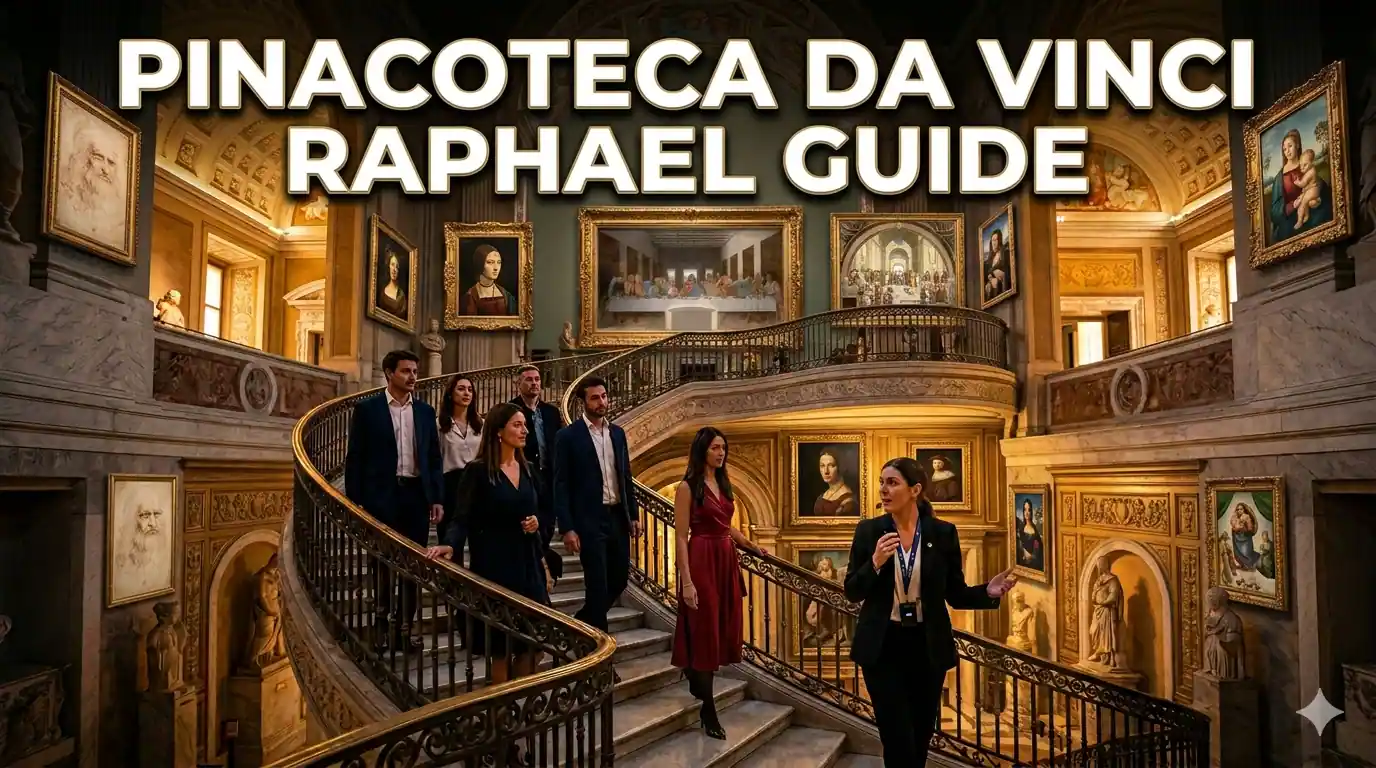
Introduction to Italy's Premier Pinacotecas
Italy's pinacotecas house some of the world's most extraordinary Renaissance masterpieces, including works by Leonardo da Vinci and Raphael.
These art galleries preserve centuries of artistic achievement, offering visitors intimate encounters with genius-level creativity.
From Milan's Pinacoteca di Brera to the Vatican Pinacoteca, each institution tells unique stories through curated collections.
This comprehensive guide helps art lovers navigate these sacred spaces and appreciate the masterpieces within.
Understanding the context, history, and significance of these works enhances your museum experience immeasurably.
Major Pinacotecas Featuring Renaissance Masters

Several Italian pinacotecas boast significant works by Leonardo da Vinci and Raphael among their collections.
Each museum offers distinct curatorial approaches and unique masterpieces worth exploring.
Understanding which pinacoteca houses which masterpieces helps plan your art pilgrimage effectively.
These institutions range from intimate galleries to expansive museum complexes.
Each offers different visitor experiences, from guided tours to audio guides and educational programs.
Pinacoteca di Brera - Milan
One of Italy's most important galleries, housing over 500 masterpieces of Italian art.
Features Raphael's Marriage of the Virgin, one of his early masterpieces from 1504.
The gallery occupies the Palazzo Brera, a neoclassical building in the heart of Milan.
Collection spans from 14th to 20th centuries with strong Renaissance representation.
The museum's layout allows chronological exploration of Italian art history.
Vatican Pinacoteca - Vatican City
Home to Raphael's final masterpiece, the Transfiguration, completed in 1520.
Also features Leonardo's unfinished St. Jerome in the Wilderness from around 1480.
The gallery contains 18 rooms organized chronologically from 13th to 19th centuries.
Collection includes works by Giotto, Perugino, Caravaggio, and other Renaissance masters.
Located within Vatican Museums complex, accessible with museum admission.
Other Notable Pinacotecas
Pinacoteca Nazionale in Bologna features significant Emilian Renaissance works.
Pinacoteca Capitolina in Rome displays important Renaissance and Baroque paintings.
Pinacoteca Ambrosiana in Milan houses Leonardo's preparatory drawings and manuscripts.
Each institution offers unique perspectives on Italian artistic development.
Regional variations in style and subject matter reflect Italy's diverse cultural heritage.
Leonardo da Vinci in Italian Pinacotecas

Leonardo da Vinci's works are exceptionally rare, making any pinacoteca housing his pieces a must-visit destination.
His innovative techniques and revolutionary approach to art changed the course of Western art history.
Understanding Leonardo's methods and artistic philosophy enhances appreciation of his surviving works.
His paintings demonstrate mastery of sfumato, anatomical precision, and psychological depth.
Each Leonardo work tells a story of artistic genius and relentless experimentation.
St. Jerome in the Wilderness - Vatican Pinacoteca
This unfinished work from circa 1480 reveals Leonardo's working process and anatomical studies.
The painting depicts St. Jerome as an emaciated figure in the desert, demonstrating Leonardo's anatomical knowledge.
The lion at Jerome's feet references the saint's legendary removal of a thorn from the animal's paw.
Leonardo's characteristic sfumato technique is evident in the soft transitions and atmospheric effects.
The unfinished state provides rare insight into Leonardo's layering and painting techniques.
Leonardo's Drawings and Manuscripts
Pinacoteca Ambrosiana houses the Codex Atlanticus, containing Leonardo's drawings and notes.
These manuscripts reveal his interests spanning art, science, engineering, and anatomy.
Preparatory drawings show his meticulous planning process for major works.
His mirror writing and detailed observations demonstrate his insatiable curiosity.
These documents are as valuable as his paintings for understanding his genius.
Leonardo's Influence on Renaissance Art
His innovative use of chiaroscuro and sfumato influenced generations of artists.
Leonardo's approach to composition and psychological portraiture set new standards.
His studies of light, shadow, and human anatomy advanced artistic representation.
Many works in pinacotecas show clear Leonardo influence even if not by his hand.
Understanding his impact helps contextualize the broader Renaissance movement.
Raphael Sanzio Masterpieces

Raphael Sanzio represents the High Renaissance ideal of harmony, balance, and beauty.
His works demonstrate perfect composition, graceful figures, and serene spirituality.
Italian pinacotecas house some of his most important paintings from different periods.
Raphael's career progressed from early Perugino-influenced works to mature masterpieces.
His ability to synthesize influences from Leonardo and Michelangelo created a unique style.
The Marriage of the Virgin - Pinacoteca di Brera
Painted in 1504, this early masterpiece established Raphael as a major Renaissance artist.
The composition shows the marriage ceremony of Mary and Joseph with perfect symmetry.
The temple in the background demonstrates Raphael's developing architectural knowledge.
Figures display the grace and harmony that would characterize his mature work.
This painting directly responds to Perugino's earlier treatment of the same subject.
The Transfiguration - Vatican Pinacoteca
Raphael's final work, completed in 1520, represents the culmination of his artistic achievement.
The painting depicts Christ's transfiguration on Mount Tabor with apostles below.
The upper section shows divine light and heavenly figures in perfect harmony.
The lower section depicts human suffering and the limits of earthly understanding.
This dual composition demonstrates Raphael's mastery of complex theological themes.
Other Raphael Works in Italian Collections
Madonna and Child compositions appear in various pinacotecas showing his evolution.
Portrait works demonstrate his skill in capturing personality and status.
Altarpieces reveal his ability to create devotional images of profound beauty.
His workshop produced many works that continue to be studied and admired.
Each painting demonstrates his commitment to ideal beauty and harmonious composition.
Planning Your Pinacoteca Visit

Visiting Italy's great pinacotecas requires planning to maximize your experience.
Understanding opening hours, ticketing, and special exhibitions prevents disappointment.
Knowing what to expect helps you allocate appropriate time for each museum.
Preparation enhances your ability to appreciate the masterpieces you'll encounter.
These practical considerations ensure a smooth and rewarding museum experience.
Ticketing and Admission
Most pinacotecas offer online ticket purchase to avoid long entry lines.
Combined tickets often available for multiple museums or Vatican complex.
Student, senior, and youth discounts typically available with valid ID.
First Sunday of month often free admission at state museums in Italy.
Audio guides and guided tours available for additional fee enhance understanding.
Opening Hours and Best Times to Visit
Most pinacotecas open Tuesday-Sunday, closed Mondays or Tuesdays.
Typical hours 8:30 AM to 7:00 PM with last entry 30-60 minutes before closing.
Early morning visits offer fewer crowds and better viewing conditions.
Late afternoon often less crowded as tour groups depart.
Wednesday and Thursday typically less busy than weekends.
Time Allocation
Pinacoteca di Brera requires minimum 2-3 hours for comprehensive visit.
Vatican Pinacoteca needs 1-2 hours as part of larger Vatican Museums visit.
Smaller regional pinacotecas can be seen in 1-2 hours.
Allow extra time if joining guided tour or using audio guide.
Don't rush - these masterpieces deserve contemplative viewing.
Understanding Renaissance Art

Appreciating Renaissance masterpieces requires understanding the historical and artistic context.
The Renaissance represented a rebirth of classical learning and humanistic values.
Artists like Leonardo and Raphael pushed boundaries of technique and expression.
Religious themes dominated but were treated with new humanistic approaches.
Understanding these contexts enriches your appreciation of what you're viewing.
Key Renaissance Characteristics
Perspective and depth created realistic three-dimensional space on two-dimensional surfaces.
Chiaroscuro used light and shadow to create volume and drama.
Sfumato created soft, smoky transitions between colors and tones.
Human anatomy studied and depicted with unprecedented accuracy.
Classical themes and Christian subjects blended in innovative ways.
Symbolism and Meaning
Renaissance art is rich with symbolic meaning and hidden references.
Colors carried specific meanings - blue for divine, red for passion or sacrifice.
Objects in paintings often had symbolic significance beyond literal appearance.
Compositions followed mathematical principles of harmony and proportion.
Understanding symbolism reveals deeper layers of meaning in the artworks.
Technical Innovations
Oil paint allowed for richer colors and subtle blending techniques.
Linear perspective created convincing illusion of three-dimensional space.
Anatomical studies improved accuracy of human figure representation.
Canvas gradually replaced wood panels as preferred painting surface.
These innovations revolutionized artistic possibilities and expression.
Masterpiece Highlights Not to Miss

While every artwork in these pinacotecas has value, certain masterpieces demand special attention.
These works represent pinnacle achievements of Renaissance art and human creativity.
Spending time with these masterpieces provides deep aesthetic and intellectual rewards.
Understanding what makes each work special enhances your viewing experience.
These are the unmissable highlights that define these collections.
Essential Leonardo Works
St. Jerome in the Wilderness shows his anatomical knowledge and emotional intensity.
Preparatory drawings reveal his creative process and scientific curiosity.
Notice the sfumato technique creating soft, atmospheric transitions.
Observe how unfinished areas reveal his painting method and layering.
Study the psychological depth and spiritual intensity of his figures.
Essential Raphael Works
The Marriage of the Virgin demonstrates perfect compositional balance and grace.
The Transfiguration shows his mature style and theological sophistication.
Notice the harmonious arrangement of figures in architectural space.
Observe the idealized beauty and serene expressions characteristic of his work.
Study how he balances multiple figures while maintaining clarity and focus.
Contextual Masterpieces
Works by Perugino show Raphael's early influences and training.
Contemporary works by Michelangelo and Leonardo show artistic dialogue.
Later works influenced by these masters show their lasting impact.
Regional variations demonstrate how Renaissance ideas spread throughout Italy.
Comparing different artists' treatments of similar subjects reveals individual styles.
Photography and Museum Etiquette

Understanding museum rules and proper etiquette ensures respectful visit for all.
Photography policies vary by institution and specific artworks.
Proper behavior protects these irreplaceable treasures for future generations.
Being a considerate visitor enhances everyone's museum experience.
These guidelines help you navigate museum spaces respectfully.
Photography Policies
Most pinacotecas allow photography without flash for personal use.
Flash photography strictly prohibited as it damages pigments over time.
Some special exhibitions or specific works may prohibit all photography.
Selfie sticks and tripods typically not allowed in gallery spaces.
Always check signage and respect staff instructions regarding photography.
Museum Behavior
Maintain reasonable voice levels to preserve contemplative atmosphere.
Keep safe distance from artworks - never touch paintings or frames.
Large bags and backpacks must be checked in cloakroom.
Food and drinks not permitted in gallery spaces.
Follow designated routes and respect any restricted areas.
Enhancing Your Experience
Use audio guides or join guided tours for deeper understanding.
Take time to sit and contemplate major works rather than rushing.
Read wall labels and exhibition texts for context and information.
Visit museum shop for quality reproductions and educational materials.
Consider multiple visits to fully appreciate extensive collections.
Educational Resources and Programs

Italian pinacotecas offer rich educational resources for visitors of all ages and backgrounds.
These programs deepen understanding and appreciation of Renaissance art.
Taking advantage of educational offerings enhances your museum visit significantly.
Resources range from guided tours to scholarly publications and digital content.
These tools help you engage more meaningfully with the collections.
Guided Tours
Expert-led tours provide context and insights not available independently.
Specialized tours focus on specific artists, periods, or themes.
Private tours can be customized to your interests and schedule.
Group tours offer social experience and shared learning opportunities.
Book tours in advance especially for popular times and special exhibitions.
Audio Guides and Apps
Audio guides available in multiple languages at most major pinacotecas.
Museum apps offer self-guided tours and additional multimedia content.
Some apps include augmented reality features bringing artworks to life.
Digital guides allow you to proceed at your own pace.
Download apps before visit to ensure functionality in museum.
Educational Publications
Museum catalogs provide detailed information about permanent collections.
Scholarly essays offer deep dives into specific artworks or artists.
Children's books make art accessible to younger visitors.
Exhibition catalogs document special exhibitions and temporary displays.
These resources extend learning beyond your museum visit.
Accessibility and Special Services

Italian pinacotecas strive to make art accessible to all visitors.
Various services accommodate different needs and abilities.
Planning ahead ensures you can access available accommodations.
These services ensure everyone can enjoy these cultural treasures.
Don't hesitate to inquire about specific accessibility needs.
Physical Accessibility
Most major pinacotecas have wheelchair accessible entrances and routes.
Elevators provide access to upper floors in multi-story buildings.
Wheelchairs often available for loan at no charge.
Accessible restrooms located throughout museum facilities.
Some historic buildings may have limited accessibility due to architecture.
Services for Visual Impairments
Audio descriptions available for major works at some institutions.
Tactile tours with replica sculptures or reliefs may be offered.
Large print guides and labels available upon request.
Service animals welcome in most museum spaces.
Staff trained to assist visitors with visual impairments.
Services for Hearing Impairments
Sign language interpreters available for tours with advance booking.
Captioned videos and multimedia presentations increasingly available.
Written materials supplement audio guides and tours.
Staff can provide written information and assistance.
Visual alarm systems in place for emergency situations.
Planning Your Art Journey

Visiting multiple pinacotecas requires strategic planning to maximize your experience.
Italy's cities offer different artistic treasures worth exploring.
Creating an itinerary helps you see the most important works efficiently.
Balancing museum visits with other activities prevents art fatigue.
These planning tips help you create a memorable art-focused trip.
Multi-City Itineraries
Milan: Pinacoteca di Brera and Ambrosiana for Renaissance masterpieces.
Vatican City: Vatican Pinacoteca as part of larger Vatican Museums visit.
Rome: Pinacoteca Capitolina and other galleries for comprehensive Renaissance view.
Bologna: Pinacoteca Nazionale for Emilian school of painting.
Florence: Uffizi Gallery though not called pinacoteca is essential for Renaissance art.
Pacing Your Visits
Limit major pinacoteca visits to one per day to avoid overload.
Alternate museum days with outdoor activities and sightseeing.
Morning visits when you're fresh provide best appreciation.
Take breaks during long visits - sit and contemplate rather than rushing.
Allow time between visits to process and reflect on what you've seen.
Combining with Other Attractions
Many pinacotecas located near other cultural sites and attractions.
Combine museum visits with nearby churches featuring related artworks.
Historic centers offer architecture and atmosphere complementing art viewing.
Restaurants and cafes near museums provide convenient meal options.
Evening cultural events extend your artistic experience beyond museum hours.
Digital Resources and Virtual Tours
Modern technology offers new ways to engage with pinacoteca collections.
Virtual resources allow preview and follow-up to physical visits.
These tools enhance understanding and appreciation of the artworks.
Digital access makes these collections available to global audiences.
These resources complement but don't replace in-person viewing.
Virtual Tours
Many pinacotecas offer 360-degree virtual tours of their galleries.
Google Arts and Culture features high-resolution images of major works.
Virtual tours allow preview before visit or revisit after leaving.
Some virtual tours include expert commentary and additional context.
These resources particularly valuable for those unable to visit in person.
Online Collections
Museum websites often feature searchable online databases of collections.
High-resolution images allow detailed study of artworks.
Scholarly information and provenance data available for research.
Digital catalogs provide comprehensive collection information.
These resources support ongoing learning and research.
Social Media and Digital Engagement
Museums active on social media sharing collection highlights and news.
Instagram and Facebook feature behind-the-scenes content and exhibitions.
YouTube channels offer virtual tours, lectures, and educational content.
Podcasts provide in-depth discussions of artworks and artists.
Following museums keeps you informed about new acquisitions and exhibitions.
Conclusion and Final Recommendations
Italy's pinacotecas house some of humanity's greatest artistic achievements.
Works by Leonardo da Vinci and Raphael represent pinnacle of Renaissance creativity.
These masterpieces continue to inspire and educate visitors from around the world.
Proper planning and preparation maximize your appreciation of these treasures.
Take time to contemplate these works - they've waited centuries for your visit.
Book tickets in advance especially for popular museums and time periods.
Allow adequate time for each visit - don't rush through these masterpieces.
Use available resources like audio guides and tours to deepen understanding.
Respect museum rules and other visitors to preserve these treasures for future generations.
Your visit to these pinacotecas will be a highlight of your Italian journey.
0 Comments