.webp)
.webp)
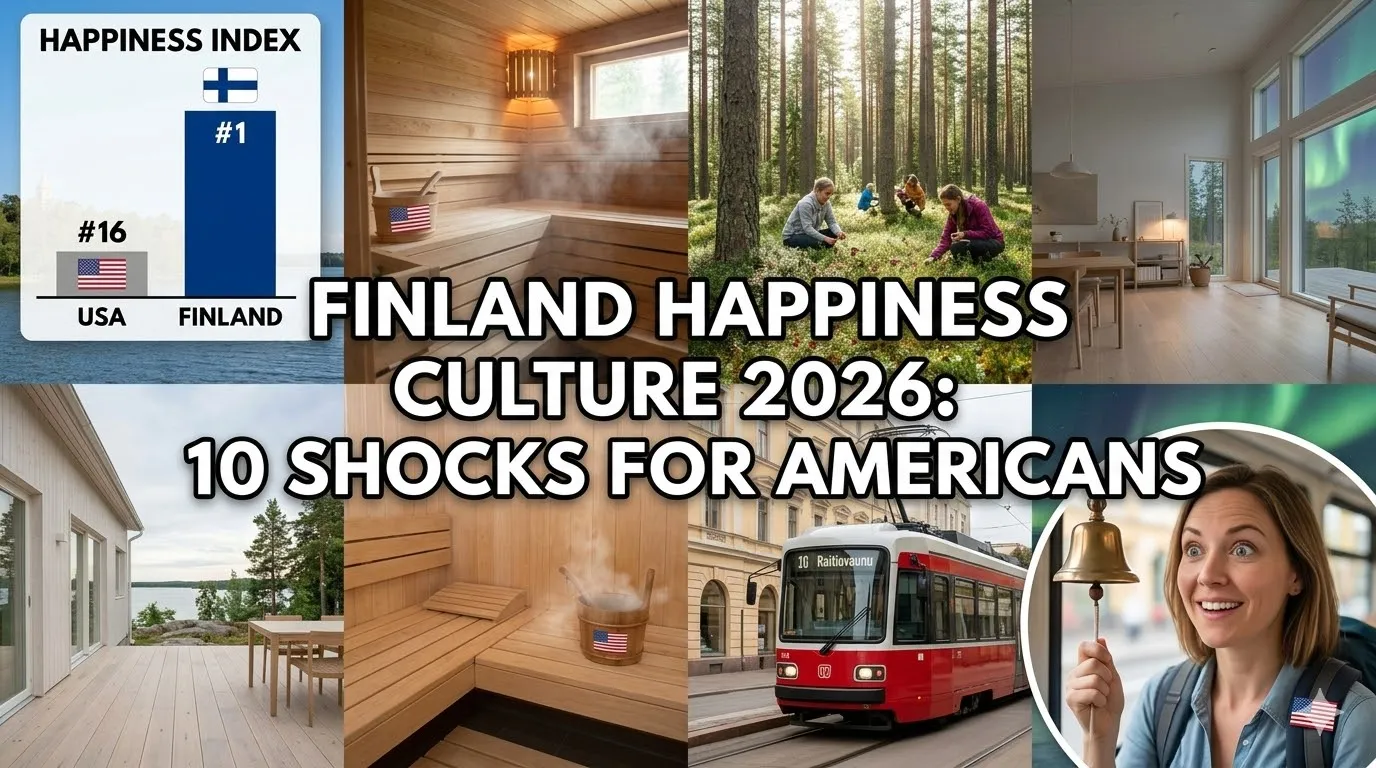
Finland's Happiness Culture: Why Americans Are Stunned in 2026
For the ninth consecutive year, Finland has been ranked the world's happiest country in the UN World Happiness Report, and in 2026, American travelers are discovering firsthand what makes Finnish culture so uniquely conducive to well-being . From radical trust in society to profound connections with nature, Finland's approach to happiness challenges many American assumptions about success, productivity, and the good life .
When Americans visit Finland, they often arrive expecting a cold, reserved society. Instead, many are surprised to discover a culture that prioritizes contentment over conspicuous consumption, community over competition, and presence over productivity . These cultural differences can be both disorienting and enlightening, prompting visitors to reconsider their own definitions of happiness and success.
This comprehensive guide explores the ten aspects of Finland's happiness culture that most consistently shock American travelers in 2026. From the ubiquitous sauna ritual to the profound trust in public institutions, from the embrace of silence to the radical equality embedded in daily life, these cultural insights reveal why Finland consistently tops global happiness rankings—and what Americans might learn from the Finnish approach to well-being.
Whether you're planning a trip to Finland, curious about Nordic culture, or simply interested in the science of happiness, understanding these cultural shocks can deepen your appreciation for Finland's unique approach to human flourishing—and perhaps inspire changes in your own life.
1. Trust Is the Default, Not the Exception

Perhaps the most profound shock for Americans visiting Finland is the pervasive culture of trust that permeates daily life . In a society where strangers leave babies sleeping in strollers outside cafés, where lost wallets are routinely returned with cash intact, and where children walk to school alone from age seven, trust isn't an aspiration—it's the operating system.
What Shocks Americans:
- Unattended Children: Finnish parents commonly leave infants sleeping in prams outside restaurants while they dine inside—a practice that would trigger child services calls in many American communities
- Honor Systems: Rural bus stops, farm stands, and library returns often operate on honor systems with minimal supervision
- Low Crime Perception: Finns routinely walk alone at night without fear, and visible police presence is minimal in most areas
- Institutional Trust: Finns express high confidence in government, media, and public services—levels that surprise Americans accustomed to institutional skepticism
- 👉 Tara National Park Coolcation: Serbia's 2026 Summer Escape
- 👉 Liechtenstein EES April 2026 Update: Why biometric entry is mandatory starting April 10.
- 👉 US Passport Validity Rules for Ukraine Entry Essential Border Facts 2026
Why This Matters for Happiness:
Research shows that trust is one of the strongest predictors of national happiness . When people trust their neighbors, institutions, and systems, they experience less anxiety, spend less energy on vigilance, and feel more connected to their communities. Finland's culture of trust creates a psychological safety net that allows citizens to focus on flourishing rather than self-protection.
How Americans Can Adapt:
- Observe Finnish social norms around trust without judgment
- Practice small acts of trust during your visit (e.g., using honor-system purchases)
- Reflect on how trust levels in your own community affect your well-being
- Consider how building trust might improve your relationships and daily life
- 👉 Tara National Park Coolcation: Serbia's 2026 Summer Escape
- 👉 Liechtenstein EES April 2026 Update: Why biometric entry is mandatory starting April 10.
- 👉 US Passport Validity Rules for Ukraine Entry Essential Border Facts 2026
2. Silence Is Valued, Not Filled

Americans accustomed to constant background noise—music in stores, chatter in public spaces, notifications on devices—are often startled by Finland's comfortable embrace of silence . In Finnish culture, silence isn't awkward; it's a form of respect, a space for reflection, and a natural part of human connection.
What Shocks Americans:
- Quiet Public Spaces: Buses, libraries, and parks are notably quiet; loud conversations draw disapproving looks
- Comfortable Pauses: Finns are comfortable with silent moments in conversation; they don't rush to fill every gap
- Nature Immersion: Forests and lakes offer profound silence that many Americans find initially unsettling but ultimately restorative
- Minimal Small Talk: Finns value meaningful conversation over casual chatter; greetings are brief and purposeful
- 👉 Tara National Park Coolcation: Serbia's 2026 Summer Escape
- 👉 Liechtenstein EES April 2026 Update: Why biometric entry is mandatory starting April 10.
- 👉 US Passport Validity Rules for Ukraine Entry Essential Border Facts 2026
Why This Matters for Happiness:
Psychological research indicates that constant noise and stimulation contribute to stress and cognitive fatigue . Finland's cultural comfort with silence creates space for mental restoration, deeper relationships, and mindful presence. The ability to be comfortable in silence is linked to lower anxiety and greater emotional resilience.
How Americans Can Adapt:
- Practice sitting in silence for short periods during your visit
- Observe how Finns communicate non-verbally and through presence
- Experiment with reducing background noise in your own life
- Appreciate silence as a resource rather than a void to be filled
- 👉 Tara National Park Coolcation: Serbia's 2026 Summer Escape
- 👉 Liechtenstein EES April 2026 Update: Why biometric entry is mandatory starting April 10.
- 👉 US Passport Validity Rules for Ukraine Entry Essential Border Facts 2026
3. Nature Access Is a Right, Not a Luxury

Everyman's Right (jokamiehenoikeus) is a cornerstone of Finnish culture that often astonishes Americans: the legal principle that everyone, regardless of land ownership, has the right to roam freely in nature . This isn't just permission to hike—it's a cultural commitment to ensuring that nature is accessible to all.
What Shocks Americans:
- Free Access: You can hike, camp, pick berries, and fish in most natural areas without permits or fees
- Urban Nature: Even in Helsinki, forests and beaches are minutes from city centers by public transit
- Cultural Priority: Finns prioritize time in nature as essential to well-being, not as a weekend luxury
- Minimal Development: Natural areas remain largely undeveloped, with trails and facilities designed to minimize environmental impact
- 👉 Tara National Park Coolcation: Serbia's 2026 Summer Escape
- 👉 Liechtenstein EES April 2026 Update: Why biometric entry is mandatory starting April 10.
- 👉 US Passport Validity Rules for Ukraine Entry Essential Border Facts 2026
Why This Matters for Happiness:
Extensive research demonstrates that access to nature reduces stress, improves mood, and enhances cognitive function . Finland's commitment to universal nature access ensures that these benefits aren't reserved for the wealthy or rural residents—they're available to everyone, regardless of income or location.
How Americans Can Adapt:
- Take advantage of Everyman's Right during your visit: hike, forage, and immerse yourself in Finnish nature
- Respect nature by following Leave No Trace principles
- Reflect on how access to nature affects your own well-being
- Advocate for greater nature access in your own communities
- 👉 Tara National Park Coolcation: Serbia's 2026 Summer Escape
- 👉 Liechtenstein EES April 2026 Update: Why biometric entry is mandatory starting April 10.
- 👉 US Passport Validity Rules for Ukraine Entry Essential Border Facts 2026
4. Work-Life Balance Is Non-Negotiable

Americans accustomed to hustle culture, long work hours, and the glorification of busyness are often surprised by Finland's fierce protection of personal time . In Finnish culture, working late isn't a badge of honor—it's a sign of poor time management or an unsustainable workplace.
What Shocks Americans:
- Short Work Weeks: Many Finns work 37.5 hours per week with strict boundaries around overtime
- Generous Vacation: Five weeks of paid vacation is standard, and most Finns take all of it
- Parental Leave: Extensive paid parental leave (nearly 7 months per parent) is normalized and encouraged
- After-Hours Boundaries: Work emails and calls after hours are rare and generally considered inappropriate
- 👉 Tara National Park Coolcation: Serbia's 2026 Summer Escape
- 👉 Liechtenstein EES April 2026 Update: Why biometric entry is mandatory starting April 10.
- 👉 US Passport Validity Rules for Ukraine Entry Essential Border Facts 2026
Why This Matters for Happiness:
Research consistently shows that excessive work hours correlate with lower life satisfaction, poorer health, and strained relationships . Finland's cultural commitment to work-life balance ensures that citizens have time for family, hobbies, rest, and community—key ingredients for sustained well-being.
How Americans Can Adapt:
- Observe Finnish workplace norms without judgment
- Experiment with setting clearer boundaries between work and personal time
- Reflect on how your own work habits affect your well-being
- Consider advocating for healthier work norms in your own workplace
- 👉 Tara National Park Coolcation: Serbia's 2026 Summer Escape
- 👉 Liechtenstein EES April 2026 Update: Why biometric entry is mandatory starting April 10.
- 👉 US Passport Validity Rules for Ukraine Entry Essential Border Facts 2026
5. Equality Is Embedded in Daily Life

Finland's commitment to equality isn't just policy—it's woven into the fabric of daily life in ways that often surprise Americans accustomed to more visible class distinctions . From education to healthcare to public spaces, Finnish culture minimizes status markers and maximizes access.
What Shocks Americans:
- Education Equality: All schools are publicly funded and high-quality; private schools are rare and don't confer significant advantages
- Healthcare Access: Universal healthcare ensures that medical care isn't tied to employment or wealth
- Minimal Status Display: Designer labels, luxury cars, and conspicuous consumption are uncommon; modesty is valued
- Gender Equality: Finland consistently ranks among the world's most gender-equal societies, with visible representation in leadership and daily life
- 👉 Tara National Park Coolcation: Serbia's 2026 Summer Escape
- 👉 Liechtenstein EES April 2026 Update: Why biometric entry is mandatory starting April 10.
- 👉 US Passport Validity Rules for Ukraine Entry Essential Border Facts 2026
Why This Matters for Happiness:
Societies with greater equality tend to report higher levels of happiness, trust, and social cohesion . When people perceive that everyone has access to basic necessities and opportunities, they experience less anxiety about status competition and more confidence in their own futures.
How Americans Can Adapt:
- Observe how Finnish equality norms shape social interactions
- Reflect on how status competition affects your own well-being
- Consider how greater equality might benefit your own communities
- Practice modesty and inclusivity in your own interactions
- 👉 Tara National Park Coolcation: Serbia's 2026 Summer Escape
- 👉 Liechtenstein EES April 2026 Update: Why biometric entry is mandatory starting April 10.
- 👉 US Passport Validity Rules for Ukraine Entry Essential Border Facts 2026
6. Saunas Are Sacred, Not Optional

For Americans who view saunas as luxury spa treatments, the Finnish relationship with saunas can be startling: they're not indulgences—they're essential to daily life, social connection, and even spiritual practice . With an estimated 3 million saunas for 5.5 million people, Finland has more saunas than cars.
What Shocks Americans:
- Ubiquity: Saunas are found in homes, apartments, workplaces, and public facilities—not just resorts
- Social Ritual: Saunas are spaces for conversation, reflection, and bonding; business deals and family conversations happen in the heat
- Cultural Significance: Sauna culture is recognized by UNESCO as intangible cultural heritage
- Temperature Extremes: Traditional saunas reach 80-100°C (176-212°F), followed by cold plunges—a practice that initially intimidates many Americans
- 👉 Tara National Park Coolcation: Serbia's 2026 Summer Escape
- 👉 Liechtenstein EES April 2026 Update: Why biometric entry is mandatory starting April 10.
- 👉 US Passport Validity Rules for Ukraine Entry Essential Border Facts 2026
Why This Matters for Happiness:
Research suggests that regular sauna use is associated with reduced stress, improved cardiovascular health, and enhanced social connection . Beyond physical benefits, the sauna ritual creates a dedicated space for slowing down, connecting with others, and practicing mindfulness—key components of Finnish well-being.
How Americans Can Adapt:
- Try a traditional Finnish sauna experience during your visit
- Respect sauna etiquette: shower before entering, sit on towels, embrace the heat
- Consider how regular relaxation rituals might improve your own well-being
- Explore sauna culture as a form of mindfulness practice
- 👉 Tara National Park Coolcation: Serbia's 2026 Summer Escape
- 👉 Liechtenstein EES April 2026 Update: Why biometric entry is mandatory starting April 10.
- 👉 US Passport Validity Rules for Ukraine Entry Essential Border Facts 2026
7. Coffee Culture Is a Daily Ritual, Not a Rush

Americans accustomed to grab-and-go coffee culture are often surprised by Finland's approach to coffee: it's not fuel for productivity—it's a ritual for connection, pause, and pleasure . Finns consume more coffee per capita than any other nation, and the way they drink it reveals cultural priorities.
What Shocks Americans:
- Quantity: Finns drink an average of 12 kg of coffee per person annually—roughly four cups per day
- Pacing: Coffee breaks (kahvihetki) are sacred pauses in the day, not rushed interruptions
- Social Function: Coffee is served at virtually every social gathering, from business meetings to funerals
- Preparation: Filter coffee is standard; elaborate espresso drinks are less common than in American café culture
- 👉 Tara National Park Coolcation: Serbia's 2026 Summer Escape
- 👉 Liechtenstein EES April 2026 Update: Why biometric entry is mandatory starting April 10.
- 👉 US Passport Validity Rules for Ukraine Entry Essential Border Facts 2026
Why This Matters for Happiness:
The Finnish approach to coffee exemplifies a broader cultural value: the importance of intentional pauses in daily life . Regular breaks for coffee create opportunities for connection, reflection, and mental reset—practices linked to lower stress and greater life satisfaction.
How Americans Can Adapt:
- Slow down your own coffee ritual; savor rather than rush
- Use coffee breaks as opportunities for connection or reflection
- Consider how intentional pauses might improve your daily rhythm
- Explore Finnish coffee culture as a model for mindful consumption
- 👉 Tara National Park Coolcation: Serbia's 2026 Summer Escape
- 👉 Liechtenstein EES April 2026 Update: Why biometric entry is mandatory starting April 10.
- 👉 US Passport Validity Rules for Ukraine Entry Essential Border Facts 2026
8. Education Prioritizes Well-Being Over Competition

Americans accustomed to high-stakes testing, college admissions pressure, and competitive schooling are often astonished by Finland's approach to education: less homework, later start times, and a focus on play, creativity, and well-being . Despite—or perhaps because of—this relaxed approach, Finnish students consistently perform among the world's best.
What Shocks Americans:
- Minimal Homework: Finnish students receive little homework, especially in early grades
- Later Start Times: School days often begin at 9 AM or later, aligning with adolescent sleep patterns
- Play-Based Learning: Young children spend significant time playing outdoors, even in winter
- Teacher Autonomy: Teachers have significant freedom to design curriculum and assessments
- 👉 Tara National Park Coolcation: Serbia's 2026 Summer Escape
- 👉 Liechtenstein EES April 2026 Update: Why biometric entry is mandatory starting April 10.
- 👉 US Passport Validity Rules for Ukraine Entry Essential Border Facts 2026
Why This Matters for Happiness:
Research indicates that excessive academic pressure correlates with anxiety, burnout, and diminished love of learning . Finland's education model prioritizes student well-being, intrinsic motivation, and holistic development—factors linked to both academic success and long-term life satisfaction.
How Americans Can Adapt:
- Observe Finnish educational practices without judgment
- Reflect on how academic pressure affects children's well-being in your own context
- Consider how play, rest, and autonomy might enhance learning
- Advocate for well-being-focused approaches in your own educational communities
- 👉 Tara National Park Coolcation: Serbia's 2026 Summer Escape
- 👉 Liechtenstein EES April 2026 Update: Why biometric entry is mandatory starting April 10.
- 👉 US Passport Validity Rules for Ukraine Entry Essential Border Facts 2026
9. Sustainability Is Practical, Not Performative

Americans accustomed to greenwashing and performative environmentalism are often surprised by Finland's pragmatic, embedded approach to sustainability . Environmental responsibility isn't a marketing tactic—it's a cultural norm reflected in daily choices, policy, and infrastructure.
What Shocks Americans:
- Recycling Systems: Comprehensive, easy-to-use recycling is standard in homes and public spaces
- Public Transit Priority: Efficient, affordable public transportation reduces car dependency
- Local Food Culture: Seasonal, local ingredients are prioritized in homes and restaurants
- Policy Alignment: Environmental goals are reflected in concrete policies, not just rhetoric
- 👉 Tara National Park Coolcation: Serbia's 2026 Summer Escape
- 👉 Liechtenstein EES April 2026 Update: Why biometric entry is mandatory starting April 10.
- 👉 US Passport Validity Rules for Ukraine Entry Essential Border Facts 2026
Why This Matters for Happiness:
Living in alignment with one's values is a key predictor of life satisfaction . Finland's culture of practical sustainability allows citizens to act on environmental concerns without significant personal sacrifice, reducing the cognitive dissonance that often accompanies eco-anxiety.
How Americans Can Adapt:
- Observe Finnish sustainability practices that feel practical and achievable
- Experiment with small, consistent sustainable choices in your own life
- Reflect on how aligning actions with values affects your well-being
- Advocate for practical sustainability solutions in your own communities
- 👉 Tara National Park Coolcation: Serbia's 2026 Summer Escape
- 👉 Liechtenstein EES April 2026 Update: Why biometric entry is mandatory starting April 10.
- 👉 US Passport Validity Rules for Ukraine Entry Essential Border Facts 2026
10. Happiness Is a Collective Project, Not an Individual Pursuit

Perhaps the most profound shock for Americans is Finland's cultural understanding of happiness itself: it's not a personal achievement to be pursued in isolation—it's a collective outcome shaped by social systems, community connections, and shared values .
What Shocks Americans:
- Systemic Focus: Finns discuss happiness in terms of social policies, infrastructure, and community design—not just personal habits
- Modest Expectations: Finnish happiness isn't about euphoria or constant positivity—it's about contentment, security, and meaningful connection
- Community Orientation: Well-being is understood as interdependent; individual happiness is linked to community flourishing
- Realistic Outlook: Finns acknowledge life's difficulties while maintaining confidence in their capacity to cope and connect
- 👉 Tara National Park Coolcation: Serbia's 2026 Summer Escape
- 👉 Liechtenstein EES April 2026 Update: Why biometric entry is mandatory starting April 10.
- 👉 US Passport Validity Rules for Ukraine Entry Essential Border Facts 2026
Why This Matters for Happiness:
Research shows that social connection, purpose, and a sense of contribution are among the strongest predictors of life satisfaction . Finland's cultural framing of happiness as a collective project creates conditions where these factors can flourish—not through individual effort alone, but through supportive systems and shared values.
How Americans Can Adapt:
- Reflect on how your own happiness is connected to your communities and systems
- Consider how collective action might enhance well-being in your own context
- Practice gratitude for the systems and relationships that support your well-being
- Explore how modest, realistic expectations might reduce pressure and increase contentment
- 👉 Tara National Park Coolcation: Serbia's 2026 Summer Escape
- 👉 Liechtenstein EES April 2026 Update: Why biometric entry is mandatory starting April 10.
- 👉 US Passport Validity Rules for Ukraine Entry Essential Border Facts 2026
Why Finland's Happiness Culture Matters for Americans in 2026

As Americans navigate increasing polarization, economic uncertainty, and mental health challenges, Finland's happiness culture offers not just curiosity but practical inspiration . The ten cultural shocks outlined above aren't just interesting differences—they're alternative approaches to fundamental human needs: trust, connection, purpose, rest, and meaning.
Key Takeaways for American Travelers:
- Observe Without Judgment: Cultural differences aren't deficits; they're alternative solutions to shared human challenges
- Experiment Selectively: You don't need to adopt Finnish culture wholesale to benefit from its insights
- Reflect on Your Own Context: Consider which Finnish practices might enhance your own well-being
- Advocate for Systemic Change: Individual habits matter, but so do the systems that shape our daily lives
- 👉 Tara National Park Coolcation: Serbia's 2026 Summer Escape
- 👉 Liechtenstein EES April 2026 Update: Why biometric entry is mandatory starting April 10.
- 👉 US Passport Validity Rules for Ukraine Entry Essential Border Facts 2026
The Science Behind Finland's Happiness:
Finland's consistent top ranking in the World Happiness Report isn't accidental—it reflects measurable factors that research links to well-being :
- Social Support: Strong relationships and community connections
- Freedom: Personal autonomy and life choices
- Generosity: Culture of giving and mutual aid
- Corruption Perception: Trust in institutions and low corruption
- Healthy Life Expectancy: Access to healthcare and healthy living conditions
- GDP Per Capita: Economic security without extreme inequality
- 👉 Tara National Park Coolcation: Serbia's 2026 Summer Escape
- 👉 Liechtenstein EES April 2026 Update: Why biometric entry is mandatory starting April 10.
- 👉 US Passport Validity Rules for Ukraine Entry Essential Border Facts 2026
What's remarkable about Finland isn't that it excels in one area—it's that it performs well across all these dimensions, creating a synergistic effect that supports widespread well-being.
Practical Tips for Experiencing Finnish Happiness Culture

If you're planning a visit to Finland in 2026, here's how to make the most of your cultural immersion:
Before You Go:
- Learn Basic Finnish Phrases: While English is widely spoken, simple greetings (kiitos = thank you, hei = hello) show respect
- Pack for Nature: Bring versatile, weather-appropriate clothing for outdoor activities
- Research Sauna Etiquette: Understand basic sauna customs to participate comfortably
- Adjust Expectations: Embrace silence, modesty, and slower pacing as cultural features, not bugs
During Your Visit:
- Immerse in Nature: Take advantage of Everyman's Right to hike, forage, and connect with Finnish landscapes
- Try a Public Sauna: Experience this cultural cornerstone in a community setting
- Observe Social Norms: Notice how trust, silence, and equality shape daily interactions
- Engage with Locals: Finns may seem reserved initially, but they're often warm and thoughtful once conversation begins
- Slow Down: Embrace the Finnish pace; resist the urge to rush or fill every moment
After Your Visit:
- Reflect on which Finnish practices resonated with you
- Consider small experiments to incorporate Finnish-inspired habits into your own life
- Share your insights with others interested in well-being and cultural learning
- 👉 Tara National Park Coolcation: Serbia's 2026 Summer Escape
- 👉 Liechtenstein EES April 2026 Update: Why biometric entry is mandatory starting April 10.
- 👉 US Passport Validity Rules for Ukraine Entry Essential Border Facts 2026
Frequently Asked Questions: Finland's Happiness Culture

Is Finland really the happiest country in the world?
Finland has ranked #1 in the UN World Happiness Report for nine consecutive years (2018-2026). The report measures factors like social support, freedom, generosity, and life expectancy—not just subjective mood. Finland's consistent performance reflects systemic strengths, not just temporary conditions.
Are Finns actually happier than Americans?
Research suggests Finns report higher life satisfaction on average, but happiness is complex and individual. Finnish culture emphasizes contentment and security over euphoria, which may align differently with American expectations of happiness.
Do I need to speak Finnish to experience the culture?
No. English is widely spoken in Finland, especially in tourism, hospitality, and urban areas. Learning basic Finnish phrases is appreciated but not required for a meaningful visit.
Is Finnish culture cold or unfriendly?
Finns may seem reserved initially, but this reflects cultural norms around privacy and respect, not unfriendliness. Once conversation begins, Finns are often thoughtful, warm, and engaging. Silence is valued as a form of connection, not rejection.
Can Americans adopt Finnish happiness practices?
Absolutely. While systemic factors matter, individual practices like prioritizing nature time, embracing silence, setting work boundaries, and cultivating trust can enhance well-being in any context. Start small and adapt practices to your own life.
What's the best time to visit Finland to experience happiness culture?
Summer (June-August) offers long days, outdoor activities, and festivals. Winter (December-February) offers cozy hygge-like culture, Northern Lights, and sauna culture. Shoulder seasons (May, September) offer fewer crowds and beautiful transitional landscapes.
Is Finland expensive for American travelers?
Finland is moderately expensive compared to the US, but costs vary by region and season. Helsinki is pricier than rural areas. Budget travelers can find good value in hostels, public transit, and self-catering. The experience of Finnish culture often justifies the investment.
How do Finns view American culture?
Finns are generally curious and respectful toward American culture, though they may find aspects like conspicuous consumption, hustle culture, or political polarization puzzling. Most Finns appreciate genuine cultural exchange and are happy to share their own perspectives.
What's the biggest mistake Americans make when visiting Finland?
Trying to "fix" or judge cultural differences rather than observing and learning. Approaching Finnish culture with curiosity rather than comparison allows for richer experiences and deeper insights.
Can experiencing Finnish culture actually make me happier?
Research suggests that cultural immersion, mindfulness practices, nature connection, and social trust—all prominent in Finnish culture—can enhance well-being. While a short visit won't transform your life, the insights and practices you discover may inspire meaningful changes.
Conclusion: Learning from Finland's Happiness Culture

Finland's status as the world's happiest country isn't a mystery—it's the result of intentional cultural choices, supportive systems, and shared values that prioritize human well-being. For Americans visiting in 2026, the ten cultural shocks outlined in this guide offer not just curiosity but practical inspiration.
The Finnish approach to happiness challenges many American assumptions: that busyness equals importance, that status markers signal success, that individual achievement is the path to fulfillment. Instead, Finland demonstrates that trust, connection, nature access, rest, and equality create the conditions for widespread well-being.
You don't need to move to Finland to benefit from these insights. Small experiments—embracing silence, prioritizing nature time, setting work boundaries, practicing trust—can enhance your own well-being regardless of location. And by advocating for systemic changes that support collective flourishing, you can contribute to a culture of happiness in your own communities.
As you plan your journey to Finland, approach the experience with curiosity rather than comparison. Observe how Finnish culture shapes daily life, reflect on which practices resonate with your own values, and consider how you might adapt insights to your own context. The goal isn't to become Finnish—it's to learn from a culture that has prioritized human well-being in ways that offer valuable lessons for us all.
Your journey to understanding Finland's happiness culture begins with a single step. Embrace the silence, trust the process, and let the Nordic way of well-being inspire your own path to contentment.
0 Comments