.webp)
.webp)
The British Museum: A Master Guide to a World of History Under One Roof
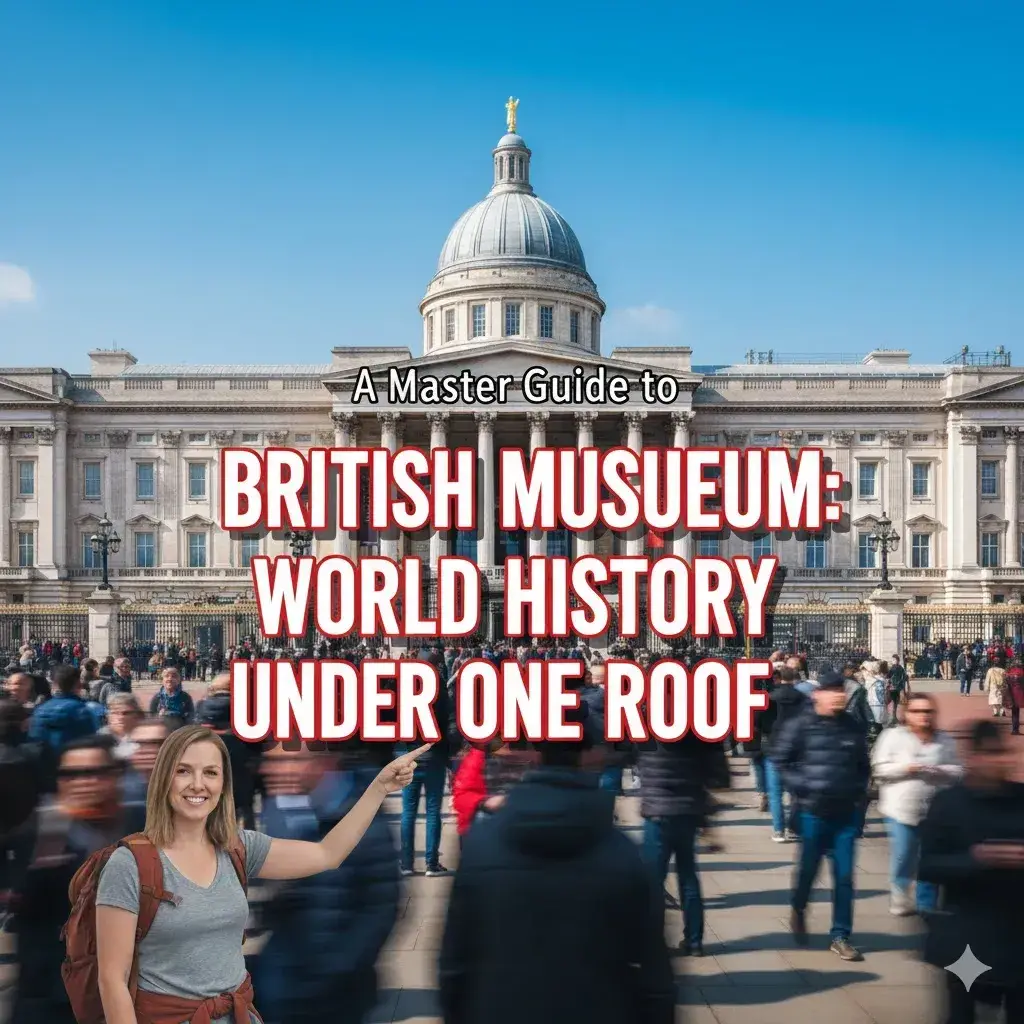
The British Museum: A Master Guide to a World of History Under One Roof
In the heart of London's Bloomsbury district stands a building that contains nothing less than the story of humanity itself. The British Museum, founded in 1753 and opened to the public in 1759, is one of the world's oldest and most comprehensive museums—a monumental institution dedicated to human history, art, and culture spanning two million years. As we explore this extraordinary repository of global heritage in 2026, the British Museum continues to captivate millions of visitors annually with its unparalleled collections, architectural grandeur, and commitment to making history accessible to all.
With over 8 million objects in its collection—of which approximately 80,000 are on display at any given time—the British Museum offers an encyclopedic journey through human civilization. From the iconic Rosetta Stone that unlocked ancient Egyptian hieroglyphs to the exquisite Parthenon Sculptures that embody classical Greek artistry, from the mysterious Easter Island statues to the glittering treasures of Sutton Hoo, the museum's holdings represent every continent and era of human achievement. Remarkably, admission to the permanent collections is free, reflecting the museum's founding principle that knowledge and culture should be shared with all humanity.
This comprehensive master guide invites you to explore the British Museum not merely as a checklist of famous artifacts, but as a living dialogue between past and present, between cultures and continents, between discovery and understanding. We'll delve into the museum's fascinating history, highlight must-see masterpieces across its diverse galleries, provide practical insights for navigating this vast institution efficiently, and address the complex conversations surrounding cultural heritage and repatriation that define modern museum practice. Whether you're planning your first visit to London or seeking to deepen your appreciation for global history, this guide will help you experience the British Museum with curiosity, context, and wonder.
A Vision of Enlightenment: The Museum's Founding and Evolution
The British Museum's story begins not with a royal decree, but with the bequest of a physician and naturalist. In 1753, Sir Hans Sloane, a collector whose interests spanned natural history, antiquities, and ethnography, left his collection of over 71,000 objects to the nation. Parliament accepted the gift, establishing the British Museum as the world's first national public museum—a radical concept that democratized access to knowledge previously reserved for elites.
Key Historical Milestones:
- 1759: The museum opens in Montagu House, Bloomsbury, with free admission for "all studious and curious persons." Early visitors included scholars, artists, and the general public—a revolutionary approach to cultural access.
- 1802: The Rosetta Stone arrives, captured from French forces in Egypt. This trilingual inscription becomes the key to deciphering hieroglyphs, transforming understanding of ancient Egypt.
- 1823: The Elgin Marbles (Parthenon Sculptures) are acquired, sparking debates about cultural ownership that continue to this day.
- 1857: The iconic Round Reading Room opens, its vast dome inspired by the Pantheon in Rome. For over 150 years, it serves as a sanctuary for scholars including Karl Marx, Virginia Woolf, and George Orwell.
- 2000: The Great Court, designed by Norman Foster, transforms the museum's central courtyard into the largest covered public square in Europe, with a spectacular glass-and-steel roof enclosing the historic Reading Room.
- 21st Century: The museum embraces digital innovation, global partnerships, and contemporary debates about heritage, representation, and restitution while maintaining its core mission of education and access.
- 👉 Austria's 2026 Non-Working Resident Permit: New Minimum Income Thresholds
- 👉 Malta EES April 2026 Update: Why biometric entry is mandatory for US and UK citizens starting April 10.
- 👉 Belarus-Russia Visa Agreement 2026: Tourist Impact Guide
Understanding this evolution enriches your visit: every gallery, every object, every architectural detail reflects centuries of collecting philosophy, scholarly inquiry, and changing attitudes toward cultural heritage. The British Museum is not a static repository but a living institution engaged in ongoing conversations about history, identity, and our shared human story.
Architectural Marvel: The Great Court and Historic Spaces
The British Museum's architecture is itself a masterpiece, blending neoclassical grandeur with contemporary innovation to create spaces that honor history while serving modern visitors.
The Great Court: Completed in 2000, this breathtaking space is the museum's beating heart. Designed by architect Norman Foster, the Great Court features a spectacular glass-and-steel roof comprising 3,312 uniquely shaped panes that flood the courtyard with natural light. At its center stands the restored Round Reading Room, its blue-and-gold dome a tribute to the Pantheon. The Great Court serves as a gathering space, orientation point, and venue for events, with shops, cafés, and information desks arranged around its perimeter.
The Reading Room: Originally opened in 1857, this circular chamber with a 42-meter diameter dome was once the intellectual epicenter of the British Library. Though the library's collections moved to St. Pancras in 1997, the Reading Room remains a symbol of scholarly pursuit. Today, it hosts exhibitions and events, allowing visitors to experience its atmospheric grandeur and imagine the thinkers who once studied beneath its painted ceiling.
Neoclassical Facade: The museum's main entrance on Great Russell Street features a grand portico with 44 Ionic columns, designed by Sir Robert Smirke and completed in 1852. The pediment sculptures by Sir Richard Westmacott depict "The Progress of Civilization," reflecting Victorian ideals about knowledge and human development. This imposing facade sets the tone for the treasures within.
Gallery Design: Inside, the museum's galleries balance historical character with modern exhibition design. Natural light, careful climate control, and thoughtful spatial planning create environments that protect fragile artifacts while allowing visitors to engage with them meaningfully. Recent renovations have improved accessibility, lighting, and interpretive materials throughout.
Must-See Masterpieces: Highlights of the Collection
With over 80,000 objects on display, prioritizing your visit is essential. These iconic masterpieces represent the pinnacle of human creativity and historical significance.
The Rosetta Stone (Room 4): Discovered in 1799 during Napoleon's Egyptian campaign, this granodiorite stele bears the same decree inscribed in three scripts: ancient Egyptian hieroglyphs, Demotic script, and ancient Greek. Its decipherment by Jean-François Champollion in 1822 unlocked the language of ancient Egypt, revolutionizing understanding of one of humanity's greatest civilizations. The stone remains the museum's most visited object—a tangible key to the past.
Egyptian Sculpture and Mummies (Rooms 62-63): The British Museum houses the largest and most comprehensive collection of Egyptian antiquities outside Egypt. Highlights include:
- Ramesses II: A colossal granite statue of one of Egypt's greatest pharaohs, demonstrating the power and artistry of New Kingdom sculpture.
- The Younger Memnon: A monumental bust of Ramesses II that inspired Percy Bysshe Shelley's poem "Ozymandias."
- Mummy Collection: Over 140 human mummies and numerous animal mummies, displayed with CT scan visualizations that reveal burial practices without disturbing the remains.
- Book of the Dead Papyri: Illuminated manuscripts containing spells and guidance for the afterlife, showcasing Egyptian religious beliefs and artistic traditions.
- 👉 Austria's 2026 Non-Working Resident Permit: New Minimum Income Thresholds
- 👉 Malta EES April 2026 Update: Why biometric entry is mandatory for US and UK citizens starting April 10.
- 👉 Belarus-Russia Visa Agreement 2026: Tourist Impact Guide
The Parthenon Sculptures (Room 18): Also known as the Elgin Marbles, these classical Greek marble sculptures originally adorned the Parthenon temple on the Athenian Acropolis. Created under the supervision of Phidias in the 5th century BCE, they represent the pinnacle of classical artistry. The sculptures include friezes depicting the Panathenaic procession, metopes showing mythological battles, and figures from the temple's pediments. Their acquisition by Lord Elgin in the early 19th century remains the subject of ongoing international debate about cultural heritage and repatriation.
The Lewis Chessmen (Room 40): Discovered on the Isle of Lewis in Scotland in 1831, these 12th-century chess pieces carved from walrus ivory and whale tooth are among the most charming artifacts in the collection. Their expressive faces—kings, queens, bishops, knights, and pawns—offer a rare glimpse into medieval leisure, craftsmanship, and cultural exchange between Norse and Celtic worlds.
The Sutton Hoo Treasure (Room 41): Unearthed from an Anglo-Saxon ship burial in Suffolk in 1939, this collection includes the iconic helmet with its iconic face mask, gold and garnet jewelry, silverware, and ceremonial objects. The Sutton Hoo finds transformed understanding of early medieval England, revealing a sophisticated culture of artistry, trade, and belief previously underestimated by historians.
The Easter Island Statue (Room 24): This massive moai, Hoa Hakananai'a, was removed from Easter Island (Rapa Nui) in 1868 and gifted to Queen Victoria. Carved from basalt and originally painted with red scoria, the statue embodies the spiritual and artistic achievements of the Rapa Nui people. Its presence in London continues to spark important conversations about indigenous heritage and cultural ownership.
The Oxus Treasure (Room 52): This collection of approximately 180 gold and silver objects from the Achaemenid Persian Empire (5th-4th centuries BCE) includes intricate jewelry, ceremonial vessels, and figurines. Discovered near the Oxus River in Central Asia, the treasure illustrates the sophistication of Persian metalwork and the cultural connections across ancient Eurasia.
Exploring the Galleries: A Strategic Approach
The British Museum's vast size can be overwhelming. A strategic approach ensures you experience the highlights without exhaustion.
Recommended Route for First-Time Visitors (2-3 Hours):
- Start in the Great Court: Orient yourself, pick up a free map, and consider the multimedia guide for deeper context.
- Room 4: Rosetta Stone: Visit early to avoid peak crowds around this iconic object.
- Rooms 62-63: Egyptian Sculpture and Mummies: Explore the chronological development of Egyptian art and beliefs.
- Room 18: Parthenon Sculptures: Appreciate classical Greek artistry and consider the ongoing repatriation discussion.
- Room 40: Lewis Chessmen and Medieval Europe: Discover charming artifacts from the Middle Ages.
- Room 41: Sutton Hoo and Early Medieval Britain: Understand the sophistication of Anglo-Saxon culture.
- Room 24: Easter Island and the Americas: Explore indigenous artistry from the Pacific and beyond.
- End in the Great Court: Reflect on your journey, visit the shop or café, and plan a return visit for deeper exploration.
- 👉 Austria's 2026 Non-Working Resident Permit: New Minimum Income Thresholds
- 👉 Malta EES April 2026 Update: Why biometric entry is mandatory for US and UK citizens starting April 10.
- 👉 Belarus-Russia Visa Agreement 2026: Tourist Impact Guide
Themed Itineraries: The museum offers suggested routes focused on specific interests:
- Ancient Civilizations: Egypt, Mesopotamia, Greece, Rome, and Persia in Rooms 4, 5, 6, 18, 52, and 67.
- Medieval Europe: Lewis Chessmen, Sutton Hoo, and illuminated manuscripts in Rooms 40-41 and 45.
- Asia and the Americas: Chinese ceramics, Japanese prints, Indian sculpture, and pre-Columbian artifacts in Rooms 33, 92-94, and 24-27.
- Enlightenment and Empire: Objects reflecting European exploration, scientific discovery, and colonial encounters in Rooms 1, 2, and 24.
- 👉 Austria's 2026 Non-Working Resident Permit: New Minimum Income Thresholds
- 👉 Malta EES April 2026 Update: Why biometric entry is mandatory for US and UK citizens starting April 10.
- 👉 Belarus-Russia Visa Agreement 2026: Tourist Impact Guide
Audio and Digital Resources: The museum's free multimedia guide (available via app or handheld device) provides expert commentary on over 250 objects. The British Museum website also offers virtual tours, collection databases, and educational resources for pre-visit planning or post-visit reflection.
Temporary Exhibitions and Special Programs
Beyond its permanent collections, the British Museum hosts world-class temporary exhibitions that explore specific themes, cultures, or historical moments in depth.
Exhibition Highlights: Recent and upcoming exhibitions have included:
- Major Retrospectives: In-depth explorations of artists, civilizations, or historical periods, such as exhibitions on the Assyrian Empire, the Ming Dynasty, or the history of Buddhism.
- Contemporary Dialogues: Exhibitions that connect historical artifacts with modern artistic practice, inviting reflection on continuity and change across time.
- Collaborative Projects: Partnerships with museums worldwide to co-curate exhibitions that present multiple perspectives on shared heritage.
- 👉 Austria's 2026 Non-Working Resident Permit: New Minimum Income Thresholds
- 👉 Malta EES April 2026 Update: Why biometric entry is mandatory for US and UK citizens starting April 10.
- 👉 Belarus-Russia Visa Agreement 2026: Tourist Impact Guide
Planning for Exhibitions: Temporary exhibitions require separate timed tickets, which should be booked in advance due to popularity. Check the museum's website for current and upcoming exhibitions, and consider combining a permanent collection visit with a special exhibition for a comprehensive experience.
Events and Programs: The museum offers lectures, workshops, family activities, and evening events that bring collections to life:
- Family Activities: Weekend workshops, trail sheets, and interactive stations engage younger visitors with hands-on learning.
- Lectures and Talks: Curators and scholars share insights on collections, research, and museum practice.
- Evening Events: After-hours openings with live music, performances, and themed activities offer unique ways to experience the museum.
- 👉 Austria's 2026 Non-Working Resident Permit: New Minimum Income Thresholds
- 👉 Malta EES April 2026 Update: Why biometric entry is mandatory for US and UK citizens starting April 10.
- 👉 Belarus-Russia Visa Agreement 2026: Tourist Impact Guide
Practical Guide: Visiting the British Museum in 2026
Thoughtful planning enhances your experience of this vast institution.
Opening Hours:
- Daily: 10:00 AM to 5:00 PM
- Extended Hours: Selected galleries open until 8:30 PM on Fridays (check website for details)
- Closed: December 24-26 and January 1
- 👉 Austria's 2026 Non-Working Resident Permit: New Minimum Income Thresholds
- 👉 Malta EES April 2026 Update: Why biometric entry is mandatory for US and UK citizens starting April 10.
- 👉 Belarus-Russia Visa Agreement 2026: Tourist Impact Guide
Admission:
- Permanent Collection: Free admission for all visitors—no ticket required
- Temporary Exhibitions: Separate timed tickets required; prices vary by exhibition
- Donations: Voluntary contributions support the museum's work; suggested amounts are displayed at entry
- 👉 Austria's 2026 Non-Working Resident Permit: New Minimum Income Thresholds
- 👉 Malta EES April 2026 Update: Why biometric entry is mandatory for US and UK citizens starting April 10.
- 👉 Belarus-Russia Visa Agreement 2026: Tourist Impact Guide
Getting There:
- Tube: Tottenham Court Road, Holborn, Russell Square, or Goodge Street stations (all within 5-10 minutes' walk)
- Bus: Routes 1, 7, 8, 19, 25, 38, 55, 98, 242 serve the museum area
- Walking: Easily reached on foot from Covent Garden, Soho, or King's Cross
- 👉 Austria's 2026 Non-Working Resident Permit: New Minimum Income Thresholds
- 👉 Malta EES April 2026 Update: Why biometric entry is mandatory for US and UK citizens starting April 10.
- 👉 Belarus-Russia Visa Agreement 2026: Tourist Impact Guide
Best Time to Visit:
- Early Morning: Arrive at opening (10:00 AM) to experience popular galleries like the Rosetta Stone with minimal crowds.
- Weekdays: Tuesday-Thursday typically see fewer visitors than weekends.
- Friday Evenings: Extended hours offer a quieter atmosphere with beautiful lighting.
- Avoid: School holidays, bank holiday weekends, and summer peak (July-August) when crowds are heaviest.
- 👉 Austria's 2026 Non-Working Resident Permit: New Minimum Income Thresholds
- 👉 Malta EES April 2026 Update: Why biometric entry is mandatory for US and UK citizens starting April 10.
- 👉 Belarus-Russia Visa Agreement 2026: Tourist Impact Guide
Accessibility: The British Museum is committed to accessibility for all visitors:
- Wheelchair Access: Lifts provide access to all public floors; wheelchairs available to borrow free of charge.
- Visual and Hearing Support: Large-print guides, hearing loops, and British Sign Language interpreted tours available.
- Sensory Considerations: Quiet hours and sensory maps available for visitors who benefit from reduced stimulation.
- Assistance Dogs: Welcome throughout the museum.
- 👉 Austria's 2026 Non-Working Resident Permit: New Minimum Income Thresholds
- 👉 Malta EES April 2026 Update: Why biometric entry is mandatory for US and UK citizens starting April 10.
- 👉 Belarus-Russia Visa Agreement 2026: Tourist Impact Guide
Check the official website for detailed accessibility information and to arrange specific support before your visit.
Photography and Viewing Etiquette
The British Museum welcomes photography for personal, non-commercial use in most galleries, with important exceptions.
Photography Policy:
- Allowed: Photography without flash or tripods is permitted in most permanent collection galleries.
- Prohibited: Flash photography, video recording, and tripods are not allowed to protect light-sensitive artifacts and ensure visitor safety. Some temporary exhibitions and specific objects may have additional restrictions—always check signage.
- Rosetta Stone and Popular Objects: Due to high visitor density, photography around iconic objects may be managed to ensure everyone can view and photograph respectfully.
- 👉 Austria's 2026 Non-Working Resident Permit: New Minimum Income Thresholds
- 👉 Malta EES April 2026 Update: Why biometric entry is mandatory for US and UK citizens starting April 10.
- 👉 Belarus-Russia Visa Agreement 2026: Tourist Impact Guide
Best Photography Spots:
- Great Court: The glass roof creates dramatic light patterns; early morning or late afternoon offers the most atmospheric shots.
- Egyptian Sculpture Gallery: The grand scale of statues like Ramesses II benefits from wide-angle lenses and careful composition.
- Reading Room: The dome's intricate details and blue-and-gold decoration make compelling subjects.
- Parthenon Gallery: Natural light from the roof illuminates the sculptures beautifully; visit during weekday mornings for fewer crowds in your frame.
- 👉 Austria's 2026 Non-Working Resident Permit: New Minimum Income Thresholds
- 👉 Malta EES April 2026 Update: Why biometric entry is mandatory for US and UK citizens starting April 10.
- 👉 Belarus-Russia Visa Agreement 2026: Tourist Impact Guide
Ettiquette: Be mindful of other visitors when taking photos. Avoid blocking pathways or exhibits. Respect the contemplative atmosphere of the museum—speak quietly and move thoughtfully through galleries.
Family-Friendly Experiences and Educational Resources
The British Museum is designed to engage visitors of all ages, with numerous resources for families and learners.
Family Activities:
- Family Trails: Free themed activity sheets guide children through galleries with puzzles, observations, and creative challenges.
- Hands-On Stations: Interactive displays in selected galleries allow children to touch replica artifacts, try ancient crafts, or explore digital reconstructions.
- Family Workshops: Weekend and holiday programs offer hands-on activities led by museum educators, from mummy-making to medieval manuscript illumination.
- 👉 Austria's 2026 Non-Working Resident Permit: New Minimum Income Thresholds
- 👉 Malta EES April 2026 Update: Why biometric entry is mandatory for US and UK citizens starting April 10.
- 👉 Belarus-Russia Visa Agreement 2026: Tourist Impact Guide
Educational Resources:
- Online Collections: The museum's database provides high-resolution images and detailed information on hundreds of thousands of objects, freely accessible for research and learning.
- Curriculum Resources: Teachers can access lesson plans, object-based activities, and virtual tours aligned with educational standards.
- Virtual Tours: Explore galleries remotely via the museum's website or partner platforms, ideal for pre-visit preparation or remote learning.
- 👉 Austria's 2026 Non-Working Resident Permit: New Minimum Income Thresholds
- 👉 Malta EES April 2026 Update: Why biometric entry is mandatory for US and UK citizens starting April 10.
- 👉 Belarus-Russia Visa Agreement 2026: Tourist Impact Guide
Facilities for Families: Baby changing facilities, family-friendly dining options in the museum cafés, and stroller-accessible routes make visiting with young children manageable. The museum's self-guided format allows families to proceed at their own pace.
Cultural Conversations: Repatriation and Ethical Collecting
The British Museum exists within important contemporary debates about cultural heritage, colonialism, and the ethics of collecting. Engaging with these conversations enriches your understanding of the museum's role in the 21st century.
The Repatriation Debate: Many objects in the British Museum's collection were acquired during periods of imperial expansion, raising questions about ownership, consent, and cultural rights. Prominent examples include:
- Parthenon Sculptures: Greece has requested the return of these sculptures since the 1980s, arguing they belong with the Parthenon in Athens. The museum maintains that it preserves and presents them as part of a global narrative of human achievement.
- Benin Bronzes: Hundreds of brass plaques and sculptures looted from the Kingdom of Benin (modern Nigeria) in 1897 are held in museums worldwide. The British Museum has engaged in dialogue about loans, partnerships, and ethical stewardship.
- Easter Island Statue: Rapa Nui communities have requested the return of Hoa Hakananai'a, emphasizing its spiritual significance to indigenous culture.
- 👉 Austria's 2026 Non-Working Resident Permit: New Minimum Income Thresholds
- 👉 Malta EES April 2026 Update: Why biometric entry is mandatory for US and UK citizens starting April 10.
- 👉 Belarus-Russia Visa Agreement 2026: Tourist Impact Guide
Museum Responses: The British Museum addresses these issues through:
- Transparent Interpretation: Gallery labels and digital resources provide context about how objects were acquired, acknowledging complex histories.
- Global Partnerships: Collaborative projects with source communities and institutions worldwide promote shared stewardship and knowledge exchange.
- Contemporary Programming: Exhibitions and events create spaces for dialogue about heritage, identity, and restitution.
- 👉 Austria's 2026 Non-Working Resident Permit: New Minimum Income Thresholds
- 👉 Malta EES April 2026 Update: Why biometric entry is mandatory for US and UK citizens starting April 10.
- 👉 Belarus-Russia Visa Agreement 2026: Tourist Impact Guide
Visitor Reflection: As you explore the collections, consider: Who created these objects, and for what purpose? How did they come to be in London? What meanings do they hold for source communities today? These questions don't have simple answers, but engaging with them deepens your appreciation for the museum's role as a site of ongoing conversation about history, culture, and justice.
Sustainable and Responsible Tourism
Visiting the British Museum responsibly helps preserve its collections and mission for future generations.
Protecting the Collection: Follow posted guidelines: don't touch artifacts (oils from skin can damage surfaces), stay on designated paths, and respect barriers protecting sensitive objects. The museum's climate control systems maintain precise conditions to preserve fragile materials—doors and cases are sealed for a reason.
Environmental Considerations: Use public transportation to reach the museum. Dispose of waste properly and recycle where facilities exist. The British Museum is working to reduce its environmental impact through energy-efficient lighting, sustainable sourcing, and waste reduction initiatives.
Supporting the Mission: Consider making a voluntary donation at entry, purchasing items from the museum shop (with proceeds supporting conservation and education), or becoming a member. These contributions directly fund the museum's work of preservation, research, and public engagement.
Cultural Respect: Approach the collections with curiosity and empathy. Recognize that objects from diverse cultures carry spiritual, historical, and communal significance beyond their aesthetic or historical value. Listen to multiple perspectives, including those of source communities, as you engage with global heritage.
Conclusion: A Universe of Human Story
The British Museum is far more than a building filled with old things—it is a profound testament to human curiosity, creativity, and connection across time and space. From the first stone tools crafted by early humans to the intricate artworks of complex civilizations, from the sacred objects of spiritual traditions to the everyday items that reveal how people lived, loved, and dreamed, the museum's collections tell the story of us all.
As you walk through its galleries, stand before the Rosetta Stone, marvel at the Parthenon Sculptures, or discover the charm of the Lewis Chessmen, you're not merely observing history—you're participating in an ongoing conversation about what it means to be human. The British Museum invites us to see ourselves in the achievements of others, to recognize shared aspirations across cultures, and to appreciate the fragile beauty of what humanity has created and preserved.
Whether you're fascinated by ancient scripts, moved by artistic mastery, or simply awed by the sheer scope of human experience on display, the British Museum offers encounters that enrich the mind and expand the heart. It reminds us that history is not a distant abstraction but a living inheritance, inviting us to learn from the past, engage with the present, and imagine possibilities for the future.
As you plan your visit to London in 2026, make time to experience the British Museum not as a checklist of famous objects, but as a journey through the collective story of humanity. Allow its collections to spark your curiosity. Follow your interests through its galleries. Reflect on the conversations it invites about heritage, identity, and our shared world. These moments of connection transform a visit into a memory, and a memory into a deeper understanding of the human journey we all share.
The British Museum awaits. Step into two million years of human story. Discover the artifacts. Engage the questions. Your journey through global history begins now.
0 Comments