.webp)
.webp)
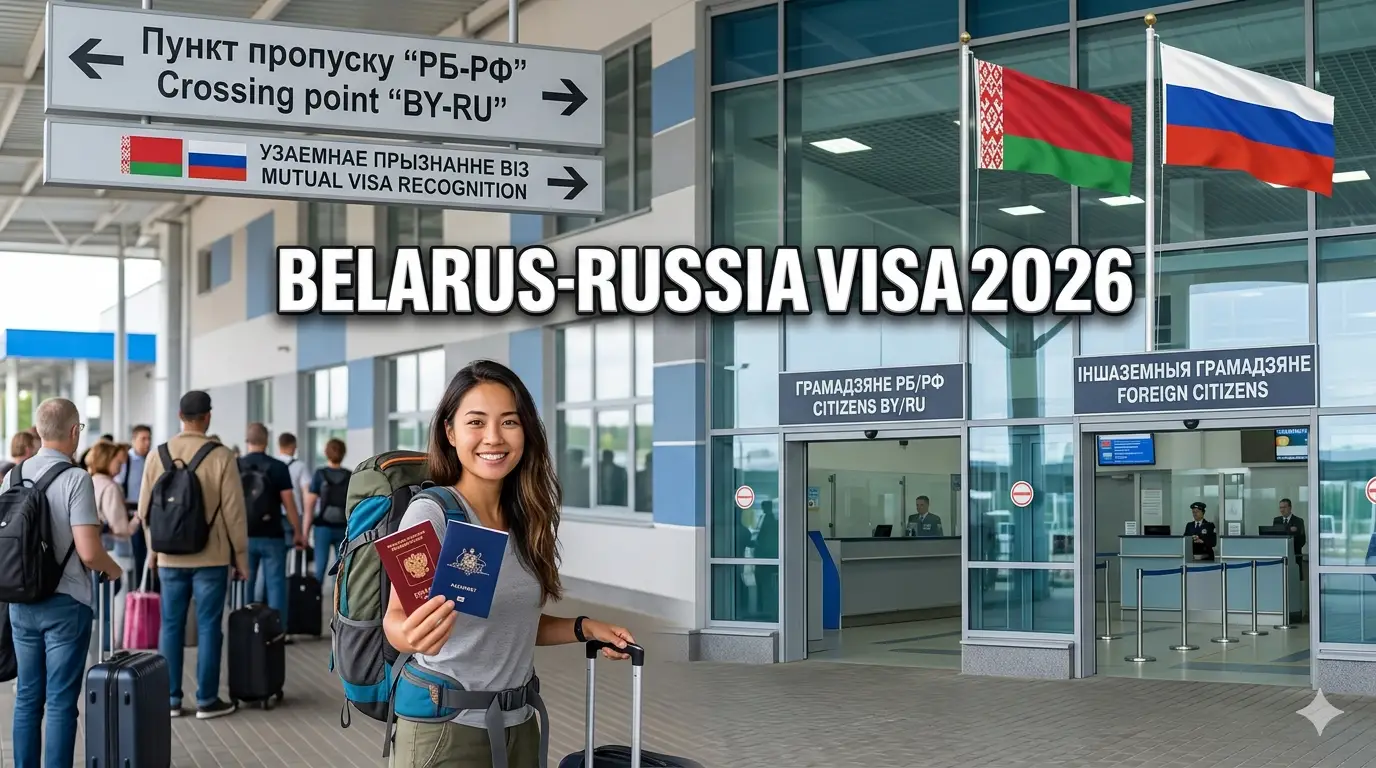
Introduction: Navigating the New Belarus-Russia Visa Landscape
The implementation of the 2026 Belarus-Russia Mutual Visa Agreement marks a significant shift in travel policies for international tourists exploring Eastern Europe. This bilateral arrangement, designed to facilitate movement between two neighboring nations with deep historical ties, promises to simplify border procedures for eligible travelers while raising important questions about entry requirements, permitted activities, and practical implications for trip planning.
For international tourists—particularly those from the United States, European Union, and other visa-required nations—understanding this agreement is essential for seamless travel across the Belarus-Russia border. Whether you're planning a cultural tour of Minsk and Moscow, a historical journey through World War II sites, or a broader Eastern European itinerary, the mutual visa framework affects your documentation, entry points, and overall travel strategy.
This comprehensive guide explains the Belarus-Russia Mutual Visa Agreement in practical terms: what the policy entails, which travelers benefit, how entry procedures work, potential limitations, and expert tips for maximizing your Eastern European adventure in 2026. By clarifying complex immigration rules and providing actionable travel advice, we help you navigate this evolving policy landscape with confidence.
Understanding the Mutual Visa Agreement: Core Provisions

What exactly does the Belarus-Russia Mutual Visa Agreement allow?
The 2026 Mutual Visa Agreement between Belarus and Russia establishes a framework for recognizing certain visa categories across both nations, reducing administrative barriers for international travelers moving between the two countries. While not a fully unified visa system like the Schengen Area, the agreement creates streamlined pathways for eligible visitors.
Key provisions of the agreement:
- Visa recognition: Certain types of visas issued by one country may be accepted for entry into the other, subject to specific conditions
- Eligible visa categories: Primarily tourist, business, and humanitarian visas; work and student visas typically require separate authorization
- Entry points: Applies to designated border crossings and international airports; land border procedures may differ from air travel
- Duration alignment: Permitted stay in the second country generally cannot exceed the validity of the original visa
- Registration requirements: Travelers must still comply with local registration rules in each country (e.g., Belarus's 5-day registration rule)
- 👉 Germany Digital Nomad Visa 2026: €2,539 Income & New Rules
- 👉 Atlas Festival 2026 Kyiv: Everything you need to know about the July 17-19 dates and lineup.
- 👉 The Best Time to Visit London from the US: Your 2026 Planning Guide
Important limitations:
- Not universal: The agreement does not apply to all nationalities or all visa types; eligibility depends on your citizenship and visa category
- Entry method matters: Some provisions apply only to travelers entering via specific border crossings or airports
- No automatic extension: Time spent in one country counts toward your total permitted stay; you cannot "reset" your visa clock by crossing the border
- Security screenings: Each country retains the right to deny entry based on its own security assessments
- 👉 Germany Digital Nomad Visa 2026: €2,539 Income & New Rules
- 👉 Atlas Festival 2026 Kyiv: Everything you need to know about the July 17-19 dates and lineup.
- 👉 The Best Time to Visit London from the US: Your 2026 Planning Guide
Who benefits most from this agreement?
- Multi-destination travelers: Tourists planning to visit both Minsk and Moscow on a single trip
- Business visitors: Professionals attending meetings or conferences in both countries
- Cultural tourists: Travelers exploring shared historical sites, museums, and heritage locations
- Transit passengers: Those using one country as a transit point to reach the other
- 👉 Germany Digital Nomad Visa 2026: €2,539 Income & New Rules
- 👉 Atlas Festival 2026 Kyiv: Everything you need to know about the July 17-19 dates and lineup.
- 👉 The Best Time to Visit London from the US: Your 2026 Planning Guide
Eligibility: Which Travelers Can Use the Mutual Visa Framework?
Not all international tourists qualify for the streamlined procedures under the Belarus-Russia Mutual Visa Agreement. Eligibility depends on nationality, visa type, entry method, and purpose of travel.
Nationalities typically eligible (subject to verification):
- Citizens of European Union member states with valid Schengen or national visas
- United States, Canadian, and United Kingdom passport holders with appropriate visas
- Nationals of select Asian countries (Japan, South Korea, Singapore) with pre-arranged visas
- Travelers from Latin American nations with established visa relationships with Belarus or Russia
- 👉 Germany Digital Nomad Visa 2026: €2,539 Income & New Rules
- 👉 Atlas Festival 2026 Kyiv: Everything you need to know about the July 17-19 dates and lineup.
- 👉 The Best Time to Visit London from the US: Your 2026 Planning Guide
Important: Eligibility lists change frequently. Always verify your specific status with official government sources before travel.
Visa types covered under the agreement:
- Tourist visas: Single-entry or multiple-entry tourist visas issued by either country may facilitate entry to the other
- Business visas: Valid business visas may permit short-term commercial activities in both nations
- Humanitarian visas: Cultural, scientific, or educational exchange visas often receive reciprocal recognition
- Transit visas: May allow brief stops in the second country en route to a third destination
- 👉 Germany Digital Nomad Visa 2026: €2,539 Income & New Rules
- 👉 Atlas Festival 2026 Kyiv: Everything you need to know about the July 17-19 dates and lineup.
- 👉 The Best Time to Visit London from the US: Your 2026 Planning Guide
Visa types typically NOT covered:
- Work visas requiring local employment authorization
- Student visas tied to specific educational institutions
- Private visit visas for extended family stays
- Visa-free entry programs (e.g., Belarus's 30-day waiver for Europeans) do not automatically grant access to Russia
- 👉 Germany Digital Nomad Visa 2026: €2,539 Income & New Rules
- 👉 Atlas Festival 2026 Kyiv: Everything you need to know about the July 17-19 dates and lineup.
- 👉 The Best Time to Visit London from the US: Your 2026 Planning Guide
Entry method considerations:
- Air travel: Mutual visa recognition is most straightforward when entering via international airports (Minsk MSQ, Moscow SVO/DME)
- Land borders: Crossing by train or car may involve additional documentation checks; verify procedures at specific border crossings
- Sea ports: Limited applicability; most mutual visa provisions focus on air and land entry
- 👉 Germany Digital Nomad Visa 2026: €2,539 Income & New Rules
- 👉 Atlas Festival 2026 Kyiv: Everything you need to know about the July 17-19 dates and lineup.
- 👉 The Best Time to Visit London from the US: Your 2026 Planning Guide
How the Agreement Works: Step-by-Step Entry Procedures
Understanding the practical mechanics of using the mutual visa framework helps avoid border complications.
Scenario 1: Entering Belarus first, then Russia
- Obtain Belarus visa: Secure a valid tourist or business visa from a Belarusian embassy or through visa-free entry if eligible
- Enter Belarus: Present passport, visa, proof of accommodation, onward travel, and insurance at Minsk Airport or designated land border
- Complete registration: If staying more than 5 business days in Belarus, register with local authorities (hotels typically handle this)
- Travel to Russia: At the Belarus-Russia border, present your Belarus visa, passport, and documentation showing purpose of Russian visit
- Russian entry assessment: Russian border officers evaluate your eligibility for entry under the mutual visa framework; approval is not automatic
- Enter Russia: If approved, receive Russian entry stamp; comply with Russian registration requirements if staying more than 7 business days
Scenario 2: Entering Russia first, then Belarus
- Obtain Russian visa: Secure valid visa from Russian embassy or consulate
- Enter Russia: Complete standard Russian entry procedures at airport or land border
- Register in Russia: Complete migration registration if required for your stay duration
- Travel to Belarus: At border crossing, present Russian visa and documentation for Belarus entry
- Belarus entry assessment: Belarusian officers determine eligibility under mutual visa provisions
- Enter Belarus: If approved, receive entry stamp; complete Belarus registration if staying beyond 5 business days
Documentation checklist for mutual visa travel:
- Valid passport (6+ months beyond intended departure from both countries)
- Original visa from first country of entry (Belarus or Russia)
- Proof of accommodation in both countries (hotel confirmations, invitation letters)
- Onward/return travel tickets showing exit from the region
- Travel insurance valid in both Belarus and Russia (minimum €10,000 coverage recommended)
- Proof of sufficient funds (approximately €30-50 per day of stay)
- Letter explaining purpose of travel if visiting both countries (especially for business or humanitarian visits)
- 👉 Germany Digital Nomad Visa 2026: €2,539 Income & New Rules
- 👉 Atlas Festival 2026 Kyiv: Everything you need to know about the July 17-19 dates and lineup.
- 👉 The Best Time to Visit London from the US: Your 2026 Planning Guide
Impact on Popular Travel Itineraries
How does the mutual visa agreement affect common Eastern European travel plans?
Classic Minsk-Moscow Cultural Tour
For travelers exploring the shared heritage of Belarus and Russia, the agreement simplifies logistics:
- Traditional approach: Required separate visa applications for each country, doubling paperwork and fees
- With mutual visa: One well-prepared visa application may facilitate entry to both nations, reducing administrative burden
- Practical benefit: More time planning experiences, less time managing documentation
- Sample itinerary: 3 days Minsk (National Library, Trinity Suburb, Mir Castle day trip) + 4 days Moscow (Red Square, Kremlin, Golden Ring excursion)
- 👉 Germany Digital Nomad Visa 2026: €2,539 Income & New Rules
- 👉 Atlas Festival 2026 Kyiv: Everything you need to know about the July 17-19 dates and lineup.
- 👉 The Best Time to Visit London from the US: Your 2026 Planning Guide
World War II Historical Route
Travelers following WWII history through Eastern Europe benefit from streamlined border procedures:
- Key sites: Brest Fortress (Belarus), Moscow's Victory Museum, St. Petersburg's Siege memorials
- Visa advantage: Mutual recognition reduces complexity of multi-country historical tours
- Planning tip: Coordinate with tour operators experienced in Belarus-Russia travel to maximize visa benefits
- 👉 Germany Digital Nomad Visa 2026: €2,539 Income & New Rules
- 👉 Atlas Festival 2026 Kyiv: Everything you need to know about the July 17-19 dates and lineup.
- 👉 The Best Time to Visit London from the US: Your 2026 Planning Guide
Transcontinental Rail Journey
For travelers using the Trans-Siberian Railway or regional train networks:
- Route example: Warsaw → Minsk → Moscow → St. Petersburg
- Border crossing: Train travel between Belarus and Russia involves passport checks; mutual visa framework may expedite processing
- Documentation: Keep all visas, tickets, and registration papers easily accessible during train journeys
- Contingency planning: Allow buffer time for border procedures; train schedules may not accommodate lengthy immigration delays
- 👉 Germany Digital Nomad Visa 2026: €2,539 Income & New Rules
- 👉 Atlas Festival 2026 Kyiv: Everything you need to know about the July 17-19 dates and lineup.
- 👉 The Best Time to Visit London from the US: Your 2026 Planning Guide
Practical Challenges and How to Overcome Them
While the mutual visa agreement offers benefits, travelers should anticipate and prepare for potential complications.
Challenge 1: Inconsistent border officer interpretation
- Issue: Individual border officers may apply mutual visa provisions differently based on training, workload, or discretion
- Solution: Carry printed copies of official policy documents, visa approval letters, and itinerary details; remain polite and patient during questioning
- Preparation: Research recent traveler experiences on forums like TripAdvisor or Lonely Planet for current border crossing insights
- 👉 Germany Digital Nomad Visa 2026: €2,539 Income & New Rules
- 👉 Atlas Festival 2026 Kyiv: Everything you need to know about the July 17-19 dates and lineup.
- 👉 The Best Time to Visit London from the US: Your 2026 Planning Guide
Challenge 2: Registration requirements in both countries
- Issue: Belarus requires registration after 5 business days; Russia after 7 business days; failing to comply can result in fines or entry bans
- Solution: Confirm registration procedures with each accommodation provider; keep registration certificates with your passport
- Documentation: Take photos of registration papers as digital backup; carry contact information for your country's embassy in both nations
- 👉 Germany Digital Nomad Visa 2026: €2,539 Income & New Rules
- 👉 Atlas Festival 2026 Kyiv: Everything you need to know about the July 17-19 dates and lineup.
- 👉 The Best Time to Visit London from the US: Your 2026 Planning Guide
Challenge 3: Limited English-language support at borders
- Issue: Border officials in Belarus and Russia may have limited English proficiency, complicating communication about visa status
- Solution: Prepare key phrases in Russian or Belarusian; use translation apps offline; carry a printed itinerary with dates and destinations clearly labeled
- Professional assistance: Consider hiring a local fixer or tour guide for complex multi-country itineraries
- 👉 Germany Digital Nomad Visa 2026: €2,539 Income & New Rules
- 👉 Atlas Festival 2026 Kyiv: Everything you need to know about the July 17-19 dates and lineup.
- 👉 The Best Time to Visit London from the US: Your 2026 Planning Guide
Challenge 4: Geopolitical sensitivities affecting travel
- Issue: Regional political developments can impact border policies, flight availability, or traveler perceptions
- Solution: Monitor travel advisories from your government; purchase flexible tickets and accommodations; maintain contingency plans
- Insurance: Ensure travel insurance covers trip interruption due to political events or border closures
- 👉 Germany Digital Nomad Visa 2026: €2,539 Income & New Rules
- 👉 Atlas Festival 2026 Kyiv: Everything you need to know about the July 17-19 dates and lineup.
- 👉 The Best Time to Visit London from the US: Your 2026 Planning Guide
Comparison: Mutual Visa vs. Traditional Separate Visas
Understanding the advantages and limitations helps travelers choose the optimal approach.
Traditional separate visas approach:
- Process: Apply for Belarus visa and Russian visa independently through respective embassies
- Timeline: Typically 10-20 business days per visa; total processing time 3-6 weeks
- Cost: Two separate visa fees plus service charges; approximately $150-300 USD total for tourist visas
- Flexibility: Clear, predictable entry rights for each country; less ambiguity at borders
- Best for: Travelers with complex itineraries, longer stays, or uncertain travel dates
- 👉 Germany Digital Nomad Visa 2026: €2,539 Income & New Rules
- 👉 Atlas Festival 2026 Kyiv: Everything you need to know about the July 17-19 dates and lineup.
- 👉 The Best Time to Visit London from the US: Your 2026 Planning Guide
Mutual visa framework approach:
- Process: Obtain visa from one country; seek entry to second country under mutual recognition provisions
- Timeline: Single visa application; potential time savings of 1-3 weeks
- Cost: One visa fee; potential savings of $50-150 USD
- Flexibility: Streamlined for simple two-country trips; less predictable at borders due to officer discretion
- Best for: Confident travelers with straightforward itineraries visiting both countries consecutively
- 👉 Germany Digital Nomad Visa 2026: €2,539 Income & New Rules
- 👉 Atlas Festival 2026 Kyiv: Everything you need to know about the July 17-19 dates and lineup.
- 👉 The Best Time to Visit London from the US: Your 2026 Planning Guide
Decision framework:
- Choose separate visas if: You need maximum certainty, plan extended stays, or have complex travel purposes
- Choose mutual visa if: You prioritize convenience, have a simple two-country itinerary, and accept some border uncertainty
- Hybrid approach: Obtain visas for both countries but use mutual provisions for flexibility; highest cost but maximum security
- 👉 Germany Digital Nomad Visa 2026: €2,539 Income & New Rules
- 👉 Atlas Festival 2026 Kyiv: Everything you need to know about the July 17-19 dates and lineup.
- 👉 The Best Time to Visit London from the US: Your 2026 Planning Guide
Special Considerations for US and EU Travelers
American and European tourists face unique considerations under the mutual visa framework.
For United States citizens:
- Visa requirements: US citizens need visas for both Belarus and Russia; no visa-free entry options currently apply
- Application process: Belarus visas can be obtained through the Belarusian Embassy in Washington, DC; Russian visas through Russian consulates or authorized visa centers
- Political context: US-Russia and US-Belarus diplomatic relations may affect visa processing times or entry assessments; monitor State Department travel advisories
- Documentation: US travelers should carry proof of ties to the United States (employment letter, property ownership, return flight) to demonstrate intent to depart
- 👉 Germany Digital Nomad Visa 2026: €2,539 Income & New Rules
- 👉 Atlas Festival 2026 Kyiv: Everything you need to know about the July 17-19 dates and lineup.
- 👉 The Best Time to Visit London from the US: Your 2026 Planning Guide
For European Union citizens:
- Visa-free opportunities: Some EU nationals qualify for Belarus's 30-day visa-free entry via Minsk Airport; this does NOT automatically grant access to Russia
- Schengen visa considerations: A valid Schengen visa does not substitute for Belarus or Russia visas under the mutual agreement
- Border crossing nuances: EU travelers entering Belarus visa-free who then seek entry to Russia must still obtain a Russian visa; mutual provisions apply only to pre-arranged visas
- Practical tip: If using Belarus visa-free entry, plan to exit Belarus to a non-Russia destination (e.g., Poland, Lithuania) unless you have a separate Russian visa
- 👉 Germany Digital Nomad Visa 2026: €2,539 Income & New Rules
- 👉 Atlas Festival 2026 Kyiv: Everything you need to know about the July 17-19 dates and lineup.
- 👉 The Best Time to Visit London from the US: Your 2026 Planning Guide
For travelers from other regions:
- Asian nationals: Citizens of Japan, South Korea, and Singapore often receive favorable visa treatment; verify mutual visa eligibility with embassies
- Latin American travelers: Some nations have visa facilitation agreements with Belarus or Russia; check bilateral arrangements
- Middle Eastern and African travelers: Visa requirements vary widely; consult official sources for nationality-specific guidance
- 👉 Germany Digital Nomad Visa 2026: €2,539 Income & New Rules
- 👉 Atlas Festival 2026 Kyiv: Everything you need to know about the July 17-19 dates and lineup.
- 👉 The Best Time to Visit London from the US: Your 2026 Planning Guide
Planning Your Trip: Expert Tips for Success
Maximize your Eastern European adventure with these practical strategies.
Pre-trip preparation:
- Verify current policies: Visa rules change; check official government websites 4-6 weeks before departure
- Apply early: Submit visa applications at least 6-8 weeks before travel to accommodate processing delays
- Document organization: Create a travel folder with printed copies of visas, insurance, itineraries, and emergency contacts
- Digital backups: Store scanned documents in secure cloud storage accessible offline
- Embassy registration: Register with your country's embassy in both Belarus and Russia for emergency updates
- 👉 Germany Digital Nomad Visa 2026: €2,539 Income & New Rules
- 👉 Atlas Festival 2026 Kyiv: Everything you need to know about the July 17-19 dates and lineup.
- 👉 The Best Time to Visit London from the US: Your 2026 Planning Guide
Border crossing strategies:
- Arrive early: Allow 2-3 hours for international border procedures, especially at land crossings
- Have documents ready: Keep passport, visas, and supporting papers in an easily accessible travel wallet
- Stay calm and polite: Border officers respond better to cooperative travelers; avoid arguing about policy interpretations
- Ask for clarification: If uncertain about procedures, politely request guidance from border staff
- Keep receipts: Save all border stamps, registration certificates, and entry documents for exit procedures
- 👉 Germany Digital Nomad Visa 2026: €2,539 Income & New Rules
- 👉 Atlas Festival 2026 Kyiv: Everything you need to know about the July 17-19 dates and lineup.
- 👉 The Best Time to Visit London from the US: Your 2026 Planning Guide
Accommodation and registration:
- Hotel selection: Choose accommodations experienced with international guests; confirm they handle registration for foreign visitors
- Private rentals: If using Airbnb or similar, confirm host understands registration requirements and is willing to assist
- Registration timeline: Complete registration within required timeframes (5 days Belarus, 7 days Russia) to avoid penalties
- Keep certificates: Carry registration documents throughout your stay; you may be asked to present them
- 👉 Germany Digital Nomad Visa 2026: €2,539 Income & New Rules
- 👉 Atlas Festival 2026 Kyiv: Everything you need to know about the July 17-19 dates and lineup.
- 👉 The Best Time to Visit London from the US: Your 2026 Planning Guide
Transportation planning:
- Flights: Direct flights between Minsk and Moscow simplify travel; book flexible tickets in case of schedule changes
- Trains: Overnight trains offer efficient city-to-city travel; reserve compartments in advance for comfort
- Car rental: Driving between countries requires international permits, insurance validation, and border crossing documentation
- Local transit: Download offline maps and transit apps for Minsk and Moscow; cash is still preferred for many local services
- 👉 Germany Digital Nomad Visa 2026: €2,539 Income & New Rules
- 👉 Atlas Festival 2026 Kyiv: Everything you need to know about the July 17-19 dates and lineup.
- 👉 The Best Time to Visit London from the US: Your 2026 Planning Guide
Future Outlook: What to Expect Beyond 2026
Understanding potential policy evolution helps travelers plan long-term.
Potential developments:
- Expanded eligibility: The mutual visa framework may extend to additional nationalities or visa categories based on implementation success
- Digital integration: Electronic visa systems and biometric verification could streamline border procedures further
- Regional cooperation: Broader Eastern European visa harmonization efforts could impact Belarus-Russia policies
- Geopolitical factors: International relations developments may accelerate or constrain visa policy evolution
- 👉 Germany Digital Nomad Visa 2026: €2,539 Income & New Rules
- 👉 Atlas Festival 2026 Kyiv: Everything you need to know about the July 17-19 dates and lineup.
- 👉 The Best Time to Visit London from the US: Your 2026 Planning Guide
Traveler recommendations:
- Stay informed: Subscribe to official embassy newsletters and travel advisory updates for policy changes
- Build flexibility: Plan itineraries with buffer days and alternative routing options
- Document experiences: Share border crossing experiences on travel forums to help fellow travelers navigate evolving policies
- Advocate responsibly: Engage with travel industry groups to promote sensible visa policies that balance security and accessibility
- 👉 Germany Digital Nomad Visa 2026: €2,539 Income & New Rules
- 👉 Atlas Festival 2026 Kyiv: Everything you need to know about the July 17-19 dates and lineup.
- 👉 The Best Time to Visit London from the US: Your 2026 Planning Guide
Conclusion: Navigating Opportunity with Preparation
The 2026 Belarus-Russia Mutual Visa Agreement represents a meaningful step toward simplifying travel between two culturally rich Eastern European nations. For international tourists, the framework offers potential time savings, reduced administrative burden, and greater flexibility for multi-destination itineraries.
However, the agreement is not a universal solution. Success depends on careful preparation, accurate documentation, realistic expectations, and adaptability to on-the-ground realities. Travelers who invest time in understanding the policy's nuances, verifying their eligibility, and planning contingencies will be best positioned to benefit from streamlined border procedures.
Whether you're drawn to Minsk's Stalinist architecture, Moscow's imperial grandeur, the shared history of the Eastern Front, or simply the adventure of exploring less-visited European destinations, the Belarus-Russia corridor offers compelling experiences. By approaching visa requirements with diligence and respect for local regulations, you can focus on what matters most: discovering the culture, history, and hospitality of two fascinating nations.
Before your journey, verify current policies with official sources, consult with experienced travel advisors, and prepare thoroughly. With the right preparation, the Belarus-Russia Mutual Visa Agreement can transform a potentially complex border crossing into a seamless transition between two remarkable destinations. Your Eastern European adventure awaits—plan wisely, travel confidently, and embrace the opportunity to explore beyond the familiar.
0 Comments