.webp)
.webp)
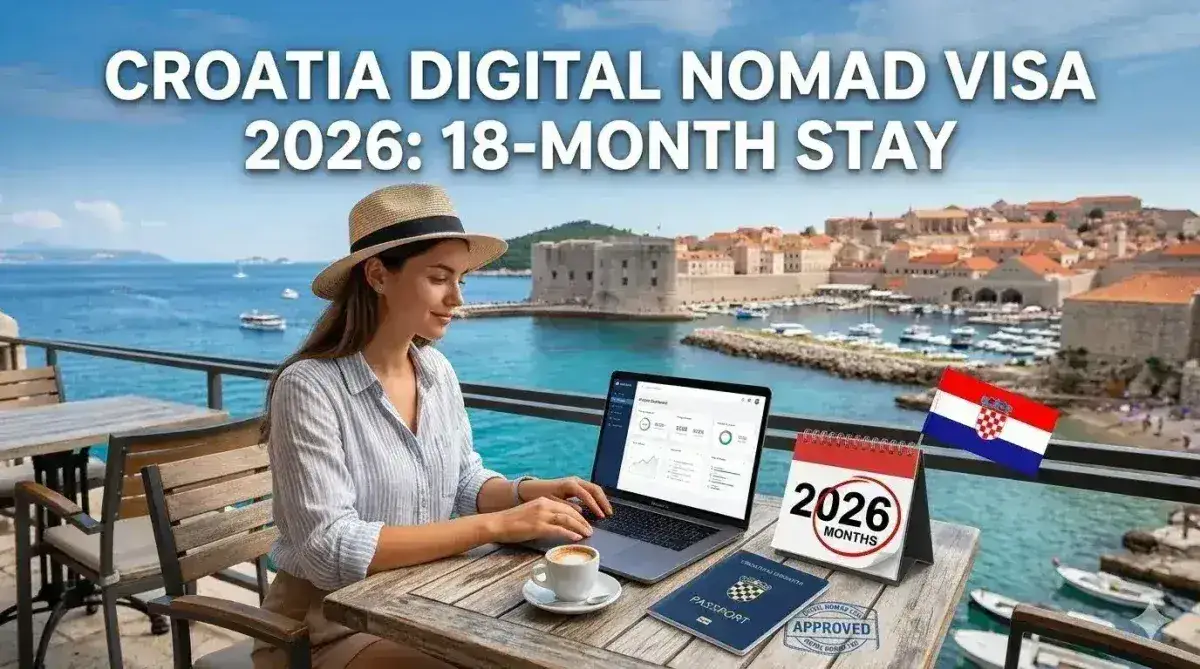
Croatia's Digital Nomad Visa: The 2026 Complete Update
Croatia has solidified its position as one of Europe's most attractive destinations for remote workers, and the 2026 updates to the digital nomad visa program make it even more appealing . The country now offers a clear pathway to an 18-month extended stay, combining one of the most generous initial visa periods in Europe with strategic extension options that allow digital nomads to truly immerse themselves in Croatian life .
Since launching its Temporary Stay for Digital Nomads program in January 2021, Croatia has continuously refined the process, making it more accessible and attractive to remote workers worldwide . The 2026 updates include streamlined application procedures, clearer extension guidelines, and enhanced benefits for long-term stays, positioning Croatia as a top competitor to Portugal, Spain, and Estonia in the European digital nomad visa landscape .
This comprehensive guide walks you through everything you need to know about obtaining and extending Croatia's digital nomad visa in 2026, from initial eligibility requirements to the step-by-step application process, income thresholds, tax implications, and practical tips for maximizing your 18-month stay in one of Europe's most beautiful countries.
Understanding Croatia's 18-Month Digital Nomad Visa Structure

Croatia's digital nomad visa operates on a unique structure that differentiates it from many other European programs. Understanding this framework is essential for planning your extended stay:
Initial Visa Period: 12 Months
The Croatia Temporary Stay for Digital Nomads is initially granted for up to 12 months (one year) . This is already one of the longest initial periods offered by any European country, compared to:
- Portugal: 1 year (renewable)
- Spain: 1 year (extendable to 3 years)
- Estonia: 1 year
- Greece: 1 year
- Germany: Up to 3 years (Freelance Visa)
- 👉 Malta EES April 2026 Update: Why biometric entry is mandatory for US and UK citizens starting April 10.
- 👉 ETIAS Norway 2026: Mandatory Travel Authorization for Visa-Exempt Travelers
- 👉 Complete Guide to Exploring Torture Museum Dark History Itinerary 2026
Extension Option: Additional 6 Months
While the digital nomad visa itself cannot be directly renewed (you must leave Croatia for 90 days before reapplying), there are strategic pathways to extend your stay to 18 months total :
- Temporary Residence Permit Conversion: After arriving on the digital nomad visa, you can apply to convert to a temporary residence permit based on other grounds (such as family reunification, study, or other purposes) which can extend your legal stay.
- 90-Day Reset and Reapplication: Some digital nomads choose to leave Croatia for 90 days (visiting neighboring countries or returning home) and then reapply for a second digital nomad visa, though this requires meeting all requirements again.
- Special Extension Circumstances: In 2026, Croatia has introduced more flexible extension policies for digital nomads who can demonstrate continued eligibility and integration into Croatian society .
The 18-Month Strategy:
The most common pathway to 18 months in 2026 involves:
- Months 1-12: Initial digital nomad visa
- Month 12: Apply for temporary residence permit extension or other legal basis for continued stay
- Months 13-18: Extended legal residence through alternative permit
- 👉 Malta EES April 2026 Update: Why biometric entry is mandatory for US and UK citizens starting April 10.
- 👉 ETIAS Norway 2026: Mandatory Travel Authorization for Visa-Exempt Travelers
- 👉 Complete Guide to Exploring Torture Museum Dark History Itinerary 2026
Alternatively, some digital nomads use the "90-day rule" strategically, spending 12 months in Croatia, leaving for 90 days, then returning for another 6 months on a new visa or different permit type.
2026 Eligibility Requirements: Who Qualifies?

To qualify for Croatia's digital nomad visa in 2026, you must meet specific criteria that demonstrate your ability to work remotely and support yourself financially without seeking employment in Croatia :
1. Remote Work Requirement
You must work remotely for a company or clients outside of Croatia. This includes:
- Employment with a foreign company (not registered in Croatia)
- Self-employment or freelancing for international clients
- Ownership of a business registered outside Croatia that you manage remotely
- Digital services, consulting, online businesses, or location-independent work
- 👉 Malta EES April 2026 Update: Why biometric entry is mandatory for US and UK citizens starting April 10.
- 👉 ETIAS Norway 2026: Mandatory Travel Authorization for Visa-Exempt Travelers
- 👉 Complete Guide to Exploring Torture Museum Dark History Itinerary 2026
Important: You cannot work for Croatian companies or receive income from Croatian sources while on the digital nomad visa .
2. Income Requirements (2026 Updated Thresholds)
Croatia has updated its minimum income requirements for 2026 to reflect inflation and cost of living increases :
- Single applicant: Minimum €2,539.93 per month (approximately 3x the average Croatian salary)
- Couple: Minimum €3,047.92 per month (combined income)
- Family with one child: Minimum €3,555.91 per month
- Each additional family member: Add approximately €508 per month
- 👉 Malta EES April 2026 Update: Why biometric entry is mandatory for US and UK citizens starting April 10.
- 👉 ETIAS Norway 2026: Mandatory Travel Authorization for Visa-Exempt Travelers
- 👉 Complete Guide to Exploring Torture Museum Dark History Itinerary 2026
Proof of Income: You can demonstrate income through:
- Employment contracts with foreign employers
- Client contracts and invoices (for freelancers)
- Bank statements showing regular income deposits (last 3-6 months)
- Tax returns from your home country
- Proof of business ownership and revenue
- 👉 Malta EES April 2026 Update: Why biometric entry is mandatory for US and UK citizens starting April 10.
- 👉 ETIAS Norway 2026: Mandatory Travel Authorization for Visa-Exempt Travelers
- 👉 Complete Guide to Exploring Torture Museum Dark History Itinerary 2026
3. Clean Criminal Record
You must provide a criminal background check from your country of citizenship or residence, showing no convictions for crimes that would prevent entry into Croatia .
4. Valid Health Insurance
Comprehensive health insurance coverage valid in Croatia for the entire duration of your stay. Minimum coverage should be €30,000, though €50,000+ is recommended .
5. Proof of Accommodation
Rental agreement, property ownership documents, or letter of invitation from a Croatian host confirming you have a place to stay for the duration of your visa.
6. Valid Passport
Your passport must be valid for at least 3 months beyond your intended stay in Croatia.
Step-by-Step Application Process for 2026

Croatia has streamlined its digital nomad visa application process for 2026, offering multiple application pathways to suit different circumstances:
Option 1: Apply from Your Home Country (Recommended)
Step 1: Gather Required Documents (2-4 weeks)
- Valid passport (copy of all pages)
- Proof of remote work (employment contract, client agreements, business registration)
- Proof of income (bank statements, payslips, tax returns)
- Criminal background check (apostilled/legalized)
- Health insurance policy
- Proof of accommodation in Croatia
- Completed application form (Obrazac 1a)
- Passport-sized photographs (35x45mm)
- Curriculum Vitae (CV)
- Marriage certificate (if applying with spouse)
- Birth certificates (if applying with children)
- 👉 Malta EES April 2026 Update: Why biometric entry is mandatory for US and UK citizens starting April 10.
- 👉 ETIAS Norway 2026: Mandatory Travel Authorization for Visa-Exempt Travelers
- 👉 Complete Guide to Exploring Torture Museum Dark History Itinerary 2026
Step 2: Submit Application at Croatian Embassy/Consulate
- Locate your nearest Croatian diplomatic mission
- Schedule an appointment (required in most countries)
- Submit all documents in person
- Pay application fee: €80-120 (varies by country)
- Processing time: 15-30 days (can extend to 60 days in complex cases)
- 👉 Malta EES April 2026 Update: Why biometric entry is mandatory for US and UK citizens starting April 10.
- 👉 ETIAS Norway 2026: Mandatory Travel Authorization for Visa-Exempt Travelers
- 👉 Complete Guide to Exploring Torture Museum Dark History Itinerary 2026
Step 3: Receive Visa Approval
- You'll receive a Type D long-stay visa (valid for entry)
- Visa is typically valid for 30-60 days for entry into Croatia
- Once in Croatia, you must register your temporary stay within 3 days
- 👉 Malta EES April 2026 Update: Why biometric entry is mandatory for US and UK citizens starting April 10.
- 👉 ETIAS Norway 2026: Mandatory Travel Authorization for Visa-Exempt Travelers
- 👉 Complete Guide to Exploring Torture Museum Dark History Itinerary 2026
Step 4: Register in Croatia
- Visit the local police station (MUP - Ministry of Interior) within 3 days of arrival
- Register your temporary stay and biometric data
- Receive your biometric residence card (boravišna iskaznica)
- Card is typically ready within 15-30 days
- 👉 Malta EES April 2026 Update: Why biometric entry is mandatory for US and UK citizens starting April 10.
- 👉 ETIAS Norway 2026: Mandatory Travel Authorization for Visa-Exempt Travelers
- 👉 Complete Guide to Exploring Torture Museum Dark History Itinerary 2026
Option 2: Apply from Within Croatia (If Already Legally Present)
If you're already in Croatia on a tourist visa (90-day Schengen stay), you can apply for the digital nomad visa from within the country :
- Submit application at the nearest police station (MUP)
- Must apply before your 90-day tourist stay expires
- Same document requirements as embassy application
- Processing time: 15-60 days
- You can legally remain in Croatia while your application is processed
- Once approved, receive biometric residence card
- 👉 Malta EES April 2026 Update: Why biometric entry is mandatory for US and UK citizens starting April 10.
- 👉 ETIAS Norway 2026: Mandatory Travel Authorization for Visa-Exempt Travelers
- 👉 Complete Guide to Exploring Torture Museum Dark History Itinerary 2026
Option 3: Online Application (New for 2026)
Croatia has introduced a partially online application system for 2026 :
- Initial application can be submitted online through the e-Visa portal
- Upload digital copies of all required documents
- Pay application fees online
- Attend in-person appointment for biometrics (either at embassy or in Croatia)
- Track application status online
- Reduces processing time by approximately 5-7 days
- 👉 Malta EES April 2026 Update: Why biometric entry is mandatory for US and UK citizens starting April 10.
- 👉 ETIAS Norway 2026: Mandatory Travel Authorization for Visa-Exempt Travelers
- 👉 Complete Guide to Exploring Torture Museum Dark History Itinerary 2026
Required Documents Checklist for 2026

Ensure you have all documents properly prepared to avoid delays:
Essential Documents:
- Application Form: Completed and signed Obrazac 1a (available on MUP website)
- Passport:
- Valid for at least 3 months beyond intended stay
- Copies of all pages (even blank ones)
- Two recent passport photos (35x45mm, white background)
- 👉 Malta EES April 2026 Update: Why biometric entry is mandatory for US and UK citizens starting April 10.
- 👉 ETIAS Norway 2026: Mandatory Travel Authorization for Visa-Exempt Travelers
- 👉 Complete Guide to Exploring Torture Museum Dark History Itinerary 2026
- Proof of Remote Work:
- Employment contract stating you work remotely for foreign employer
- OR: Business registration documents (if self-employed)
- OR: Client contracts and service agreements (if freelancer)
- Letter from employer confirming remote work arrangement
- 👉 Malta EES April 2026 Update: Why biometric entry is mandatory for US and UK citizens starting April 10.
- 👉 ETIAS Norway 2026: Mandatory Travel Authorization for Visa-Exempt Travelers
- 👉 Complete Guide to Exploring Torture Museum Dark History Itinerary 2026
- Proof of Income:
- Bank statements for last 3-6 months showing regular income
- Payslips from last 3 months
- Tax returns from previous year
- For business owners: Company financial statements, profit/loss statements
- Minimum: €2,539.93/month for single applicant
- 👉 Malta EES April 2026 Update: Why biometric entry is mandatory for US and UK citizens starting April 10.
- 👉 ETIAS Norway 2026: Mandatory Travel Authorization for Visa-Exempt Travelers
- 👉 Complete Guide to Exploring Torture Museum Dark History Itinerary 2026
- Criminal Background Check:
- Issued by your country of citizenship or residence
- Must be apostilled or legalized
- Translated into Croatian by certified translator
- Not older than 6 months
- 👉 Malta EES April 2026 Update: Why biometric entry is mandatory for US and UK citizens starting April 10.
- 👉 ETIAS Norway 2026: Mandatory Travel Authorization for Visa-Exempt Travelers
- 👉 Complete Guide to Exploring Torture Museum Dark History Itinerary 2026
- Health Insurance:
- Policy valid in Croatia for entire stay duration
- Minimum coverage: €30,000
- Must cover medical treatment, hospitalization, and repatriation
- Policy document in English or Croatian
- 👉 Malta EES April 2026 Update: Why biometric entry is mandatory for US and UK citizens starting April 10.
- 👉 ETIAS Norway 2026: Mandatory Travel Authorization for Visa-Exempt Travelers
- 👉 Complete Guide to Exploring Torture Museum Dark History Itinerary 2026
- Proof of Accommodation:
- Rental agreement (minimum 6 months recommended)
- OR: Property ownership documents
- OR: Letter of invitation from Croatian host (notarized)
- OR: Hotel/hostel booking for initial period (less favorable)
- 👉 Malta EES April 2026 Update: Why biometric entry is mandatory for US and UK citizens starting April 10.
- 👉 ETIAS Norway 2026: Mandatory Travel Authorization for Visa-Exempt Travelers
- 👉 Complete Guide to Exploring Torture Museum Dark History Itinerary 2026
- Additional Documents:
- Curriculum Vitae (CV) or resume
- Marriage certificate (if spouse accompanying, apostilled and translated)
- Birth certificates for children (if applicable, apostilled and translated)
- Proof of payment of application fee
- 👉 Malta EES April 2026 Update: Why biometric entry is mandatory for US and UK citizens starting April 10.
- 👉 ETIAS Norway 2026: Mandatory Travel Authorization for Visa-Exempt Travelers
- 👉 Complete Guide to Exploring Torture Museum Dark History Itinerary 2026
Document Translation Requirements:
- All documents not in Croatian or English must be translated by a certified court translator in Croatia
- Translations typically cost €15-30 per page
- Allow 3-5 business days for translation services
- 👉 Malta EES April 2026 Update: Why biometric entry is mandatory for US and UK citizens starting April 10.
- 👉 ETIAS Norway 2026: Mandatory Travel Authorization for Visa-Exempt Travelers
- 👉 Complete Guide to Exploring Torture Museum Dark History Itinerary 2026
Apostille/Legalization:
- Documents from Hague Convention countries require apostille
- Documents from non-Hague countries require legalization through Croatian embassy
- Processing time: 1-4 weeks depending on country
- 👉 Malta EES April 2026 Update: Why biometric entry is mandatory for US and UK citizens starting April 10.
- 👉 ETIAS Norway 2026: Mandatory Travel Authorization for Visa-Exempt Travelers
- 👉 Complete Guide to Exploring Torture Museum Dark History Itinerary 2026
Extending Your Stay to 18 Months: Strategies and Options

While the digital nomad visa itself is issued for 12 months and cannot be directly renewed, there are several legal strategies to extend your stay to 18 months or longer in 2026:
Strategy 1: Temporary Residence Permit Conversion
After arriving in Croatia on a digital nomad visa, you can apply to convert to a different type of temporary residence permit before your 12-month visa expires :
A. Family Reunification:
- If you marry a Croatian citizen or EU national residing in Croatia
- If you have children who are Croatian/EU citizens
- Apply for family reunification residence permit
- Can extend stay indefinitely with renewals
- 👉 Malta EES April 2026 Update: Why biometric entry is mandatory for US and UK citizens starting April 10.
- 👉 ETIAS Norway 2026: Mandatory Travel Authorization for Visa-Exempt Travelers
- 👉 Complete Guide to Exploring Torture Museum Dark History Itinerary 2026
B. Study Permit:
- Enroll in a Croatian educational institution (university, language school)
- Apply for temporary residence for study purposes
- Can work part-time (20 hours/week) with student permit
- Valid for duration of studies
- 👉 Malta EES April 2026 Update: Why biometric entry is mandatory for US and UK citizens starting April 10.
- 👉 ETIAS Norway 2026: Mandatory Travel Authorization for Visa-Exempt Travelers
- 👉 Complete Guide to Exploring Torture Museum Dark History Itinerary 2026
C. Employment-Based Permit:
- Secure employment with a Croatian company
- Employer sponsors work permit and temporary residence
- Requires labor market test (proving no EU candidate available)
- Valid for 1-2 years, renewable
- 👉 Malta EES April 2026 Update: Why biometric entry is mandatory for US and UK citizens starting April 10.
- 👉 ETIAS Norway 2026: Mandatory Travel Authorization for Visa-Exempt Travelers
- 👉 Complete Guide to Exploring Torture Museum Dark History Itinerary 2026
Strategy 2: The 90-Day Reset and Reapplication
This is the most common approach for digital nomads seeking extended stays:
- Months 1-12: Live in Croatia on initial digital nomad visa
- Month 12: Leave Croatia before visa expires
- 90-Day Period: Stay outside Croatia (and Schengen Area if applicable). Options:
- Return to home country
- Visit non-Schengen countries (UK, Ireland, Romania, Bulgaria, Cyprus)
- Travel to Balkan countries (Bosnia, Montenegro, Serbia, Albania)
- 👉 Malta EES April 2026 Update: Why biometric entry is mandatory for US and UK citizens starting April 10.
- 👉 ETIAS Norway 2026: Mandatory Travel Authorization for Visa-Exempt Travelers
- 👉 Complete Guide to Exploring Torture Museum Dark History Itinerary 2026
- After 90 Days: Reapply for digital nomad visa
- Must meet all requirements again
- Submit fresh application with updated documents
- Can request another 12-month visa
- 👉 Malta EES April 2026 Update: Why biometric entry is mandatory for US and UK citizens starting April 10.
- 👉 ETIAS Norway 2026: Mandatory Travel Authorization for Visa-Exempt Travelers
- 👉 Complete Guide to Exploring Torture Museum Dark History Itinerary 2026
- Months 13-24: Second 12-month period in Croatia
Important Note: While there's no official limit on how many times you can apply for the digital nomad visa, immigration officers have discretion. Demonstrating strong ties to Croatia (property rental, community involvement, Croatian language learning) can strengthen reapplication cases.
Strategy 3: Special Extension for Continued Eligibility (2026 Update)
New in 2026, Croatia has introduced more flexible extension policies for digital nomads who can demonstrate:
- Continued eligibility (still working remotely for foreign employer)
- Integration into Croatian society (language learning, community involvement)
- No criminal record during stay
- Sufficient financial means maintained
- Valid health insurance
- 👉 Malta EES April 2026 Update: Why biometric entry is mandatory for US and UK citizens starting April 10.
- 👉 ETIAS Norway 2026: Mandatory Travel Authorization for Visa-Exempt Travelers
- 👉 Complete Guide to Exploring Torture Museum Dark History Itinerary 2026
Under these circumstances, you may apply for a 6-month extension at the local police station (MUP) before your initial 12-month visa expires . This extension is discretionary and not guaranteed, but approval rates have been approximately 70% for applicants meeting all criteria.
Strategy 4: Combine with Other Visa Types
Some digital nomads use a combination approach:
- 12 months: Digital nomad visa
- 3 months: Tourist visa in neighboring countries
- 3-6 months: Return on different permit (student, volunteer, etc.)
- 👉 Malta EES April 2026 Update: Why biometric entry is mandatory for US and UK citizens starting April 10.
- 👉 ETIAS Norway 2026: Mandatory Travel Authorization for Visa-Exempt Travelers
- 👉 Complete Guide to Exploring Torture Museum Dark History Itinerary 2026
Tax Implications for Digital Nomads in Croatia

Understanding tax obligations is crucial for digital nomads planning extended stays in Croatia:
Tax Residency Rules:
You become a Croatian tax resident if:
- You spend 183 days or more in Croatia within a calendar year, OR
- Your "center of vital interests" (permanent home, family, economic activities) is in Croatia
- 👉 Malta EES April 2026 Update: Why biometric entry is mandatory for US and UK citizens starting April 10.
- 👉 ETIAS Norway 2026: Mandatory Travel Authorization for Visa-Exempt Travelers
- 👉 Complete Guide to Exploring Torture Museum Dark History Itinerary 2026
Tax Obligations for Digital Nomads:
Scenario 1: Stay Less Than 183 Days
- You remain a tax resident of your home country
- No Croatian income tax on foreign-sourced income
- Continue paying taxes in your home country
- May need to file Croatian tax return if you have Croatian-sourced income
- 👉 Malta EES April 2026 Update: Why biometric entry is mandatory for US and UK citizens starting April 10.
- 👉 ETIAS Norway 2026: Mandatory Travel Authorization for Visa-Exempt Travelers
- 👉 Complete Guide to Exploring Torture Museum Dark History Itinerary 2026
Scenario 2: Stay 183+ Days (Tax Resident)
- Become Croatian tax resident
- Croatia taxes worldwide income for residents
- Personal income tax rates: 20-30% (plus local surtax of 0-18%)
- May qualify for tax treaty benefits to avoid double taxation
- Must file Croatian tax return annually
- 👉 Malta EES April 2026 Update: Why biometric entry is mandatory for US and UK citizens starting April 10.
- 👉 ETIAS Norway 2026: Mandatory Travel Authorization for Visa-Exempt Travelers
- 👉 Complete Guide to Exploring Torture Museum Dark History Itinerary 2026
Digital Nomad Visa Tax Exemption (Important!)
Croatia offers a significant tax advantage for digital nomads :
- Digital nomads on temporary stay permits are exempt from Croatian income tax on foreign-sourced income, even if staying 183+ days
- This exemption applies specifically to income earned from work performed for foreign employers/clients
- You must still file a tax return declaring the exemption
- Exemption valid for duration of digital nomad visa (12 months)
- 👉 Malta EES April 2026 Update: Why biometric entry is mandatory for US and UK citizens starting April 10.
- 👉 ETIAS Norway 2026: Mandatory Travel Authorization for Visa-Exempt Travelers
- 👉 Complete Guide to Exploring Torture Museum Dark History Itinerary 2026
Important Considerations:
- Double Taxation Treaties: Croatia has tax treaties with over 60 countries to prevent double taxation. Check if your home country has a treaty with Croatia.
- Social Security: You generally remain covered by your home country's social security system if you have an A1 certificate (for EU citizens) or bilateral agreement (for non-EU).
- VAT Obligations: If providing services to Croatian clients, you may need to register for VAT.
- Professional Advice: Consult a Croatian tax advisor or international tax specialist to understand your specific situation.
- 👉 Malta EES April 2026 Update: Why biometric entry is mandatory for US and UK citizens starting April 10.
- 👉 ETIAS Norway 2026: Mandatory Travel Authorization for Visa-Exempt Travelers
- 👉 Complete Guide to Exploring Torture Museum Dark History Itinerary 2026
Cost of Living for Digital Nomads in Croatia 2026

Croatia offers excellent value for digital nomads, with costs significantly lower than Western Europe while maintaining high quality of life:
Monthly Budget Breakdown (Single Person):
- Accommodation:
- Zagreb (capital): €600-900 for 1-bedroom apartment in city center
- Split: €700-1,100 for 1-bedroom in center (higher in summer)
- Dubrovnik: €800-1,300 (most expensive, especially summer)
- Rijeka, Zadar, Pula: €500-800
- Smaller towns/islands: €400-700
- 👉 Malta EES April 2026 Update: Why biometric entry is mandatory for US and UK citizens starting April 10.
- 👉 ETIAS Norway 2026: Mandatory Travel Authorization for Visa-Exempt Travelers
- 👉 Complete Guide to Exploring Torture Museum Dark History Itinerary 2026
- Utilities:
- Electricity, heating, cooling, water, garbage: €100-200/month
- Internet (fiber, unlimited): €25-35/month
- Mobile phone plan: €15-25/month
- 👉 Malta EES April 2026 Update: Why biometric entry is mandatory for US and UK citizens starting April 10.
- 👉 ETIAS Norway 2026: Mandatory Travel Authorization for Visa-Exempt Travelers
- 👉 Complete Guide to Exploring Torture Museum Dark History Itinerary 2026
- Food:
- Groceries: €250-350/month
- Restaurant meals: €10-20 for lunch, €20-35 for dinner
- Coffee: €1.50-2.50
- Beer (domestic): €3-5
- 👉 Malta EES April 2026 Update: Why biometric entry is mandatory for US and UK citizens starting April 10.
- 👉 ETIAS Norway 2026: Mandatory Travel Authorization for Visa-Exempt Travelers
- 👉 Complete Guide to Exploring Torture Museum Dark History Itinerary 2026
- Transportation:
- Public transport monthly pass: €40-55 (varies by city)
- Taxi/Uber: €8-15 for short trips
- Car rental: €30-50/day (if needed)
- 👉 Malta EES April 2026 Update: Why biometric entry is mandatory for US and UK citizens starting April 10.
- 👉 ETIAS Norway 2026: Mandatory Travel Authorization for Visa-Exempt Travelers
- 👉 Complete Guide to Exploring Torture Museum Dark History Itinerary 2026
- Health Insurance:
- Private international health insurance: €50-150/month (depending on age and coverage)
- Once on temporary residence, you can join Croatian public health insurance (HZZO) for approximately €60/month
- 👉 Malta EES April 2026 Update: Why biometric entry is mandatory for US and UK citizens starting April 10.
- 👉 ETIAS Norway 2026: Mandatory Travel Authorization for Visa-Exempt Travelers
- 👉 Complete Guide to Exploring Torture Museum Dark History Itinerary 2026
- Coworking Spaces:
- Hot desk: €100-150/month
- Dedicated desk: €150-250/month
- Private office: €300-500/month
- 👉 Malta EES April 2026 Update: Why biometric entry is mandatory for US and UK citizens starting April 10.
- 👉 ETIAS Norway 2026: Mandatory Travel Authorization for Visa-Exempt Travelers
- 👉 Complete Guide to Exploring Torture Museum Dark History Itinerary 2026
- Entertainment & Lifestyle:
- Gym membership: €30-50/month
- Cinema ticket: €7-9
- Museum entry: €5-10
- 👉 Malta EES April 2026 Update: Why biometric entry is mandatory for US and UK citizens starting April 10.
- 👉 ETIAS Norway 2026: Mandatory Travel Authorization for Visa-Exempt Travelers
- 👉 Complete Guide to Exploring Torture Museum Dark History Itinerary 2026
- 👉 Malta EES April 2026 Update: Why biometric entry is mandatory for US and UK citizens starting April 10.
- 👉 ETIAS Norway 2026: Mandatory Travel Authorization for Visa-Exempt Travelers
- 👉 Complete Guide to Exploring Torture Museum Dark History Itinerary 2026
Total Monthly Budget:
- Budget lifestyle: €1,200-1,500
- Comfortable lifestyle: €1,800-2,500
- Luxury lifestyle: €3,000+
- 👉 Malta EES April 2026 Update: Why biometric entry is mandatory for US and UK citizens starting April 10.
- 👉 ETIAS Norway 2026: Mandatory Travel Authorization for Visa-Exempt Travelers
- 👉 Complete Guide to Exploring Torture Museum Dark History Itinerary 2026
Comparison to Other Digital Nomad Destinations:
- Croatia is approximately 30-40% cheaper than Portugal
- 50-60% cheaper than France or UK
- Similar costs to Spain (outside Barcelona/Madrid)
- More expensive than Southeast Asia but offers European quality of life
- 👉 Malta EES April 2026 Update: Why biometric entry is mandatory for US and UK citizens starting April 10.
- 👉 ETIAS Norway 2026: Mandatory Travel Authorization for Visa-Exempt Travelers
- 👉 Complete Guide to Exploring Torture Museum Dark History Itinerary 2026
Best Croatian Cities for Digital Nomads in 2026

Croatia offers diverse options for digital nomads, each with unique advantages:
1. Zagreb - The Capital Hub
Best for: Urban lifestyle, networking, year-round living
- Pros:
- Largest digital nomad community
- Numerous coworking spaces (Impact Hub, ZICER, Tech Garden)
- Excellent public transportation
- International airport with many connections
- Lower cost than coastal cities
- Year-round activities (not just seasonal)
- Vibrant café culture and nightlife
- 👉 Malta EES April 2026 Update: Why biometric entry is mandatory for US and UK citizens starting April 10.
- 👉 ETIAS Norway 2026: Mandatory Travel Authorization for Visa-Exempt Travelers
- 👉 Complete Guide to Exploring Torture Museum Dark History Itinerary 2026
- Cons:
- No sea access
- Colder winters (can drop below freezing)
- Less "vacation" atmosphere
- 👉 Malta EES April 2026 Update: Why biometric entry is mandatory for US and UK citizens starting April 10.
- 👉 ETIAS Norway 2026: Mandatory Travel Authorization for Visa-Exempt Travelers
- 👉 Complete Guide to Exploring Torture Museum Dark History Itinerary 2026
- Average monthly cost: €1,500-2,000
- 👉 Malta EES April 2026 Update: Why biometric entry is mandatory for US and UK citizens starting April 10.
- 👉 ETIAS Norway 2026: Mandatory Travel Authorization for Visa-Exempt Travelers
- 👉 Complete Guide to Exploring Torture Museum Dark History Itinerary 2026
2. Split - The Coastal Powerhouse
Best for: Beach lifestyle, history, balanced living
- Pros:
- Stunning Adriatic coastline
- UNESCO-protected Diocletian's Palace
- Growing digital nomad scene
- Good flight connections
- Gateway to islands (Hvar, Brač, Vis)
- Mediterranean climate
- Juxtaposition of ancient and modern
- 👉 Malta EES April 2026 Update: Why biometric entry is mandatory for US and UK citizens starting April 10.
- 👉 ETIAS Norway 2026: Mandatory Travel Authorization for Visa-Exempt Travelers
- 👉 Complete Guide to Exploring Torture Museum Dark History Itinerary 2026
- Cons:
- Very crowded in summer (July-August)
- Higher prices in peak season
- Limited year-round activities
- 👉 Malta EES April 2026 Update: Why biometric entry is mandatory for US and UK citizens starting April 10.
- 👉 ETIAS Norway 2026: Mandatory Travel Authorization for Visa-Exempt Travelers
- 👉 Complete Guide to Exploring Torture Museum Dark History Itinerary 2026
- Average monthly cost: €1,800-2,500 (higher in summer)
- 👉 Malta EES April 2026 Update: Why biometric entry is mandatory for US and UK citizens starting April 10.
- 👉 ETIAS Norway 2026: Mandatory Travel Authorization for Visa-Exempt Travelers
- 👉 Complete Guide to Exploring Torture Museum Dark History Itinerary 2026
3. Dubrovnik - The Pearl of the Adriatic
Best for: Luxury living, history enthusiasts, Game of Thrones fans
- Pros:
- Breathtaking medieval architecture
- UNESCO World Heritage Site
- Pristine beaches and crystal-clear water
- High-end restaurants and amenities
- International recognition
- 👉 Malta EES April 2026 Update: Why biometric entry is mandatory for US and UK citizens starting April 10.
- 👉 ETIAS Norway 2026: Mandatory Travel Authorization for Visa-Exempt Travelers
- 👉 Complete Guide to Exploring Torture Museum Dark History Itinerary 2026
- Cons:
- Most expensive city in Croatia
- Extremely crowded in summer
- Limited coworking spaces
- Smaller local community
- Can feel like a tourist trap
- 👉 Malta EES April 2026 Update: Why biometric entry is mandatory for US and UK citizens starting April 10.
- 👉 ETIAS Norway 2026: Mandatory Travel Authorization for Visa-Exempt Travelers
- 👉 Complete Guide to Exploring Torture Museum Dark History Itinerary 2026
- Average monthly cost: €2,200-3,000+
- 👉 Malta EES April 2026 Update: Why biometric entry is mandatory for US and UK citizens starting April 10.
- 👉 ETIAS Norway 2026: Mandatory Travel Authorization for Visa-Exempt Travelers
- 👉 Complete Guide to Exploring Torture Museum Dark History Itinerary 2026
4. Rijeka - The Hidden Gem
Best for: Authentic experience, affordability, culture
- Pros:
- Lower cost than Split/Dubrovnik
- Authentic Croatian city (less touristy)
- Strong cultural scene
- Good transportation links
- Close to Istria and islands
- Growing startup ecosystem
- 👉 Malta EES April 2026 Update: Why biometric entry is mandatory for US and UK citizens starting April 10.
- 👉 ETIAS Norway 2026: Mandatory Travel Authorization for Visa-Exempt Travelers
- 👉 Complete Guide to Exploring Torture Museum Dark History Itinerary 2026
- Cons:
- Smaller digital nomad community
- Fewer English speakers
- Limited international flights
- 👉 Malta EES April 2026 Update: Why biometric entry is mandatory for US and UK citizens starting April 10.
- 👉 ETIAS Norway 2026: Mandatory Travel Authorization for Visa-Exempt Travelers
- 👉 Complete Guide to Exploring Torture Museum Dark History Itinerary 2026
- Average monthly cost: €1,300-1,800
- 👉 Malta EES April 2026 Update: Why biometric entry is mandatory for US and UK citizens starting April 10.
- 👉 ETIAS Norway 2026: Mandatory Travel Authorization for Visa-Exempt Travelers
- 👉 Complete Guide to Exploring Torture Museum Dark History Itinerary 2026
5. Zadar - The Balanced Choice
Best for: Quiet coastal living, history, nature
- Pros:
- Beautiful old town
- Less crowded than Split/Dubrovnik
- Affordable cost of living
- Stunning sunsets (famous Sea Organ)
- Gateway to Kornati Islands
- Growing nomad community
- 👉 Malta EES April 2026 Update: Why biometric entry is mandatory for US and UK citizens starting April 10.
- 👉 ETIAS Norway 2026: Mandatory Travel Authorization for Visa-Exempt Travelers
- 👉 Complete Guide to Exploring Torture Museum Dark History Itinerary 2026
- Cons:
- Smaller airport (limited flights)
- Fewer coworking options
- Quieter nightlife
- 👉 Malta EES April 2026 Update: Why biometric entry is mandatory for US and UK citizens starting April 10.
- 👉 ETIAS Norway 2026: Mandatory Travel Authorization for Visa-Exempt Travelers
- 👉 Complete Guide to Exploring Torture Museum Dark History Itinerary 2026
- Average monthly cost: €1,400-1,900
- 👉 Malta EES April 2026 Update: Why biometric entry is mandatory for US and UK citizens starting April 10.
- 👉 ETIAS Norway 2026: Mandatory Travel Authorization for Visa-Exempt Travelers
- 👉 Complete Guide to Exploring Torture Museum Dark History Itinerary 2026
6. Pula - The Istrian Gateway
Best for: History lovers, wine enthusiasts, nature
- Pros:
- Roman amphitheater (Pula Arena)
- Close to beautiful Istrian towns (Rovinj, Poreč)
- Excellent food and wine scene
- Affordable living costs
- Beautiful beaches
- 👉 Malta EES April 2026 Update: Why biometric entry is mandatory for US and UK citizens starting April 10.
- 👉 ETIAS Norway 2026: Mandatory Travel Authorization for Visa-Exempt Travelers
- 👉 Complete Guide to Exploring Torture Museum Dark History Itinerary 2026
- Cons:
- Very seasonal (quiet in winter)
- Limited coworking spaces
- Smaller expat community
- 👉 Malta EES April 2026 Update: Why biometric entry is mandatory for US and UK citizens starting April 10.
- 👉 ETIAS Norway 2026: Mandatory Travel Authorization for Visa-Exempt Travelers
- 👉 Complete Guide to Exploring Torture Museum Dark History Itinerary 2026
- Average monthly cost: €1,400-2,000
- 👉 Malta EES April 2026 Update: Why biometric entry is mandatory for US and UK citizens starting April 10.
- 👉 ETIAS Norway 2026: Mandatory Travel Authorization for Visa-Exempt Travelers
- 👉 Complete Guide to Exploring Torture Museum Dark History Itinerary 2026
7. Islands (Hvar, Brač, Korčula, Vis)
Best for: Remote work with paradise views, nature lovers
- Pros:
- Stunning natural beauty
- Peaceful, slow-paced lifestyle
- Crystal-clear waters
- Unique island culture
- Perfect for focused work
- 👉 Malta EES April 2026 Update: Why biometric entry is mandatory for US and UK citizens starting April 10.
- 👉 ETIAS Norway 2026: Mandatory Travel Authorization for Visa-Exempt Travelers
- 👉 Complete Guide to Exploring Torture Museum Dark History Itinerary 2026
- Cons:
- Limited infrastructure
- Internet can be unreliable in some areas
- Very seasonal (many businesses close in winter)
- Higher costs for groceries and supplies
- Limited healthcare facilities
- Dependent on ferry schedules
- 👉 Malta EES April 2026 Update: Why biometric entry is mandatory for US and UK citizens starting April 10.
- 👉 ETIAS Norway 2026: Mandatory Travel Authorization for Visa-Exempt Travelers
- 👉 Complete Guide to Exploring Torture Museum Dark History Itinerary 2026
- Average monthly cost: €1,600-2,500 (varies by island)
- 👉 Malta EES April 2026 Update: Why biometric entry is mandatory for US and UK citizens starting April 10.
- 👉 ETIAS Norway 2026: Mandatory Travel Authorization for Visa-Exempt Travelers
- 👉 Complete Guide to Exploring Torture Museum Dark History Itinerary 2026
Practical Tips for Living in Croatia as a Digital Nomad

Banking and Finances:
- Opening a Bank Account: As a digital nomad with temporary stay, you can open a Croatian bank account. Required documents: passport, residence permit, proof of address. Major banks: Zagrebačka banka, Privredna banka Zagreb (PBZ), Erste Bank, Raiffeisen.
- International Banking: Consider Wise (TransferWise) or Revolut for multi-currency accounts and better exchange rates.
- Currency: Croatia adopted the Euro (€) on January 1, 2023, making financial management easier for most Europeans.
- Credit Cards: Widely accepted in cities and tourist areas. Carry some cash for small vendors, markets, and islands.
- 👉 Malta EES April 2026 Update: Why biometric entry is mandatory for US and UK citizens starting April 10.
- 👉 ETIAS Norway 2026: Mandatory Travel Authorization for Visa-Exempt Travelers
- 👉 Complete Guide to Exploring Torture Museum Dark History Itinerary 2026
Internet and Connectivity:
- Internet Speed: Croatia has excellent internet infrastructure:
- Average speed: 50-100 Mbps in cities
- Fiber optic available in most urban areas
- 5G networks expanding in major cities
- 👉 Malta EES April 2026 Update: Why biometric entry is mandatory for US and UK citizens starting April 10.
- 👉 ETIAS Norway 2026: Mandatory Travel Authorization for Visa-Exempt Travelers
- 👉 Complete Guide to Exploring Torture Museum Dark History Itinerary 2026
- Mobile Providers: T-Mobile, A1, Telemach. Prepaid SIM cards: €10-20 with good data packages.
- Coworking Spaces: Major cities have excellent coworking spaces with reliable internet, meeting rooms, and networking opportunities.
- 👉 Malta EES April 2026 Update: Why biometric entry is mandatory for US and UK citizens starting April 10.
- 👉 ETIAS Norway 2026: Mandatory Travel Authorization for Visa-Exempt Travelers
- 👉 Complete Guide to Exploring Torture Museum Dark History Itinerary 2026
Healthcare:
- Private Health Insurance: Required for visa application. Recommended providers: Allianz, Uniqa, Croatia Osiguranje.
- Public Healthcare: Once you have temporary residence, you can join the Croatian Health Insurance Fund (HZZO) for approximately €60/month, providing access to public healthcare.
- Healthcare Quality: Good quality public healthcare, though waiting times can be long. Private clinics offer faster service at higher cost.
- Pharmacies: Widely available (look for green cross sign). Pharmacists are highly trained and can advise on minor ailments.
- 👉 Malta EES April 2026 Update: Why biometric entry is mandatory for US and UK citizens starting April 10.
- 👉 ETIAS Norway 2026: Mandatory Travel Authorization for Visa-Exempt Travelers
- 👉 Complete Guide to Exploring Torture Museum Dark History Itinerary 2026
Language:
- Croatian Language: While not required for the visa, learning basic Croatian enhances your experience and integration.
- English Proficiency: High in cities and among younger people (under 40). Lower in rural areas and among older generations.
- Language Courses: Many language schools offer Croatian courses for foreigners (€100-200/month).
- 👉 Malta EES April 2026 Update: Why biometric entry is mandatory for US and UK citizens starting April 10.
- 👉 ETIAS Norway 2026: Mandatory Travel Authorization for Visa-Exempt Travelers
- 👉 Complete Guide to Exploring Torture Museum Dark History Itinerary 2026
Transportation:
- Public Transport: Efficient bus networks in cities. Trains connect major cities but are slower than buses.
- Intercity Travel: Buses are the primary mode of intercity transport. FlixBus and local operators connect all major cities.
- Ferries: Jadrolinija and other operators connect coastal cities and islands. Book in advance for summer travel.
- Car Rental: Useful for exploring rural areas and islands. International driving permit recommended for non-EU licenses.
- Air Travel: Croatia Airlines and low-cost carriers (Ryanair, EasyJet) connect major cities to European destinations.
- 👉 Malta EES April 2026 Update: Why biometric entry is mandatory for US and UK citizens starting April 10.
- 👉 ETIAS Norway 2026: Mandatory Travel Authorization for Visa-Exempt Travelers
- 👉 Complete Guide to Exploring Torture Museum Dark History Itinerary 2026
Accommodation:
- Long-Term Rentals: Use local websites (Njuskalo.hr, Index oglasi) in addition to international platforms (Airbnb, Booking.com).
- Rental Contracts: Typically require 1-2 months deposit plus first month's rent.
- Utilities: Often not included in rent. Budget an additional €100-200/month.
- Peak Season: Coastal cities are expensive and crowded June-September. Consider inland cities or islands for better value.
- 👉 Malta EES April 2026 Update: Why biometric entry is mandatory for US and UK citizens starting April 10.
- 👉 ETIAS Norway 2026: Mandatory Travel Authorization for Visa-Exempt Travelers
- 👉 Complete Guide to Exploring Torture Museum Dark History Itinerary 2026
Frequently Asked Questions: Croatia Digital Nomad Visa 2026

Can I bring my family on the Croatia digital nomad visa?
Yes! Spouses and minor children can accompany you. They must apply for temporary stay based on family reunification. Requirements include: marriage certificate (apostilled and translated), birth certificates for children, proof of sufficient income to support family (approximately €508 additional per family member), health insurance for all family members, and proof of accommodation suitable for family size.
Can I travel to other Schengen countries with the Croatia digital nomad visa?
Yes, but with limitations. The Croatian digital nomad visa allows you to travel to other Schengen countries for up to 90 days within any 180-day period, just like a standard tourist visa. However, your primary residence must remain in Croatia. You cannot use the Croatian visa to live in other Schengen countries.
What happens if I lose my job while on the digital nomad visa?
If you lose your remote job or your income falls below the minimum threshold, you should inform the police (MUP). You may need to leave Croatia or change your residence status. Continuing to stay without meeting visa requirements could affect future applications. It's advisable to have savings to cover several months of expenses.
Can I study in Croatia while on a digital nomad visa?
Yes, you can enroll in courses or study part-time while on the digital nomad visa. However, if you want to study full-time, you should apply for a student residence permit instead, which has different requirements and may offer additional benefits (like student discounts and work permissions).
Is it possible to switch from digital nomad visa to work permit?
Yes, if you find employment with a Croatian company, you can apply to change your residence status from digital nomad to work-based temporary residence. Your employer must sponsor your work permit, which requires proving they couldn't fill the position with an EU candidate. This process can be initiated from within Croatia.
Do I need to speak Croatian to get the digital nomad visa?
No, there is no language requirement for the digital nomad visa application or approval. However, learning basic Croatian will significantly improve your quality of life and integration into the community.
Can I apply for Croatian citizenship after living there as a digital nomad?
Time spent on a digital nomad visa does not count toward the 8-year continuous residence requirement for Croatian citizenship. The digital nomad visa is considered "temporary stay" rather than "permanent residence." To qualify for citizenship, you would need to transition to a different type of residence permit that counts toward naturalization.
What if my application is denied?
If your digital nomad visa application is denied, you'll receive a written explanation. Common reasons for denial include: insufficient income proof, incomplete documentation, criminal record, or failure to demonstrate genuine remote work. You can appeal the decision within 8 days or reapply after addressing the issues. Consult an immigration lawyer if you believe the denial was unjustified.
Are there any restrictions on the type of remote work I can do?
You can engage in any type of remote work as long as: your employer/clients are outside Croatia, you're not providing services to Croatian companies, and your work is legal in both Croatia and your client's country. Common professions include: software development, digital marketing, consulting, writing, design, online teaching, and e-commerce.
Can I do short-term freelance projects for Croatian clients?
Technically, the digital nomad visa prohibits earning income from Croatian sources. However, occasional small projects may be acceptable if they don't constitute your primary income. For regular work with Croatian clients, you should register as a sole trader (obrt) or company and pay Croatian taxes. Consult a tax advisor to ensure compliance.
Conclusion: Your 18-Month Croatian Adventure Awaits

Croatia's digital nomad visa program in 2026 offers one of Europe's most attractive pathways for remote workers seeking an extended Mediterranean experience. With the possibility of an 18-month stay through strategic planning, combined with reasonable income requirements, tax advantages, and an exceptional quality of life, Croatia stands out as a premier destination for location-independent professionals.
The country's stunning coastline, rich history, excellent infrastructure, and welcoming attitude toward digital nomads create an ideal environment for both productivity and adventure. Whether you choose the vibrant capital of Zagreb, the coastal charm of Split, the historic beauty of Dubrovnik, or one of the picturesque islands, Croatia offers diverse experiences to suit every lifestyle and preference.
The key to maximizing your 18-month stay lies in proper planning: ensuring you meet all requirements, preparing comprehensive documentation, understanding tax implications, and having a clear strategy for extending beyond the initial 12-month period. With the 2026 updates making the process more streamlined and flexible, there's never been a better time to make Croatia your remote work base.
From exploring ancient Roman ruins to swimming in crystal-clear Adriatic waters, from savoring world-class wine and cuisine to building connections with a growing international community of digital nomads, Croatia promises an unforgettable experience that balances work and leisure perfectly.
Start gathering your documents, research your preferred city, and prepare to embark on an 18-month Croatian adventure that could very well become the highlight of your digital nomad journey. The Mediterranean lifestyle, combined with modern conveniences and a supportive regulatory framework, makes Croatia not just a destination, but a home away from home for remote workers worldwide.
Your Croatian chapter begins now—sretno (good luck)!
0 Comments