.webp)
.webp)
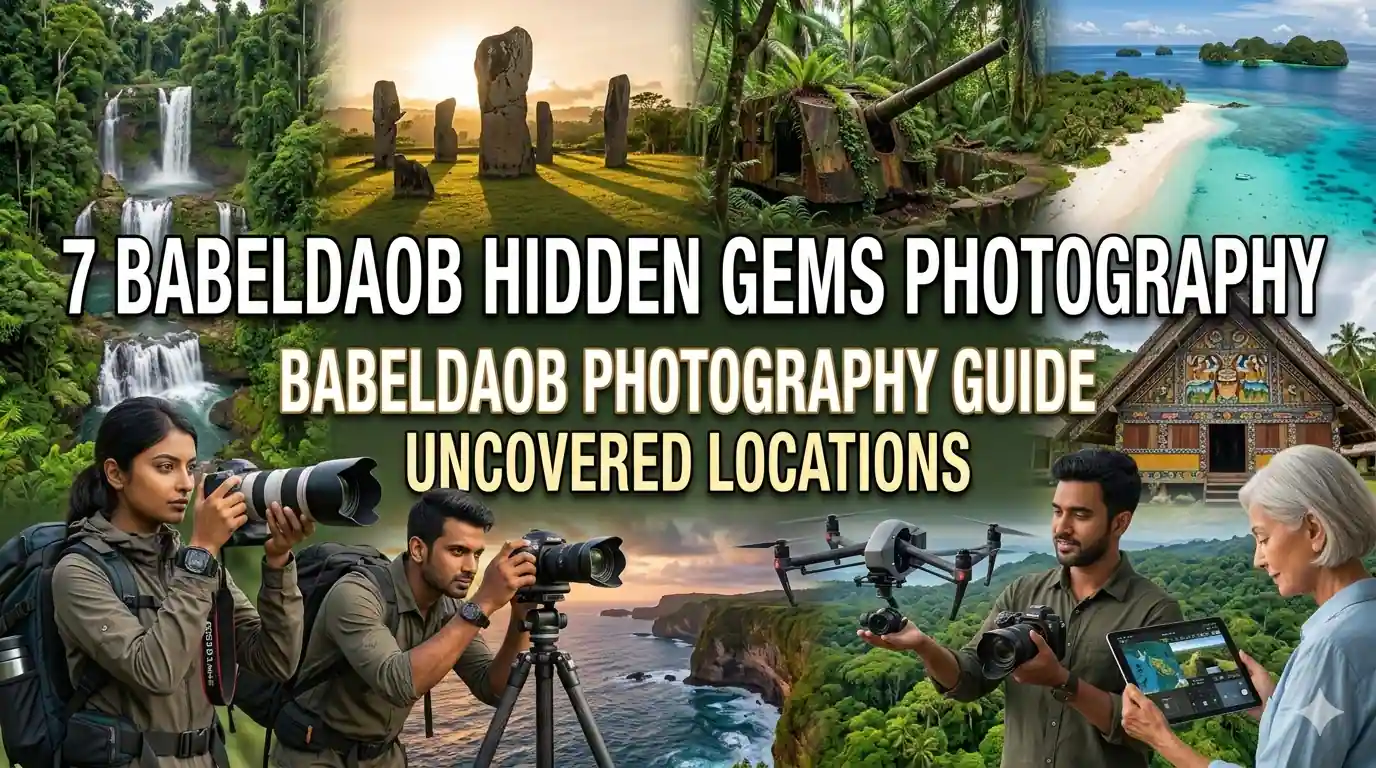
Discovering Babeldaob's Untapped Photographic Paradise
While most visitors to Palau focus on the Rock Islands and Koror, Babeldaob hidden gems for adventure photographers remain largely unexplored by all but the most intrepid visual storytellers. As Palau's largest island, Babeldaob encompasses over 80% of the nation's landmass yet receives only a fraction of tourist attention. This vast island offers an extraordinary diversity of photographic opportunities—from the tallest waterfall in Micronesia plunging through pristine rainforest, to ancient stone monoliths shrouded in mystery, abandoned WWII relics being reclaimed by jungle, remote beaches accessible only by 4WD, and traditional villages preserving centuries-old customs.
For adventure photographers seeking unique compositions away from crowded tourist spots, Babeldaob represents one of the Pacific's last great photographic frontiers. The island's rugged interior mountains, dramatic coastal cliffs, mangrove forests, archaeological sites, and cultural treasures provide endless subjects for landscape, wildlife, cultural, and historical photography. Unlike the heavily photographed Rock Islands, Babeldaob's locations offer the rare opportunity to capture iconic images without other photographers in your frame.
This comprehensive guide reveals seven extraordinary hidden gems on Babeldaob that every adventure photographer needs to experience. For each location, you'll find detailed access information, optimal shooting times, equipment recommendations, composition tips, and cultural considerations. Whether you're shooting with a DSLR, mirrorless camera, drone, or smartphone, these locations will challenge your skills and reward you with portfolio-worthy images that showcase the raw, authentic beauty of Palau's largest island.
Why should adventure photographers explore Babeldaob?
Babeldaob offers unique advantages for photographers: (1) Untapped Locations: Most sites receive few visitors, allowing unobstructed compositions and unique perspectives; (2) Diverse Subjects: Waterfalls, ancient ruins, WWII relics, beaches, rainforests, villages, and wildlife all on one island; (3) Authentic Culture: Traditional Palauan life continues with minimal tourist influence; (4) Dramatic Landscapes: Rugged mountains, coastal cliffs, and pristine ecosystems; (5) Golden Hour Magic: East and west coast locations provide sunrise and sunset opportunities; (6) Wildlife: Fruit bats, tropical birds, marine life, and endemic species; (7) Adventure: Reaching these locations requires effort, making the images more rewarding.
Hidden Gem #1: Ngardmau Waterfall - Palau's Tallest Cascade

Location: Ngardmau State, Central Babeldaob
GPS Coordinates: Approximately 7.5167° N, 134.5833° E
Difficulty: Moderate (30-45 minute rainforest hike)
Best Photography: Mid-morning for light beams, midday for full cascade
The Photographic Appeal
Ngardmau Waterfall plunges over 200 feet (60+ meters) through a lush rainforest amphitheater, making it the tallest waterfall in Palau and one of the most spectacular in Micronesia. The multi-tiered cascade creates multiple photographic opportunities: wide-angle shots capturing the full height against jungle backdrop, telephoto compressions of water crashing into emerald pools, long exposures smoothing the flow into silky ribbons, and intimate details of moss-covered rocks and tropical ferns.
The hike itself provides photographic opportunities, with the trail crossing streams, passing through dense rainforest, and offering glimpses of endemic birds and butterflies. Upon arrival, the waterfall's base pool invites refreshing swims while you scout compositions.
Access and Logistics
Getting There:
- From Koror: 45-60 minute drive via Compact Road (paved highway)
- Parking: Small parking area at trailhead with signage
- Entrance Fee: $5-10 per person (paid to Ngardmau State)
- Guide: Recommended but not mandatory ($30-50)
- Trail: Well-maintained but steep and muddy; 30-45 minutes each way
- 👉 Photography Tips for Capturing Funafuti Atoll Sunset Updated 2026
- 👉 Samoa Tourism Exchange (STE) 2026: Registration guide for the South Pacific’s biggest B2B event.
- 👉 Palau Entry Permit for US Travelers: 2026 Application Guide
Best Time to Visit:
- Season: Year-round accessible, but flow varies
- Wet Season (June-October): Maximum flow, dramatic power, but trail more challenging
- Dry Season (November-May): Moderate flow, easier hiking, clearer pools
- Time of Day: 10 AM - 2 PM for best light penetrating canopy
- Avoid: Heavy rain days (dangerous trail conditions)
- 👉 Photography Tips for Capturing Funafuti Atoll Sunset Updated 2026
- 👉 Samoa Tourism Exchange (STE) 2026: Registration guide for the South Pacific’s biggest B2B event.
- 👉 Palau Entry Permit for US Travelers: 2026 Application Guide
Photography Tips and Techniques
Essential Gear:
- Wide-angle lens (16-35mm): Capture full waterfall and surrounding jungle
- Telephoto lens (70-200mm): Compress layers, isolate details
- Tripod: Essential for long exposures and low-light forest conditions
- ND filters: Smooth water flow in bright conditions
- Polarizing filter: Reduce glare on wet rocks, enhance foliage saturation
- Waterproof bag: Protect gear from spray and humidity
- Microfiber cloths: Frequently wipe lens of moisture
- 👉 Photography Tips for Capturing Funafuti Atoll Sunset Updated 2026
- 👉 Samoa Tourism Exchange (STE) 2026: Registration guide for the South Pacific’s biggest B2B event.
- 👉 Palau Entry Permit for US Travelers: 2026 Application Guide
Composition Strategies:
- Include scale: Position hikers near base to show massive height
- Leading lines: Use stream and rocks to guide eye to cascade
- Frame with foliage: Tropical ferns and branches create natural frames
- Vertical orientation: Emphasize height and drama
- Long exposure: 1-2 seconds creates silky water contrast with sharp rocks
- Focus stacking: Combine multiple exposures for front-to-back sharpness
- 👉 Photography Tips for Capturing Funafuti Atoll Sunset Updated 2026
- 👉 Samoa Tourism Exchange (STE) 2026: Registration guide for the South Pacific’s biggest B2B event.
- 👉 Palau Entry Permit for US Travelers: 2026 Application Guide
Camera Settings:
- Aperture: f/8-f/11 for depth of field
- Shutter Speed: 1/60s for frozen water, 1-2s for silky effect
- ISO: 100-400 (use tripod for longer exposures)
- White Balance: Shade or cloudy (5500-6500K) for warm forest tones
- 👉 Photography Tips for Capturing Funafuti Atoll Sunset Updated 2026
- 👉 Samoa Tourism Exchange (STE) 2026: Registration guide for the South Pacific’s biggest B2B event.
- 👉 Palau Entry Permit for US Travelers: 2026 Application Guide
Cultural and Environmental Considerations
Ngardmau Waterfall is on traditional state land. Respect local customs by: (1) Paying the required entrance fee that supports conservation; (2) Hiring local guides when possible to support the community; (3) Staying on marked trails to protect fragile ecosystems; (4) Not removing plants, rocks, or disturbing wildlife; (5) Packing out all trash; (6) Asking permission before photographing local residents; (7) Respecting quiet hours and sacred areas.
What makes Ngardmau Waterfall special for photographers?
Ngardmau offers: (1) Height and drama: Tallest waterfall in Palau creates impressive scale; (2) Accessibility: Reasonable hike makes it achievable for most fitness levels; (3) Versatility: Multiple composition options from wide landscapes to intimate details; (4) Light quality: Forest canopy creates dramatic light beams and soft, diffused illumination; (5) Seasonal variation: Different character in wet vs. dry season; (6) Minimal crowds: Rarely more than a few visitors, allowing unobstructed shooting; (7) Swimming opportunity: Cool pool provides refreshing break and unique water-level perspectives.
Hidden Gem #2: Badrulchau Stone Monoliths - Ancient Mysteries

Location: Ngarchelong State, Northern Babeldaob
GPS Coordinates: Approximately 7.5667° N, 134.6333° E
Difficulty: Easy (short walk from parking)
Best Photography: Golden hour (sunrise or sunset) for dramatic shadows
The Photographic Appeal
The Badrulchau stone monoliths represent one of the Pacific's most intriguing archaeological mysteries. Over 1,000 years ago, ancient Palauans carved and transported dozens of massive basalt monoliths—some weighing several tons—to this hilltop site. The purpose remains debated: ceremonial center, astronomical observatory, chief's meeting ground, or territorial marker. For photographers, the monoliths offer compelling subjects: weathered stone textures, mysterious carvings, dramatic silhouettes against sky, and the enigmatic atmosphere of an ancient sacred site.
The location provides panoramic views of northern Babeldaob, with opportunities to capture monoliths against tropical vegetation, dramatic cloud formations, and golden hour light casting long shadows across the stone formations. The site's relative obscurity means you'll often have it entirely to yourself.
Access and Logistics
Getting There:
- From Koror: 1-hour drive north via Compact Road
- Final Approach: 500-meter walk from parking area through grassland
- Entrance Fee: $5 per person (supports site maintenance)
- Guide: Optional but recommended for historical context ($30-40)
- Facilities: None—bring water and sun protection
- 👉 Photography Tips for Capturing Funafuti Atoll Sunset Updated 2026
- 👉 Samoa Tourism Exchange (STE) 2026: Registration guide for the South Pacific’s biggest B2B event.
- 👉 Palau Entry Permit for US Travelers: 2026 Application Guide
Best Time to Visit:
- Golden Hour: Sunrise (6-7 AM) or sunset (5-6 PM) for dramatic lighting
- Overcast Days: Soft, even light reveals stone textures and carvings
- Avoid: Midday harsh sun creates flat, uninteresting light
- Season: Year-round accessible; dry season offers easier access
- 👉 Photography Tips for Capturing Funafuti Atoll Sunset Updated 2026
- 👉 Samoa Tourism Exchange (STE) 2026: Registration guide for the South Pacific’s biggest B2B event.
- 👉 Palau Entry Permit for US Travelers: 2026 Application Guide
Photography Tips and Techniques
Essential Gear:
- Wide-angle lens (16-35mm): Capture monoliths with landscape context
- Standard zoom (24-70mm): Versatile for various compositions
- Macro lens (optional): Detail shots of weathered textures and carvings
- Tripod: Essential for golden hour and long exposures
- Polarizing filter: Enhance sky contrast, reduce stone glare
- Graduated ND filter: Balance bright sky with darker foreground
- 👉 Photography Tips for Capturing Funafuti Atoll Sunset Updated 2026
- 👉 Samoa Tourism Exchange (STE) 2026: Registration guide for the South Pacific’s biggest B2B event.
- 👉 Palau Entry Permit for US Travelers: 2026 Application Guide
Composition Strategies:
- Silhouettes: Backlight monoliths at sunrise/sunset for dramatic shapes
- Leading lines: Use stone arrangements to guide viewer's eye
- Foreground interest: Include grasses, flowers, or smaller stones
- Sky drama: Capture tropical clouds and color gradients
- Detail shots: Focus on weathering patterns, lichen, carved symbols
- Panoramas: Stitch multiple images for sweeping landscape views
- Human scale: Include yourself or travel companion for size reference
- 👉 Photography Tips for Capturing Funafuti Atoll Sunset Updated 2026
- 👉 Samoa Tourism Exchange (STE) 2026: Registration guide for the South Pacific’s biggest B2B event.
- 👉 Palau Entry Permit for US Travelers: 2026 Application Guide
Camera Settings:
- Golden Hour: f/8-f/11, ISO 100-400, varying shutter speeds
- Details: f/5.6-f/8 for shallow depth, isolate textures
- Panoramas: Manual exposure, overlap 30-40% between frames
- White Balance: Daylight (5200K) or shade (6500K) for warm tones
- 👉 Photography Tips for Capturing Funafuti Atoll Sunset Updated 2026
- 👉 Samoa Tourism Exchange (STE) 2026: Registration guide for the South Pacific’s biggest B2B event.
- 👉 Palau Entry Permit for US Travelers: 2026 Application Guide
Historical and Cultural Context
Understanding the site enhances your photography. The monoliths were carved from basalt quarried several kilometers away and transported using unknown methods (possibly logs, ropes, and human labor). Some stones feature carved faces or symbols, though erosion has obscured many details. The site holds cultural significance for Ngarchelong State residents. Respect the sacred nature by: (1) Not climbing on monoliths; (2) Not removing stones or artifacts; (3) Speaking quietly and behaving respectfully; (4) Following any posted guidelines; (5) Supporting local guides who share traditional knowledge.
What photographic stories can Badrulchau tell?
Badrulchau offers multiple narratives: (1) Ancient mystery: Capture the enigmatic quality of these 1,000-year-old stones; (2) Human achievement: Document the engineering feat of moving multi-ton stones; (3) Time and weathering: Show how nature reclaims human creations; (4) Cultural continuity: Connect ancient Palau to modern traditions; (5) Landscape integration: Reveal how the site relates to surrounding terrain; (6) Atmospheric mood: Use light, shadow, and weather to create emotional impact. Each photographer will find their own interpretation of this compelling location.
Hidden Gem #3: WWII Japanese Coastal Defense Guns - History Reclaimed

Location: Various sites around Babeldaob coastline (multiple locations)
Difficulty: Easy to Moderate (depending on specific site)
Best Photography: Overcast days for even light, golden hour for atmosphere
The Photographic Appeal
Babeldaob's coastline hides numerous abandoned Japanese coastal defense guns from WWII, slowly being reclaimed by jungle and salt spray. These massive artillery pieces, some still pointing seaward after 80 years, tell powerful stories of the Pacific War. For photographers, they offer compelling subjects: rusted metal textures, jungle overtaking machinery, dramatic silhouettes against ocean, and the haunting beauty of abandoned war relics. The contrast between nature's persistence and human conflict creates emotionally resonant images.
Unlike Peleliu's well-documented battlefields, Babeldaob's coastal guns receive few visitors, allowing intimate exploration and unique compositions without crowds. Each site has its own character—some guns remain relatively intact, others are fragmented and overgrown, all telling different chapters of the same story.
Access and Logistics
Finding the Sites:
- Research: GPS coordinates scattered online; ask locals for directions
- Common Locations: Northern and eastern coastlines, particularly Ngarchelong and Ngaraard states
- Transportation: 4WD vehicle recommended; some sites require hiking through jungle
- Local Guides: Highly recommended—they know locations and can share historical context ($40-60)
- Permissions: Some sites on private land—always ask before entering
- 👉 Photography Tips for Capturing Funafuti Atoll Sunset Updated 2026
- 👉 Samoa Tourism Exchange (STE) 2026: Registration guide for the South Pacific’s biggest B2B event.
- 👉 Palau Entry Permit for US Travelers: 2026 Application Guide
Safety Considerations:
- Structural instability: 80-year-old metal can be dangerously corroded
- Unexploded ordnance: Extremely rare but possible—never touch unknown metal objects
- Jungle hazards: Watch for snakes, insects, and uneven terrain
- Tide awareness: Some coastal sites accessible only at low tide
- Sun protection: Bring water, hat, and sunscreen
- 👉 Photography Tips for Capturing Funafuti Atoll Sunset Updated 2026
- 👉 Samoa Tourism Exchange (STE) 2026: Registration guide for the South Pacific’s biggest B2B event.
- 👉 Palau Entry Permit for US Travelers: 2026 Application Guide
Photography Tips and Techniques
Essential Gear:
- Wide-angle lens (16-35mm): Capture guns with environmental context
- Standard zoom (24-70mm): Versatile for various compositions
- Macro lens: Rust textures, weathering details, plant life
- Tripod: Low-light conditions in jungle, long exposures
- Polarizing filter: Reduce metal glare, enhance sky
- Flash/diffuser: Fill shadows in dense jungle
- 👉 Photography Tips for Capturing Funafuti Atoll Sunset Updated 2026
- 👉 Samoa Tourism Exchange (STE) 2026: Registration guide for the South Pacific’s biggest B2B event.
- 👉 Palau Entry Permit for US Travelers: 2026 Application Guide
Composition Strategies:
- Jungle reclamation: Show nature overtaking machinery—vines, trees growing through metal
- Ocean backdrop: Frame guns pointing seaward with water and sky
- Texture studies: Rust patterns, peeling paint, corroded metal
- Scale and isolation: Emphasize size against landscape
- Leading lines: Gun barrels pointing toward horizon
- Before/after: Document multiple angles showing deterioration
- Human element: Include yourself for scale and emotional connection
- 👉 Photography Tips for Capturing Funafuti Atoll Sunset Updated 2026
- 👉 Samoa Tourism Exchange (STE) 2026: Registration guide for the South Pacific’s biggest B2B event.
- 👉 Palau Entry Permit for US Travelers: 2026 Application Guide
Camera Settings:
- Wide landscapes: f/8-f/11, ISO 100-400, tripod for stability
- Details: f/2.8-f/5.6 for shallow depth, isolate textures
- Jungle interiors: Higher ISO (800-1600), wider aperture, slower shutter with tripod
- White Balance: Daylight (5200K) or cloudy (6000K) for warm, aged tones
- 👉 Photography Tips for Capturing Funafuti Atoll Sunset Updated 2026
- 👉 Samoa Tourism Exchange (STE) 2026: Registration guide for the South Pacific’s biggest B2B event.
- 👉 Palau Entry Permit for US Travelers: 2026 Application Guide
Historical Context and Respectful Photography
These guns represent a dark chapter in Pacific history. Japanese forces fortified Babeldaob during WWII, though the island saw less combat than Peleliu or Angaur. The coastal defenses were part of Japan's strategy to protect against Allied invasion. When photographing these sites:
- Respect the history: These were weapons of war; approach with solemnity
- Avoid glorification: Document history without romanticizing violence
- Include context: Explain the historical significance in captions
- Don't disturb: Leave artifacts in place; don't remove souvenirs
- Safety first: Never climb on unstable structures
- 👉 Photography Tips for Capturing Funafuti Atoll Sunset Updated 2026
- 👉 Samoa Tourism Exchange (STE) 2026: Registration guide for the South Pacific’s biggest B2B event.
- 👉 Palau Entry Permit for US Travelers: 2026 Application Guide
What stories do these WWII relics tell?
These abandoned guns offer multiple narratives: (1) War's legacy: Show how conflict scars landscapes for generations; (2) Nature's resilience: Document jungle reclaiming human destruction; (3) Time's passage: Capture 80 years of weathering and decay; (4) Forgotten history: Bring attention to lesser-known WWII sites; (5) Peace and reflection: Use images to promote understanding and reconciliation; (6) Environmental recovery: Show ecosystems healing after human disturbance. Approach these sites with respect for both history and the land.
Hidden Gem #4: Remote East Coast Beaches - Untouched Paradise

Location: Eastern Babeldaob coastline (Ngaraard, Ngiwal, Ngchesar states)
Difficulty: Moderate to Challenging (4WD required, some hiking)
Best Photography: Sunrise, golden hour, low tide
The Photographic Appeal
Babeldaob's eastern coastline features stunning remote beaches that rival any in the Pacific, yet receive a tiny fraction of visitors. These pristine stretches of white and golden sand, backed by coconut palms and fronted by turquoise water, offer photographers paradise without crowds. Unlike Palau's famous Rock Islands beaches, these east coast locations remain largely unknown, allowing you to capture untouched tropical beauty in solitude.
The beaches vary in character: some feature dramatic volcanic rock formations, others have gentle curves with offshore coral reefs, many include traditional fishing villages nearby. The combination of pristine sand, clear water, tropical vegetation, and traditional culture creates diverse photographic opportunities from sunrise seascapes to cultural documentary work.
Access and Logistics
Getting There:
- Vehicle: 4WD essential—many beach access roads are rough tracks
- From Koror: 1-2 hours depending on specific beach
- Navigation: GPS helpful but not always accurate; ask locals for directions
- Beach Access: Some require 10-30 minute walk from road
- Tide Considerations: Some beaches only accessible at low tide
- 👉 Photography Tips for Capturing Funafuti Atoll Sunset Updated 2026
- 👉 Samoa Tourism Exchange (STE) 2026: Registration guide for the South Pacific’s biggest B2B event.
- 👉 Palau Entry Permit for US Travelers: 2026 Application Guide
Recommended Beaches:
- Ngaraard State beaches: Northern east coast, dramatic rock formations
- Ngiwal villages: Traditional fishing communities with beach access
- Ngchesar coastline: Central east coast, pristine white sand
- Melekeok area: Near new capital, secluded coves
- 👉 Photography Tips for Capturing Funafuti Atoll Sunset Updated 2026
- 👉 Samoa Tourism Exchange (STE) 2026: Registration guide for the South Pacific’s biggest B2B event.
- 👉 Palau Entry Permit for US Travelers: 2026 Application Guide
What to Bring:
- Plenty of water and food (no services)
- Sun protection (hat, sunscreen, rash guard)
- Snorkeling gear (many beaches have offshore reefs)
- Towel and change of clothes
- Trash bags (pack out everything)
- First aid kit
- 👉 Photography Tips for Capturing Funafuti Atoll Sunset Updated 2026
- 👉 Samoa Tourism Exchange (STE) 2026: Registration guide for the South Pacific’s biggest B2B event.
- 👉 Palau Entry Permit for US Travelers: 2026 Application Guide
Photography Tips and Techniques
Essential Gear:
- Wide-angle lens (16-35mm): Sweeping beach and seascape compositions
- Telephoto lens (70-200mm): Compress waves, isolate palm trees, capture distant details
- Tripod: Sunrise/sunset long exposures, wave smoothing
- Polarizing filter: Reduce water glare, enhance sky and cloud contrast
- ND filters: Long exposures for silky water effects
- Drone (if permitted): Aerial perspectives of coastline
- Waterproof housing: Protect gear from salt spray and sand
- 👉 Photography Tips for Capturing Funafuti Atoll Sunset Updated 2026
- 👉 Samoa Tourism Exchange (STE) 2026: Registration guide for the South Pacific’s biggest B2B event.
- 👉 Palau Entry Permit for US Travelers: 2026 Application Guide
Composition Strategies:
- Sunrise silhouettes: Palm trees against colorful sky
- Leading lines: Shoreline curves, wave patterns, footprints in sand
- Foreground interest: Shells, driftwood, rocks, tide pools
- Wave action: Fast shutter (1/500s+) to freeze crashing waves
- Long exposure: 1-2 seconds for smooth, ethereal water
- Reflections: Wet sand at low tide creates mirror effects
- Human element: Local fishermen, children playing, traditional activities
- 👉 Photography Tips for Capturing Funafuti Atoll Sunset Updated 2026
- 👉 Samoa Tourism Exchange (STE) 2026: Registration guide for the South Pacific’s biggest B2B event.
- 👉 Palau Entry Permit for US Travelers: 2026 Application Guide
Camera Settings:
- Sunrise/sunset: f/8-f/11, ISO 100, tripod, bracket exposures
- Wave action: f/8, 1/500s-1/2000s, ISO 100-400
- Long exposure: f/11-f/16, 1-2 seconds, ND filter, tripod
- White Balance: Daylight (5200K) or shade (6500K) for warm tropical tones
- 👉 Photography Tips for Capturing Funafuti Atoll Sunset Updated 2026
- 👉 Samoa Tourism Exchange (STE) 2026: Registration guide for the South Pacific’s biggest B2B event.
- 👉 Palau Entry Permit for US Travelers: 2026 Application Guide
Cultural Sensitivity and Environmental Responsibility
Many east coast beaches are near or within traditional village areas. Always:
- Ask permission: Before entering private or village-owned beaches
- Respect customs: Some areas may have restrictions, especially for women
- Support local communities: Buy from village vendors if available
- Leave no trace: Pack out all trash, don't disturb wildlife
- Coral protection: Don't stand on or touch coral reefs
- Photograph people respectfully: Always ask permission first
- 👉 Photography Tips for Capturing Funafuti Atoll Sunset Updated 2026
- 👉 Samoa Tourism Exchange (STE) 2026: Registration guide for the South Pacific’s biggest B2B event.
- 👉 Palau Entry Permit for US Travelers: 2026 Application Guide
What makes these beaches special for photographers?
East coast beaches offer: (1) Pristine conditions: Minimal human impact, untouched beauty; (2) Solitude: Often completely empty, allowing creative freedom; (3) Diversity: Different beaches offer different characters—rocky, sandy, reef-protected, open ocean; (4) Cultural context: Traditional villages and fishing practices add documentary interest; (5) Sunrise opportunities: East-facing location provides spectacular dawn light; (6) Wildlife: Sea turtles, tropical fish, seabirds; (7) Authenticity: Real Palau, not tourist Palau. These beaches reward the effort required to reach them with images that capture the essence of Pacific paradise.
Hidden Gem #5: Traditional Bai Meeting Houses - Cultural Heritage

Location: Various villages across Babeldaob (particularly Ngeremlengui, Ngaraard, Airai)
Difficulty: Easy (village access)
Best Photography: Mid-morning or late afternoon for architectural details
The Photographic Appeal
Traditional bai meeting houses represent the heart of Palauan culture and architecture. These elaborately decorated structures, with distinctive peaked roofs, colorful storyboards depicting legends and history, and intricate woodwork, serve as community gathering places and repositories of traditional knowledge. For photographers, bai offer rich visual subjects: vibrant colors, symbolic carvings, traditional construction techniques, and the living culture they represent.
Unlike museum exhibits, bai on Babeldaob remain active community centers where chiefs meet, ceremonies occur, and traditions continue. This provides opportunities for cultural documentary photography that captures Palauan heritage in its authentic context. Each bai has unique storyboards telling different legends, making every visit distinct.
Access and Logistics
Finding Bai:
- Village Locations: Most traditional villages have at least one bai
- Notable Examples: Airai Bai (oldest), Ngeremlengui State bai, Ngaraard bai
- Transportation: Regular vehicle sufficient; villages accessible via Compact Road
- Permissions: Always ask village elders or chiefs before photographing
- Guides: Local guides can facilitate introductions and explain cultural significance ($30-50)
- 👉 Photography Tips for Capturing Funafuti Atoll Sunset Updated 2026
- 👉 Samoa Tourism Exchange (STE) 2026: Registration guide for the South Pacific’s biggest B2B event.
- 👉 Palau Entry Permit for US Travelers: 2026 Application Guide
Cultural Protocol:
- Dress modestly: Cover shoulders and knees when visiting villages
- Remove shoes: Required when entering bai
- Ask permission: Never photograph people or interiors without asking
- Respect hierarchy: Chiefs and elders hold authority; show proper respect
- Gifts: Small gifts (tobacco, betel nut, or money) may be appropriate when requesting permission
- 👉 Photography Tips for Capturing Funafuti Atoll Sunset Updated 2026
- 👉 Samoa Tourism Exchange (STE) 2026: Registration guide for the South Pacific’s biggest B2B event.
- 👉 Palau Entry Permit for US Travelers: 2026 Application Guide
Photography Tips and Techniques
Essential Gear:
- Wide-angle lens (16-35mm): Capture full bai structure and architectural details
- Standard zoom (24-70mm): Versatile for storyboards and medium shots
- Macro lens: Intricate carvings, wood textures, decorative elements
- Tripod: Interior shots in low light, architectural symmetry
- Polarizing filter: Reduce glare on painted storyboards
- Flash/diffuser: Fill shadows under roof overhangs
- 👉 Photography Tips for Capturing Funafuti Atoll Sunset Updated 2026
- 👉 Samoa Tourism Exchange (STE) 2026: Registration guide for the South Pacific’s biggest B2B event.
- 👉 Palau Entry Permit for US Travelers: 2026 Application Guide
Composition Strategies:
- Architectural symmetry: Center bai in frame, emphasize peaked roof
- Storyboard details: Close-ups of painted legends and symbols
- Cultural context: Include village setting, palm trees, traditional elements
- Human element: Villagers gathered, ceremonies in progress (with permission)
- Interior details: Carved beams, traditional tools, ceremonial objects
- Leading lines: Roof lines, support beams, decorative patterns
- Cultural activities: Traditional dancing, weaving, food preparation
- 👉 Photography Tips for Capturing Funafuti Atoll Sunset Updated 2026
- 👉 Samoa Tourism Exchange (STE) 2026: Registration guide for the South Pacific’s biggest B2B event.
- 👉 Palau Entry Permit for US Travelers: 2026 Application Guide
Camera Settings:
- Exterior architecture: f/8-f/11, ISO 100-400, tripod for sharpness
- Storyboard details: f/5.6-f/8, ISO 400-800, focus on painted details
- Interior shots: f/2.8-f/4, ISO 800-3200, tripod or image stabilization
- White Balance: Daylight (5200K) or shade (6500K) for warm, authentic tones
- 👉 Photography Tips for Capturing Funafuti Atoll Sunset Updated 2026
- 👉 Samoa Tourism Exchange (STE) 2026: Registration guide for the South Pacific’s biggest B2B event.
- 👉 Palau Entry Permit for US Travelers: 2026 Application Guide
Understanding Storyboards and Cultural Significance
Bai storyboards (called "denguy" in Palauan) depict traditional legends, historical events, and cultural values through colorful painted panels. Common themes include:
- Creation stories: How Palau and its people came to be
- Legendary heroes: Tales of great chiefs and warriors
- Clan histories: Specific village or family lineages
- Moral lessons: Cultural values and proper behavior
- Natural world: Marine life, birds, plants important to Palauans
- 👉 Photography Tips for Capturing Funafuti Atoll Sunset Updated 2026
- 👉 Samoa Tourism Exchange (STE) 2026: Registration guide for the South Pacific’s biggest B2B event.
- 👉 Palau Entry Permit for US Travelers: 2026 Application Guide
Learning the stories behind the storyboards enriches your photography and shows respect for the culture. Ask your guide or village elders to explain the meanings—this builds relationships and provides context for your images.
How can photographers respectfully document bai and village life?
Respectful cultural photography requires: (1) Permission first: Always ask before photographing people, interiors, or ceremonies; (2) Build relationships: Spend time in villages, don't just shoot and leave; (3) Give back: Share your photos with the community, consider donations; (4) Avoid exploitation: Don't treat people as props; (5) Learn context: Understand what you're photographing and its significance; (6) Respect restrictions: Some ceremonies or areas may be off-limits; (7) Use appropriate language: Learn basic Palauan greetings and thanks. Remember: you're a guest in these communities. Your photography should honor and preserve culture, not exploit it.
Hidden Gem #6: Mangrove Forests and Kayak Trails - Hidden Waterways

Location: Coastal areas around Babeldaob (particularly Ngeremlengui, Airai, Ngaraard)
Difficulty: Easy to Moderate (kayaking required)
Best Photography: Mid-morning for light penetration, overcast for even tones
The Photographic Appeal
Babeldaob's extensive mangrove forests create intricate networks of waterways, tunnels, and hidden lagoons that offer photographers a completely different perspective on Palau's coastal ecosystems. These mangrove forests serve as nurseries for marine life, protect coastlines from erosion, and store massive amounts of carbon. For photographers, they provide unique opportunities: tunnel-like passages through dense vegetation, reflections in still water, intricate root systems, wildlife including birds and juvenile fish, and the interplay of light and shadow in these cathedral-like forests.
Kayaking through mangroves allows intimate access to these ecosystems while minimizing environmental impact. The quiet nature of kayaking means you won't disturb wildlife, and you can navigate narrow passages inaccessible to motorized boats. The combination of adventure and photography makes mangrove exploration deeply rewarding.
Access and Logistics
Kayak Rental and Tours:
- Rental: $25-40/day from Koror or some Babeldaob villages
- Guided Tours: $80-120/person (recommended for first-time visitors)
- Locations: Ngeremlengui mangroves, Airai Bay, Ngaraard coastal areas
- Transportation: Need to transport kayak to launch site or join tour with transport included
- 👉 Photography Tips for Capturing Funafuti Atoll Sunset Updated 2026
- 👉 Samoa Tourism Exchange (STE) 2026: Registration guide for the South Pacific’s biggest B2B event.
- 👉 Palau Entry Permit for US Travelers: 2026 Application Guide
What to Bring:
- Kayak and paddle (or rent)
- Life jacket (mandatory)
- Dry bag for camera gear
- Water and snacks
- Sun protection (hat, sunscreen, long sleeves)
- Insect repellent (mangroves have mosquitoes)
- Water shoes or sandals
- Tide chart (some areas only accessible at high tide)
- 👉 Photography Tips for Capturing Funafuti Atoll Sunset Updated 2026
- 👉 Samoa Tourism Exchange (STE) 2026: Registration guide for the South Pacific’s biggest B2B event.
- 👉 Palau Entry Permit for US Travelers: 2026 Application Guide
Safety Considerations:
- Tides: Check tide tables—some areas impassable at low tide
- Weather: Avoid kayaking in strong winds or storms
- Wildlife: Saltwater crocodiles rare but possible—maintain awareness
- Navigation: Mangroves can be confusing; use GPS or guide
- Inform others: Tell someone your plans and expected return time
- 👉 Photography Tips for Capturing Funafuti Atoll Sunset Updated 2026
- 👉 Samoa Tourism Exchange (STE) 2026: Registration guide for the South Pacific’s biggest B2B event.
- 👉 Palau Entry Permit for US Travelers: 2026 Application Guide
Photography Tips and Techniques
Essential Gear:
- Wide-angle lens (16-35mm): Capture tunnel-like mangrove passages
- Standard zoom (24-70mm): Versatile for various compositions
- Telephoto lens (70-200mm): Wildlife, birds, distant details
- Waterproof housing or dry bag: Critical for protecting gear
- Polarizing filter: Reduce water glare, enhance reflections
- Tripod: Not practical in kayak; use monopod or stabilize on kayak
- Action camera: GoPro or similar for unique perspectives
- 👉 Photography Tips for Capturing Funafuti Atoll Sunset Updated 2026
- 👉 Samoa Tourism Exchange (STE) 2026: Registration guide for the South Pacific’s biggest B2B event.
- 👉 Palau Entry Permit for US Travelers: 2026 Application Guide
Composition Strategies:
- Mangrove tunnels: Use leading lines of roots and branches
- Reflections: Still water creates mirror images of trees
- Root systems: Intricate patterns of prop roots emerging from water
- Light beams: Sun filtering through canopy creates dramatic rays
- Wildlife: Birds, crabs, fish, juvenile marine life
- Human element: Kayaker navigating through forest
- Abstract patterns: Textures, shadows, repetitive root structures
- 👉 Photography Tips for Capturing Funafuti Atoll Sunset Updated 2026
- 👉 Samoa Tourism Exchange (STE) 2026: Registration guide for the South Pacific’s biggest B2B event.
- 👉 Palau Entry Permit for US Travelers: 2026 Application Guide
Camera Settings:
- Tunnel shots: f/8-f/11, ISO 400-800, slower shutter (stabilize on kayak)
- Wildlife: f/5.6-f/8, 1/500s+ shutter, ISO 400-1600
- Reflections: f/8, ISO 100-400, polarizer to control reflections
- White Balance: Shade (6500K) or cloudy (6000K) for warm, natural tones
- 👉 Photography Tips for Capturing Funafuti Atoll Sunset Updated 2026
- 👉 Samoa Tourism Exchange (STE) 2026: Registration guide for the South Pacific’s biggest B2B event.
- 👉 Palau Entry Permit for US Travelers: 2026 Application Guide
Environmental Conservation and Respect
Mangroves are fragile ecosystems critical to Palau's marine health. When photographing:
- Don't damage roots: Avoid touching or breaking mangrove prop roots
- Minimize wake: Paddle gently to avoid disturbing sediment and wildlife
- No littering: Pack out all trash, including biodegradable items
- Respect wildlife: Don't chase birds, fish, or other animals
- Stay in channels: Don't venture into shallow areas that damage seagrass
- Use reef-safe sunscreen: Required by Palau law
- 👉 Photography Tips for Capturing Funafuti Atoll Sunset Updated 2026
- 👉 Samoa Tourism Exchange (STE) 2026: Registration guide for the South Pacific’s biggest B2B event.
- 👉 Palau Entry Permit for US Travelers: 2026 Application Guide
What makes mangrove photography unique?
Mangroves offer: (1) Unique ecosystem: Rare opportunity to photograph this critical habitat; (2) Intimate scale: Narrow passages create enclosed, cathedral-like atmosphere; (3) Light and shadow: Canopy creates dramatic lighting conditions; (4) Reflections: Still water provides mirror compositions; (5) Wildlife: Birds, crabs, fish, and juvenile marine species; (6) Adventure: Kayaking adds physical engagement to photography; (7) Conservation story: Document these vital ecosystems before they disappear. Mangrove photography challenges you to work in tight spaces, low light, and dynamic conditions—skills that improve your overall photography.
Hidden Gem #7: Mountain Viewpoints and Ridge Trails - Panoramic Vistas

Location: Central Babeldaob highlands (various states)
Difficulty: Moderate to Challenging (hiking required)
Best Photography: Sunrise, sunset, clear days after rain
The Photographic Appeal
Babeldaob's interior highlands rise to over 700 feet (240 meters) at Mount Ngerchelchuus, the highest point in Palau. While not towering peaks by global standards, these hills provide spectacular panoramic views of the island's diverse landscapes: dense rainforest canopy, coastal plains, distant Rock Islands, turquoise lagoons, and on clear days, neighboring islands. For photographers willing to hike, these viewpoints offer sweeping vistas, dramatic cloud formations, golden hour light across the landscape, and the satisfaction of earning your shot through physical effort.
Unlike developed viewpoints elsewhere, Babeldaob's highland trails remain rugged and natural, providing authentic adventure photography experiences. The combination of physical challenge, stunning scenery, and relative solitude makes these locations special for photographers seeking more than easy roadside pullouts.
Access and Logistics
Finding Viewpoints:
- Local Knowledge Essential: Few marked trails; ask villagers for directions
- Guides Highly Recommended: Local guides know safe routes and best viewpoints ($50-80/day)
- Common Areas: Ngeremlengui highlands, Ngaraard ridges, central Babeldaob peaks
- Transportation: 4WD to trailhead, then hiking
- Permissions: Some trails cross private or state land—always ask
- 👉 Photography Tips for Capturing Funafuti Atoll Sunset Updated 2026
- 👉 Samoa Tourism Exchange (STE) 2026: Registration guide for the South Pacific’s biggest B2B event.
- 👉 Palau Entry Permit for US Travelers: 2026 Application Guide
What to Bring:
- Sturdy hiking boots with good traction
- Plenty of water (at least 2-3 liters per person)
- High-energy snacks and lunch
- Sun protection (hat, sunscreen, long sleeves)
- Insect repellent
- Rain jacket (tropical showers common)
- First aid kit
- Map and compass or GPS
- Headlamp or flashlight (in case hike takes longer than expected)
- 👉 Photography Tips for Capturing Funafuti Atoll Sunset Updated 2026
- 👉 Samoa Tourism Exchange (STE) 2026: Registration guide for the South Pacific’s biggest B2B event.
- 👉 Palau Entry Permit for US Travelers: 2026 Application Guide
Safety Considerations:
- Weather: Check forecast; avoid hiking in heavy rain (slippery trails)
- Tell someone: Always inform others of your plans and expected return
- Start early: Begin hikes at dawn to avoid afternoon heat and storms
- Pace yourself: Tropical humidity makes hiking more strenuous
- Wildlife: Watch for snakes, insects, and uneven terrain
- 👉 Photography Tips for Capturing Funafuti Atoll Sunset Updated 2026
- 👉 Samoa Tourism Exchange (STE) 2026: Registration guide for the South Pacific’s biggest B2B event.
- 👉 Palau Entry Permit for US Travelers: 2026 Application Guide
Photography Tips and Techniques
Essential Gear:
- Wide-angle lens (16-35mm): Sweeping panoramic vistas
- Telephoto lens (70-200mm or longer): Compress distant islands, isolate details
- Standard zoom (24-70mm): Versatile for various compositions
- Sturdy tripod: Essential for sunrise/sunset and panoramic stitching
- Polarizing filter: Enhance sky contrast, reduce atmospheric haze
- Graduated ND filter: Balance bright sky with darker foreground
- Drone (if permitted): Aerial perspectives of landscape (check regulations)
- 👉 Photography Tips for Capturing Funafuti Atoll Sunset Updated 2026
- 👉 Samoa Tourism Exchange (STE) 2026: Registration guide for the South Pacific’s biggest B2B event.
- 👉 Palau Entry Permit for US Travelers: 2026 Application Guide
Composition Strategies:
- Panoramas: Stitch multiple images for ultra-wide vistas
- Layering: Foreground vegetation, midground hills, background ocean and islands
- Leading lines: Ridge lines, valleys, cloud formations
- Sunrise/sunset: Golden hour light across landscape
- Cloud drama: Tropical cloud formations add interest to sky
- Human scale: Include hikers to show vastness of landscape
- Weather moods: Storms clearing, mist in valleys, rainbows
- 👉 Photography Tips for Capturing Funafuti Atoll Sunset Updated 2026
- 👉 Samoa Tourism Exchange (STE) 2026: Registration guide for the South Pacific’s biggest B2B event.
- 👉 Palau Entry Permit for US Travelers: 2026 Application Guide
Camera Settings:
- Panoramas: Manual exposure, manual white balance, overlap 30-40%
- Sunrise/sunset: f/8-f/11, ISO 100, tripod, bracket exposures
- Telephoto compression: f/8, ISO 100-400, fast shutter for sharpness
- White Balance: Daylight (5200K) or shade (6500K) for warm landscape tones
- 👉 Photography Tips for Capturing Funafuti Atoll Sunset Updated 2026
- 👉 Samoa Tourism Exchange (STE) 2026: Registration guide for the South Pacific’s biggest B2B event.
- 👉 Palau Entry Permit for US Travelers: 2026 Application Guide
Physical Preparation and Realistic Expectations
Hiking Babeldaob's highlands requires preparation:
- Fitness level: Moderate to good fitness required; trails can be steep and muddy
- Heat and humidity: Tropical conditions make hiking more challenging than temperature suggests
- Trail conditions: Expect muddy, slippery, overgrown paths—not maintained trails
- Time: Allow 3-6 hours for most hikes including photography time
- Views not guaranteed: Clouds, rain, or haze may obscure vistas—be flexible
- Reward: The effort makes the views more meaningful and the images more special
- 👉 Photography Tips for Capturing Funafuti Atoll Sunset Updated 2026
- 👉 Samoa Tourism Exchange (STE) 2026: Registration guide for the South Pacific’s biggest B2B event.
- 👉 Palau Entry Permit for US Travelers: 2026 Application Guide
How do I find the best viewpoints on Babeldaob?
Finding viewpoints requires local knowledge: (1) Ask villagers: Residents know the best spots and can provide directions; (2) Hire local guides: Worth the investment—they know safe routes, best times, and hidden viewpoints; (3) Check with state offices: Some states maintain information on hiking areas; (4) Connect with other photographers: Online forums and social media may have recent reports; (5) Explore respectfully: If you find a trail, ensure you have permission to use it; (6) Be flexible: The best viewpoints may not be on any map—remain open to discovery while respecting land ownership and cultural sensitivities.
Planning Your Babeldaob Photography Expedition

Now that you know about these seven hidden gems, here's how to plan your photography adventure on Babeldaob.
Recommended Itinerary (7-10 Days)
Days 1-2: Northern Babeldaob
- Visit Badrulchau stone monoliths (golden hour)
- Explore WWII coastal guns
- Photograph traditional bai in Ngaraard
- Base: Koror or northern village homestay
- 👉 Photography Tips for Capturing Funafuti Atoll Sunset Updated 2026
- 👉 Samoa Tourism Exchange (STE) 2026: Registration guide for the South Pacific’s biggest B2B event.
- 👉 Palau Entry Permit for US Travelers: 2026 Application Guide
Days 3-4: Central Highlands and Waterfalls
- Hike to Ngardmau Waterfall
- Explore mountain viewpoints
- Photograph rainforest landscapes
- Base: Central Babeldaob village or return to Koror
- 👉 Photography Tips for Capturing Funafuti Atoll Sunset Updated 2026
- 👉 Samoa Tourism Exchange (STE) 2026: Registration guide for the South Pacific’s biggest B2B event.
- 👉 Palau Entry Permit for US Travelers: 2026 Application Guide
Days 5-6: East Coast Beaches
- Sunrise at remote beaches
- Kayak mangrove forests
- Document coastal village life
- Base: East coast village or Koror
- 👉 Photography Tips for Capturing Funafuti Atoll Sunset Updated 2026
- 👉 Samoa Tourism Exchange (STE) 2026: Registration guide for the South Pacific’s biggest B2B event.
- 👉 Palau Entry Permit for US Travelers: 2026 Application Guide
Days 7-8: Cultural Immersion
- Visit multiple bai meeting houses
- Photograph traditional crafts and daily life
- Return to favorite locations for second shoot
- Base: Koror
- 👉 Photography Tips for Capturing Funafuti Atoll Sunset Updated 2026
- 👉 Samoa Tourism Exchange (STE) 2026: Registration guide for the South Pacific’s biggest B2B event.
- 👉 Palau Entry Permit for US Travelers: 2026 Application Guide
Days 9-10: Flexibility and Favorites
- Revisit best locations in different light
- Explore newly discovered spots
- Edit and backup images
- 👉 Photography Tips for Capturing Funafuti Atoll Sunset Updated 2026
- 👉 Samoa Tourism Exchange (STE) 2026: Registration guide for the South Pacific’s biggest B2B event.
- 👉 Palau Entry Permit for US Travelers: 2026 Application Guide
Essential Gear Checklist
Camera Equipment:
- li>Camera body (weather-sealed preferred)
- Wide-angle zoom (16-35mm or similar)
- Standard zoom (24-70mm)
- Telephoto zoom (70-200mm or longer)
- Tripod (carbon fiber for hiking)
- Filters (polarizer, ND, graduated ND)
- Extra batteries (4-6 minimum)
- Memory cards (multiple high-capacity cards)
- Laptop or tablet for backup
- External hard drive
- 👉 Photography Tips for Capturing Funafuti Atoll Sunset Updated 2026
- 👉 Samoa Tourism Exchange (STE) 2026: Registration guide for the South Pacific’s biggest B2B event.
- 👉 Palau Entry Permit for US Travelers: 2026 Application Guide
Protection and Accessories:
- Rain cover for camera
- Dry bags for kayaking and boat trips
- Lens cleaning kit (humidity and salt spray)
- Camera bag (comfortable for hiking)
- Headlamp with red light mode
- 👉 Photography Tips for Capturing Funafuti Atoll Sunset Updated 2026
- 👉 Samoa Tourism Exchange (STE) 2026: Registration guide for the South Pacific’s biggest B2B event.
- 👉 Palau Entry Permit for US Travelers: 2026 Application Guide
Budget Considerations
Estimated Costs (7-10 days):
- Car rental (4WD): $60-100/day × 7-10 days = $420-1,000
- Fuel: $100-200
- Accommodation: $50-200/night × 7-10 nights = $350-2,000
- Food: $30-60/day × 10 days = $300-600
- Guides: $30-80/day × 3-5 days = $90-400
- Entrance fees: $50-100 total
- Kayak rental: $25-40/day × 2 days = $50-80
- Miscellaneous: $200-400
- Total: $1,560-4,780 (depending on travel style)
- 👉 Photography Tips for Capturing Funafuti Atoll Sunset Updated 2026
- 👉 Samoa Tourism Exchange (STE) 2026: Registration guide for the South Pacific’s biggest B2B event.
- 👉 Palau Entry Permit for US Travelers: 2026 Application Guide
What's the best time of year for Babeldaob photography?
Timing affects your photography: (1) Dry Season (November-May): Best overall—clearer skies, less rain, easier hiking, better light; (2) Wet Season (June-October): Lush vegetation, dramatic clouds, waterfalls at maximum flow, but challenging conditions and potential delays; (3) Best for landscapes: December-April offers clearest conditions; (4) Best for waterfalls: July-September provides maximum flow; (5) Best for culture: Year-round, but avoid major holidays when villages may be closed; (6) Golden hour: Consistent year-round around 6-7 AM and 5-6 PM. Choose based on your photographic priorities and tolerance for challenging conditions.
Conclusion: Your Babeldaob Photography Adventure Awaits
Babeldaob offers adventure photographers a rare opportunity to capture pristine landscapes, ancient culture, and hidden beauty in one of the Pacific's last great photographic frontiers. From the thundering cascade of Ngardmau Waterfall to the mysterious silence of Badrulchau's stone monoliths, from WWII relics being reclaimed by jungle to remote beaches untouched by tourism, from traditional bai meeting houses to mangrove tunnels and mountain vistas—this island rewards those willing to venture beyond the familiar.
The seven hidden gems featured in this guide represent just the beginning of what Babeldaob has to offer. Each location provides unique photographic challenges and opportunities, requiring different skills, equipment, and approaches. But beyond the technical aspects, photographing Babeldaob demands cultural sensitivity, environmental responsibility, and genuine respect for the land and its people.
As you plan your expedition, remember that the journey matters as much as the destination. The conversations with village elders, the guidance of local experts, the physical effort of reaching remote locations, and the patience required to capture perfect light—these experiences enrich your photography and create memories that last far beyond the images themselves.
Babeldaob won't make photography easy. The humidity will fog your lens, the trails will test your fitness, the light will be unpredictable, and the logistics will be challenging. But that's precisely what makes it special. In an age when iconic locations are crowded with influencers and Instagram seekers, Babeldaob remains authentic, wild, and wonderfully undiscovered.
Pack your gear, respect the culture, embrace the adventure, and prepare to create images that capture the raw, untamed beauty of Palau's largest island. Babeldaob is waiting.
Where can I find local photography guides on Babeldaob?
Connect with local guides through: (1) Palau Visitors Authority: Official tourism office can recommend licensed guides; (2) Village offices: Contact state or village administrations directly; (3) Local hotels: Even if not staying there, staff often know guides; (4) Online communities: Palau photography Facebook groups, travel forums; (5) Word of mouth: Ask other travelers, dive operators, or restaurant owners; (6) Palau Guide Association: Professional organization of licensed guides. Always verify that guides are licensed and insured. A good local guide is worth the investment—they provide access, knowledge, safety, and cultural context that dramatically enhance your photography and experience.
0 Comments