.webp)
.webp)
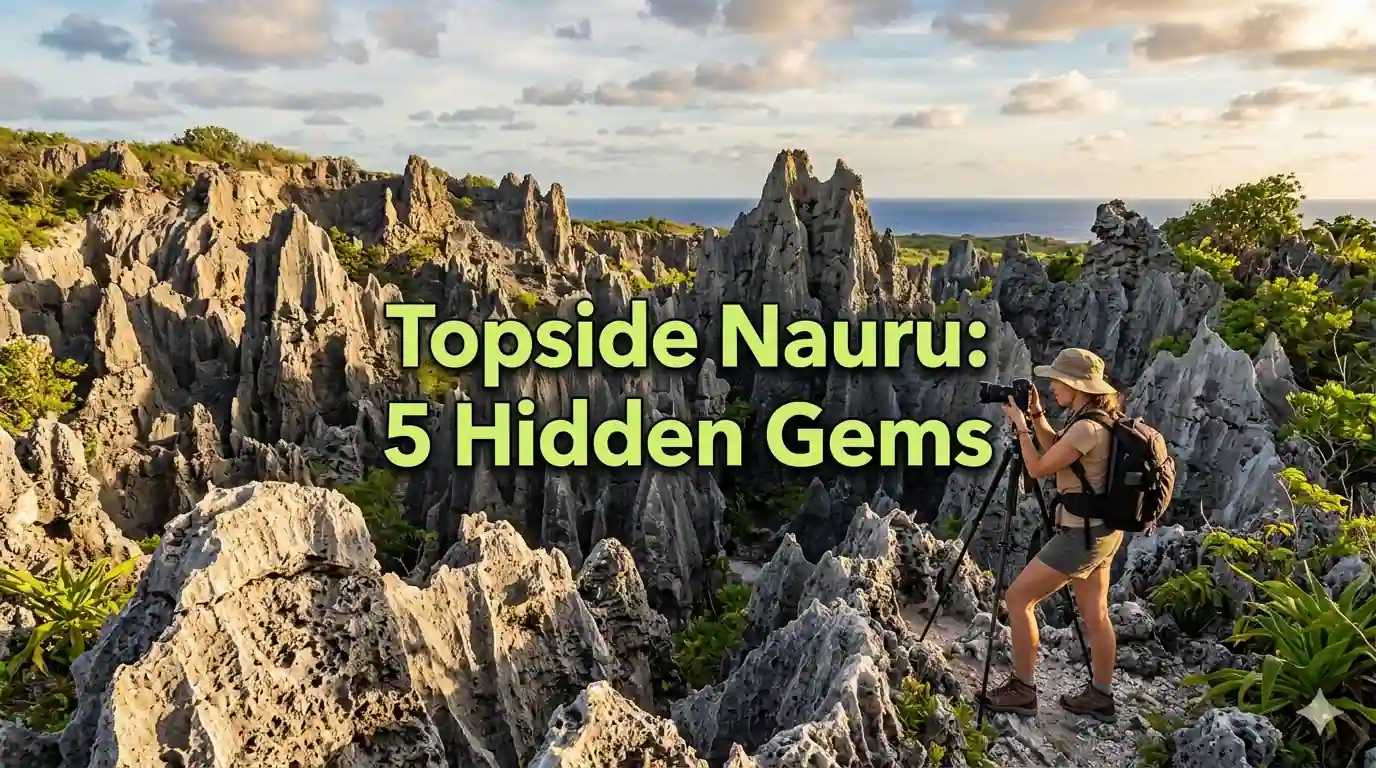
Introduction: Discovering Nauru's Otherworldly Topside
Nauru's Topside represents one of the most surreal and fascinating landscapes on Earth—a hauntingly beautiful terrain of limestone pinnacles, coral rock formations, and reclaimed vegetation that resembles a lunar surface more than a tropical Pacific island. This distinctive interior region, shaped by decades of phosphate mining that stripped away the island's original lush cover, offers adventurous travelers a unique opportunity to explore an environment unlike anywhere else on the planet.
For photographers, geologists, and curious explorers, Topside provides an extraordinary canvas of natural and human-made wonders. The jagged limestone towers rise dramatically from the earth, casting long shadows in the golden Pacific light. Sparse vegetation slowly reclaims the mined terrain, creating a poignant narrative of environmental resilience. And scattered throughout this otherworldly landscape are hidden gems—specific locations that offer particularly compelling views, photographic opportunities, and insights into Nauru's complex history.
This guide reveals five hidden gems within Nauru's Topside that every adventurous visitor should seek out. From dramatic viewpoint locations to historically significant sites, from photographic hotspots to quiet places for reflection, these destinations showcase the surreal beauty and profound story of Nauru's transformed interior. Whether you're visiting Nauru as part of a world-traveling journey or seeking a truly unique Pacific experience, these Topside hidden gems will deepen your appreciation for this remarkable microstate.
Understanding Topside: Nauru's Lunar Landscape

Before exploring specific hidden gems, understanding what makes Topside unique enhances appreciation for these remarkable locations. Topside refers to Nauru's central plateau, the elevated interior region that once contained rich phosphate deposits formed from ancient bird guano accumulated over millennia.
Phosphate mining, which began in the early 20th century under German and later Australian administration, transformed this landscape dramatically. Heavy machinery stripped away the fertile topsoil and vegetation to access the phosphate ore beneath, leaving behind a stark terrain of coral pinnacles, limestone towers, and exposed rock formations. The mining process created a jagged, uneven surface that resembles lunar or Martian landscapes, with towers rising 5-15 meters high separated by deep crevices and narrow passages.
Today, Topside covers approximately 80% of Nauru's land area and presents a complex environment of geological interest, environmental challenge, and unexpected beauty. While mining has largely ceased, the landscape remains a powerful reminder of the environmental costs of resource extraction and the ongoing efforts toward rehabilitation and sustainable development. For visitors, Topside offers a rare opportunity to witness a landscape shaped by both natural processes and human activity, creating a unique destination for exploration and reflection.
What Makes Topside Special for Travelers?
Topside's appeal extends beyond its visual uniqueness. The landscape offers exceptional photographic opportunities with dramatic textures, striking light-and-shadow compositions, and a sense of isolation that few destinations can match. The surreal environment inspires creativity and contemplation, making it ideal for travelers seeking meaningful, off-the-beaten-path experiences.
Additionally, Topside provides insights into Nauru's economic history, environmental challenges, and cultural resilience. Understanding the story behind the landscape—the boom of phosphate wealth, the bust of resource depletion, and the ongoing journey toward sustainability—adds depth to the visual experience and fosters appreciation for the Nauruan people's adaptability and determination.
For adventurous travelers, exploring Topside requires preparation and respect. The terrain can be challenging to navigate, with uneven surfaces, sharp limestone edges, and limited shade. Proper footwear, sun protection, water, and local guidance enhance safety and enjoyment. Approaching Topside with curiosity, humility, and environmental awareness ensures a rewarding experience that honors both the landscape and the community.
Hidden Gem #1: Command Ridge Panorama

Command Ridge, Nauru's highest point at 71 meters above sea level, offers the most comprehensive vantage point for experiencing Topside's surreal landscape. This elevated location provides 360-degree views that contextualize the island's geography, mining history, and natural beauty in a single, breathtaking panorama.
The ascent to Command Ridge follows a path through vegetation and mined terrain, with interpretive elements explaining the site's historical significance. During World War II, Japanese forces occupied Nauru from 1942 to 1945, using Command Ridge as a strategic observation point. Remnants of Japanese artillery, bunkers, and communication equipment remain on site, adding historical depth to the geological spectacle.
From the ridge's summit, visitors witness the full scope of Nauru's landscape: the narrow coastal ring where most development and population are concentrated, the distinctive Topside terrain of limestone pinnacles stretching inland, Buada Lagoon's green oasis nestled in the interior, and the endless Pacific Ocean surrounding the tiny island. This perspective helps visitors understand Nauru's geographical constraints, environmental challenges, and the remarkable resilience of its people.
Photography Tips for Command Ridge:
- Visit during golden hour (early morning or late afternoon) for dramatic lighting that emphasizes the texture and dimension of limestone formations
- Use a wide-angle lens to capture the expansive panorama, or a telephoto lens to isolate specific landscape features
- Include foreground elements like limestone pinnacles or historical remnants to add depth and context to panoramic shots
- Bring a polarizing filter to enhance sky contrast and reduce glare from limestone surfaces
- 👉 Ultimate Guide to Hiking Kepler Track Logistics Huts and Weather Prep
- 👉 Nauru Airlines 2026 Expansion: New direct flights connecting Suva, Nadi, and Tarawa.
- 👉 The Ultimate Guide to Samoa Independence Day Celebrations 2026- Experiencing Samoa's National Pride and Cultural Heritage
Practical Considerations: The climb to Command Ridge is moderate but requires sturdy footwear due to uneven terrain. Bring water, sun protection, and allow 1-2 hours for the round-trip experience including time for photography and reflection. Respect historical remnants by observing without disturbing or removing artifacts.
Hidden Gem #2: The Pinnacle Forest

Deep within Topside's interior lies a remarkable area known informally as the Pinnacle Forest—a dense concentration of limestone towers that creates an almost mystical environment of vertical stone formations rising like ancient monuments from the earth. This location offers an immersive experience of Topside's most distinctive feature: the jagged coral pinnacles formed by phosphate mining.
Navigating through the Pinnacle Forest feels like exploring a natural stone labyrinth. The towers, ranging from 5 to 15 meters in height, create narrow passages, hidden alcoves, and unexpected viewpoints. Sunlight filters through the gaps between formations, casting dramatic shadows that shift throughout the day. Sparse vegetation—hardy plants adapted to the challenging environment—clings to crevices and pockets of soil, adding touches of green to the predominantly gray and white landscape.
This location is particularly compelling for photographers seeking abstract compositions, texture studies, and atmospheric landscape images. The interplay of light, shadow, and stone creates endless visual opportunities. For contemplative travelers, the Pinnacle Forest offers a quiet space for reflection on themes of environmental transformation, resilience, and the passage of time.
Best Times to Visit: Early morning provides soft, directional light that emphasizes texture and dimension. Late afternoon offers warm golden tones that enhance the limestone's natural colors. Avoid midday visits when harsh overhead light flattens the landscape and temperatures peak.
Safety and Navigation: The Pinnacle Forest's uneven terrain requires careful footing. Wear sturdy, closed-toe shoes with good traction. Consider hiring a local guide familiar with the area to ensure safe navigation and provide cultural and historical context. Carry sufficient water and sun protection, as shade is limited.
Hidden Gem #3: Buada Lagoon Overlook

While Buada Lagoon itself is a well-known destination, the specific overlook location on Topside's edge offers a unique perspective that many visitors miss. This vantage point provides a striking contrast between the lush, green oasis of Nauru's only freshwater body and the stark, mined landscape surrounding it—a visual metaphor for the island's environmental story.
From this overlook, visitors observe Buada Lagoon's tranquil waters surrounded by dense tropical vegetation, a vivid green jewel set against the gray and white tones of Topside. The contrast highlights the ecological importance of the lagoon as a rare freshwater resource and a habitat for local wildlife. Birds, insects, and plant species thrive in this protected environment, demonstrating nature's capacity for resilience even in transformed landscapes.
This location also offers excellent opportunities for landscape photography that tells a story. Compositions that include both the lagoon and the surrounding Topside terrain create powerful visual narratives about environmental change, conservation, and hope. The overlook is particularly beautiful at sunrise, when morning mist often rises from the lagoon and soft light bathes the entire scene.
Photography Opportunities:
- Capture the contrast between green lagoon vegetation and gray limestone formations using composition techniques like leading lines or framing
- Experiment with long exposures to smooth the lagoon's surface and emphasize cloud movement in the sky
- Include human elements thoughtfully—such as a distant figure on the path—to provide scale and emotional connection
- Use a graduated neutral density filter to balance exposure between bright sky and darker landscape
- 👉 Ultimate Guide to Hiking Kepler Track Logistics Huts and Weather Prep
- 👉 Nauru Airlines 2026 Expansion: New direct flights connecting Suva, Nadi, and Tarawa.
- 👉 The Ultimate Guide to Samoa Independence Day Celebrations 2026- Experiencing Samoa's National Pride and Cultural Heritage
Access and Etiquette: The overlook is accessible via a short walk from the coastal road. Respect the fragile environment by staying on established paths, avoiding disturbance to vegetation, and packing out all trash. The lagoon is culturally significant to Nauruans; approach with reverence and avoid swimming or activities that could impact water quality.
Hidden Gem #4: The Reclamation Corridor

One of Topside's most hopeful and visually interesting areas is what travelers call the Reclamation Corridor—a section of mined landscape where rehabilitation efforts have taken root, creating a unique environment of regrowth and renewal. This location demonstrates Nauru's ongoing commitment to environmental restoration and offers a compelling subject for travelers interested in sustainability and ecological recovery.
In the Reclamation Corridor, visitors observe young trees, shrubs, and ground cover gradually reclaiming the limestone terrain. The contrast between bare rock and emerging vegetation creates a dynamic visual landscape that changes with the seasons. Native and introduced plant species adapted to the challenging conditions—limited soil, high salinity, intense sun—demonstrate remarkable resilience.
This location is particularly meaningful for travelers interested in environmental stories. The visible progress of reclamation efforts provides hope and inspiration, while the ongoing challenges highlight the complexity of ecological restoration. Local guides can share insights about rehabilitation techniques, native species selection, and community involvement in sustainability initiatives.
Best Practices for Visiting:
- Walk gently to avoid damaging young plants and fragile soil pockets
- Photograph regrowth without disturbing vegetation or removing plant material
- Engage respectfully with local conservation workers if encountered; their expertise enriches understanding
- Consider supporting reclamation efforts through donations to recognized environmental organizations working in Nauru
- 👉 Ultimate Guide to Hiking Kepler Track Logistics Huts and Weather Prep
- 👉 Nauru Airlines 2026 Expansion: New direct flights connecting Suva, Nadi, and Tarawa.
- 👉 The Ultimate Guide to Samoa Independence Day Celebrations 2026- Experiencing Samoa's National Pride and Cultural Heritage
Photography Tips: Focus on details that tell the story of renewal—new shoots emerging from rock crevices, the texture of young bark against weathered limestone, or the interplay of light through emerging canopy. Macro lenses excel at capturing these intimate moments of ecological recovery.
Hidden Gem #5: Sunset Ridge

For travelers seeking a truly magical Topside experience, Sunset Ridge offers an unparalleled opportunity to witness the surreal landscape transformed by the Pacific's golden hour light. This elevated location on Topside's western edge provides unobstructed views of the sun descending toward the ocean, casting warm tones across the limestone formations and creating dramatic shadows that emphasize the terrain's texture and dimension.
As the sun lowers, the limestone pinnacles glow with amber and rose hues, while deep shadows carve the landscape into a study of light and form. The sky often displays spectacular colors—pinks, oranges, purples—that reflect off the pale stone surfaces. This ephemeral beauty makes Sunset Ridge a favorite among photographers and contemplative travelers alike.
Beyond the visual spectacle, Sunset Ridge offers a moment for reflection. Watching the day end over this unique landscape invites consideration of Nauru's story: the extraction of resources, the transformation of environment, and the ongoing journey toward sustainable futures. The peaceful atmosphere encourages mindfulness and appreciation for the planet's diverse and fragile beauty.
Timing and Preparation: Arrive at least 45 minutes before sunset to secure a good viewing position and allow time for photography as light changes. Bring layers, as temperatures can drop quickly after sunset. Carry a headlamp or flashlight for the return journey in diminishing light.
Photography Guidance: Use a tripod for stability in low light. Experiment with exposure bracketing to capture the full dynamic range of bright sky and darker landscape. Consider silhouette compositions that emphasize the dramatic shapes of limestone formations against the colorful sky.
Practical Tips for Exploring Topside

Visiting Nauru's Topside requires preparation and awareness to ensure a safe, respectful, and rewarding experience. These practical considerations help travelers make the most of their exploration.
Transportation and Access
Topside is accessible via Nauru's coastal ring road, with several entry points leading inland. Renting a car provides the greatest flexibility for reaching hidden gem locations; vehicles can be arranged through the Menen Hotel or local contacts. Roads within Topside are often unpaved and rough, so drive cautiously and ensure your vehicle has adequate ground clearance.
Alternatively, hire a local driver-guide who knows the terrain, can navigate challenging sections, and provides valuable cultural and historical context. This option supports local livelihoods while enhancing safety and understanding.
Essential Gear and Preparation
Topside's environment demands appropriate preparation:
- Footwear: Sturdy, closed-toe shoes with good traction are essential for navigating uneven limestone terrain
- Sun protection: Wide-brimmed hat, sunglasses, and reef-safe sunscreen shield against intense Pacific sun
- Hydration: Carry ample water (at least 2 liters per person) as shade is limited and temperatures can exceed 30°C (86°F)
- Navigation: Download offline maps or carry a physical map; cell coverage can be inconsistent in Topside's interior
- First aid: Basic kit including bandages, antiseptic, and blister treatment for minor scrapes on sharp limestone
- 👉 Ultimate Guide to Hiking Kepler Track Logistics Huts and Weather Prep
- 👉 Nauru Airlines 2026 Expansion: New direct flights connecting Suva, Nadi, and Tarawa.
- 👉 The Ultimate Guide to Samoa Independence Day Celebrations 2026- Experiencing Samoa's National Pride and Cultural Heritage
Respectful Exploration Practices
Topside is both a natural environment and a cultural landscape with deep significance for Nauruans. Practice responsible tourism by:
- Staying on established paths to minimize erosion and protect fragile vegetation
- Packing out all trash; waste management infrastructure is limited
- Asking permission before photographing people or culturally sensitive locations
- Listening to local guides and respecting their knowledge and protocols
- Supporting community-based tourism initiatives that benefit Nauruan families
- 👉 Ultimate Guide to Hiking Kepler Track Logistics Huts and Weather Prep
- 👉 Nauru Airlines 2026 Expansion: New direct flights connecting Suva, Nadi, and Tarawa.
- 👉 The Ultimate Guide to Samoa Independence Day Celebrations 2026- Experiencing Samoa's National Pride and Cultural Heritage
Photography Guidance for Topside's Unique Landscape

Nauru's Topside offers exceptional photographic opportunities, but capturing its surreal beauty requires specific techniques and considerations.
Lighting and Timing
Golden hour—early morning and late afternoon—provides the most flattering light for Topside photography. Low-angle sunlight emphasizes texture, dimension, and the dramatic interplay of light and shadow across limestone formations. Midday light, while harsh, can create striking high-contrast images that emphasize the starkness of the landscape.
Overcast days offer soft, even lighting ideal for capturing color and detail without harsh shadows. Stormy skies can add dramatic mood to compositions, though safety should always be the priority.
Composition Techniques
Topside's unique terrain lends itself to several effective compositional approaches:
- Leading lines: Use paths, limestone ridges, or shadow patterns to guide the viewer's eye through the frame
- Foreground interest: Include rocks, vegetation, or textures in the foreground to add depth and scale
- Abstract details: Focus on patterns, textures, and colors for compelling close-up images
- Human element: Thoughtfully include a figure to provide scale and emotional connection, ensuring the person enhances rather than dominates the landscape
- 👉 Ultimate Guide to Hiking Kepler Track Logistics Huts and Weather Prep
- 👉 Nauru Airlines 2026 Expansion: New direct flights connecting Suva, Nadi, and Tarawa.
- 👉 The Ultimate Guide to Samoa Independence Day Celebrations 2026- Experiencing Samoa's National Pride and Cultural Heritage
Equipment Recommendations
While any camera can capture Topside's beauty, certain gear enhances results:
- Wide-angle lens (16-35mm): Essential for panoramic views and emphasizing the scale of limestone formations
- Telephoto lens (70-200mm): Useful for isolating details, compressing perspective, and capturing distant features
- Tripod: Critical for low-light conditions, long exposures, and precise composition
- Polarizing filter: Reduces glare from limestone surfaces and enhances sky contrast
- Neutral density filters: Enable long exposures for smoothing water or clouds in dynamic conditions
- 👉 Ultimate Guide to Hiking Kepler Track Logistics Huts and Weather Prep
- 👉 Nauru Airlines 2026 Expansion: New direct flights connecting Suva, Nadi, and Tarawa.
- 👉 The Ultimate Guide to Samoa Independence Day Celebrations 2026- Experiencing Samoa's National Pride and Cultural Heritage
Protect equipment from dust and moisture with appropriate covers or housing. The abrasive limestone environment can scratch lenses and camera bodies if not carefully managed.
Responsible Tourism in Topside

Visiting Nauru's Topside carries special responsibilities given the landscape's fragility, cultural significance, and the island's emerging tourism sector. Practice sustainable, respectful travel to ensure your visit benefits Nauru and preserves this unique environment for future generations.
Environmental Stewardship
Topside's ecosystem, while transformed, remains delicate. Minimize your impact by:
- Avoiding contact with limestone formations; oils from skin can accelerate weathering
- Not removing rocks, plants, or any natural materials as souvenirs
- Staying on established paths to prevent erosion and protect regrowth efforts
- Using biodegradable products and packing out all waste
- 👉 Ultimate Guide to Hiking Kepler Track Logistics Huts and Weather Prep
- 👉 Nauru Airlines 2026 Expansion: New direct flights connecting Suva, Nadi, and Tarawa.
- 👉 The Ultimate Guide to Samoa Independence Day Celebrations 2026- Experiencing Samoa's National Pride and Cultural Heritage
Consider offsetting your flight emissions through reputable carbon offset programs, acknowledging that travel to remote destinations carries environmental costs.
Cultural Sensitivity
Topside holds cultural and historical significance for Nauruans. Approach exploration with humility and respect:
- Learn about Nauru's history and the story behind the landscape before visiting
- Ask before photographing people, cultural sites, or sensitive locations
- Listen to local guides and community members; value their knowledge and perspectives
- Support locally-owned services and purchase crafts directly from artisans when possible
- 👉 Ultimate Guide to Hiking Kepler Track Logistics Huts and Weather Prep
- 👉 Nauru Airlines 2026 Expansion: New direct flights connecting Suva, Nadi, and Tarawa.
- 👉 The Ultimate Guide to Samoa Independence Day Celebrations 2026- Experiencing Samoa's National Pride and Cultural Heritage
Remember that you are a guest in Nauru; your behavior reflects on all visitors and can influence future tourism opportunities for the community.
Conclusion: Why Topside's Hidden Gems Matter
Nauru's Topside offers more than a checklist of unusual sights—it provides a profound opportunity to engage with a landscape that tells a powerful story of human impact, environmental transformation, and resilient hope. The five hidden gems explored in this guide represent just a fraction of Topside's wonders, but they offer a meaningful introduction to this surreal and significant environment.
From Command Ridge's panoramic perspective to the Pinnacle Forest's immersive stone labyrinth, from Buada Lagoon's contrasting oasis to the Reclamation Corridor's hopeful regrowth and Sunset Ridge's golden-hour magic, each location invites travelers to see beyond the surface. These places challenge us to consider complex questions about resource use, environmental responsibility, and sustainable development while appreciating the unexpected beauty that can emerge from transformation.
For photographers, Topside provides a unique canvas of texture, light, and form. For contemplative travelers, it offers space for reflection on humanity's relationship with the planet. For adventurous explorers, it delivers the thrill of discovering places few others have experienced. Whatever draws you to Nauru, Topside's hidden gems reward curiosity with memories that endure.
As you plan your journey to this remarkable Pacific microstate, approach Topside with preparation, respect, and openness. The effort to reach this remote destination filters for travelers who value authenticity over convenience and meaning over metrics. In return, Nauru offers an experience that expands perspectives, deepens appreciation for planetary diversity, and reminds us that even transformed landscapes hold beauty, lessons, and hope.
Your exploration of Topside's hidden gems awaits. May it inspire wonder, foster understanding, and contribute to a future where travel enriches both visitor and visited. The lunar landscape of Nauru stands ready to share its story—with those willing to listen, learn, and tread lightly.
0 Comments