.webp)
.webp)
Oaxaca City and San Cristobal Which Cultural Hub Fits Best
Overview
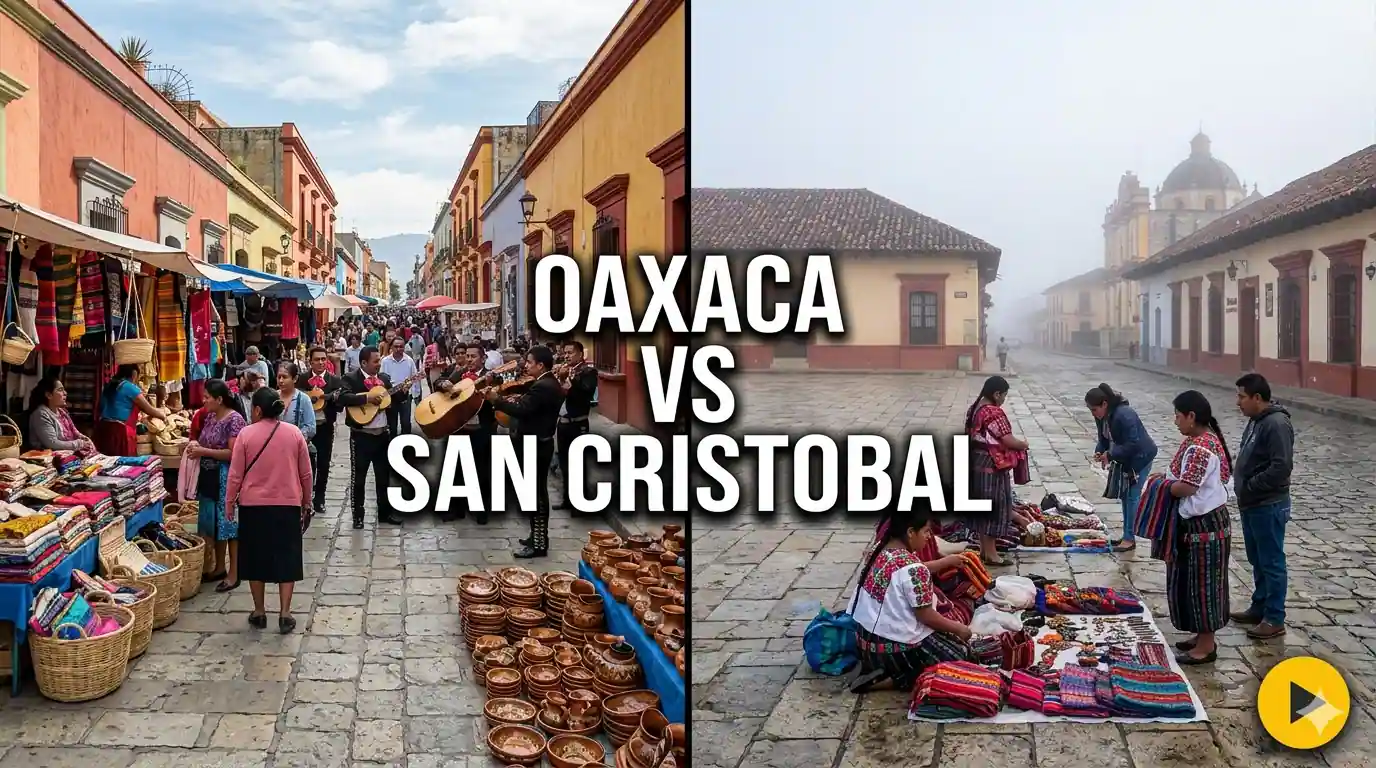
Southern Mexico offers two of the most culturally profound destinations in Latin America. Travelers often debate whether to explore the vibrant culinary and artisanal heart of Oaxaca City or the highland indigenous traditions of San Cristobal de las Casas. Both cities deliver immersive historical experiences, yet they cater to different travel styles, climates, and budgets.
Choosing between them depends on your priorities. If you prioritize world-class gastronomy, accessible archaeological ruins, and a warmer climate with established luxury infrastructure, Oaxaca City is the superior choice. If you seek cooler mountain weather, deep Mayan cultural immersion, remote eco-adventures, and a more relaxed backpacker-friendly pace, San Cristobal provides an unmatched experience.
Based on the latest tourism data and traveler feedback from United States and European visitors, both destinations remain safe, affordable, and highly rewarding. Flight connections to both regions have improved significantly over the past three years. You can easily visit both in a single two-week trip by taking a short domestic connection.
This comprehensive guide breaks down every logistical detail, from international flight routes to visa requirements, seasonal weather patterns, daily budgets, and curated itineraries. We have structured this comparison to help you make a confident booking decision while maximizing your travel budget and cultural exposure.
Direct Answer for Quick Decision
Choose Oaxaca City if you want renowned cuisine, ancient Zapotec ruins, and a warmer climate with upscale hotel options. Select San Cristobal de las Casas if you prefer highland indigenous markets, cooler weather, eco-trekking, and a slower paced cultural immersion.
Key Travel Data Comparison

| Category | Oaxaca City | San Cristobal de las Casas |
| Primary Airport | Oaxaca International Airport (OAX) | San Cristobal uses Tuxtla Gutierrez (TGZ) |
| Average Flight Duration from New York | 4 hours to 6 hours 30 minutes with one stop | 5 hours to 8 hours with two stops |
| Average Flight Cost USD | 350 USD to 750 USD round trip | 450 USD to 850 USD round trip |
| Elevation | 1555 meters above sea level | 2195 meters above sea level |
| Average Daily Budget Mid-Range | 95 USD to 140 USD | 80 USD to 120 USD |
| Best Time to Visit | November to April | November to April |
Why Visit Oaxaca City and San Cristobal

Oaxaca City stands as a UNESCO World Heritage site celebrated for its intact colonial architecture, vibrant artisan markets, and globally recognized culinary scene. The city serves as a gateway to the Sierra Norte mountains, the Valles Centrales valleys, and the coastlines of Puerto Escondido. Visitors frequently highlight the mezcal distillery tours, traditional weaving workshops, and the Monte Alban archaeological site as standout experiences. The local gastronomy has earned multiple international accolades, making it a primary draw for food-focused travelers.
San Cristobal de las Casas operates differently. Nestled in the Chiapas highlands, it retains a deeply indigenous atmosphere where Tzotzil and Tzeltal languages are widely spoken alongside Spanish. The city feels more intimate, with narrow cobblestone streets, historic churches, and thriving artisan cooperatives. Travelers are drawn to its cool mountain climate, the nearby Sumidero Canyon, the vibrant Lacandon Jungle expeditions, and authentic coffee farm visits. The cultural preservation here remains stronger than in many heavily commercialized tourist hubs.
Both cities deliver exceptional value for international visitors. Accommodation options range from budget hostels to luxury boutique hotels. You will find guided English-speaking tours, reliable public transportation, and modern healthcare facilities in both urban centers. Travelers from the United States and Europe consistently rate both destinations highly for cultural authenticity, safety, and hospitality.
When evaluating which city aligns with your travel style, consider your tolerance for altitude, preferred climate, and activity intensity. Oaxaca suits travelers who want structured tours, culinary workshops, and comfortable transit. San Cristobal appeals to those who enjoy independent exploration, trekking, and immersive community tourism.
How to Reach Your Destination

International travelers typically fly into Mexico City International Airport before connecting to southern Mexico. This hub offers the most competitive flight pricing and flexible scheduling. You can book a direct domestic flight from Mexico City to Oaxaca in approximately one hour and fifteen minutes. Major carriers operate multiple daily departures, with round-trip fares ranging from 150 USD to 300 USD when booked two to three months in advance.
Reaching San Cristobal de las Casas requires a slightly more complex routing. Most travelers fly into Angel Albino Corzo International Airport in Tuxtla Gutierrez. The domestic flight from Mexico City takes roughly one hour and twenty minutes. From the Tuxtla airport, you must take a shuttle bus or private transfer to San Cristobal. The drive covers approximately 70 kilometers and lasts about one hour and fifteen minutes through mountain terrain. Shuttle transfers typically cost 15 USD to 25 USD per person.
Direct international flights to Oaxaca City exist from major United States hubs including Houston, Los Angeles, and Dallas. European travelers often route through Madrid or Amsterdam before connecting in Mexico City. San Cristobal rarely receives direct international traffic, making it essential to book a multi-city itinerary or a domestic connection. We recommend using flexible date search tools to secure the lowest airfare. Booking on Tuesday or Wednesday afternoons historically yields better pricing than weekend searches.
Ground transportation within both regions remains highly accessible. Oaxaca City offers reliable local taxis, ride-sharing applications, and organized tour vans. San Cristobal relies heavily on private shuttle networks and cooperative taxi services due to its mountainous geography. Purchasing a comprehensive travel insurance policy with medical evacuation coverage is highly recommended for both destinations. Mountain roads and remote eco-tours carry standard travel risks that require proper documentation and financial protection.
If you plan to visit both cities, domestic flights between Oaxaca and Tuxtla Gutierrez are available through regional carriers. The flight takes roughly one hour and fifteen minutes. Alternatively, you can take a long-distance luxury bus through first-class carriers. The bus journey spans approximately nine hours and costs between 45 USD and 60 USD. This option provides a scenic route through rural Mexican landscapes, though it requires significant time allocation.
Flight Booking and Transit Strategy
Always compare prices across major booking platforms before finalizing your itinerary. Consider booking separate one-way tickets instead of round-trip fares if you plan multi-destination travel. This strategy often reduces total airfare by 15 percent to 25 percent. Pack light if you plan to use regional flights, as baggage fees on domestic Mexican carriers can add 25 USD to 50 USD to your total cost. Using carry-on luggage only eliminates this expense entirely.
Upon arrival, avoid airport currency exchange booths due to unfavorable rates. Use automated teller machines located inside airport terminals or authorized banking centers. Most hotels and tour operators in Oaxaca and San Cristobal accept major credit cards, but rural villages and local markets operate exclusively on cash. Carrying United States dollars as backup is acceptable, but local pesos provide significantly better value for daily transactions.
Visa Rules for International Travelers

Mexico maintains a highly accessible visa policy for travelers from the United States, Canada, the United Kingdom, Australia, and European Union nations. United States citizens require a valid passport with at least six months of remaining validity. No tourist visa is required for stays up to 180 days. Upon arrival, immigration officers issue a Forma Migratoria Multiple tourist card. You must keep this document secure until departure, as lost forms incur replacement fees and processing delays.
Canadian and British passport holders follow identical entry requirements. Australian travelers also receive visa-free entry for tourism purposes, though immigration officers may request proof of onward travel and sufficient funds. European Union citizens holding Schengen passports enter Mexico under the same tourist framework. Always verify updated entry guidelines through official embassy portals before departure, as immigration policies can shift with minimal notice.
If you plan to work remotely or extend your stay beyond 180 days, you must apply for a temporary residency visa at a Mexican consulate in your home country. This process requires financial documentation, health insurance proof, and a formal application submission. Standard tourist visits do not require additional paperwork beyond your passport and tourist card. Keep digital copies of all travel documents stored securely on cloud platforms to prevent loss during transit.
Best Time to Visit Each City

The optimal travel window for both destinations spans from November through April. This period aligns with the dry season, delivering consistent sunshine, minimal rainfall, and comfortable daytime temperatures. December and January represent peak tourist months. Hotel rates increase by 30 percent to 50 percent during holiday weeks, and popular archaeological sites experience heavy foot traffic. Booking accommodations three to four months in advance secures better pricing and preferred locations.
March and April offer ideal conditions for travelers seeking a balance between favorable weather and reduced crowds. Daytime temperatures in Oaxaca City typically range from 24 degrees Celsius to 28 degrees Celsius. Evening temperatures drop to 14 degrees Celsius, requiring light jackets. San Cristobal remains cooler due to its higher elevation. Daytime averages hover around 19 degrees Celsius, while nights frequently drop to 6 degrees Celsius to 10 degrees Celsius. Pack thermal layers and warm outerwear if visiting the highlands during winter months.
The rainy season extends from June through October. While afternoon showers are common, they rarely disrupt entire days. Travelers who visit during this window benefit from lower accommodation costs, reduced tourist density, and lush green landscapes. However, road conditions to remote archaeological sites and jungle reserves may deteriorate temporarily. Always confirm tour operator accessibility before booking eco-adventures during peak rainfall months.
Cultural festivals also influence optimal timing. Oaxaca hosts the Guelaguetza festival in late July, drawing massive regional crowds. San Cristobal celebrates vibrant indigenous processions during Semana Santa. These events provide unparalleled cultural immersion but require advanced booking and flexible itineraries. Evaluate your preference for festive energy versus quiet exploration when selecting your travel dates.
Cost Breakdown and Budget Planning

Both cities deliver exceptional value compared to coastal resort destinations. Daily expenses vary significantly based on your accommodation preferences, dining habits, and tour selection. The following breakdown uses United States dollars as the primary currency for clarity and consistency.
| Expense Category | Budget Traveler | Mid-Range Traveler | Luxury Traveler |
| Accommodation Per Night | 25 USD to 45 USD | 75 USD to 150 USD | 200 USD to 400 USD |
| Daily Meals and Drinks | 15 USD to 25 USD | 35 USD to 60 USD | 80 USD to 150 USD |
| Local Transport | 5 USD to 10 USD | 15 USD to 30 USD | 50 USD to 100 USD |
| Guided Tours and Activities | 20 USD to 40 USD | 60 USD to 120 USD | 200 USD to 500 USD |
| Estimated Total Per Day | 65 USD to 120 USD | 185 USD to 360 USD | 530 USD to 1150 USD |
Budget travelers maximize value by utilizing hostel dormitories, local market meals, and public transit. Oaxaca offers extensive street food networks where you can enjoy traditional tlayudas and fresh juices for under 5 USD. San Cristobal maintains affordable communal dining halls near the central plaza. Booking shared van tours instead of private vehicles reduces daily activity costs by 40 percent to 60 percent.
Mid-range travelers benefit from boutique hotel stays, private guided experiences, and curated dining reservations. This tier provides the best balance between comfort, safety, and cultural access. Many travelers in this category purchase multi-day tour packages that include transportation, English-speaking guides, and entrance fees. These bundles typically offer 15 percent to 20 percent savings compared to booking individually.
Luxury travelers access premium villa accommodations, exclusive mezcal tastings, helicopter archaeological tours, and fine dining experiences. Both cities host internationally trained culinary teams operating high-end restaurants. Private transfers, dedicated local guides, and premium health services remain widely available. Purchasing comprehensive travel insurance with high medical coverage limits is essential for luxury itineraries due to higher-value activities and premium booking commitments.
Recommended Itinerary for First Time Visitors

A seven-day split itinerary allows you to experience both regions without excessive travel fatigue. Day one focuses on arrival and orientation. Fly into your primary destination, check into your accommodation, and take a guided walking tour of the historic center. Evening meals at established local restaurants provide safe and authentic culinary introductions. Avoid over-scheduling during your first 24 hours to allow for altitude and climate adjustment.
Days two through four should cover primary attractions. In Oaxaca, dedicate one day to Monte Alban and Hierve el Agua. Hire a certified guide to navigate the archaeological zones and access restricted cliff pools. Reserve another day for artisan village tours in Teotitlan del Valle and San Bartolo Coyotepec. The third day focuses on culinary workshops, mezcal distillery visits, and market exploration. San Cristobal follows a similar structure. Allocate one day for Sumidero Canyon boat tours and nearby coffee farm visits. Dedicate a second day to indigenous village tours, textile cooperatives, and traditional pottery workshops. Use the third day for Lacandon Jungle eco-trekking or Chiapas highland lake excursions.
Days five and seven accommodate transit and departure. If visiting both cities, take an early morning domestic flight or overnight first-class bus on day five. Spend day six exploring your second destination and finalize souvenir purchases. Book a reputable airport shuttle for day seven departure. Verify all flight schedules 24 hours before travel to avoid unexpected schedule modifications. Keep digital and physical copies of your tourist card and passport readily accessible during transit.
Tour Package Selection and Upgrades
When booking guided experiences, verify operator licensing and recent traveler reviews. Reputable companies provide transparent pricing, clear cancellation policies, and professional English-speaking guides. Avoid unlicensed street vendors offering heavily discounted archaeological or jungle tours. These operations frequently lack proper insurance, safety equipment, and emergency protocols. Upgrading to small-group tours under ten participants enhances cultural interaction and reduces wait times at major attractions. Many mid-range and luxury travelers benefit from purchasing comprehensive city passes that bundle museum entries, transport tickets, and priority access.
Safety and Practical Travel Tips

Both Oaxaca City and San Cristobal maintain stable security conditions for international visitors. Standard urban precautions apply. Keep valuables secured in hotel safes, avoid displaying expensive electronics in crowded markets, and use authorized taxi services or verified ride-sharing applications. Walking in well-lit central districts during daylight hours remains completely safe. Nighttime transit requires pre-arranged transportation rather than street hailing.
Altitude sickness affects some visitors upon arrival in San Cristobal due to the 2195 meter elevation. Drink ample water, avoid heavy alcohol consumption during your first two days, and limit strenuous activity until your body adjusts. Oaxaca City sits at a lower elevation, making altitude concerns minimal. Both regions offer modern medical clinics and hospitals staffed by trained professionals. Keep a list of nearby emergency contacts and ensure your travel insurance covers outpatient medical visits and prescription medication.
Water safety remains a standard consideration. Always consume bottled or properly filtered water. Avoid ice from street vendors and unverified restaurants. Most upscale hotels and established tour operators utilize purified water systems. Carry a reusable water bottle with a built-in filtration mechanism to reduce plastic waste and ensure consistent hydration during long transit days.
Communication networks operate reliably in both urban centers. Local SIM cards and international roaming plans provide consistent data coverage for navigation and translation applications. Purchase a regional data package before arrival to avoid premium roaming charges. Many tour operators and hotels offer complimentary Wi-Fi, though mountainous routes and remote eco-destinations experience intermittent signal coverage. Download offline maps and emergency translation guides as backup.
Respect local customs and indigenous traditions when visiting rural communities. Request permission before photographing residents, dress modestly near religious sites, and purchase artisan goods directly from cooperative vendors. Supporting ethical tourism initiatives ensures that cultural preservation and local economic development continue thriving for future generations. Both cities reward respectful, well-planned travelers with unforgettable cultural immersion and exceptional hospitality.
Final Verdict
Your decision ultimately depends on personal travel priorities. Oaxaca City delivers superior culinary experiences, warmer weather, easier logistics, and world-renowned archaeological access. It suits travelers who value structured itineraries, upscale accommodations, and vibrant urban energy. San Cristobal de las Casas provides cooler highland climates, profound indigenous cultural immersion, remote eco-adventures, and a slower paced atmosphere. It appeals to independent travelers, nature enthusiasts, and those seeking authentic community interactions.
Both destinations remain highly accessible, safe, and financially manageable for United States and European travelers. You can easily combine them into a single extended trip or focus deeply on one region to maximize cultural exposure. Book flights early, secure comprehensive travel insurance, and verify tour operator credentials before committing to premium experiences. Proper planning ensures seamless transit, authentic cultural engagement, and exceptional value throughout your southern Mexico journey.
0 Comments