.webp)
.webp)
Guatemala Digital Nomad Visa 2026: $3,000 Income Rule Guide
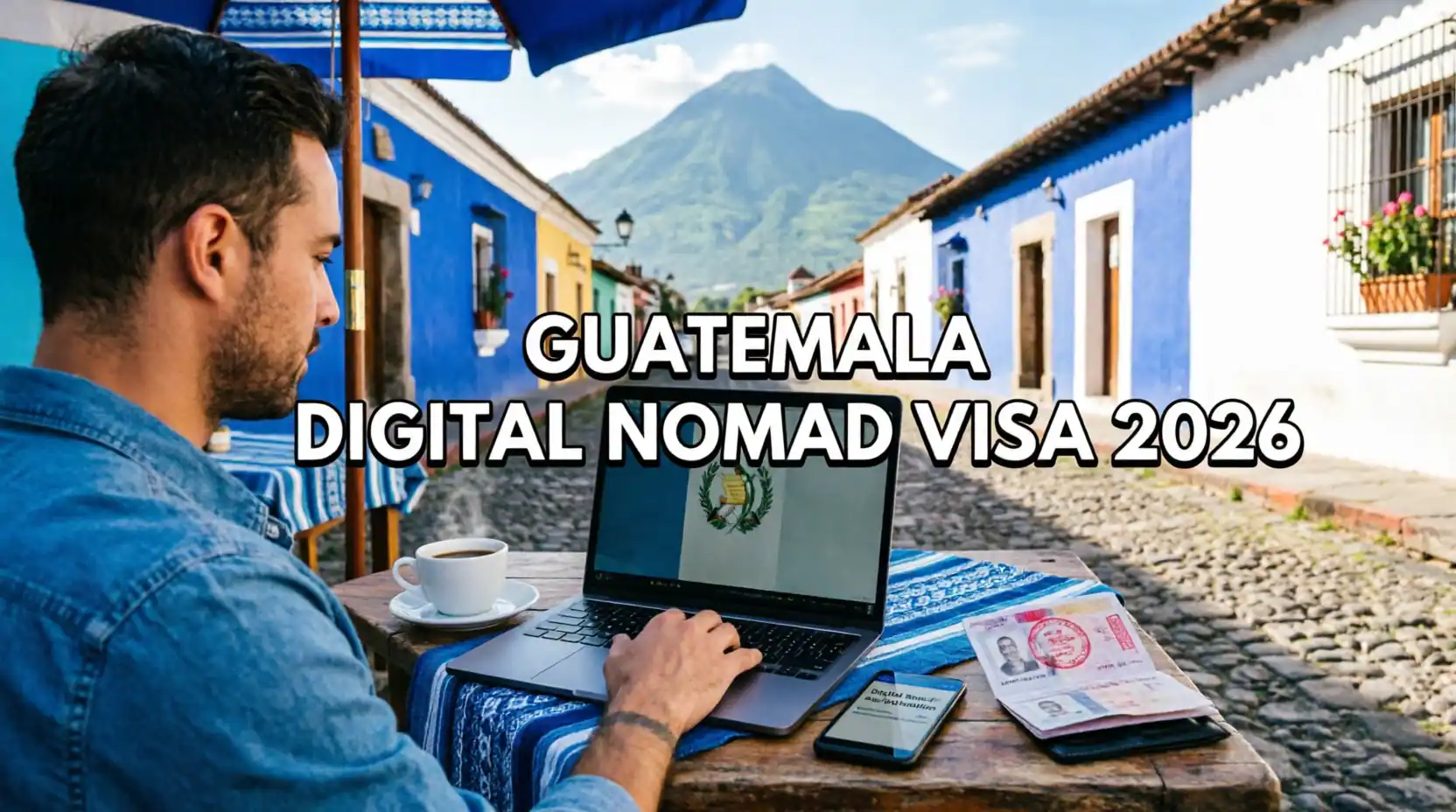
Guatemala's New Digital Nomad Visa 2026: Why the $3,000 Monthly Income Rule Is a Game-Changer
For remote workers seeking an affordable, culturally rich, and geographically stunning base in 2026, Guatemala has emerged as one of Latin America's most compelling digital nomad destinations. The country's newly launched Digital Nomad Visa—featuring an accessible $3,000 USD monthly income requirement—positions Guatemala as a strategic alternative to more expensive regional programs while offering exceptional value, authentic cultural experiences, and diverse landscapes ranging from volcanic highlands to Caribbean coastlines.
While the $3,000 threshold may seem higher than some competing programs, it represents a carefully calibrated balance: accessible enough to attract skilled remote professionals while ensuring visa holders can maintain a comfortable lifestyle in Guatemala without straining local resources. Combined with Guatemala's low cost of living, rich Maya heritage, world-class coffee, adventure opportunities, and improving digital infrastructure, the visa creates a powerful value proposition for location-independent professionals.
This comprehensive guide explains everything you need to know about Guatemala's Digital Nomad Visa in 2026: eligibility requirements, step-by-step application procedures, documentation, tax considerations, cost of living analysis, best cities for remote work, and expert tips to ensure a smooth transition. Whether you're considering your first digital nomad destination or seeking a more affordable alternative to popular hubs, this guide provides the actionable insights you need to make Guatemala your remote work base.
Understanding Guatemala's Digital Nomad Visa

What Is the Guatemala Digital Nomad Visa?
Guatemala's Digital Nomad Visa (officially categorized as a temporary residency permit for remote workers) is a specialized authorization designed for foreign nationals who work remotely for employers or clients outside Guatemala. Introduced as part of Guatemala's broader strategy to attract skilled remote professionals and stimulate local economies, particularly in tourism-centric regions like Antigua and Lake Atitlán, the visa provides legal authorization to live in Guatemala while earning income from abroad.
Key features of the visa include:
- Duration: Initial grant of up to 2 years, with possibility of renewal
- Work authorization: Permission to work remotely for foreign employers or clients; does not permit employment with Guatemalan companies without additional permits
- Family inclusion: Spouses, domestic partners, and dependent children may apply as dependents
- Healthcare access: Eligibility to enroll in Guatemala's healthcare system or maintain private insurance
- Travel flexibility: Multiple entries allowed; visa holders may travel in and out of Guatemala freely
- Pathway to residency: Time spent on the digital nomad visa may count toward permanent residency applications
- Tax considerations: Potential tax benefits for foreign-sourced income (consult tax professional)
- 👉 MUPANAH Museum Haiti First-Time Travelers Guide National Artifacts
- 👉 Pearl Lagoon Nicaragua: 7 Hidden Gems for Adventurers
- 👉 Best Places to Visit in Canada for American Tourists (2026 Guide)
Why the $3,000 Monthly Income Requirement Matters
The $3,000 USD monthly income threshold is the cornerstone of Guatemala's digital nomad visa—and it's a strategic advantage for remote workers:
- Competitive positioning: While higher than some regional programs (El Salvador $1,460), it's significantly lower than Costa Rica ($3,000 but with additional requirements), Mexico ($2,600), or Panama ($1,000 plus additional documentation)
- Affordability alignment: The amount aligns well with Guatemala's cost of living, ensuring visa holders can live comfortably while contributing to the local economy
- Quality filter: The threshold helps attract established professionals with stable income, reducing risks of visa holders becoming a burden on local resources
- Flexibility: Income can come from employment, freelance contracts, business ownership, pensions, or investments—diverse sources are accepted
- Regional competitiveness: Makes Guatemala attractive to mid-to-senior level remote professionals who might not qualify for more restrictive programs
- 👉 MUPANAH Museum Haiti First-Time Travelers Guide National Artifacts
- 👉 Pearl Lagoon Nicaragua: 7 Hidden Gems for Adventurers
- 👉 Best Places to Visit in Canada for American Tourists (2026 Guide)
Income verification options:
- Employment letter stating salary and remote work arrangement
- Freelance contracts or client agreements showing consistent income
- Bank statements demonstrating regular deposits over 3-6 months
- Tax returns or financial statements for business owners
- Pension or investment income documentation
- Cryptocurrency holdings (increasingly accepted with proper documentation)
- 👉 MUPANAH Museum Haiti First-Time Travelers Guide National Artifacts
- 👉 Pearl Lagoon Nicaragua: 7 Hidden Gems for Adventurers
- 👉 Best Places to Visit in Canada for American Tourists (2026 Guide)
Who Qualifies for the Visa?
Eligibility for Guatemala's Digital Nomad Visa extends to:
- Remote employees: Individuals employed by companies outside Guatemala who work entirely online
- Freelancers and contractors: Self-employed professionals serving international clients
- Entrepreneurs and business owners: Founders of location-independent businesses
- Content creators and influencers: Digital professionals earning through platforms, sponsorships, or ad revenue
- Consultants and coaches: Professionals providing services remotely to global clientele
- Technology professionals: Developers, designers, and IT specialists working remotely
- 👉 MUPANAH Museum Haiti First-Time Travelers Guide National Artifacts
- 👉 Pearl Lagoon Nicaragua: 7 Hidden Gems for Adventurers
- 👉 Best Places to Visit in Canada for American Tourists (2026 Guide)
Basic eligibility criteria:
- Valid passport with at least 6 months remaining validity
- Proof of monthly income of at least $3,000 USD (or equivalent in another currency)
- Clean criminal background check from country of residence
- Health insurance coverage valid in Guatemala (public or private)
- Completed visa application and supporting documentation
- Proof of accommodation or rental agreement in Guatemala
- 👉 MUPANAH Museum Haiti First-Time Travelers Guide National Artifacts
- 👉 Pearl Lagoon Nicaragua: 7 Hidden Gems for Adventurers
- 👉 Best Places to Visit in Canada for American Tourists (2026 Guide)
Step-by-Step Application Process

Phase 1: Pre-Application Preparation
Before submitting your visa application, gather and prepare the following documents:
- Valid passport: Ensure at least 6 months validity beyond intended stay; scan bio page in color
- Income verification: Collect 3-6 months of bank statements, employment letters, or contracts demonstrating consistent $3,000+ monthly income
- Criminal background check: Obtain apostilled or authenticated police clearance from your country of residence (valid within 6 months)
- Health insurance proof: Secure coverage valid in Guatemala; public or private international policy accepted
- Passport-style photographs: Two recent color photos meeting Guatemalan specifications (white background, 3x4 cm)
- Visa application form: Complete online via Guatemala's immigration portal or at Guatemalan consulate
- Application fee payment: Prepare payment for visa processing fee (approximately $50-150 USD)
- Proof of accommodation: Rental agreement, hotel reservation, or letter of invitation from host in Guatemala
Phase 2: Submitting Your Application
Guatemala offers multiple pathways for visa submission:
Option A: Apply from Abroad (Recommended)
- Submit application through Guatemalan consulate or embassy in your home country or country of legal residence
- Attend in-person appointment if required for document verification
- Receive visa approval stamped in passport before traveling to Guatemala
- Enter Guatemala with pre-approved visa; complete residency registration within 30 days
- 👉 MUPANAH Museum Haiti First-Time Travelers Guide National Artifacts
- 👉 Pearl Lagoon Nicaragua: 7 Hidden Gems for Adventurers
- 👉 Best Places to Visit in Canada for American Tourists (2026 Guide)
Option B: Apply from Within Guatemala
- Enter Guatemala on a 90-day tourist visa (available to most nationalities upon arrival)
- Submit digital nomad visa application to immigration office in Guatemala City
- Remain in Guatemala while application processes (typically 30-60 days)
- Receive residency card upon approval
- 👉 MUPANAH Museum Haiti First-Time Travelers Guide National Artifacts
- 👉 Pearl Lagoon Nicaragua: 7 Hidden Gems for Adventurers
- 👉 Best Places to Visit in Canada for American Tourists (2026 Guide)
Pro Tip: Applying from abroad often results in faster processing and eliminates uncertainty about in-country status. However, applying from within Guatemala allows you to experience the country before committing long-term.
Phase 3: Post-Approval Steps
Once your visa is approved:
- Register with immigration: Complete residency registration within 30 days of arrival or approval
- Obtain residency ID: Apply for Guatemalan residency identification card at civil registry office
- Open local bank account: Use residency ID and visa to access Guatemalan banking services
- Enroll in healthcare: Register with public health system (IGSS) or activate private insurance
- Update tax status: Consult a tax professional regarding Guatemalan and home-country obligations
- 👉 MUPANAH Museum Haiti First-Time Travelers Guide National Artifacts
- 👉 Pearl Lagoon Nicaragua: 7 Hidden Gems for Adventurers
- 👉 Best Places to Visit in Canada for American Tourists (2026 Guide)
Required Documents Checklist

Core Documentation
All applicants must submit:
- Passport copy: Color scan of bio page; ensure 6+ months validity
- Income proof: Bank statements, employment letter, or contracts showing $3,000+ monthly income
- Background check: Apostilled police clearance from country of residence
- Health insurance: Policy document showing Guatemala coverage
- Photographs: Two recent passport-style photos (white background, 3x4 cm)
- Application form: Completed and signed visa application
- Fee payment: Receipt of visa processing fee payment
- Proof of accommodation: Rental agreement or hotel reservation
- 👉 MUPANAH Museum Haiti First-Time Travelers Guide National Artifacts
- 👉 Pearl Lagoon Nicaragua: 7 Hidden Gems for Adventurers
- 👉 Best Places to Visit in Canada for American Tourists (2026 Guide)
Supporting Documents (Recommended)
- Remote work verification: Letter from employer or client contracts confirming remote arrangement
- Professional credentials: Degrees, certifications, or portfolio demonstrating expertise
- Spanish translation: Certified translations of non-Spanish documents (required by some consulates)
- Proof of ties to home country: Property ownership, family connections, or return flight itinerary
- 👉 MUPANAH Museum Haiti First-Time Travelers Guide National Artifacts
- 👉 Pearl Lagoon Nicaragua: 7 Hidden Gems for Adventurers
- 👉 Best Places to Visit in Canada for American Tourists (2026 Guide)
Document Authentication Requirements
- Apostille: Background checks and certain civil documents must be apostilled per Hague Convention
- Consular legalization: For non-Hague countries, documents may require embassy authentication
- Translation: Non-Spanish documents typically require certified Spanish translation
- Validity periods: Background checks and financial documents usually must be issued within 6 months
- 👉 MUPANAH Museum Haiti First-Time Travelers Guide National Artifacts
- 👉 Pearl Lagoon Nicaragua: 7 Hidden Gems for Adventurers
- 👉 Best Places to Visit in Canada for American Tourists (2026 Guide)
Cost Breakdown: Visa Fees and Living Expenses

Visa-Related Costs
Budget for these visa-specific expenses:
- Application fee: $50-150 USD (varies by consulate and processing speed)
- Document authentication: $50-200 USD for apostilles and translations
- Health insurance: $50-150 USD/month for international coverage; public IGSS ~$30-50/month
- Legal assistance (optional): $300-1,000 USD for immigration lawyer support
- Travel to consulate: Variable costs if in-person appointment required
- 👉 MUPANAH Museum Haiti First-Time Travelers Guide National Artifacts
- 👉 Pearl Lagoon Nicaragua: 7 Hidden Gems for Adventurers
- 👉 Best Places to Visit in Canada for American Tourists (2026 Guide)
Total estimated visa startup cost: $500-1,800 USD
Monthly Living Costs in Guatemala
Guatemala's affordability is a major draw for digital nomads. Estimated monthly expenses:
Housing:
- Antigua apartment (1-bedroom, city center): $400-700 USD
- Antigua apartment (1-bedroom, outside center): $250-450 USD
- Lake Atitlán (Panajachel, San Pedro): $300-600 USD
- Guatemala City (Zona 10, Zona 14): $500-900 USD
- 👉 MUPANAH Museum Haiti First-Time Travelers Guide National Artifacts
- 👉 Pearl Lagoon Nicaragua: 7 Hidden Gems for Adventurers
- 👉 Best Places to Visit in Canada for American Tourists (2026 Guide)
Utilities and Internet:
- Electricity, water, gas: $50-100 USD
- High-speed fiber internet: $30-60 USD
- Mobile phone plan: $15-30 USD
- 👉 MUPANAH Museum Haiti First-Time Travelers Guide National Artifacts
- 👉 Pearl Lagoon Nicaragua: 7 Hidden Gems for Adventurers
- 👉 Best Places to Visit in Canada for American Tourists (2026 Guide)
Food and Dining:
- Groceries (local markets): $150-250 USD
- Restaurant meals (mid-range): $5-15 USD per meal
- Street food and local comedores: $2-5 USD
- Coffee (local): $1-3 USD
- 👉 MUPANAH Museum Haiti First-Time Travelers Guide National Artifacts
- 👉 Pearl Lagoon Nicaragua: 7 Hidden Gems for Adventurers
- 👉 Best Places to Visit in Canada for American Tourists (2026 Guide)
Transportation:
- Local buses (chicken buses): $0.50-2 USD per ride
- Taxis/ride-share: $3-10 USD per trip
- Inter-city shuttles: $10-25 USD
- Domestic flights: Not typically necessary; Guatemala is compact
- 👉 MUPANAH Museum Haiti First-Time Travelers Guide National Artifacts
- 👉 Pearl Lagoon Nicaragua: 7 Hidden Gems for Adventurers
- 👉 Best Places to Visit in Canada for American Tourists (2026 Guide)
Healthcare:
- Public IGSS enrollment: ~$30-50 USD/month
- Private insurance: $50-150 USD/month
- Doctor visit (private): $20-40 USD
- 👉 MUPANAH Museum Haiti First-Time Travelers Guide National Artifacts
- 👉 Pearl Lagoon Nicaragua: 7 Hidden Gems for Adventurers
- 👉 Best Places to Visit in Canada for American Tourists (2026 Guide)
Total estimated monthly budget (single person): $1,000-2,000 USD
Key insight: The $3,000 income requirement provides comfortable margin above typical living costs, allowing for savings, travel, and discretionary spending while maintaining financial stability.
Tax Considerations for Digital Nomads

Guatemalan Tax Obligations
Understanding tax implications is critical for digital nomads:
- Residency-based taxation: Guatemala taxes residents on worldwide income; non-residents only on Guatemala-sourced income
- 183-day rule: Spending more than 183 days in Guatemala within a 12-month period typically establishes tax residency
- Digital nomad visa status: Holding the visa does not automatically make you a tax resident, but extended stays may trigger residency
- Foreign income exclusion: Guatemala may exempt foreign-sourced income under certain conditions; consult a tax professional
- Local income: Any income earned from Guatemalan sources is subject to local taxation
- 👉 MUPANAH Museum Haiti First-Time Travelers Guide National Artifacts
- 👉 Pearl Lagoon Nicaragua: 7 Hidden Gems for Adventurers
- 👉 Best Places to Visit in Canada for American Tourists (2026 Guide)
Home Country Tax Obligations
Most digital nomads remain tax residents of their home countries:
- U.S. citizens: Must file U.S. taxes regardless of residence; Foreign Earned Income Exclusion may apply ($120,000+ exclusion for 2026)
- Canadian citizens: May maintain residency ties; consult CRA guidelines
- EU citizens: Rules vary by country; many tax based on permanent home or center of vital interests
- Double taxation treaties: Guatemala has agreements with select countries; verify applicability to your situation
- 👉 MUPANAH Museum Haiti First-Time Travelers Guide National Artifacts
- 👉 Pearl Lagoon Nicaragua: 7 Hidden Gems for Adventurers
- 👉 Best Places to Visit in Canada for American Tourists (2026 Guide)
Practical Tax Strategies
- Track days carefully: Maintain a travel log to monitor time spent in Guatemala versus other countries
- Consult professionals: Engage tax advisors familiar with both Guatemalan and home-country rules
- Document income sources: Keep clear records distinguishing Guatemala-sourced versus foreign income
- Consider corporate structures: Some nomads use LLCs or other entities to optimize tax treatment (seek legal advice)
- File on time: Meet all filing deadlines in both jurisdictions to avoid penalties
- 👉 MUPANAH Museum Haiti First-Time Travelers Guide National Artifacts
- 👉 Pearl Lagoon Nicaragua: 7 Hidden Gems for Adventurers
- 👉 Best Places to Visit in Canada for American Tourists (2026 Guide)
Best Cities in Guatemala for Digital Nomads

Antigua Guatemala: Colonial Charm and Connectivity
Why nomads love it:
- UNESCO World Heritage colonial city with cobblestone streets and baroque architecture
- Established expat and digital nomad community with networking opportunities
- Abundant coworking spaces, cafes with reliable WiFi, and restaurants
- Rich cultural experiences: festivals, markets, Spanish language schools
- Proximity to volcanoes, coffee farms, and adventure activities
- Safe, walkable, and tourist-friendly infrastructure
- 👉 MUPANAH Museum Haiti First-Time Travelers Guide National Artifacts
- 👉 Pearl Lagoon Nicaragua: 7 Hidden Gems for Adventurers
- 👉 Best Places to Visit in Canada for American Tourists (2026 Guide)
Considerations:
- Higher cost of living than other Guatemalan cities (though still affordable globally)
- Can be crowded during peak tourist seasons
- Limited nightlife compared to larger cities
- 👉 MUPANAH Museum Haiti First-Time Travelers Guide National Artifacts
- 👉 Pearl Lagoon Nicaragua: 7 Hidden Gems for Adventurers
- 👉 Best Places to Visit in Canada for American Tourists (2026 Guide)
Estimated monthly budget: $1,200-2,200 USD
Lake Atitlán: Natural Beauty and Creative Community
Why nomads love it:
- Stunning volcanic lake surrounded by three volcanoes and indigenous villages
- Strong creative and wellness community; yoga retreats, art workshops, spiritual gatherings
- Affordable accommodation and dining options
- Opportunities for cultural immersion with Kaqchikel and Tz'utujil Maya communities
- Outdoor activities: hiking, kayaking, swimming, volcano climbing
- 👉 MUPANAH Museum Haiti First-Time Travelers Guide National Artifacts
- 👉 Pearl Lagoon Nicaragua: 7 Hidden Gems for Adventurers
- 👉 Best Places to Visit in Canada for American Tourists (2026 Guide)
Considerations:
- Internet reliability varies by village; research specific locations
- Limited healthcare facilities; serious issues require travel to Guatemala City
- Transportation between villages requires boat or shuttle coordination
- 👉 MUPANAH Museum Haiti First-Time Travelers Guide National Artifacts
- 👉 Pearl Lagoon Nicaragua: 7 Hidden Gems for Adventurers
- 👉 Best Places to Visit in Canada for American Tourists (2026 Guide)
Estimated monthly budget: $900-1,800 USD
Guatemala City: Urban Amenities and Business Hub
Why nomads love it:
- Capital city with extensive infrastructure and international connections
- Diverse neighborhoods: modern Zona 10, historic Zona 1, trendy Zona 14
- Abundant coworking spaces, international restaurants, and cultural institutions
- Excellent healthcare facilities and international schools
- Direct flights to major global hubs via La Aurora International Airport
- Access to business networking and professional opportunities
- 👉 MUPANAH Museum Haiti First-Time Travelers Guide National Artifacts
- 👉 Pearl Lagoon Nicaragua: 7 Hidden Gems for Adventurers
- 👉 Best Places to Visit in Canada for American Tourists (2026 Guide)
Considerations:
- Higher cost of living than smaller cities
- Traffic congestion during rush hours
- Some neighborhoods require safety awareness
- 👉 MUPANAH Museum Haiti First-Time Travelers Guide National Artifacts
- 👉 Pearl Lagoon Nicaragua: 7 Hidden Gems for Adventurers
- 👉 Best Places to Visit in Canada for American Tourists (2026 Guide)
Estimated monthly budget: $1,300-2,500 USD
Other Notable Locations
- Flores/Tikal: Gateway to Maya ruins; quieter, nature-focused
- Xela (Quetzaltenango): University city with Spanish schools; lower costs
- Monterrico: Pacific coast beach town; relaxed, surf-friendly
- Lanquín/Semuc Champey: Adventure destination; remote, nature-focused
- 👉 MUPANAH Museum Haiti First-Time Travelers Guide National Artifacts
- 👉 Pearl Lagoon Nicaragua: 7 Hidden Gems for Adventurers
- 👉 Best Places to Visit in Canada for American Tourists (2026 Guide)
Healthcare and Insurance Options

Public Healthcare: IGSS
Guatemala's public healthcare system (Instituto Guatemalteco de Seguridad Social - IGSS) offers affordable coverage:
- Eligibility: Visa holders may enroll as voluntary contributors
- Cost: Approximately $30-50 USD/month based on declared income
- Coverage: Primary care, hospitalization, medications, and specialist referrals
- Quality: Varies by facility; major cities have well-equipped public hospitals
- Language: Spanish-speaking staff; limited English in public facilities
- 👉 MUPANAH Museum Haiti First-Time Travelers Guide National Artifacts
- 👉 Pearl Lagoon Nicaragua: 7 Hidden Gems for Adventurers
- 👉 Best Places to Visit in Canada for American Tourists (2026 Guide)
Private Healthcare and Insurance
Many digital nomads prefer private options for flexibility and English-language service:
- International insurance: Policies from providers like Cigna Global, Allianz, or SafetyWing ($50-150 USD/month)
- Local private insurance: Guatemalan companies offer regional coverage
- Private hospitals: High-quality facilities in Guatemala City with English-speaking staff
- Out-of-pocket care: Even private consultations are affordable ($20-50 USD) compared to North America or Europe
- 👉 MUPANAH Museum Haiti First-Time Travelers Guide National Artifacts
- 👉 Pearl Lagoon Nicaragua: 7 Hidden Gems for Adventurers
- 👉 Best Places to Visit in Canada for American Tourists (2026 Guide)
Healthcare Tips for Nomads
- Carry copies of insurance policies and emergency contact information
- Research hospitals and clinics in your chosen city before arrival
- Keep a supply of prescription medications; bring copies of prescriptions
- Learn basic Spanish medical phrases or use translation apps
- Consider evacuation coverage for remote travel or adventure activities
- 👉 MUPANAH Museum Haiti First-Time Travelers Guide National Artifacts
- 👉 Pearl Lagoon Nicaragua: 7 Hidden Gems for Adventurers
- 👉 Best Places to Visit in Canada for American Tourists (2026 Guide)
Banking and Financial Logistics

Opening a Local Bank Account
Having a Guatemalan bank account simplifies daily life:
- Requirements: Residency ID, visa, proof of address, and initial deposit
- Recommended banks: Banco Industrial, Banco G&T Continental, or Banrural for expat-friendly services
- Account types: Savings (ahorros) and checking (corriente) accounts available
- Fees: Minimal monthly fees; ATM withdrawals often free at own-bank machines
- Online banking: Most banks offer apps and web platforms; English support varies
- 👉 MUPANAH Museum Haiti First-Time Travelers Guide National Artifacts
- 👉 Pearl Lagoon Nicaragua: 7 Hidden Gems for Adventurers
- 👉 Best Places to Visit in Canada for American Tourists (2026 Guide)
Managing International Finances
- Multi-currency accounts: Services like Wise, Revolut, or Payoneer facilitate cross-border transactions
- Credit cards: Visa and Mastercard widely accepted; notify issuers of travel to avoid blocks
- Cash usage: Guatemala uses Quetzales (GTQ); USD accepted in tourist areas but change may be in GTQ
- Remittances: Services like Western Union or bank transfers for sending/receiving funds
- Tax documentation: Maintain clear records of income sources and expenses for reporting
- 👉 MUPANAH Museum Haiti First-Time Travelers Guide National Artifacts
- 👉 Pearl Lagoon Nicaragua: 7 Hidden Gems for Adventurers
- 👉 Best Places to Visit in Canada for American Tourists (2026 Guide)
Internet and Coworking Infrastructure

Internet Reliability by Region
Digital nomads depend on connectivity; Guatemala's infrastructure varies:
- Antigua: Fiber optic widely available; 50-100 Mbps common; reliable for video calls
- Lake Atitlán: Good coverage in Panajachel and San Pedro; 20-50 Mbps typical; verify before committing
- Guatemala City: Excellent coverage; 100+ Mbps available in business districts
- Rural areas: Limited infrastructure; satellite or mobile hotspots may be necessary
- 👉 MUPANAH Museum Haiti First-Time Travelers Guide National Artifacts
- 👉 Pearl Lagoon Nicaragua: 7 Hidden Gems for Adventurers
- 👉 Best Places to Visit in Canada for American Tourists (2026 Guide)
Mobile data options:
- Tigo, Claro, and Movistar offer prepaid and postpaid plans
- 4G/LTE coverage extensive in populated areas; 5G emerging in cities
- Unlimited data plans: $20-40 USD/month
- Portable Wi-Fi hotspots: $30-60 USD for device plus data
- 👉 MUPANAH Museum Haiti First-Time Travelers Guide National Artifacts
- 👉 Pearl Lagoon Nicaragua: 7 Hidden Gems for Adventurers
- 👉 Best Places to Visit in Canada for American Tourists (2026 Guide)
Coworking Spaces
Guatemala's coworking scene is growing:
- Antigua: Antigua Coworking, Impact Hub, and other spaces with day passes ($10-20) and monthly memberships ($80-150)
- Guatemala City: WeWork, Espacio Coworking, and local spaces with professional amenities
- Lake Atitlán: Emerging spaces in Panajachel; verify internet speed before committing
- 👉 MUPANAH Museum Haiti First-Time Travelers Guide National Artifacts
- 👉 Pearl Lagoon Nicaragua: 7 Hidden Gems for Adventurers
- 👉 Best Places to Visit in Canada for American Tourists (2026 Guide)
Café culture: Many cafes welcome remote workers; purchase drinks to support businesses; test Wi-Fi before settling in.
Community and Networking

Expat and Nomad Communities
Connecting with fellow remote workers enhances the Guatemala experience:
- Facebook groups: "Digital Nomads Guatemala," "Expats in Antigua," "Lake Atitlán Nomads" for advice and meetups
- Meetup.com: Regular events for professionals, language exchange, and social activities
- Coworking events: Workshops, networking nights, and skill-sharing sessions
- Language exchange: Practice Spanish while helping others learn English; builds local connections
- Cultural events: Festivals, markets, and community gatherings for authentic immersion
- 👉 MUPANAH Museum Haiti First-Time Travelers Guide National Artifacts
- 👉 Pearl Lagoon Nicaragua: 7 Hidden Gems for Adventurers
- 👉 Best Places to Visit in Canada for American Tourists (2026 Guide)
Integrating with Local Culture
- Learn basic Spanish: Even A2-level skills dramatically improve daily interactions and community acceptance
- Participate in local events: Festivals, markets, and cultural activities deepen understanding of Guatemalan life
- Support local businesses: Choose neighborhood shops, restaurants, and services over international chains
- Respect customs: Punctuality, greetings, and social norms differ from North America or Europe; observe and adapt
- 👉 MUPANAH Museum Haiti First-Time Travelers Guide National Artifacts
- 👉 Pearl Lagoon Nicaragua: 7 Hidden Gems for Adventurers
- 👉 Best Places to Visit in Canada for American Tourists (2026 Guide)
Renewal and Long-Term Pathways

Visa Renewal Process
The Digital Nomad Visa is initially granted for up to 2 years:
- Renewal eligibility: Apply before expiration; demonstrate continued income and compliance
- Documentation: Updated income proof, clean criminal record, valid insurance, and application form
- Processing time: Typically 30-60 days; apply early to avoid gaps in status
- Fees: Renewal costs similar to initial application ($50-150 USD)
- 👉 MUPANAH Museum Haiti First-Time Travelers Guide National Artifacts
- 👉 Pearl Lagoon Nicaragua: 7 Hidden Gems for Adventurers
- 👉 Best Places to Visit in Canada for American Tourists (2026 Guide)
Pathway to Permanent Residency
Time on the digital nomad visa may contribute to permanent residency:
- Standard requirement: 21-24 months of temporary residency typically qualifies for permanent application
- Additional criteria: Clean record, financial stability, and integration efforts strengthen applications
- Benefits of permanent residency: No renewal requirements, easier banking, and pathway to citizenship
- Citizenship timeline: After 3-5 years of permanent residency, naturalization may be possible (consult immigration attorney)
- 👉 MUPANAH Museum Haiti First-Time Travelers Guide National Artifacts
- 👉 Pearl Lagoon Nicaragua: 7 Hidden Gems for Adventurers
- 👉 Best Places to Visit in Canada for American Tourists (2026 Guide)
Common Challenges and Solutions

Language Barrier
Challenge: Limited English outside major cities and tourist areas.
Solutions:
- Take intensive Spanish courses before or upon arrival
- Use translation apps (Google Translate, DeepL) for daily tasks
- Seek bilingual services for banking, healthcare, and legal matters
- Practice with language exchange partners to build confidence
- 👉 MUPANAH Museum Haiti First-Time Travelers Guide National Artifacts
- 👉 Pearl Lagoon Nicaragua: 7 Hidden Gems for Adventurers
- 👉 Best Places to Visit in Canada for American Tourists (2026 Guide)
Bureaucracy and Processing Times
Challenge: Government procedures can be slow and documentation-intensive.
Solutions:
- Start applications early; allow buffer time for delays
- Keep digital and physical copies of all documents
- Consider hiring a local immigration attorney for complex cases
- Join expat forums for real-time advice on processes
- 👉 MUPANAH Museum Haiti First-Time Travelers Guide National Artifacts
- 👉 Pearl Lagoon Nicaragua: 7 Hidden Gems for Adventurers
- 👉 Best Places to Visit in Canada for American Tourists (2026 Guide)
Safety Concerns
Challenge: Perception of safety issues in Guatemala.
Solutions:
- Stay informed about current conditions through official sources
- Stick to well-traveled areas and tourist-friendly zones
- Use reputable transportation and accommodation providers
- Follow local advice and exercise standard urban precautions
- Register with your embassy for safety updates
- 👉 MUPANAH Museum Haiti First-Time Travelers Guide National Artifacts
- 👉 Pearl Lagoon Nicaragua: 7 Hidden Gems for Adventurers
- 👉 Best Places to Visit in Canada for American Tourists (2026 Guide)
Cultural Adjustment
Challenge: Different pace of life, social norms, and business practices.
Solutions:
- Observe and ask questions rather than assuming
- Embrace flexibility; "Guatemalan time" is more relaxed
- Build relationships; personal connections often facilitate solutions
- Stay patient and maintain a sense of humor
- 👉 MUPANAH Museum Haiti First-Time Travelers Guide National Artifacts
- 👉 Pearl Lagoon Nicaragua: 7 Hidden Gems for Adventurers
- 👉 Best Places to Visit in Canada for American Tourists (2026 Guide)
Expert Tips for a Successful Transition

- Visit before committing: Spend 2-4 weeks in your target city to assess fit before applying for the visa
- Secure housing first: Arrange initial accommodation (Airbnb, short-term rental) before arrival; long-term leases often require local references
- Build a local support network: Connect with expats, hire a relocation consultant, or join community groups before arrival
- Prepare financially: Maintain 3-6 months of expenses in savings as a buffer during transition
- Learn key Spanish phrases: Focus on greetings, directions, shopping, and emergency terms
- Register with your embassy: Notify your country's embassy of your Guatemala residence for emergency assistance
- Embrace flexibility: Plans may change; adaptability is your greatest asset in a new country
- Document everything: Keep organized records of applications, payments, and communications for visa and tax purposes
- Respect local culture: Guatemala has a rich heritage; be respectful and curious about traditions and customs
- Explore responsibly: Support sustainable tourism practices and community-based initiatives
- 👉 MUPANAH Museum Haiti First-Time Travelers Guide National Artifacts
- 👉 Pearl Lagoon Nicaragua: 7 Hidden Gems for Adventurers
- 👉 Best Places to Visit in Canada for American Tourists (2026 Guide)
Conclusion: Why Guatemala's $3,000 Rule Changes the Game

Guatemala's Digital Nomad Visa, anchored by the accessible $3,000 monthly income requirement, represents a strategic opportunity for remote workers seeking authenticity, affordability, and adventure. By positioning itself between ultra-budget destinations and premium hubs, Guatemala attracts professionals who value cultural immersion, natural beauty, and meaningful experiences without sacrificing comfort or connectivity.
But affordability is just the beginning. The visa's two-year duration, family inclusion options, healthcare access, and pathway to permanent residency create a compelling package for those seeking more than a temporary escape. Combined with Guatemala's geographic diversity, cultural richness, improving digital infrastructure, and welcoming expat communities, the opportunity extends far beyond paperwork—it's an invitation to build a meaningful, balanced life in one of Central America's most dynamic countries.
For digital nomads weighing options in 2026, Guatemala offers a rare combination: reasonable barriers to entry, high quality of life, authentic experiences, and the chance to be part of a nation embracing innovation while preserving its rich cultural heritage. The $3,000 rule isn't just a number—it's a gateway to a lifestyle where work and wonder coexist, where volcanoes meet colonial charm, and where your remote career fuels adventures rather than confines them.
As the world of work continues to evolve, destinations like Guatemala demonstrate that the future of employment isn't tied to a desk—it's tied to possibility. And in 2026, that possibility has a name: Guatemala's Digital Nomad Visa.
Your remote work journey just got a whole lot more accessible. The highlands are calling. The coffee is brewing. And Guatemala awaits.
0 Comments