.webp)
.webp)
Introduction to Namibia Tourist Visa for US Citizens
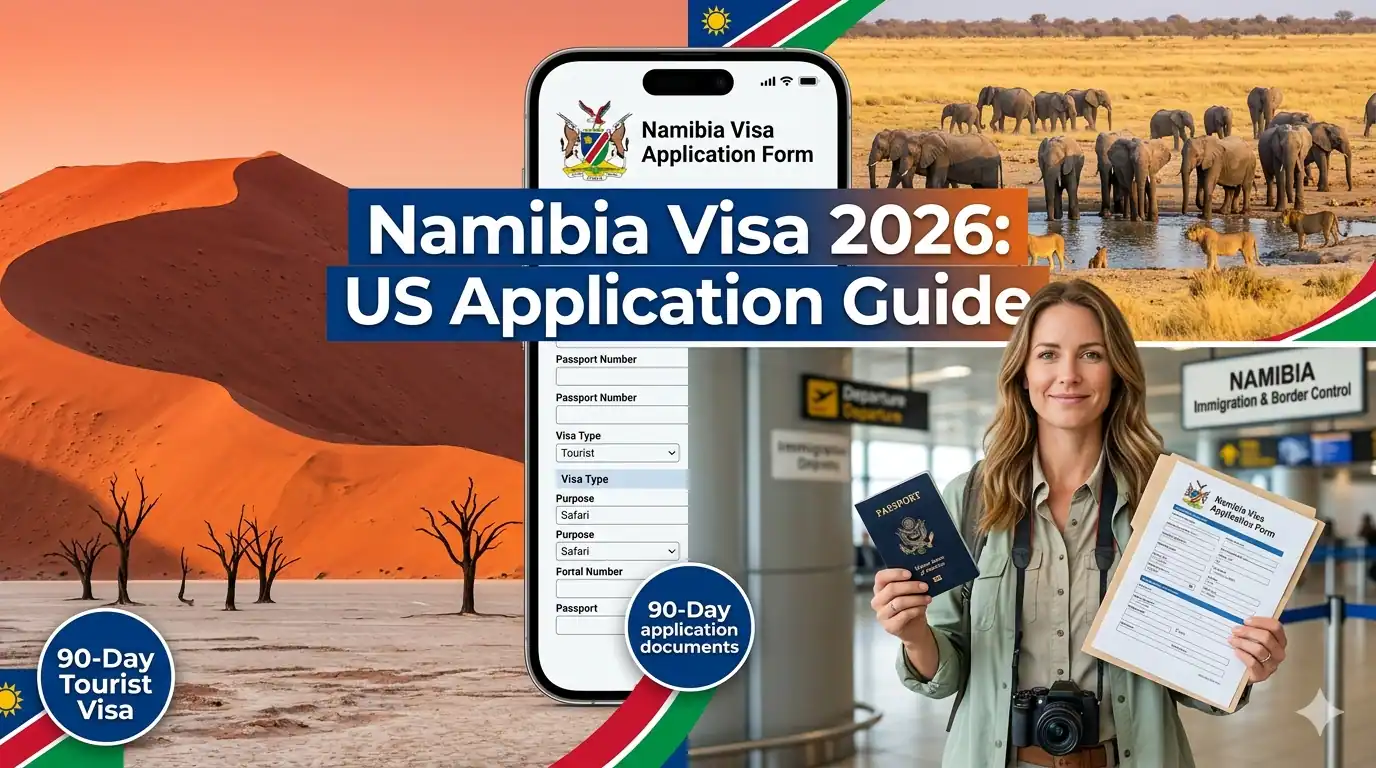
Planning an unforgettable safari adventure or exploring the breathtaking landscapes of Namibia in 2026? As a US citizen, understanding the visa requirements is your first step toward experiencing this remarkable Southern African destination. Namibia offers some of the world's most spectacular scenery, from the towering red dunes of Sossusvlei to the wildlife-rich plains of Etosha National Park, and the dramatic Skeleton Coast. However, before you can embark on this incredible journey, you must secure the proper travel documentation.
Unlike some destinations that offer visa-free entry or visa-on-arrival for American travelers, Namibia requires US citizens to obtain a tourist visa before arrival. This comprehensive guide will walk you through every aspect of the Namibia tourist visa application process, from gathering required documents to understanding processing times and fees. Whether you're planning a two-week safari or an extended exploration of Namibia's diverse regions, having the correct visa ensures a smooth entry and allows you to focus on creating unforgettable memories in one of Africa's most pristine wilderness areas.
The good news is that while the application process requires attention to detail, it's straightforward when you have the right information. Namibian tourist visas typically allow stays of up to 90 days, providing ample time to explore the country's highlights at a comfortable pace. This guide covers everything you need to know to successfully obtain your Namibia tourist visa in 2026, including recent updates to requirements, application procedures, and tips to avoid common mistakes that could delay your travel plans.
Do US Citizens Need a Visa to Visit Namibia?

Yes, US citizens must obtain a tourist visa before traveling to Namibia. Namibia does not currently offer visa-free entry or visa-on-arrival privileges for American passport holders. This means you must secure your visa approval before departing the United States, either through a Namibian embassy or consulate, or through authorized visa application centers.
The requirement for advance visa application allows Namibian immigration authorities to process your documentation thoroughly and ensures you meet all entry requirements before arrival. While this adds a step to your travel planning, it provides certainty and peace of mind knowing your entry is pre-approved. The tourist visa is specifically designed for leisure travelers, safari enthusiasts, photographers, and those visiting friends and family in Namibia.
It's important to distinguish between tourist visas and other visa categories. If you're traveling to Namibia for business purposes, volunteer work, study, or employment, you'll need to apply for a different visa category with specific requirements. The tourist visa strictly prohibits engaging in paid employment or business activities, though attending conferences or meetings as a participant is generally permissible.
What Is a Namibia Tourist Visa?
A Namibia tourist visa is an official travel document that grants US citizens permission to enter Namibia for leisure and tourism purposes. The visa is typically issued as a sticker or stamp in your passport and specifies the validity period, number of entries allowed, and maximum duration of stay.
Standard tourist visas for US citizens are usually valid for up to 90 days from the date of entry and may be issued for single or multiple entries, depending on your travel itinerary and supporting documentation. The visa allows you to explore Namibia's national parks, visit cultural sites, participate in safari activities, and experience the country's renowned hospitality.
It's crucial to understand that visa validity and permitted stay are different concepts. Visa validity refers to the period during which you can use the visa to enter Namibia, while permitted stay indicates how long you can remain in the country on each entry. Always verify these dates carefully when you receive your visa to avoid overstaying, which can result in fines, deportation, or future entry bans.
Namibia Tourist Visa Requirements for US Citizens in 2026

Meeting all visa requirements is essential for a successful application. Namibian immigration authorities carefully review each application, and incomplete or incorrect submissions can result in delays or denials. Understanding and preparing the required documentation in advance streamlines the process and improves your chances of approval.
Passport Requirements
Your passport is the foundation of your visa application and must meet specific criteria. US citizens must possess a valid passport with at least six months of remaining validity beyond your intended departure date from Namibia. This six-month rule is strictly enforced, and applications with passports nearing expiration will be rejected outright.
Your passport must have at least two to three completely blank visa pages available for the visa sticker and entry stamps. Note that endorsement pages or amendment pages do not count as valid visa pages. The passport should be in excellent condition with no significant damage, tears, water damage, or excessive wear. Damaged passports may result in entry denial even if your visa is approved.
If your passport is set to expire within the next six to nine months, renew it before applying for the Namibia tourist visa. Passport renewal typically takes 6-8 weeks for standard service or 2-3 weeks for expedited service, so plan accordingly to avoid delays in your visa application timeline.
Completed Visa Application Form
You must complete the official Namibia visa application form, available from Namibian embassies, consulates, or their official immigration website. The form requires detailed personal information including your full legal name, date of birth, place of birth, nationality, passport details, and contact information.
Travel information sections require your intended dates of entry and exit, purpose of visit, intended address in Namibia (hotel or accommodation details), and port of entry. Employment information typically includes your current occupation, employer name and address, and length of employment.
Accuracy is paramount when completing the application form. All information must match exactly what appears on your passport and supporting documents. Inconsistencies, even minor ones like middle name variations or date format differences, can cause processing delays. Take your time to review every field before submission, and consider having someone else proofread your application to catch potential errors.
Passport Photographs
You'll need to provide recent passport-sized photographs that meet specific international standards. Namibia typically requires two identical color photographs taken within the last six months. The photographs must be 2 inches by 2 inches (51mm x 51mm) with a plain white or off-white background.
Your face should be centered in the frame, occupying approximately 50-70% of the photograph, with a neutral expression and both eyes open and visible. Head coverings are only permitted for religious purposes and must not obscure facial features. Glasses are generally discouraged unless medically necessary, and even then, there must be no glare or reflection obscuring your eyes.
Professional passport photo services are widely available at post offices, shipping centers, pharmacies, and photography studios. Many services can provide digital files if needed for online applications. Avoid using old photographs, selfies, or images with filters, as these will likely be rejected.
Proof of Travel Arrangements
Namibian immigration authorities require evidence of your travel plans to verify your intended dates of entry and exit. This typically includes a copy of your round-trip flight itinerary showing confirmed reservations from the United States to Namibia and return. The itinerary should clearly display your name, flight numbers, dates, and destinations.
While some travelers hesitate to purchase non-refundable tickets before visa approval, many airlines offer flexible fares or hold reservations for 24-72 hours. Alternatively, you can use flight itinerary services that provide confirmed reservations specifically for visa applications without full payment. However, once your visa is approved, you should have actual confirmed tickets before travel.
If you're planning to enter Namibia from a neighboring country like South Africa, Botswana, or Zambia, provide documentation of that entry including flight confirmations or border crossing details along with proof of onward travel from Namibia.
Proof of Accommodation
You must demonstrate where you'll stay during your time in Namibia. This can include hotel reservations, lodge bookings, safari camp confirmations, or invitation letters from hosts if staying with friends or family. The accommodation proof should cover your entire intended stay or at least the first portion of your trip.
For hotel and lodge bookings, provide confirmation emails or vouchers showing your name, property name and address, dates of stay, and booking reference numbers. Many safari lodges and tour operators provide comprehensive booking confirmations suitable for visa applications.
If staying with friends or family, your host must provide a formal invitation letter along with proof of their legal status in Namibia (copy of passport, ID, or residence permit) and evidence of their address. The invitation letter should include their contact information, your relationship, purpose and duration of your visit, and a statement that they'll provide accommodation during your stay.
Proof of Sufficient Funds
Namibia requires visitors to demonstrate they have adequate financial resources to support themselves during their stay without seeking employment. You'll need to provide recent bank statements, typically covering the last three to six months, showing consistent income and sufficient balance.
While Namibia doesn't publish a specific minimum amount, a general guideline is to show access to at least $100-150 USD per day of your intended stay. For a 14-day trip, this means demonstrating access to $1,400-$2,100 or more. Bank statements should show your name, account number, and transaction history.
Additional financial documents that strengthen your application include employment verification letters stating your position and salary, recent pay stubs, tax returns, or proof of investments. If someone else is sponsoring your trip, they must provide a sponsorship letter along with their financial documents and proof of relationship to you.
Travel Insurance Documentation
While not always mandatory, comprehensive travel insurance is highly recommended and sometimes required for visa approval. Your policy should cover medical emergencies, hospitalization, evacuation, repatriation, and trip cancellation for the entire duration of your stay in Namibia.
Medical facilities in Namibia's major cities like Windhoek and Swakopmund are adequate, but remote safari areas have limited healthcare infrastructure. Medical evacuation to South Africa or beyond can be extremely expensive, making comprehensive coverage essential. Your insurance documentation should clearly state coverage limits, policy number, and validity dates.
Some credit cards offer travel insurance benefits, but verify that coverage is sufficient for Namibia travel and that it covers adventure activities if you plan to participate in safaris, hiking, or other outdoor pursuits. Standalone travel insurance policies from reputable providers often offer more comprehensive coverage.
Yellow Fever Vaccination Certificate
Namibia requires proof of yellow fever vaccination if you're arriving from or have transited through countries with risk of yellow fever transmission. While the United States is not a yellow fever endemic country, if your travel itinerary includes connections through countries like Ethiopia, Kenya, or certain South American nations, you may need to present a valid yellow fever vaccination certificate.
The vaccination must be administered at least 10 days before entry to Namibia and is valid for life according to current international health regulations. The certificate should be the original yellow card (International Certificate of Vaccination) issued by an authorized vaccination center, not a photocopy.
Even if not required based on your itinerary, some travelers choose to get vaccinated for personal protection, especially if planning extensive travel throughout Africa. Consult a travel medicine specialist 4-6 weeks before departure for personalized vaccination recommendations.
Namibia Visa Application Fees and Payment Methods

Understanding the cost structure and payment options for your Namibia tourist visa helps you budget appropriately and avoid surprises during the application process.
Official Visa Fees
The Namibia tourist visa fee for US citizens typically ranges from $80 to $120 USD for a single-entry visa valid for up to 90 days. Multiple-entry visas cost more, generally between $150 and $200 USD. These fees are subject to change, so verify current rates with the Namibian embassy or consulate where you'll apply before submitting your application.
Visa fees are non-refundable, even if your application is denied or withdrawn. This policy emphasizes the importance of ensuring your application is complete and accurate before submission. Some embassies may charge additional service fees if you apply through a visa application center or use expedited processing services.
Payment methods vary by location. Namibian embassies and consulates typically accept money orders, cashier's checks, or bank drafts made payable to the Embassy of Namibia or Consulate General of Namibia. Personal checks and cash are generally not accepted. Some locations may offer electronic payment options, but confirm acceptable payment methods in advance.
Additional Costs to Consider
Beyond the visa fee itself, budget for these potential expenses:
- Passport photos: $10-$20 for professional passport photographs
- Courier services: $20-$50 for secure document delivery if applying by mail
- Expedited processing: Additional $50-$100 if faster processing is available
- Notary fees: $10-$50 if documents require notarization
- Travel to embassy/consulate: Gas, parking, or transportation costs if applying in person
- 👉 Mali Family Travel Guide 2026: Traveling with Kids Safely
- 👉 Republic of the Congo Entry Requirements: A Complete Checklist for US Residents and Green Card Holders 2026
- 👉 Singita Elela 2026: First Look at Okavango Luxury Lodge
Factor these costs into your overall travel budget. While they may seem minor individually, they add up, especially if you need to make multiple trips or use premium services.
Step-by-Step Namibia Visa Application Process

Following a systematic approach to your visa application minimizes errors and delays. Here's a detailed walkthrough of the process from start to finish.
Step 1: Determine Where to Apply
US citizens can apply for Namibia tourist visas through Namibian diplomatic missions in the United States. The primary locations include:
- Embassy of Namibia in Washington, D.C.: Serves the entire United States and accepts applications by mail or in person
- Consulate General of Namibia in New York: Accepts applications from residents in the northeastern United States
- Honorary Consulates: Limited services available in select cities; verify capabilities before applying
- 👉 Mali Family Travel Guide 2026: Traveling with Kids Safely
- 👉 Republic of the Congo Entry Requirements: A Complete Checklist for US Residents and Green Card Holders 2026
- 👉 Singita Elela 2026: First Look at Okavango Luxury Lodge
Check the official Namibian embassy website to confirm which location has jurisdiction over your state of residence. Some embassies require you to apply based on your permanent address, while others accept applications from anywhere in the US. If you're unsure, contact the embassy directly for clarification.
Step 2: Gather Required Documents
Create a comprehensive checklist based on the requirements outlined earlier and collect all necessary documents. Organize them in the order specified by the embassy to facilitate processing. Make photocopies of everything for your records before submitting originals.
Verify that your passport meets validity requirements and has sufficient blank pages. Order passport photos from a professional service to ensure they meet specifications. Request bank statements from your financial institution if you don't receive them regularly. Contact your hotel or tour operator for booking confirmations if you haven't already secured them.
Review each document carefully to ensure accuracy and completeness. Incomplete applications are the most common cause of delays, so thoroughness at this stage saves time and frustration later.
Step 3: Complete the Application Form
Download the current visa application form from the official Namibian embassy website or obtain a physical copy if applying in person. Fill out the form completely using black or blue ink if completing by hand, or type directly into a PDF if digital completion is allowed.
Provide accurate, truthful information on every field. Don't leave any sections blank; if a question doesn't apply to you, write "N/A" rather than leaving it empty. Double-check that all dates, names, and passport numbers match your supporting documents exactly.
Sign and date the application form where required. Applications without signatures will be rejected. If applying for a family, each traveler including children must have a separate completed application form.
Step 4: Submit Your Application
You can submit your Namibia visa application either in person or by mail, depending on the embassy's policies and your location.
In-Person Submission: Schedule an appointment if required, though some embassies accept walk-ins during specific hours. Bring your completed application form, all supporting documents, passport, photos, and payment. The consular officer may ask brief questions about your travel plans. Processing time begins once your application is accepted.
Mail Submission: Send your application package via trackable courier service like FedEx, UPS, or USPS Certified Mail with return receipt. Include a self-addressed prepaid envelope for the return of your passport. Clearly label the envelope with "Namibia Visa Application" and include your contact information. Keep tracking numbers for both outgoing and return shipments.
Regardless of submission method, retain copies of everything you send. This protects you if documents are lost and helps you reference information if questions arise during processing.
Step 5: Track Application Status
Processing times vary, but standard Namibia tourist visa applications typically take 5-10 business days from receipt of a complete application. During peak travel seasons or if additional documentation is requested, processing may extend to 15-20 business days.
Some embassies offer online tracking systems where you can check your application status using a reference number. If no online system exists, you can contact the embassy by phone or email for updates, though response times may vary. Avoid excessive inquiries, as this can slow processing.
If you haven't received your visa within the stated processing time plus a few buffer days, contact the embassy politely to inquire about your application status. Have your reference number, full name, and submission date ready.
Step 6: Receive Your Visa
Once approved, your passport will be returned with the visa sticker affixed to one of the blank pages. Carefully inspect the visa to verify all information is correct:
- Your name matches your passport exactly
- Passport number is accurate
- Visa type is listed as "Tourist"
- Number of entries matches your request (single or multiple)
- Validity dates align with your travel plans
- Duration of stay is correct (typically 90 days)
- 👉 Mali Family Travel Guide 2026: Traveling with Kids Safely
- 👉 Republic of the Congo Entry Requirements: A Complete Checklist for US Residents and Green Card Holders 2026
- 👉 Singita Elela 2026: First Look at Okavango Luxury Lodge
If you notice any errors, contact the embassy immediately before traveling. Corrections are much easier to make before departure than after you've entered Namibia. Store your passport with the visa in a secure location and make photocopies to carry separately while traveling.
Namibia Visa Processing Time and Approval

Understanding realistic processing timelines helps you plan your application submission appropriately and avoid last-minute stress.
Standard Processing Time
The standard processing time for Namibia tourist visa applications is typically 5-10 business days from the date the embassy receives a complete application. "Business days" exclude weekends and both US and Namibian public holidays. This means if you submit your application on a Friday, processing doesn't begin until the following Monday.
During high-volume periods such as summer travel season or around major holidays, processing times may extend to 15-20 business days. Applications requiring additional verification or documentation also take longer. To account for these variables, submit your application at least 3-4 weeks before your intended departure date.
Applying too early also presents challenges. Most embassies won't process applications more than 3 months before your intended travel date. Submitting within the 4-8 week window before travel provides sufficient processing time while ensuring your visa validity aligns with your trip dates.
Expedited Processing Options
Some Namibian diplomatic missions offer expedited or rush processing for an additional fee, typically reducing processing time to 2-3 business days. However, expedited service isn't guaranteed and depends on current workload and the complexity of your application.
If you need faster processing due to emergency travel or last-minute opportunities, contact the embassy directly to inquire about expedited options and associated fees. Be prepared to provide justification for the urgent request and pay premium processing charges.
Even with expedited service, allow at least one week between application submission and departure to accommodate unexpected delays. Never book non-refundable travel arrangements before receiving your visa unless you have visa cancellation insurance.
Factors Affecting Processing Time
Several variables can influence how quickly your application is processed:
- Application completeness: Incomplete applications requiring follow-up documentation experience significant delays
- Application volume: Peak seasons see higher submission rates and longer processing times
- Security checks: Some applications undergo additional background verification
- Submission method: In-person applications may be processed faster than mail submissions
- Consular workload: Staff availability and current caseload affect processing speed
- Public holidays: Both US and Namibian holidays pause processing
- 👉 Mali Family Travel Guide 2026: Traveling with Kids Safely
- 👉 Republic of the Congo Entry Requirements: A Complete Checklist for US Residents and Green Card Holders 2026
- 👉 Singita Elela 2026: First Look at Okavango Luxury Lodge
Understanding these factors helps you set realistic expectations and plan accordingly. The best strategy is submitting a complete, accurate application well in advance of your travel date.
Important Validity and Entry Rules

Once you receive your Namibia tourist visa, understanding its terms and conditions ensures compliance and prevents entry issues.
Visa Validity Period
Namibia tourist visas for US citizens are typically valid for entry within 3 months from the date of issue, though this can vary. The validity period is printed clearly on the visa sticker and indicates the window during which you must enter Namibia. If you don't enter within this period, the visa expires and you must reapply.
Some visas may be issued with longer validity periods, especially multiple-entry visas. Always verify the "Enter Before" date on your visa and plan your travel accordingly. If your travel plans change and you can't enter before the visa expires, you'll need to submit a new application and pay the fee again.
Duration of Stay
The standard Namibia tourist visa allows a maximum stay of 90 days per entry for US citizens. This 90-day period begins on the day you enter Namibia, not the day your visa was issued. Immigration officers at the port of entry determine the exact duration granted, which may be less than 90 days depending on your stated travel plans.
The duration of stay is typically stamped in your passport upon entry along with the date by which you must depart. Overstaying your authorized period is a serious violation that can result in fines, deportation, detention, and bans on future entry. Always verify the entry stamp matches your intended departure date and request clarification if there are discrepancies.
If you need to stay longer than authorized, you must apply for an extension through the Namibian Ministry of Home Affairs, Immigration, Safety and Security before your current visa expires. Extensions aren't guaranteed and require valid justification.
Single vs. Multiple Entry
Single-entry visas allow you to enter Namibia once during the validity period. If you leave Namibia for any reason, including day trips to neighboring countries like South Africa, Botswana, or Zambia, you cannot re-enter with a single-entry visa. You would need to apply and pay for a new visa to return.
Multiple-entry visas permit unlimited entries and exits during the validity period, making them ideal for travelers planning regional tours that include Namibia plus neighboring countries. Multiple-entry visas cost more but provide flexibility and peace of mind for complex itineraries.
When applying, request the entry type that matches your travel plans. If you're uncertain, opt for multiple-entry to avoid complications, though you'll pay a higher fee.
Port of Entry Requirements
Namibia has several international ports of entry where you can present your tourist visa:
- Airports: Hosea Kutako International Airport (Windhoek), Walvis Bay Airport
- Land borders: Various crossings with South Africa, Botswana, Zambia, and Angola
- 👉 Mali Family Travel Guide 2026: Traveling with Kids Safely
- 👉 Republic of the Congo Entry Requirements: A Complete Checklist for US Residents and Green Card Holders 2026
- 👉 Singita Elela 2026: First Look at Okavango Luxury Lodge
Upon arrival, present your passport with the visa, completed entry card (provided during flight or at border), proof of onward travel, and accommodation details. Immigration officers may ask about your travel plans, duration of stay, and purpose of visit. Answer honestly and confidently.
The immigration officer has final authority to grant or deny entry even with a valid visa. Ensure your documentation is complete and your stated plans align with your visa type to facilitate smooth entry.
Can You Extend a Namibia Tourist Visa?

While the standard 90-day tourist visa suits most visitors, some travelers wish to extend their stay to explore Namibia more thoroughly or adjust travel plans.
Extension Possibilities
Namibia does allow tourist visa extensions under certain circumstances, though they're not automatically granted. Extensions are typically approved for:
- Medical emergencies requiring extended treatment
- Unforeseen circumstances like flight cancellations or natural disasters
- Compelling personal reasons with proper documentation
- Continued tourism with proof of sufficient funds and valid reason
- 👉 Mali Family Travel Guide 2026: Traveling with Kids Safely
- 👉 Republic of the Congo Entry Requirements: A Complete Checklist for US Residents and Green Card Holders 2026
- 👉 Singita Elela 2026: First Look at Okavango Luxury Lodge
Simply wanting more vacation time isn't always considered sufficient justification. Immigration authorities prioritize extensions for genuine needs over convenience. However, many tourists successfully extend their visas by demonstrating financial stability, valid accommodation, and legitimate reasons for additional time.
How to Apply for an Extension
To extend your Namibia tourist visa, you must apply in person at the Ministry of Home Affairs, Immigration, Safety and Security office in Windhoek or regional immigration offices in major cities like Swakopmund or Oshakati. Apply at least 7-10 days before your current visa expires to allow processing time.
Required documents for extension applications include:
- Valid passport with current visa
- Completed visa extension application form
- Two recent passport photographs
- Letter explaining reason for extension
- Proof of sufficient funds for extended stay
- Proof of accommodation for extension period
- Return or onward ticket
- Extension fee payment (typically $50-$100)
- 👉 Mali Family Travel Guide 2026: Traveling with Kids Safely
- 👉 Republic of the Congo Entry Requirements: A Complete Checklist for US Residents and Green Card Holders 2026
- 👉 Singita Elela 2026: First Look at Okavango Luxury Lodge
Processing times for extensions vary from a few days to several weeks. You may be granted a temporary permit while your extension is processed. If approved, extensions typically add 30-90 days to your authorized stay, though this is at the discretion of immigration authorities.
Overstay Penalties
Overstaying your Namibia visa is illegal and carries serious consequences. Penalties include:
- Fines ranging from $100-$500 or more depending on overstay duration
- Possible detention by immigration authorities
- Deportation at your own expense
- Bans on future entry to Namibia ranging from 6 months to several years
- Difficulty obtaining visas for other countries
- 👉 Mali Family Travel Guide 2026: Traveling with Kids Safely
- 👉 Republic of the Congo Entry Requirements: A Complete Checklist for US Residents and Green Card Holders 2026
- 👉 Singita Elela 2026: First Look at Okavango Luxury Lodge
Never overstay your visa intentionally. If you realize you've overstayed, report to immigration authorities immediately to minimize penalties. Voluntary disclosure is viewed more favorably than being caught during routine checks or attempted departure.
Important Travel Considerations for US Citizens

Beyond visa requirements, several important factors affect US travelers planning trips to Namibia.
US State Department Travel Advisory
As of 2026, the US State Department maintains a Level 1 "Exercise Normal Precautions" travel advisory for Namibia, the lowest warning level. This indicates Namibia is generally safe for US travelers, though standard travel precautions apply.
Namibia enjoys political stability, low crime rates compared to regional neighbors, and a welcoming attitude toward tourists. However, petty crime like pickpocketing and bag snatching occurs in urban areas, particularly Windhoek. Exercise caution in city centers, avoid displaying valuables, and use reputable transportation services.
Register with the Smart Traveler Enrollment Program (STEP) before departure to receive security updates and facilitate location in emergencies. Purchase comprehensive travel insurance including medical evacuation coverage, as healthcare in remote areas is limited.
Health and Vaccination Requirements
Consult a travel medicine specialist 4-6 weeks before departure for personalized health recommendations. While Namibia doesn't require specific vaccinations for entry from the United States, several are recommended:
- Routine vaccines: Ensure MMR, tetanus, diphtheria, pertussis, polio, and flu are current
- Hepatitis A: Recommended for all travelers
- Hepatitis B: Recommended for most travelers
- Typhoid: Recommended, especially for smaller cities and rural areas
- Rabies: Consider for travelers involved in outdoor activities or working with animals
- Malaria prophylaxis: Recommended for northern regions including Caprivi Strip and Etosha area during rainy season
- 👉 Mali Family Travel Guide 2026: Traveling with Kids Safely
- 👉 Republic of the Congo Entry Requirements: A Complete Checklist for US Residents and Green Card Holders 2026
- 👉 Singita Elela 2026: First Look at Okavango Luxury Lodge
Malaria risk varies by region and season. Northern Namibia has higher risk, particularly during and after rainy season (November-June). Southern regions including Sossusvlei and the coast have minimal to no malaria risk. Discuss prophylaxis options with your healthcare provider based on your specific itinerary.
Money and Banking
Namibia's currency is the Namibian Dollar (NAD), which is pegged 1:1 with the South African Rand (ZAR). South African Rand is also legal tender in Namibia, though Namibian Dollars aren't accepted in South Africa.
US dollars aren't widely accepted for everyday transactions, though some safari lodges and tour operators may accept them. Exchange currency at banks, authorized exchange bureaus, or ATMs upon arrival. Major credit cards (Visa, Mastercard) are accepted at hotels, restaurants, and larger establishments in cities, but cash is essential in rural areas and small towns.
ATMs are available in major cities and towns but sparse in remote areas. Notify your bank of travel plans to prevent card blocks. Carry a mix of payment methods including credit cards, debit cards, and cash for flexibility.
Common Mistakes to Avoid When Applying

Learning from others' errors can save you time, money, and frustration. Here are the most common mistakes US citizens make when applying for Namibia tourist visas:
Insufficient Passport Validity
Mistake: Applying with a passport that has less than six months validity remaining beyond your intended departure date.
Solution: Always check your passport expiration date before applying. If it expires within seven months of your planned return, renew it first. Allow 6-8 weeks for passport renewal.
Incomplete Application Forms
Mistake: Leaving fields blank or providing incomplete information on the visa application form.
Solution: Complete every field on the application. Write "N/A" for non-applicable questions rather than leaving blanks. Review thoroughly before submission.
Incorrect Photograph Specifications
Mistake: Submitting photos that don't meet size, background, or recency requirements.
Solution: Use professional passport photo services familiar with international requirements. Verify photos are 2x2 inches with white background and taken within six months.
Last-Minute Applications
Mistake: Applying just days or weeks before travel, assuming quick approval.
Solution: Apply 4-8 weeks before your intended departure date to accommodate processing delays and unexpected issues.
Insufficient Financial Proof
Mistake: Providing bank statements showing inadequate funds or recent large deposits without explanation.
Solution: Show consistent income and sufficient balance covering your entire stay. Explain any unusual transactions with supporting documentation.
Not Verifying Visa Details
Mistake: Receiving your visa and not checking that all information is correct before traveling.
Solution: Immediately verify name spelling, passport number, validity dates, entry type, and duration of stay. Report errors to the embassy before departure.
Frequently Asked Questions About Namibia Tourist Visa

Here are answers to the most common questions US travelers have about the Namibia tourist visa application process.
Do US citizens need a visa to visit Namibia?
Yes, US citizens must obtain a tourist visa before traveling to Namibia. Visa-free entry or visa-on-arrival isn't available for American passport holders. Apply through a Namibian embassy or consulate before departure.
How much does a Namibia tourist visa cost for US citizens?
The Namibia tourist visa costs approximately $80-$120 USD for single-entry and $150-$200 for multiple-entry. Fees are subject to change, so verify current rates with the embassy before applying.
How long does it take to get a Namibia visa?
Standard processing takes 5-10 business days, though it can extend to 15-20 business days during peak periods. Apply at least 3-4 weeks before your intended travel date to allow sufficient processing time.
How long can US citizens stay in Namibia with a tourist visa?
US citizens can stay in Namibia for up to 90 days per entry with a standard tourist visa. The exact duration is determined by immigration officers at entry and stamped in your passport.
Can I extend my Namibia tourist visa?
Yes, visa extensions are possible by applying at the Ministry of Home Affairs, Immigration, Safety and Security in Namibia before your current visa expires. Extensions aren't guaranteed and require valid justification and supporting documentation.
Is the Namibia visa multiple entry?
You can request either single-entry or multiple-entry visas. Single-entry visas are standard and less expensive. Multiple-entry visas cost more but allow unlimited entries during the validity period, ideal for regional travel.
What if my visa application is denied?
If denied, you'll receive notification explaining the reason. Common causes include incomplete documentation, insufficient funds, or unclear travel purpose. You can reapply after addressing the issues, but visa fees aren't refundable.
Can I apply for a Namibia visa online?
As of 2026, Namibia doesn't offer a fully online e-visa system for US citizens. Applications must be submitted in person or by mail to Namibian embassies or consulates. Check the official embassy website for any updates to application procedures.
Do children need a separate visa?
Yes, every traveler regardless of age must have their own visa. Children need their own passport and completed application form signed by a parent or guardian, along with all required supporting documents.
Can I work in Namibia with a tourist visa?
No, the tourist visa strictly prohibits employment, paid work, or business activities. If you plan to work, volunteer, or conduct business in Namibia, you must apply for the appropriate visa category before travel.
What should I do if I lose my passport with visa in Namibia?
Report the loss immediately to local police and obtain a police report. Contact the US Embassy in Windhoek for emergency passport replacement. Then visit Namibian immigration authorities to transfer your visa to the new passport.
Do I need yellow fever vaccination for Namibia?
Yellow fever vaccination is only required if you're arriving from or transiting through countries with yellow fever risk. The United States isn't endemic for yellow fever, so direct travelers don't need it. Consult a travel medicine specialist for personalized advice.
Final Checklist Before You Apply
Use this comprehensive checklist to ensure your Namibia visa application is complete and accurate:
Document Checklist
- ✓ Valid US passport with at least 6 months validity beyond departure date and 2-3 blank pages
- ✓ Two recent 2x2 inch passport photographs with white background
- ✓ Completed and signed visa application form
- ✓ Round-trip flight itinerary or confirmed tickets
- ✓ Hotel reservations or accommodation proof covering entire stay
- ✓ Bank statements from last 3-6 months showing sufficient funds
- ✓ Employment verification letter or proof of income
- ✓ Travel insurance documentation with medical coverage
- ✓ Yellow fever certificate if traveling from endemic areas
- ✓ Visa fee payment (money order or cashier's check)
- ✓ Self-addressed prepaid envelope if applying by mail
- 👉 Mali Family Travel Guide 2026: Traveling with Kids Safely
- 👉 Republic of the Congo Entry Requirements: A Complete Checklist for US Residents and Green Card Holders 2026
- 👉 Singita Elela 2026: First Look at Okavango Luxury Lodge
Pre-Application Steps
- ✓ Verify current visa fees and requirements on embassy website
- ✓ Confirm which embassy/consulate has jurisdiction over your location
- ✓ Check passport expiration date and renew if necessary
- ✓ Schedule appointment if required for in-person submission
- ✓ Make photocopies of all documents for your records
- ✓ Apply 4-8 weeks before intended travel date
- 👉 Mali Family Travel Guide 2026: Traveling with Kids Safely
- 👉 Republic of the Congo Entry Requirements: A Complete Checklist for US Residents and Green Card Holders 2026
- 👉 Singita Elela 2026: First Look at Okavango Luxury Lodge
Post-Approval Steps
- ✓ Verify all visa information is correct (name, dates, entry type)
- ✓ Make copies of visa and passport to carry separately while traveling
- ✓ Confirm travel dates fall within visa validity period
- ✓ Register with STEP program for travel updates
- ✓ Pack visa documentation in carry-on luggage, not checked bags
- 👉 Mali Family Travel Guide 2026: Traveling with Kids Safely
- 👉 Republic of the Congo Entry Requirements: A Complete Checklist for US Residents and Green Card Holders 2026
- 👉 Singita Elela 2026: First Look at Okavango Luxury Lodge
Conclusion: Your Namibia Adventure Begins with Proper Planning
Obtaining a Namibia tourist visa as a US citizen requires careful preparation and attention to detail, but the process is straightforward when you follow the guidelines outlined in this comprehensive guide. By understanding requirements, gathering complete documentation, and applying well in advance of your travel date, you'll secure your visa and can focus on the excitement of exploring one of Africa's most spectacular destinations.
Namibia rewards travelers with unforgettable experiences: witnessing sunrise over the world's tallest sand dunes at Sossusvlei, tracking wildlife in Etosha National Park's vast plains, exploring the haunting beauty of the Skeleton Coast, and experiencing the warm hospitality of its people. From adventure activities like sandboarding and skydiving to luxury safari lodges and stargazing under some of the world's darkest skies, Namibia offers diverse experiences for every type of traveler.
Remember that the visa is just your entry ticket to this remarkable country. Once you arrive, respect local customs, practice responsible tourism, support local communities, and embrace the spirit of adventure that defines Namibian travel. Follow safety guidelines, stay informed about current conditions, and travel with comprehensive insurance for peace of mind.
With your visa in hand and proper preparation complete, you're ready to embark on the journey of a lifetime. Namibia's landscapes, wildlife, and culture await. Start your application today, and soon you'll be creating memories in one of the world's most pristine and breathtaking destinations. Safe travels, and enjoy every moment of your Namibian adventure!
0 Comments