.webp)
.webp)
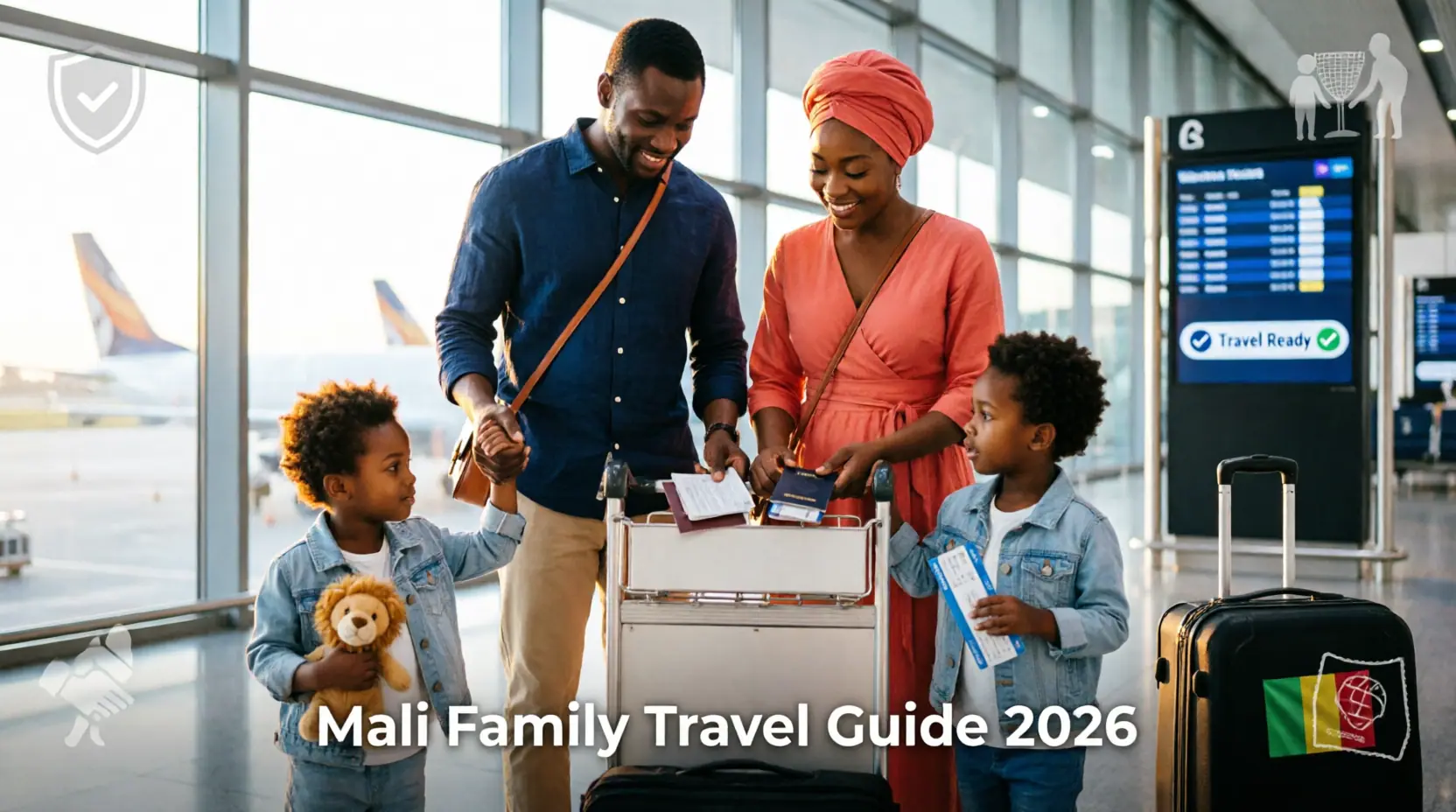
Traveling to Mali with Kids: A 2026 Family Guide
Planning family travel to Mali in 2026 requires careful, honest assessment of significant security, health, and logistical considerations. As of 2026, Mali carries a US State Department Level 4: Do Not Travel advisory—the highest warning level—due to terrorism, kidnapping, violent crime, and civil unrest. For families with legitimate authorization to visit Mali—diplomatic personnel, accredited humanitarian workers, or international organization staff—this comprehensive guide provides responsible, practical information for traveling with children in challenging conditions.
Important context: This guide does not encourage leisure family tourism to Mali. The combination of severe security risks, limited medical infrastructure, entry restrictions, and children's heightened vulnerability creates a risk profile that families should not accept for vacation travel. For families seeking West African cultural experiences with children, we also explore safer alternative destinations that offer comparable richness with significantly lower risks and greater accessibility.
For families with essential professional reasons to be in Mali, understanding how to protect children while navigating complex security, health, and cultural landscapes is paramount. This resource delivers evidence-based guidance on entry requirements, health preparations, security protocols, accommodation selection, educational considerations, and emergency planning specifically tailored to family travel in Mali's capital, Bamako. From pediatric health preparations to age-appropriate cultural engagement, discover how to prioritize children's safety and wellbeing while fulfilling professional obligations in one of West Africa's most culturally rich yet challenging destinations.
Is Mali safe for family travel with children in 2026?
No, Mali is not considered safe for family leisure travel with children in 2026. The US State Department maintains a Level 4: Do Not Travel advisory due to terrorism, kidnapping, violent crime, and civil unrest. Children face heightened vulnerability in high-risk environments, and Mali's limited medical infrastructure cannot reliably address pediatric emergencies. For families with essential professional authorization to visit Mali, rigorous security protocols, comprehensive health preparations, and specialized planning are non-negotiable. For leisure family travel, safer West African alternatives offer comparable cultural experiences with significantly lower risks.
Understanding Risk: Why Mali Presents Unique Challenges for Families

Before evaluating family travel feasibility, parents must understand the specific factors that make Mali particularly challenging for children.
Level 4 Advisory Impact on Family Travel:
The US Department of State's Level 4 advisory indicates that risks of traveling to Mali outweigh any potential benefits. For families, key concerns include:
• Kidnapping risk: Westerners face elevated kidnapping threats; children may be specifically targeted or used as leverage in hostage situations
• Medical limitations: Mali's healthcare system lacks pediatric specialists, child-appropriate medications, and emergency care capabilities meeting international standards
• Psychological impact: Exposure to security restrictions, visible armed presence, and crisis situations can affect children's emotional wellbeing and development
• Educational disruption: Limited schooling options for expatriate children; security constraints may limit outdoor play and social development
• Emergency response constraints: US government ability to assist citizens in emergencies is severely limited; medical evacuation for children may be impossible or prohibitively expensive
Children's Heightened Vulnerability:
Traveling with children in Mali amplifies risks in several ways:
• Physical vulnerability: Children are more susceptible to tropical diseases, heat stress, and injuries; their developing immune systems require extra protection
• Communication limitations: Young children cannot reliably follow complex security instructions or articulate health concerns
• Emotional needs: Children require stability, routine, and age-appropriate explanations of security measures that may be difficult to provide in high-risk environments
• Logistical complexity: Managing security protocols, health precautions, and cultural adaptation while caring for children adds significant operational burden
• Evacuation challenges: Emergency evacuation with children requires specialized planning, equipment, and coordination that may not be available in Mali
These factors make family travel to Mali inadvisable for leisure purposes and require exceptional preparation for essential professional travel.
Entry Restrictions Compounding Family Challenges:
As of January 2026, Mali has suspended visa issuance to US citizens, creating additional barriers for American families. Even for families from countries with standard visa access:
• Each family member requires individual entry authorization; children's documentation must be meticulously prepared
• Entry uncertainty requires flexible booking policies that may be costly for family-sized reservations
• Limited flight options increase travel complexity and costs for families with children
• Restricted movement within Mali limits family activities and educational opportunities
Without organizational support or local networks, navigating these complexities with children significantly increases family vulnerability.
Health Infrastructure Limitations for Pediatric Care:
Mali's healthcare system presents serious challenges for any traveler, but especially for children:
• Public medical clinics lack basic pediatric resources, child-appropriate medications, and trained staff
• Hospital-based pediatric care is only available through government institutions with limited capacity and variable standards
• Emergency pediatric evacuation to countries with advanced medical care may take days to arrange and cost tens of thousands of dollars
• Rural areas have minimal to no accessible medical care; even Bamako facilities may not meet international pediatric standards
• US-standard emergency pediatric care does not exist in-country
Families cannot rely on local medical infrastructure to address children's health emergencies.
Why are children at higher risk when traveling to Mali?
Children face heightened vulnerability due to developing immune systems (increased susceptibility to tropical diseases), limited ability to follow complex security instructions, emotional needs for stability that high-risk environments challenge, and specialized medical requirements that Mali's limited healthcare infrastructure cannot reliably meet. In kidnapping or crisis situations, children may be specifically targeted or used as leverage. These factors require exceptional preparation and risk mitigation strategies that exceed standard adult travel protocols.
Entry Requirements and Documentation for Families

Understanding entry procedures is essential for families considering Mali travel, with additional complexities when traveling with children.
Visa Status and Family Authorization:
• US Citizen Families: Visa issuance suspended as of January 2026; limited exemptions may exist for diplomatic families, humanitarian workers with dependents, or accredited journalists with official authorization
• Other Nationalities: Verify current requirements directly with Embassy of Mali for each family member; policies may change without notice
• Children's Documentation: Each child requires individual passport, visa/entry authorization, and supporting documentation including birth certificates and parental consent letters if traveling with one parent
• Special Authorization: Families eligible under exemptions must coordinate approval through Malian diplomatic channels, often requiring documentation of purpose, security plans, sponsor verification, and child welfare considerations
• Verification: Never rely on third-party visa services; confirm requirements through official government sources before making family travel commitments
Passport and Family Documentation:
• Validity: Each passport must be valid at time of entry with at least one blank visa page
• Copies: Carry photocopies of each family member's passport bio page and entry stamp; store originals securely
• Digital backups: Secure cloud storage of all travel documents accessible offline
• Emergency contacts: Save embassy, security provider, medical facilities, and family contact information in multiple formats for each traveler
• Family tip: Create a master document with all family members' information, emergency contacts, and itineraries; share with trusted contacts outside Mali
Health Documentation for Children:
• Yellow fever vaccination certificate required for travelers aged 9 months and older if arriving from endemic countries; $50-150 USD per person at travel clinics
• Recommended pediatric vaccines: Hepatitis A/B, typhoid, meningitis, routine childhood immunizations; consult pediatric travel medicine specialist
• Malaria prophylaxis: Age-appropriate prescription antimalarial medication essential; consult specialist for pediatric dosing and formulation
• International Certificate of Vaccination ("yellow card"): Carry physical copy for each family member; digital backup recommended
• Family consideration: Without local pediatric specialists, preventive health measures become even more critical for children
Family Travel Insurance Requirements:
• Comprehensive travel insurance with explicit Mali coverage and pediatric medical evacuation is non-negotiable
• Medical evacuation coverage essential: Costs $10,000-100,000+ per person if needed; verify policy covers Level 4 destinations and children
• Recommended providers: International SOS, Global Rescue, specialized high-risk insurers with family coverage options
• Family tip: Ensure policy includes 24/7 pediatric assistance access from Mali and clear activation procedures for family emergencies
Embassy Registration for Families:
• Enroll each family member in Smart Traveler Enrollment Program (STEP) at step.state.gov for US citizen families
• Provides security alerts, location-specific guidance, and emergency contact capability for each traveler
• Families should update registration if itinerary changes and maintain communication with embassy staff
• Non-US families: Register with home country embassy or consulate for similar support
• Family consideration: Establish family communication protocols including child-appropriate check-in procedures
What health preparations do children need for Mali travel?
Children require comprehensive pediatric travel health preparation: age-appropriate vaccinations (yellow fever if applicable, hepatitis A/B, typhoid, meningitis, routine immunizations), prescription malaria prophylaxis formulated for pediatric use, insect repellent safe for children's skin, and a pediatric travel health kit with child-appropriate medications. Consult a pediatric travel medicine specialist 4-6 weeks before travel for personalized recommendations. Preventive measures are critical given Mali's limited pediatric medical infrastructure.
Health and Medical Preparedness for Children in Mali

Health preparedness takes on heightened importance for families traveling with children in Mali, where medical infrastructure is limited and emergency support is constrained.
Pediatric Medical Infrastructure Limitations:
Mali's healthcare system presents serious challenges for children:
• Public medical clinics lack pediatric specialists, child-appropriate medications, and equipment sized for children
• Hospital-based pediatric care is only available through government institutions with limited capacity and variable standards
• Emergency pediatric evacuation to countries with advanced medical care may take days to arrange and cost tens of thousands of dollars per child
• Rural areas have minimal to no accessible pediatric care; even Bamako facilities may not meet international standards for children
• US-standard emergency pediatric care does not exist in-country
Families cannot rely on local medical infrastructure to address children's health emergencies.
Preventive Health Strategies for Children:
• Malaria prevention: Endemic throughout Mali; use age-appropriate prescription prophylaxis before, during, and after travel; use child-safe insect repellent with DEET (concentration appropriate for age), sleep under treated bed nets
• Food and water safety: Children are more susceptible to foodborne illness; ensure all family members drink only bottled or treated water; avoid ice of uncertain origin; eat thoroughly cooked foods; peel fruits yourself; avoid street food for young children
• Personal pediatric medical kit: Carry each child's prescription medications in original packaging with copies of prescriptions; include child-appropriate first-aid supplies, fever reducers, anti-diarrheal safe for children, oral rehydration salts, thermometer
• Heat and sun protection: Bamako temperatures exceed 40°C (104°F) in hot season; use child-safe sunscreen, wear protective clothing and hats, ensure adequate hydration
• Family tip: Pack extra pediatric medications and supplies; without reliable local access, self-sufficiency is critical for children's health
Emergency Pediatric Medical Planning:
• Identify medical facilities in Bamako with any pediatric capabilities before arrival; save contact information for international clinics if available
• Understand evacuation protocols for children: How to activate insurance, coordinate pediatric transport, communicate with family
• Carry emergency cash reserves in multiple currencies for immediate pediatric medical expenses
• Establish family communication plan including child-appropriate proof-of-life protocols if security incident occurs
• Family consideration: Prepare children age-appropriately for health precautions without causing anxiety; practice handwashing, insect avoidance, and water safety as family routines
Child Mental Health and Resilience:
• High-risk travel environments create psychological stress; children may not understand security restrictions or express concerns verbally
• Practice age-appropriate stress management: maintain routines, provide comfort items, use play to process experiences
• Maintain connection with extended family and friends through regular communication; children benefit from familiar relationships
• Recognize signs of anxiety, regression, or trauma in children; have plan for accessing child mental health support if needed
• Family tip: Consider pre-travel consultation with child psychologist experienced in expatriate or high-risk travel families
Age-Specific Health Considerations:
• Infants (0-12 months): Highest vulnerability to disease and dehydration; require specialized medications and equipment; consider delaying non-essential travel
• Toddlers (1-3 years): Curious but unable to understand risks; require constant supervision and childproofing of accommodations
• Preschoolers (3-5 years): Can learn basic safety rules but need simple, consistent explanations; benefit from familiar routines and comfort items
• School-age (6-12 years): Can understand more complex security concepts; involve in age-appropriate safety planning; maintain educational continuity
• Teens (13+): May chafe against security restrictions; engage in honest conversations about risks while maintaining boundaries
What if my child gets sick while traveling in Mali?
Seek medical attention immediately at the best available facility; contact your travel insurance provider's 24/7 assistance line for guidance on pediatric care and potential evacuation. Notify your embassy and trusted contacts of your child's condition. Without reliable local pediatric specialists, families must be prepared to manage medical logistics while activating external support systems. Prevention through thorough health preparation is far preferable to emergency response. Carry a pediatric health summary with each child's medical history, allergies, and medications.
Security Protocols for Families in Bamako

For families with essential reasons to be in Bamako despite risks, rigorous security practices adapted for children are non-negotiable.
Family Accommodation Security:
• Choose hotels or compounds with verified security measures: gated access, 24-hour armed guards, surveillance systems, controlled vehicle entry
• Confirm child-appropriate safety features: window guards, pool fencing, secure play areas, backup power for medical equipment if needed
• Request family-friendly rooms away from street level; use in-room safe for valuables and important documents
• Register with hotel security upon arrival; share family itinerary and emergency contacts with front desk
• Family tip: Avoid budget accommodations without verified security; the cost savings are not worth increased vulnerability for children
Family Movement and Transportation:
• Use pre-arranged transportation through hotel or reputable security services for all family travel
• Ensure vehicles have appropriate child safety seats; bring your own if uncertain about availability or standards
• Avoid public minibuses (sotramas), unmarked taxis, and walking after dark with children
• Confirm driver identity and vehicle details before entering any vehicle; share trip details with hotel security
• Vary routines and travel times to avoid predictability; maintain low profile avoiding displays of wealth
• Family consideration: Teach children age-appropriate safety rules without causing anxiety; practice "what if" scenarios through play
Family Communication and Connectivity:
• Maintain reliable communication for each family member: local SIM cards with data plans, satellite messenger for areas without coverage
• Establish family check-in schedule with trusted contacts outside Mali; include child-appropriate proof-of-life protocols
• Save emergency contacts for each family member: embassy, security provider, medical facilities, insurance assistance line
• Download offline maps, translation apps, and critical information before travel; include child-friendly emergency instructions
• Family tip: Create simple, visual emergency cards for children with contact information and basic instructions in local language
Child-Specific Security Practices:
• Keep doors locked and windows up while driving with children; avoid nighttime road travel
• Stay in populated, well-lit areas; avoid political gatherings, demonstrations, and large crowds with children
• Carry copies of each child's passport and important documents; store originals securely
• Be discreet about family travel plans and personal information; avoid sharing details with strangers
• Teach children age-appropriate safety rules: stay close to parents, don't accept items from strangers, what to do if separated
• Family consideration: Without companions to share supervision duties, parents must maintain constant vigilance with children in public
Professional Security Support for Families:
• For essential family travel, engage professional security services experienced with families for risk assessment, secure transportation, and emergency response
• Verify credentials, insurance coverage, local partnerships, and experience with children before contracting
• Coordinate security protocols with hotel, embassy, and organizational contacts; ensure child-appropriate implementation
• Budget for family security as non-negotiable component of travel planning
• Family tip: Even brief security consultation focused on family needs can significantly improve risk mitigation strategies
Child Education and Routine in High-Risk Environments:
• Maintain educational continuity: arrange tutoring, online schooling, or homeschooling resources before travel
• Preserve family routines: consistent meal times, bedtime rituals, and play periods provide stability amid uncertainty
• Create safe play spaces within secure accommodations; bring familiar toys and comfort items
• Limit children's exposure to security discussions while providing age-appropriate explanations
• Family consideration: Children benefit from predictability; balance necessary security adaptations with maintaining normalcy where possible
Should families hire security when traveling with children to Mali?
For any essential family travel to Mali, professional security support experienced with children is strongly recommended. While not legally required for private citizens, the combination of kidnapping risk, violent crime, and limited emergency support makes independent movement inadvisable with children. At minimum, use hotel-arranged transportation with child safety seats, avoid nighttime travel, and maintain low profile. For travel outside Bamako or high-profile assignments, professional security assessment and family-experienced support are non-negotiable.
Cultural Engagement and Responsible Family Travel

For families authorized to visit Mali, respectful cultural engagement enhances experience while supporting local communities and providing educational value for children.
Child-Appropriate Cultural Etiquette:
• Greetings: Teach children simple greetings in French or Bambara ("Bonjour," "I ni ce," "Merci"); taking time for greetings models respect
• Photography: Always ask permission before photographing people; explain to children why we ask; avoid government/military sites entirely
• Dress: Modest clothing respects local norms; cover shoulders and knees, especially at religious sites; involve children in selecting appropriate clothing
• Religion: Mali is predominantly Muslim; respect prayer times and religious customs; use these moments to teach children about cultural diversity
• Gifts: Small, thoughtful tokens (school supplies, photos from home) are welcomed when visiting communities; avoid creating dependency or unequal dynamics
Supporting Local Economies with Children:
• Purchase crafts directly from artisans or certified cooperatives; involve children in respectful bargaining starting at 30-40% of asking price
• Choose locally-owned restaurants and accommodations when feasible and secure; explain to children how our choices support communities
• Hire local guides through reputable agencies to ensure fair compensation and cultural insight; children benefit from local perspectives
• Avoid excessive haggling; recognize that small amounts matter greatly to vendors; teach children about fair exchange
• Family tip: Building relationships with trusted local contacts can enhance both safety and cultural learning for children
Age-Appropriate Cultural Experiences Within Security Parameters:
• Markets: Visit Marché du Fleuve with vetted guide; focus on artisan cooperatives for authentic crafts; keep visits brief with young children
• Music: Attend performances at secure venues featuring traditional Malian artists; confirm transportation arrangements; children enjoy rhythmic music
• Cuisine: Try traditional dishes like mafé, tô, or poulet yassa at established restaurants with verified food safety; involve children in selecting familiar options
• Cultural sites: National Museum of Mali offers essential context; confirm security protocols before visiting; use exhibits to teach children about Malian history
• Family consideration: Balance cultural curiosity with security awareness; never compromise safety for experience; keep activities brief and engaging for children
Teaching Cultural Humility to Children:
• Approach interactions with curiosity rather than assumptions; model listening more than speaking
• Explain that different ways of life are not "strange" but valuable; help children appreciate diversity
• Share your family's culture respectfully when invited; avoid positioning yourselves as experts on Malian life
• Acknowledge privilege and complexity of traveling in high-risk environments in age-appropriate ways
• Family tip: Use journaling, drawing, or storytelling to help children process cultural observations and maintain perspective
Post-Travel Family Reflection:
• Share experiences thoughtfully as a family, crediting Malian hosts and avoiding stereotypes
• Support Malian artists, musicians, and cultural organizations from afar; involve children in age-appropriate advocacy
• Discuss what the family learned about responsibility, respect, and global citizenship
• Consider ongoing connections with contacts made during visit if appropriate and safe
• Family consideration: Reflect together on how the experience shaped your family's understanding of risk, culture, and responsible travel
How can families engage children respectfully with Malian culture?
Teach children to ask permission before photographing people, dress modestly, learn simple greetings in French or Bambara, and support local artisans through respectful purchases. Model curiosity rather than judgment, explain cultural differences as valuable rather than strange, and involve children in age-appropriate service or learning opportunities. Remember that cultural engagement is a privilege—prioritize community benefit and children's emotional wellbeing over checklist experiences.
Practical Logistics for Families in Mali

Managing day-to-day logistics requires extra preparation for families traveling with children in Mali's challenging environment.
Family Currency and Financial Management:
• Currency: West African CFA franc (XOF); approximately 600 XOF = 1 USD
• Cash: Carry sufficient CFA francs for family expenses; credit cards accepted at major hotels but not widely
• ATMs: Available in Bamako but may have withdrawal limits; notify bank of family travel plans
• Emergency funds: Maintain accessible reserves in multiple forms (cash USD, credit cards, wire transfer capability) for family-sized emergencies
• Family tip: Keep money in multiple secure locations; teach older children basic money safety without causing anxiety
Family Communication Strategies:
• Mobile networks: Available in Bamako; limited or absent in rural areas; ensure each parent has reliable communication
• Local SIM: Purchase at airport or authorized vendor for data and local calls; consider family plan if available
• Satellite communication: Consider satellite phone or messenger for remote travel (verify legality); essential for family emergency coordination
• Internet: Available in urban centers; speeds and reliability vary; download offline resources before travel including child-friendly emergency instructions
• Family consideration: Redundant communication methods essential when traveling with children; establish clear protocols for family separation scenarios
Family Navigation and Orientation:
• Download offline maps (Google Maps, Maps.me) before arrival; cellular data may be unreliable
• Learn key landmarks and neighborhood names in Bamako; ask hotel staff for family-friendly orientation
• Carry physical map as backup to digital tools; involve older children in navigation as learning opportunity
• Avoid displaying navigation devices conspicuously in public with children
• Family tip: Practice routes in secure environment before independent travel; familiarity reduces stress for parents and children
Family Time Management and Flexibility:
• Allow extra time for all family activities; security protocols, transportation delays, and children's needs take longer than expected
• Build buffer into schedule for unexpected developments; rigid itineraries increase stress for families in high-risk environments
• Prioritize essential activities; avoid over-scheduling with children in challenging conditions
• Maintain flexibility to adjust plans based on security updates, children's needs, or changing conditions
• Family consideration: Children benefit from predictable routines; balance necessary flexibility with maintaining family structure
Family Documentation and Record-Keeping:
• Keep digital and physical copies of each family member's passport, visa, insurance, itinerary, emergency contacts
• Document daily family activities and contacts for organizational reporting or personal records
• Retain receipts for family expenses requiring reimbursement or tax documentation
• Store copies separately from originals; use secure cloud backup accessible offline
• Family tip: Create a family travel binder with all documentation organized by person and category; reduces stress during emergencies
Child-Friendly Packing Essentials:
• Comfort items: Favorite toys, blankets, or books provide emotional security in unfamiliar environments
• Entertainment: Offline games, books, and activities for travel delays and secure accommodation time
• Health supplies: Child-appropriate medications, sunscreen, insect repellent, first-aid items, thermometer
• Clothing: Modest, lightweight options for tropical climate; layers for temperature variation; sturdy shoes
• Safety items: Child ID bracelets with contact information, family meeting point plan, age-appropriate emergency instructions
• Family consideration: Pack extra supplies for children; without reliable local access, self-sufficiency is critical
What should families pack for children traveling to Mali?
Essential items include: modest lightweight clothing for tropical climate, sturdy closed-toe shoes, child-safe sunscreen and insect repellent, comfort items from home, offline entertainment, pediatric health kit with age-appropriate medications, reusable water bottles with purification capability, child ID bracelets with contact information, copies of important documents, and familiar snacks for travel. Prioritize health supplies, security items, and emotional comfort objects given children's heightened vulnerability in challenging environments.
Emergency Preparedness for Families in Mali

Comprehensive emergency planning is non-negotiable for family travel to high-risk destinations like Mali.
Pre-Travel Family Emergency Planning:
• Develop written emergency plan covering medical crisis, security incident, natural disaster, and evacuation scenarios for each family member
• Identify multiple evacuation routes and transportation options from accommodation and frequent family locations
• Establish family communication protocols with trusted contacts outside Mali including child-appropriate check-in procedures and proof-of-life protocols
• Prepare family "go-bags" with essentials for rapid departure: documents, cash, medications, communication devices, comfort items for children
• Draft legal documents (guardianship arrangements, medical powers of attorney) before travel; share location with trusted contacts
• Family consideration: Practice emergency procedures with children through age-appropriate games or stories; familiarity reduces panic during real incidents
During-Travel Family Emergency Response:
• Medical emergency: Contact insurance assistance line immediately; follow their guidance for pediatric care and potential evacuation
• Security incident: Follow hotel security or professional security provider instructions; move family to safe area; avoid public discussion
• Family separation: Establish clear meeting points and communication protocols; teach children what to do if separated from parents
• Communication failure: Use backup methods (satellite messenger, alternative phone) to re-establish contact with support network
• Lost documents: Contact embassy immediately for emergency travel documents; retain copies to expedite replacement for each family member
• Family tip: Assign age-appropriate roles to older children in emergency plans; involvement reduces anxiety and improves response
Post-Emergency Family Recovery:
• Seek medical evaluation for all family members even for seemingly minor incidents; stress and adrenaline can mask injuries or illness
• Connect with mental health support if any family member experiences trauma, anxiety, or difficulty processing events
• Document incident details for insurance claims, organizational reporting, or personal records
• Debrief as a family to process experience and adjust future risk mitigation strategies; allow children to express feelings through play or art
• Family consideration: Children may process trauma differently than adults; watch for behavioral changes and seek professional support if needed
Embassy and External Support for Families:
• Register each family member with embassy's emergency system (STEP for US citizen families) before travel
• Understand limitations of embassy assistance in Level 4 environments; do not rely solely on government support for family emergencies
• Maintain contact information for embassy, security providers, insurance assistance, and emergency services for each family member
• Know that US government resources for hostage recovery or emergency evacuation are extremely limited in Mali, especially for families
• Family tip: Build redundant support networks; do not depend on single point of failure for family emergency response
What if there is a security incident while my family is in Mali?
Follow instructions from security professionals or hotel staff immediately. Move family to designated safe areas, maintain communication with emergency contacts using pre-established protocols, and avoid sharing incident details publicly until authorized. Contact your embassy and insurance provider as soon as safely possible. Families must rely on pre-planned emergency procedures and external support systems; preparation, calm response, and age-appropriate communication with children are critical.
Safer Alternatives for Family West African Travel

For families seeking West African cultural experiences with children and greater accessibility, several alternative destinations offer compelling options with significantly lower risks.
Dakar, Senegal:
• Safety profile: Stable democracy; standard urban precautions; no Level 4 advisory
• Family advantages: Established tourism infrastructure, visa-on-arrival for US citizens, welcoming local culture, child-friendly accommodations
• Experiences: Gorée Island historic site (educational for older children), vibrant music scene, Atlantic coastline beaches, French-West African fusion cuisine
• Logistics: Direct flights from major hubs, reliable transportation options, English widely understood in tourism sector
• Cost comparison: Typically 40-60% lower total trip cost than Mali for comparable family experiences
Accra, Ghana:
• Safety profile: Generally stable; standard urban precautions; English as official language simplifies family travel
• Family advantages: Welcoming tourism sector, rich cultural heritage, established family traveler community, child-friendly activities
• Experiences: Historic slave trade sites (age-appropriate education), contemporary art scene, coastal resorts, cultural festivals with family programming
• Logistics: Multiple flight options, reliable ride-hailing apps, extensive accommodation choices for families with children
• Cost comparison: Competitive pricing with broader flight options reducing overall family travel costs
Cape Verde:
• Safety profile: Stable island nation; low crime rates; popular with European families
• Family advantages: Portuguese/English bilingual environment, well-developed tourism infrastructure, relaxed atmosphere ideal for children
• Experiences: Atlantic beaches safe for swimming, volcanic landscapes for exploration, Creole culture, water sports appropriate for various ages
• Logistics: Direct flights from Europe, reliable inter-island transport, accommodation options for all family budgets
• Cost comparison: Mid-range pricing with strong value for beach-focused family travel
Marrakech, Morocco:
• Safety profile: Established tourism destination; standard precautions; visa-free for US citizens
• Family advantages: Well-developed family traveler infrastructure, rich cultural experiences, excellent value, child-friendly riads and hotels
• Experiences: Imperial city heritage, Sahara desert experiences (age-appropriate tours), Islamic architecture, world-class spas and cuisine with family options
• Logistics: Direct flights from major hubs, reliable transportation, extensive accommodation options for families
• Cost comparison: Premium family experiences available at various price points with excellent value relative to risk
Family Decision Framework for Alternative Selection:
• Prioritize cultural heritage similar to Mali? → Dakar or Accra offer rich West African experiences with greater family accessibility
• Seek Islamic architecture and Sahel landscapes? → Marrakech provides North African family travel with established tourism infrastructure
• Prefer beach luxury combined with culture? → Cape Verde offers island paradise with cultural heritage safe for children
• Require English-language environment? → Accra or Cape Verde provide West African culture with English accessibility for families
• Value established family traveler infrastructure? → Marrakech or Cape Verde offer mature tourism sectors with extensive family-friendly amenities
Responsible Family Travel Consideration:
Choosing accessible alternatives does not diminish interest in Mali's rich culture and heritage. Supporting West African tourism through family visits to stable destinations contributes to regional economic development while prioritizing children's safety. When conditions in Mali improve, informed families can revisit travel options with greater confidence and appropriate preparations.
Is Senegal a good family travel alternative to Mali?
Yes, Senegal offers comparable West African cultural experiences—Islamic heritage, traditional music, historic sites, Sahel landscapes—with significantly lower risks and greater accessibility for families with children. US citizen families can obtain visa-on-arrival, flight options are more competitive, security requirements are standard rather than exceptional, and tourism infrastructure supports family travel. Total trip costs are typically 40-60% lower than Mali for comparable family experiences.
Final Considerations: Responsible Family Travel Decision-Making

Traveling to Mali with children in 2026 requires sober acknowledgment of exceptional risks and careful, informed decision-making. The combination of Level 4 security advisory, visa restrictions for certain nationalities, limited pediatric medical infrastructure, and genuine threats to family safety creates a risk profile that most families—especially for leisure travel—should not accept.
For families with essential professional obligations requiring presence in Mali with children, thorough preparation, professional security support experienced with families, comprehensive pediatric health preparations, and contingency planning are non-negotiable. Coordinate closely with employers, security providers, and government channels to maximize family safety and compliance. Understand that even with meticulous planning, risks cannot be eliminated—only mitigated.
For leisure family travel, the current environment strongly favors postponing Mali visits until conditions improve. West Africa offers many remarkable destinations with rich cultural experiences, child-friendly infrastructure, and more accessible entry requirements. Exploring alternatives like Senegal, Ghana, or Cape Verde can fulfill family travel aspirations while prioritizing children's safety and responsible tourism practices.
Regardless of travel purpose, families considering Mali must:
Prioritize Children's Safety Over All Else:
Never compromise verified security measures, health preparations, or emergency planning to save money or time. Professional security services, secure accommodations, and reliable transportation are essential investments for families, not optional luxuries. Children's heightened vulnerability requires extra precautions beyond adult travel protocols.
Maintain Realistic Expectations About Emergency Support:
Understand that emergency support is severely limited in Mali. The US government's ability to assist citizens in crises is constrained; medical evacuation for children may be impossible or prohibitively expensive. Prepare for family self-reliance while activating external support systems.
Practice Cultural Humility as a Family:
Approach Mali with respect for local customs, knowledge, and community priorities. Families represent their home countries through their actions; responsible engagement benefits both visitors and hosts. Model cultural curiosity and respect for children.
Stay Informed and Flexible as a Family Unit:
Monitor official sources regularly for changes to security assessments, entry policies, or health requirements. Maintain flexible family travel plans that can adapt to evolving conditions. Families bear collective responsibility for staying current on risk information.
Consider the Bigger Picture for Your Children:
Travel decisions carry consequences not only for parents but for children's safety, emotional wellbeing, and development. Choose wisely, prepare thoroughly, and travel with intention and respect. Children's experiences in high-risk environments shape their understanding of the world.
As geopolitical conditions evolve, entry policies and security assessments may change. Families considering Mali must verify current information through official channels and adjust plans accordingly. The most responsible family travel choice is sometimes the decision not to travel—until conditions allow for safer, more accessible experiences for children.
For families who do undertake travel to Mali with legitimate authorization and children, may your preparation enable safe, compliant, and meaningful experiences. Approach the journey with humility, curiosity, and commitment to responsible engagement. Listen to Malian voices, honor local customs, support community livelihoods, and carry the lessons of your journey forward as a family.
Mali's cultural richness, historical significance, and warm hospitality remain compelling. When security conditions improve and entry barriers ease, informed families can revisit this remarkable destination with greater confidence and appropriate preparations for children. Until then, responsible family decision-making prioritizes children's safety while keeping Mali's treasures in mind for future exploration.
Your family's travel choices matter. Choose wisely. Prepare thoroughly. Travel responsibly—with your children's safety and wellbeing at the center of every decision.
0 Comments