.webp)
.webp)
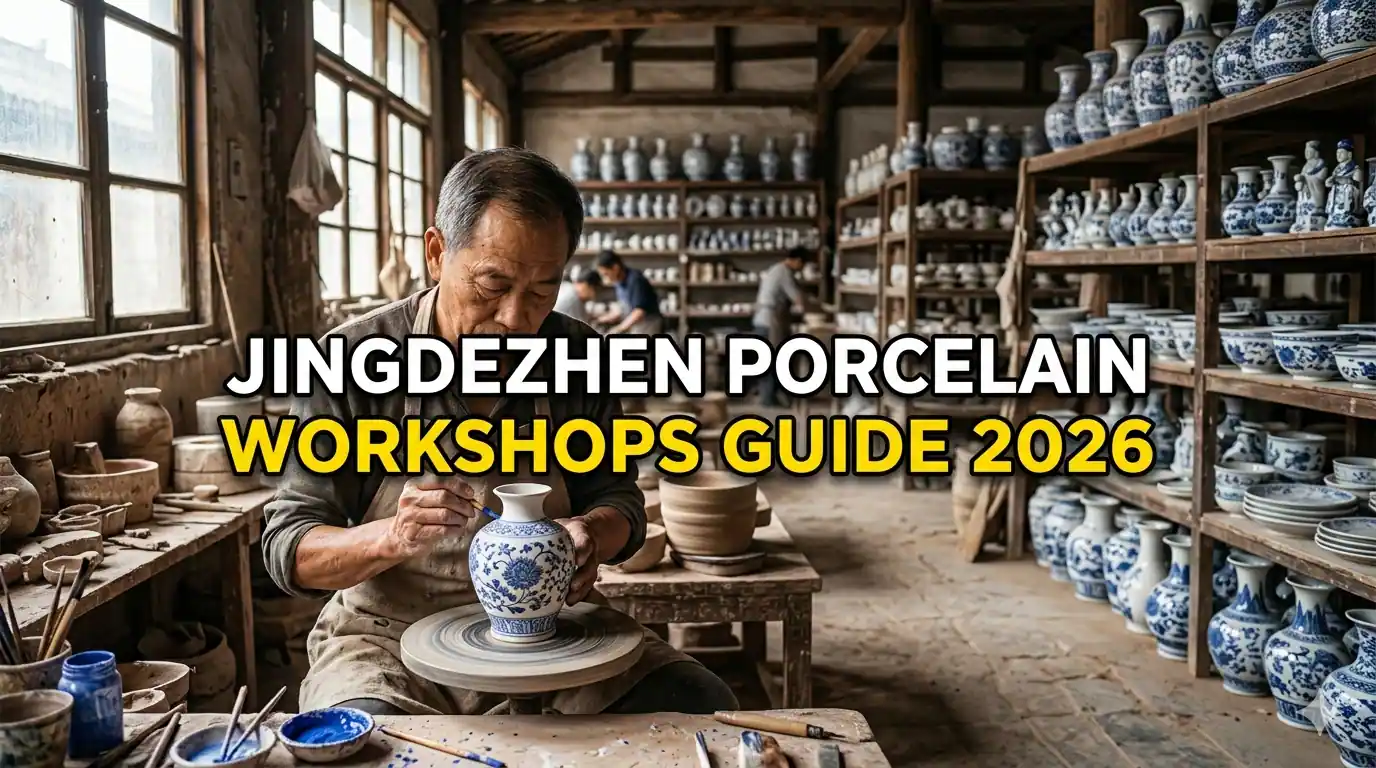
Overview of Jingdezhen Porcelain Heritage
Jingdezhen in Jiangxi Province has been China's porcelain capital for over 1700 years producing the world's finest ceramics.
The city's name became synonymous with porcelain itself with authentic Jingdezhen ceramics treasured by emperors and collectors worldwide.
Traditional hand-making techniques passed down through generations continue alongside modern production methods.
Visiting authentic workshops offers unique opportunity to witness master craftsmen creating ceramics using centuries-old methods.
This comprehensive guide helps travelers find genuine hand-made porcelain workshops and avoid mass-produced imitations in 2026.
Why Jingdezhen Remains the Porcelain Capital
Unique local kaolin clay deposits provide ideal raw material for high-quality porcelain production.
Centuries of accumulated expertise created unparalleled craftsmanship in forming decorating and firing techniques.
Imperial kilns established during Ming and Qing Dynasties set standards still followed by master artisans today.
Complete ceramic industry ecosystem from raw materials to finished products concentrated in one location.
UNESCO Creative City designation recognizes Jingdezhen's ongoing contribution to ceramic arts and culture.
Understanding Authentic Hand-Made Porcelain
True hand-made porcelain involves manual shaping on pottery wheel or hand-building techniques without molds.
Hand-painted decoration requires skilled artists applying designs brushstroke by brushstroke using traditional mineral pigments.
Wood-fired or traditional kiln firing creates unique characteristics impossible to replicate in gas or electric kilns.
Each hand-made piece exhibits subtle variations proving human craftsmanship rather than machine production.
Authentic pieces often bear artisan marks or seals identifying the master craftsman or workshop.
Finding Authentic Workshops in Jingdezhen

Jingdezhen offers diverse workshop experiences from family ateliers to master craftsman studios and cooperative workshops.
Knowing where to look and what questions to ask helps distinguish authentic workshops from tourist-oriented factories.
Building relationships with workshop owners often leads to better pieces and deeper cultural understanding.
Taoxichuan Ceramic Art Avenue
Taoxichuan represents revitalized ceramic district combining traditional workshops with contemporary artist studios.
Former state-owned porcelain factory transformed into creative hub housing over 200 workshops and galleries.
Many resident artists practice traditional techniques while experimenting with modern designs and forms.
Workshops open to visitors with opportunities to observe artists at work and purchase directly.
Weekend markets feature independent ceramic artists selling unique hand-made pieces at various price points.
Best for: Contemporary interpretations of traditional styles meeting working artists.
Jingdezhen Ancient Kiln Folk Customs Expo Area
This living museum preserves traditional porcelain production methods in authentic historical setting.
Ancient dragon kilns still used for firing demonstrations showing traditional wood-firing techniques.
Master craftsmen demonstrate complete production process from clay preparation to final decoration.
Workshops allow hands-on participation in pottery wheel throwing and hand-painting under guidance.
Pieces created in workshops can be fired and shipped to your home address.
Best for: Learning traditional techniques and purchasing pieces made with historical methods.
Master Craftsman Studios in Old Town
Old Town area contains family workshops operating for generations specializing in specific techniques.
Master artisans often trained since childhood achieving exceptional skill in narrow specialties.
Some workshops focus exclusively on blue and white porcelain while others specialize in famille rose or celadon.
Direct purchases from masters command premium prices but guarantee authenticity and quality.
Building relationships may lead to custom commissions and long-term collecting opportunities.
Best for: Serious collectors seeking museum-quality pieces and custom commissions.
Sanbao International Ceramic Art Village
Sanbao Village located in scenic mountain valley 10 kilometers from city center.
International artist residency program attracts ceramic artists from around world.
Traditional architecture houses modern studios creating fusion of Eastern and Western ceramic traditions.
Workshops offer classes ranging from single day introductions to week-long intensive courses.
Gallery shop features curated selection of resident artist work at various price points.
Best for: Hands-on learning experiences and contemporary ceramic art.
Identifying Authentic Hand-Made Ceramics

Distinguishing genuine hand-made porcelain from factory-produced or mass-market items requires knowledge and observation.
Several visual and tactile clues help identify authentic craftsmanship.
Asking right questions and knowing what to look for prevents purchasing inferior imitations.
Visual Indicators of Hand-Made Quality
Subtle asymmetry and variation in form indicates wheel-thrown rather than mold-made production.
Brush strokes in painted decoration show variation in pressure and pigment density impossible in printed designs.
Slight imperfections like tiny bubbles in glaze or minor warping indicate traditional firing methods.
Foot ring or base shows tool marks from hand-trimming rather than perfectly smooth machine finish.
Weight and sound when tapped differ between hand-made and factory pieces due to density variations.
Questions to Ask Workshop Owners
Who made this piece and what is their training background?
Was this hand-thrown on wheel or mold-cast?
What type of kiln was used for firing and at what temperature?
Are the decorative designs hand-painted or transfer-printed?
Can you provide certificate of authenticity or artisan signature?
How long did this piece take to create from start to finish?
Red Flags Indicating Mass Production
Perfectly identical pieces displayed in large quantities suggest mold production.
Extremely low prices inconsistent with time-intensive hand production methods.
Uniform decoration without brush stroke variation indicates transfer printing or decals.
Vendor unable or unwilling to identify specific artisan or production method.
Workshop shows no evidence of actual production equipment like wheels kilns or painting stations.
Traditional Porcelain Techniques and Styles

Understanding major porcelain styles and techniques helps visitors appreciate quality and make informed purchases.
Jingdezhen masters specialize in specific techniques refined over centuries.
Each style has distinct characteristics price points and collecting considerations.
Blue and White Porcelain Qinghua
Most iconic Jingdezhen style featuring cobalt blue designs on white porcelain body.
Underglaze decoration applied before glazing requiring exceptional skill as mistakes cannot be corrected.
Traditional motifs include dragons phoenixes floral patterns and landscape scenes.
Quality indicated by depth and variation in blue tones showing hand-brushed application.
Prices range from 200 yuan for simple pieces to 50000 yuan for master works.
Famille Rose Fencai Porcelain
Overglaze enamel decoration introduced during Qing Dynasty featuring soft pastel colors.
Multiple firings required to build up colors creating rich dimensional effects.
Popular subjects include flowers birds figures and intricate decorative patterns.
Hand-painted famille rose requires exceptional artistic skill and patience.
Authentic pieces command premium prices from 1000 to 100000 yuan depending on quality.
Celadon Longquan Style
Jade-green glaze achieved through iron oxide in reduction firing atmosphere.
Subtle color variations from pale green to deep olive highly prized by collectors.
Often features carved or incised decoration visible through translucent glaze.
Simple elegant forms emphasize glaze quality over elaborate decoration.
Prices typically 500 to 20000 yuan for authentic hand-made pieces.
Modern Contemporary Ceramics
Younger generation artists blend traditional techniques with contemporary aesthetics.
Experimental forms glazes and firing methods push boundaries of ceramic art.
Often signed and numbered making them collectible as fine art.
Prices vary widely from 300 to 30000 yuan based on artist reputation.
Best purchased directly from artist studios at Taoxichuan or Sanbao Village.
Workshop Visiting Etiquette and Practical Tips

Respectful behavior and cultural awareness enhance workshop visits and build positive relationships with artisans.
Understanding workshop protocols demonstrates respect for craftspeople and their work.
Proper etiquette often leads to better service deeper insights and fairer prices.
Photography and Video Policies
Always ask permission before photographing artisans at work or workshop interiors.
Some masters restrict photography to protect proprietary techniques from copying.
Flash photography may disturb artists concentration during delicate work.
Offer to purchase piece if you take extensive photos for commercial purposes.
Respect posted signs prohibiting photography in certain areas.
Appropriate Behavior in Workshops
Observe quietly without touching tools materials or unfinished pieces unless invited.
Avoid standing directly in artist's light source or blocking their workspace.
Ask questions at appropriate moments not during concentration-intensive tasks.
Remove shoes if entering traditional workshop spaces where required.
Show genuine interest and appreciation for skill and effort involved.
Negotiation and Pricing Customs
Prices in established workshops often fixed especially for signed master works.
Modest negotiation acceptable for unsigned pieces or multiple item purchases.
Aggressive haggling inappropriate for hand-made art reflecting months of skilled labor.
Paying fair price supports continuation of traditional crafts and artisan livelihoods.
Building relationship through fair dealing often leads to better pieces and prices long-term.
Purchasing and Shipping Ceramics

Buying porcelain in Jingdezhen requires consideration of authentication pricing and logistics.
Understanding purchasing process helps ensure satisfaction and successful transport home.
Proper packaging and shipping essential for protecting fragile ceramics during travel.
Price Ranges and Value Assessment
Student or apprentice work: 100 to 500 yuan suitable for decorative use.
Skilled artisan pieces: 500 to 5000 yuan showing good technique and design.
Master craftsman work: 5000 to 50000 yuan exhibiting exceptional skill.
National level master pieces: 50000 yuan and up representing highest quality.
Price should reflect complexity size decoration quality and artisan reputation.
Authentication and Documentation
Request certificate of authenticity for pieces over 2000 yuan.
Master artisans often provide signed documentation with seal or chop.
Photograph piece with artisan if possible for provenance documentation.
Keep all receipts and documentation for insurance and resale purposes.
Be wary of inflated claims about age or historical significance without documentation.
Packaging and Shipping Options
Workshops typically provide professional packaging for purchased pieces.
Double-boxing with foam padding essential for safe transport.
China Post EMS offers international shipping with tracking and insurance.
Private shipping companies like DHL FedEx provide faster but more expensive options.
Allow 2-4 weeks for international shipping and budget 15-20 percent of purchase price for shipping.
Consider purchasing shipping insurance for valuable pieces.
Hands-On Learning Opportunities

Many Jingdezhen workshops offer classes allowing visitors to learn traditional techniques firsthand.
Participating in creation process deepens appreciation for skill involved and cultural heritage.
Classes range from brief introductions to intensive multi-day courses.
Pottery Wheel Throwing Classes
Beginner classes teach basic centering and forming techniques on traditional wheels.
Sessions typically 2-4 hours with option to have pieces fired and shipped later.
Cost ranges 150 to 400 yuan including materials and firing.
Advance booking recommended especially during peak tourist seasons.
Classes available in English at major workshops like Sanbao Village and Taoxichuan studios.
Hand-Painting Workshops
Learn traditional blue and white or famille rose painting techniques from skilled artists.
Classes focus on brush control pigment preparation and traditional motif execution.
Sessions range from 3 hours to multi-day courses for serious students.
Cost 200 to 800 yuan depending on duration and complexity.
Students create decorated pieces to take home after firing.
Multi-Day Intensive Programs
Comprehensive courses cover complete process from clay preparation to final firing.
Programs range from 3 days to 2 weeks for serious study.
Cost 1500 to 8000 yuan including materials firing and sometimes accommodation.
Small class sizes ensure individual attention from master instructors.
Best for dedicated enthusiasts and serious ceramic artists.
Seasonal Considerations and Events
Timing your visit to Jingdezhen can enhance workshop experiences and purchasing opportunities.
Certain seasons and events offer unique advantages for visitors interested in ceramics.
Best Times to Visit Workshops
Spring March to May offers comfortable weather and active production before summer heat.
Autumn September to November provides ideal conditions with clear skies and moderate temperatures.
Avoid Chinese New Year period when many workshops close for 2-3 weeks.
Summer June to August hot and humid but workshops remain active.
Weekday visits less crowded than weekends allowing more personalized attention.
Annual Ceramic Events and Markets
Jingdezhen International Ceramic Art Biennale held every two years in October.
Spring and Autumn Canton Fair ceramic exhibitions attract international buyers.
Taoxichuan Weekend Market every Saturday and Sunday featuring independent artists.
Ancient Kiln Festival in October celebrates traditional firing techniques.
Events provide opportunities to meet artists compare styles and find unique pieces.
Avoiding Common Pitfalls
Awareness of common mistakes helps visitors have positive authentic experiences in Jingdezhen.
Understanding potential issues enables informed decision-making.
Factory-Made Pieces Sold as Hand-Made
Some vendors misrepresent machine-made or mold-cast pieces as hand-made.
Look for subtle variations and imperfections indicating human craftsmanship.
Visit actual production areas to verify hand-making processes.
Purchase from reputable workshops with transparent production methods.
Be skeptical of prices that seem too good for claimed hand-made quality.
Inflated Pricing for Tourists
Some workshops charge foreigners significantly more than local customers.
Research typical price ranges before visiting to establish reasonable expectations.
Build relationships with workshop owners for fairer long-term pricing.
Purchase multiple pieces to negotiate better overall pricing.
Consider hiring local guide or translator who understands fair pricing.
Shipping Damage and Loss
Inadequate packaging leads to breakage during transport.
Ensure professional packaging with adequate padding and double-boxing.
Purchase shipping insurance for valuable pieces.
Use tracked and insured shipping methods for accountability.
Photograph pieces before shipping for insurance documentation.
Resources and Further Learning
Continuing education about Chinese ceramics enhances appreciation and collecting ability.
Multiple resources available for deepening knowledge of Jingdezhen porcelain.
Museums and Educational Institutions
Jingdezhen China Ceramics Museum houses comprehensive collection from ancient to modern.
Jingdezhen Imperial Kiln Museum displays excavated pieces from imperial production.
Jingdezhen Ceramic Institute offers lectures and workshops for serious students.
Museum visits provide context for understanding quality and historical development.
Recommended Reading and Research
"Chinese Ceramics" by John Ayers provides comprehensive historical overview.
"Jingdezhen Ware" by Stacey Pierson focuses on production techniques and styles.
"The Art of Chinese Ceramics" by Louise Allison Cort covers collecting and authentication.
Online resources include academic journals and collector forums.
Learn basic Chinese ceramic terminology to enhance communication with artisans.
0 Comments