.webp)
.webp)
Hidden Gems of Gapar Aitiev Museum of Fine Arts A Social Guide
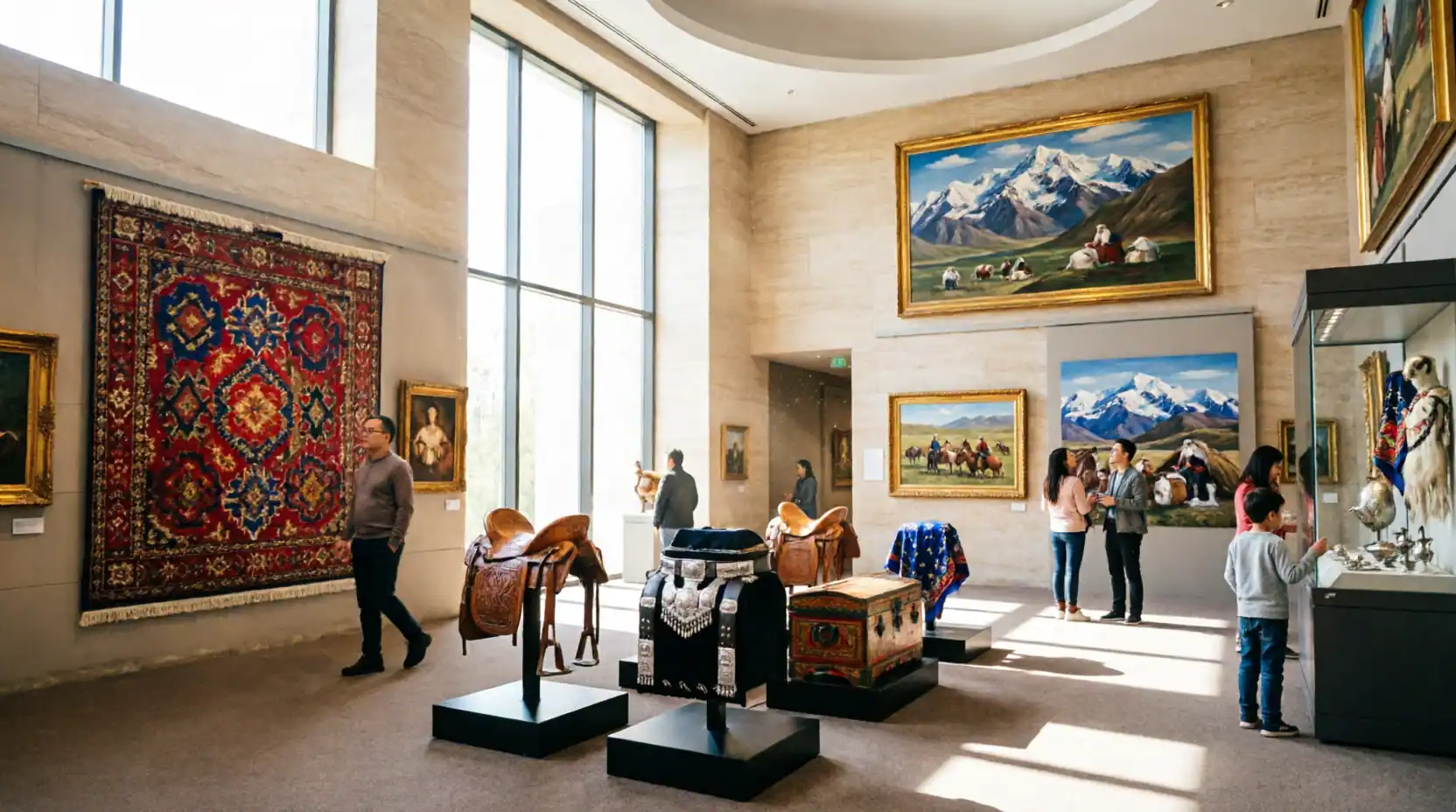
Introduction to Gapar Aitiev Museum
The Gapar Aitiev Museum of Fine Arts stands as Kyrgyzstan's premier cultural institution showcasing the nation's rich artistic heritage.
Located in the heart of Bishkek, this museum houses an exceptional collection spanning traditional Kyrgyz art to contemporary works.
Named after renowned Kyrgyz artist Gapar Aitiev, the museum serves as guardian of the country's visual cultural legacy.
Visitors discover hidden treasures including ancient artifacts, traditional crafts, and modern masterpieces that tell Kyrgyzstan's story.
This comprehensive guide reveals the museum's must-see collections and practical visiting information.
History and Significance

The museum was established in 1935 making it one of Central Asia's oldest art institutions.
Originally founded as the Kyrgyz State Art Museum, it was renamed in 1996 to honor Gapar Aitiev.
Gapar Aitiev 1912-1984 was a pioneering Kyrgyz artist who played crucial role in developing national art scene.
The museum building itself represents Soviet-era architecture with distinctive Central Asian design elements.
Over decades, the collection has grown to include over 20,000 items representing diverse periods and styles.
Gapar Aitiev's Legacy
Gapar Aitiev studied at prestigious art institutions in Leningrad and Moscow during Soviet era.
He pioneered the integration of traditional Kyrgyz motifs with European painting techniques.
His landscapes and portraits captured the essence of Kyrgyz life and mountain scenery.
Aitiev mentored generations of Kyrgyz artists establishing foundations for national art education.
His personal works form important part of museum's permanent collection.
Museum Evolution
Initial collection focused primarily on Soviet-era art and Russian classical works.
Post-independence period saw expansion of traditional Kyrgyz art and crafts sections.
Recent renovations have modernized exhibition spaces while preserving historical character.
International collaborations have brought temporary exhibitions from around the world.
Digital initiatives now make collections more accessible to global audiences.
Permanent Collections Overview

The museum's permanent collections are organized into distinct thematic and chronological sections.
Each gallery offers unique perspective on Kyrgyzstan's artistic evolution and cultural identity.
Collections range from ancient petroglyphs to cutting-edge contemporary installations.
Traditional applied arts receive special emphasis reflecting Kyrgyz nomadic heritage.
Understanding collection organization helps visitors plan efficient and rewarding museum experience.
Ancient and Medieval Art
Ancient petroglyphs and rock carvings demonstrate artistic expression dating back thousands of years.
Medieval manuscripts and miniature paintings show Persian and Islamic artistic influences.
Archaeological artifacts include pottery, jewelry, and ceremonial objects from Silk Road era.
Buddhist and Nestorian Christian artifacts reflect region's religious diversity through history.
These ancient works provide context for understanding later artistic developments.
Traditional Kyrgyz Applied Arts
Exquisite shyrdaks and alakiyiz felt carpets showcase traditional Kyrgyz textile arts.
Intricate embroidery patterns tell stories of nomadic life and cultural symbolism.
Traditional jewelry displays silver craftsmanship with carnelian and other semi-precious stones.
Wooden yurts components and household items demonstrate practical artistry of nomadic culture.
Traditional musical instruments like komuz and kyl kyyak feature decorative artistry.
Russian and Soviet Period Art
19th century Russian landscape paintings and portraits form significant collection segment.
Soviet-era socialist realism works document mid-20th century artistic trends.
Revolutionary period posters and propaganda art offer historical perspective.
Kyrgyz artists trained in Soviet academies developed distinctive synthesis of styles.
This collection helps understand artistic influences that shaped modern Kyrgyz art.
Modern and Contemporary Kyrgyz Art
Post-independence works reflect new artistic freedom and exploration of national identity.
Contemporary artists address social issues, globalization, and cultural preservation.
Mixed media installations and experimental works show evolution beyond traditional forms.
Young generation artists blend traditional motifs with contemporary techniques and concepts.
Rotating exhibitions feature emerging artists and current artistic trends.
Must See Masterpieces

Certain works stand out as essential viewing for any museum visitor.
These masterpieces represent pinnacle of artistic achievement in various categories.
Understanding significance of key works enhances appreciation of entire collection.
Museum staff can provide guided tours highlighting these important pieces.
Allow extra time to contemplate these exceptional works of art.
Iconic Kyrgyz Paintings
Gapar Aitiev's mountain landscapes capture dramatic beauty of Tian Shan ranges.
Semyon Chuikov's "Daughter of Soviet Kyrgyzstan" remains iconic Soviet-era masterpiece.
Mikhail Kurzin's ethereal landscapes evoke spiritual connection to Kyrgyz land.
Alexander Ignatiev's portraits document traditional Kyrgyz life with sensitivity.
These works define visual identity of Kyrgyzstan in art historical context.
Exceptional Decorative Arts
19th century bridal headdress elechek with intricate silver work and carnelian.
Antique shyrdak carpets with complex geometric patterns and natural dyes.
Ornate saddle decorations showing master leatherworking and metal inlay.
Traditional wooden chests with carved geometric and floral motifs.
Ceremonial weapons with decorative hilts and scabbards demonstrating craftsmanship.
Temporary Exhibitions and Events

The museum regularly hosts temporary exhibitions complementing permanent collections.
These exhibitions bring fresh perspectives and international works to Bishkek.
Special events and cultural programs engage diverse audiences throughout year.
Exhibition schedule changes seasonally requiring advance planning for specific interests.
Temporary exhibitions often feature contemporary artists and experimental works.
Current and Upcoming Exhibitions
Contemporary Central Asian art exhibitions rotate every 2-3 months.
International collaborations bring works from Europe, Asia, and Americas.
Thematic exhibitions explore specific periods, techniques, or cultural topics.
Student and emerging artist showcases provide platform for new voices.
Photography exhibitions document Kyrgyzstan's transformation and daily life.
Cultural Events and Programs
Artist lectures and workshops provide deeper engagement with artistic processes.
Traditional craft demonstrations keep ancient skills alive for new generations.
Children's art programs cultivate appreciation from young age.
Evening concerts feature traditional Kyrgyz music in museum setting.
Cultural festivals celebrate Nowruz and other important dates with special exhibitions.
Visitor Information and Practical Tips

Practical information ensures smooth and enjoyable museum visit.
Planning ahead maximizes time and enhances overall experience.
Understanding museum policies prevents misunderstandings and disappointment.
Accessibility features accommodate diverse visitor needs.
These details help visitors prepare for optimal museum experience.
Location and Hours
Museum located at 197 Abdrakhmanov Street in central Bishkek near Ala-Too Square.
Open Tuesday through Sunday 10 AM to 6 PM, closed Mondays.
Extended hours until 8 PM on Thursdays for working visitors.
Last admission 30 minutes before closing time.
Holiday hours vary check website or call ahead during national holidays.
Admission and Tickets
General admission 100-150 som approximately 1-2 USD very affordable.
Student discounts available with valid student identification.
Children under 7 years enter free of charge.
Photography permit available for small additional fee.
Guided tours in Russian, Kyrgyz, and English available for groups by arrangement.
Getting There
Central location easily accessible by marshrutka minibuses numbers 5, 10, 15, 20.
Taxi from most central locations costs 150-250 som.
Walking distance from major hotels in city center.
Limited street parking available nearby.
Museum entrance clearly marked with signage in Kyrgyz and Russian.
Museum Facilities and Services

Museum offers various facilities to enhance visitor experience.
Services cater to diverse needs from research to leisure.
Modern amenities balance with preservation of historical character.
Staff assistance available to answer questions and provide guidance.
These facilities support comfortable and informative visit.
Museum Shop and Publications
Museum shop offers catalogs, postcards, and books on Kyrgyz art.
Traditional crafts and reproductions available for purchase.
Local artisan products support community and provide authentic souvenirs.
Publications available in Russian, Kyrgyz, and some in English.
Prices reasonable with proceeds supporting museum programs.
Educational Resources
Library and research facilities available by appointment for scholars.
Educational programs for schools and universities.
Online resources and virtual tours expanding accessibility.
Lecture series and academic conferences on art historical topics.
Internship opportunities for art history and museum studies students.
Photography and Documentation

Photography policies balance visitor experience with artwork preservation.
Understanding rules prevents conflicts and protects valuable collections.
Certain restrictions apply to protect light-sensitive works.
Professional photography requires advance permission and fees.
These guidelines ensure all visitors can enjoy collections responsibly.
Photography Guidelines
Personal photography allowed in most galleries without flash.
Tripods and selfie sticks prohibited to protect artworks and other visitors.
Some temporary exhibitions may restrict photography entirely.
Respect other visitors when taking photographs.
Commercial photography requires written permission from museum administration.
Social Media and Sharing
Visitors encouraged to share experiences on social media.
Tag museum in posts using official hashtags.
Credit artists and provide context when sharing artwork images.
Museum website provides high-resolution images for educational use.
Respect copyright and intellectual property rights of artists.
Cultural Context and Etiquette

Understanding cultural context enriches museum experience significantly.
Respectful behavior demonstrates appreciation for Kyrgyz culture and heritage.
Museum represents important cultural institution for local community.
Appropriate conduct ensures positive experience for all visitors.
These cultural considerations enhance visit and show respect.
Museum Etiquette
Speak quietly maintaining peaceful atmosphere for contemplation.
Do not touch artworks even if unprotected.
Keep reasonable distance from displayed items.
Follow designated pathways through galleries.
Respect photography restrictions and staff instructions.
Cultural Sensitivity
Museum displays include religious and ceremonial objects requiring respect.
Some traditional items have spiritual significance beyond aesthetic value.
Ask questions respectfully if curious about cultural meanings.
Museum staff happy to explain cultural context of displays.
Approach collections with open mind and willingness to learn.
Nearby Attractions and Dining

Museum's central location provides easy access to other Bishkek attractions.
Combining museum visit with nearby sites creates full day of cultural exploration.
Local dining options offer authentic Kyrgyz cuisine near museum.
Planning itinerary around museum maximizes cultural experience.
These recommendations help create comprehensive Bishkek cultural tour.
Nearby Cultural Sites
Ala-Too Square 10 minutes walk features changing of guard ceremony.
State History Museum across square complements art museum visit.
Osh Bazaar 15 minutes walk offers traditional crafts and local atmosphere.
Philharmonic Hall nearby hosts traditional music performances.
Central Mosque 20 minutes walk showcases Islamic architecture.
Local Dining Recommendations
Cafe Navat near museum serves traditional Kyrgyz tea and pastries.
Restaurant Bishkek House offers upscale Kyrgyz cuisine.
Shoro chain serves affordable traditional dishes and national drinks.
Coffee houses on Chui Avenue provide modern cafe culture experience.
Street vendors near Osh Bazaar offer authentic local snacks.
Accessibility and Special Needs

Museum committed to making collections accessible to all visitors.
Facilities accommodate various physical and sensory needs.
Advance notice helps staff prepare appropriate accommodations.
Ongoing improvements enhance accessibility throughout building.
These features ensure inclusive museum experience.
Physical Accessibility
Ground floor fully wheelchair accessible with ramp access.
Elevator provides access to upper galleries.
Accessible restrooms available on ground floor.
Wheelchairs available for loan at entrance free of charge.
Seating areas throughout galleries for rest breaks.
Assistive Services
Large print labels available for visitors with visual impairments.
Audio guides in development for future implementation.
Staff trained to assist visitors with disabilities.
Service animals welcome throughout museum.
Quiet hours available for visitors with sensory sensitivities by arrangement.
Research and Academic Opportunities

Museum serves as important resource for scholars and researchers.
Extensive collections support academic study of Central Asian art.
Research facilities available by appointment for serious scholars.
Collaboration with international institutions expands research possibilities.
These opportunities support advancement of art historical knowledge.
Research Facilities
Library contains specialized collection on Kyrgyz and Central Asian art.
Archives house documents, photographs, and artist papers.
Study room available for examining collection objects by appointment.
Curatorial staff available for consultation on research projects.
Digital catalog provides remote access to collection information.
Academic Programs
Internship program for graduate students in art history and museum studies.
Lecture series featuring visiting scholars and curators.
Collaboration with Kyrgyz National University and international institutions.
Publication opportunities in museum journal and catalogs.
Research grants available for qualified scholars.
Museum Conservation and Preservation

Museum actively works to preserve collections for future generations.
Conservation efforts balance access with long-term preservation needs.
Modern techniques protect both traditional and contemporary works.
Climate control and proper storage essential for collection care.
These efforts ensure collections survive for future visitors.
Conservation Programs
Textile conservation lab specializes in preserving traditional carpets and embroidery.
Paper conservation addresses fragile works on paper and manuscripts.
Painting conservation restores and stabilizes canvas and panel works.
Preventive conservation monitors environmental conditions throughout museum.
Emergency preparedness plans protect collections from disasters.
Preservation Challenges
Traditional materials like felt and natural dyes require special care.
Climate fluctuations in Kyrgyzstan create preservation challenges.
Limited funding constrains conservation efforts requiring prioritization.
Training local conservators builds sustainable preservation capacity.
International partnerships provide technical expertise and support.
Supporting the Museum

Museum welcomes support from visitors and art enthusiasts.
Various forms of contribution help sustain museum operations.
Membership programs offer benefits while supporting institution.
Donations fund acquisitions, conservation, and educational programs.
Support ensures museum continues serving community for generations.
Membership and Donations
Annual membership provides unlimited admission and special event access.
Membership levels range from individual to family and patron categories.
Donations accepted for general support or specific projects.
Corporate sponsorship opportunities available for businesses.
All donations tax-deductible for Kyrgyzstan taxpayers.
Volunteer Opportunities
Volunteer guides assist with visitor services and education.
Special events require volunteer support throughout year.
Research volunteers help with cataloging and documentation.
Language volunteers assist with translation and international visitors.
Volunteer program provides valuable museum experience and community connection.
Digital Initiatives and Virtual Access
Museum embracing digital technologies to expand access and engagement.
Online resources make collections available to global audience.
Virtual exhibitions complement physical displays.
Social media presence connects with younger audiences.
These initiatives ensure museum relevance in digital age.
Online Collections
Digital catalog provides searchable database of collection highlights.
High-resolution images available for educational and research use.
Virtual tours allow remote exploration of galleries.
Online exhibitions feature themed selections from collections.
Digital archive preserves historical photographs and documents.
Social Media and Engagement
Active presence on Instagram, Facebook, and local platforms.
Behind-the-scenes content shows conservation work and collection care.
Artist features and interviews provide deeper context.
Interactive content engages followers with collections.
Online educational programs reach audiences beyond physical visitors.
Conclusion and Final Recommendations
The Gapar Aitiev Museum of Fine Arts offers rich journey through Kyrgyzstan's artistic heritage.
From ancient petroglyphs to contemporary installations, collections span millennia of creative expression.
Traditional applied arts demonstrate exceptional craftsmanship of Kyrgyz nomadic culture.
Modern and contemporary works show dynamic evolution of national artistic identity.
Museum visit essential for anyone seeking to understand Kyrgyzstan's cultural soul.
Allow at least 2-3 hours for thorough exploration of permanent collections.
Consider guided tour for deeper understanding of historical and cultural context.
Check temporary exhibition schedule for additional reasons to visit.
Museum shop offers unique souvenirs supporting local artisans and museum programs.
Gapar Aitiev Museum stands as testament to Kyrgyzstan's vibrant artistic tradition and cultural pride.
0 Comments