.webp)
.webp)
Digital Nomad Life Juba Satellite Internet and Coworking Guide 2026
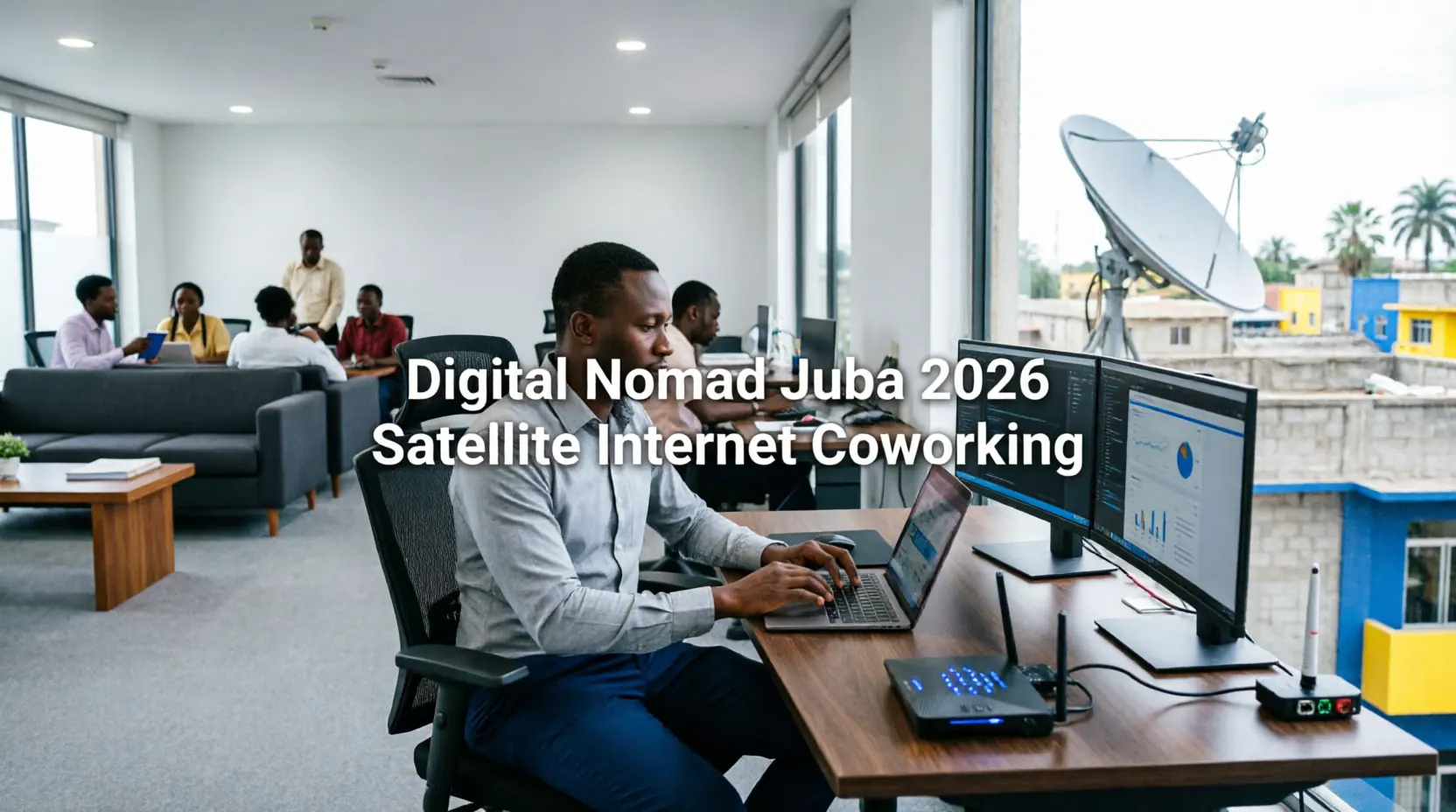
Understanding Digital Nomad Life in Juba
Juba presents unique challenges and opportunities for digital nomads in 2026. As South Sudan's capital this rapidly developing city offers an emerging remote work scene.
Internet connectivity has improved significantly with satellite technology becoming more accessible. Digital nomads can now work effectively with proper planning and equipment.
The cost of living remains moderate compared to established digital nomad hubs. However infrastructure limitations require adaptation and realistic expectations.
Fewer than 200 digital nomads currently call Juba home. This small community offers authentic experiences without the crowds found in popular destinations.
Success as a digital nomad in Juba requires thorough preparation and flexibility. Understanding the local context proves essential for productive remote work.
Current Internet Infrastructure in Juba 2026

Juba's internet infrastructure has evolved considerably over recent years. Multiple connectivity options now exist for remote workers and digital nomads.
Fiber optic cables provide backbone connectivity to the city. However last-mile delivery to individual locations remains inconsistent.
Mobile networks offer 4G LTE coverage in central Juba. Speeds vary significantly depending on location time of day and network congestion.
Traditional broadband services exist but suffer from reliability issues. Power outages and infrastructure limitations affect consistent connectivity.
Satellite internet has emerged as the most reliable option for serious remote workers. New technologies have dramatically improved speeds and reduced latency.
Satellite Internet Options for Digital Nomads

Satellite internet represents the gold standard for reliable connectivity in Juba. Several providers now serve the South Sudan market.
Starlink has become available in South Sudan as of 2025. This low-earth orbit service offers speeds between 50 and 200 Mbps with reasonable latency.
Traditional VSAT systems remain viable alternatives. These geostationary satellite systems provide reliable though slower connectivity.
Starlink equipment costs approximately 500 to 600 dollars initially. Monthly service fees range from 100 to 150 dollars depending on the plan.
VSAT installation requires professional setup and costs more upfront. Equipment and installation can total 2000 to 5000 dollars.
Monthly VSAT service fees typically run 200 to 400 dollars. Data caps may apply depending on the provider and package.
Setting Up Starlink in Juba

Acquiring Starlink equipment requires ordering from the official website. Shipping to South Sudan takes 2 to 4 weeks typically.
Customs clearance in Juba may require additional fees. Budget an extra 100 to 200 dollars for import duties and processing.
Installation is straightforward requiring clear sky visibility. The system automatically aligns once powered on and connected.
Power requirements include standard 110-240V AC power. A stable power source or battery backup is essential for uninterrupted service.
Performance in Juba generally meets advertised speeds. Occasional outages occur during severe weather but overall reliability is excellent.
Customer support is available online but not locally. Troubleshooting requires self-reliance or assistance from the expat community.
Mobile Data and Cellular Options

Mobile data serves as a backup or primary option for lighter remote work. Several carriers operate in South Sudan offering various plans.
Zain South Sudan provides the most extensive network coverage. Their 4G service reaches most areas of central Juba reliably.
Vivacell and MTN South Sudan offer competitive alternatives. Coverage and speeds vary by neighborhood and time of day.
Prepaid SIM cards cost 5 to 10 dollars with registration. Data packages range from 10 dollars for 10GB to 50 dollars for 50GB monthly.
Mobile hotspot devices enable connectivity for laptops. Dedicated 4G routers provide more stable connections than phone tethering.
Average mobile speeds range from 5 to 25 Mbps download. Upload speeds typically reach 2 to 10 Mbps depending on signal strength.
Coworking Spaces in Juba 2026

Juba's coworking scene remains small but growing. Several spaces cater to expats entrepreneurs and remote workers.
The Innovation Hub Juba leads the coworking movement. This UN-supported space offers reliable internet and professional facilities.
Private business centers provide day passes and monthly memberships. Costs range from 15 to 30 dollars daily or 200 to 400 dollars monthly.
Most coworking spaces include backup power and satellite internet. This ensures productivity even during grid outages.
Security measures vary by location. Premium spaces offer controlled access CCTV and security personnel.
Networking opportunities exist within these communities. Connecting with other professionals proves valuable for both work and social integration.
Secure Workspace Requirements

Security represents a primary concern for digital nomads in Juba. Choosing safe workspaces requires careful evaluation.
Locations within gated compounds offer enhanced security. UN compounds diplomatic areas and upscale hotels provide safer environments.
24-hour security personnel should be standard. Verify that guards are trained and professional before committing to a space.
CCTV cameras and controlled access points deter theft. These features also provide evidence if incidents occur.
Backup power systems ensure continuous operation. Generator or solar backup prevents work disruption during frequent outages.
Secure storage for equipment proves essential. Lockable desks or storage rooms protect valuable laptops and devices.
Internet Speed and Reliability Expectations

Setting realistic expectations prevents frustration when working from Juba. Internet performance varies significantly from Western standards.
Satellite connections typically deliver 50 to 150 Mbps download. Upload speeds range from 10 to 30 Mbps with modern systems.
Latency on satellite internet averages 25 to 50 milliseconds. This proves acceptable for most work though not ideal for competitive gaming.
Mobile data speeds fluctuate throughout the day. Peak hours from 6pm to 10pm often see reduced performance due to congestion.
Video conferencing works reliably on satellite connections. Zoom Teams and similar platforms function well with proper bandwidth.
Large file uploads may take longer than expected. Plan accordingly when sending substantial data to clients or colleagues.
Power Supply and Backup Solutions

Electrical power in Juba remains unreliable requiring backup solutions. Daily outages lasting several hours occur regularly.
Most accommodations provide generator power during outages. However these generators may run only during specific hours.
Investing in a UPS battery backup protects equipment. A quality UPS provides 2 to 4 hours of runtime for laptops and routers.
Solar power systems offer sustainable backup options. Portable solar panels with battery storage provide independence from the grid.
Power banks for mobile devices prove essential. Multiple high-capacity power banks ensure phones and tablets stay charged.
Surge protectors safeguard expensive electronics. Voltage fluctuations can damage equipment without proper protection.
Accommodation with Reliable Internet

Choosing the right accommodation significantly impacts remote work success. Not all hotels and apartments offer adequate connectivity.
Premium hotels like the Radisson Blu provide business centers. These properties typically maintain satellite internet and backup power.
Serviced apartments offer more space for extended stays. Verify internet capabilities before booking long-term arrangements.
Expat-oriented housing often includes better infrastructure. Properties catering to international workers understand connectivity needs.
Monthly rentals range from 800 to 2500 dollars. Higher-priced units typically include better amenities and internet service.
Always test internet speed before committing. Request a speed test demonstration during property viewings.
Cost of Living for Digital Nomads

Juba offers moderate costs compared to Western cities. However certain expenses exceed expectations due to import dependencies.
Accommodation represents the largest monthly expense. Budget 800 to 2000 dollars for comfortable housing with reliable internet.
Food costs vary widely depending on dining choices. Local restaurants charge 5 to 15 dollars per meal while international cuisine costs 20 to 40 dollars.
Groceries from imported goods sections prove expensive. Budget 300 to 500 dollars monthly for quality food shopping.
Transportation via taxi costs 10 to 20 dollars daily. Ride-hailing apps are not available requiring negotiation with local drivers.
Internet and connectivity expenses total 150 to 300 dollars monthly. This includes satellite service mobile data and backup solutions.
Overall monthly budgets range from 2000 to 4000 dollars. Lifestyle choices and accommodation standards determine final costs.
Visa Requirements for Remote Workers

South Sudan does not offer a specific digital nomad visa. Remote workers must navigate standard visa categories.
Tourist visas allow stays of 30 to 90 days. These visas technically prohibit employment though remote work for foreign companies exists in a gray area.
Business visas permit longer stays and multiple entries. Costs range from 100 to 300 dollars depending on duration and nationality.
Visa extensions require visits to immigration offices. Processing takes 3 to 7 days and costs 50 to 100 dollars.
Invitation letters facilitate visa approval. Working with local organizations or hotels simplifies the application process.
Always maintain valid documentation. Overstaying visas results in fines and potential deportation.
Banking and Financial Considerations

Banking infrastructure in Juba remains underdeveloped. Digital nomads must plan financial management carefully.
International credit cards work at major hotels and businesses. Visa and Mastercard are accepted though American Express is not.
ATMs exist but reliability varies significantly. Carry backup cash as machines frequently run out of currency or experience technical issues.
US dollars are widely accepted alongside South Sudanese pounds. Bring crisp new bills as worn notes may be rejected.
Digital payment platforms like PayPal have limited functionality. Receiving payments requires international bank accounts or services like Wise.
Currency exchange is available at banks and hotels. Rates at hotels prove less favorable than official banking institutions.
Time Zone and Client Communication

Juba operates on Central Africa Time CAT UTC plus 3. This time zone affects coordination with international clients.
European clients experience minimal time difference. One to two hours difference facilitates easy communication during business hours.
North American clients face 7 to 10 hour differences. Early morning or late evening calls may be necessary for real-time collaboration.
Asian clients experience 3 to 6 hour differences. Afternoon calls in Juba work well for morning meetings in Asia.
Asynchronous communication proves valuable. Tools like Slack email and project management platforms reduce scheduling challenges.
Clear communication about availability prevents misunderstandings. Share your working hours and response time expectations with clients.
Health and Safety for Remote Workers

Health considerations require attention when living in Juba. Comprehensive preparation ensures wellbeing during extended stays.
Malaria prophylaxis is essential for all residents. Consult a travel medicine specialist before arrival for appropriate medications.
Yellow fever vaccination is mandatory for entry. Carry your vaccination certificate at all times as authorities may request it.
Travel insurance with medical evacuation coverage is mandatory. Standard policies often exclude South Sudan requiring specialized coverage.
Medical facilities in Juba are limited. Serious conditions require evacuation to Kenya Uganda or beyond.
Personal health kits should include prescription medications. Bring adequate supplies as local pharmacies have limited inventories.
Building a Professional Network

Networking enhances both professional and personal experiences in Juba. The small expat community proves surprisingly connected.
UN and NGO workers dominate the professional landscape. These organizations host regular events and meetings open to outsiders.
Business chambers and entrepreneurship hubs host networking events. The Juba Chamber of Commerce welcomes international professionals.
Social media groups connect expats and digital nomads. Facebook groups like Juba Expats provide valuable information and connections.
Coworking spaces facilitate organic networking. Regular attendance builds relationships with fellow remote workers and local entrepreneurs.
Professional relationships often lead to opportunities. The developing economy values international expertise and connections.
Cultural Adaptation and Local Customs

Understanding local culture improves quality of life in Juba. South Sudan hosts diverse ethnic groups with rich traditions.
English serves as the official language facilitating communication. However learning basic Arabic greetings shows respect and builds rapport.
Dress codes lean conservative especially for women. Modest clothing covering shoulders and knees proves appropriate in most settings.
Relationships matter more than schedules. Patience and flexibility when dealing with bureaucracy prevents frustration.
Friday and Saturday constitute the weekend. Plan work schedules accordingly when coordinating with local partners.
Respect for elders and authority figures is important. Polite formal interactions create positive impressions in professional settings.
Shipping and Receiving Equipment

Receiving packages in Juba requires planning and patience. International shipping infrastructure remains limited.
DHL and FedEx operate in Juba but costs are high. Express shipping from Europe or US costs 100 to 300 dollars for small packages.
Customs duties apply to most imported goods. Budget 20 to 40 percent of item value for duties and processing fees.
Shipping times average 2 to 4 weeks. Delays occur frequently due to customs processing and logistical challenges.
PO boxes provide more reliable delivery than street addresses. Rent a box if expecting regular shipments.
Bring essential equipment when possible. Do not rely on shipping for critical work tools or technology.
Internet Security and VPN Requirements

Internet security requires attention when working from Juba. Protecting data and communications proves essential.
VPN services encrypt internet traffic protecting sensitive information. Subscribe to a reputable VPN before arriving in South Sudan.
Public wifi networks pose security risks. Avoid conducting sensitive business on unsecured connections.
Firewall protection and updated antivirus software are mandatory. Cyber threats exist even in less connected regions.
Two-factor authentication adds security to accounts. Enable 2FA on all professional and financial platforms.
Encrypted communication tools protect client confidentiality. Use Signal or similar apps for sensitive conversations.
Backup Internet Strategies

Redundant internet connections prevent work disruption. Relying on a single connection proves risky in Juba.
Primary satellite internet supplemented by mobile data works well. This combination ensures connectivity if one system fails.
Dual SIM phones provide network redundancy. Different carriers experience outages at different times.
Coworking space memberships offer backup locations. When home internet fails these spaces provide alternatives.
Mobile hotspot devices create instant backup networks. Keep charged devices ready for immediate deployment.
Hotel business centers serve as emergency options. Premium hotels maintain reliable internet for guests.
Work Life Balance in Challenging Conditions

Maintaining work-life balance requires intentionality in Juba. The challenges of daily life can blur boundaries.
Establish consistent work hours despite flexibility. Routine provides structure in an otherwise unpredictable environment.
Explore Juba during non-work hours. The city offers cultural experiences restaurants and social opportunities.
Connect with other expats for social interaction. Isolation affects mental health and productivity.
Exercise regularly despite limited facilities. Walking running or hotel gyms maintain physical health.
Take regular breaks from connectivity. Constant work without rest leads to burnout especially in challenging environments.
Emergency Preparedness for Digital Nomads

Emergency planning proves essential for remote workers in Juba. Unpredictable situations require preparation.
Maintain emergency cash reserves in US dollars. ATMs may be unavailable during crises or outages.
Keep important documents digitized and backed up. Passport visa and insurance copies should exist in cloud storage.
Establish emergency contacts including embassy details. Register with your embassy upon arrival in South Sudan.
Evacuation plans should exist before emergencies occur. Know departure routes and transportation options.
Travel insurance must cover political evacuation. Standard policies exclude conflict-related evacuations.
Long Term Sustainability Considerations

Long-term stays in Juba require sustainable practices. Burnout and frustration can end assignments prematurely.
Regular travel breaks prevent exhaustion. Plan trips to neighboring countries every 2 to 3 months.
Invest in comfort improvements for living spaces. Quality furniture and equipment enhance daily life.
Build local support networks for assistance. Trusted local contacts prove invaluable during challenges.
Continuously reassess whether Juba meets your needs. Flexibility to relocate if conditions become untenable proves wise.
Document experiences and lessons learned. Sharing knowledge helps future digital nomads considering Juba.
Alternative East African Nomad Destinations
Juba may not suit all digital nomads long-term. Understanding alternatives helps inform decisions.
Nairobi Kenya offers superior infrastructure and connectivity. The established nomad scene provides community and support.
Kigali Rwanda combines safety with modern amenities. This clean organized city attracts growing numbers of remote workers.
Kampala Uganda balances affordability with functionality. Lower costs than Juba with better internet reliability.
Addis Ababa Ethiopia provides cultural richness and connectivity. The capital serves as a major African hub.
Consider Juba as an adventure destination rather than permanent base. Short-term stays of 3 to 6 months often prove most sustainable.
Conclusion and Final Recommendations
Digital nomad life in Juba presents both challenges and opportunities in 2026. Success requires preparation adaptability and realistic expectations.
Satellite internet particularly Starlink enables reliable remote work. Investment in proper equipment and backup systems proves essential.
Secure coworking spaces and accommodations with reliable infrastructure support productivity. Budget adequately for these necessities.
The small but growing nomad community offers networking and support. Connecting with fellow remote workers enhances the experience.
Juba suits adventurous nomads seeking unique experiences off the beaten path. Those requiring perfect infrastructure should consider alternatives.
With proper planning and the right mindset digital nomads can work effectively from Juba. This emerging destination offers authentic African experiences for intrepid remote workers willing to embrace its challenges.
0 Comments