.webp)
.webp)
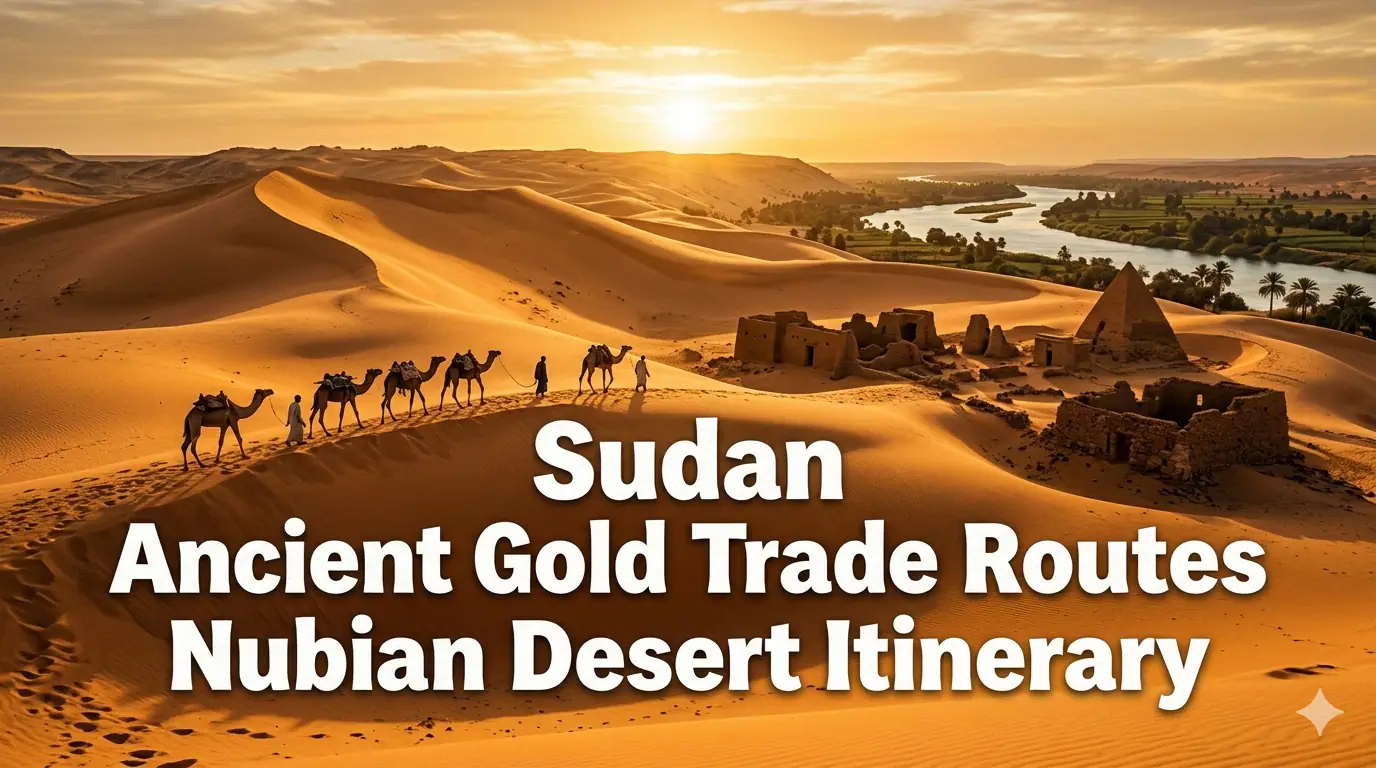
Discovering Sudans Ancient Gold Trade Legacy
Sudan holds one of Africas most fascinating yet overlooked historical narratives. The ancient gold trade routes of the Nubian Desert connected powerful civilizations across continents.
Nubia was known to ancient Egyptians as the land of gold. This reputation drove millennia of trade exploration and cultural exchange throughout the region.
The Nubian Desert served as a critical corridor for gold caravans traveling from interior mines to Nile ports. These routes shaped economies and empires for thousands of years.
Modern travelers can follow these ancient pathways discovering archaeological sites and cultural heritage along the way. This itinerary reveals Sudans golden historical treasures.
Understanding the gold trade context enhances appreciation for sites visited. Each location tells part of the larger story of African commerce and civilization.
Planning Your Gold Route Journey

Successful exploration of Sudans ancient gold routes requires careful preparation. The remote desert environment demands logistical planning and realistic expectations.
The optimal travel season spans November through February. These months offer comfortable temperatures ideal for desert travel and archaeological exploration.
Visa requirements must be secured before arrival. E-visa options now exist for many nationalities simplifying the application process significantly.
Travel insurance covering Sudan is essential. Verify that policies include medical evacuation as healthcare facilities remain limited outside major cities.
Hiring experienced local guides proves invaluable for navigating remote areas. Their knowledge of routes conditions and cultural protocols enhances safety and experience.
Day One Arrival in Khartoum and Historical Orientation

Begin your gold route itinerary with arrival in Khartoum Sudans capital city. This strategic location at the confluence of Blue and White Nile Rivers served as a historic trade hub.
Visit the National Museum of Sudan for essential historical context. Exceptional Nubian artifacts including statues jewelry and relics illustrate the regions golden past.
The museums Nubian gallery displays items recovered from gold trade era sites. These artifacts provide tangible connections to ancient commercial networks.
Explore Souq Arabi for authentic market experiences. Traditional goods spices and handicrafts reflect continuing cultural traditions rooted in trade history.
Evening briefings with local guides establish itinerary expectations. Review route maps safety protocols and cultural guidelines for upcoming desert travel.
Accommodation in Khartoum ranges from budget guesthouses to upscale hotels. Choose lodging with reliable internet for coordinating next days early departure.
Day Two Journey to Meroe and the Pyramid Gold Connection

Depart Khartoum early morning for the three-hour drive to Meroe archaeological site. This UNESCO World Heritage location contains over 200 Nubian pyramids.
Meroe served as capital of the Kingdom of Kush during peak gold trade periods. The city controlled access to gold mines and trade routes heading east and west.
Explore the Royal Cemetery where Kushite kings and queens were buried. Many tombs contained gold jewelry and artifacts demonstrating the wealth generated by trade.
Photography opportunities excel with minimal crowds. Capture pyramid silhouettes against desert skies while imagining ancient gold caravans passing these monuments.
Visit the Temple of Amun to understand religious aspects of gold trade. Gold held spiritual significance beyond economic value in Nubian culture.
On-site museum provides additional context about Meroitic civilization. Exhibits explain gold extraction methods and trade networks connecting Nubia to Mediterranean markets.
Day Three Exploring Meroes Gold Mining Heritage

Dedicate the third day to deeper exploration of Meroes gold mining connections. Ancient mining sites in surrounding hills reveal extraction techniques.
Guided visits to archaeological mining areas show stone tools and processing facilities. These sites demonstrate sophisticated understanding of geology and metallurgy.
Learn about traditional gold panning methods still practiced in some communities. Observing these techniques connects modern practices to ancient traditions.
Local communities share oral histories about gold trade era. These narratives provide perspectives absent from written historical records.
Photograph mining landscape features including ancient quarries and processing areas. These images document important aspects of Sudans industrial heritage.
Evening discussions with archaeologists or historians deepen understanding. Expert insights reveal ongoing research about Nubian gold trade networks.
Day Four Travel to Karima and Jebel Barkal

Continue north to Karima home of Jebel Barkal another UNESCO World Heritage Site. This sacred mountain was central to Nubian religious and political life.
Jebel Barkals temples demonstrate the wealth generated by gold trade. Elaborate carvings and architectural sophistication reflect economic prosperity.
Explore the Temple of Amun complex featuring impressive columns and reliefs. Gold leaf remnants on some surfaces hint at the sites former splendor.
Climb to viewpoints overlooking the Nile Valley. These perspectives reveal strategic importance of Karima for controlling trade routes.
Visit nearby Nuri pyramids where later Kushite rulers were buried. These structures contain artifacts illustrating continued gold trade significance.
Local guides share stories about Barkals spiritual significance. Understanding cultural context enhances appreciation for archaeological remains.
Day Five Dongola and Medieval Gold Trade Connections

Travel to Dongola to explore medieval Nubian Christian sites. This period represents an important chapter in Sudans gold trade history.
Visit the Old Dongola archaeological site featuring churches and palaces. These structures demonstrate continued prosperity through gold commerce.
Examine frescoes and artifacts showing trade connections with Byzantine and Islamic worlds. Gold facilitated cultural exchange across religious boundaries.
Explore local museums displaying medieval trade goods. Coins jewelry and imported items illustrate the scope of Nubian commercial networks.
Walk through traditional neighborhoods maintaining architectural styles from gold trade era. These living communities connect past and present.
Evening cultural performances showcase traditional music and dance. Artistic expressions preserve cultural heritage shaped by centuries of trade.
Day Six Desert Expedition to Ancient Caravan Routes

Embark on a four-wheel drive expedition into the Nubian Desert. This adventure follows ancient caravan routes used by gold traders for millennia.
Experienced drivers navigate desert tracks connecting archaeological sites. These routes reveal the challenging terrain faced by ancient merchants.
Stop at desert oases that served as crucial rest points. These water sources enabled long-distance trade across arid landscapes.
Explore rock art sites depicting ancient caravans and trading activities. These prehistoric paintings provide visual records of gold route history.
Camping under desert stars creates unforgettable experiences. Minimal light pollution offers exceptional stargazing opportunities.
Desert photography captures dramatic landscapes and archaeological features. Golden hour light enhances the timeless quality of these ancient routes.
Day Seven Kerma and the Earliest Gold Trade Centers

Reach Kerma one of Africas oldest urban centers and earliest gold trade hubs. This site dates to 2500 BC demonstrating Nubias ancient commercial significance.
Explore the massive mudbrick deffufa structures that served as temples and administrative centers. These impressive buildings controlled gold trade operations.
Visit royal cemeteries containing elaborate burials with gold artifacts. These tombs demonstrate the wealth accumulated through trade networks.
Archaeological museum displays Kerma period pottery jewelry and trade goods. Exhibits explain early gold extraction and commercial techniques.
Learn about Kerma connections to ancient Egypt through trade and conflict. Gold motivated both cooperation and competition between these civilizations.
Local community interactions provide insights into continuing cultural traditions. Modern Nubian practices preserve elements of ancient commercial culture.
Day Eight Red Sea Connection and Coastal Trade Routes

Travel eastward toward the Red Sea coast exploring connections between Nile gold routes and maritime trade networks. This journey reveals Sudans role in global commerce.
Visit archaeological sites linking desert caravan routes to Red Sea ports. These locations demonstrate integration of land and sea trade systems.
Explore ancient port facilities where gold shipments transferred to ships. Maritime connections carried Nubian gold to Mediterranean Arabian and Indian markets.
Learn about monsoon wind patterns that enabled long-distance sea trade. Understanding these natural systems reveals sophistication of ancient navigation.
Coastal communities share histories of maritime trade heritage. Oral traditions preserve knowledge about ships cargoes and trading partners.
Red Sea landscapes provide dramatic photographic opportunities. Desert meeting ocean creates unique visual compositions documenting trade route geography.
Day Nine Return Journey and Reflection

Begin the return journey toward Khartoum reflecting on discoveries about Sudans gold trade heritage. This day consolidates learning from the itinerary.
Stop at additional archaeological sites missed during outbound travel. Flexible scheduling allows comprehensive exploration of gold route locations.
Photography sessions capture favorite locations in different lighting. Returning to sites provides new perspectives and compositional opportunities.
Discussions with guides synthesize historical insights gained throughout the journey. Connecting individual sites into broader narratives enhances understanding.
Document experiences through journaling or photography. Recording observations preserves memories and shares knowledge with others.
Evening farewell dinner celebrates successful exploration of Sudans golden heritage. Traditional cuisine and cultural performances conclude the itinerary memorably.
Day Ten Departure and Continued Engagement

Final day in Khartoum allows last-minute exploration and departure preparations. This day ensures smooth conclusion to the gold route itinerary.
Visit additional museums or cultural sites based on personal interests. Flexible scheduling accommodates individual preferences and discoveries.
Purchase authentic handicrafts supporting local artisan communities. Traditional pottery textiles and jewelry provide meaningful souvenirs.
Exchange contact information with guides and new connections. Maintaining relationships facilitates future travel and cultural exchange.
Share experiences through social media or travel platforms. Responsible storytelling raises awareness about Sudans archaeological treasures.
Depart Khartoum with deeper appreciation for Africas historical contributions. The ancient gold trade routes reveal sophisticated civilizations deserving recognition.
Essential Equipment for Desert Archaeological Travel

Proper equipment significantly impacts comfort and success on gold route itineraries. Desert conditions demand specific preparation.
Sturdy four-wheel-drive vehicles with experienced drivers prove essential. Desert tracks require capable transportation and skilled navigation.
Camping equipment for remote overnight stays includes quality tents and sleeping gear. Desert temperatures vary dramatically between day and night.
Navigation tools including GPS devices and detailed maps prevent getting lost. Remote areas lack signage and cellular coverage.
Water storage capacity of at least five liters per person daily ensures hydration. Desert environments demand rigorous fluid management.
Photography equipment protects against dust and sand. Lens cleaning supplies and protective cases maintain gear functionality.
Safety Considerations for Gold Route Exploration

Safety awareness proves critical when exploring Sudans remote archaeological sites. Proper preparation minimizes risks in challenging environments.
Current security situations require verification before travel. Consult official government advisories and local contacts for updated information.
Travel with reputable tour operators when visiting remote areas. Professional guides navigate security concerns and cultural protocols effectively.
Register with your embassy upon arrival in Sudan. This facilitates emergency communications if situations change unexpectedly.
Maintain regular communication with local contacts regarding conditions. Artisan communities and guides possess valuable local knowledge.
Carry comprehensive first aid kits including medications for common ailments. Medical facilities remain limited outside major urban centers.
Cultural Etiquette for Historical Site Visits

Respectful behavior enhances experiences at Sudans archaeological treasures. Understanding cultural norms demonstrates appreciation for heritage.
Dress modestly particularly when visiting religious or traditional sites. Conservative clothing covering shoulders and knees aligns with local expectations.
Ask permission before photographing people or sensitive cultural elements. Many Sudanese welcome photos though some prefer privacy.
Learn basic Arabic greetings to facilitate positive interactions. Simple phrases like as-salamu alaykum demonstrate respect and effort.
Follow site preservation guidelines protecting archaeological remains. Stay on designated paths and avoid touching fragile structures.
Support local communities through fair purchases and respectful engagement. Economic benefits from tourism incentivize heritage preservation.
Photography Tips for Gold Route Documentation

Photography preserves memories and shares Sudans golden heritage with wider audiences. Strategic techniques enhance image quality and storytelling.
Golden hour lighting during sunrise and sunset creates dramatic archaeological photography. Plan shooting sessions around these optimal light periods.
Wide angle lenses capture expansive desert landscapes and pyramid fields. These lenses excel at documenting the scale of archaeological sites.
Telephoto lenses isolate architectural details and distant features. Compression effects create compelling compositions of ancient structures.
Polarizing filters reduce glare and enhance sky colors in desert conditions. These filters improve image quality during bright daylight shooting.
RAW format capture provides maximum post-processing flexibility. Desert lighting challenges benefit from RAW files ability to recover details.
Sustainable Tourism and Heritage Preservation
Responsible travel supports preservation of Sudans archaeological treasures. Sustainable practices ensure future generations experience these remarkable sites.
Employ local guides and use Sudanese tour operators. This economic benefit incentivizes heritage protection and community development.
Follow leave-no-trace principles in desert and archaeological environments. Minimizing impact protects fragile ecosystems and historical remains.
Share experiences responsibly avoiding exploitation or misrepresentation. Ethical storytelling respects cultural significance of visited sites.
Support conservation initiatives through donations or volunteer opportunities. Direct contributions aid preservation of Sudans golden heritage.
Educate fellow travelers about importance of sustainable archaeological tourism. Spreading awareness amplifies positive impacts of responsible travel.
Conclusion Embracing Sudans Golden Historical Legacy
Sudans ancient gold trade routes offer extraordinary opportunities for historical exploration and cultural discovery. This itinerary reveals the Nubian Deserts remarkable heritage.
From Meroes pyramids to Kerma's ancient urban centers each site tells part of Africas golden commercial narrative. These archaeological treasures deserve global recognition.
Travelers willing to embrace challenges discover rewards impossible in developed destinations. Authenticity solitude and historical significance define the Sudan experience.
Visiting these sites contributes to sustainable development while creating memories of a lifetime. Early travelers help shape responsible tourism benefiting local communities.
The ancient gold trade routes of the Nubian Desert represent one of Africas most compelling historical journeys. Sudan awaits adventurous travelers ready to explore this remarkable heritage.
Now stands as an ideal time to experience Sudans golden legacy before widespread tourism changes its character. The pyramids deserts and cultural traditions offer unforgettable encounters with human history.
0 Comments