.webp)
.webp)
Comoros Sustainable Blue Economy Policy 2026: How the new framework transforms ocean tourism.
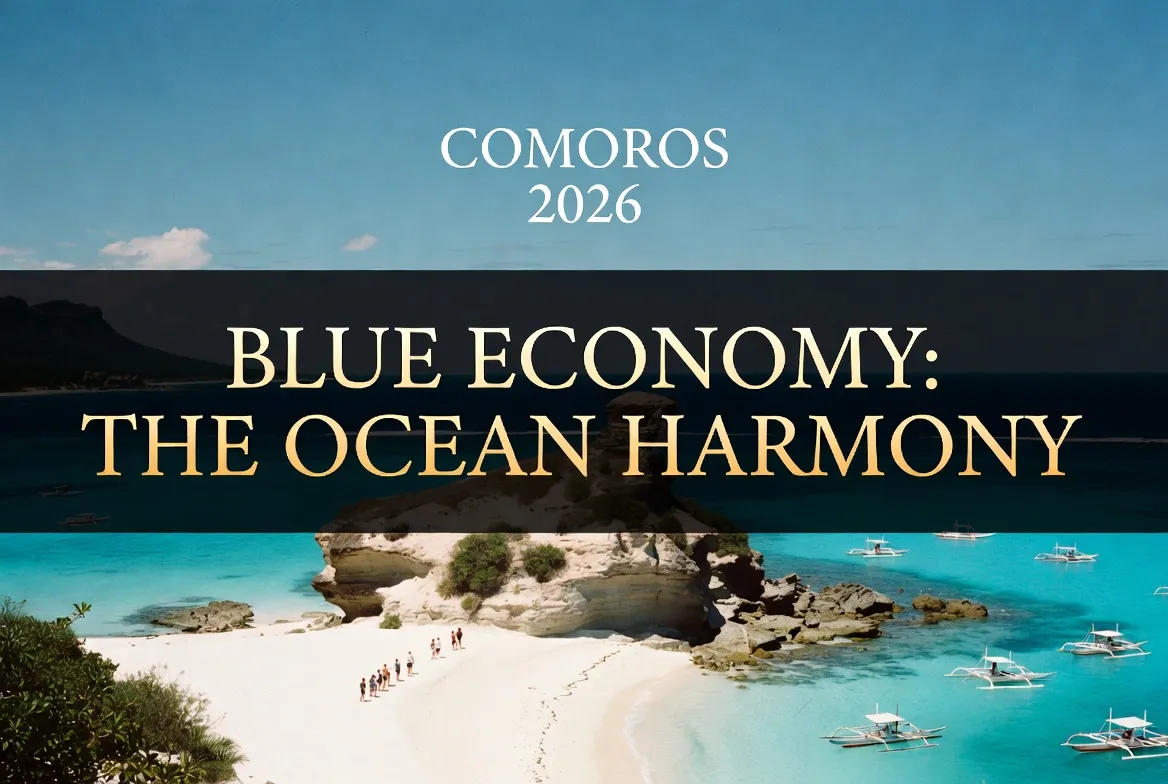
Comoros Sustainable Blue Economy Policy 2026: How the New Framework Transforms Ocean Tourism
The Union of the Comoros, a small island nation in the Indian Ocean, has launched an ambitious Sustainable Blue Economy Policy in 2026 that promises to transform the archipelago's approach to ocean-based economic development, with particular emphasis on sustainable ocean tourism. This comprehensive policy framework represents a paradigm shift from traditional extractive ocean use to a regenerative, inclusive, and climate-resilient model that positions the Comoros as a leader in sustainable island development.
Spanning the three main islands of Grande Comore (Ngazidja), Mohéli (Mwali), and Anjouan (Nzwani), the Comoros possesses one of the richest marine biodiversity hotspots in the Western Indian Ocean. With over 2,000 square kilometers of coral reefs, diverse marine ecosystems, and pristine coastal environments, the nation's blue economy potential is enormous. The 2026 policy framework provides a roadmap for harnessing this potential while ensuring environmental sustainability, social equity, and economic prosperity for current and future generations.
This comprehensive guide explores the Comoros Sustainable Blue Economy Policy 2026 in detail, examining its key pillars, tourism transformation strategies, implementation mechanisms, and what it means for travelers, investors, conservationists, and the local communities who call these beautiful islands home.
Understanding the Blue Economy Concept in the Comoros Context
What is the Blue Economy?
The Blue Economy refers to the sustainable use of ocean resources for economic growth, improved livelihoods, and jobs while preserving the health of ocean ecosystems. For the Comoros, this concept is particularly relevant given that:
- Ocean dependency: Over 90% of Comoros' territory is ocean
- Economic reliance: Marine resources contribute significantly to GDP and employment
- Food security: Fish provides over 50% of animal protein consumption
- Tourism potential: Marine and coastal tourism represents the fastest-growing sector
- Climate vulnerability: As a small island state, the Comoros is highly vulnerable to climate change and ocean degradation
- 👉 Luxury Hotels Bamako 2026: Best 5-Star Stays Guide
- 👉 The Àkéte Collection 2026: Full guide to Lagos' newest Museum of Modern Art.
- 👉 Moroni Port Control Unit 2026: Smoother Border Entry Guide
Why the Comoros Adopted This Policy in 2026
Several converging factors led to the development and adoption of the Sustainable Blue Economy Policy:
Environmental Imperatives:
- Coral reef degradation: Rising sea temperatures and ocean acidification threaten reef ecosystems
- Overfishing: Unsustainable fishing practices depleting fish stocks
- Coastal erosion: Sea-level rise and storm surges damaging coastal infrastructure
- Marine pollution: Plastic waste and land-based pollution affecting marine life
- Biodiversity loss: Threats to endangered species including sea turtles, dugongs, and reef sharks
- 👉 Luxury Hotels Bamako 2026: Best 5-Star Stays Guide
- 👉 The Àkéte Collection 2026: Full guide to Lagos' newest Museum of Modern Art.
- 👉 Moroni Port Control Unit 2026: Smoother Border Entry Guide
Economic Opportunities:
- Tourism growth: Increasing demand for sustainable and eco-tourism experiences
- Blue carbon markets: Potential revenue from mangrove and seagrass conservation
- Sustainable fisheries: Value addition and certification for premium markets
- Marine biotechnology: Untapped potential in marine genetic resources
- Renewable ocean energy: Wave and tidal energy potential
- 👉 Luxury Hotels Bamako 2026: Best 5-Star Stays Guide
- 👉 The Àkéte Collection 2026: Full guide to Lagos' newest Museum of Modern Art.
- 👉 Moroni Port Control Unit 2026: Smoother Border Entry Guide
Social and Cultural Factors:
- Community livelihoods: Protecting traditional fishing communities and coastal populations
- Cultural heritage: Preserving maritime traditions and indigenous knowledge
- Youth employment: Creating green jobs in ocean-based sectors
- Gender equality: Ensuring women's participation in blue economy activities
- 👉 Luxury Hotels Bamako 2026: Best 5-Star Stays Guide
- 👉 The Àkéte Collection 2026: Full guide to Lagos' newest Museum of Modern Art.
- 👉 Moroni Port Control Unit 2026: Smoother Border Entry Guide
Key Pillars of the 2026 Sustainable Blue Economy Policy
The Comoros Sustainable Blue Economy Policy 2026 is structured around five strategic pillars that provide a comprehensive framework for sustainable ocean development:
Pillar 1: Sustainable Fisheries and Aquaculture
Objectives:
- Restore and maintain fish stocks at sustainable levels
- Promote responsible fishing practices and eliminate illegal fishing
- Develop sustainable aquaculture and mariculture
- Enhance value chains and market access for fish products
- Strengthen fisheries governance and monitoring
- 👉 Luxury Hotels Bamako 2026: Best 5-Star Stays Guide
- 👉 The Àkéte Collection 2026: Full guide to Lagos' newest Museum of Modern Art.
- 👉 Moroni Port Control Unit 2026: Smoother Border Entry Guide
Key Initiatives:
- Marine Protected Areas (MPAs): Expand coverage to 30% of territorial waters by 2030
- Fishing quotas and licenses: Science-based management of fishing effort
- Artisanal fisheries support: Training, equipment, and market access for small-scale fishers
- Aquaculture development: Seaweed farming, oyster cultivation, and fish farming
- Cold chain infrastructure: Improve post-harvest handling and reduce losses
- 👉 Luxury Hotels Bamako 2026: Best 5-Star Stays Guide
- 👉 The Àkéte Collection 2026: Full guide to Lagos' newest Museum of Modern Art.
- 👉 Moroni Port Control Unit 2026: Smoother Border Entry Guide
Pillar 2: Sustainable Ocean Tourism and Coastal Development
Objectives:
- Develop high-value, low-impact tourism that respects carrying capacities
- Protect and restore coastal and marine ecosystems
- Promote community-based tourism and local ownership
- Enhance tourism infrastructure while minimizing environmental footprint
- Position Comoros as a premier sustainable tourism destination
- 👉 Luxury Hotels Bamako 2026: Best 5-Star Stays Guide
- 👉 The Àkéte Collection 2026: Full guide to Lagos' newest Museum of Modern Art.
- 👉 Moroni Port Control Unit 2026: Smoother Border Entry Guide
Key Initiatives:
- Eco-certification program: Standards for sustainable hotels, tour operators, and activities
- Marine tourism zones: Designated areas for diving, snorkeling, and water sports
- Coastal zone management: Integrated planning for sustainable coastal development
- Cultural tourism: Promote maritime heritage and traditional practices
- Visitor management: Carrying capacity assessments and visitor flow management
- 👉 Luxury Hotels Bamako 2026: Best 5-Star Stays Guide
- 👉 The Àkéte Collection 2026: Full guide to Lagos' newest Museum of Modern Art.
- 👉 Moroni Port Control Unit 2026: Smoother Border Entry Guide
Pillar 3: Marine Conservation and Biodiversity Protection
Objectives:
- Protect and restore critical marine habitats (coral reefs, mangroves, seagrass)
- Conserve endangered and threatened marine species
- Establish and effectively manage marine protected areas
- Combat marine pollution and plastic waste
- Enhance climate resilience of marine ecosystems
- 👉 Luxury Hotels Bamako 2026: Best 5-Star Stays Guide
- 👉 The Àkéte Collection 2026: Full guide to Lagos' newest Museum of Modern Art.
- 👉 Moroni Port Control Unit 2026: Smoother Border Entry Guide
Key Initiatives:
- Mohéli Marine Park expansion: Strengthen protection and management
- Coral reef restoration: Active restoration of degraded reefs
- Mangrove rehabilitation: Planting and protecting mangrove forests
- Sea turtle conservation: Nesting site protection and monitoring
- Marine litter management: Waste reduction and cleanup programs
- 👉 Luxury Hotels Bamako 2026: Best 5-Star Stays Guide
- 👉 The Àkéte Collection 2026: Full guide to Lagos' newest Museum of Modern Art.
- 👉 Moroni Port Control Unit 2026: Smoother Border Entry Guide
Pillar 4: Blue Carbon and Climate Action
Objectives:
- Quantify and protect blue carbon ecosystems (mangroves, seagrass, salt marshes)
- Develop blue carbon credit markets
- Enhance coastal resilience to climate change
- Reduce greenhouse gas emissions from ocean-based activities
- Integrate climate adaptation into all blue economy sectors
- 👉 Luxury Hotels Bamako 2026: Best 5-Star Stays Guide
- 👉 The Àkéte Collection 2026: Full guide to Lagos' newest Museum of Modern Art.
- 👉 Moroni Port Control Unit 2026: Smoother Border Entry Guide
Key Initiatives:
- Blue carbon inventory: Mapping and measuring carbon stocks
- Carbon credit projects: Develop verified carbon standard projects
- Climate-smart infrastructure: Build resilience into coastal developments
- Renewable ocean energy: Explore wave and tidal energy potential
- Climate finance: Access international climate funds for blue economy
- 👉 Luxury Hotels Bamako 2026: Best 5-Star Stays Guide
- 👉 The Àkéte Collection 2026: Full guide to Lagos' newest Museum of Modern Art.
- 👉 Moroni Port Control Unit 2026: Smoother Border Entry Guide
Pillar 5: Governance, Innovation, and Inclusive Growth
Objectives:
- Strengthen ocean governance and regulatory frameworks
- Promote research, innovation, and technology transfer
- Ensure equitable benefit-sharing and community participation
- Build capacity and skills for blue economy jobs
- Foster partnerships and international cooperation
- 👉 Luxury Hotels Bamako 2026: Best 5-Star Stays Guide
- 👉 The Àkéte Collection 2026: Full guide to Lagos' newest Museum of Modern Art.
- 👉 Moroni Port Control Unit 2026: Smoother Border Entry Guide
Key Initiatives:
- Blue Economy Council: Multi-stakeholder governance body
- Marine spatial planning: Comprehensive ocean zoning and planning
- Research centers: Establish marine research and innovation hubs
- Blue economy fund: Financing mechanism for sustainable projects
- Youth and women programs: Targeted support for underrepresented groups
- 👉 Luxury Hotels Bamako 2026: Best 5-Star Stays Guide
- 👉 The Àkéte Collection 2026: Full guide to Lagos' newest Museum of Modern Art.
- 👉 Moroni Port Control Unit 2026: Smoother Border Entry Guide
Transformation of Ocean Tourism: Key Strategies
The Sustainable Blue Economy Policy 2026 fundamentally transforms how tourism is developed and managed in the Comoros. Here are the key strategies:
1. Shift from Mass Tourism to High-Value Sustainable Tourism
Old Model:
- Focus on visitor numbers and volume
- Large-scale resort development
- Low-spending mass market tourists
- High environmental and social costs
- 👉 Luxury Hotels Bamako 2026: Best 5-Star Stays Guide
- 👉 The Àkéte Collection 2026: Full guide to Lagos' newest Museum of Modern Art.
- 👉 Moroni Port Control Unit 2026: Smoother Border Entry Guide
New Model:
- Focus on visitor experience quality and value
- Small-scale, eco-friendly accommodations
- High-spending conscious travelers
- Low environmental impact, high community benefits
- 👉 Luxury Hotels Bamako 2026: Best 5-Star Stays Guide
- 👉 The Àkéte Collection 2026: Full guide to Lagos' newest Museum of Modern Art.
- 👉 Moroni Port Control Unit 2026: Smoother Border Entry Guide
Implementation:
- Carrying capacity limits: Maximum visitor numbers for sensitive sites
- Premium positioning: Market Comoros as exclusive sustainable destination
- Quality standards: Strict environmental and social criteria for tourism businesses
- Visitor fees: Conservation fees and tourism levies
- 👉 Luxury Hotels Bamako 2026: Best 5-Star Stays Guide
- 👉 The Àkéte Collection 2026: Full guide to Lagos' newest Museum of Modern Art.
- 👉 Moroni Port Control Unit 2026: Smoother Border Entry Guide
2. Community-Based and Locally-Owned Tourism
Objectives:
- Increase local ownership and control of tourism enterprises
- Ensure tourism revenues benefit local communities
- Preserve and showcase cultural heritage and traditions
- Create meaningful employment and entrepreneurship opportunities
- 👉 Luxury Hotels Bamako 2026: Best 5-Star Stays Guide
- 👉 The Àkéte Collection 2026: Full guide to Lagos' newest Museum of Modern Art.
- 👉 Moroni Port Control Unit 2026: Smoother Border Entry Guide
Initiatives:
- Community tourism cooperatives: Support village-level tourism enterprises
- Homestay programs: Authentic cultural immersion experiences
- Local guide training: Certify and train community members as guides
- Craft and product markets: Platforms for selling local products to tourists
- Revenue sharing: Mechanisms for communities to benefit from protected areas
- 👉 Luxury Hotels Bamako 2026: Best 5-Star Stays Guide
- 👉 The Àkéte Collection 2026: Full guide to Lagos' newest Museum of Modern Art.
- 👉 Moroni Port Control Unit 2026: Smoother Border Entry Guide
3. Marine-Based Tourism Development
Sustainable Diving and Snorkeling:
- Dive site certification: Assess and certify dive sites for sustainability
- Diver education: Mandatory briefings on reef protection
- Mooring buoys: Install buoys to prevent anchor damage
- Reef monitoring: Regular health assessments of dive sites
- Limited access: Rotate dive sites to allow recovery
- 👉 Luxury Hotels Bamako 2026: Best 5-Star Stays Guide
- 👉 The Àkéte Collection 2026: Full guide to Lagos' newest Museum of Modern Art.
- 👉 Moroni Port Control Unit 2026: Smoother Border Entry Guide
Whale and Dolphin Watching:
- Regulations: Strict guidelines for vessel approach and interaction
- Training: Certified guides and boat operators
- Monitoring: Track impacts on marine mammal populations
- Research partnerships: Collaborate with scientists on marine mammal studies
- 👉 Luxury Hotels Bamako 2026: Best 5-Star Stays Guide
- 👉 The Àkéte Collection 2026: Full guide to Lagos' newest Museum of Modern Art.
- 👉 Moroni Port Control Unit 2026: Smoother Border Entry Guide
Sustainable Fishing Tourism:
- Catch and release: Promote sport fishing with catch-and-release
- Traditional fishing experiences: Cultural tourism with local fishers
- Size and species limits: Protect vulnerable species
- Licensing: Regulate fishing tourism operators
- 👉 Luxury Hotels Bamako 2026: Best 5-Star Stays Guide
- 👉 The Àkéte Collection 2026: Full guide to Lagos' newest Museum of Modern Art.
- 👉 Moroni Port Control Unit 2026: Smoother Border Entry Guide
4. Eco-Certification and Standards
Comoros Sustainable Tourism Certification Program:
- Criteria: Environmental, social, and economic sustainability standards
- Levels: Bronze, Silver, Gold certification levels
- Auditing: Regular third-party audits and verification
- Marketing: Certified businesses featured in promotional materials
- Incentives: Tax breaks and preferential treatment for certified businesses
- 👉 Luxury Hotels Bamako 2026: Best 5-Star Stays Guide
- 👉 The Àkéte Collection 2026: Full guide to Lagos' newest Museum of Modern Art.
- 👉 Moroni Port Control Unit 2026: Smoother Border Entry Guide
Standards Cover:
- Energy and water efficiency
- Waste management and reduction
- Local sourcing and employment
- Community engagement and benefit-sharing
- Cultural heritage protection
- Marine and coastal conservation
- 👉 Luxury Hotels Bamako 2026: Best 5-Star Stays Guide
- 👉 The Àkéte Collection 2026: Full guide to Lagos' newest Museum of Modern Art.
- 👉 Moroni Port Control Unit 2026: Smoother Border Entry Guide
5. Climate-Resilient Tourism Infrastructure
Green Building Standards:
- Renewable energy: Solar, wind, and other renewable sources
- Water conservation: Rainwater harvesting, greywater recycling
- Sustainable materials: Local, renewable, and low-impact materials
- Nature-based design: Architecture that respects local climate and culture
- 👉 Luxury Hotels Bamako 2026: Best 5-Star Stays Guide
- 👉 The Àkéte Collection 2026: Full guide to Lagos' newest Museum of Modern Art.
- 👉 Moroni Port Control Unit 2026: Smoother Border Entry Guide
Coastal Protection:
- Natural barriers: Mangrove and coral reef restoration for storm protection
- Setback requirements: Minimum distance from shoreline for new construction
- Climate risk assessments: Mandatory for all coastal developments
- Adaptive management: Flexible designs that can adapt to changing conditions
- 👉 Luxury Hotels Bamako 2026: Best 5-Star Stays Guide
- 👉 The Àkéte Collection 2026: Full guide to Lagos' newest Museum of Modern Art.
- 👉 Moroni Port Control Unit 2026: Smoother Border Entry Guide
Marine Protected Areas and Tourism Zones
The Blue Economy Policy establishes a comprehensive system of Marine Protected Areas (MPAs) and sustainable tourism zones to balance conservation with responsible tourism use.
Existing Protected Areas:
Mohéli Marine Park (Parc Marin de Mohéli):
- Established: 2001, expanded under 2026 policy
- Size: 430 km² (expanded to 600 km² by 2030)
- Features: Coral reefs, sea turtle nesting beaches, dugong habitat
- Tourism: Controlled diving, snorkeling, and turtle watching
- Management: Co-management with local communities
- 👉 Luxury Hotels Bamako 2026: Best 5-Star Stays Guide
- 👉 The Àkéte Collection 2026: Full guide to Lagos' newest Museum of Modern Art.
- 👉 Moroni Port Control Unit 2026: Smoother Border Entry Guide
New Protected Areas Under 2026 Policy:
Grande Comore Marine Reserve:
- Location: Western coast of Grande Comore
- Size: 250 km²
- Features: Pristine coral reefs, diverse fish populations
- Tourism: Sustainable diving and snorkeling zones
- Timeline: Designated 2026, fully operational by 2028
- 👉 Luxury Hotels Bamako 2026: Best 5-Star Stays Guide
- 👉 The Àkéte Collection 2026: Full guide to Lagos' newest Museum of Modern Art.
- 👉 Moroni Port Control Unit 2026: Smoother Border Entry Guide
Anjouan Coastal Protection Zone:
- Location: Northern and eastern coasts of Anjouan
- Size: 180 km²
- Features: Mangrove forests, seagrass beds, coral reefs
- Tourism: Kayaking, birdwatching, cultural tourism
- Timeline: Designated 2027
- 👉 Luxury Hotels Bamako 2026: Best 5-Star Stays Guide
- 👉 The Àkéte Collection 2026: Full guide to Lagos' newest Museum of Modern Art.
- 👉 Moroni Port Control Unit 2026: Smoother Border Entry Guide
Tourism Use Zones:
The policy establishes different zones with varying levels of tourism access:
Zone 1: Strict Protection (No Tourism)
- Critical habitats and breeding grounds
- No access except for scientific research
- Examples: Sea turtle nesting beaches during nesting season
- 👉 Luxury Hotels Bamako 2026: Best 5-Star Stays Guide
- 👉 The Àkéte Collection 2026: Full guide to Lagos' newest Museum of Modern Art.
- 👉 Moroni Port Control Unit 2026: Smoother Border Entry Guide
Zone 2: Limited Use (Controlled Tourism)
- Sensitive ecosystems requiring protection
- Limited visitor numbers with permits required
- Guided tours only
- Examples: Coral reef restoration sites, mangrove forests
- 👉 Luxury Hotels Bamako 2026: Best 5-Star Stays Guide
- 👉 The Àkéte Collection 2026: Full guide to Lagos' newest Museum of Modern Art.
- 👉 Moroni Port Control Unit 2026: Smoother Border Entry Guide
Zone 3: Sustainable Use (Regulated Tourism)
- Resilient ecosystems suitable for tourism
- Managed visitor numbers
- Eco-certified operators only
- Examples: Main dive sites, snorkeling areas
- 👉 Luxury Hotels Bamako 2026: Best 5-Star Stays Guide
- 👉 The Àkéte Collection 2026: Full guide to Lagos' newest Museum of Modern Art.
- 👉 Moroni Port Control Unit 2026: Smoother Border Entry Guide
Zone 4: Multiple Use (General Tourism)
- Areas designated for various tourism activities
- Standard regulations apply
- Examples: Beach areas, coastal resorts
- 👉 Luxury Hotels Bamako 2026: Best 5-Star Stays Guide
- 👉 The Àkéte Collection 2026: Full guide to Lagos' newest Museum of Modern Art.
- 👉 Moroni Port Control Unit 2026: Smoother Border Entry Guide
Implementation Timeline and Milestones
The Comoros Sustainable Blue Economy Policy 2026 follows a phased implementation approach:
Phase 1: Foundation (2026-2027)
Key Activities:
- Establish Blue Economy Council and governance structures
- Develop detailed regulations and standards
- Conduct baseline assessments and mapping
- Launch pilot eco-certification program
- Establish monitoring and enforcement mechanisms
- Begin stakeholder consultation and capacity building
- 👉 Luxury Hotels Bamako 2026: Best 5-Star Stays Guide
- 👉 The Àkéte Collection 2026: Full guide to Lagos' newest Museum of Modern Art.
- 👉 Moroni Port Control Unit 2026: Smoother Border Entry Guide
Milestones:
- Q2 2026: Blue Economy Council operational
- Q4 2026: Marine spatial planning framework adopted
- Q2 2027: First 100 businesses eco-certified
- Q4 2027: Marine Protected Areas expansion plan approved
- 👉 Luxury Hotels Bamako 2026: Best 5-Star Stays Guide
- 👉 The Àkéte Collection 2026: Full guide to Lagos' newest Museum of Modern Art.
- 👉 Moroni Port Control Unit 2026: Smoother Border Entry Guide
Phase 2: Scaling Up (2028-2030)
Key Activities:
- Expand marine protected areas to 20% of territorial waters
- Scale up eco-certification to all tourism businesses
- Implement blue carbon projects
- Develop sustainable fisheries management systems
- Launch blue economy financing mechanisms
- Strengthen research and innovation capacity
- 👉 Luxury Hotels Bamako 2026: Best 5-Star Stays Guide
- 👉 The Àkéte Collection 2026: Full guide to Lagos' newest Museum of Modern Art.
- 👉 Moroni Port Control Unit 2026: Smoother Border Entry Guide
Milestones:
- 2028: 30% of tourism businesses certified
- 2029: 20% of waters under protection
- 2030: Blue carbon projects generating revenue
- 2030: 50% reduction in illegal fishing
- 👉 Luxury Hotels Bamako 2026: Best 5-Star Stays Guide
- 👉 The Àkéte Collection 2026: Full guide to Lagos' newest Museum of Modern Art.
- 👉 Moroni Port Control Unit 2026: Smoother Border Entry Guide
Phase 3: Consolidation and Growth (2031-2035)
Key Activities:
- Achieve 30% marine protected area coverage
- Fully implement sustainable fisheries management
- Scale up blue economy sectors
- Enhance climate resilience
- Strengthen regional cooperation
- Achieve SDG 14 (Life Below Water) targets
- 👉 Luxury Hotels Bamako 2026: Best 5-Star Stays Guide
- 👉 The Àkéte Collection 2026: Full guide to Lagos' newest Museum of Modern Art.
- 👉 Moroni Port Control Unit 2026: Smoother Border Entry Guide
Long-Term Vision (2035+):
- Comoros recognized as global leader in sustainable blue economy
- Ocean-based GDP contribution doubled from 2026 levels
- Healthy, resilient marine ecosystems
- Thriving sustainable tourism sector
- Equitable benefit-sharing with local communities
- 👉 Luxury Hotels Bamako 2026: Best 5-Star Stays Guide
- 👉 The Àkéte Collection 2026: Full guide to Lagos' newest Museum of Modern Art.
- 👉 Moroni Port Control Unit 2026: Smoother Border Entry Guide
Financing the Blue Economy Transition
Implementing the Sustainable Blue Economy Policy requires significant investment. The Comoros has developed a multi-source financing strategy:
1. Public Funding
- National budget: Dedicated allocation for blue economy (target: 5% of national budget)
- Tourism levies: Environmental fees on visitors and tourism businesses
- Fishing licenses: Revenue from commercial fishing permits
- Carbon taxes: Potential future revenue from blue carbon credits
- 👉 Luxury Hotels Bamako 2026: Best 5-Star Stays Guide
- 👉 The Àkéte Collection 2026: Full guide to Lagos' newest Museum of Modern Art.
- 👉 Moroni Port Control Unit 2026: Smoother Border Entry Guide
2. International Climate and Conservation Finance
- Green Climate Fund (GCF): Climate adaptation and mitigation projects
- Global Environment Facility (GEF): Biodiversity conservation
- Blue Carbon Fund: Mangrove and seagrass conservation
- Debt-for-nature swaps: Debt relief in exchange for conservation commitments
- 👉 Luxury Hotels Bamako 2026: Best 5-Star Stays Guide
- 👉 The Àkéte Collection 2026: Full guide to Lagos' newest Museum of Modern Art.
- 👉 Moroni Port Control Unit 2026: Smoother Border Entry Guide
3. Private Sector Investment
- Impact investors: Investors seeking both financial return and environmental impact
- Sustainable tourism developers: Eco-resorts and sustainable infrastructure
- Blue bonds: Bonds specifically for ocean conservation and sustainable use
- Public-private partnerships: Collaborative projects with shared risks and rewards
- 👉 Luxury Hotels Bamako 2026: Best 5-Star Stays Guide
- 👉 The Àkéte Collection 2026: Full guide to Lagos' newest Museum of Modern Art.
- 👉 Moroni Port Control Unit 2026: Smoother Border Entry Guide
4. Community and Cooperative Financing
- Community trusts: Local management of tourism revenues
- Microfinance: Small loans for community tourism enterprises
- Cooperative models: Shared ownership and benefit-sharing
- 👉 Luxury Hotels Bamako 2026: Best 5-Star Stays Guide
- 👉 The Àkéte Collection 2026: Full guide to Lagos' newest Museum of Modern Art.
- 👉 Moroni Port Control Unit 2026: Smoother Border Entry Guide
5. Innovative Financing Mechanisms
- PescaDerechos: Transferable fishing quotas generating revenue
- Tourism conservation fees: Direct fees from visitors to protected areas
- Blue carbon credits: Sale of verified carbon offsets
- Marine biodiversity offsets: Compensation for unavoidable impacts
- 👉 Luxury Hotels Bamako 2026: Best 5-Star Stays Guide
- 👉 The Àkéte Collection 2026: Full guide to Lagos' newest Museum of Modern Art.
- 👉 Moroni Port Control Unit 2026: Smoother Border Entry Guide
Opportunities for Tourists and Visitors
The Sustainable Blue Economy Policy creates exciting new opportunities for conscious travelers:
1. Eco-Certified Experiences
What to Expect:
- Verified sustainable accommodations and tour operators
- Transparent environmental and social practices
- Authentic cultural experiences with local communities
- Low-impact activities that support conservation
- Educational components about marine conservation
- 👉 Luxury Hotels Bamako 2026: Best 5-Star Stays Guide
- 👉 The Àkéte Collection 2026: Full guide to Lagos' newest Museum of Modern Art.
- 👉 Moroni Port Control Unit 2026: Smoother Border Entry Guide
How to Identify:
- Look for Comoros Sustainable Tourism Certification logo
- Check for membership in recognized eco-tourism associations
- Ask about environmental and community practices
- Read reviews from other conscious travelers
- 👉 Luxury Hotels Bamako 2026: Best 5-Star Stays Guide
- 👉 The Àkéte Collection 2026: Full guide to Lagos' newest Museum of Modern Art.
- 👉 Moroni Port Control Unit 2026: Smoother Border Entry Guide
2. Marine Conservation Tourism
Citizen Science Programs:
- Coral reef monitoring and restoration
- Sea turtle nesting surveys
- Marine species identification and counting
- Beach cleanup and plastic collection
- 👉 Luxury Hotels Bamako 2026: Best 5-Star Stays Guide
- 👉 The Àkéte Collection 2026: Full guide to Lagos' newest Museum of Modern Art.
- 👉 Moroni Port Control Unit 2026: Smoother Border Entry Guide
Volunteer Opportunities:
- Short-term conservation projects (1-2 weeks)
- Long-term research assistant positions (1-6 months)
- Community development projects
- Marine education and outreach
- 👉 Luxury Hotels Bamako 2026: Best 5-Star Stays Guide
- 👉 The Àkéte Collection 2026: Full guide to Lagos' newest Museum of Modern Art.
- 👉 Moroni Port Control Unit 2026: Smoother Border Entry Guide
3. Community-Based Tourism
Homestay Programs:
- Stay with local families in coastal villages
- Participate in daily activities and traditions
- Learn traditional fishing, cooking, and crafts
- Direct economic benefit to host families
- 👉 Luxury Hotels Bamako 2026: Best 5-Star Stays Guide
- 👉 The Àkéte Collection 2026: Full guide to Lagos' newest Museum of Modern Art.
- 👉 Moroni Port Control Unit 2026: Smoother Border Entry Guide
Cultural Experiences:
- Traditional music and dance performances
- Local market visits and cooking classes
- Historical and heritage site tours
- Artisan workshops and craft demonstrations
- 👉 Luxury Hotels Bamako 2026: Best 5-Star Stays Guide
- 👉 The Àkéte Collection 2026: Full guide to Lagos' newest Museum of Modern Art.
- 👉 Moroni Port Control Unit 2026: Smoother Border Entry Guide
4. Sustainable Adventure Tourism
Low-Impact Activities:
- Sea kayaking: Explore coastlines and mangroves
- Stand-up paddleboarding: Calm water exploration
- Sailing: Traditional dhow or modern sailboats
- Hiking: Coastal trails and volcanic landscapes
- Wildlife watching: Whales, dolphins, sea turtles (with strict guidelines)
- 👉 Luxury Hotels Bamako 2026: Best 5-Star Stays Guide
- 👉 The Àkéte Collection 2026: Full guide to Lagos' newest Museum of Modern Art.
- 👉 Moroni Port Control Unit 2026: Smoother Border Entry Guide
Regulated Activities:
- Diving: Only with certified eco-operators
- Snorkeling: Designated areas with mooring buoys
- Fishing: Catch-and-release or regulated catch
- 👉 Luxury Hotels Bamako 2026: Best 5-Star Stays Guide
- 👉 The Àkéte Collection 2026: Full guide to Lagos' newest Museum of Modern Art.
- 👉 Moroni Port Control Unit 2026: Smoother Border Entry Guide
5. Educational and Learning Tourism
Marine Education Centers:
- Interactive exhibits on marine biodiversity
- Conservation success stories
- Hands-on learning activities
- School and group programs
- 👉 Luxury Hotels Bamako 2026: Best 5-Star Stays Guide
- 👉 The Àkéte Collection 2026: Full guide to Lagos' newest Museum of Modern Art.
- 👉 Moroni Port Control Unit 2026: Smoother Border Entry Guide
Workshops and Courses:
- Sustainable fishing techniques
- Coral reef ecology and conservation
- Traditional boat building
- Marine photography and documentation
- 👉 Luxury Hotels Bamako 2026: Best 5-Star Stays Guide
- 👉 The Àkéte Collection 2026: Full guide to Lagos' newest Museum of Modern Art.
- 👉 Moroni Port Control Unit 2026: Smoother Border Entry Guide
Opportunities for Investors and Businesses
The Blue Economy Policy creates numerous investment opportunities:
1. Sustainable Tourism Infrastructure
- Eco-lodges and resorts: Small-scale, high-end sustainable accommodations
- Green buildings: Energy-efficient, climate-resilient construction
- Renewable energy: Solar, wind, and ocean energy for tourism facilities
- Waste management: Recycling, composting, and waste-to-energy systems
- 👉 Luxury Hotels Bamako 2026: Best 5-Star Stays Guide
- 👉 The Àkéte Collection 2026: Full guide to Lagos' newest Museum of Modern Art.
- 👉 Moroni Port Control Unit 2026: Smoother Border Entry Guide
2. Blue Technology and Innovation
- Marine monitoring: Drones, sensors, and AI for ocean observation
- Sustainable aquaculture: Recirculating systems, offshore farming
- Blue biotechnology: Marine genetic resources and products
- Ocean renewable energy: Wave, tidal, and OTEC (Ocean Thermal Energy Conversion)
- 👉 Luxury Hotels Bamako 2026: Best 5-Star Stays Guide
- 👉 The Àkéte Collection 2026: Full guide to Lagos' newest Museum of Modern Art.
- 👉 Moroni Port Control Unit 2026: Smoother Border Entry Guide
3. Sustainable Fisheries and Aquaculture
- Value-added processing: Fish processing, packaging, and certification
- Cold chain infrastructure: Refrigeration and storage facilities
- Seaweed farming: Cultivation for food, cosmetics, and biofuels
- Sustainable fish feed: Alternative protein sources for aquaculture
- 👉 Luxury Hotels Bamako 2026: Best 5-Star Stays Guide
- 👉 The Àkéte Collection 2026: Full guide to Lagos' newest Museum of Modern Art.
- 👉 Moroni Port Control Unit 2026: Smoother Border Entry Guide
4. Marine Conservation and Restoration
- Coral restoration: Nurseries and reef rehabilitation
- Mangrove planting: Large-scale restoration projects
- Marine protected area management: Consulting and management services
- Environmental consulting: Impact assessments and sustainability planning
- 👉 Luxury Hotels Bamako 2026: Best 5-Star Stays Guide
- 👉 The Àkéte Collection 2026: Full guide to Lagos' newest Museum of Modern Art.
- 👉 Moroni Port Control Unit 2026: Smoother Border Entry Guide
5. Blue Finance and Insurance
- Blue bonds: Investment instruments for ocean projects
- Impact investing: Funds focused on blue economy outcomes
- Marine insurance: Products for sustainable ocean businesses
- Carbon finance: Blue carbon credit development and trading
- 👉 Luxury Hotels Bamako 2026: Best 5-Star Stays Guide
- 👉 The Àkéte Collection 2026: Full guide to Lagos' newest Museum of Modern Art.
- 👉 Moroni Port Control Unit 2026: Smoother Border Entry Guide
Challenges and Solutions
Implementing the Sustainable Blue Economy Policy faces several challenges:
Challenge 1: Limited Financial Resources
Solutions:
- Leverage international climate and conservation finance
- Develop innovative financing mechanisms (blue bonds, carbon credits)
- Attract private sector investment through incentives
- Strengthen public financial management and transparency
- 👉 Luxury Hotels Bamako 2026: Best 5-Star Stays Guide
- 👉 The Àkéte Collection 2026: Full guide to Lagos' newest Museum of Modern Art.
- 👉 Moroni Port Control Unit 2026: Smoother Border Entry Guide
Challenge 2: Capacity and Skills Gaps
Solutions:
- Establish blue economy training centers
- Partner with international universities and research institutions
- Develop vocational training programs
- Create scholarship and exchange programs
- 👉 Luxury Hotels Bamako 2026: Best 5-Star Stays Guide
- 👉 The Àkéte Collection 2026: Full guide to Lagos' newest Museum of Modern Art.
- 👉 Moroni Port Control Unit 2026: Smoother Border Entry Guide
Challenge 3: Enforcement and Compliance
Solutions:
- Strengthen monitoring, control, and surveillance (MCS) systems
- Use technology (drones, satellite monitoring, AIS)
- Build community-based surveillance programs
- Establish clear penalties and enforcement mechanisms
- 👉 Luxury Hotels Bamako 2026: Best 5-Star Stays Guide
- 👉 The Àkéte Collection 2026: Full guide to Lagos' newest Museum of Modern Art.
- 👉 Moroni Port Control Unit 2026: Smoother Border Entry Guide
Challenge 4: Balancing Conservation and Development
Solutions:
- Implement science-based marine spatial planning
- Use carrying capacity assessments
- Engage stakeholders in decision-making
- Adopt adaptive management approaches
- 👉 Luxury Hotels Bamako 2026: Best 5-Star Stays Guide
- 👉 The Àkéte Collection 2026: Full guide to Lagos' newest Museum of Modern Art.
- 👉 Moroni Port Control Unit 2026: Smoother Border Entry Guide
Challenge 5: Climate Change Impacts
Solutions:
- Integrate climate adaptation into all blue economy sectors
- Protect and restore natural coastal defenses (mangroves, reefs)
- Develop climate-resilient infrastructure
- Access international climate finance
- 👉 Luxury Hotels Bamako 2026: Best 5-Star Stays Guide
- 👉 The Àkéte Collection 2026: Full guide to Lagos' newest Museum of Modern Art.
- 👉 Moroni Port Control Unit 2026: Smoother Border Entry Guide
Measuring Success: Indicators and Monitoring
The Comoros has established a comprehensive monitoring and evaluation framework to track progress:
Environmental Indicators:
- Coral reef health and coverage
- Fish stock abundance and diversity
- Mangrove and seagrass extent
- Marine protected area coverage and effectiveness
- Water quality and pollution levels
- Endangered species populations
- 👉 Luxury Hotels Bamako 2026: Best 5-Star Stays Guide
- 👉 The Àkéte Collection 2026: Full guide to Lagos' newest Museum of Modern Art.
- 👉 Moroni Port Control Unit 2026: Smoother Border Entry Guide
Economic Indicators:
- Blue economy contribution to GDP
- Tourism revenue and visitor numbers
- Fisheries and aquaculture production and value
- Blue economy employment and jobs created
- Investment in blue economy sectors
- Export revenues from sustainable products
- 👉 Luxury Hotels Bamako 2026: Best 5-Star Stays Guide
- 👉 The Àkéte Collection 2026: Full guide to Lagos' newest Museum of Modern Art.
- 👉 Moroni Port Control Unit 2026: Smoother Border Entry Guide
Social Indicators:
- Local community participation in blue economy
- Revenue sharing and benefit distribution
- Women and youth employment in blue sectors
- Food security from sustainable fisheries
- Cultural heritage preservation
- Access to blue economy opportunities
- 👉 Luxury Hotels Bamako 2026: Best 5-Star Stays Guide
- 👉 The Àkéte Collection 2026: Full guide to Lagos' newest Museum of Modern Art.
- 👉 Moroni Port Control Unit 2026: Smoother Border Entry Guide
Governance Indicators:
- Policy and regulatory framework implementation
- Stakeholder participation and engagement
- Enforcement and compliance rates
- Transparency and accountability
- International cooperation and partnerships
- 👉 Luxury Hotels Bamako 2026: Best 5-Star Stays Guide
- 👉 The Àkéte Collection 2026: Full guide to Lagos' newest Museum of Modern Art.
- 👉 Moroni Port Control Unit 2026: Smoother Border Entry Guide
Regional and International Cooperation
The Comoros recognizes that ocean challenges and opportunities transcend national boundaries. The Blue Economy Policy emphasizes:
Regional Cooperation:
- Indian Ocean Commission (IOC): Collaborate on regional blue economy initiatives
- Western Indian Ocean (WIO) region: Coordinate on marine conservation and fisheries management
- African Union: Align with African Blue Economy Strategy
- SADC: Southern African Development Community cooperation on ocean governance
- 👉 Luxury Hotels Bamako 2026: Best 5-Star Stays Guide
- 👉 The Àkéte Collection 2026: Full guide to Lagos' newest Museum of Modern Art.
- 👉 Moroni Port Control Unit 2026: Smoother Border Entry Guide
International Partnerships:
- United Nations: SDG 14 implementation and Ocean Decade
- World Bank: Blue economy financing and technical assistance
- UNDP: Sustainable development and capacity building
- FAO: Sustainable fisheries and aquaculture
- IUCN: Marine conservation and protected areas
- Research institutions: Scientific collaboration and knowledge sharing
- 👉 Luxury Hotels Bamako 2026: Best 5-Star Stays Guide
- 👉 The Àkéte Collection 2026: Full guide to Lagos' newest Museum of Modern Art.
- 👉 Moroni Port Control Unit 2026: Smoother Border Entry Guide
Conclusion: A Vision for Sustainable Ocean Prosperity
The Comoros Sustainable Blue Economy Policy 2026 represents a bold and transformative vision for how small island developing states can harness their ocean resources sustainably while protecting the ecosystems upon which they depend. By placing sustainability, equity, and resilience at the heart of ocean-based development, the Comoros is charting a course toward a future where:
- Marine ecosystems thrive: Healthy coral reefs, abundant fish stocks, and protected biodiversity
- Communities prosper: Local people benefit from sustainable ocean livelihoods and tourism
- Economy grows: Blue economy sectors contribute significantly to GDP and employment
- Culture flourishes: Maritime traditions and heritage are preserved and celebrated
- Climate resilience strengthens: Coastal communities are protected from climate impacts
- 👉 Luxury Hotels Bamako 2026: Best 5-Star Stays Guide
- 👉 The Àkéte Collection 2026: Full guide to Lagos' newest Museum of Modern Art.
- 👉 Moroni Port Control Unit 2026: Smoother Border Entry Guide
For tourists and visitors, the Comoros offers an authentic, low-impact, high-value destination where your visit directly supports conservation and community development. For investors and businesses, it presents opportunities to be part of a growing sustainable blue economy with strong governance and clear standards. For conservationists and researchers, it provides a living laboratory for innovative ocean conservation and sustainable use.
The success of this ambitious policy will require commitment, collaboration, and innovation from all stakeholders—government, private sector, local communities, civil society, and international partners. But with its rich marine biodiversity, strong political will, and comprehensive framework, the Comoros is well-positioned to become a global model for sustainable blue economy development.
As the world increasingly recognizes the critical importance of ocean health for planetary well-being and human prosperity, the Comoros Sustainable Blue Economy Policy 2026 offers hope and a roadmap for how small island nations can lead the way toward a more sustainable, equitable, and resilient future.
Welcome to the Comoros—where the blue economy is not just a policy, but a promise to future generations.
Disclaimer: Information provided is based on the Comoros Sustainable Blue Economy Policy framework as of 2026. Specific programs, regulations, and opportunities may evolve as the policy is implemented. Always verify current requirements, certifications, and opportunities through official Comoros government channels, the Ministry of Blue Economy, and recognized tourism and conservation organizations before planning travel or investment.
0 Comments