.webp)
.webp)
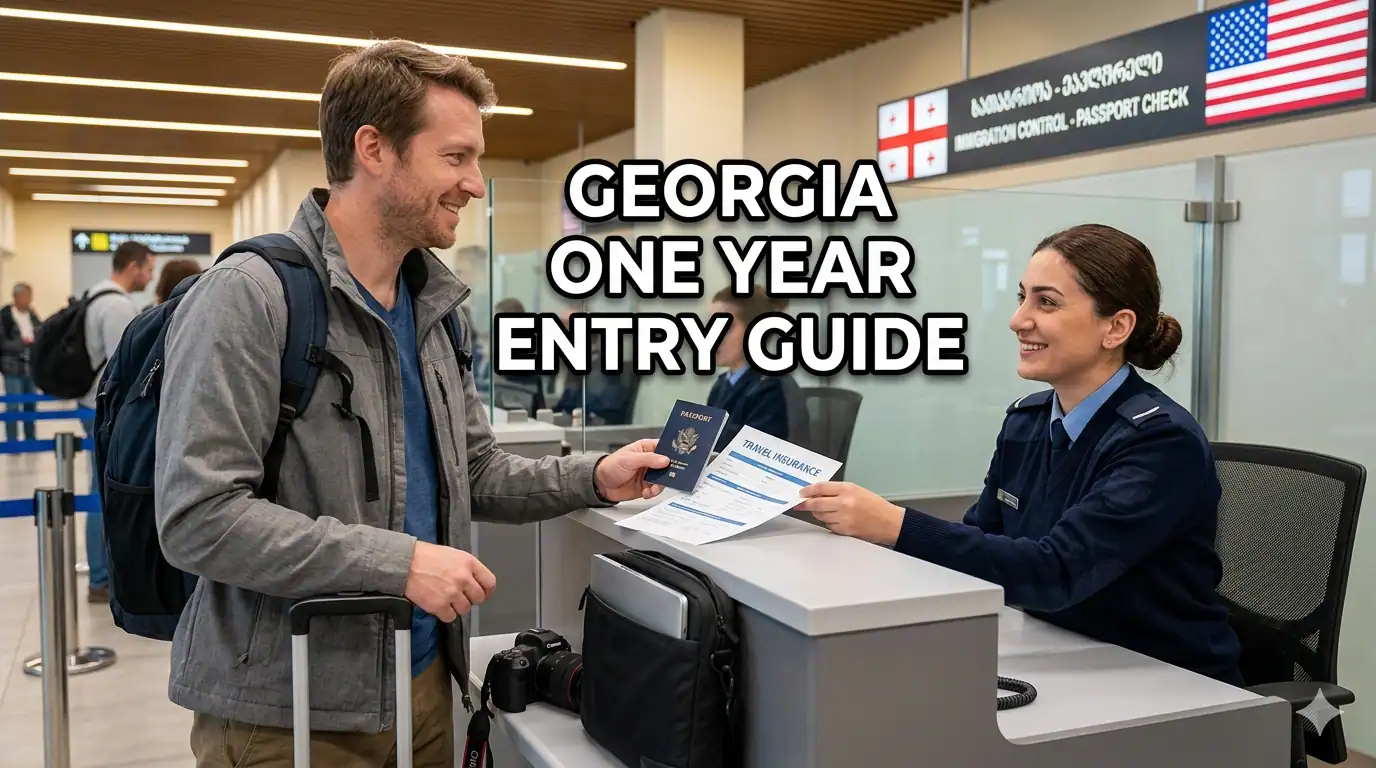
Understanding Georgia Visa Free Entry for US Citizens
United States citizens enjoy one of the world's most generous visa policies when traveling to Georgia. US passport holders can enter Georgia without applying for any visa or permit for stays up to three hundred sixty-five days .
This visa-free access applies to tourism, business visits, family visits, and short-term study purposes. No formal application process exists before travel because entry permission is granted at the border upon arrival .
The one-year stay allowance makes Georgia uniquely attractive for digital nomads, remote workers, retirees, and long-term travelers seeking extended time abroad without complex visa paperwork .
However, new requirements effective January first, twenty twenty-six mean travelers must prepare documentation before departure. Health and accident insurance covering your entire stay is now mandatory for all foreign visitors .
Border officials retain discretion to ask questions and verify your travel purpose, funds, and accommodation plans. Understanding these expectations ensures smooth entry and avoids potential delays or denial .
What the Georgia One Year Entry Actually Means

Many travelers search for a "Georgia One-Year Free Entry Permit" expecting a formal application process. In reality, no such permit document exists .
Instead, US citizens receive visa-free entry authorization stamped in their passport upon arrival at Georgian border control. This stamp grants legal permission to remain in Georgia for up to three hundred sixty-five consecutive days .
The entry is free of charge with no application fees, processing times, or embassy visits required. This simplicity distinguishes Georgia from destinations requiring advance visa applications or electronic travel authorizations .
Your permitted stay begins the moment you enter Georgia and continues for one full year from that date. You may leave and re-enter Georgia during this period without resetting or extending your allowance .
Important note: The three hundred sixty-five day period is fixed. You cannot extend it by leaving briefly and returning. Once your year expires, you must depart Georgia .
Activities Permitted Under Visa Free Entry
Tourism activities including sightseeing, cultural exploration, hiking, and visiting friends or family are fully permitted under visa-free entry .
Business activities such as attending meetings, conferences, negotiations, and market research are allowed without work authorization .
Short-term study programs, language courses, and educational workshops may be pursued without student visa requirements for stays under one year .
Remote work for employers or clients outside Georgia is generally tolerated though not explicitly regulated. Digital nomads commonly use visa-free entry for extended working stays .
Employment with Georgian companies, receiving salary from Georgian sources, or providing services to local clients requires separate work authorization regardless of visa-free entry status .
New Health Insurance Requirement Starting January 2026

Beginning January first, twenty twenty-six, all foreign citizens entering Georgia must present valid health and accident insurance covering their entire planned stay .
This requirement applies to travelers from visa-free countries including the United States. Border officials may request to see your insurance documentation before granting entry .
Your insurance policy must provide minimum coverage of thirty thousand Georgian Lari for medical expenses and accident-related costs. Most international travel insurance plans meet or exceed this threshold .
The policy document must be available in English or Georgian language to facilitate verification by border staff. Digital copies on your phone or printed documents are both acceptable .
Insurance must cover the full duration of your intended stay. If you plan to remain in Georgia for six months, your policy must be valid for at least six months from your entry date .
Selecting Compliant Travel Insurance
Choose insurance from reputable international providers with clear coverage terms and English-language documentation. Popular options include World Nomads, SafetyWing, and Hey Mondo .
Verify that your policy explicitly covers Georgia as a destination country. Some regional policies exclude certain nations, so confirm coverage before purchasing .
Ensure your plan includes emergency medical treatment, hospitalization, and medical evacuation benefits. These core protections satisfy Georgian entry requirements .
Save your insurance certificate as a PDF and screenshot on your phone. Keep a backup copy in cloud storage accessible without internet connection .
Consider policies offering flexible renewal options if your travel plans might extend. Monthly renewable plans provide adaptability for uncertain itineraries .
Entry Requirements Checklist for US Travelers

US citizens must meet specific documentation requirements when entering Georgia under visa-free rules. Preparing these items before departure prevents border delays .
Passport Validity Requirements
Your US passport must remain valid for the entire duration of your stay in Georgia. Unlike some countries requiring six months validity beyond travel dates, Georgia only requires validity through your planned departure .
Ensure your passport has at least one blank page for entry stamps. Border officials place arrival stamps in available passport pages .
Carry your passport at all times while in Georgia. Local authorities may request identification during your stay, and your passport serves as primary proof of legal status .
Make photocopies of your passport bio page and entry stamp. Store copies separately from your original passport as backup in case of loss or theft .
Proof of Travel Purpose and Plans
Border officials may ask about your reason for visiting Georgia. Prepare a clear, honest explanation of your travel purpose whether tourism, business, or visiting family .
Carry documentation supporting your stated purpose. Hotel reservations, invitation letters from Georgian contacts, or conference registration confirmations help verify your plans .
Have a return or onward travel ticket available for inspection. While not always requested, proof of intended departure demonstrates compliance with entry rules .
Prepare evidence of sufficient funds for your stay. Bank statements, credit cards, or cash showing ability to support yourself may be requested .
Health Insurance Documentation
Present your health and accident insurance certificate when asked by border officials. Have both digital and printed copies readily accessible .
Ensure your insurance document clearly shows coverage dates matching or exceeding your planned stay in Georgia. Mismatched dates may raise questions about compliance .
Verify your policy includes the minimum thirty thousand GEL coverage for medical and accident expenses. Policy summaries typically state coverage limits prominently .
Keep your insurance provider's emergency contact information handy. Border staff may verify policy authenticity if questions arise .
The Border Entry Process Step by Step

Understanding what to expect at Georgian border control reduces anxiety and ensures efficient processing. Most entries proceed smoothly when travelers arrive prepared .
Arrival at Land Border or Airport
Proceed to passport control upon arrival at Tbilisi International Airport, Kutaisi Airport, or any land border crossing. Follow signage directing foreign passport holders to appropriate lanes .
Present your US passport to the border officer when your turn arrives. The officer will scan your passport and may ask brief questions about your visit .
Answer questions clearly and concisely. Typical inquiries include purpose of visit, intended length of stay, accommodation plans, and proof of insurance .
Provide requested documentation when asked. Have your insurance certificate, return ticket, and accommodation details organized for quick access .
Receiving Your Entry Stamp
If your documentation satisfies entry requirements, the border officer will place an entry stamp in your passport. This stamp marks the start of your three hundred sixty-five day permitted stay .
Verify the stamp shows the correct entry date before leaving the counter. Report any errors immediately to avoid future complications with your legal status .
Keep your passport secure after receiving the entry stamp. This document proves your legal presence in Georgia and may be requested by police or officials during your stay .
Take a photo of your entry stamp with your phone as backup documentation. Digital records help if your passport is lost or stolen while abroad .
Potential Questions and How to Respond
Border officers may ask where you will stay in Georgia. Provide your hotel address, host contact information, or rental confirmation as appropriate .
Questions about your financial means are common. Show bank statements, credit cards, or cash demonstrating ability to support yourself during your visit .
Officers might inquire about your travel itinerary. Having a general plan for your time in Georgia shows preparedness and legitimate travel purpose .
Remain calm and polite throughout the interaction. Border officials perform routine checks and appreciate cooperative, respectful travelers .
Managing Your One Year Stay in Georgia

Once admitted to Georgia, understanding how to maintain legal status throughout your year-long stay prevents unintentional violations .
Tracking Your Permitted Stay Duration
Your three hundred sixty-five day allowance begins on the date stamped in your passport at entry. Mark this date clearly and track remaining days .
Set calendar reminders at three hundred, three hundred thirty, and three hundred fifty days to plan your departure or next steps. Avoid last-minute complications .
Leaving Georgia temporarily does not pause or extend your one-year allowance. The clock continues running regardless of short trips to neighboring countries .
Use online calculators or apps designed for tracking visa-free stays. These tools help visualize remaining time and prevent accidental overstays .
Consequences of Overstaying
Remaining in Georgia beyond your permitted three hundred sixty-five days results in fines calculated per day of overstay. Penalties increase with longer violations .
Overstays may trigger entry bans preventing future visits to Georgia for specified periods. Serious violations can result in multi-year exclusion .
Overstay records may affect visa applications for other countries. Immigration authorities share data and review travel history during visa processing .
If you realize you have overstayed, contact Georgian immigration authorities immediately. Voluntary compliance may reduce penalties compared to enforcement discovery .
Options After Your One Year Expires
Depart Georgia before your three hundred sixty-five day period ends to maintain clean immigration records. Plan travel arrangements well in advance .
Apply for a residence permit if you wish to remain longer. Eligible categories include employment, investment, family reunification, and study .
Leave Georgia and re-enter only after sufficient time has passed. While no formal cooling-off period exists, immediate re-entry may raise questions about intent .
Consider neighboring countries for extended regional travel. Armenia, Turkey, and Azerbaijan offer accessible destinations for continuing your journey .
Working and Studying During Visa Free Stay

Understanding what activities are permitted under visa-free entry helps avoid unintentional violations of Georgian immigration law .
Remote Work and Digital Nomad Considerations
Working remotely for employers or clients outside Georgia is generally accepted under visa-free entry though not explicitly codified in law .
Receiving income from foreign sources into foreign bank accounts typically does not trigger work authorization requirements .
Using local coworking spaces, cafes, or rental offices for remote work is permitted. Georgia actively welcomes digital nomads with affordable living costs and good internet .
Avoid providing services to Georgian companies or receiving payment from Georgian sources without proper work authorization. This crosses into regulated employment territory .
Keep documentation showing your income sources remain outside Georgia. Contracts, invoices, and bank statements help demonstrate compliance if questioned .
Study and Educational Activities
Short-term language courses, workshops, and educational programs under one year may be pursued without student visa requirements .
Enrollment in formal degree programs at Georgian universities typically requires student residence permits regardless of visa-free entry eligibility .
Cultural exchange programs, volunteer opportunities, and informal learning experiences generally fall within permitted activities for visa-free visitors .
Verify with educational institutions whether your intended program requires additional documentation beyond visa-free entry status .
Business Activities Permitted Without Work Authorization
Attending business meetings, conferences, trade shows, and networking events is permitted under visa-free entry .
Conducting market research, negotiating contracts, and exploring business opportunities does not require work authorization .
Signing agreements or memoranda of understanding with Georgian partners is allowed as long as you do not perform ongoing work within Georgia .
Receiving payment from Georgian entities for services rendered within Georgia requires proper work authorization regardless of visa-free entry status .
Healthcare and Insurance Considerations During Your Stay

While Georgia requires entry insurance, understanding healthcare options during your year-long stay ensures comprehensive protection .
Using Your Entry Insurance Effectively
Keep your insurance policy details accessible throughout your stay. Save provider contact information, policy numbers, and claim procedures on your phone .
Understand what your policy covers including emergency treatment, hospitalization, prescription medications, and medical evacuation .
Know the process for accessing care. Some policies require pre-authorization for non-emergency treatment while others allow direct billing with participating providers .
Carry your insurance card or certificate when traveling within Georgia. Medical facilities may request proof of coverage before providing non-emergency services .
Healthcare System Overview in Georgia
Georgia offers both public and private healthcare facilities with varying quality and cost structures. Major cities have modern private clinics meeting international standards .
English-speaking medical professionals are available in Tbilisi and tourist areas though less common in rural regions. Consider this when planning travel itineraries .
Prescription medications may have different brand names or availability compared to the United States. Bring adequate supply of essential medications with doctor documentation .
Emergency services can be reached by dialing one one two throughout Georgia. Ambulance response times vary by location with faster service in urban areas .
Extending or Updating Insurance Coverage
If your stay extends beyond your initial insurance period, arrange renewal or new coverage before your current policy expires .
Some insurers allow mid-term extensions while others require new policies. Review terms when purchasing to understand flexibility options .
Maintain continuous coverage throughout your stay. Gaps in insurance could complicate future border entries or access to healthcare services .
Keep records of all insurance policies used during your year in Georgia. Documentation may be requested during exit procedures or future visa applications .
Practical Tips for US Travelers in Georgia

Maximizing your experience during a year-long stay in Georgia requires practical preparation beyond immigration compliance .
Banking and Financial Management
US credit and debit cards work at most Georgian ATMs and merchants though foreign transaction fees may apply. Notify your bank of travel plans to prevent card blocks .
Consider opening a local Georgian bank account for extended stays. This simplifies bill payments, salary receipt if authorized to work, and daily transactions .
Carry some Georgian Lari in cash for small purchases, markets, and rural areas where card acceptance may be limited .
Use reputable currency exchange services at banks or official exchange offices. Avoid street exchanges offering unusually favorable rates .
Accommodation and Registration
Hotels and licensed guesthouses typically register guests with immigration authorities automatically. Confirm this service when booking .
Private rentals may require you to register your address with local immigration offices. Ask your landlord about this obligation and assistance .
Keep copies of rental agreements, hotel confirmations, and registration documents. These may be requested during your stay or when applying for extensions .
Update your address with authorities if you move during your year-long stay. Maintaining current registration supports compliance with immigration requirements .
Communication and Connectivity
Purchase a local SIM card from providers like Magti, Geocell, or Beeline for affordable data and calling within Georgia .
Ensure your phone is unlocked before traveling to use Georgian SIM cards. Most modern smartphones support international networks .
Download offline maps, translation apps, and essential travel information before arrival. Internet access may be limited in remote mountain areas .
Register with the US State Department STEP program for travel alerts and emergency assistance while in Georgia .
Common Mistakes to Avoid When Entering Georgia

Learning from others experiences helps ensure your entry to Georgia proceeds smoothly without preventable complications .
Documentation Errors
Arriving with a passport expiring before your planned departure date violates entry requirements. Verify passport validity covers your entire intended stay .
Forgetting to obtain health insurance before travel may result in denied entry or requirement to purchase coverage at the border at higher cost .
Presenting insurance documents in languages other than English or Georgian creates verification challenges. Ensure your policy is accessible in approved languages .
Failing to carry supporting documents like return tickets or accommodation confirmations may delay processing if officials request verification .
Behavior and Communication Issues
Providing inconsistent or unclear answers to border officer questions raises suspicion and may trigger additional scrutiny .
Appearing unprepared or unaware of entry requirements suggests potential non-compliance. Demonstrate knowledge of rules through organized documentation .
Displaying frustration or impatience during border processing creates negative impressions. Remain calm and cooperative throughout the interaction .
Attempting to negotiate entry requirements or argue with border officials rarely succeeds and may result in denial .
Planning and Timing Mistakes
Arriving at border crossings during peak hours may result in long waits. Consider timing your arrival for off-peak periods when possible .
Underestimating processing time may cause missed connections or transportation. Allow buffer time in your travel schedule for border procedures .
Failing to track your three hundred sixty-five day allowance leads to accidental overstays. Implement reminder systems to monitor your legal stay duration .
Assuming visa-free entry permits any activity without restrictions risks unintentional violations. Understand permitted activities before engaging in work or study .
Resources and Support for US Travelers in Georgia

Accessing reliable information and assistance enhances your experience and helps navigate any challenges during your stay in Georgia .
Official Government Resources
Visit the Georgian Ministry of Foreign Affairs website for current visa and entry information. Official sources provide authoritative guidance on immigration policies .
Consult the US Embassy in Tbilisi website for country-specific travel advisories and emergency contact information for American citizens .
Register with the Smart Traveler Enrollment Program STEP to receive updates and facilitate emergency contact from the US Embassy .
Review the Public Service Hall website for information on residence permits and other immigration services should you need to extend your stay legally .
Practical Support Services
Connect with expatriate communities in Tbilisi and other cities for local knowledge and peer support. Online forums and social media groups share valuable insights .
Engage immigration lawyers specializing in Georgian law for complex situations like residence permit applications or compliance questions .
Use reputable relocation services for assistance with housing, banking, and settling in if planning an extended stay .
Access travel insurance provider support lines for assistance with claims, coverage questions, or emergency medical coordination .
Emergency Contacts
Save the US Embassy in Tbilisi emergency contact information: plus nine nine five three two two two five five zero zero zero .
Program Georgia emergency number one one two for police, ambulance, and fire services accessible throughout the country .
Keep your travel insurance emergency assistance number readily available for medical or travel-related crises .
Store contact information for your country's consulate if different from the US Embassy, particularly if holding dual citizenship .
Georgia offers US citizens exceptional access through its generous visa-free entry policy allowing stays up to one year without advance applications. Understanding the new health insurance requirement starting in twenty twenty-six, preparing proper documentation, and respecting the terms of visa-free entry ensures a smooth and rewarding experience. Whether pursuing remote work, cultural immersion, extended tourism, or personal exploration, Georgia welcomes American travelers with open borders and warm hospitality. By following this guide, you can confidently navigate entry procedures, maintain legal status throughout your stay, and make the most of your time in this fascinating Caucasus destination.
0 Comments