.webp)
.webp)
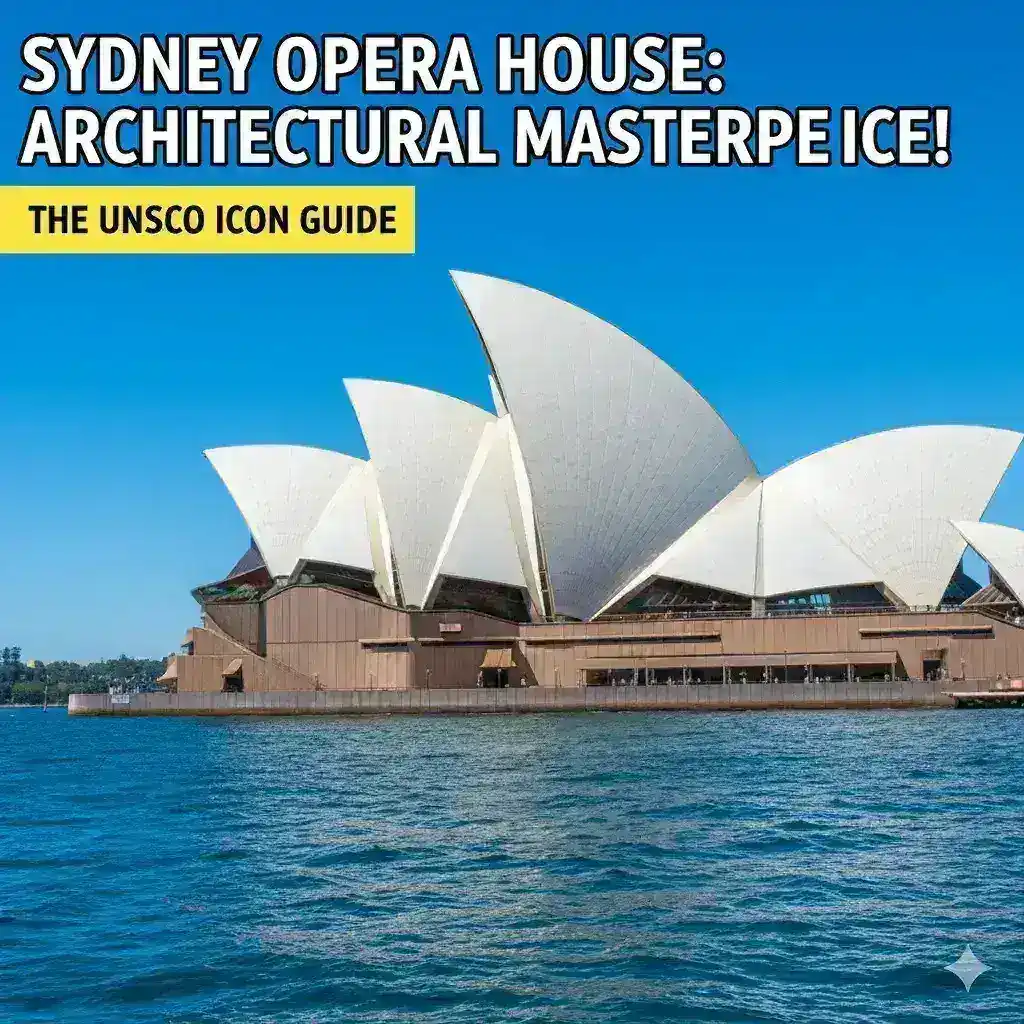
THE SYDNEY OPERA HOUSE: A MASTERPIECE OF 20TH-CENTURY ARCHITECTURE
Few buildings in the world have achieved the instant recognition, cultural significance, and architectural innovation of the Sydney Opera House. Rising from Bennelong Point on Sydney Harbour, its distinctive white sail-like shells have become synonymous not just with Sydney but with Australia itself, and with the very possibility of architecture to inspire, challenge, and transform. Designed by Danish architect Jorn Utzon and opened in 1973, the Opera House represents one of the most extraordinary achievements of 20th-century architecture—a building that pushed the boundaries of engineering, redefined the relationship between form and function, and created a new language of architectural expression that continues to influence designers worldwide.
This comprehensive guide invites you to explore the Sydney Opera House with deeper understanding and greater appreciation. We will examine the historical context that gave rise to this iconic building, decode the architectural innovations that make it a masterpiece, reflect on the cultural significance that continues to make it relevant today, and provide practical information for visiting in 2026. Whether you are an architecture enthusiast, a performance lover, a photography enthusiast, or simply a curious traveler, this guide will help you prepare for an encounter with one of humanity's greatest architectural achievements.
Understanding the Sydney Opera House requires more than admiring its iconic silhouette; it demands engaging with the stories of vision, controversy, engineering ingenuity, and artistic ambition that shaped this extraordinary building. By approaching the Opera House with curiosity and respect, you will discover not just a beautiful structure but a living dialogue between art and engineering, between individual genius and collective effort, between past ambition and present relevance.
HISTORICAL CONTEXT: FROM COMPETITION TO ICON
The story of the Sydney Opera House begins not with a building but with an idea: that a great city deserves a great cultural institution. In the mid-1950s, Sydney, though already a major Australian city, lacked a world-class performance venue. Eugene Goossens, director of the Sydney Symphony Orchestra, championed the idea of a dedicated opera house, and in 1956, the New South Wales government launched an international design competition to realize this vision.
The competition attracted over 200 entries from architects around the world. The jury, led by the renowned American architect Eero Saarinen, initially struggled to identify a winning design. According to legend, Saarinen arrived late, reviewed the rejected entries, and immediately identified Jorn Utzon's submission as the clear winner. Utzon's design, submitted as a series of expressive sketches rather than detailed plans, depicted a cluster of shell-like forms rising from a monumental podium—a vision that was as poetic as it was technically challenging.
Jorn Utzon (1918-2008) was a relatively unknown Danish architect when he won the competition. His background in naval architecture, interest in organic forms, and experience with prefabrication and modular design informed his approach to the Opera House. Utzon saw the building not as a static object but as a dynamic composition of forms that responded to the harbor setting, the requirements of performance spaces, and the possibilities of new construction techniques.
The selection of Utzon's design in 1957 marked the beginning of one of the most complex and controversial architectural projects of the 20th century. The poetic vision of the shells presented extraordinary engineering challenges: How could these curved forms be constructed? What materials could achieve the desired aesthetic while withstanding the harbor environment? How could the interior performance spaces be accommodated within the sculptural exterior?
Construction began in 1959, with the expectation that the project would be completed in four years at a cost of 7 million Australian pounds. In reality, the Opera House would not open until 1973, fourteen years later, at a final cost of 102 million Australian dollars—over fourteen times the original estimate. The extended timeline and escalating costs reflected the unprecedented technical challenges of realizing Utzon's vision, as well as political controversies, design changes, and the sheer ambition of the project.
The engineering breakthrough that made the shells possible came in 1961, when Utzon and the engineering firm Ove Arup and Partners developed the "sphere solution." Rather than attempting to construct each shell as a unique curved form, they realized that all the shells could be derived from sections of a single imaginary sphere with a radius of 75 meters. This insight allowed the shells to be constructed using precast concrete ribs, dramatically simplifying the construction process while maintaining the desired aesthetic.
The tiles that clad the shells represent another innovation. Over one million tiles, manufactured by the Swedish company Hoganas, were used to create the Opera House's distinctive white surface. The tiles come in two finishes: glossy white and matte cream, arranged in a subtle pattern that creates visual texture while maintaining the building's sculptural purity. The tiles' ceramic composition and arrangement were designed to withstand the harbor environment while maintaining their appearance over time.
Despite the engineering achievements, the project was marked by controversy. Political changes in New South Wales led to tensions between Utzon and the government over costs, timelines, and design decisions. In 1966, Utzon resigned from the project and left Australia, never to return to see his completed building. The interior spaces were completed by a team of Australian architects, with compromises that Utzon later described as betraying his original vision.
The Sydney Opera House was officially opened by Queen Elizabeth II on October 20, 1973, in a ceremony broadcast to millions around the world. Though Utzon was not invited to attend, the opening marked the beginning of the building's life as a working performance venue and a global icon.
In later decades, efforts were made to reconcile with Utzon and honor his original vision. In 1999, Utzon was re-engaged as a consultant for future works, and in 2003, he was awarded the Pritzker Architecture Prize, architecture's highest honor. The citation described the Opera House as "one of the great iconic buildings of the 20th century, an image of great beauty that has become known throughout the world."
Today, the Sydney Opera House is a UNESCO World Heritage Site, recognized for its outstanding universal value as a masterpiece of human creative genius. For visitors in 2026, understanding this complex history enriches the experience of encountering the building, revealing the human stories of vision, struggle, and achievement that lie behind the iconic shells.
ARCHITECTURAL INNOVATION: FORM, ENGINEERING, AND MATERIALS
The Sydney Opera House represents a convergence of architectural vision, engineering ingenuity, and material innovation that redefined what was possible in building design. Understanding these innovations enhances appreciation of the building's significance as a masterpiece of 20th-century architecture.
The Shell Forms:
The Opera House's most distinctive feature is its cluster of shell-like forms that rise from a monumental podium. These shells are not merely decorative; they define the building's spatial organization, structural system, and aesthetic identity.
Utzon's original concept envisioned the shells as free-form sculptural elements, but the engineering challenge of constructing such complex curves led to the sphere solution. By deriving all shells from sections of a single sphere, the design team could use standardized precast concrete ribs to construct the complex forms. This approach combined the poetic freedom of Utzon's vision with the practical requirements of construction.
The shells serve multiple functions: they roof the performance venues below, create dramatic interior volumes, and define the building's iconic silhouette. The largest shells cover the Concert Hall and Joan Sutherland Theatre, while smaller shells shelter the Drama Theatre, Playhouse, and other spaces. The arrangement of shells creates a dynamic composition that changes dramatically as viewers move around the building, revealing new relationships and perspectives.
Structural Engineering:
The engineering of the Opera House represents one of the great achievements of 20th-century structural design. The precast concrete ribs that form the shells were manufactured off-site and assembled on the podium like the segments of an orange. Each rib weighs up to 15 tons and was precisely positioned using cranes and temporary supports.
The podium itself is a massive concrete structure that elevates the performance venues above the harbor, providing a monumental base for the shells and accommodating backstage spaces, foyers, and service areas. The podium's design reflects Utzon's interest in Mayan and Aztec architecture, with its stepped forms and monumental scale creating a sense of timeless presence.
The engineering challenges extended beyond the shells to the building's foundations, which had to accommodate the weight of the structure on Bennelong Point's rocky outcrop. The integration of mechanical, electrical, and acoustic systems within the complex geometry of the shells required innovative solutions that continue to influence building design today.
Material Innovation:
The materials used in the Opera House were selected for their aesthetic qualities, durability, and performance in the harbor environment. The most visible material is the ceramic tile cladding that covers the shells.
Over one million tiles, manufactured by Hoganas in Sweden, were used to create the Opera House's distinctive white surface. The tiles come in two finishes: glossy white and matte cream, arranged in a subtle chevron pattern that creates visual texture while maintaining the building's sculptural purity. The tiles' ceramic composition was designed to resist staining, fading, and weathering in the harsh harbor environment.
Inside the building, materials were selected for their acoustic properties and aesthetic contribution. The Concert Hall features Australian red cedar paneling that enhances acoustics while creating a warm, intimate atmosphere. The Joan Sutherland Theatre uses similar materials with adjustments for opera and ballet performances.
The building's exterior also features granite from New South Wales, used for the podium and plaza areas. The granite's durability and local provenance connect the building to its place while providing a timeless, monumental quality.
Acoustic Design:
As a performance venue, the Opera House's acoustic design is as important as its visual architecture. The Concert Hall, the building's largest performance space, was designed to accommodate symphony orchestras, choral performances, and popular music with exceptional acoustic clarity.
The Concert Hall's acoustic design features a series of adjustable acoustic elements, including retractable curtains, movable panels, and a large acoustic canopy that can be raised or lowered to adjust the hall's reverberation time. The hall's volume, shape, and materials were carefully calibrated to create a balanced acoustic environment that supports a wide range of musical styles.
The Joan Sutherland Theatre, designed primarily for opera and ballet, features a traditional proscenium arch configuration with acoustic treatments that support vocal performance and orchestral accompaniment. Smaller venues like the Drama Theatre and Playhouse offer more intimate acoustic environments for theater and chamber music.
Ongoing acoustic improvements have been made to the Opera House over the decades, reflecting advances in acoustic science and the evolving requirements of performance. The building's acoustic design remains a subject of study and admiration among architects, engineers, and performers.
CULTURAL SIGNIFICANCE: ICON, VENUE, AND SYMBOL
The Sydney Opera House transcends its function as a performance venue to serve as a cultural icon, a symbol of Australian identity, and a testament to the power of architecture to inspire and unite.
Global Icon:
Few buildings achieve the instant recognition of the Sydney Opera House. Its distinctive silhouette appears on postcards, souvenirs, and promotional materials around the world, representing not just Sydney but Australia itself. The building's image has been reproduced in countless contexts, from film and television to art and advertising, cementing its status as one of the most recognizable structures on Earth.
This global recognition stems from the building's unique combination of sculptural form, harbor setting, and cultural function. The Opera House is not just beautiful; it is meaningful, embodying aspirations of artistic excellence, architectural innovation, and civic pride.
Performance Venue:
Beyond its iconic status, the Opera House is a working performance venue that hosts over 1,500 events annually. The building's multiple performance spaces accommodate opera, ballet, symphony concerts, theater, contemporary music, and community events, serving diverse audiences and artistic practices.
The Opera House is home to several of Australia's premier performing arts companies, including Opera Australia, The Australian Ballet, the Sydney Theatre Company, and the Sydney Symphony Orchestra. These companies, along with visiting artists and productions, ensure that the Opera House remains a vibrant center of artistic creation and presentation.
The building's programming reflects both classical traditions and contemporary innovation. From productions of Puccini and Shakespeare to new works by Australian and international artists, the Opera House's calendar offers something for every taste and interest.
Symbol of Australian Identity:
For Australians, the Opera House represents more than architecture; it embodies national values of creativity, ambition, and connection to place. The building's harbor setting connects it to Australia's maritime heritage, while its innovative design reflects a willingness to embrace new ideas and challenge conventions.
The Opera House has played a role in significant national moments, from royal visits to cultural celebrations to moments of collective reflection. Its image appears on Australian currency, postage stamps, and official materials, reinforcing its status as a national symbol.
At the same time, the Opera House's history—including Utzon's departure and the compromises made in completing the interior—reminds us that cultural achievement is often complex and contested. This complexity adds depth to the building's significance, inviting reflection on the relationship between vision and realization, individual genius and collective effort.
VISITOR EXPERIENCE: TOURS, PERFORMANCES, AND EXPLORATION
Visiting the Sydney Opera House in 2026 offers multiple ways to engage with this architectural masterpiece, from guided tours that reveal its design and history to performances that bring its spaces to life.
Guided Tours:
The Opera House offers several tour options that provide insight into the building's architecture, history, and cultural significance:
Essential Tour:
- Duration: Approximately 1 hour
- Highlights: Concert Hall, Joan Sutherland Theatre foyers, Utzon Room, harbor views
- Focus: Architectural design, construction history, and cultural significance
- Accessibility: Wheelchair accessible with advance notice
- Booking: Recommended in advance, especially for peak season
Behind the Scenes Tour:
- Duration: Approximately 2 hours
- Highlights: Backstage areas, dressing rooms, technical spaces not accessible on standard tours
- Focus: Technical operations, performance preparation, and building management
- Accessibility: Limited due to backstage areas; check accessibility requirements when booking
- Booking: Essential to book well in advance; limited availability
Architecture Tour:
- Duration: Approximately 1.5 hours
- Highlights: In-depth exploration of architectural design, engineering innovations, and Utzon's vision
- Focus: Architectural history, design process, and material innovations
- Accessibility: Wheelchair accessible with advance notice
- Booking: Recommended for architecture enthusiasts; advance booking essential
All tours are led by knowledgeable guides who share stories of the building's design, construction, and cultural life. Tours are available in multiple languages and can be customized for groups with special interests.
Attending Performances:
Experiencing the Opera House as a performance venue offers a different but equally rewarding way to engage with the building. The Opera House's programming includes:
Opera and Ballet:
- Productions by Opera Australia and The Australian Ballet in the Joan Sutherland Theatre
- Repertoire ranging from classical masterworks to contemporary commissions
- Ticket prices vary by production and seating; book in advance for popular shows
Symphony Concerts:
- Performances by the Sydney Symphony Orchestra in the Concert Hall
- Programs featuring classical repertoire, contemporary works, and popular music
- Acoustic excellence makes the Concert Hall a premier venue for orchestral performance
Theater and Contemporary Performance:
- Productions by the Sydney Theatre Company and visiting artists in the Drama Theatre and Playhouse
- Programming includes classic plays, new Australian works, and experimental performance
- Intimate venues create close connections between performers and audiences
Contemporary Music and Events:
- Concerts featuring popular music, jazz, and world music in the Concert Hall and outdoor spaces
- Special events including festivals, ceremonies, and community celebrations
- Outdoor performances on the Opera House steps offer free or low-cost access to culture
Booking tickets in advance is recommended, especially for popular productions and peak season. The Opera House website provides comprehensive information on programming, ticketing, and accessibility.
Exploring the Building and Grounds:
Even without a tour or performance ticket, visitors can explore the Opera House's public spaces and grounds:
Forecourt and Steps:
- The monumental steps leading to the building offer spectacular harbor views and photo opportunities
- The forecourt hosts outdoor performances, markets, and events throughout the year
- Free to access; ideal for photography and people-watching
Foyers and Public Spaces:
- The building's foyers are open to the public during performance times and selected hours
- Harbor-view restaurants and bars offer dining with iconic views
- Exhibitions and installations in public spaces share stories of the building's history and culture
Royal Botanic Garden and Harbor Walks:
- The Opera House is surrounded by the Royal Botanic Garden, offering peaceful paths and harbor views
- Walking the harbor foreshore from Circular Quay to Mrs Macquarie's Chair provides multiple perspectives on the building
- Free to access; ideal for photography, especially at golden hour
Photography Tips:
The Opera House is one of the world's most photographed buildings. To capture its beauty:
- Golden hour: Visit at sunrise or sunset for warm light that illuminates the white tiles
- Harbor views: Photograph from ferry approaches, Circular Quay, or Mrs Macquarie's Chair for classic perspectives
- Architectural details: Focus on tile patterns, shell curves, and structural elements for abstract compositions
- Night photography: The building's lighting creates dramatic effects after dark; use a tripod for long exposures
- Respect performances: Avoid using flash during performances or in performance spaces
PRACTICAL VISITOR INFORMATION FOR 2026
Planning a visit to the Sydney Opera House requires some preparation to ensure a smooth and rewarding experience.
Getting to the Opera House:
The Opera House is located at Bennelong Point in Sydney Harbour, easily accessible by public transportation, taxi, or on foot from central Sydney.
By public transportation:
- Train: Circular Quay Station (10-minute walk) serves multiple train lines
- Ferry: Circular Quay ferry terminal (5-minute walk) offers scenic harbor approaches
- Bus: Multiple bus routes serve Circular Quay and nearby stops
- Light rail: L2 and L3 lines connect to Circular Quay
By taxi or ride-hailing:
- Taxis and services like Uber can drop off at the Opera House forecourt
- Allow extra time for traffic, especially during peak hours and event times
On foot:
- Walking from The Rocks, Circular Quay, or the Royal Botanic Garden is pleasant and scenic
- Allow 10-20 minutes from central Sydney locations
Opening Hours and Access:
The Opera House is open daily, though access to interior spaces varies:
- Building hours: Generally open from 9 AM to 5 PM for tours and public access
- Performance times: Vary by production; arrive 30-45 minutes before performance start
- Restaurants and bars: Hours vary; check individual venue websites
- Outdoor spaces: Forecourt and steps accessible 24/7, though events may restrict access
Tour times vary by season and demand; book in advance through the official Opera House website.
Ticket Prices:
- Essential Tour: Approximately AUD 43 adults, AUD 23 children/concessions
- Behind the Scenes Tour: Approximately AUD 175 adults (limited availability)
- Architecture Tour: Approximately AUD 65 adults, AUD 35 children/concessions
- Performance tickets: Vary widely by production, seating, and demand; from AUD 30 to AUD 300+
Concession rates available for students, seniors, and groups. Family packages and multi-visit passes may offer savings.
Accessibility:
The Opera House is committed to accessibility for all visitors:
- Wheelchair access: Ramps, elevators, and accessible seating available in performance venues
- Assisted listening: Hearing augmentation systems available in performance spaces
- Accessible tours: Most tours can accommodate wheelchair users with advance notice
- Companion cards: Accepted for eligible visitors requiring support
- Service animals: Welcome in public areas and performance venues with advance notice
Contact the Opera House accessibility team in advance to arrange specific accommodations.
Dining and Amenities:
The Opera House offers multiple dining options with harbor views:
- Bennelong Restaurant: Fine dining inside the Opera House; reservations essential
- Opera Bar: Casual harbor-side dining with Opera House and Bridge views
- House Canteen: Casual cafe offering quick meals and snacks
- Multiple bars and kiosks: Offering beverages and light refreshments
Additional amenities include:
- Gift shop: Featuring Opera House merchandise, books, and Australian crafts
- Cloakroom: Coat and bag check available for a small fee
- Restrooms: Located throughout the building; accessible facilities available
Weather Considerations:
Sydney has a temperate climate, but harbor-side locations can be windy:
- Summer (December-February): Warm to hot; bring sun protection and water
- Autumn (March-May) and Spring (September-November): Pleasant temperatures; ideal for visiting
- Winter (June-August): Mild days, cool evenings; bring layers for evening performances
Check weather forecasts and dress appropriately for outdoor exploration and harbor views.
SUSTAINABLE AND RESPONSIBLE VISITING
Visiting the Sydney Opera House carries responsibility to respect the building, its cultural significance, and its harbor setting. In 2026, sustainable tourism practices enhance the experience for all.
Respect the Building:
The Opera House is a working performance venue and a UNESCO World Heritage Site. Help preserve this irreplaceable resource by:
- Following posted guidelines regarding photography, behavior, and access
- Respecting performance spaces by maintaining silence during shows and avoiding flash photography
- Staying on designated paths and avoiding restricted areas
- Disposing of waste properly and using recycling facilities
Support Cultural Programming:
The Opera House's mission depends on audience engagement and financial support:
- Attend performances to support the performing arts and the building's operational costs
- Consider becoming a member or donor to support programming and preservation
- Purchase merchandise from the official gift shop to support the Opera House directly
Minimize Environmental Impact:
Sydney Harbour is a precious natural environment. Reduce your footprint by:
- Using public transportation to reach the Opera House
- Carrying reusable water bottles and avoiding single-use plastics
- Participating in harbor cleanup initiatives if available
- Choosing eco-certified tour operators and dining options
Engage with Indigenous Heritage:
Bennelong Point is the traditional land of the Gadigal people of the Eora Nation. Acknowledge this heritage by:
- Learning about Indigenous connections to place through Opera House programming
- Supporting Indigenous artists and performances presented at the Opera House
- Approaching the site with respect for its deep cultural history
CONCLUSION: AN ENDURING MASTERPIECE
The Sydney Opera House stands as one of the great achievements of 20th-century architecture—a building that transformed a poetic vision into built form, that pushed the boundaries of engineering and design, and that continues to inspire audiences and architects around the world. Its iconic shells, rising from Sydney Harbour like sails or shells or clouds, embody the possibility of architecture to elevate human experience, to create beauty that endures, and to express the aspirations of a culture.
In 2026, as travelers seek meaningful connections to art, architecture, and place, the Opera House offers an unparalleled opportunity to engage with a masterpiece that is both historically significant and vibrantly contemporary. Whether you explore its architectural innovations on a guided tour, experience its acoustic excellence in performance, or simply admire its sculptural form from the harbor, the Opera House invites reflection on the power of human creativity to shape the world.
As you plan your visit to the Sydney Opera House, approach this extraordinary building with curiosity, humility, and respect. Listen to the stories its spaces tell, engage with the performances that bring it to life, and allow its beauty to inspire your own appreciation for art, architecture, and the enduring human impulse to create.
May your encounter with the Sydney Opera House deepen your appreciation for the achievements of the past and inspire your contribution to the future. As Jorn Utzon understood, true architectural greatness lies not in form alone but in the ideas, values, and experiences that give buildings meaning. May you carry that understanding forward, wherever your journey leads.
Useful resources include the Sydney Opera House official website at sydneyoperahouse.com for tours, performances, and visitor information; UNESCO World Heritage Centre for heritage information; and Destination NSW for trip planning. Emergency services in Australia can be reached at 000. Disclaimer: Information is accurate as of early 2026. Tour schedules, performance programming, and policies may change; verify details before travel. This guide is for informational purposes only and does not constitute professional travel or architectural advice.
0 Comments