.webp)
.webp)
Marshall Islands Travel Cost Breakdown: Budget vs Luxury 2026
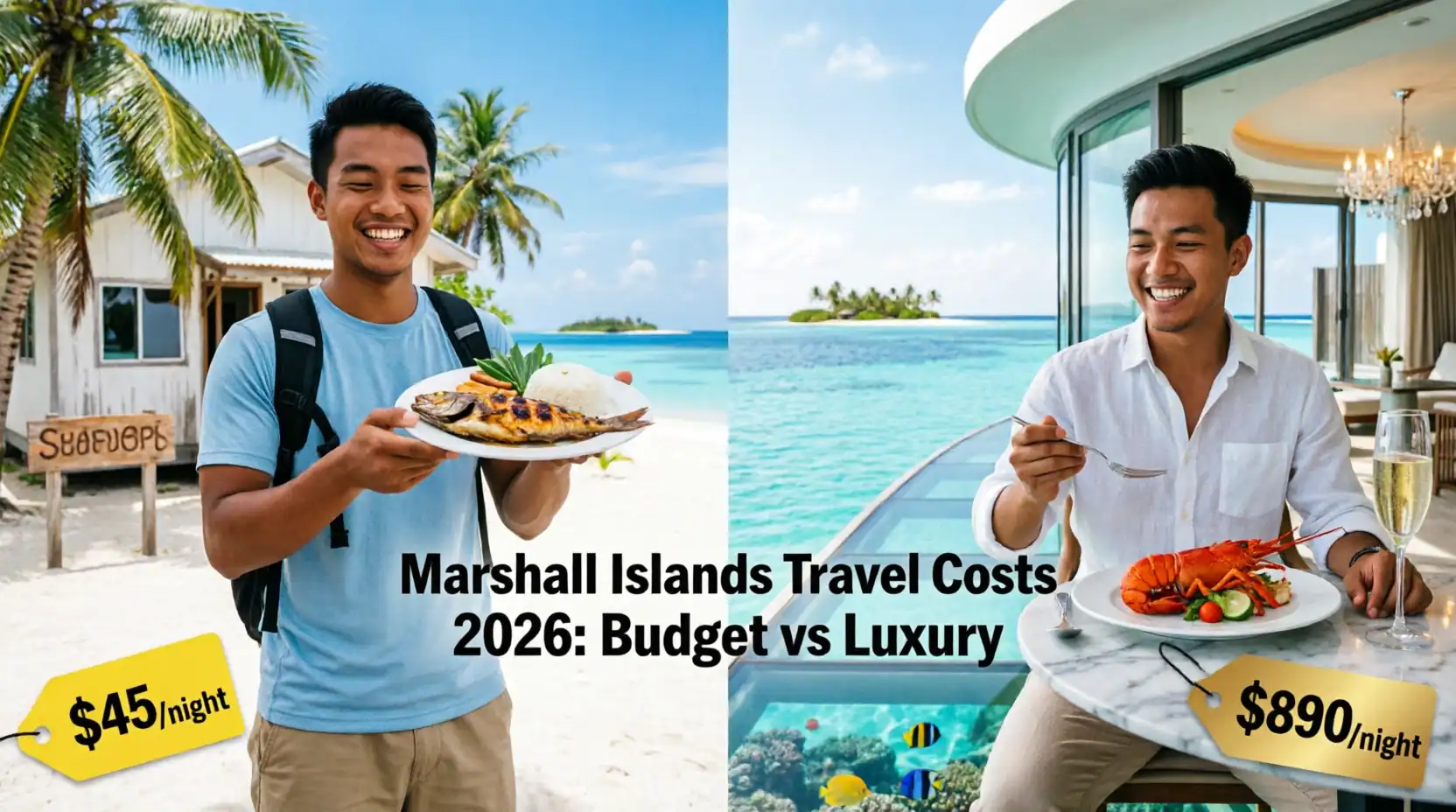
Marshall Islands Travel Cost Breakdown: Budget vs Luxury 2026
Planning a trip to the Marshall Islands requires careful budget planning, as this remote Pacific destination presents unique cost considerations that differ significantly from typical tropical destinations. Whether you're a budget backpacker seeking authentic cultural experiences or a luxury traveler looking for exclusive island resorts, understanding the true costs of visiting the Marshall Islands in 2026 is essential for realistic trip planning.
The Marshall Islands, comprising 29 coral atolls and 5 isolated islands scattered across 750,000 square miles of the central Pacific, faces significant logistical challenges that impact travel costs. Everything from food to fuel must be imported, driving up prices. Limited tourism infrastructure means fewer options and less price competition. Inter-island transportation is infrequent and can be expensive. Yet despite these challenges, the Marshall Islands offers extraordinary value for those seeking pristine diving, authentic cultural immersion, and uncrowded tropical paradise.
This comprehensive cost breakdown covers everything from international flights and accommodation to food, activities, and inter-island transport, with specific pricing for budget, mid-range, and luxury travel styles. Whether you're planning a week-long diving expedition or an extended cultural immersion, this guide provides the detailed financial information you need to plan your Marshall Islands adventure in 2026.
How much does a trip to the Marshall Islands cost?
A typical 7-10 day trip to the Marshall Islands costs $1,500-$3,000 USD for budget travelers, $3,000-$6,000 for mid-range travelers, and $8,000-$15,000+ for luxury travelers. The biggest expenses are international flights ($800-$2,500), accommodation ($50-$400+ per night), and inter-island transport if visiting outer atolls ($100-$500+). Food costs range from $15-60+ per day depending on dining choices. Diving and activities add $100-300+ per day. The remote location and import-dependent economy make the Marshall Islands more expensive than Southeast Asia but comparable to other Pacific island destinations.
International Flights: Your Biggest Expense

Getting to the Marshall Islands represents the largest single expense for most travelers, with costs varying significantly by origin, season, and booking timing.
Flight Costs by Region:
• From United States (West Coast):
- Los Angeles/San Francisco to Majuro: $1,200-$2,000 USD round-trip
- Honolulu to Majuro: $800-$1,500 USD round-trip
- Airlines: United Airlines (primary carrier), occasionally Nauru Airlines
- Flight time: 6-10 hours depending on connections
- Best deals: Book 3-6 months in advance; avoid December-January peak
• From Australia/New Zealand:
- Brisbane/Sydney to Majuro: $1,500-$2,500 USD round-trip
- Airlines: Nauru Airlines via Fiji or Tarawa
- Flight time: 12-18 hours with connections
- Note: Less direct routing increases cost and travel time
• From Asia:
- Tokyo/Manila to Majuro: $1,000-$1,800 USD round-trip
- Airlines: United via Honolulu or Nauru Airlines via various Pacific hubs
- Flight time: 10-15 hours with connections
• From Europe:
- Major European cities to Majuro: $2,000-$3,500 USD round-trip
- Routing: Typically via US West Coast or Asia
- Flight time: 20-30+ hours with multiple connections
- Note: Longest and most expensive routing
Money-Saving Flight Strategies:
• Book Early: Reserve 4-6 months ahead for best prices
• Flexible Dates: Mid-week departures often cheaper than weekends
• Off-Peak Travel: May-October (wet season) offers lower fares
• Flight Alerts: Set up price alerts on Google Flights, Skyscanner
• Multi-City: Sometimes cheaper to book separate tickets (e.g., US to Honolulu, then Honolulu to Majuro)
• Frequent Flyer: United MileagePlus offers best redemption options for Marshall Islands
• Shoulder Season: April-May and October-November offer good weather with lower prices
Domestic Flights Within Marshall Islands:
• Air Marshall Islands: Government carrier serving outer atolls
• Majuro to Ebeye: $100-150 USD one-way (30-minute flight)
• Majuro to Outer Atolls: $150-300 USD one-way depending on distance
• Availability: Limited schedules; book well in advance
• Reliability: Weather-dependent; build buffer days into itinerary
• Alternative: Private charters available but expensive ($1,000-3,000+)
How much are flights to the Marshall Islands?
Round-trip flights to Majuro cost $800-$1,500 from Honolulu, $1,200-$2,000 from US West Coast, $1,500-$2,500 from Australia, and $2,000-$3,500 from Europe. Book 4-6 months in advance for best prices. United Airlines is the primary carrier from the US, while Nauru Airlines serves routes from Australia and Pacific islands. Off-peak travel (May-October) and flexible dates can save 20-30% on airfare.
Accommodation Costs: From Guesthouses to Luxury Resorts

Accommodation options in the Marshall Islands range from basic local guesthouses to upscale resorts, with prices reflecting the remote location and limited infrastructure.
Budget Accommodation ($30-80/night):
• Local Guesthouses:
- Basic rooms with shared or private bathroom
- Often family-run with local hospitality
- Locations: Majuro, Ebeye, some outer atolls
- Amenities: Fan or basic AC, shared kitchen access, WiFi (slow)
- Examples: Various family guesthouses in Majuro residential areas
- Best for: Budget travelers, cultural immersion, extended stays
• Hostels/Backpacker Lodgings:
- Very limited options; not common in Marshall Islands
- Dorm beds: $25-40 USD per night (rare)
- Private rooms: $50-70 USD
- Basic amenities, shared facilities
- Best for: Solo budget travelers
• Budget Hotels:
- Marshall Islands Resort budget rooms: $80-120 USD/night
- Basic but clean rooms
- Private bathroom, AC, TV
- Restaurant on-site
- Best for: Budget-conscious travelers wanting reliability
Mid-Range Accommodation ($100-250/night):
• Standard Hotels:
- Rita Hotel Majuro: $120-180 USD/night
- Comfortable rooms with modern amenities
- Private bathroom, AC, WiFi, TV
- Restaurant and bar on-site
- Central Majuro location
- Best for: Business travelers, comfortable tourism
• Boutique Lodges:
- Small locally-owned properties
- $100-200 USD/night
- More personalized service
- Often include breakfast
- Cultural experiences available
- Best for: Travelers seeking authentic experience with comfort
• Outer Island Guesthouses:
- Basic but comfortable accommodations on atolls like Arno, Jaluit
- $80-150 USD/night including meals
- Simple rooms, shared facilities common
- Home-cooked local meals
- Cultural immersion opportunities
- Best for: Cultural travelers, diving enthusiasts
Luxury Accommodation ($250-600+/night):
• Upscale Resorts:
- Marshall Islands Resort premium rooms: $250-400 USD/night
- Ocean view rooms, upgraded amenities
- Restaurant, bar, pool facilities
- Water sports equipment available
- Best for: Comfort-seeking tourists, honeymooners
• Private Island Resorts:
- Limited but exclusive options
- $400-800+ USD/night
- Overwater bungalows or beachfront villas
- All-inclusive options available
- Private beach access
- Spa services, fine dining
- Best for: Luxury travelers, special occasions
• Liveaboard Diving Vessels:
- Bikini Atoll expeditions: $6,000-9,000 USD for 10-14 days
- All-inclusive (accommodation, meals, diving, permits)
- Technical diving focus
- Shared or private cabins
- Best for: Serious divers seeking world-class wreck diving
Accommodation Booking Tips:
• Book Early: Limited options fill quickly, especially peak season (Nov-Apr)
• Direct Booking: Often cheaper than third-party sites for local properties
• Long-Stay Discounts: Many guesthouses offer weekly/monthly rates
• Outer Islands: Book 3-6 months ahead; very limited capacity
• Inclusions: Check if breakfast/meals included (common in outer islands)
• Payment: Many properties require cash; credit cards not always accepted
How much do hotels cost in the Marshall Islands?
Budget guesthouses cost $30-80/night, mid-range hotels $100-250/night, and luxury resorts $250-600+/night. Majuro has the most options, while outer atolls offer basic guesthouses at $80-150/night often including meals. Limited supply means prices are higher than Southeast Asia but comparable to other Pacific destinations. Book well in advance, especially for outer islands and peak season (November-April).
Food and Dining Costs

Food costs in the Marshall Islands vary widely depending on whether you eat local cuisine, import-dependent restaurant food, or cook your own meals.
Budget Food Options ($10-25/day):
• Local Markets:
- Majuro Local Market: Fresh produce, local fish
- Breadfruit, taro, coconut: $2-5 USD
- Fresh fish (per pound): $5-10 USD
- Tropical fruits (papaya, banana, pineapple): $1-3 USD each
- Best for: Self-catering, budget travelers
• Local Eateries/Food Stalls:
- Rice and fish plates: $5-8 USD
- Local snacks (bwiro, jeptō): $2-4 USD
- Noodle soup: $4-6 USD
- Fresh coconut water: $2-3 USD
- Locations: Majuro town, local neighborhoods
• Self-Catering:
- Grocery stores (Majuro): Imported goods expensive
- Local staples cheaper than imports
- Weekly grocery budget: $50-80 USD per person
- Guesthouses with kitchen access ideal
- Best for: Extended stays, budget travelers
Mid-Range Dining ($25-60/day):
• Local Restaurants:
- Emelan Restaurant (Majuro): $15-25 USD per meal
- Island Burger Café: $10-18 USD per meal
- Mix of local and international cuisine
- Fresh fish dishes: $18-28 USD
- International dishes (pasta, burgers): $12-20 USD
• Hotel Restaurants:
- Breakfast: $10-15 USD
- Lunch: $15-25 USD
- Dinner: $20-35 USD
- Three-course meal: $40-60 USD
- Better quality, more reliable
• Cafés and Casual Dining:
- Coffee: $3-5 USD
- Sandwiches/salads: $8-15 USD
- Smoothies/fresh juice: $5-8 USD
- Light meals: $10-18 USD
Luxury Dining ($60-150+/day):
• Upscale Resort Restaurants:
- Fine dining experiences
- Fresh seafood (lobster, premium fish): $35-60 USD
- Imported steaks: $40-70 USD
- Wine by bottle: $40-150+ USD
- Tasting menus: $80-120 USD
- Reservations recommended
• Private Dining:
- Beach dinners arranged by resorts
- $100-200+ USD per person
- Customized menus
- Romantic/special occasion focus
• Imported Alcohol:
- Beer (imported): $6-10 USD
- Wine (mid-range): $30-60 USD/bottle
- Spirits: $10-20 USD per drink
- Local beer (if available): $4-6 USD
Food Cost-Saving Strategies:
• Eat Local: Marshallese cuisine cheaper than imported food
• Market Shopping: Buy fresh produce and fish at local markets
• Lunch Specials: Many restaurants offer cheaper lunch menus
• Self-Catering: Book accommodation with kitchen facilities
• Avoid Imports: Imported goods cost 2-3x US prices
• Local Water: Buy large water containers vs. small bottles
• Group Dining: Share larger plates at restaurants
How much does food cost in the Marshall Islands?
Budget travelers can eat for $10-25/day eating at local markets and food stalls. Mid-range dining costs $25-60/day at local restaurants and cafés. Luxury dining runs $60-150+/day at upscale resort restaurants. Local food (rice, fish, breadfruit, tropical fruits) is much cheaper than imported goods. Self-catering from local markets offers best value. Imported items cost 2-3x US prices due to shipping costs.
Transportation Costs Within the Marshall Islands

Getting around the Marshall Islands presents unique challenges and costs, particularly for inter-atoll travel.
Majuro Local Transportation:
• Taxis:
- Airport to town: $15-25 USD
- Within Majuro town: $5-15 USD per trip
- Hourly rate: $20-30 USD
- No meter; negotiate fare in advance
- Limited availability; call ahead
• Public Buses:
- Very limited service
- $1-2 USD per ride
- Irregular schedules
- Not reliable for tourists
• Rental Cars:
- Very limited availability
- $60-100 USD per day
- Requires advance booking
- Fuel: $6-8 USD per gallon
- Not generally recommended
• Bicycle Rental:
- $10-20 USD per day
- Good for exploring Majuro's narrow atoll
- Limited to flat terrain
- Best for adventurous travelers
Inter-Atoll Transportation:
• Air Marshall Islands (Domestic Flights):
- Majuro to Ebeye: $100-150 USD one-way
- Majuro to Jaluit: $150-250 USD one-way
- Majuro to Mili: $150-250 USD one-way
- Majuro to Arno: $100-150 USD one-way
- Majuro to outer atolls: $200-400 USD one-way
- Book weeks/months in advance
- Weather-dependent; delays common
- Baggage limits strictly enforced
• Public Boats:
- Majuro to nearby atolls: $20-50 USD one-way
- Irregular schedules
- Basic conditions
- Weather-dependent
- 2-8 hour journeys depending on distance
- Not always reliable
• Private Boat Charter:
- Day charter: $300-600 USD
- Multi-day charter: $800-2,000+ USD
- Customizable itinerary
- Includes captain and crew
- Fuel costs additional
- Best for groups or diving trips
• Cargo Ships:
- Occasionally accept passengers
- $50-150 USD depending on distance
- Very basic conditions
- Unpredictable schedules
- Adventure travel only
Inter-Island Transport Planning:
• Book Early: Domestic flights fill quickly
• Flexibility: Build buffer days for weather delays
• Confirm: Reconfirm all bookings 48-72 hours before travel
• Backup Plans: Always have alternative arrangements
• Baggage: Pack light; strict weight limits on small aircraft
• Cash: Some services require cash payment
How much does inter-island transport cost in the Marshall Islands?
Domestic flights cost $100-400 USD one-way depending on distance, with Majuro to Ebeye at $100-150 and outer atolls at $200-400. Public boats cost $20-50 USD but are unreliable. Private boat charters run $300-2,000+ USD depending on duration. Air Marshall Islands is the primary domestic carrier but schedules are limited and weather-dependent. Book domestic flights weeks or months in advance and build buffer days into your itinerary for delays.
Activities and Excursions: Diving, Tours, and Experiences

The Marshall Islands offers world-class diving, cultural experiences, and outdoor activities at varying price points.
Diving Costs:
• Majuro Local Diving:
- Single tank dive: $80-120 USD
- Two-tank dive: $150-200 USD
- Full day diving (3 tanks): $200-280 USD
- Equipment rental: $30-50 USD per day
- Nitrox fill: $10-15 USD
- PADI courses: $400-600 USD (Open Water)
- Advanced courses: $300-500 USD
• Bikini Atoll Expeditions:
- 10-14 day liveaboard: $6,000-9,000 USD
- Includes: accommodation, meals, diving, permits
- Excludes: flights to Majuro, equipment rental, gratuities
- Technical diving certification required
- Book 12-18 months in advance
- Seasonal: May-October only
• Outer Atoll Diving:
- Liveaboard expeditions: $2,000-4,000 USD/week
- Shore-based diving: $100-200 USD per day
- Remote locations, pristine reefs
- Limited availability
Cultural Experiences:
• Village Tours:
- Half-day tour: $30-60 USD per person
- Full-day tour: $60-100 USD per person
- Includes guide, transportation
- Traditional weaving, cooking demonstrations
- Community visit fees: $10-20 USD
• Cultural Performances:
- Traditional dance shows: $20-40 USD
- Often included with resort stays
- Community events: donation-based
• Handicraft Workshops:
- Weaving classes: $25-50 USD
- Canoe building observation: $20-40 USD
- Purchase crafts directly: $10-100+ USD
Water Activities:
• Snorkeling:
- Equipment rental: $15-25 USD per day
- Boat snorkeling tours: $50-100 USD
- Shore snorkeling: Free (bring own gear)
• Kayaking:
- Kayak rental: $20-40 USD per day
- Guided kayaking tours: $60-100 USD
- Multi-day kayaking expeditions: $300-600 USD
• Fishing:
- Half-day charter: $200-400 USD
- Full-day charter: $400-800 USD
- Traditional fishing with locals: $50-100 USD
- Fishing license (if required): $20-50 USD
• Sailing:
- Day sail: $100-200 USD per person
- Multi-day sailing: $500-1,500 USD
- Traditional outrigger canoe experience: $50-100 USD
Land-Based Activities:
• WWII Historical Sites:
- Self-guided exploration: Free
- Guided historical tours: $40-80 USD
- Museum entry (Alele Museum): $5-10 USD
• Hiking:
- Self-guided: Free
- Guided nature hikes: $40-80 USD
- Multi-day trekking: $200-500 USD
• Island Hopping Tours:
- Day trips to nearby islets: $80-150 USD
- Multi-island tours: $200-400 USD
- Private boat tours: $300-800 USD
Activity Cost-Saving Tips:
• Multi-Day Packages: Book diving/activity packages for discounts
• Group Rates: Travel with others to split costs
• Bring Gear: Bring your own snorkel/dive gear to save rental fees
• Free Activities: Beach access, hiking, cultural sites often free
• Local Guides: Hire local guides vs. tour companies for better rates
• Negotiate: Some prices negotiable, especially for groups or extended trips
How much does diving cost in the Marshall Islands?
Local diving in Majuro costs $80-120 USD for a single tank, $150-200 USD for two tanks. Equipment rental is $30-50 USD per day. Bikini Atoll liveaboard expeditions cost $6,000-9,000 USD for 10-14 days including all diving, accommodation, and meals. Outer atoll diving ranges $100-200 USD per day. Bring your own equipment to save rental fees. Book diving in advance, especially for Bikini Atoll which requires technical certification and books 12-18 months ahead.
Daily Budget Breakdowns by Travel Style

Here are realistic daily budgets for different travel styles in the Marshall Islands.
Budget Traveler ($50-100/day):
• Accommodation: $30-50 USD (guesthouse/shared room)
• Food: $15-25 USD (local markets, street food, self-catering)
• Transport: $5-15 USD (walking, bicycle, occasional taxi)
• Activities: $0-10 USD (free beaches, hiking, cultural sites)
• Total Daily: $50-100 USD
• Weekly Total: $350-700 USD
• Best For: Backpackers, extended stays, cultural immersion
• Trade-offs: Basic accommodation, limited activities, self-catering
• Tips: Stay in guesthouses, eat local food, use public transport, focus on free activities
Mid-Range Traveler ($150-300/day):
• Accommodation: $80-150 USD (private room, mid-range hotel)
• Food: $40-80 USD (mix of local restaurants and some upscale meals)
• Transport: $20-40 USD (taxis, occasional domestic flight)
• Activities: $30-70 USD (diving, tours, cultural experiences)
• Total Daily: $170-340 USD
• Weekly Total: $1,190-2,380 USD
• Best For: Comfortable tourism, diving enthusiasts, cultural travelers
• Trade-offs: Good balance of comfort and cost
• Tips: Mix budget and mid-range options, book activities in packages, stay in mid-range hotels
Luxury Traveler ($400-800+/day):
• Accommodation: $250-500+ USD (resort, overwater bungalow)
• Food: $100-200+ USD (fine dining, all meals at restaurants)
• Transport: $50-150+ USD (private transfers, domestic flights)
• Activities: $100-300+ USD (private tours, diving, charters)
• Total Daily: $500-1,150+ USD
• Weekly Total: $3,500-8,050+ USD
• Best For: Honeymooners, luxury seekers, special occasions
• Trade-offs: Premium comfort and service
• Tips: Book resort packages, private charters, fine dining experiences
Ultra-Luxury/Bikini Diving ($1,000-2,000+/day):
• Accommodation: $400-800+ USD (luxury resort or liveaboard)
• Food: $150-300+ USD (gourmet dining, all-inclusive)
• Transport: $100-300+ USD (private charters, multiple flights)
• Activities: $350-600+ USD (Bikini diving, private tours)
• Total Daily: $1,000-2,000+ USD
• Weekly Total: $7,000-14,000+ USD
• Best For: Serious divers, ultra-luxury travelers
• Trade-offs: Ultimate comfort and exclusive experiences
• Tips: Book Bikini liveaboard, private island resorts, customized experiences
What is a realistic daily budget for the Marshall Islands?
Budget travelers can manage on $50-100/day staying in guesthouses, eating local food, and focusing on free activities. Mid-range travelers should budget $150-300/day for comfortable hotels, restaurant meals, and activities like diving. Luxury travelers need $400-800+/day for resorts, fine dining, and private tours. Bikini Atoll diving expeditions run $1,000-2,000+/day. These budgets exclude international flights but include accommodation, food, transport, and activities.
Sample Trip Cost Scenarios

Here are complete trip cost examples for different travel styles and durations.
Scenario 1: Budget 7-Day Cultural Immersion
• Traveler: Solo backpacker
• Focus: Cultural experiences, local life
• International Flights: $1,500 USD (from US West Coast)
• Accommodation: $280 USD (7 nights guesthouse @ $40/night)
• Food: $140 USD (7 days @ $20/day local food)
• Transport: $100 USD (local taxis, bicycle rental)
• Activities: $100 USD (village tours, museums, snorkeling)
• Domestic Travel: $200 USD (one outer atoll visit)
• Travel Insurance: $100 USD
• Miscellaneous: $100 USD (souvenirs, tips)
TOTAL: $2,520 USD
Scenario 2: Mid-Range 10-Day Diving & Culture
• Travelers: Couple
• Focus: Diving, cultural experiences
• International Flights: $3,000 USD (2 people from US)
• Accommodation: $1,200 USD (10 nights mid-range hotel @ $120/night)
• Food: $800 USD (10 days @ $80/day for two)
• Transport: $300 USD (taxis, one domestic flight)
• Activities: $1,200 USD (4 days diving @ $300/day for two, tours)
• Domestic Travel: $400 USD (inter-atoll flights)
• Travel Insurance: $300 USD
• Miscellaneous: $300 USD
TOTAL: $7,500 USD (for two people)
Scenario 3: Luxury 7-Day Resort & Diving
• Travelers: Couple
• Focus: Luxury resort, diving, relaxation
• International Flights: $3,500 USD (2 people, premium economy)
• Accommodation: $2,800 USD (7 nights resort @ $400/night)
• Food: $1,400 USD (7 days @ $200/day fine dining for two)
• Transport: $400 USD (private transfers, domestic flights)
• Activities: $1,500 USD (3 days diving, spa, private tours)
• Domestic Travel: $600 USD (multiple domestic flights)
• Travel Insurance: $500 USD (comprehensive coverage)
• Miscellaneous: $500 USD
TOTAL: $11,200 USD (for two people)
Scenario 4: Bikini Atoll Diving Expedition (14 days)
• Traveler: Solo technical diver
• Focus: Bikini Atoll wreck diving
• International Flights: $1,800 USD (from US)
• Bikini Liveaboard: $7,500 USD (14 days all-inclusive)
• Majuro Hotel: $400 USD (4 nights pre/post expedition @ $100/night)
• Food in Majuro: $200 USD (4 days @ $50/day)
• Transport: $200 USD (taxis, transfers)
• Equipment Rental: $300 USD (technical gear)
• Travel Insurance: $600 USD (technical diving coverage)
• Miscellaneous: $300 USD
TOTAL: $11,300 USD
How much does a week in the Marshall Islands cost?
A 7-day trip costs $1,000-2,000 for budget travelers, $2,500-5,000 for mid-range, and $5,000-10,000+ for luxury. These estimates include accommodation, food, transport, and activities but exclude international flights ($800-2,500). Budget travelers stay in guesthouses and eat local food. Mid-range includes hotels and restaurant meals. Luxury covers resorts and fine dining. Bikini Atoll diving expeditions cost $6,000-9,000+ for 10-14 days.
Money-Saving Tips and Strategies

Maximize your Marshall Islands budget with these proven strategies.
Before You Go:
• Book Early: Reserve flights and accommodation 4-6 months ahead for best prices
• Travel Off-Peak: May-October offers 20-30% lower prices
• Flight Alerts: Set up price alerts; be flexible with dates
• Package Deals: Some operators offer flight+hotel packages
• Travel Insurance: Compare providers; don't skip this essential coverage
• Visa Requirements: US citizens get 90-day visa-free entry
Accommodation Savings:
• Guesthouses: Choose local guesthouses over hotels for 50% savings
• Long Stays: Negotiate weekly/monthly rates for extended visits
• Outer Islands: Often include meals in room rate
• Direct Booking: Book directly with properties to avoid commission fees
• Share Rooms: Travel with others to split accommodation costs
• Kitchen Access: Choose places with kitchen facilities for self-catering
Food Cost Reduction:
• Eat Local: Marshallese food costs half of imported cuisine
• Market Shopping: Buy fresh produce and fish at local markets
• Self-Catering: Prepare your own meals when possible
• Lunch Specials: Eat main meal at lunch when restaurants offer deals
• Avoid Imports: Imported food costs 2-3x US prices
• Local Water: Buy large water containers vs. small bottles
• Street Food: Try local snacks and food stalls for authentic, cheap meals
Transportation Savings:
• Walk/Bike: Majuro is narrow; walking/biking often feasible
• Share Taxis: Split taxi fares with other travelers
• Public Boats: Use public boats vs. private charters when possible
• Book Domestic Flights Early: Prices increase closer to departure
• Flexible Dates: Mid-week flights sometimes cheaper
• Group Travel: Split private charter costs with others
Activity Savings:
• Free Activities: Beaches, hiking, cultural sites often free
• Multi-Day Packages: Book diving/activity packages for discounts
• Bring Gear: Bring your own snorkel/dive equipment
• Local Guides: Hire local guides directly vs. tour companies
• Group Rates: Travel with others to split activity costs
• Negotiate: Some prices negotiable, especially for groups
• Focus on Free: Prioritize free beaches, hiking, cultural experiences
General Money-Saving Tips:
• Cash is King: Many places don't accept credit cards
• ATM Fees: Withdraw larger amounts less frequently
• Notify Bank: Prevent card blocks by notifying bank of travel
• Exchange Rates: USD is official currency; no exchange needed
• Tipping: Not expected but appreciated for exceptional service
• Bargaining: Acceptable at markets; not in restaurants/hotels
• Track Spending: Use budgeting app to monitor daily expenses
How can I save money traveling in the Marshall Islands?
Save money by: eating local food vs. imported cuisine ($15 vs. $40/day), staying in guesthouses ($40 vs. $150/night), using public transport and walking, booking flights 4-6 months early, traveling in wet season (May-October) for lower prices, bringing your own snorkel/dive gear, self-catering from local markets, and focusing on free activities like beaches and hiking. These strategies can reduce costs by 40-60% while still providing authentic experiences.
Hidden Costs and Unexpected Expenses

Budget for these often-overlooked expenses to avoid surprises.
Common Hidden Costs:
• Departure Tax: $20-40 USD (sometimes included in ticket)
• Travel Insurance: $100-600 USD (essential for remote destination)
• Vaccinations: $100-300 USD (hepatitis, typhoid, etc.)
• Visa Fees: $0 for US citizens (90-day visa-free entry)
• Equipment Rental: $30-50 USD/day for diving/snorkeling gear
• Nitrox Fills: $10-15 USD per tank for divers
• Baggage Fees: $50-150 USD for excess baggage on domestic flights
• Hotel Transfers: $15-30 USD each way if not included
• WiFi/Internet: $20-50 USD for data packages
• Phone Calls: Expensive; use WiFi calling when possible
• Tips: $5-20 USD per day for guides, boat crews
• Souvenirs: $20-100+ USD for crafts, gifts
• Emergency Fund: Always have $500-1,000 USD accessible for emergencies
Weather-Related Costs:
• Flight Delays: May need extra hotel nights ($50-200/night)
• Missed Connections: Rebooking fees possible
• Buffer Days: Build 2-3 extra days into itinerary ($100-300/day)
• Travel Insurance: Essential for weather-related disruptions
Medical Costs:
• Medical Evacuation: $10,000-100,000+ USD (insurance essential)
• Local Medical Care: Limited; may need evacuation for serious issues
• Medications: Bring full supply; limited availability locally
• First Aid: Bring comprehensive kit; pharmacies limited
Communication Costs:
• Local SIM: $20-50 USD for data package
• International Roaming: Very expensive; avoid if possible
• Satellite Phone: $100-300 rental for remote travel
• Internet Cafés: $5-10 USD per hour
What hidden costs should I budget for?
Budget for: departure tax ($20-40), travel insurance ($100-600), vaccinations ($100-300), equipment rental ($30-50/day), excess baggage fees ($50-150), hotel transfers ($15-30 each way), WiFi/data ($20-50), tips ($5-20/day), and emergency fund ($500-1,000). Build 2-3 buffer days into your itinerary for weather delays ($100-300/day). Medical evacuation insurance is essential ($10,000-100,000+ coverage) as local medical facilities are limited.
Payment Methods and Currency

Understanding payment options helps you manage money effectively.
Currency:
• Official Currency: US Dollar (USD)
• No Exchange Needed: For US citizens
• Bills: Bring small denominations ($1, $5, $10, $20)
• Coins: US coins accepted
• Condition: Bring crisp, undamaged bills (torn bills may be rejected)
Cash vs. Cards:
• Cash Preferred: Most transactions require cash
• Credit Cards: Accepted only at major hotels and some restaurants
• ATMs: Very limited; mainly in Majuro
• ATM Fees: $3-5 USD per withdrawal plus bank fees
• Withdrawal Limits: Often $200-400 USD per transaction
• Backup: Always carry sufficient cash; don't rely on ATMs
Money Management Tips:
• Bring Enough: Calculate total budget; bring 20% extra
• Diversify: Split cash between multiple locations
• Secure Storage: Use money belt, hotel safe
• Notify Bank: Prevent card blocks by notifying bank of travel
• Emergency Cash: Keep $200-500 USD separate emergency fund
• Receipts: Keep receipts for expensive items (customs may ask)
• Tipping: Not expected but appreciated; $5-20 USD for good service
Should I bring cash or use cards in the Marshall Islands?
Bring cash—most transactions require USD cash. Credit cards are only accepted at major hotels and a few restaurants in Majuro. ATMs are very limited and unreliable. Calculate your total budget and bring sufficient cash plus 20% extra for emergencies. Bring small denominations ($1, $5, $10, $20) as change may be limited. Use a money belt and hotel safe for security. Notify your bank of travel plans even though you'll primarily use cash.
Final Budget Planning Checklist
Use this checklist to ensure comprehensive budget planning.
Pre-Departure Costs:
☐ International flights: $800-3,500 USD
☐ Travel insurance: $100-600 USD
☐ Vaccinations: $100-300 USD
☐ Visa (if required): $0-100 USD
☐ Diving certifications (if needed): $300-600 USD
☐ Equipment purchase/rental: $200-1,000 USD
☐ Guidebooks/maps: $30-50 USD
☐ Miscellaneous gear: $100-300 USD
During Trip (Per Day):
☐ Accommodation: $30-500+ USD
☐ Food: $15-200+ USD
☐ Local transport: $5-100+ USD
☐ Activities: $0-300+ USD
☐ Miscellaneous: $10-50 USD
☐ Daily total: $60-1,150+ USD
Inter-Island Travel:
☐ Domestic flights: $100-400 USD per flight
☐ Boat transport: $20-200 USD
☐ Private charters: $300-2,000+ USD
☐ Buffer days for delays: $100-300/day
Emergency Fund:
☐ Medical evacuation coverage: Essential
☐ Cash emergency fund: $500-1,000 USD
☐ Backup credit card: For emergencies only
☐ Embassy contact info: Saved and accessible
Post-Trip Costs:
☐ Departure tax: $20-40 USD
☐ Souvenirs: $50-200 USD
☐ Photo/video editing: $0-100 USD
☐ Sharing experiences: Variable
Conclusion: Planning Your Marshall Islands Budget
The Marshall Islands presents unique budget considerations as a remote Pacific destination. While more expensive than Southeast Asia due to import-dependent economy and limited infrastructure, it offers exceptional value for those seeking pristine diving, authentic cultural experiences, and uncrowded tropical paradise.
Budget travelers can manage on $50-100/day by staying in guesthouses, eating local food, and focusing on free activities. Mid-range travelers should budget $150-300/day for comfortable accommodation, restaurant meals, and activities like diving. Luxury travelers need $400-800+/day for resorts, fine dining, and private experiences. Bikini Atoll diving expeditions represent the premium end at $6,000-9,000+ for 10-14 days.
The biggest expenses are international flights ($800-3,500), accommodation ($30-500+/night), and inter-island transport if visiting outer atolls ($100-400+ per flight). Food costs vary dramatically from $15/day eating local to $200+/day for imported fine dining.
Money-saving strategies include traveling in wet season (May-October), booking flights 4-6 months early, eating local food, staying in guesthouses, using public transport, and focusing on free activities like beaches and cultural sites. These strategies can reduce costs by 40-60% while maintaining authentic experiences.
Remember to budget for hidden costs like travel insurance (essential), vaccinations, equipment rental, departure tax, and emergency funds. Always bring sufficient USD cash as credit cards are rarely accepted and ATMs are limited.
With careful planning and realistic budgeting, the Marshall Islands offers unforgettable experiences that justify the investment. Whether you're diving WWII wrecks, exploring pristine atolls, or immersing in Marshallese culture, this remote Pacific paradise delivers experiences found nowhere else on Earth.
Iakwe (hello) and komman tata (thank you) for planning your Marshall Islands adventure with realistic budget expectations!
0 Comments