.webp)
.webp)
South Island Travel KiwiRail Great Journeys Versus Campervan Rentals
Understanding South Island Transportation Choices
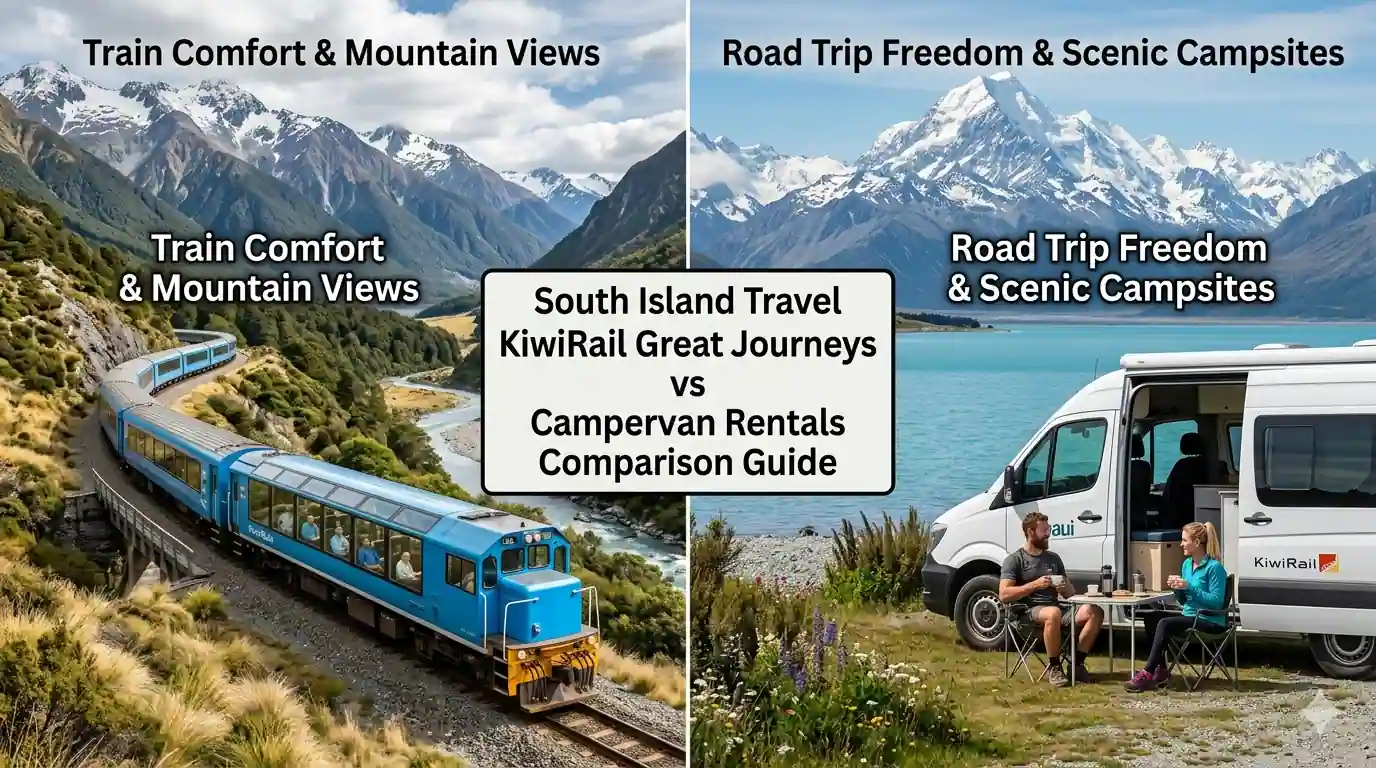
New Zealand's South Island offers two distinct approaches to exploration: the relaxed scenic comfort of KiwiRail Great Journeys trains versus the flexible adventurous freedom of campervan rentals. Each option delivers unique experiences with distinct advantages and trade-offs.
KiwiRail Great Journeys features iconic routes like the TranzAlpine crossing Arthur's Pass and the Coastal Pacific linking Christchurch to Picton. These trains provide panoramic windows expert commentary and stress-free travel through spectacular landscapes.
Campervan rentals enable complete itinerary control spontaneous detours and the ability to wake up beside lakes mountains or coastlines. This approach suits travelers prioritizing flexibility though requires navigation driving confidence and campsite planning.
Understanding cost structures time commitments scenic value and practical logistics enables informed decisions matching your travel style budget and priorities. This comprehensive comparison reveals everything needed to choose your ideal South Island transportation in 2026.
KiwiRail Great Journeys Overview and Routes

KiwiRail Great Journeys operates three premium scenic train routes across New Zealand with two serving the South Island exclusively.
The TranzAlpine ranks among the world's great train journeys traversing one hundred ninety kilometers between Christchurch and Greymouth. The four-hour trip crosses the Southern Alps via Arthur's Pass featuring dramatic gorges alpine meadows and beech forests visible through oversized panoramic windows.
The Coastal Pacific connects Christchurch to Picton over one hundred thirty-eight kilometers showcasing Pacific coastline Kaikoura's marine wildlife and the Marlborough Sounds. This three-and-a-half-hour journey highlights coastal beauty and mountain backdrops.
Both routes feature reserved seating in Silver Service or Grand Class carriages with complimentary refreshments priority boarding and enhanced viewing areas. Commentary from knowledgeable guides provides cultural and natural history context throughout journeys.
Great Journeys trains operate year-round though frequency varies seasonally. Summer schedules offer daily departures while winter may reduce to three or four weekly services. Advance booking proves essential particularly for peak season travel.
Campervan Rental Options and Categories

New Zealand's campervan rental market offers diverse vehicle categories matching different budgets group sizes and comfort preferences.
Compact two-berth campervans suit couples or solo travelers seeking affordability and maneuverability. These vehicles typically cost eighty to one hundred fifty New Zealand dollars daily excluding insurance and mileage.
Mid-size four-berth motorhomes balance comfort and cost for small families or groups. Daily rates range one hundred fifty to two hundred fifty dollars with enhanced amenities like kitchenettes and separate sleeping areas.
Luxury six-berth motorhomes provide premium comfort with full bathrooms spacious living areas and high-end finishes. These command two hundred fifty to four hundred dollars daily though deliver hotel-like comfort on wheels.
Major rental companies including Apollo Britz Maui and Jucy operate nationwide with pickup locations in Christchurch Queenstown and Picton. Booking three to six months ahead secures best rates and vehicle selection particularly for summer travel.
Cost Comparison Train Versus Campervan

Understanding true costs enables realistic budget planning for South Island travel.
KiwiRail Great Journeys tickets range from one hundred twenty to three hundred fifty New Zealand dollars per person one-way depending on class and route. The TranzAlpine Silver Service typically costs one hundred eighty dollars while Grand Class reaches three hundred twenty dollars.
Campervan rental costs include daily rates plus insurance fuel campsite fees and potential one-way drop charges. A seven-day rental for a two-berth van typically totals eight hundred to one thousand five hundred dollars excluding fuel and campsites.
Fuel costs for campervans average two hundred to four hundred dollars for a two-week South Island itinerary depending on distances and vehicle efficiency. Diesel prices fluctuate though budgeting one dollar eighty cents per liter provides reasonable estimate.
Campsite fees range from free Department of Conservation sites to thirty to sixty dollars nightly for powered sites at holiday parks. Budget travelers can minimize costs though comfort-oriented travelers should allocate fifty to one hundred dollars nightly for quality facilities.
When comparing costs consider that trains cover specific routes only while campervans enable comprehensive island exploration. The value equation depends on itinerary scope rather than direct price comparison.
Flexibility and Itinerary Control

Flexibility represents the most significant differentiator between train and campervan travel.
KiwiRail trains follow fixed schedules and routes with limited stops. The TranzAlpine departs Christchurch at eight AM arriving Greymouth at twelve forty PM with no intermediate boarding opportunities. This structure suits travelers prioritizing relaxation over spontaneity.
Campervans enable complete itinerary control with ability to stop at waterfalls viewpoints or small towns on impulse. Detours to Franz Josef Glacier Wanaka or Abel Tasman National Park prove simple with personal transport.
Train travel requires coordinating connecting buses or rental cars for destinations beyond rail termini. Reaching Queenstown from Greymouth after the TranzAlpine requires additional transport planning and costs.
Campervans serve as both transport and accommodation eliminating daily packing and hotel check-ins. This proves valuable for travelers prioritizing simplicity though requires managing vehicle logistics.
Hybrid approaches combining train journeys for scenic segments with campervan rentals for regional exploration maximize both comfort and flexibility though increase planning complexity.
Scenic Value and Viewing Experience

Both options deliver spectacular scenery though through fundamentally different lenses.
KiwiRail trains feature oversized panoramic windows designed specifically for sightseeing. The TranzAlpine's glass-roofed carriages provide unobstructed views of Arthur's Pass without needing to focus on driving.
Train commentary enhances scenic appreciation with guides sharing geological cultural and historical context. This educational component transforms passive viewing into enriched understanding.
Campervan travel enables stopping at pullouts for photography extended viewpoint visits or spontaneous hikes. The ability to linger at favorite locations proves invaluable for photography enthusiasts.
Driving requires attention to road conditions potentially limiting scenic appreciation during challenging sections. Passengers enjoy views though drivers must focus on navigation and safety.
Both approaches reward travelers with South Island's extraordinary landscapes though trains optimize passive viewing while campervans enable active exploration.
Practical Logistics and Convenience

Practical considerations significantly impact travel experience and stress levels.
KiwiRail trains depart from city centers with straightforward boarding procedures. Luggage limits apply though staff assist with loading and storage.
Campervan travel requires navigating New Zealand's often narrow winding roads particularly in mountainous regions. Left-side driving proves challenging for visitors from right-side driving countries requiring adjustment period.
Train travel eliminates parking concerns fuel stops and vehicle maintenance worries. This proves valuable for travelers prioritizing relaxation over logistics management.
Campervans require campsite bookings particularly during peak season when popular locations fill weeks ahead. Freedom camping regulations restrict overnight parking in many areas requiring careful planning.
Weather impacts both options though differently. Train travel continues in most conditions while campervan travel may require itinerary adjustments during severe weather.
Seasonal Considerations and Timing

Seasonal factors affect both transportation options requiring strategic planning.
Summer December through February offers optimal conditions for both trains and campervans with long daylight hours and reliable weather. This peak season demands advance booking for both options.
Shoulder seasons March April and October November provide good conditions with fewer crowds and moderate pricing. Campervan rates drop significantly while train availability improves.
Winter June through August brings snow to alpine regions enhancing TranzAlpine scenery though potentially affecting road conditions for campervans. Chain requirements may apply on mountain routes.
Train schedules reduce frequency in winter though scenic value remains high. Campervan travel requires winter driving experience and appropriate vehicle equipment.
Consider your comfort with seasonal conditions when choosing transportation. Trains provide climate-controlled comfort while campervans require adapting to variable weather.
Environmental Impact and Sustainability

Environmental considerations increasingly influence travel decisions.
Train travel produces significantly lower carbon emissions per passenger than private vehicles. KiwiRail's electric and diesel-electric locomotives offer more efficient transport than individual campervans.
Campervan travel enables visiting remote conservation areas though requires responsible practices including proper waste disposal staying on designated roads and respecting wildlife.
Both options support New Zealand's tourism economy though trains concentrate benefits along rail corridors while campervans distribute spending across regional communities.
Hybrid approaches combining train travel for long distances with local campervan rentals for regional exploration can balance environmental impact with flexibility.
Who Should Choose Trains Versus Campervans

Matching transportation to traveler profile ensures satisfying experiences.
KiwiRail Great Journeys suits travelers prioritizing relaxation scenic viewing and minimal logistics. Seniors couples seeking romantic journeys and photography enthusiasts valuing guided commentary find trains ideal.
Campervans suit adventurous travelers families with children groups seeking shared experiences and those prioritizing itinerary flexibility. Active travelers wanting spontaneous detours and outdoor access benefit from personal transport.
Budget-conscious travelers can minimize costs with either option though strategies differ. Trains enable controlled spending on specific routes while campervans require managing multiple cost categories.
First-time New Zealand visitors may prefer trains for stress-free introduction to South Island scenery. Return visitors often choose campervans for deeper regional exploration.
Hybrid Approaches and Combined Strategies

Combining transportation options maximizes benefits of both approaches.
One strategy involves taking the TranzAlpine for the iconic Arthur's Pass crossing then renting a campervan in Greymouth for West Coast exploration. This combines scenic train experience with regional flexibility.
Another approach uses campervans for South Island exploration then takes the Coastal Pacific train from Picton to Christchurch for relaxed return journey with coastal views.
Multi-center itineraries can incorporate train segments between major hubs with campervan rentals for regional day trips. This balances long-distance efficiency with local exploration.
Consider booking train segments during peak scenic periods while using campervans for less scenic but logistically complex regions. Strategic combination optimizes both experience and efficiency.
Booking Strategies and Practical Tips

Effective booking and preparation enhances both transportation experiences.
KiwiRail tickets should be booked three to six months ahead for summer travel with early bird discounts often available. Sign up for newsletters for sale announcements.
Campervan rentals require similar advance booking for peak season with consideration for one-way fees if not returning to pickup location. Compare inclusive packages covering insurance and mileage.
For trains select window seats on the scenic side of the carriage. TranzAlpine's scenic side faces north between Christchurch and Arthur's Pass then south to Greymouth.
For campervans practice vehicle handling in low-traffic areas before tackling mountain roads. Familiarize yourself with New Zealand road rules particularly regarding giving way and narrow bridges.
Pack appropriately for both options. Train travel requires minimal luggage while campervans need efficient packing for limited storage space.
Conclusion Choosing Your South Island Adventure

South Island transportation choices between KiwiRail Great Journeys and campervan rentals represent fundamentally different travel philosophies. Trains offer relaxed scenic immersion with minimal logistics while campervans deliver adventurous flexibility with comprehensive exploration.
Cost considerations extend beyond direct prices to encompass time value flexibility preferences and experience priorities. The TranzAlpine's iconic journey justifies its cost for scenic enthusiasts while campervans provide better value for comprehensive island exploration.
Consider your travel style comfort with logistics scenic priorities and budget when deciding. Many travelers find hybrid approaches combining both options deliver optimal South Island experiences.
Whether choosing the panoramic windows of the TranzAlpine or the open-road freedom of a campervan New Zealand's South Island rewards thoughtful transportation planning with extraordinary landscapes and unforgettable memories.
Your South Island journey begins with this fundamental choice. Embrace the approach matching your travel dreams and discover why New Zealand remains one of the world's premier adventure destinations.
0 Comments