.webp)
.webp)
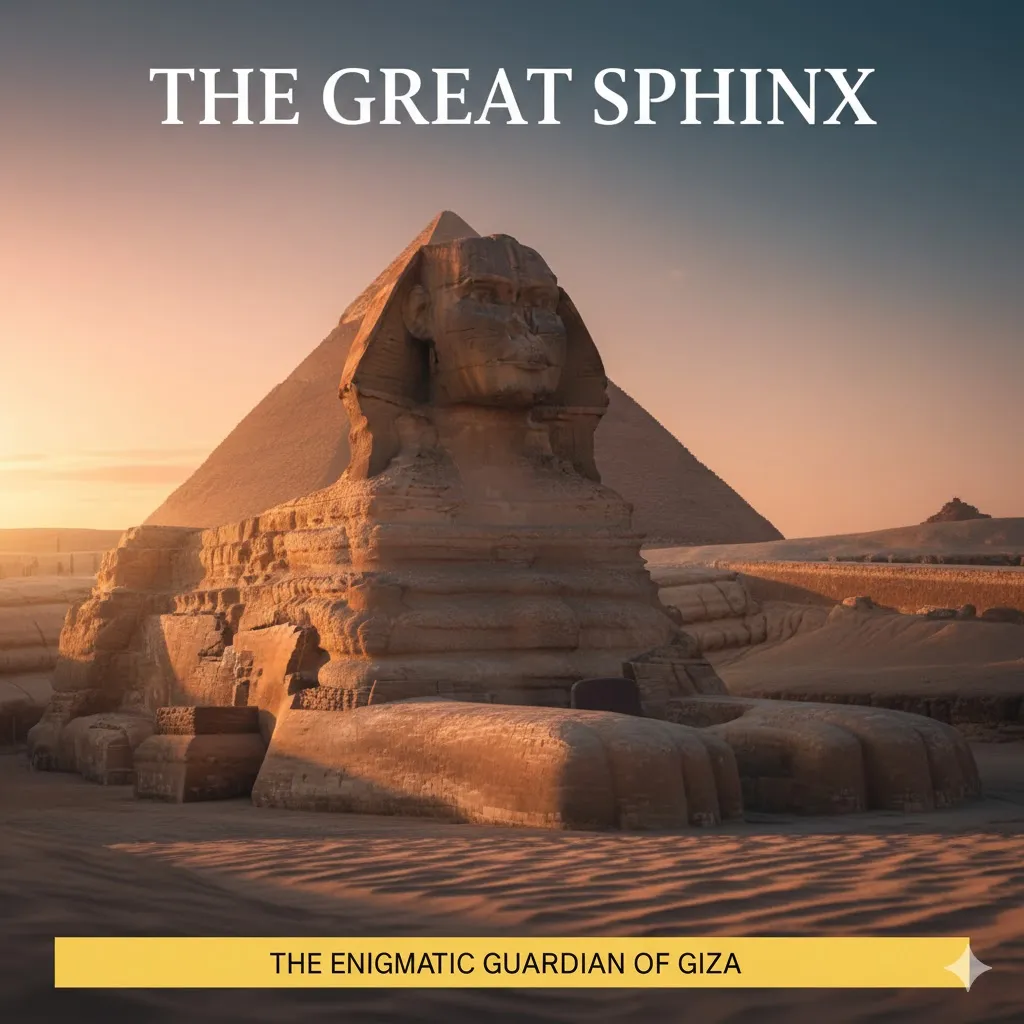
THE GREAT SPHINX: THE ENIGMATIC GUARDIAN OF THE GIZA PLATEAU
Carved from the living rock of the Giza Plateau over 4,500 years ago, the Great Sphinx stands as one of humanity's most mysterious and iconic monuments. With the body of a lion and the head of a pharaoh, this colossal statue has watched over the pyramids through millennia, witnessing the rise and fall of empires, the birth of religions, and the entire sweep of recorded history. Its weathered face, gazing eternally toward the rising sun, has inspired wonder, speculation, and scholarly debate about its origins, purpose, and meaning. In 2026, as travelers seek connections to ancient wisdom and extraordinary human achievement, the Great Sphinx offers an unparalleled opportunity to stand before a monument that embodies the power, mystery, and artistic genius of ancient Egypt.
This comprehensive guide invites you to explore the Great Sphinx with deeper understanding and greater appreciation. We will examine the historical context that gave rise to this extraordinary sculpture, decode the architectural and symbolic innovations that make it a masterpiece of ancient art, reflect on the cultural and spiritual significance that continues to captivate the human imagination, and provide practical information for visiting in 2026. Whether you are a history enthusiast drawn by pharaonic mysteries, an archaeology lover fascinated by ancient engineering, a photography enthusiast chasing golden hour light on ancient stone, or simply a curious traveler inspired by the Sphinx's legendary status, this guide will help you prepare for an unforgettable encounter with the enigmatic guardian of Giza.
Understanding the Great Sphinx requires more than admiring its massive scale; it demands engaging with the beliefs that inspired its creation, the ongoing scholarly debates about its dating and purpose, and the conservation challenges that threaten its survival. By approaching the Sphinx with curiosity and respect, you will discover not just ancient stone but a living dialogue between past and present, between mystery and knowledge, between human ambition and the relentless passage of time.
HISTORICAL CONTEXT: CARVING ETERNITY FROM LIVING ROCK
The Great Sphinx stands as a sentinel on the Giza Plateau, positioned to the east of the Great Pyramid of Khufu and directly in front of the Pyramid of Khafre. Most Egyptologists attribute its construction to Pharaoh Khafre (also known as Chephren), who ruled during the Fourth Dynasty of the Old Kingdom, approximately 2558-2532 BCE. This dating places the Sphinx's creation roughly contemporaneous with the construction of Khafre's pyramid complex, suggesting it was an integral part of the royal necropolis.
The Sphinx was carved from a single mass of limestone bedrock, exploiting a natural outcrop that remained after quarrying stone for Khufu's pyramid. This strategic use of existing geology demonstrates the sophisticated planning and engineering capabilities of Old Kingdom architects. The statue measures approximately 73 meters (240 feet) long from paw to tail, stands 20 meters (66 feet) high, and is 19 meters (62 feet) wide at its haunches—making it one of the largest monolithic statues in the world.
The identity of the Sphinx's face has been the subject of extensive scholarly debate. Traditional Egyptological consensus holds that the face represents Khafre himself, based on several lines of evidence: the proximity to Khafre's pyramid complex, the resemblance to statues of Khafre found in his valley temple, and the Dream Stele erected by Thutmose IV between the Sphinx's paws, which associates the monument with Khafre. However, alternative theories have emerged over the years, with some researchers proposing earlier dates based on geological evidence of water erosion, though these theories remain controversial and are not widely accepted by mainstream Egyptologists.
The Sphinx's original appearance would have been dramatically different from its current weathered state. The entire statue was painted in bright colors, with the face likely painted red (the traditional color for male figures in Egyptian art), the headdress striped in blue and gold, and the body decorated with intricate patterns. A ceremonial beard, fragments of which are now in the British Museum and the Egyptian Museum in Cairo, extended from the chin, and the statue wore a nemes headdress with a uraeus (royal cobra) on the forehead.
Over the millennia, the Sphinx has faced numerous challenges. Sand accumulation periodically buried the statue up to its neck, requiring periodic excavations. The first known restoration was undertaken by Thutmose IV around 1400 BCE, as recorded on the Dream Stele. Later restorations occurred during the Roman period and under various Islamic rulers. In modern times, extensive conservation efforts have been undertaken to address erosion, pollution damage, and structural instability, though these efforts have sometimes been controversial among conservationists.
ARCHITECTURAL AND ARTISTIC FEATURES: MASTERPIECE OF ANCIENT SCULPTURE
The Great Sphinx represents a unique fusion of human intelligence and animal strength, combining the head of a pharaoh with the body of a lion. This hybrid form was not arbitrary but carried profound symbolic meaning in ancient Egyptian culture.
Lion Symbolism:
In ancient Egypt, lions were associated with solar deities, royal power, and protection. The lion's strength and ferocity made it an ideal symbol for the pharaoh's role as protector of Egypt and defender of cosmic order (ma'at). By the Old Kingdom, the lion had become closely associated with the sun god Ra and with the pharaoh's role as the living embodiment of divine kingship.
The Sphinx's Form:
The recumbent lion pose—lying down with front paws extended—was a traditional Egyptian representation of power at rest but ready to act. This pose appears in various contexts in Egyptian art, from small amulets to massive temple guardians. The Sphinx's orientation, facing due east toward the rising sun, reinforces its solar associations and its role as a guardian of the necropolis.
The Human Head:
The Sphinx's head, carved with remarkable precision despite millennia of erosion, displays the characteristic features of Old Kingdom royal portraiture: a broad, idealized face; almond-shaped eyes; a straight nose (now damaged); full lips; and a ceremonial false beard. The nemes headdress, with its distinctive striped pattern and lappets (flaps) falling over the shoulders, is the quintessential symbol of pharaonic royalty.
Construction Techniques:
The creation of the Sphinx required extraordinary skill and organization:
- Quarrying: Workers carved the statue from the top down, removing limestone blocks that were likely used in the construction of nearby structures.
- Detailing: Skilled sculptors refined the features using copper chisels, stone hammers, and abrasive sands.
- Finishing: The surface was smoothed and prepared for painting, though traces of the original pigments are now almost entirely lost.
The Sphinx Temple:
Directly in front of the Sphinx lies the Sphinx Temple, built from massive limestone blocks quarried from the ditch created when the Sphinx was carved. This temple, aligned with the Sphinx and the rising sun, was likely used for rituals honoring the Sphinx as a solar deity and for ceremonies connecting the pharaoh to divine power. The temple's construction from the same limestone as the Sphinx creates a unified architectural complex that demonstrates the integrated planning of Khafre's entire funerary complex.
The Valley Temple Connection:
Khafre's Valley Temple, connected to the Sphinx Temple by a causeway, features some of the finest examples of Old Kingdom architecture and sculpture. The temple's massive granite and limestone blocks, some weighing over 100 tons, were transported from Aswan and quarried locally. Inside, archaeologists discovered statues of Khafre, including the famous diorite statue now in the Egyptian Museum, which bears a striking resemblance to the Sphinx's face.
CULTURAL AND SYMBOLIC SIGNIFICANCE: GUARDIAN OF SACRED SPACE
The Great Sphinx served multiple symbolic and religious functions in ancient Egyptian society, roles that evolved over time but consistently emphasized protection, solar power, and royal authority.
Solar Deity:
By the New Kingdom (1550-1077 BCE), the Sphinx had become closely associated with the sun god Ra-Horakhty (Ra-Horus of the Horizon), a form of the sun god that emphasized the solar cycle and the pharaoh's connection to divine power. The Sphinx's eastward orientation, facing the rising sun, reinforced this solar association. Texts from the New Kingdom refer to the Sphinx as "Horus of the Horizon," linking it to the daily rebirth of the sun and, by extension, the eternal renewal of kingship.
Royal Protector:
As a guardian of the Giza necropolis, the Sphinx protected the sacred tombs of the pharaohs from both physical and spiritual threats. Its position at the entrance to the plateau, facing east, allowed it to watch over the realm of the living while guarding the realm of the dead. This protective function is emphasized in the Sphinx's powerful, alert posture and its association with lion deities who served as guardians in Egyptian mythology.
The Dream Stele:
Erected by Pharaoh Thutmose IV around 1400 BCE, the Dream Stele stands between the Sphinx's front paws and tells a remarkable story. According to the inscription, the young prince Thutmose (not yet pharaoh) fell asleep in the shadow of the Sphinx, which was then partially buried in sand. The Sphinx appeared to him in a dream, speaking as a father to a son, and promised him the throne of Egypt if he would clear away the sand that choked the monument. Thutmose fulfilled this request, and subsequently became pharaoh, ruling Egypt for nearly a decade.
The Dream Stele is significant for several reasons:
- It provides one of the few ancient textual references to the Sphinx
- It demonstrates the Sphinx's role as a divine intermediary between gods and kings
- It shows that even in the New Kingdom, over 1,000 years after its construction, the Sphinx's original builder was forgotten or mythologized
- It illustrates the Egyptian belief in dreams as divine communication
Later Interpretations:
In the Greco-Roman period, the Sphinx took on additional layers of meaning. Greek visitors associated it with their own mythological sphinx, though the Egyptian version was male and benevolent, unlike the female, malevolent Greek sphinx of Oedipus legend. Roman emperors restored and venerated the Sphinx, and it became a symbol of Egypt's ancient wisdom and mystery for the classical world.
The famous "Riddle of the Sphinx" from Greek mythology—though not connected to the Egyptian monument—has contributed to the modern perception of the Sphinx as an embodiment of mystery and enigmatic wisdom. This association, though historically inaccurate, has fueled centuries of speculation about hidden chambers, lost knowledge, and secret meanings associated with the Giza Sphinx.
VISITOR EXPERIENCE: EXPLORING THE SPHINX ENCLOSURE
Visiting the Great Sphinx in 2026 offers multiple ways to engage with this ancient monument, from close-up observation to panoramic views that reveal its relationship to the broader Giza complex.
Viewing Areas:
The Sphinx Enclosure:
Visitors can walk around the Sphinx enclosure, approaching the statue from multiple angles:
- Frontal View: The classic view from the east, looking directly at the Sphinx's face with the pyramids in the background. This is the most photographed angle and offers the best sense of the statue's scale and presence.
- Side Views: Walking along the north or south sides of the enclosure reveals the full length of the lion body and the depth of the carved limestone. These views emphasize the Sphinx's integration with the bedrock and the massive scale of the quarrying operation.
- Rear View: The back of the Sphinx, though less visited, shows the transition from carved statue to natural rock and provides insight into the construction process.
The Sphinx Temple:
Located directly in front of the Sphinx, the ruins of the Sphinx Temple offer a glimpse into the ritual life that surrounded the monument. Though heavily ruined, the temple's massive limestone blocks and column bases indicate its original grandeur. Standing in the temple courtyard, visitors can imagine the ceremonies, offerings, and rituals that once honored the Sphinx as a living deity.
Panoramic Viewpoint:
A designated viewing area to the south of the Sphinx offers a panoramic perspective that includes the Sphinx, the Sphinx Temple, Khafre's Valley Temple, and the pyramids in a single vista. This viewpoint is ideal for photography and for understanding the integrated planning of the entire Giza complex.
Access and Restrictions:
- The Sphinx enclosure is included with general admission to the Giza Plateau
- Access to certain areas may be restricted for conservation reasons
- Climbing on the Sphinx is strictly prohibited
- Photography is permitted in most areas, though tripod use may require special permission
- The enclosure can be crowded, especially midday; early morning or late afternoon visits offer a more peaceful experience
Conservation Work:
Visitors may observe ongoing conservation efforts, including:
- Scaffolding for restoration work on damaged areas
- Drainage systems to protect against groundwater damage
- Barriers preventing visitors from approaching too closely to fragile areas
- Information panels explaining conservation challenges and techniques
These conservation efforts, while sometimes visually intrusive, are essential for preserving the Sphinx for future generations. Understanding the fragility of this ancient monument enhances appreciation for both its endurance and the ongoing work required to protect it.
PRACTICAL VISITOR INFORMATION FOR 2026
Planning a visit to the Great Sphinx requires consideration of logistics, timing, and cultural norms. This section provides essential information for traveling responsibly to the Giza Plateau in 2026.
Getting to the Sphinx:
The Giza Plateau is located approximately 20 kilometers (12 miles) southwest of central Cairo. The Sphinx is situated within the Giza archaeological complex, easily accessible once you arrive at the plateau.
By Taxi or Ride-Hailing:
- Uber and Careem operate reliably in Cairo and can drop visitors at the Giza Plateau entrance
- Agree on fares in advance or use app pricing to avoid confusion
- Allow 30-60 minutes for the journey from central Cairo, depending on traffic
By Organized Tour:
- Many tour operators offer half-day or full-day Giza tours with transportation, guides, and sometimes meals included
- Ideal for first-time visitors or those preferring structured experiences
- Book through reputable companies with good reviews
By Public Transportation:
- Metro Line 2 to Giza Station, then taxi or bus to the plateau
- Budget-friendly but requires navigation and local knowledge
- Allow extra time for transfers and potential delays
Opening Hours and Ticketing:
The Giza Plateau, including the Sphinx, is generally open daily from 8 AM to 5 PM, though hours may vary seasonally and for special events.
Ticket Information:
- General admission to Giza Plateau: Approximately 200-400 Egyptian pounds (EGP) for foreigners (approximately $6-12 USD), though prices are subject to change
- Sphinx enclosure access: Included with general admission
- Interior access to pyramids: Requires separate tickets
- Combination tickets: May offer savings for visiting multiple sites; inquire at ticket offices
Booking Tips:
- Purchase tickets at the official ticket office to avoid scams
- Keep tickets accessible; they may be checked at multiple points within the complex
- Consider hiring a licensed Egyptologist guide at the entrance for enhanced understanding
Best Times to Visit:
To avoid crowds and enjoy optimal conditions:
- Sunrise/Early Morning: Arrive at opening time (8 AM) for the smallest crowds, soft morning light, and cooler temperatures. This is ideal for photography and peaceful contemplation.
- Late Afternoon: Visit 2-3 hours before closing for golden hour lighting and dramatic shadows, though crowds may be larger.
- Avoid Midday: Heat and crowds peak between 11 AM and 2 PM, especially in summer months. The Sphinx faces east, so morning light illuminates the face best.
- Seasonal Considerations:
- October to April offers the most pleasant weather (15-25°C / 59-77°F)
- May to September brings extreme heat (often exceeding 35°C / 95°F) but fewer tourists
- December and January are peak tourist seasons; expect larger crowds
Weather Considerations:
Giza has a desert climate with hot, dry summers and mild winters:
- Summer (May-September): Temperatures often exceed 35°C (95°F); bring sun protection, water, and light clothing. Plan indoor or shaded activities during peak heat.
- Winter (November-February): Pleasant daytime temperatures (15-25°C / 59-77°F) but cool mornings and evenings; bring layers.
- Sandstorms: Occasional khamsin winds can bring sand and dust, reducing visibility and making outdoor exploration uncomfortable. Check weather forecasts before your visit.
Accessibility:
The Sphinx enclosure presents some challenges for visitors with mobility limitations:
- Pathways: Paved paths connect major viewing areas, though some surfaces are uneven or sandy
- Terrain: The enclosure floor is relatively flat, but accessing different viewing angles may involve steps or uneven ground
- Shade: Limited shade is available; bring sun protection
- Assistance: Staff can provide guidance on accessible routes; contact in advance for specific needs
- Wheelchair Access: Partial access is possible, but some areas may be difficult to navigate
Photography Tips:
The Sphinx offers exceptional photography opportunities. To capture its majesty:
Best Times for Photography:
- Golden Hour: Sunrise and sunset provide warm, directional light that enhances the texture of weathered stone and creates dramatic shadows. Morning light illuminates the face; evening light creates silhouettes against the pyramids.
- Blue Hour: The period just after sunset offers soft, even light and dramatic sky colors with illuminated monuments (if lighting is available).
- Overcast Days: Diffused light reduces harsh shadows, ideal for capturing details without extreme contrast.
Composition Techniques:
- Include Scale: Position people in your frame to convey the Sphinx's massive size
- Pyramid Backdrop: Frame the Sphinx with Khafre's pyramid in the background for a classic composition
- Details: Focus on the face, paws, or headdress to capture artistic details and erosion patterns
- Wide Angle: Use a wide-angle lens to capture the full length of the Sphinx and its relationship to the enclosure
Technical Considerations:
- Polarizing Filter: Reduces glare on stone surfaces and enhances sky contrast
- Tripod: Useful for low-light conditions; may require special permission
- Lens Choice: Wide-angle (16-35mm) for full views; telephoto (70-200mm) for details and compressing the pyramids behind the Sphinx
Respect Restrictions:
- Flash photography may be prohibited in certain areas
- Commercial photography requires special permits
- Drones are generally prohibited without special authorization
Health and Safety:
The Giza Plateau is generally safe for visitors who take standard precautions:
- Sun Protection: Egypt's UV levels can be extreme. Use SPF 30+ sunscreen, wear a hat and sunglasses, and seek shade during peak sun hours (10 AM to 3 PM).
- Hydration: Bring sufficient water (at least 2 liters per person). Dehydration can occur quickly in desert conditions. Vendors sell water on-site, but prices are higher.
- Footwear: Wear sturdy, comfortable walking shoes with good traction for walking on sand and uneven limestone surfaces.
- Personal Belongings: Keep valuables secure; use hotel safes for passports and excess cash. Be aware of your surroundings in crowded areas.
- Guidance: Follow instructions from site staff and licensed guides; avoid climbing on monuments or entering restricted areas.
- Scams: Be wary of unsolicited "guides," aggressive vendors, or offers that seem too good to be true. Use official ticket offices and licensed guides.
Cultural Etiquette:
Egypt is a predominantly Muslim country with conservative social norms in many areas:
- Dress Modestly: Cover shoulders and knees, especially when visiting religious or historic sites. Light, breathable fabrics are ideal for the climate while maintaining modesty.
- Respect Local Customs: Ask permission before photographing people, particularly women and children. A smile and gesture usually suffice.
- Tipping (Baksheesh): Small tips are customary for services (guards, restroom attendants, guides). Carry small denominations of Egyptian currency (5, 10, 20 EGP notes).
- Bargaining: Polite negotiation is expected with vendors; approach it as a friendly interaction, not a confrontation. Start at 30-50% of the asking price and negotiate in good faith.
- Language: Learning a few basic Arabic phrases is appreciated: "Salam alaykum" (Peace be upon you), "Shukran" (Thank you), "Min fadlak" (Please).
SUSTAINABLE AND RESPONSIBLE TOURISM
Visiting the Great Sphinx carries responsibility to protect this irreplaceable monument for future generations. In 2026, sustainable tourism practices are essential for preserving Egypt's heritage.
Protect the Monument:
The Sphinx faces ongoing conservation challenges:
- Erosion: Wind, sand, and pollution continue to wear away the limestone
- Groundwater: Rising water tables threaten the statue's foundation
- Pollution: Cairo's air pollution accelerates stone deterioration
- Visitor Impact: Millions of visitors annually contribute to wear and environmental stress
How You Can Help:
- Stay on Designated Paths: Protect the enclosure floor and prevent further erosion
- Do Not Touch the Sphinx: Oils from skin accelerate stone deterioration
- Follow Conservation Guidelines: Respect barriers and restricted areas
- Support Conservation: Consider donating to organizations working to preserve Egyptian monuments
Minimize Environmental Impact:
- Reduce Waste: Carry a reusable water bottle; avoid single-use plastics. Egypt faces significant waste management challenges.
- Proper Disposal: Use designated bins; if bins are full, carry your trash until you find appropriate disposal.
- Choose Sustainable Operators: Select tour companies committed to environmental responsibility and fair labor practices.
- Conserve Resources: Egypt faces water scarcity; use water and energy mindfully.
Support Local Communities:
- Choose Local Guides: Hire licensed Egyptian guides who provide authentic perspectives and support the local economy.
- Purchase Responsibly: Buy crafts from reputable sources that fairly compensate artisans. Avoid mass-produced souvenirs.
- Respect Workers: Treat guards, vendors, and service workers with dignity and fairness. Tip appropriately for services rendered.
Engage with Cultural Heritage Respectfully:
- Educate Yourself: Learn about the Sphinx's history and significance before visiting; understanding deepens appreciation.
- Listen to Egyptian Voices: Prioritize Egyptian guides, scholars, and conservationists who interpret their own heritage.
- Avoid Pseudoscience: Be skeptical of claims about Atlantis, aliens, or lost civilizations associated with the Sphinx; these theories often disrespect Egyptian culture and history.
- Share Responsibly: When sharing your experience on social media, promote accurate information and cultural respect rather than sensationalism.
CONCLUSION: GUARDIAN OF ETERNAL MYSTERIES
Standing before the Great Sphinx is an experience that transcends ordinary tourism. As you gaze upon this weathered face that has watched over the Giza Plateau for over four millennia, as you contemplate the skill and vision that transformed living rock into a symbol of divine kingship, and as you reflect on the countless generations who have stood where you stand, you encounter something profound: the enduring power of human creativity to shape stone into meaning, to reach for eternity, and to leave a legacy that outlasts empires.
The Sphinx does not yield its secrets easily. It stands as a testament to what we know—the engineering genius of the Old Kingdom, the religious symbolism of ancient Egypt, the political power of pharaonic kingship—and to what we may never fully understand—the precise motivations of its creators, the full depth of its spiritual significance, the complete story of its endurance through millennia of change. This balance of knowledge and mystery is precisely what makes the Sphinx so compelling.
In 2026, as travelers seek meaningful connections to history, culture, and human achievement, the Great Sphinx offers an unparalleled opportunity to engage with one of humanity's most enigmatic creations. Whether you photograph its weathered features at sunrise, trace the erosion patterns that tell the story of millennia, or simply sit in contemplative silence before its timeless gaze, the Sphinx invites reflection on questions that have animated human existence across the ages: What endures? What is the relationship between power and eternity? How do we balance preservation with the inevitable passage of time?
As you plan your visit to the Great Sphinx, approach this extraordinary monument with curiosity, humility, and respect. Listen to the stories told by Egyptologists and conservationists, engage with the scholarship that continues to reveal its secrets, and allow its mystery to inspire your own appreciation for human potential and enduring questions. By traveling responsibly and supporting conservation efforts, you can contribute to the preservation of this remarkable monument while creating memories that will last a lifetime.
May your encounter with the Great Sphinx deepen your appreciation for the achievements of ancient civilizations and inspire your commitment to protecting the cultural treasures that make our world extraordinary. As the pharaohs who commissioned this monument understood, true legacy lies not just in stones that endure but in the knowledge, values, and stories that inspire future generations. May you carry that understanding forward, wherever your journey leads.
Useful resources include the Egyptian Ministry of Tourism and Antiquities for official site information, the Giza Plateau Mapping Project for archaeological research, and your country's travel advisory service for safety updates. Emergency services in Egypt can be reached at 122 for police, 123 for ambulance, and 180 for fire. Disclaimer: Information is accurate as of early 2026. Site hours, ticket prices, and conservation policies may change; verify details before travel. This guide is for informational purposes only and does not constitute professional travel advice.
0 Comments