.webp)
.webp)
Why 2026 Is the Year of "Coastal Highway Progress": Connecting Buchanan to Cestos City
Why 2026 Is the Year of "Coastal Highway Progress": Connecting Buchanan to Cestos City
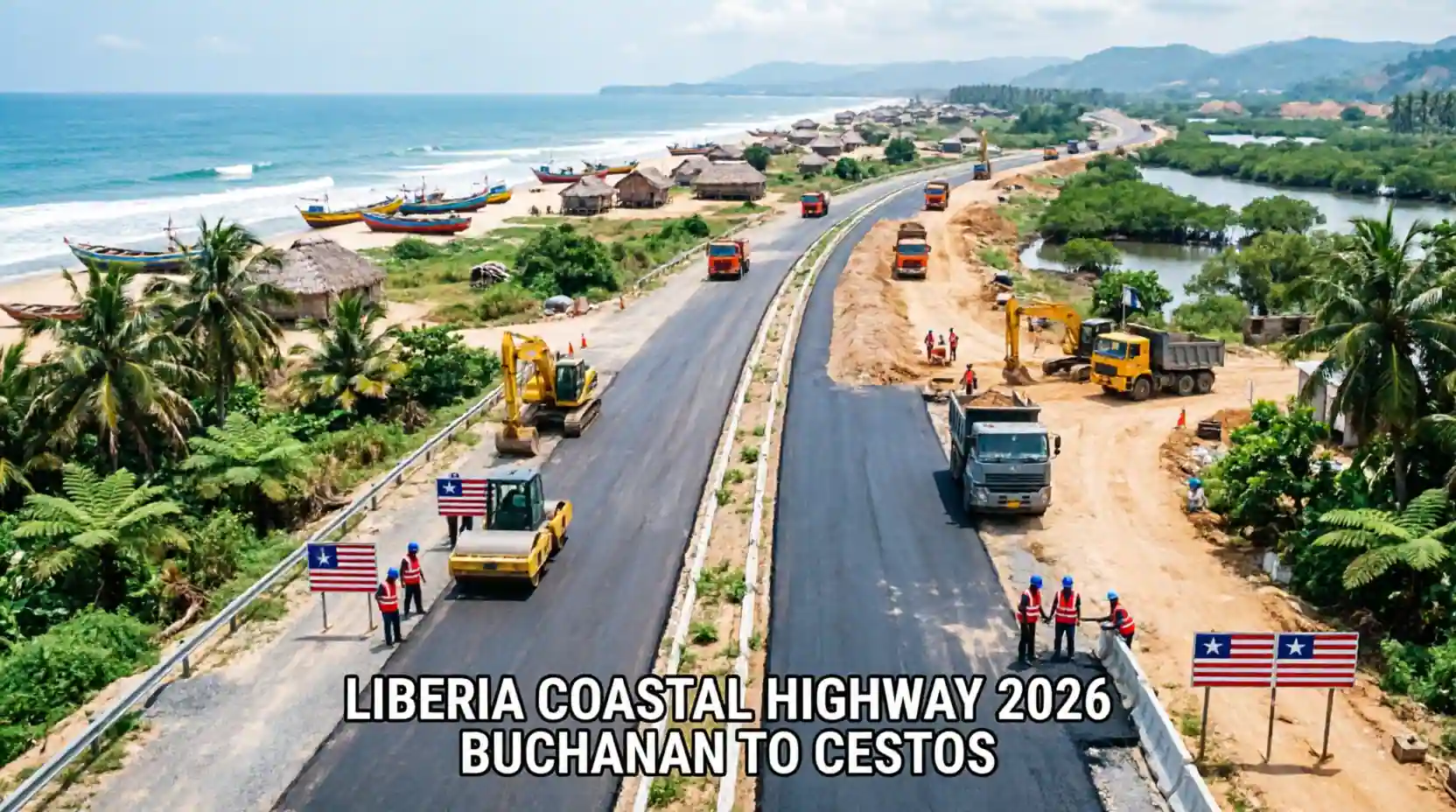
Along Liberia's stunning Atlantic coastline, where tropical forests meet golden beaches and traditional fishing villages dot the shoreline, a transformative infrastructure project is reshaping connectivity, commerce, and community life: the Coastal Highway linking Buchanan in Grand Bassa County to Cestos City in River Cess County. As 2026 unfolds, this critical transportation corridor has emerged as a symbol of Liberia's development aspirations, a catalyst for regional economic integration, and a testament to the power of strategic infrastructure investment to unlock human potential. For residents of coastal communities, for businesses seeking market access, for tourists exploring Liberia's natural beauty, and for development partners committed to sustainable growth, the progress on the Buchanan-to-Cestos City Coastal Highway represents far more than asphalt and engineering—it represents hope, opportunity, and connection.
Historically, travel along Liberia's coast has been challenging: unpaved roads that become impassable during the rainy season, long journey times that isolate communities from markets and services, and limited transportation options that constrain economic activity and social mobility. The Coastal Highway project addresses these challenges head-on, promising to transform a fragmented coastal corridor into a reliable, all-weather transportation link that connects people, products, and possibilities. As construction advances in 2026, with significant sections completed and others progressing rapidly, the tangible benefits are becoming increasingly visible: reduced travel times, improved market access for farmers and fishers, enhanced emergency response capabilities, and growing investor confidence in Liberia's coastal potential.
This comprehensive guide explores everything you need to know about the Coastal Highway progress in 2026: understanding the project's scope, strategic importance, and development context; analyzing the engineering and construction achievements to date; examining the economic, social, and environmental implications for coastal communities; exploring financing models and partnership structures that enable progress; addressing implementation challenges and innovative solutions; and evaluating what this landmark infrastructure project means for Liberia's broader development trajectory. Whether you're a resident of coastal Liberia, a business leader evaluating investment opportunities, a development professional supporting infrastructure initiatives, or simply someone interested in how transportation infrastructure catalyzes inclusive growth, this guide provides the insights you need to understand why 2026 is truly the year of Coastal Highway progress.
Understanding the Coastal Highway Project: Scope and Strategic Importance

Project Overview and Geographic Context
The Coastal Highway connecting Buchanan to Cestos City is a critical segment of Liberia's broader coastal transportation network:
- Route alignment: Approximately 180 kilometers of coastal roadway linking Buchanan (Grand Bassa County) through Greenville (Sinoe County) to Cestos City (River Cess County), with connections to inland communities and economic zones
- Strategic positioning: Forms part of the Trans-West African Coastal Highway corridor, connecting Liberia to regional neighbors Côte d'Ivoire and Sierra Leone
- Population served: Directly benefits over 500,000 residents of Grand Bassa, Sinoe, and River Cess counties; indirectly serves broader regional population through improved connectivity
- Economic zones connected: Links agricultural production areas, fishing communities, mining operations, tourism destinations, and port facilities along Liberia's coast
- Environmental context: Traverses diverse ecosystems including coastal mangroves, tropical rainforests, and marine environments, requiring careful environmental management
- 👉 Loango Savannah Camp 2026: Iguela Lagoon Eco-Lodge Guide
- 👉 South Africa Property Tax July 2026: Foreign Investor Guide
- 👉 Ultimate 10 Day Rwanda Itinerary Beyond Gorilla Trekking Volcanoes National Park
Historical Context: Why This Highway Matters Now
Understanding the project's significance requires appreciating Liberia's infrastructure development journey:
- Post-conflict reconstruction: Following Liberia's civil wars (1989-2003), rebuilding transportation infrastructure became a national priority for economic recovery and social cohesion
- Coastal isolation: Coastal communities historically faced significant transportation barriers, limiting access to markets, healthcare, education, and emergency services
- Economic potential: Liberia's coastal regions possess abundant natural resources—agricultural land, fisheries, minerals, tourism assets—whose development depends on reliable transportation
- Regional integration: The Coastal Highway aligns with ECOWAS and African Union infrastructure priorities, positioning Liberia within continental development frameworks
- Climate resilience: Modern road design incorporates climate adaptation measures to withstand coastal erosion, flooding, and extreme weather events
- 👉 Loango Savannah Camp 2026: Iguela Lagoon Eco-Lodge Guide
- 👉 South Africa Property Tax July 2026: Foreign Investor Guide
- 👉 Ultimate 10 Day Rwanda Itinerary Beyond Gorilla Trekking Volcanoes National Park
Project Components and Technical Specifications
The Coastal Highway project encompasses multiple interconnected elements:
Road Construction and Rehabilitation:
- Road classification: Two-lane paved highway with shoulders, designed for mixed traffic including heavy vehicles
- Engineering standards: Meets international road design standards for drainage, geometry, and safety features
- Materials and methods: Use of locally sourced materials where feasible; modern construction techniques for durability in tropical coastal environment
- Bridge and culvert works: Construction and rehabilitation of river crossings, drainage structures, and coastal protection measures
- 👉 Loango Savannah Camp 2026: Iguela Lagoon Eco-Lodge Guide
- 👉 South Africa Property Tax July 2026: Foreign Investor Guide
- 👉 Ultimate 10 Day Rwanda Itinerary Beyond Gorilla Trekking Volcanoes National Park
Supporting Infrastructure:
- Drainage systems: Comprehensive drainage design to manage heavy rainfall and prevent road damage
- Safety features: Road markings, signage, lighting at critical points, and pedestrian crossings
- Rest areas and facilities: Designated stopping points with basic amenities for travelers and commercial vehicles
- Connectivity improvements: feeder roads linking communities to the main highway corridor
- 👉 Loango Savannah Camp 2026: Iguela Lagoon Eco-Lodge Guide
- 👉 South Africa Property Tax July 2026: Foreign Investor Guide
- 👉 Ultimate 10 Day Rwanda Itinerary Beyond Gorilla Trekking Volcanoes National Park
Environmental and Social Safeguards:
- Environmental impact assessment: Comprehensive studies to identify and mitigate ecological impacts
- Community engagement: Ongoing consultation with affected communities regarding land acquisition, livelihood impacts, and benefit sharing
- Resettlement action plans: Fair compensation and support for households affected by road alignment
- Biodiversity protection: Measures to protect sensitive coastal and forest ecosystems along the route
- 👉 Loango Savannah Camp 2026: Iguela Lagoon Eco-Lodge Guide
- 👉 South Africa Property Tax July 2026: Foreign Investor Guide
- 👉 Ultimate 10 Day Rwanda Itinerary Beyond Gorilla Trekking Volcanoes National Park
2026 Progress Update: Achievements and Milestones

Construction Progress by Segment
As of 2026, significant advances have been made across the corridor:
Buchanan to Greenville Segment (Approx. 90 km):
- Status: Approximately 70% complete; major earthworks, drainage, and paving finished on most sections
- Key achievements:
- Completion of critical bridge structures over St. John River tributaries
- Paving of 60+ kilometers of roadway with asphalt concrete
- Installation of drainage systems and safety features on completed sections
- Opening of several segments to traffic, reducing travel time by 40-60%
- 👉 Loango Savannah Camp 2026: Iguela Lagoon Eco-Lodge Guide
- 👉 South Africa Property Tax July 2026: Foreign Investor Guide
- 👉 Ultimate 10 Day Rwanda Itinerary Beyond Gorilla Trekking Volcanoes National Park
- Remaining work: Final paving on remaining sections; completion of roadside facilities; landscaping and final safety improvements
- 👉 Loango Savannah Camp 2026: Iguela Lagoon Eco-Lodge Guide
- 👉 South Africa Property Tax July 2026: Foreign Investor Guide
- 👉 Ultimate 10 Day Rwanda Itinerary Beyond Gorilla Trekking Volcanoes National Park
Greenville to Cestos City Segment (Approx. 90 km):
- Status: Approximately 40% complete; earthworks and drainage progressing; paving beginning on initial sections
- Key achievements:
- Clearing and grading of alignment through challenging coastal terrain
- Construction of major culverts and small bridge structures
- Community access improvements linking villages to construction zones
- Environmental mitigation measures implemented along sensitive coastal sections
- 👉 Loango Savannah Camp 2026: Iguela Lagoon Eco-Lodge Guide
- 👉 South Africa Property Tax July 2026: Foreign Investor Guide
- 👉 Ultimate 10 Day Rwanda Itinerary Beyond Gorilla Trekking Volcanoes National Park
- Remaining work: Continued earthworks; bridge construction; paving operations; final safety and drainage installations
- 👉 Loango Savannah Camp 2026: Iguela Lagoon Eco-Lodge Guide
- 👉 South Africa Property Tax July 2026: Foreign Investor Guide
- 👉 Ultimate 10 Day Rwanda Itinerary Beyond Gorilla Trekking Volcanoes National Park
Engineering and Technical Innovations
The project incorporates innovative approaches for Liberia's coastal environment:
- Climate-resilient design: Elevated road sections in flood-prone areas; enhanced drainage capacity for extreme rainfall events
- Local material utilization: Use of laterite and other locally available materials to reduce costs and support local economies
- Modular construction: Phased implementation allowing sections to open to traffic while work continues elsewhere
- Community-based maintenance: Training local crews for ongoing road maintenance, creating jobs and ensuring sustainability
- Digital monitoring: Use of GPS, drones, and digital tools for quality control, progress tracking, and community communication
- 👉 Loango Savannah Camp 2026: Iguela Lagoon Eco-Lodge Guide
- 👉 South Africa Property Tax July 2026: Foreign Investor Guide
- 👉 Ultimate 10 Day Rwanda Itinerary Beyond Gorilla Trekking Volcanoes National Park
Community Benefits Already Realized
Even before full completion, the project is delivering tangible benefits:
- Reduced travel times: Journey times between Buchanan and Greenville reduced from 4-5 hours to 2-2.5 hours on completed sections
- Improved market access: Farmers and fishers can transport products to markets more reliably and cost-effectively
- Enhanced service delivery: Health workers, teachers, and emergency responders can reach communities more consistently
- Job creation: Hundreds of local jobs in construction, maintenance, and supporting services
- Skills development: Training programs for Liberian workers in road construction, equipment operation, and project management
- Business opportunities: New roadside enterprises: food vendors, repair shops, lodging facilities serving increased traffic
- 👉 Loango Savannah Camp 2026: Iguela Lagoon Eco-Lodge Guide
- 👉 South Africa Property Tax July 2026: Foreign Investor Guide
- 👉 Ultimate 10 Day Rwanda Itinerary Beyond Gorilla Trekking Volcanoes National Park
Economic and Social Implications for Coastal Communities

Economic Transformation Potential
The Coastal Highway unlocks significant economic opportunities:
- Agricultural value chains: Reliable transportation enables farmers to access larger markets, reduce post-harvest losses, and attract agribusiness investment
- Fisheries development: Improved cold chain logistics allow fishers to preserve and transport catch to urban markets and processing facilities
- Tourism growth: Enhanced accessibility to coastal attractions: beaches, fishing villages, cultural sites, and eco-tourism destinations
- Small enterprise development: Roadside businesses, transport services, and hospitality enterprises emerge to serve increased traffic
- Investment attraction: Improved infrastructure signals stability and opportunity, attracting domestic and foreign investment in coastal zones
- Regional trade: Connection to regional highway networks facilitates cross-border trade and economic integration
- 👉 Loango Savannah Camp 2026: Iguela Lagoon Eco-Lodge Guide
- 👉 South Africa Property Tax July 2026: Foreign Investor Guide
- 👉 Ultimate 10 Day Rwanda Itinerary Beyond Gorilla Trekking Volcanoes National Park
Social Development Impacts
Beyond economics, the highway catalyzes social progress:
- Healthcare access: Ambulances and medical supplies can reach remote communities more reliably; patients can access hospitals more easily
- Education connectivity: Students can attend schools beyond their immediate villages; teachers can be deployed more flexibly
- Gender empowerment: Improved transportation reduces women's time burden for market access and service utilization
- Youth opportunities: Construction jobs, skills training, and new economic activities provide alternatives to migration or illicit activities
- Social cohesion: Improved connectivity fosters interaction, exchange, and understanding among diverse coastal communities
- Disaster resilience: Reliable evacuation routes and emergency response capabilities enhance community safety
- 👉 Loango Savannah Camp 2026: Iguela Lagoon Eco-Lodge Guide
- 👉 South Africa Property Tax July 2026: Foreign Investor Guide
- 👉 Ultimate 10 Day Rwanda Itinerary Beyond Gorilla Trekking Volcanoes National Park
Environmental Considerations and Mitigation
Responsible development balances progress with protection:
- Ecosystem protection: Road alignment avoids sensitive mangrove forests and critical wildlife habitats where feasible
- Erosion control: Engineering measures to prevent coastal erosion and sedimentation of marine environments
- Water quality management: Drainage systems designed to filter runoff and protect coastal waters
- Biodiversity corridors: Wildlife crossings and habitat connectivity measures to minimize fragmentation
- Community-based monitoring: Local environmental committees participate in monitoring and mitigation efforts
- Climate adaptation: Design features that anticipate sea-level rise, increased storm intensity, and other climate impacts
- 👉 Loango Savannah Camp 2026: Iguela Lagoon Eco-Lodge Guide
- 👉 South Africa Property Tax July 2026: Foreign Investor Guide
- 👉 Ultimate 10 Day Rwanda Itinerary Beyond Gorilla Trekking Volcanoes National Park
Financing and Partnership Models: Enabling Progress

Investment Framework and Funding Sources
The Coastal Highway project leverages diverse financing mechanisms:
- Government allocation: Liberian national budget commitments to infrastructure development
- Development partner support: Financing from World Bank, African Development Bank, European Union, and bilateral partners
- Regional initiatives: ECOWAS and African Union infrastructure programs supporting transnational corridors
- Private sector participation: Public-private partnerships for specific components like tolling, maintenance, or roadside development
- Blended finance: Combining grants, concessional loans, and commercial investment to optimize risk-return profiles
- Community contributions: Local labor, materials, and in-kind support that reduce costs and build ownership
- 👉 Loango Savannah Camp 2026: Iguela Lagoon Eco-Lodge Guide
- 👉 South Africa Property Tax July 2026: Foreign Investor Guide
- 👉 Ultimate 10 Day Rwanda Itinerary Beyond Gorilla Trekking Volcanoes National Park
Partnership Structures and Governance
- Implementing agencies: Liberia Ministry of Public Works leads implementation with technical support from engineering firms
- Oversight mechanisms: Multi-stakeholder committees including government, communities, civil society, and development partners
- Contract management: Transparent procurement and contract administration to ensure value for money and accountability
- Community engagement: Regular consultations, grievance mechanisms, and benefit-sharing arrangements with affected communities
- Monitoring and evaluation: Independent assessment of progress, quality, and impacts against agreed indicators
- 👉 Loango Savannah Camp 2026: Iguela Lagoon Eco-Lodge Guide
- 👉 South Africa Property Tax July 2026: Foreign Investor Guide
- 👉 Ultimate 10 Day Rwanda Itinerary Beyond Gorilla Trekking Volcanoes National Park
Sustainability and Long-Term Management
- Maintenance planning: Dedicated funding and institutional arrangements for ongoing road maintenance
- Capacity building: Training Liberian engineers, technicians, and managers to sustain infrastructure long-term
- Revenue mechanisms: Exploring sustainable financing options like fuel levies or targeted user fees for maintenance
- Climate resilience: Design and maintenance practices that anticipate and adapt to changing climate conditions
- Community ownership: Engaging local communities in maintenance and protection of road infrastructure
- 👉 Loango Savannah Camp 2026: Iguela Lagoon Eco-Lodge Guide
- 👉 South Africa Property Tax July 2026: Foreign Investor Guide
- 👉 Ultimate 10 Day Rwanda Itinerary Beyond Gorilla Trekking Volcanoes National Park
Implementation Challenges and Innovative Solutions
Technical and Logistical Challenges
Building a coastal highway in Liberia presents unique complexities:
- Challenging terrain: Coastal wetlands, river crossings, and variable soil conditions require specialized engineering solutions
- Weather constraints: Heavy rainfall during wet season limits construction windows; requires careful scheduling and drainage design
- Material logistics: Transporting construction materials to remote coastal sites increases costs and complexity
- Equipment availability: Limited local heavy equipment capacity requires strategic procurement and maintenance planning
- Technical capacity: Building local expertise in modern road construction while meeting quality standards
- 👉 Loango Savannah Camp 2026: Iguela Lagoon Eco-Lodge Guide
- 👉 South Africa Property Tax July 2026: Foreign Investor Guide
- 👉 Ultimate 10 Day Rwanda Itinerary Beyond Gorilla Trekking Volcanoes National Park
Innovative solutions implemented:
- Modular construction approaches allowing work to continue in favorable weather windows
- Local material testing and adaptation to reduce dependence on imported materials
- Equipment sharing arrangements among contractors to optimize utilization
- On-site training programs to build Liberian technical capacity during construction
- Digital project management tools for real-time coordination across dispersed sites
- 👉 Loango Savannah Camp 2026: Iguela Lagoon Eco-Lodge Guide
- 👉 South Africa Property Tax July 2026: Foreign Investor Guide
- 👉 Ultimate 10 Day Rwanda Itinerary Beyond Gorilla Trekking Volcanoes National Park
Social and Environmental Challenges
- Land acquisition: Balancing road alignment needs with community land rights and livelihoods
- Displacement concerns: Ensuring fair compensation and support for affected households
- Environmental protection: Minimizing impacts on sensitive coastal and forest ecosystems
- Cultural heritage: Protecting archaeological sites and culturally significant landscapes
- Community expectations: Managing diverse expectations regarding benefits, timelines, and participation
- 👉 Loango Savannah Camp 2026: Iguela Lagoon Eco-Lodge Guide
- 👉 South Africa Property Tax July 2026: Foreign Investor Guide
- 👉 Ultimate 10 Day Rwanda Itinerary Beyond Gorilla Trekking Volcanoes National Park
Responsive approaches:
- Participatory land mapping and negotiation processes with affected communities
- Livelihood restoration programs that go beyond cash compensation to support sustainable alternatives
- Environmental monitoring committees with community representation
- Cultural heritage assessments and mitigation plans developed with local knowledge holders
- Transparent communication channels for ongoing dialogue and grievance resolution
- 👉 Loango Savannah Camp 2026: Iguela Lagoon Eco-Lodge Guide
- 👉 South Africa Property Tax July 2026: Foreign Investor Guide
- 👉 Ultimate 10 Day Rwanda Itinerary Beyond Gorilla Trekking Volcanoes National Park
Institutional and Governance Challenges
- Coordination complexity: Multiple agencies, partners, and contractors requiring effective coordination
- Capacity constraints: Limited institutional capacity for managing complex infrastructure projects
- Corruption risks: Ensuring transparency and accountability in procurement and implementation
- Sustainability concerns: Planning for long-term maintenance and operation beyond construction phase
- 👉 Loango Savannah Camp 2026: Iguela Lagoon Eco-Lodge Guide
- 👉 South Africa Property Tax July 2026: Foreign Investor Guide
- 👉 Ultimate 10 Day Rwanda Itinerary Beyond Gorilla Trekking Volcanoes National Park
Strengthening systems:
- Integrated project management units with clear roles and accountability mechanisms
- Capacity building programs for public sector staff in project management and infrastructure governance
- Independent oversight and audit mechanisms to enhance transparency
- Long-term maintenance financing arrangements established during project design
- Knowledge management systems to capture lessons for future infrastructure projects
- 👉 Loango Savannah Camp 2026: Iguela Lagoon Eco-Lodge Guide
- 👉 South Africa Property Tax July 2026: Foreign Investor Guide
- 👉 Ultimate 10 Day Rwanda Itinerary Beyond Gorilla Trekking Volcanoes National Park
Regional and Continental Connectivity: Beyond Liberia's Borders
Integration with West African Corridors
The Coastal Highway connects to broader regional infrastructure networks:
- Trans-West African Coastal Highway: The Buchanan-Cestos segment forms part of this ECOWAS priority corridor linking Mauritania to Nigeria
- Regional trade facilitation: Improved road connectivity reduces transport costs and time for cross-border trade
- Harmonized standards: Alignment with regional road design and safety standards facilitates seamless cross-border travel
- Customs and border efficiency: Complementary investments in border posts and trade facilitation enhance corridor benefits
- 👉 Loango Savannah Camp 2026: Iguela Lagoon Eco-Lodge Guide
- 👉 South Africa Property Tax July 2026: Foreign Investor Guide
- 👉 Ultimate 10 Day Rwanda Itinerary Beyond Gorilla Trekking Volcanoes National Park
Economic Corridor Development
- Agro-industrial zones: Coastal highway enables development of processing facilities near production areas
- Logistics hubs: Strategic locations along the corridor can develop as distribution and transshipment centers
- Tourism circuits: Improved connectivity enables development of coastal tourism routes linking attractions across counties and borders
- Energy infrastructure: Road corridor facilitates maintenance and expansion of power transmission and distribution networks
- Digital connectivity: Road infrastructure supports deployment of fiber optic and mobile network infrastructure
- 👉 Loango Savannah Camp 2026: Iguela Lagoon Eco-Lodge Guide
- 👉 South Africa Property Tax July 2026: Foreign Investor Guide
- 👉 Ultimate 10 Day Rwanda Itinerary Beyond Gorilla Trekking Volcanoes National Park
Climate Resilience and Regional Cooperation
- Shared climate challenges: Coastal communities across West Africa face similar climate risks; highway design incorporates regional best practices
- Knowledge exchange: Lessons from Coastal Highway implementation can inform similar projects in neighboring countries
- Joint management: Potential for regional cooperation on maintenance, emergency response, and environmental protection
- Climate finance access: Regional climate funds can support resilience features in coastal infrastructure
- 👉 Loango Savannah Camp 2026: Iguela Lagoon Eco-Lodge Guide
- 👉 South Africa Property Tax July 2026: Foreign Investor Guide
- 👉 Ultimate 10 Day Rwanda Itinerary Beyond Gorilla Trekking Volcanoes National Park
Practical Implications for Travelers, Businesses, and Residents
For Travelers and Tourists
- Improved accessibility: Reduced travel times and more reliable road conditions make coastal Liberia more accessible for tourism
- Scenic route development: Coastal highway offers spectacular ocean views, beach access, and cultural experiences
- Safety enhancements: Improved road design, signage, and emergency response capabilities enhance traveler safety
- Service availability: Increased traffic stimulates development of roadside services: fuel, food, lodging, and repairs
- Travel planning: Check current road conditions before travel; some sections may still be under construction
- 👉 Loango Savannah Camp 2026: Iguela Lagoon Eco-Lodge Guide
- 👉 South Africa Property Tax July 2026: Foreign Investor Guide
- 👉 Ultimate 10 Day Rwanda Itinerary Beyond Gorilla Trekking Volcanoes National Park
For Businesses and Investors
- Market expansion: Reliable transportation enables businesses to reach new customers and suppliers along the coast
- Supply chain efficiency: Reduced transport costs and times improve competitiveness for coastal enterprises
- Investment opportunities: Roadside commercial development, logistics services, and tourism enterprises present investment potential
- Risk reduction: Improved infrastructure reduces operational risks related to transportation delays and damage
- Due diligence: Engage with local authorities and communities early; understand land tenure and regulatory requirements
- 👉 Loango Savannah Camp 2026: Iguela Lagoon Eco-Lodge Guide
- 👉 South Africa Property Tax July 2026: Foreign Investor Guide
- 👉 Ultimate 10 Day Rwanda Itinerary Beyond Gorilla Trekking Volcanoes National Park
For Coastal Residents and Communities
- Market access: Farmers, fishers, and artisans can transport products to larger markets more reliably
- Service utilization: Improved access to healthcare, education, and government services enhances quality of life
- Economic opportunities: New jobs in construction, maintenance, transport, and roadside enterprises
- Community engagement: Participate in consultation processes to ensure project benefits local priorities
- Environmental stewardship: Engage in monitoring and protection of coastal ecosystems affected by road development
- 👉 Loango Savannah Camp 2026: Iguela Lagoon Eco-Lodge Guide
- 👉 South Africa Property Tax July 2026: Foreign Investor Guide
- 👉 Ultimate 10 Day Rwanda Itinerary Beyond Gorilla Trekking Volcanoes National Park
Looking Ahead: Completing the Corridor and Maximizing Impact
Remaining Milestones and Timeline
Key milestones for full corridor completion:
- 2026: Complete Buchanan-Greenville segment; advance Greenville-Cestos City earthworks and drainage
- 2027: Finish paving on Greenville-Cestos City segment; complete major bridge structures
- 2028: Final safety improvements, landscaping, and commissioning of full corridor
- 2028+: Transition to operations and maintenance; implement complementary economic development initiatives
- 👉 Loango Savannah Camp 2026: Iguela Lagoon Eco-Lodge Guide
- 👉 South Africa Property Tax July 2026: Foreign Investor Guide
- 👉 Ultimate 10 Day Rwanda Itinerary Beyond Gorilla Trekking Volcanoes National Park
Complementary Investments for Maximum Impact
Road infrastructure alone is necessary but not sufficient; complementary investments amplify benefits:
- Feeder road networks: Connecting rural communities to the main highway corridor
- Market infrastructure: Upgrading local markets, cold storage, and processing facilities to handle increased agricultural and fisheries production
- Service delivery: Strengthening health posts, schools, and extension services along the corridor
- Enterprise support: Business development services, finance access, and skills training for coastal entrepreneurs
- Tourism development: Signage, visitor facilities, and marketing to promote coastal tourism experiences
- Environmental management: Continued monitoring and adaptive management of coastal ecosystems
- 👉 Loango Savannah Camp 2026: Iguela Lagoon Eco-Lodge Guide
- 👉 South Africa Property Tax July 2026: Foreign Investor Guide
- 👉 Ultimate 10 Day Rwanda Itinerary Beyond Gorilla Trekking Volcanoes National Park
Monitoring Success: Indicators and Accountability
- Infrastructure indicators: Road quality, travel times, safety metrics, maintenance performance
- Economic indicators: Market prices, trade volumes, business formation, employment rates
- Social indicators: Service utilization, education enrollment, health outcomes, community satisfaction
- Environmental indicators: Ecosystem health, water quality, biodiversity metrics, climate resilience
- Participatory monitoring: Community-based monitoring systems to ensure local perspectives inform evaluation
- 👉 Loango Savannah Camp 2026: Iguela Lagoon Eco-Lodge Guide
- 👉 South Africa Property Tax July 2026: Foreign Investor Guide
- 👉 Ultimate 10 Day Rwanda Itinerary Beyond Gorilla Trekking Volcanoes National Park
Expert Perspectives: Insights from Practitioners
For Infrastructure Planners
- Integrated planning: Coordinate road development with land use planning, environmental management, and economic development strategies
- Phased implementation: Prioritize sections with highest development impact while building capacity for later phases
- Climate mainstreaming: Integrate climate risk assessment and adaptation measures from project inception
- Community co-design: Engage communities in route planning, design features, and benefit-sharing arrangements
- Knowledge management: Document lessons learned to inform future infrastructure investments in similar contexts
- 👉 Loango Savannah Camp 2026: Iguela Lagoon Eco-Lodge Guide
- 👉 South Africa Property Tax July 2026: Foreign Investor Guide
- 👉 Ultimate 10 Day Rwanda Itinerary Beyond Gorilla Trekking Volcanoes National Park
For Development Partners
- Alignment with national priorities: Ensure infrastructure support aligns with Liberia's development plans and community priorities
- Capacity strengthening: Invest in institutional and human capacity to sustain infrastructure beyond project cycles
- Blended approaches: Combine infrastructure investment with complementary support for economic and social development
- Adaptive management: Maintain flexibility to respond to emerging challenges and opportunities during implementation
- Regional coordination: Coordinate with neighboring countries and regional bodies to maximize corridor benefits
- 👉 Loango Savannah Camp 2026: Iguela Lagoon Eco-Lodge Guide
- 👉 South Africa Property Tax July 2026: Foreign Investor Guide
- 👉 Ultimate 10 Day Rwanda Itinerary Beyond Gorilla Trekking Volcanoes National Park
For Private Sector and Investors
- Early engagement: Engage with communities and authorities early to understand local context and build trust
- Inclusive business models: Develop approaches that create opportunities for local enterprises and workers
- Risk management: Conduct thorough due diligence on political, operational, and environmental risks
- Long-term perspective: Approach coastal investments as long-term partnerships rather than short-term transactions
- Impact measurement: Track and report on social, environmental, and economic impacts alongside financial returns
- 👉 Loango Savannah Camp 2026: Iguela Lagoon Eco-Lodge Guide
- 👉 South Africa Property Tax July 2026: Foreign Investor Guide
- 👉 Ultimate 10 Day Rwanda Itinerary Beyond Gorilla Trekking Volcanoes National Park
Frequently Asked Questions
When will the full Buchanan-to-Cestos City Coastal Highway be open to traffic?
Current projections indicate the Buchanan-Greenville segment will be fully open by late 2026, with the Greenville-Cestos City segment following in 2027-2028. However, infrastructure projects in challenging environments often face delays due to weather, logistical, or other factors. Travelers and businesses should monitor official updates from the Liberia Ministry of Public Works for current status and expected opening dates for specific segments.
How will the Coastal Highway affect travel times and costs?
On completed sections, travel times between Buchanan and Greenville have already decreased by 40-60%, from 4-5 hours to 2-2.5 hours. Vehicle operating costs are also reduced due to improved road conditions. Once the full corridor is complete, journey times from Buchanan to Cestos City are expected to decrease from 8-10 hours to 4-5 hours, with corresponding reductions in transport costs for goods and passengers.
What environmental protections are in place for coastal ecosystems?
The project includes comprehensive environmental safeguards: alignment avoids sensitive mangrove areas where feasible; erosion control measures protect coastal waters; drainage systems filter runoff; wildlife crossings maintain habitat connectivity; and community-based monitoring ensures ongoing environmental protection. An independent environmental monitor oversees implementation of mitigation measures.
How are communities affected by the road construction compensated and supported?
A Resettlement Action Plan ensures fair compensation for affected land and assets, based on independent valuation. Beyond cash compensation, livelihood restoration programs support affected households with skills training, alternative income opportunities, and community development investments. A grievance mechanism allows communities to raise concerns and seek resolution throughout project implementation.
What opportunities exist for local businesses and workers?
The project prioritizes local participation: construction contracts include requirements for local hiring and subcontracting; training programs build skills in road construction, equipment operation, and maintenance; and roadside economic development initiatives support local enterprises. As the highway opens, new opportunities emerge in transport services, roadside commerce, tourism, and agricultural marketing.
How can I stay informed about Coastal Highway progress?
Official updates are available through:
- Liberia Ministry of Public Works website and communications
- Development partner portals (World Bank, AfDB, EU) with project information
- Local media coverage in Grand Bassa, Sinoe, and River Cess counties
- Community consultation meetings and information centers along the corridor
- 👉 Loango Savannah Camp 2026: Iguela Lagoon Eco-Lodge Guide
- 👉 South Africa Property Tax July 2026: Foreign Investor Guide
- 👉 Ultimate 10 Day Rwanda Itinerary Beyond Gorilla Trekking Volcanoes National Park
Conclusion: A Road to Connection, Opportunity, and Hope
The Coastal Highway connecting Buchanan to Cestos City represents more than infrastructure—it represents a commitment to connecting people to opportunity, communities to services, and Liberia's coastal potential to regional and global markets. As 2026 marks significant progress on this transformative corridor, the tangible benefits are becoming increasingly visible: reduced isolation, improved market access, enhanced service delivery, and growing confidence in Liberia's development trajectory.
For coastal communities, the highway promises not just better roads but better lives: children reaching schools more reliably, patients accessing healthcare more consistently, farmers reaching markets more profitably, and families connecting with opportunities previously beyond reach. For businesses, it offers not just shorter travel times but expanded markets, reduced costs, and new possibilities for growth and innovation. For Liberia as a nation, it represents not just a transportation project but a statement of ambition: that with strategic investment, inclusive planning, and sustained commitment, even the most challenging development goals can be achieved.
As construction advances and sections open to traffic, the Coastal Highway becomes more than a project—it becomes a promise. A promise that infrastructure can be a catalyst for inclusive growth. A promise that connectivity can be a foundation for human dignity. A promise that Liberia's coastal communities, with their rich culture, abundant resources, and resilient spirit, deserve and can achieve a future of prosperity and opportunity.
The road from Buchanan to Cestos City is being paved not just with asphalt but with hope. Not just with engineering but with empowerment. Not just with investment but with inclusion. As 2026 unfolds as the year of Coastal Highway progress, it invites all who care about Liberia's future to join in building not just a road, but a pathway to a more connected, prosperous, and equitable tomorrow.
The Coastal Highway is more than a route on a map. It is a route to possibility. And in 2026, that route is being built, one kilometer at a time.
Welcome to the progress. Welcome to the promise. Welcome to the Coastal Highway, connecting Liberia's coast to its future.
0 Comments