.webp)
.webp)
Sierra Leone Travel Insurance Why Medical Evacuation Coverage Matters for Remote Trips 2026
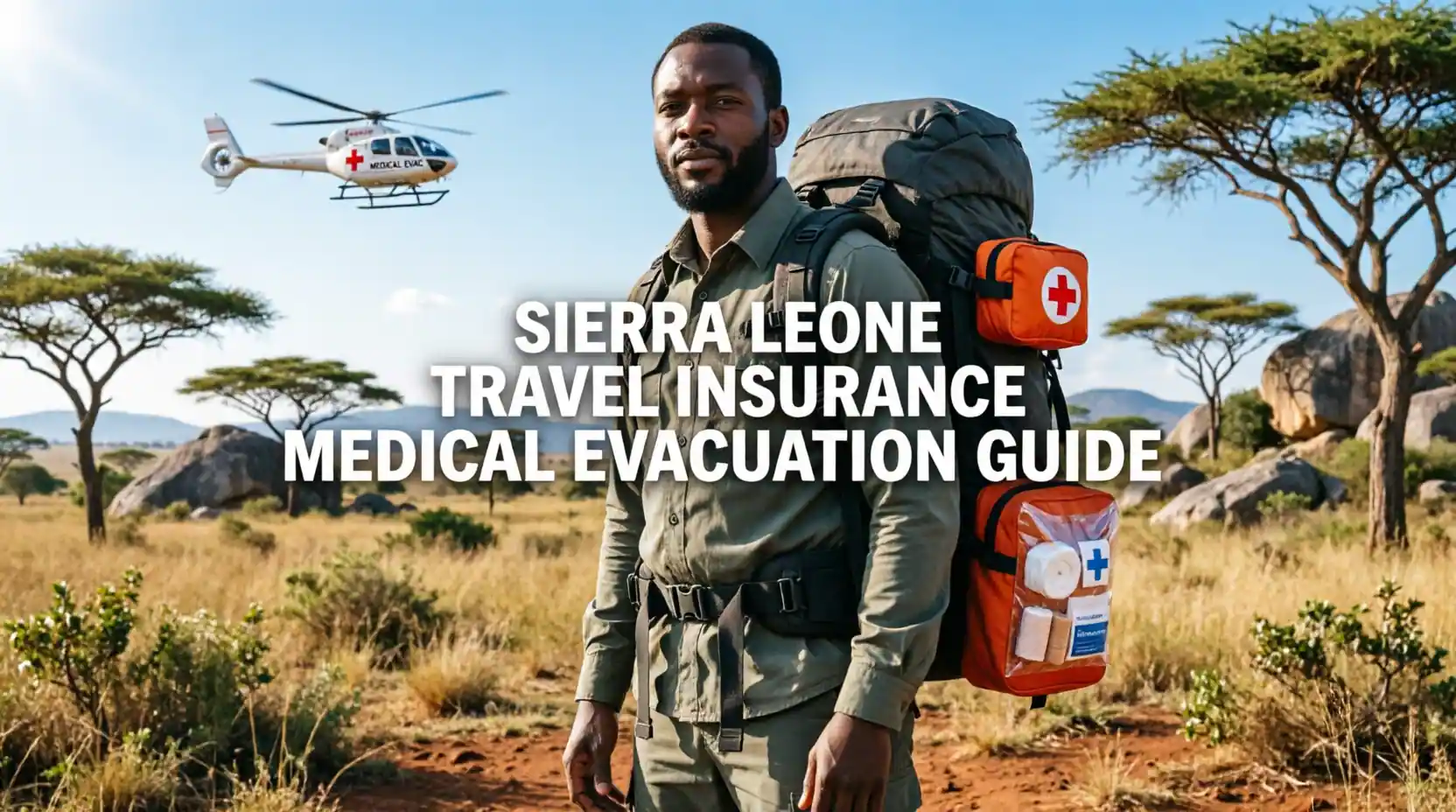
Sierra Leone Travel Insurance Why Medical Evacuation Coverage Matters for Remote Trips 2026
Sierra Leone offers adventurous travelers incredible opportunities to explore pristine rainforests, remote villages, and untouched beaches. However, venturing into the country's bush regions carries unique risks that standard travel insurance often fails to address.
Medical evacuation coverage represents the most critical component of travel insurance for Sierra Leone. Remote areas lack advanced medical facilities, making emergency transport to Freetown or international hospitals essential for serious conditions.
This comprehensive 2026 guide explains why medical evacuation insurance is non-negotiable for bush travel in Sierra Leone. You will learn about coverage requirements, recommended providers, costs, and how to prepare for emergencies in remote areas.
Whether you are trekking in the Loma Mountains, visiting rural communities, or exploring the Gola Rainforest, proper insurance protects your health and financial security. Understanding these requirements before departure prevents catastrophic outcomes.
Understanding Sierra Leone Healthcare Infrastructure

Sierra Leone's healthcare system faces significant challenges, particularly outside major urban centers. Freetown hosts the country's most advanced medical facilities, though these still lag behind international standards.
Connaught Hospital in Freetown serves as the primary referral center for serious medical conditions. However, resources remain limited, and specialized care often requires evacuation to neighboring countries or beyond.
Rural clinics and health posts provide basic care for common illnesses and injuries. These facilities lack diagnostic equipment, surgical capabilities, and medications for complex conditions.
Remote bush areas may have no formal healthcare infrastructure whatsoever. Travelers in these regions depend entirely on self-sufficiency or emergency evacuation for medical assistance.
Medical Facilities by Region
Freetown offers the best healthcare with several private clinics alongside public hospitals. These facilities handle routine emergencies but may struggle with complex trauma or specialized conditions.
Provincial capitals like Bo, Kenema, and Makeni have district hospitals providing basic emergency care. These facilities can stabilize patients but often lack capacity for definitive treatment.
Rural health centers serve local populations with minimal resources. Travelers should not expect these facilities to manage serious medical emergencies or provide advanced diagnostics.
Remote bush locations typically have no medical infrastructure. Villages may have community health workers trained in basic first aid but nothing beyond initial stabilization.
Why Medical Evacuation Coverage Is Essential

Medical evacuation insurance covers emergency transport from remote locations to appropriate medical facilities. This coverage becomes critical when local healthcare cannot address serious conditions.
Evacuation methods include ground ambulances, air ambulances, and commercial medical escorts. Each option serves different scenarios and distance requirements.
Costs for medical evacuation from Sierra Leone range from 15000 to 100000 USD depending on destination and method. Without insurance, travelers face these expenses personally.
Time sensitivity makes pre-arranged evacuation coverage essential. Coordinating emergency transport during a crisis consumes precious time when minutes matter for patient outcomes.
Common Scenarios Requiring Evacuation
Severe malaria cases may require intensive care unavailable in rural Sierra Leone. Evacuation to Freetown or regional centers provides access to advanced treatment and monitoring.
Traumatic injuries from vehicle accidents, falls, or animal encounters often need surgical intervention. Remote locations lack operating theaters and surgical specialists.
Complications from tropical diseases like yellow fever, meningitis, or severe bacterial infections require specialized care beyond rural clinic capabilities.
Chronic condition exacerbations including heart attacks, strokes, or diabetic emergencies need immediate advanced care that remote areas cannot provide.
Ground Versus Air Evacuation Considerations
Ground evacuation works for conditions stable enough for road transport and destinations within reasonable driving distance. Ambulances in Sierra Leone vary widely in equipment and reliability.
Air evacuation becomes necessary for time-critical conditions, inaccessible locations, or destinations beyond practical ground transport range. Helicopters and fixed-wing aircraft serve different evacuation needs.
Weather conditions significantly impact air evacuation feasibility. Rainy season clouds and storms can delay flights for hours or days, affecting treatment timelines.
Insurance policies should specify which evacuation methods they cover and under what circumstances. Understanding these details prevents surprises during emergencies.
What Medical Evacuation Coverage Should Include

Comprehensive medical evacuation insurance for Sierra Leone requires specific coverage elements. Not all policies provide adequate protection for remote bush travel.
Minimum coverage should include emergency transport to the nearest appropriate medical facility. This may mean evacuation to Freetown rather than international destinations for initial stabilization.
Repatriation coverage handles transport to your home country once stabilized. This benefit addresses long-term recovery needs after initial emergency care.
24/7 assistance services coordinate evacuations, communicate with medical providers, and manage logistics during crises. This support proves invaluable when navigating foreign healthcare systems.
Coverage Limits and Financial Protection
Medical evacuation coverage should provide at least 100000 USD in benefits. This amount accommodates most evacuation scenarios from Sierra Leone to regional or international facilities.
Medical expense coverage should total at least 50000 USD for treatment costs. Evacuation and treatment expenses accumulate quickly in emergency situations.
Repatriation of remains coverage handles the sensitive and costly process of returning deceased travelers home. While morbid to consider, this protection shields families from enormous expenses.
Pre-existing condition coverage varies significantly between policies. Travelers with chronic health issues should seek policies explicitly covering their conditions or purchase supplemental coverage.
Geographic Coverage Considerations
Ensure your policy explicitly covers Sierra Leone and any neighboring countries you plan to visit. Some policies exclude specific regions or countries.
Remote area coverage proves essential for bush travel. Some policies limit evacuation benefits to areas accessible by standard transportation, excluding true wilderness locations.
Adventure activity coverage matters if your itinerary includes hiking, climbing, or other physical pursuits. Standard policies may exclude injuries from these activities.
Political evacuation coverage addresses emergencies arising from civil unrest or political instability. While Sierra Leone remains relatively stable, this benefit provides additional protection.
Recommended Insurance Providers for Sierra Leone Travel

Several international insurance companies specialize in coverage for remote travel and medical evacuation. Selecting reputable providers ensures reliable support during emergencies.
Global Rescue offers comprehensive medical evacuation and security extraction services. Their membership model provides unlimited evacuation benefits and 24/7 coordination support.
IMG Global provides travel medical insurance with strong evacuation coverage. Their Patriot and Global Medical plans suit various travel styles and durations.
Allianz Travel Insurance offers robust policies with medical evacuation benefits. Their OneTrip and AllTrips plans provide flexibility for different travel needs.
Specialized Adventure Travel Insurers
World Nomads caters specifically to adventure travelers with coverage for activities often excluded from standard policies. Their plans include medical evacuation and emergency assistance.
Seven Corners provides customizable travel medical insurance with evacuation options. Their Liaison and RoundTrip plans suit various traveler profiles.
Travelex Insurance Services offers comprehensive coverage including medical evacuation. Their Travel Select and Travel Basic plans provide different coverage levels.
Compare policies carefully before purchasing. Coverage limits, exclusions, and assistance services vary significantly between providers even for similar premium prices.
Evaluating Policy Quality
Read customer reviews focusing on claims payment experiences. A policy's value depends on the insurer's willingness to pay when emergencies occur.
Verify the assistance company's track record in West Africa. Regional expertise facilitates faster, more effective evacuations from Sierra Leone.
Check pre-authorization requirements for evacuation. Some policies require approval before transport, potentially delaying critical care.
Understand documentation requirements for claims. Clear procedures simplify reimbursement processes during stressful post-emergency periods.
Cost of Medical Evacuation Insurance for Sierra Leone

Travel insurance costs vary based on coverage levels, traveler age, trip duration, and pre-existing conditions. Understanding pricing helps budget appropriately for protection.
Basic travel medical insurance with evacuation coverage typically costs 4 to 8 percent of total trip expenses. A 3000 USD trip might require 120 to 240 USD in insurance premiums.
Comprehensive policies with higher evacuation limits cost 8 to 15 percent of trip expenses. Enhanced protection justifies higher premiums for remote travel.
Age significantly impacts pricing. Travelers over 65 may pay double or triple the premiums of younger travelers for identical coverage levels.
Sample Pricing Scenarios
A 30-year-old traveler on a two-week Sierra Leone trip might pay 150 to 300 USD for comprehensive coverage including 100000 USD evacuation benefits.
A 50-year-old traveler on the same itinerary might pay 300 to 600 USD for equivalent coverage due to increased health risk assessments.
Annual multi-trip policies cost 400 to 1000 USD depending on coverage levels and traveler age. Frequent travelers benefit from these policies despite higher upfront costs.
Adventure sport riders add 20 to 50 percent to base premiums. These endorsements cover injuries from activities like hiking, climbing, or water sports.
Maximizing Value for Money
Bundle coverage for multiple travelers under family or group policies. These arrangements often provide discounts compared to individual policies.
Adjust coverage limits based on actual risk exposure. Remote bush travel warrants maximum evacuation coverage while urban itineraries may need less.
Consider deductibles carefully. Higher deductibles reduce premiums but increase out-of-pocket costs during claims. Balance affordability with financial protection.
Review existing insurance coverage before purchasing. Some credit cards or health plans include travel benefits that may supplement dedicated travel insurance.
How to Purchase and Document Your Coverage

Proper documentation of travel insurance proves essential during emergencies. Immigration officials, medical providers, and evacuation coordinators may request proof of coverage.
Purchase insurance before departure to ensure coverage begins on your travel start date. Last-minute purchases may exclude pre-existing conditions or face processing delays.
Print physical copies of your policy documents including coverage summaries, emergency contact numbers, and claim procedures. Digital copies on your phone provide backup but may fail without connectivity.
Carry your insurance card or membership ID separately from other documents. This ensures access to coverage information even if your main wallet is lost or stolen.
Essential Documentation Checklist
Policy summary showing coverage limits for medical expenses, evacuation, and repatriation. This document helps providers understand your benefits quickly.
24/7 emergency assistance phone numbers with international dialing codes. Save these in your phone and write them on paper as backup.
Claim forms and procedures for post-emergency reimbursement. Understanding these processes reduces stress during recovery periods.
Pre-existing condition waivers or medical questionnaires if applicable. These documents prove coverage eligibility for specific health issues.
Sharing Information with Travel Companions
Ensure travel companions know your insurance details and emergency contacts. Group coordination proves critical if you become incapacitated during emergencies.
Share digital copies of policy documents through cloud storage or messaging apps. This accessibility helps others assist you if needed.
Discuss evacuation preferences and decision-making authority with travel partners. Clear communication prevents delays during time-sensitive situations.
Provide emergency contact information to family members at home. They may need to coordinate with insurers or authorities if you cannot communicate.
Emergency Procedures for Remote Sierra Leone Travel

Understanding emergency procedures before traveling to remote Sierra Leone saves critical time during crises. Preparation and clear protocols improve outcomes significantly.
Establish communication plans for remote areas with limited connectivity. Satellite phones or messaging devices provide backup when cellular networks fail.
Identify evacuation assembly points and transportation options in advance. Knowing how to reach accessible locations accelerates emergency response.
Carry local emergency numbers alongside your insurance contacts. Sierra Leone emergency services include police (999), ambulance (116), and fire (117).
Activating Medical Evacuation Coverage
Contact your insurance assistance company immediately upon recognizing a medical emergency. Early notification facilitates faster coordination of care and transport.
Provide clear information about your location, condition, and available local resources. Detailed reports help coordinators determine appropriate evacuation methods.
Follow instructions from assistance professionals regarding immediate care and transport arrangements. Their expertise guides optimal emergency response.
Document all medical treatments, expenses, and communications for subsequent claims. Thorough records simplify reimbursement processes.
Coordinating with Local Authorities
Engage local health workers or village leaders when emergencies occur in remote areas. Their knowledge of terrain and resources aids evacuation planning.
Coordinate with Sierra Leone police or emergency services for ground transport assistance. Local authorities understand road conditions and available vehicles.
Inform your country's embassy or consulate about serious medical emergencies. They can provide additional support and liaise with local authorities.
Maintain calm communication during emergencies. Clear, factual information helps all parties coordinate effective responses.
Pre-Travel Health Preparation for Bush Trips

Proper health preparation reduces the likelihood of emergencies requiring evacuation. Prevention remains far preferable to crisis management in remote areas.
Consult a travel medicine specialist 6-8 weeks before departure. Professional guidance ensures appropriate vaccinations, medications, and health strategies.
Obtain required and recommended vaccinations including yellow fever, hepatitis A and B, typhoid, and meningitis. These protections prevent serious illnesses.
Secure malaria prophylaxis appropriate for Sierra Leone. Medications like atovaquone-proguanil, doxycycline, or mefloquine reduce malaria risk significantly.
Personal Medical Kit Essentials
Assemble a comprehensive medical kit including antidiarrheals, antibiotics, antiseptics, bandages, pain relievers, and personal medications. Self-sufficiency proves critical in remote areas.
Include water treatment supplies like purification tablets or filters. Safe drinking water prevents many common travel illnesses.
Pack insect repellent containing DEET and permethrin-treated clothing. These measures reduce mosquito bites and malaria risk.
Carry a satellite communication device for areas without cellular coverage. Devices like Garmin inReach or SPOT enable emergency messaging from remote locations.
Physical Fitness and Risk Assessment
Assess your physical fitness honestly before undertaking remote bush travel. Challenging terrain and limited medical support demand reasonable fitness levels.
Consider pre-existing health conditions when planning itineraries. Some conditions may warrant avoiding truly remote areas or ensuring enhanced evacuation coverage.
Train appropriately for planned activities including hiking, climbing, or extended walking. Physical preparation reduces injury risk and improves enjoyment.
Travel with companions when venturing into remote areas. Group travel provides mutual support and assistance during emergencies.
Common Mistakes to Avoid with Travel Insurance

Many travelers make critical errors when purchasing or using travel insurance for Sierra Leone. Avoiding these mistakes ensures adequate protection during emergencies.
Assuming domestic health insurance covers international travel represents a common and costly error. Most US health plans provide minimal or no coverage outside the country.
Underestimating evacuation costs leads to inadequate coverage limits. Sierra Leone evacuations often exceed 50000 USD, requiring substantial benefit amounts.
Failing to disclose pre-existing conditions voids coverage for related emergencies. Honesty during application ensures valid protection when needed most.
Purchase and Documentation Errors
Buying insurance after departure or after incidents occur eliminates coverage for those events. Purchase policies before travel begins for full protection.
Neglecting to carry physical documentation creates problems during emergencies. Digital copies may fail without connectivity or device functionality.
Not reading policy exclusions leads to surprise claim denials. Understand what activities, conditions, and scenarios your policy does not cover.
Assuming credit card travel insurance provides adequate evacuation coverage proves dangerous. These benefits often fall far short of remote travel requirements.
Emergency Response Mistakes
Delaying notification of insurance assistance companies wastes critical time. Early contact facilitates faster coordination of care and evacuation.
Attempting self-evacuation without professional guidance risks worsening conditions. Trained coordinators understand optimal transport methods and destinations.
Failing to document treatments and expenses complicates claims. Detailed records prove essential for reimbursement processes.
Not informing travel companions about insurance details hampers group response during emergencies. Shared knowledge improves coordination and outcomes.
Final Thoughts on Sierra Leone Travel Insurance

Medical evacuation coverage represents the most important investment for remote bush travel in Sierra Leone. The combination of limited healthcare infrastructure and challenging geography makes emergency transport essential for serious conditions.
Proper insurance protects both your health and financial security during adventures in West Africa. The relatively modest cost of comprehensive coverage pales against potential evacuation expenses.
Preparation before departure including health consultations, documentation organization, and emergency planning significantly improves outcomes during crises. Time invested in preparation saves lives during emergencies.
Sierra Leone rewards adventurous travelers with incredible experiences and authentic cultural connections. Responsible preparation including adequate insurance enables these adventures while managing inherent risks.
Embrace the adventure of remote Sierra Leone travel with confidence that proper medical evacuation coverage provides. Your preparation today protects your journey tomorrow.
0 Comments