.webp)
.webp)
Introduction to Djemila Ruins
Djemila represents one of the most spectacular Roman archaeological sites in all of North Africa.
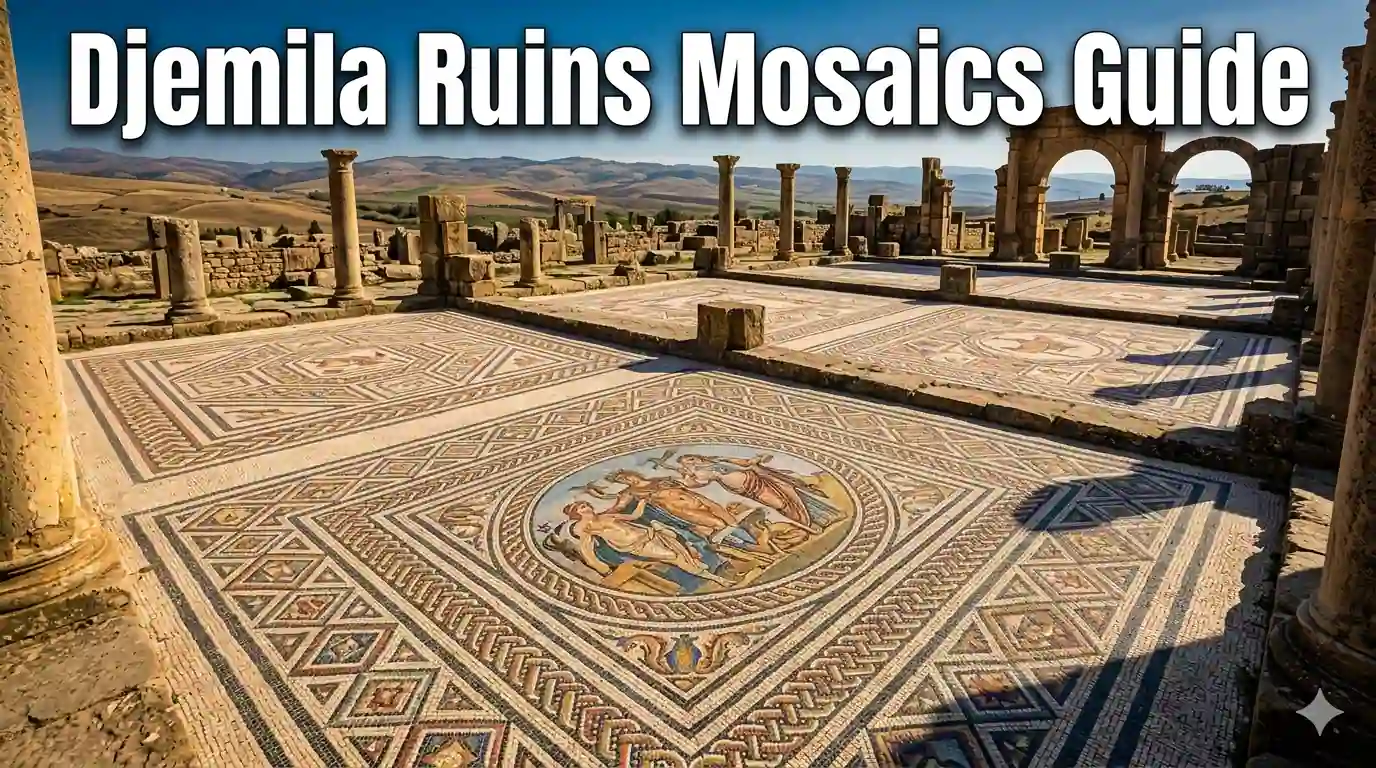
This UNESCO World Heritage Site showcases exceptionally preserved mosaics that rival any in the Mediterranean.
Located in the mountains of Algeria, ancient Cuicul reveals the grandeur of Roman provincial civilization.
The site's stunning mosaics depict mythological scenes, daily life, and intricate geometric patterns.
Exploring these hidden gems offers travelers a profound journey into antiquity and artistic mastery.
Where Is Djemila Located

Djemila sits in the mountains of northeastern Algeria approximately 30 kilometers from Setif city.
The archaeological site occupies a strategic plateau at 900 meters above sea level.
Ancient Romans chose this location for its defensible position and access to trade routes.
Modern visitors reach Djemila via road from Algiers, Constantine, or Setif.
The mountainous setting provides dramatic scenery complementing the ancient stone ruins.
How to Reach Djemila from Major Cities
From Algiers the journey takes approximately three and a half hours by car or bus.
Constantine offers a closer base at just two hours driving distance to the ruins.
Setif serves as the nearest major city with regular transportation connections to Djemila.
Private taxis and organized tours provide comfortable options for international travelers.
Public buses run daily though schedules may be limited on weekends and holidays.
What Is the Best Way to Get to Djemila
Renting a car provides maximum flexibility for exploring Djemila and surrounding areas.
Guided tours from Setif or Constantine include transportation and expert archaeological commentary.
Shared taxis called louage offer affordable transport from Setif to Djemila village.
Plan your visit during daylight hours as the site closes in late afternoon.
Consider combining Djemila with other Roman sites like Timgad for a comprehensive historical tour.
History of Ancient Cuicul
Roman Emperor Nerva founded Cuicul in 97 CE as a military colony for veteran soldiers.
The city flourished during the second and third centuries becoming a prosperous trading center.
Cuicul's strategic location facilitated commerce between coastal regions and interior highlands.
Christianity spread through the city in the fourth century leaving important religious monuments.
The site was abandoned after the Arab conquest in the seventh century and gradually forgotten.
Why Was Djemila Built in the Mountains
Mountain location provided natural defensive advantages against potential attacks and invasions.
Elevated position offered commanding views of surrounding valleys and approaching travelers.
Cooler highland climate proved more comfortable than hot coastal plains during summer months.
Access to fresh water sources and agricultural land supported the growing population.
Strategic placement along trade routes enabled control and taxation of commercial traffic.
When Was Djemila Abandoned
Gradual decline began in the fifth century with Vandal invasions disrupting stability.
Byzantine reconquest in the sixth century brought brief revival but could not restore former glory.
Arab conquest in the seventh century marked the final abandonment of the ancient city.
Local populations gradually relocated to more defensible positions in surrounding mountains.
The site remained largely undisturbed until French archaeological excavations began in 1909.
The Most Spectacular Mosaics at Djemila
Djemila's mosaics represent some of the finest examples of Roman artistic achievement in North Africa.
Vibrant colors and intricate details have survived remarkably well due to protective burial and dry climate.
Themes range from mythological narratives to scenes of daily life and elaborate geometric designs.
Master craftsmen used locally available stones and imported materials to create stunning visual effects.
Each mosaic tells a story revealing Roman culture, beliefs, and aesthetic preferences.
The Venus Mosaic Masterpiece
The Venus mosaic depicts the goddess of love emerging from ocean waves in exquisite detail.
Surrounding sea creatures and nymphs create a dynamic composition celebrating divine beauty.
Skilled artisans used tiny tesserae to achieve subtle color gradations in skin tones and water.
This masterpiece originally adorned a wealthy merchant's villa demonstrating prosperity and culture.
The Venus mosaic ranks among the most important Roman artworks discovered in Algeria.
Dionysus and the Four Seasons Mosaic
This remarkable mosaic portrays Dionysus god of wine surrounded by allegorical representations of seasons.
Each season appears as a bust with appropriate attributes like flowers, wheat, grapes, and bare branches.
Rich colors and three-dimensional effects showcase the exceptional talent of Roman mosaic artists.
The composition symbolizes agricultural abundance and the cyclical nature of time and harvests.
This mosaic decorated an important public building suggesting civic pride in artistic patronage.
The Hunt Mosaic Collection
Multiple hunting scenes depict wild animals, gladiatorial combat, and aristocratic leisure pursuits.
Dynamic compositions capture dramatic moments of action with remarkable anatomical precision.
Lions, leopards, bears, and boars appear in various states of pursuit and confrontation.
These mosaics reflect Roman fascination with spectacle, power, and domination over nature.
Private patrons commissioned hunt scenes to display wealth, courage, and imperial connections.
Must See Architectural Features
Beyond mosaics Djemila boasts impressive temples, theaters, baths, and public buildings.
The Severan Arch stands as a triumphal monument commemorating Emperor Septimius Severus.
Two forums reveal the evolution of Roman urban planning across different imperial periods.
The theater could accommodate thousands of spectators for dramatic performances and public gatherings.
Christian basilicas demonstrate the religious transformation of the city in late antiquity.
The Temple of Capitoline Jupiter
This imposing temple dominated the old forum dedicated to Rome's supreme deity Jupiter.
Corinthian columns and elaborate pediment decorations showcased imperial religious architecture.
The temple's elevated position emphasized its importance in Roman civic and spiritual life.
Remnants of the cella reveal where the cult statue once stood receiving offerings and prayers.
Architectural details demonstrate the wealth and ambition of Djemila's Roman inhabitants.
The Grand Baths Complex
Extensive bath facilities provided hygiene, relaxation, and social interaction for ancient citizens.
Hypocaust heating systems circulated warm air beneath floors maintaining comfortable temperatures.
Multiple rooms served different functions from cold plunges to hot steam chambers.
Decorative mosaics and marble revetments created luxurious atmospheres for bathers.
The baths represent sophisticated Roman engineering and commitment to public welfare.
Best Time to Visit Djemila
Spring from April to June offers ideal weather with mild temperatures and blooming wildflowers.
Autumn between September and November provides similar comfortable conditions with fewer tourists.
Summer months can be hot though mountain elevation moderates extreme heat compared to lowlands.
Winter brings cold temperatures and occasional snow creating atmospheric but challenging visiting conditions.
Early morning visits allow you to explore in peaceful solitude before tour groups arrive.
What Are the Opening Hours
Djemila archaeological site typically opens at 9 AM and closes at 5 PM during winter months.
Summer hours extend to 6 PM providing more time for thorough exploration of the ruins.
The on-site museum follows similar schedules though may close during midday prayer times.
Friday afternoons sometimes have reduced hours respecting the Islamic day of rest.
Always verify current opening times before your visit as schedules can change seasonally.
How Much Time Should You Allocate
Plan at least three to four hours to properly appreciate the main archaeological areas.
Half-day visits allow time for the museum, ruins, and photography at key viewpoints.
Full-day exploration enables detailed examination of mosaics and quieter contemplation of history.
Photography enthusiasts may want additional time to capture changing light on stone and mosaics.
Guided tours typically last two to three hours covering highlights with expert commentary.
Entrance Fees and Visitor Information
Entrance fees for international visitors cost approximately 600 Algerian dinars for adults.
Student discounts are available with valid international student identification cards.
Children under twelve years old often enter free or at significantly reduced rates.
Combined tickets may include access to both the archaeological site and museum collections.
Guided tour services cost extra but provide invaluable historical context and interpretation.
What Facilities Are Available On Site
A small museum displays the finest mosaics in climate-controlled protective environments.
Restroom facilities are located near the entrance though supplies may be limited.
Limited shade exists throughout the site so bring sun protection during summer visits.
A small cafe or vendor may offer refreshments though bringing water is strongly recommended.
Parking areas accommodate cars and buses though spaces fill quickly during peak tourist seasons.
Is a Guide Necessary for Visiting Djemila
While not mandatory guides significantly enhance understanding of the site's history and significance.
Knowledgeable guides point out details and mosaics you might otherwise overlook during self-guided tours.
Local guides speak French and Arabic with some offering English interpretation services.
Audio guides are rarely available so human guides provide the best interpretive experience.
Negotiate guide fees in advance and confirm the duration and scope of the tour.
Photography Tips for Mosaics and Ruins
Morning and late afternoon light creates dramatic shadows highlighting architectural details and textures.
Overcast days actually benefit mosaic photography by reducing glare and harsh reflections.
Polarizing filters help manage bright sunlight and enhance color saturation in stone and tesserae.
Wide-angle lenses capture the grandeur of temples and theaters while macro lenses reveal mosaic details.
Respect any photography restrictions especially for delicate mosaics that may be light-sensitive.
Best Spots for Photographing Mosaics
The museum provides optimal conditions for mosaic photography with controlled lighting and protection.
In-situ mosaics in the House of Bacchus offer atmospheric context with original architectural settings.
Climb to elevated viewpoints for panoramic shots showing the relationship between ruins and landscape.
Close-up details of tesserae patterns reveal the incredible craftsmanship of ancient artisans.
Include human figures in compositions to provide scale and sense of the site's magnitude.
Protecting Ancient Mosaics While Photographing
Never touch mosaic surfaces as oils from skin can damage ancient materials over time.
Stay on designated walkways and respect barriers protecting fragile archaeological remains.
Avoid using flash photography which can accelerate deterioration of pigments and materials.
Do not move stones or attempt to clean areas to improve your photographic composition.
Follow all posted guidelines and instructions from site custodians and archaeological staff.
The Djemila Museum Collection
The on-site museum houses the most spectacular mosaics removed from original locations for preservation.
Climate control and protective measures ensure these irreplaceable artworks survive for future generations.
Informative labels in French and Arabic provide context though English translations are sometimes limited.
Museum displays organize mosaics thematically showing mythological, daily life, and decorative examples.
Allow at least one hour to appreciate the museum's exceptional collection properly.
Highlights of the Museum Collection
The Banquet Scene mosaic depicts elaborate Roman dining customs with remarkable detail and color.
Gladiatorial combat mosaics reveal the brutal entertainment that captivated ancient audiences.
Agricultural scenes show farming practices, harvest activities, and rural life in Roman North Africa.
Geometric patterns demonstrate mathematical sophistication and aesthetic preferences for ordered design.
Inscriptions and dedicatory texts provide historical information about patrons and dates of creation.
Museum Visiting Tips
Visit the museum first to understand the site's significance before exploring the ruins.
Photography may be restricted in museum galleries so check policies upon entry.
Museum staff can answer questions and provide additional historical information about specific mosaics.
Air conditioning provides relief from summer heat making the museum a good midday destination.
Combine museum visit with site exploration for comprehensive understanding of ancient Cuicul.
Practical Travel Tips for Djemila
Wear sturdy walking shoes with good traction as ancient stone surfaces can be uneven and slippery.
Bring sun protection including hat, sunscreen, and sunglasses as shade is limited throughout the site.
Carry sufficient water especially during summer months when temperatures can rise significantly.
Light layers allow adjustment to temperature variations between morning, midday, and afternoon.
Cash in Algerian dinars is essential as credit cards are rarely accepted at remote archaeological sites.
What to Bring for Your Visit
Comfortable walking shoes with closed toes protect feet from sharp stones and uneven surfaces.
Backpack or bag to carry water, snacks, camera, sun protection, and guidebook or maps.
Notebook and pen for recording observations, guide commentary, and personal reflections.
Binoculars help examine architectural details and distant features of the expansive archaeological site.
Small first aid kit with bandages, antiseptic, and personal medications for minor injuries or ailments.
Safety Considerations at the Site
Watch your step constantly as loose stones and uneven surfaces pose tripping hazards throughout.
Stay hydrated and recognize signs of heat exhaustion especially during summer afternoon visits.
Keep valuables secure and maintain awareness of your belongings in crowded tourist areas.
Respect all barriers and warning signs as unstable ruins can collapse without notice.
Travel with companions when possible and inform someone of your itinerary when visiting remote sites.
Nearby Attractions and Extensions
Setif city offers modern amenities, museums, and access to additional Roman archaeological remains.
Timgad UNESCO World Heritage Site lies approximately three hours south representing another spectacular Roman city.
The Gorges of Guergour provide stunning natural scenery and opportunities for hiking and outdoor adventure.
Traditional Berber villages in surrounding mountains offer cultural experiences and authentic Algerian hospitality.
Constantine city with its dramatic bridges and Ottoman heritage makes an excellent base for regional exploration.
Combining Djemila with Other Roman Sites
Timgad represents the best-preserved Roman grid-plan city with triumphal arch and theater intact.
Lambaesis features military installations and the largest Roman camp in North Africa.
Hippo Regius near Annaba showcases coastal Roman ruins associated with Saint Augustine.
A multi-day itinerary visiting multiple sites reveals the extent of Roman civilization in Algeria.
Each site offers unique perspectives on different aspects of Roman provincial life and architecture.
Cultural Experiences in the Region
Local markets in Setif and surrounding towns offer traditional crafts, textiles, and regional foods.
Berber music and dance performances celebrate indigenous cultural heritage of the Kabylie mountains.
Traditional Algerian cuisine including couscous, tagines, and mint tea enriches your travel experience.
Artisan workshops demonstrate ancient crafts like pottery, weaving, and metalworking still practiced today.
Engaging with local communities provides contemporary context to the ancient ruins you explore.
Accommodation Options Near Djemila
Setif offers the widest range of hotels from budget to upscale accommodations for visitors.
Small guesthouses in Djemila village provide basic lodging though amenities are limited.
Constantine makes an excellent base with more tourist infrastructure and dining options.
Book accommodations in advance especially during peak tourist seasons and local holidays.
Consider staying multiple nights in the region to fully appreciate Djemila and surrounding attractions.
Best Places to Stay for Visiting Djemila
Setif hotels range from three-star establishments to modern business hotels with comfortable amenities.
Budget travelers find affordable options in family-run pensions and guesthouses throughout the region.
Upscale hotels in Constantine offer luxury accommodations with views of the dramatic gorge setting.
Rural guesthouses provide authentic experiences and opportunities to practice hospitality customs.
Verify amenities like hot water, heating, and reliable electricity especially in mountain villages.
Conclusion and Final Recommendations
Djemila stands as one of North Africa's most remarkable archaeological treasures awaiting discovery.
The exceptional mosaics reveal artistic mastery and cultural sophistication of ancient Roman civilization.
Plan your visit during spring or autumn for optimal weather and comfortable exploration conditions.
Allocate sufficient time to appreciate both the extensive ruins and the outstanding museum collection.
This hidden gem deserves recognition alongside Pompeii and other famous Roman sites throughout the Mediterranean.
0 Comments