.webp)
.webp)
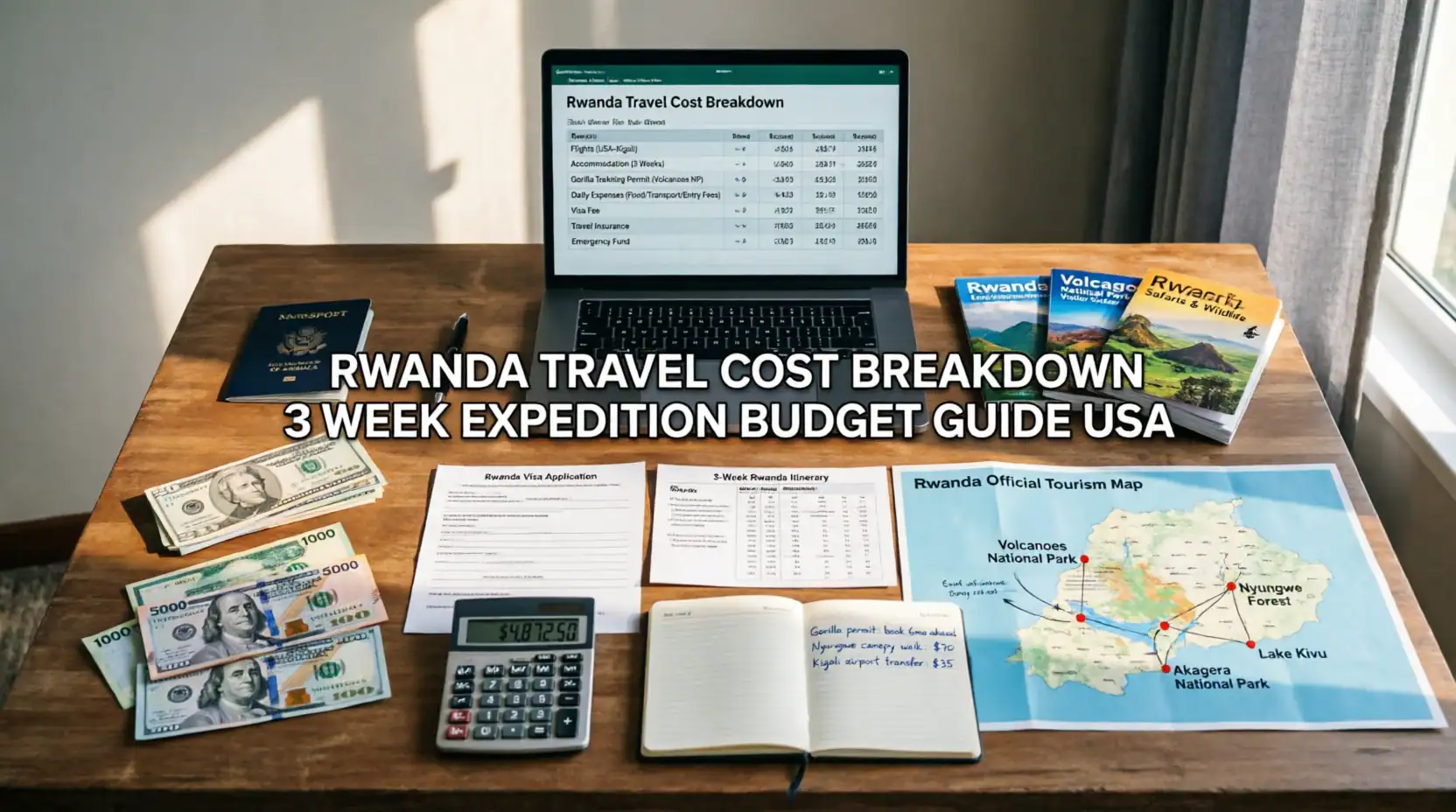
Understanding Rwanda Travel Costs for US Travelers
Planning a three-week Rwanda expedition from the United States requires comprehensive budget understanding. This East African nation offers extraordinary experiences though costs vary significantly based on travel style.
Rwanda's compact size enables efficient multi-destination travel reducing internal transportation expenses. However premium experiences like gorilla trekking represent significant budget investments.
US travelers benefit from Rwanda's stable economy and transparent pricing though currency exchange considerations affect overall costs. Understanding these factors enables realistic financial planning.
This comprehensive breakdown examines every cost category from international flights to daily expenses enabling American travelers to budget confidently for transformative Rwanda adventures.
Whether pursuing budget backpacking or luxury expedition styles this guide provides detailed cost estimates helping travelers allocate resources effectively across three unforgettable weeks.
International Flight Costs from USA to Rwanda

International airfare represents the largest single expense for US travelers visiting Rwanda. Understanding pricing patterns enables strategic booking decisions.
Round-trip flights from major US cities to Kigali International Airport typically range from twelve hundred to twenty-five hundred dollars economy class depending on season and advance booking.
Peak travel seasons including June through September and December through January command premium pricing. Booking three to six months ahead often secures better rates.
Connecting flights through European hubs like Brussels Frankfurt or Istanbul prove most common. Direct flights from the US to Rwanda do not currently exist requiring at least one connection.
Premium economy and business class options range from three thousand to eight thousand dollars round trip. These upgrades enhance comfort on long-haul segments though significantly increase total costs.
Flexible date searches and fare alert tools help identify optimal booking windows. Mid-week departures often cost less than weekend travel providing savings opportunities.
Rwanda Visa Requirements and Entry Costs

US citizens require visa authorization for Rwanda entry though the process remains straightforward and reasonably priced compared to many destinations.
Single-entry tourist visas cost fifty dollars and allow stays up to thirty days. Applications submit online through Rwanda's official immigration portal with three to five business day processing.
Visa on arrival remains available at Kigali International Airport though advance e-visa application reduces wait times and provides certainty before departure.
East Africa Tourist Visas costing one hundred dollars enable travel between Rwanda Uganda and Kenya. This multi-country option proves economical for regional itineraries though costs double single-country visas.
Yellow fever vaccination certificates prove mandatory for travelers arriving from countries with yellow fever risk. US citizens traveling directly from the United States typically do not require this documentation.
Passport validity must extend six months beyond intended departure date from Rwanda. Ensuring passport compliance prevents entry complications and additional renewal costs.
Accommodation Costs Across Budget Tiers

Rwanda accommodation spans diverse price points enabling travelers to match lodging choices with budget priorities and comfort preferences.
Budget guesthouses and hostels cost twenty to fifty dollars nightly featuring basic amenities shared facilities and central locations. These options suit backpackers and cost-conscious travelers.
Mid-range hotels and lodges range from eighty to two hundred dollars nightly offering private rooms en-suite bathrooms and enhanced services. This tier balances comfort and value effectively.
Luxury eco-lodges and boutique hotels cost two hundred fifty to six hundred dollars nightly featuring premium amenities exceptional service and prime locations. These properties deliver unforgettable experiences though represent significant budget investments.
Volcanoes National Park accommodations command premium pricing due to limited capacity and gorilla trekking demand. Booking months ahead proves essential regardless of budget tier.
Multi-night stays at single properties often qualify for discounts. Negotiating extended stay rates with lodges can reduce per-night costs significantly.
Gorilla Trekking and Premium Activity Costs

Gorilla trekking permits represent Rwanda's most significant single activity expense though they fund critical conservation efforts and community development.
Volcanoes National Park gorilla permits cost fifteen hundred dollars per person for foreign non-residents. This fee includes park entry guide services and one hour with habituated gorilla families.
Golden monkey trekking permits cost one hundred dollars providing access to these endangered primates in bamboo forests. This activity proves less expensive while equally rewarding.
Nyungwe Forest chimpanzee trekking permits cost ninety dollars with additional canopy walk experiences costing sixty dollars. These activities showcase Rwanda's rainforest biodiversity.
Akagera National Park game drives cost fifty to one hundred dollars depending on duration and vehicle type. Private safaris cost more though provide customized wildlife viewing.
Cultural experiences including village visits traditional dance performances and craft workshops typically cost twenty to fifty dollars. These activities support community tourism initiatives.
Daily Food and Dining Expenses

Rwanda's culinary scene offers diverse options spanning local eateries to international cuisine with costs reflecting this variety.
Local restaurants serving Rwandan cuisine cost five to fifteen dollars per meal. Dishes like isombe cassava leaves with peanut sauce and brochettes grilled meat skewers provide authentic affordable dining.
Mid-range restaurants featuring international cuisine cost fifteen to thirty-five dollars per meal. These establishments cater to tourists while maintaining reasonable pricing.
Luxury lodge dining experiences cost forty to eighty dollars per meal though many accommodations include meals in room rates. All-inclusive packages simplify budgeting for premium properties.
Bottled water costs one to two dollars while fresh juices and local beverages range from two to five dollars. Carrying reusable bottles with purification capabilities reduces ongoing beverage expenses.
Grocery shopping at local markets enables budget-conscious travelers to prepare simple meals. Fresh produce meats and staples prove affordable though kitchen access varies by accommodation.
Internal Transportation and Ground Logistics

Rwanda's compact geography enables efficient internal travel though transportation costs vary significantly based on mode and comfort preferences.
Private driver and vehicle rental costs one hundred to two hundred dollars daily including fuel and driver fees. This option provides maximum flexibility for multi-destination itineraries.
Group tours and shared transfers cost fifty to one hundred dollars daily depending on itinerary and group size. These options reduce per-person costs though limit scheduling flexibility.
Public buses and shared taxis cost five to twenty dollars between major destinations. These budget options suit independent travelers though require patience and local knowledge.
Motorcycle taxis called moto-taxis cost two to ten dollars for short urban trips. These prove convenient for city navigation though require negotiation and safety awareness.
Domestic flights within Rwanda remain limited though charter options exist for remote destinations. These services cost several hundred dollars and suit time-constrained itineraries.
Travel Insurance and Health Preparation Costs

Comprehensive travel insurance proves essential for Rwanda expeditions though costs vary based on coverage levels and traveler demographics.
Travel insurance policies covering medical emergencies evacuation trip cancellation and baggage loss typically cost one hundred to four hundred dollars for three-week trips from the USA.
Medical evacuation coverage proves particularly important given Rwanda's remote destinations. Policies including air ambulance services provide critical protection though increase premiums.
Pre-trip medical consultations and vaccinations cost two hundred to five hundred dollars depending on insurance coverage and required immunizations. Travel medicine clinics provide personalized recommendations.
Malaria prophylaxis medications cost fifty to one hundred fifty dollars for three-week supplies depending on prescription choices. Consulting travel medicine specialists ensures appropriate selections.
Prescription medication costs vary widely though carrying adequate supplies in original containers prevents emergency replacement expenses abroad.
Currency Exchange and Payment Method Considerations

Understanding Rwanda's currency landscape enables efficient financial management and minimizes transaction costs during three-week expeditions.
Rwandan francs serve as the local currency though US dollars are widely accepted particularly for tourism services. Exchange rates typically range from one thousand to one thousand three hundred francs per dollar.
Currency exchange at Kigali airport offers convenience though rates prove less favorable than banks or authorized exchange bureaus in the city. Exchanging minimal amounts at arrival suffices for initial expenses.
ATMs in Kigali and major towns dispense Rwandan francs using international debit and credit cards. Withdrawal fees typically range from three to five dollars plus foreign transaction charges.
Credit cards including Visa and Mastercard are accepted at hotels lodges and upscale restaurants though cash remains essential for markets local transport and rural areas.
Notifying banks of travel plans before departure prevents card blocks triggered by foreign transactions. This simple step avoids inconvenient payment disruptions during expeditions.
Tipping Guidelines and Service Gratuities

Understanding Rwanda's tipping culture enables appropriate appreciation for services while managing ongoing expense expectations during three-week journeys.
Tour guides and drivers typically receive ten to fifteen dollars daily per guest for exceptional service. Group tipping pools simplify distribution among staff members.
Lodge and hotel staff appreciate tips for housekeeping porters and restaurant service though not mandatory. Five to ten dollars daily for housekeeping proves appropriate at mid-range and luxury properties.
Restaurant tipping follows international norms with ten to fifteen percent for good service though some establishments include service charges. Checking bills prevents double tipping.
Gorilla trekking rangers and porters deserve recognition for their expertise and assistance. Ten to twenty dollars per trekker for porters and fifteen to thirty dollars for lead rangers proves appropriate.
Cultural sensitivity regarding tipping includes offering gratuities discreetly and respecting refusals. Some community-based initiatives prefer donations to collective funds rather than individual tips.
Sample 3-Week Budget Scenarios for US Travelers

Creating realistic budget scenarios enables US travelers to plan Rwanda expeditions matching financial capacity and experience preferences.
Budget expedition scenarios total approximately three thousand five hundred to five thousand dollars excluding international flights. This includes budget accommodation local dining public transport and selective premium activities.
Mid-range expedition scenarios range from six thousand to ten thousand dollars excluding international flights. This tier balances comfort and value with mid-range lodging mixed dining and key premium experiences including gorilla trekking.
Luxury expedition scenarios cost twelve thousand to twenty-five thousand dollars excluding international flights. This tier features premium lodges private transportation gourmet dining and comprehensive premium activity access.
Emergency reserves of fifteen to twenty percent above projected costs accommodate unexpected expenses opportunities or currency fluctuations. Financial buffers reduce stress during extended travel.
Cost-saving strategies include traveling shoulder seasons booking accommodations with meal packages sharing private transport costs and prioritizing must-have experiences over optional add-ons.
Money-Saving Strategies for Rwanda Expeditions
Strategic planning enables US travelers to maximize Rwanda experiences while managing costs effectively across three-week expeditions.
Booking gorilla permits and premium accommodations six to twelve months ahead secures availability and sometimes better rates than last-minute arrangements. Early planning proves particularly valuable for peak seasons.
Traveling during shoulder seasons April May and October November offers mild weather fewer crowds and often reduced pricing for accommodations and activities.
Combining destinations efficiently minimizes transportation costs and time. Rwanda's compact size enables multi-destination itineraries without excessive transit expenses.
Group travel with friends or joining small group tours reduces per-person costs for private transportation guides and sometimes accommodations. Shared expenses amplify budget efficiency.
Prioritizing must-have experiences like gorilla trekking while being selective about optional activities enables meaningful experiences within budget constraints. Quality over quantity often proves more rewarding.
Conclusion Confident Budgeting for Rwanda Adventures
Rwanda expeditions from the USA require thoughtful financial planning though the rewards of this extraordinary destination justify strategic investment. Understanding cost breakdowns enables confident budgeting across diverse travel styles.
From fifteen hundred dollar gorilla permits to five dollar local meals Rwanda offers experiences spanning budget to luxury. Matching expenditures with personal priorities creates fulfilling three-week journeys.
Strategic booking seasonal timing and cost-saving strategies enable memorable Rwanda adventures within various budget parameters. This compact nation delivers extraordinary value for prepared travelers.
Your Rwanda expedition investment supports conservation community development and sustainable tourism while creating transformative personal experiences. Confident budgeting enables focus on discovery rather than financial worry.
The Land of a Thousand Hills awaits US travelers ready to explore its wonders. With comprehensive cost understanding and strategic planning your three-week Rwanda adventure becomes an achievable extraordinary journey.
0 Comments