.webp)
.webp)
ORU Fogar Cuenca 2026: Tourism Development Assembly Guide
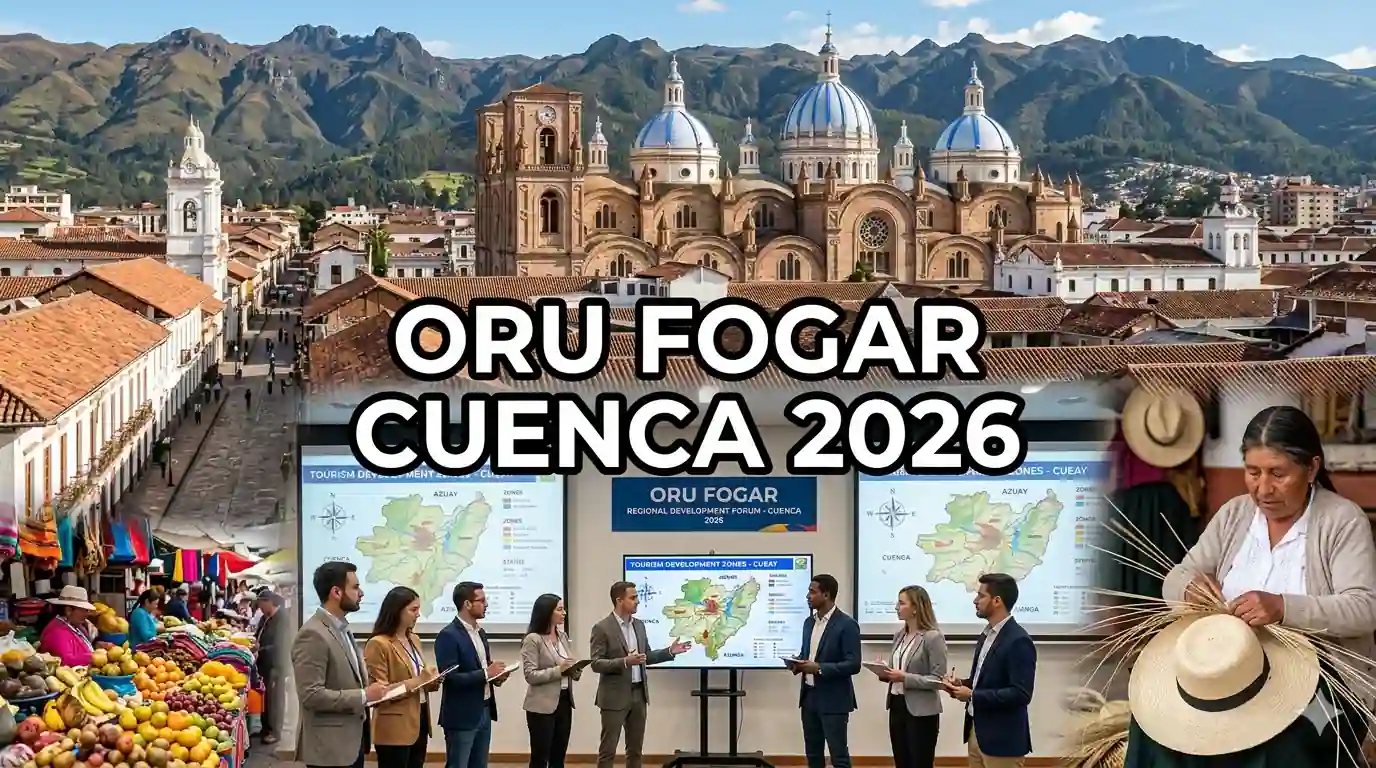
ORU Fogar Annual Assembly Cuenca (July 2-4, 2026): A Guide for Tourism Development Experts
In July 2026, the historic Andean city of Cuenca, Ecuador, will become the global epicenter for regional governance and sustainable tourism innovation. The Organization of United Regions (ORU Fogar) Annual Assembly, hosted by the Provincial Government of Azuay from July 2-4, 2026, brings together regional governments, tourism development experts, and policy leaders from across continents to address a critical question: How can tourism serve as a transformative driver of inclusive, sustainable regional economic development?
For tourism development professionals, this assembly represents an unparalleled opportunity to engage with cutting-edge research, share best practices, influence policy frameworks, and build partnerships that shape the future of responsible tourism worldwide. With Cuenca's designation as a UNESCO World Heritage Site providing a living laboratory for heritage tourism, and Ecuador's commitment to community-based models offering practical case studies, the 2026 Assembly promises both theoretical depth and actionable insights.
This comprehensive guide is designed specifically for tourism development experts: regional government officials, destination management organization leaders, sustainable tourism consultants, academic researchers, and international development practitioners. You'll find detailed information about the Assembly agenda, registration procedures, accommodation options, networking strategies, and how to maximize your participation in this pivotal gathering.
Understanding ORU Fogar: Context for Tourism Development Professionals

What Is ORU Fogar?
The Organization of United Regions (ORU Fogar) is a global network of regional governments committed to decentralized cooperation, territorial solidarity, and sustainable development. Founded to amplify the voice of subnational governments in international forums, ORU Fogar now represents regions across five continents, facilitating knowledge exchange, policy advocacy, and collaborative action on issues ranging from climate resilience to economic inclusion.
For tourism development experts, ORU Fogar's relevance lies in its unique position to influence regional policy frameworks. Unlike national governments or international organizations, regional authorities possess the proximity to implement place-based tourism strategies while maintaining the scale to coordinate cross-border initiatives, manage destination branding, and invest in infrastructure that serves both residents and visitors.
Why Tourism Now? The Evolution of ORU Fogar's Agenda
While ORU Fogar has historically addressed issues like food security, migration, and climate adaptation, tourism was incorporated relatively late into the organization's strategic priorities. The turning point came at the Third Regional Forum on Local Economic Development for Latin America and the Caribbean in Barranquilla, Colombia (2018), where ORU Fogar initiated collaboration with the Institute of Responsible Tourism and introduced Biosphere certification frameworks.
From 2021 onward, partnership with GLOCAL (Forum of Tourism and Economic Development) enabled deeper engagement with tourism issues, including sessions during the 5th World Forum on Local Economic Development amid the pandemic and the 6th Forum in 2025. The 2026 Cuenca Assembly marks a culmination of this trajectory: tourism is no longer a peripheral topic but the central focus, reflecting its growing recognition as a strategic lever for territorial transformation.
The GLOCAL Partnership: Integrating Global Insights with Local Action
The Assembly's Forum component—"Tourism and Regional Economic Development," scheduled for July 3-4—is co-organized with GLOCAL International Organization, reflecting a deliberate "glocal" methodology: thinking globally while acting locally. This approach acknowledges that while tourism challenges (overtourism, climate vulnerability, digital transformation) are universal, solutions must be tailored to specific territorial contexts, cultural values, and governance structures.
For experts, this partnership ensures the Assembly balances high-level policy discourse with practical implementation strategies, connecting international frameworks like the UN Sustainable Development Goals to on-the-ground projects in regions from the Andes to the Mediterranean.
Assembly Agenda: What Tourism Development Experts Need to Know

Key Dates and Structure
The ORU Fogar Annual Assembly in Cuenca follows a three-day structure designed to maximize both formal deliberation and informal networking:
- July 2, 2026: Executive Bureau of ORU Fogar (morning); Annual Assembly Opening Plenary (afternoon)
- July 3, 2026: GLOCAL Forum "Tourism and Regional Economic Development" – Day 1: Thematic sessions on policy frameworks, financing mechanisms, and community engagement
- July 4, 2026: GLOCAL Forum – Day 2: Case study presentations, working groups, and closing recommendations
- 👉 Choco Andino 2026: Ecuador Biosphere Reserve Guide
- 👉 FIFA World Cup 2026 Fan Zones: Rio & São Paulo Guide
- 👉 La Paz Mi Teleférico 2026: New Lines Transform Urban Tourism
Pro Tip: Tourism development experts should prioritize registration for the July 3-4 GLOCAL Forum sessions, where technical content and peer exchange are most concentrated. The July 2 Assembly proceedings focus more on organizational governance, though the opening plenary sets the strategic context for tourism discussions.
Core Themes for Tourism Professionals
The Assembly's tourism-focused agenda addresses several priority areas identified by ORU Fogar and GLOCAL as critical for regional development:
Theme 1: Tourism as a Driver of Territorial Development
Discussions will explore how regional governments can leverage tourism to diversify local economies, create quality employment, and stimulate investment in infrastructure. Key questions include:
- How can tourism value chains be designed to maximize local economic retention?
- What governance models best coordinate public, private, and community stakeholders?
- How do regions measure tourism's contribution to broader development indicators beyond visitor numbers?
- 👉 Choco Andino 2026: Ecuador Biosphere Reserve Guide
- 👉 FIFA World Cup 2026 Fan Zones: Rio & São Paulo Guide
- 👉 La Paz Mi Teleférico 2026: New Lines Transform Urban Tourism
Theme 2: Social Cohesion and Inclusive Tourism
Recognizing tourism's potential to either exacerbate or reduce inequality, sessions will address strategies for ensuring benefits reach marginalized communities, indigenous populations, and rural areas. Topics include:
- Community-based tourism models that empower local decision-making
- Skills development programs linking tourism employment to career pathways
- Gender equity initiatives in tourism entrepreneurship and leadership
- 👉 Choco Andino 2026: Ecuador Biosphere Reserve Guide
- 👉 FIFA World Cup 2026 Fan Zones: Rio & São Paulo Guide
- 👉 La Paz Mi Teleférico 2026: New Lines Transform Urban Tourism
Theme 3: Cultural and Natural Heritage Enhancement
With Cuenca serving as a UNESCO World Heritage Site, the Assembly will examine how regions can protect and leverage heritage assets for sustainable tourism. Focus areas include:
- Conservation financing mechanisms that link tourism revenue to heritage preservation
- Interpretive strategies that deepen visitor understanding while respecting cultural integrity
- Balancing accessibility with authenticity in heritage tourism experiences
- 👉 Choco Andino 2026: Ecuador Biosphere Reserve Guide
- 👉 FIFA World Cup 2026 Fan Zones: Rio & São Paulo Guide
- 👉 La Paz Mi Teleférico 2026: New Lines Transform Urban Tourism
Theme 4: The Qhapaq Ñan (Inca Trail) Project Launch
A highlight of the Assembly will be the inauguration of the Qhapaq Ñan project, an initiative showcasing ancestral Andean heritage as a catalyst for sustainable tourism and regional identity. This transnational corridor—spanning six South American countries—offers a compelling case study in:
- Cross-border tourism product development
- Indigenous knowledge integration into destination management
- Infrastructure planning that serves both tourism and local mobility needs
- 👉 Choco Andino 2026: Ecuador Biosphere Reserve Guide
- 👉 FIFA World Cup 2026 Fan Zones: Rio & São Paulo Guide
- 👉 La Paz Mi Teleférico 2026: New Lines Transform Urban Tourism
Session Formats for Expert Engagement
The GLOCAL Forum employs diverse formats to facilitate meaningful participation:
- Keynote presentations: Leading researchers and practitioners share evidence-based insights on tourism policy and practice
- Panel discussions: Multi-stakeholder dialogues exploring tensions and synergies in regional tourism development
- Case study showcases: Regional governments present concrete projects with measurable outcomes
- Working groups: Collaborative sessions developing policy recommendations or action plans
- Poster sessions: Visual presentations of research findings or innovative approaches
- Field visits: Optional excursions to Cuenca's heritage sites or community tourism initiatives
- 👉 Choco Andino 2026: Ecuador Biosphere Reserve Guide
- 👉 FIFA World Cup 2026 Fan Zones: Rio & São Paulo Guide
- 👉 La Paz Mi Teleférico 2026: New Lines Transform Urban Tourism
Registration and Participation: Practical Steps for Experts

Who Should Attend?
The Assembly targets professionals whose work intersects with regional tourism development:
- Regional government officials: Tourism directors, economic development managers, planning staff
- Destination management organizations: CEOs, marketing leads, sustainability coordinators
- International development practitioners: UNDP, ILO, World Bank staff working on tourism projects
- Academic researchers: Scholars studying tourism economics, heritage management, or regional policy
- Private sector leaders: Responsible tourism operators, impact investors, technology providers
- Community representatives: Indigenous leaders, local entrepreneurs, civil society advocates
- 👉 Choco Andino 2026: Ecuador Biosphere Reserve Guide
- 👉 FIFA World Cup 2026 Fan Zones: Rio & São Paulo Guide
- 👉 La Paz Mi Teleférico 2026: New Lines Transform Urban Tourism
Registration Process
Registration for the ORU Fogar Annual Assembly typically opens 3-4 months before the event. Based on previous assemblies, expect the following steps:
- Monitor official channels: Check the ORU Fogar website (regionsunies-fogar.org) and social media (@ORUFOGAR) for registration announcements
- Complete online form: Provide professional details, institutional affiliation, and areas of expertise
- Select participation type: Options may include full Assembly access, GLOCAL Forum only, or virtual attendance
- Submit supporting documentation: Some categories may require letters of institutional support or professional credentials
- Pay registration fee: Fees vary by participant category; early-bird discounts and waivers for developing-region representatives are often available
- Receive confirmation: Upon approval, you'll receive logistical details, preliminary agenda, and networking tools
Important: Registration capacity may be limited to ensure quality interaction. Apply early, especially if requesting financial assistance or presenting a case study.
Visa and Travel Requirements for Ecuador
International attendees must plan for entry requirements:
- Passport validity: Ensure at least 6 months remaining beyond your travel dates
- Visa policy: Citizens of many countries (including the U.S., Canada, EU, UK) receive 90-day visa-free entry for tourism/business; verify your nationality's status with Ecuadorian consulates
- Entry documentation: Prepare proof of onward travel, accommodation confirmation, and sufficient funds
- Health requirements: Yellow fever vaccination certificate required if arriving from endemic countries; routine vaccinations recommended
- Travel insurance: Strongly advised for medical coverage and trip protection
- 👉 Choco Andino 2026: Ecuador Biosphere Reserve Guide
- 👉 FIFA World Cup 2026 Fan Zones: Rio & São Paulo Guide
- 👉 La Paz Mi Teleférico 2026: New Lines Transform Urban Tourism
Pro Tip: If your participation is officially sponsored by a regional government or international organization, request a formal invitation letter from ORU Fogar or the Provincial Government of Azuay to facilitate visa processing.
Accommodation and Logistics in Cuenca

Why Cuenca? The Strategic Value of the Host City
Cuenca's selection as host is itself a case study in heritage tourism and regional development. Designated a UNESCO World Heritage Site in 1999, the city exemplifies successful preservation of colonial architecture alongside vibrant contemporary culture. For tourism experts, Cuenca offers:
- Living laboratory: Observe firsthand how heritage conservation, community engagement, and tourism management intersect
- Andean context: Understand tourism development in mountainous, culturally rich regions facing climate and economic transitions
- Accessibility: Well-connected via Mariscal Lamar International Airport (CUE) with flights from Quito, Guayaquil, and limited international routes
- Cost efficiency: Lower accommodation and dining costs compared to major global conference destinations
- 👉 Choco Andino 2026: Ecuador Biosphere Reserve Guide
- 👉 FIFA World Cup 2026 Fan Zones: Rio & São Paulo Guide
- 👉 La Paz Mi Teleférico 2026: New Lines Transform Urban Tourism
Accommodation Options for Conference Attendees
Cuenca offers diverse lodging suited to professional travelers:
Historic Center Hotels (Walking Distance to Venues):
- Mansión Alcázar: Boutique hotel in restored colonial building; upscale amenities; $120-200/night
- Hotel Carvallo: Heritage property with conference facilities; mid-range pricing; $80-140/night
- Hostal La Merced: Budget-friendly option with authentic character; $40-70/night
- 👉 Choco Andino 2026: Ecuador Biosphere Reserve Guide
- 👉 FIFA World Cup 2026 Fan Zones: Rio & São Paulo Guide
- 👉 La Paz Mi Teleférico 2026: New Lines Transform Urban Tourism
Modern District Hotels (Short Taxi Ride):
- Huayna Capac: Business-oriented hotel with reliable WiFi and workspaces; $90-150/night
- Best Western Plus Cuenca: International brand standards; meeting rooms available; $100-160/night
- 👉 Choco Andino 2026: Ecuador Biosphere Reserve Guide
- 👉 FIFA World Cup 2026 Fan Zones: Rio & São Paulo Guide
- 👉 La Paz Mi Teleférico 2026: New Lines Transform Urban Tourism
Booking Strategy: Reserve accommodations early—July is peak season in Cuenca due to festivals and favorable weather. Many hotels offer conference rates for ORU Fogar participants; inquire when booking.
Getting Around Cuenca
- Walking: The historic center is compact and pedestrian-friendly; ideal for attendees staying centrally
- Taxis: Abundant and affordable; use official taxi stands or apps like Cabify for safety
- Buses: Local system is inexpensive but may be challenging for non-Spanish speakers
- Rental cars: Generally unnecessary for conference activities; parking in the historic center is limited
- 👉 Choco Andino 2026: Ecuador Biosphere Reserve Guide
- 👉 FIFA World Cup 2026 Fan Zones: Rio & São Paulo Guide
- 👉 La Paz Mi Teleférico 2026: New Lines Transform Urban Tourism
Maximizing Your Professional Experience at the Assembly

Pre-Event Preparation
To derive maximum value from your participation:
- Review background materials: Study ORU Fogar's previous tourism publications, GLOCAL Forum reports, and Cuenca's tourism strategy documents
- Define objectives: Clarify what you hope to learn, share, or connect on (e.g., policy insights, partnership opportunities, case study feedback)
- Prepare your pitch: Develop a concise introduction to your work and interests for networking conversations
- Identify priority sessions: Review the preliminary agenda to target discussions most relevant to your expertise
- Connect in advance: Use ORU Fogar's networking platforms or LinkedIn to reach out to fellow attendees before arrival
- 👉 Choco Andino 2026: Ecuador Biosphere Reserve Guide
- 👉 FIFA World Cup 2026 Fan Zones: Rio & São Paulo Guide
- 👉 La Paz Mi Teleférico 2026: New Lines Transform Urban Tourism
During the Assembly: Engagement Strategies
Active participation enhances learning and visibility:
- Ask thoughtful questions: Contribute to panels by connecting presentations to your regional context or challenging assumptions constructively
- Share your experience: Volunteer insights from your work during working groups or informal discussions
- Document key takeaways: Take notes on innovative approaches, policy tools, or contacts worth following up
- Attend social events: Receptions, cultural activities, and field visits often yield valuable informal connections
- Respect diverse perspectives: Engage colleagues from different regions and sectors with curiosity and openness
- 👉 Choco Andino 2026: Ecuador Biosphere Reserve Guide
- 👉 FIFA World Cup 2026 Fan Zones: Rio & São Paulo Guide
- 👉 La Paz Mi Teleférico 2026: New Lines Transform Urban Tourism
Post-Event Follow-Up
The Assembly's impact extends beyond Cuenca:
- Review outputs: Monitor ORU Fogar's publication of Assembly recommendations, policy briefs, or case study compilations
- Nurture connections: Follow up with new contacts via email or professional networks within two weeks
- Apply insights: Integrate relevant strategies or frameworks into your regional tourism planning
- Share knowledge: Brief colleagues or stakeholders on key learnings to amplify the Assembly's reach
- Stay engaged: Participate in ORU Fogar's ongoing working groups or future events to maintain momentum
- 👉 Choco Andino 2026: Ecuador Biosphere Reserve Guide
- 👉 FIFA World Cup 2026 Fan Zones: Rio & São Paulo Guide
- 👉 La Paz Mi Teleférico 2026: New Lines Transform Urban Tourism
Thematic Deep Dives: Content Highlights for Experts

Sustainable Tourism Certification and Standards
Building on ORU Fogar's collaboration with the Institute of Responsible Tourism, the Assembly will likely address certification frameworks like Biosphere Tourism, which aligns destination management with the UN Sustainable Development Goals. For experts, key considerations include:
- Implementation challenges: How can regions adapt global standards to local capacities and priorities?
- Market differentiation: Does certification translate to competitive advantage in attracting responsible travelers?
- Monitoring and verification: What systems ensure credibility without imposing excessive administrative burden?
- 👉 Choco Andino 2026: Ecuador Biosphere Reserve Guide
- 👉 FIFA World Cup 2026 Fan Zones: Rio & São Paulo Guide
- 👉 La Paz Mi Teleférico 2026: New Lines Transform Urban Tourism
Financing Sustainable Tourism Development
Access to capital remains a critical barrier for many regions. Sessions may explore:
- Blended finance models: Combining public funds, private investment, and development assistance
- Community ownership structures: Ensuring local stakeholders benefit from tourism revenue
- Impact measurement: Demonstrating social and environmental returns to attract mission-aligned investors
- 👉 Choco Andino 2026: Ecuador Biosphere Reserve Guide
- 👉 FIFA World Cup 2026 Fan Zones: Rio & São Paulo Guide
- 👉 La Paz Mi Teleférico 2026: New Lines Transform Urban Tourism
Digital Transformation and Destination Management
Technology's role in tourism will likely feature prominently:
- Data-driven planning: Using visitor analytics to manage flows, reduce overtourism, and enhance experiences
- Digital storytelling: Leveraging platforms to communicate heritage values and sustainable practices
- Inclusive access: Ensuring digital tools serve diverse audiences, including those with limited connectivity or tech literacy
- 👉 Choco Andino 2026: Ecuador Biosphere Reserve Guide
- 👉 FIFA World Cup 2026 Fan Zones: Rio & São Paulo Guide
- 👉 La Paz Mi Teleférico 2026: New Lines Transform Urban Tourism
Climate Resilience and Tourism
Given the Andes' vulnerability to climate change, expect discussions on:
- Adaptation strategies: Protecting tourism assets from extreme weather, water scarcity, or ecosystem shifts
- Low-carbon tourism: Promoting transportation, accommodation, and activities that minimize emissions
- Just transition: Supporting tourism-dependent communities through economic diversification
- 👉 Choco Andino 2026: Ecuador Biosphere Reserve Guide
- 👉 FIFA World Cup 2026 Fan Zones: Rio & São Paulo Guide
- 👉 La Paz Mi Teleférico 2026: New Lines Transform Urban Tourism
Networking and Partnership Opportunities

Who You'll Meet
The Assembly attracts a diverse cohort of tourism development professionals:
- Regional government representatives: Officials from Azuay (Ecuador) and partner regions worldwide
- International organization staff: UNDP, ILO, UNESCO, and other agencies supporting territorial development
- Academic experts: Researchers specializing in tourism economics, heritage management, or regional policy
- Private sector leaders: Responsible tourism operators, impact investors, and technology innovators
- Community advocates: Indigenous leaders, local entrepreneurs, and civil society representatives
- 👉 Choco Andino 2026: Ecuador Biosphere Reserve Guide
- 👉 FIFA World Cup 2026 Fan Zones: Rio & São Paulo Guide
- 👉 La Paz Mi Teleférico 2026: New Lines Transform Urban Tourism
Strategic Networking Tips
- Prepare conversation starters: Develop open-ended questions about others' work rather than leading with your own agenda
- Seek complementary expertise: Connect with professionals whose skills or resources could enhance your projects
- Exchange contact information thoughtfully: Note specific follow-up topics to make future outreach more meaningful
- Participate in structured networking: Take advantage of speed-meeting sessions or thematic roundtables if offered
- Follow cultural protocols: In Ecuadorian and Latin American contexts, relationship-building often precedes transactional discussions
- 👉 Choco Andino 2026: Ecuador Biosphere Reserve Guide
- 👉 FIFA World Cup 2026 Fan Zones: Rio & São Paulo Guide
- 👉 La Paz Mi Teleférico 2026: New Lines Transform Urban Tourism
Potential Collaboration Areas
Consider these partnership opportunities emerging from Assembly discussions:
- Knowledge exchange: Twinning arrangements between regions facing similar tourism development challenges
- Joint research: Collaborative studies on topics like community tourism impacts or heritage conservation financing
- Capacity building: Training programs or technical assistance initiatives across regions
- Advocacy coalitions: Unified voices influencing national or international tourism policy frameworks
- 👉 Choco Andino 2026: Ecuador Biosphere Reserve Guide
- 👉 FIFA World Cup 2026 Fan Zones: Rio & São Paulo Guide
- 👉 La Paz Mi Teleférico 2026: New Lines Transform Urban Tourism
Practical Considerations for International Attendees

Language and Communication
- Primary languages: Assembly proceedings will likely be conducted in Spanish and English, with simultaneous interpretation
- Local context: Basic Spanish phrases enhance interactions with Cuenca residents and service providers
- Professional materials: Prepare business cards and presentation slides in both languages if possible
- 👉 Choco Andino 2026: Ecuador Biosphere Reserve Guide
- 👉 FIFA World Cup 2026 Fan Zones: Rio & São Paulo Guide
- 👉 La Paz Mi Teleférico 2026: New Lines Transform Urban Tourism
Cultural Etiquette in Ecuador
- Greetings: Handshakes are standard; allow time for personal conversation before business discussions
- Punctuality: Professional events typically start on time, but social gatherings may follow a more flexible schedule
- Dining: Business meals often include multiple courses; wait for the host to begin eating
- Gift-giving: Small tokens from your region can be appreciated but are not expected in professional contexts
- 👉 Choco Andino 2026: Ecuador Biosphere Reserve Guide
- 👉 FIFA World Cup 2026 Fan Zones: Rio & São Paulo Guide
- 👉 La Paz Mi Teleférico 2026: New Lines Transform Urban Tourism
Health and Safety
- Altitude: Cuenca sits at ~2,560 meters (8,400 feet); allow a day to acclimatize if arriving from sea level
- Water: Tap water is generally safe in Cuenca, but bottled water is widely available for caution
- Personal security: Cuenca is considered one of Ecuador's safest cities; exercise standard urban precautions
- Travel insurance: Ensure coverage includes medical evacuation, especially for high-altitude activities
- 👉 Choco Andino 2026: Ecuador Biosphere Reserve Guide
- 👉 FIFA World Cup 2026 Fan Zones: Rio & São Paulo Guide
- 👉 La Paz Mi Teleférico 2026: New Lines Transform Urban Tourism
Conclusion: Why This Assembly Matters for Tourism Development

The ORU Fogar Annual Assembly in Cuenca represents more than a conference—it is a strategic convening at a pivotal moment for global tourism. As the sector rebounds from pandemic disruptions while confronting climate urgency, social inequality, and digital transformation, regional governments possess unique leverage to shape tourism's future trajectory.
For tourism development experts, participation offers three compelling value propositions:
- Policy influence: Contribute to frameworks that guide sustainable tourism investment and governance across regions
- Peer learning: Exchange practical insights with colleagues navigating similar challenges in diverse contexts
- Partnership building: Forge collaborations that amplify impact beyond what any single region could achieve alone
- 👉 Choco Andino 2026: Ecuador Biosphere Reserve Guide
- 👉 FIFA World Cup 2026 Fan Zones: Rio & São Paulo Guide
- 👉 La Paz Mi Teleférico 2026: New Lines Transform Urban Tourism
Cuenca itself embodies the Assembly's themes: a UNESCO World Heritage Site where colonial architecture, Andean culture, and contemporary innovation intersect. By hosting this gathering, the Provincial Government of Azuay demonstrates leadership in positioning tourism as a catalyst for inclusive development—a model worth studying and adapting.
As you prepare for July 2026, remember that the Assembly's ultimate success depends not on declarations made in conference rooms, but on actions taken in regions worldwide. Your expertise, relationships, and commitment can help ensure that tourism fulfills its potential as a force for territorial prosperity, cultural vitality, and environmental stewardship.
The Andes await. The conversation begins in Cuenca. And the future of regional tourism development awaits your contribution.
0 Comments