.webp)
.webp)
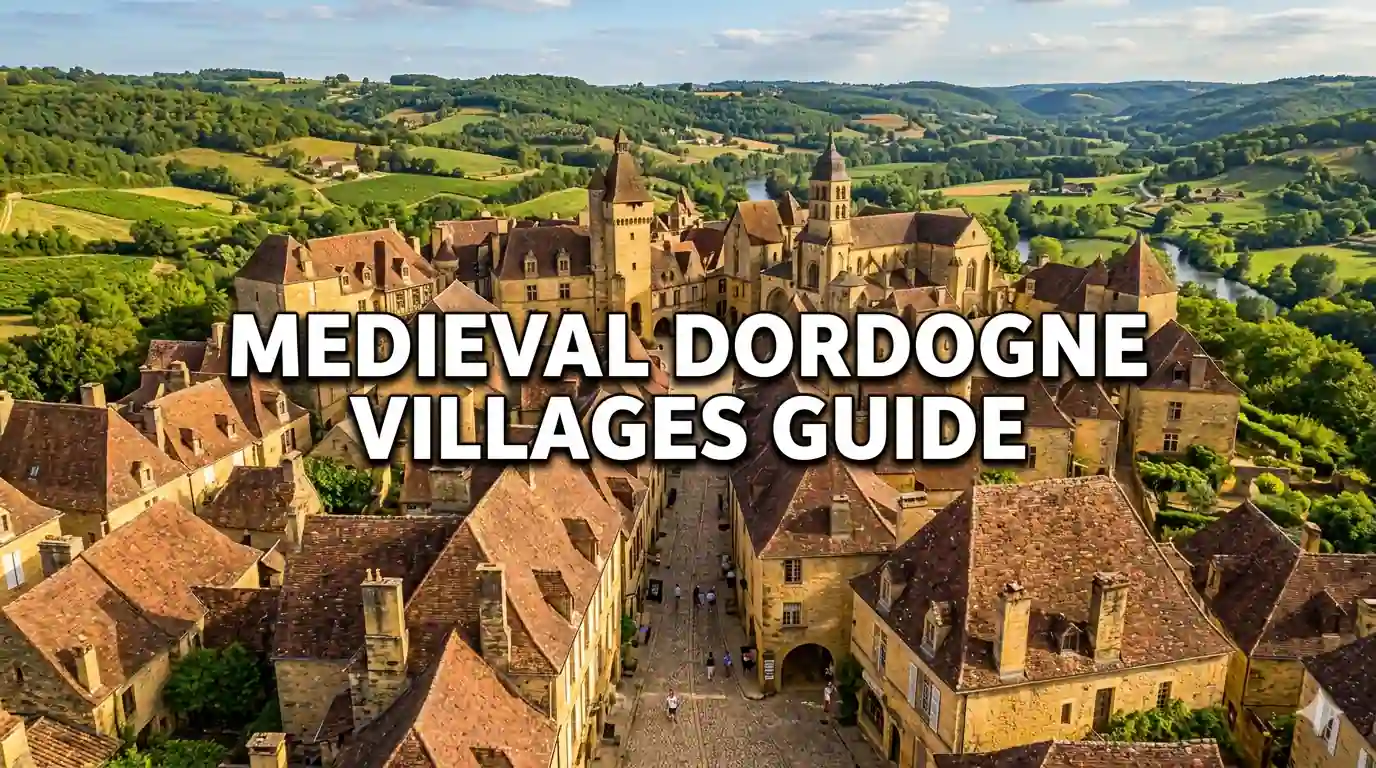
Quick Summary and Core Introduction
The Dordogne region of southwestern France preserves one of Europe's most remarkable concentrations of medieval architecture, with over 1,000 châteaux, countless fortified villages, and perfectly preserved bastide towns nestled along river valleys and hilltops. Sarlat-la-Canéda serves as the ideal base for first-time visitors, offering Renaissance architecture, excellent restaurants, and central access to iconic villages like Beynac, La Roque-Gageac, Domme, and Castelnaud. This comprehensive guide provides everything needed to plan your inaugural journey through the Périgord Noir, from transportation logistics and accommodation selection to village-by-village itineraries and authentic culinary experiences.
The primary user intent centers on understanding which villages deserve priority visits, how to structure a 3 to 7-day itinerary, transportation options from major cities, realistic budget expectations, and booking procedures for accommodations and tours. You need verified pricing in USD, exact distances between villages, seasonal considerations, and practical tips for navigating this rural region without French language skills. This guide delivers detailed, actionable information based on current conditions and official tourism data.
First-time visitors consistently report that the Dordogne exceeds expectations for medieval authenticity, culinary quality, and scenic beauty. The region balances tourist infrastructure with genuine local character, allowing you to experience centuries-old traditions while enjoying modern comforts. Most travelers allocate 4 to 7 days to explore thoroughly, though extended stays of 10 to 14 days reveal deeper layers of history, cuisine, and natural beauty. The combination of accessible location, reasonable costs, and exceptional preservation makes the Dordogne ideal for inaugural French countryside experiences.
Essential Dordogne Travel Data
| Distance from Paris to Sarlat | 520 kilometers, 5 hours by car or train |
| Distance from Bordeaux to Sarlat | 200 kilometers, 2.5 hours by car |
| Number of Medieval Villages | Over 150 classified historic sites |
| Average Daily Budget | USD 120 to 250 per person |
| Best Visiting Season | April to June and September to October |
| Recommended Duration | 4 to 7 days minimum |
| Car Rental Necessity | Highly recommended for village access |
Why the Dordogne Captivates First-Time Visitors to France

The Dordogne, historically known as Périgord, represents everything travelers imagine when dreaming of medieval France. Golden limestone villages cling to verdant hillsides, Romanesque churches punctuate market squares, and château ruins overlook walnut groves and vineyards. Unlike Provence's lavender fields or the French Riviera's glamorous coastline, the Dordogne offers unpretentious authenticity where daily life continues much as it has for centuries. You encounter farmers selling duck confit at Saturday markets, artisans crafting traditional pottery, and families gathering for long meals featuring regional specialties.
Cultural significance extends far beyond picturesque facades. The region contains 1,500 prehistoric sites including the famous Lascaux cave paintings dating back 17,000 years. Medieval history layers upon Roman occupation, with Hundred Years' War fortifications, Renaissance mansions, and pilgrimage routes creating a palimpsest of human civilization. UNESCO recognizes multiple sites, and the French government has classified over 30 villages as "Plus Beaux Villages de France" (Most Beautiful Villages of France). This concentration of heritage within a compact area enables comprehensive exploration without exhausting travel days.
Culinary excellence distinguishes the Dordogne from other French regions. The area produces foie gras, truffles, walnuts, strawberries, and exceptional wines including Bergerac, Monbazillac, and Pécharmant. Restaurants range from rustic auberges serving traditional cassoulet to Michelin-starred establishments showcasing modern interpretations of Périgord cuisine. Markets operate in every town on rotating schedules, offering direct access to local producers and artisanal products. You experience gastronomic tourism at its finest without Parisian prices or pretension.
Accessibility proves surprisingly convenient for a rural region. High-speed trains connect Paris to nearby Libourne or Bergerac in 3 to 4 hours, while regional airports at Bergerac and Brive accommodate direct flights from London and seasonal European routes. Car rental enables flexible exploration, though organized tours and public buses serve major villages for those preferring not to drive. The compact geography means you can base in one location like Sarlat and reach most attractions within 30 to 45 minutes.
Value for money attracts budget-conscious travelers seeking authentic France. Accommodation costs run 30 to 50 percent below Paris or Provence, while restaurant prices offer better quality-to-cost ratios. You can stay in charming bed-and-breakfasts for USD 80 to 150 per night, enjoy three-course meals for USD 30 to 50, and visit most attractions for USD 10 to 15 entrance fees. The region rewards slower travel, encouraging week-long stays that reveal nuances impossible to appreciate on whirlwind tours.
How to Reach the Dordogne and Sarlat-la-Canéda

Multiple transportation options connect major cities to the Dordogne, each with distinct advantages depending on your origin, budget, and preference for flexibility. Sarlat-la-Canéda serves as the region's tourism capital, making it the logical base for first-time visitors. Understanding arrival logistics enables smooth trip initiation without stressful navigation challenges.
Flight Options and Airport Transfers
Bergerac Dordogne Périgord Airport sits 70 kilometers west of Sarlat, handling seasonal direct flights from London, Brussels, Dublin, and other European cities primarily between April and October. British carriers including Ryanair and easyJet operate regular services, with round-trip fares ranging from USD 100 to 300 depending on departure city and booking timing. Airport shuttles and taxi services connect to Sarlat in 60 to 75 minutes for USD 80 to 120, or you can rent cars directly at the airport.
Brive-la-Gaillarde Airport lies 60 kilometers southeast of Sarlat, offering limited seasonal flights from Paris, London, and Dublin. While smaller than Bergerac, Brive provides convenient access to southern Dordogne villages and the Lot region. Car rental remains essential from this airport, as public transportation connections prove infrequent. Round-trip flights typically cost USD 150 to 350 from European hubs.
Bordeaux-Mérignac Airport represents the largest international gateway, located 200 kilometers west of Sarlat. This major airport handles direct flights from North American cities including New York, Montreal, and seasonal routes from other US hubs, with round-trip fares between USD 600 and 1,200. European connections abound from Amsterdam, Frankfurt, London, and other cities. You can rent cars at Bordeaux Airport for the 2.5-hour drive to Sarlat, or take trains to Bergerac then connect by bus or taxi.
Train Travel from Paris and Other Cities
High-speed TGV trains connect Paris Gare d'Austerlitz to Libourne in 3 hours 15 minutes, with fares ranging from USD 50 to 120 depending on booking timing and flexibility. From Libourne, you transfer to regional trains or rental cars for the final 90-minute journey to Sarlat. Alternative routes include Paris to Bergerac via Libourne, or Paris to Brive-la-Gaillarde with connections to Sarlat by bus or taxi. Total journey times range from 4.5 to 6 hours.
Direct regional trains operate from Bordeaux Saint-Jean to Sarlat in approximately 2 hours 30 minutes, with 3 to 4 daily departures costing USD 25 to 45. This proves the most convenient rail option for travelers arriving via Bordeaux Airport or exploring multiple regions. Train stations in Sarlat, Bergerac, and other Dordogne towns sit within walking distance of historic centers, though reaching surrounding villages requires buses, taxis, or rental cars.
Car Rental and Driving Considerations
Car rental proves highly recommended for Dordogne exploration, providing flexibility to visit villages on your own schedule, carry market purchases, and discover unexpected attractions. Major rental companies operate at airports and train stations, with weekly rates ranging from USD 250 to 450 for compact vehicles. Manual transmission cars cost 20 to 30 percent less than automatics, though automatics prove worthwhile for unfamiliar drivers.
Driving in the Dordogne presents moderate challenges on narrow village streets and winding country roads, but proves manageable with patience and basic navigation skills. GPS or smartphone maps work reliably in most areas, though downloading offline maps prevents connectivity issues in remote valleys. Parking in village centers often requires walking 5 to 10 minutes from designated lots, typically costing USD 5 to 15 daily. Fuel stations exist in larger towns but become scarce in rural areas, requiring strategic refueling.
Visa Rules and Entry Requirements for France

France maintains Schengen Area visa policies applicable to Dordogne visitors. Citizens from the United States, Canada, United Kingdom, Australia, and most European nations enjoy visa-free tourism access for up to 90 days within any 180-day period. You must present a passport valid for at least three months beyond your planned departure date from the Schengen Area. Border officials may request proof of onward travel, sufficient funds (approximately USD 70 per day), and accommodation reservations.
Starting in 2025, visa-exempt travelers must obtain ETIAS (European Travel Information and Authorization System) approval before departure. This online authorization costs USD 8, remains valid for three years, and requires basic biographical information and travel details. Processing typically completes within minutes, though some applications require up to 96 hours. You should apply at least one week before travel to accommodate potential delays.
Travel insurance, while not mandatory for visa-exempt visitors, proves highly recommended for Dordogne visits. Medical emergencies in France can generate substantial costs for uninsured travelers, and rural locations may require evacuation to larger hospitals. Comprehensive policies covering medical treatment, evacuation, trip interruption, and car rental excess typically cost USD 50 to 120 for week-long trips depending on coverage limits and age. You should verify coverage includes rental car damage and outdoor activities if planning canoeing or extensive hiking.
Non-Schengen citizens requiring visas must apply at French consulates or visa centers in their home countries. Tourist visa applications require proof of accommodation, financial means, travel insurance, and round-trip flight reservations. Processing times range from 15 to 30 days, requiring advance planning. Visa fees total approximately USD 85 for short-stay tourist visas.
Best Time to Visit Dordogne Medieval Villages

Seasonal timing significantly impacts your Dordogne experience, affecting weather, crowds, prices, and available activities. The region's continental climate brings hot summers, cool winters, and moderate rainfall year-round, with distinct advantages and challenges across seasons. Understanding these variations enables strategic planning that maximizes enjoyment while minimizing frustrations.
Peak season spans June through August when weather proves most reliable with temperatures averaging 25 to 30 degrees Celsius and long daylight hours extending until 10 PM. All attractions, restaurants, and accommodations operate at full capacity, and markets brim with seasonal produce including strawberries, cherries, and walnuts. However, these months bring intense crowds, particularly in July and August when European school holidays flood popular villages. Accommodation prices peak at 40 to 60 percent above shoulder season rates, and restaurant reservations require advance booking. Afternoon heat can exceed 35 degrees, making midday outdoor exploration uncomfortable.
Shoulder seasons of April to May and September to October deliver optimal balance for most first-time visitors. Temperatures remain comfortable at 15 to 25 degrees, crowds diminish significantly, and accommodation prices drop 20 to 40 percent. Spring brings blooming wisteria, flowering gardens, and vibrant green landscapes, while autumn features golden foliage, harvest festivals, and truffle markets. You can explore villages without jostling crowds, secure same-day restaurant reservations, and photograph architecture without tourist obstruction. Some attractions reduce hours in late October, and occasional rain requires flexible planning.
Winter months from November through March present quietest conditions with minimal tourist traffic and lowest accommodation prices. Christmas markets in December create magical atmospheres in Sarlat and larger villages, while January and February offer peaceful exploration and intimate interactions with local residents. However, some restaurants, shops, and attractions close for annual vacations, particularly in January. Weather proves cool and damp with temperatures averaging 5 to 12 degrees, and occasional snow creates picturesque but challenging driving conditions. This season suits repeat visitors or those prioritizing solitude over comprehensive access.
Market schedules vary seasonally, with summer featuring daily markets in different villages while winter concentrates activity on weekends. You should research specific market days for your intended destinations and plan accommodation accordingly. Festival calendars include medieval festivals in July and August, music festivals in summer, and gastronomic events throughout autumn harvest season.
Complete Cost Breakdown and Budget Planning

The Dordogne accommodates various budget levels through strategic choices in accommodation, dining, transportation, and activities. Understanding all cost components enables realistic planning and prevents unexpected expenses. You can experience this region comfortably on moderate budgets while luxury options abound for those seeking premium experiences.
Budget travelers spending USD 80 to 120 per day utilize budget hotels or vacation rental apartments, picnic lunches from markets, and focus on free or low-cost attractions. Accommodation in budget chambres d'hôtes (bed-and-breakfasts) costs USD 60 to 90 per night for double rooms. Self-catering apartments or gîtes (vacation rentals) range from USD 70 to 120 nightly for 2 to 4 people. You purchase bread, cheese, charcuterie, and produce from markets for USD 15 to 25 daily. Many villages offer free walking tours, and church visits typically cost nothing. Car rental shared among travelers reduces per-person costs significantly.
Mid-range budgets of USD 150 to 250 per person per day enable comfortable 3-star hotels or charming B&Bs, restaurant lunches and dinners, paid attractions, and guided tours. Accommodation in quality chambres d'hôtes or boutique hotels costs USD 100 to 180 per night. Restaurant lunches featuring plat du jour (daily special) run USD 18 to 28, while three-course dinners cost USD 35 to 55. Entrance fees to châteaux and gardens average USD 10 to 15 per site. Car rental, fuel, and parking add USD 40 to 60 daily split among passengers. This tier represents the sweet spot for most first-time visitors seeking comfort without extravagance.
Premium experiences costing USD 300 to 500 per person per day include 4 to 5-star hotels or luxury château accommodations, Michelin-starred dining, private guided tours, and exclusive experiences. Luxury hotels and converted château properties charge USD 250 to 450 per night. Gourmet restaurants with wine pairings cost USD 80 to 150 per person. Private guides charge USD 200 to 400 for half-day tours, and exclusive experiences like truffle hunting or cooking classes with chefs add USD 100 to 200. This tier suits special occasions or travelers prioritizing exceptional service and unique access.
| Expense Category | Budget Option | Mid Range | Premium |
| Accommodation Per Night | USD 60 to 90 | USD 100 to 180 | USD 250 to 450 |
| Daily Food and Drinks | USD 20 to 30 | USD 50 to 80 | USD 120 to 200 |
| Car Rental Per Day | USD 35 to 50 | USD 50 to 75 | USD 80 to 150 |
| Attraction Entrance Fees | USD 10 to 20 | USD 30 to 50 | USD 60 to 100 |
| Guided Tours | N/A | USD 40 to 80 | USD 150 to 300 |
| Travel Insurance | USD 40 to 60 | USD 60 to 100 | USD 100 to 180 |
Sarlat-la-Canéda as Your Perfect Base

Sarlat-la-Canéda stands as the Dordogne's tourism capital and ideal headquarters for first-time visitors, combining exceptional medieval architecture, comprehensive amenities, and central location. This town of approximately 9,000 residents preserves one of France's largest concentrations of Renaissance and medieval buildings, with golden stone mansions, narrow cobblestone streets, and bustling markets creating an authentic atmosphere rarely found in more commercialized destinations.
Historical significance dates to the 9th century when Benedictine monks established an abbey around which the town grew. Sarlat avoided major destruction during the Hundred Years' War and French Revolution, preserving its architectural heritage. The 1960s restoration project, championed by André Malraux, transformed deteriorating buildings into the pristine example of Périgord architecture visible today. This careful preservation earned Sarlat classification as a UNESCO World Heritage Site and designation as one of France's most beautiful towns.
Accommodation options span all budget levels, from budget hostels and basic hotels to luxury boutique properties in restored mansions. The compact historic center means you can walk to restaurants, shops, markets, and tourist information within 10 minutes. Parking exists in designated lots on the perimeter, with most hotels offering validation or discounted rates. The town serves as a transportation hub with bus connections to major villages, though car rental remains recommended for flexibility.
Dining in Sarlat reflects the region's culinary excellence, with over 100 restaurants ranging from casual crêperies to Michelin-starred establishments. Saturday mornings feature one of the region's best markets, filling Place de la Liberté with local producers selling foie gras, truffles (in season), walnuts, strawberries, cheeses, and prepared foods. Year-round, you find excellent bakeries, wine shops, and specialty food stores offering picnic supplies or gourmet souvenirs.
Attractions within Sarlat include the Cathédrale Saint-Sacerdos with its distinctive bell tower, the Tour de l'Évêché offering panoramic views, the Hôtel de Ville in a 17th-century mansion, and numerous museums covering topics from truffles to medieval life. The town hosts medieval festivals in summer, Christmas markets in December, and regular cultural events. You can easily spend 2 to 3 days exploring Sarlat itself before venturing to surrounding villages.
Must-Visit Medieval Villages Beyond Sarlat

The Dordogne's true magic emerges when you explore the constellation of medieval villages surrounding Sarlat, each offering distinct character, history, and visual splendor. First-time visitors should prioritize these essential destinations, allocating half-day to full-day visits depending on interests and pace.
Beynac-et-Cazenac - Riverside Fortress
Beynac-et-Cazenac ranks among the Dordogne's most spectacular villages, clinging to a limestone cliff 150 meters above the Dordogne River. The imposing Château de Beynac, one of the region's best-preserved medieval fortresses, dominates the skyline with its 12th-century keep, ramparts, and strategic position overlooking the valley. This castle never fell during the Hundred Years' War, serving as a bastion of French resistance against English occupation.
The village itself features narrow winding streets lined with stone houses, artisan workshops, and small restaurants. You can explore the château interior for USD 11, climb to the top for panoramic views, or simply wander the lower village free of charge. Canoe rentals on the Dordogne River provide unique perspectives of the château from below, costing USD 15 to 25 per hour. The village sits just 10 kilometers from Sarlat, requiring 15 minutes driving time.
La Roque-Gageac - Riverside Beauty
La Roque-Gageac presents a postcard-perfect scene with ochre stone houses cascading down to the Dordogne River, backed by dramatic cliffs and lush vegetation. This village, classified among France's most beautiful, features the Renaissance Château de la Malartrie perched above the river and the Jardin Exotique showcasing Mediterranean plants thriving in the microclimate.
You can visit the château for USD 9, explore the exotic gardens for USD 7, or simply stroll the riverside promenade and narrow streets free of charge. Boat tours depart regularly from the village dock, offering 1-hour river cruises for USD 12 to 15. La Roque-Gageac sits 8 kilometers from Sarlat, requiring 12 minutes driving. The village attracts significant crowds during peak season, so early morning or late afternoon visits prove most pleasant.
Domme - Bastide with Panoramic Views
Domme represents a perfectly preserved bastide town, a fortified village built on a geometric plan in the late 13th century. Perched on a rocky promontory 240 meters above the Dordogne River, this village offers breathtaking panoramic views across the valley. The main square, Place de la Rôle, features arcaded buildings housing cafes, restaurants, and shops.
Domme's fortifications include imposing gates, ramparts you can walk, and underground chambers carved into the rock that served as prisons during the French Revolution. Village access remains free, while guided tours of the underground chambers cost USD 8. The viewpoint from the Porte des Tours provides spectacular photo opportunities. Domme sits 6 kilometers from Sarlat, requiring 10 minutes driving, making it perfect for sunset visits when golden light illuminates the valley.
Castelnaud-la-Chapelle - Castle of Contrasts
Castelnaud-la-Chapelle features a dramatically restored medieval château directly across the river from Beynac, historically serving as the English stronghold opposing the French fortress. The castle now houses an impressive museum of medieval warfare displaying authentic weapons, armor, and siege engines including trebuchets and catapults.
Entrance fees cost USD 13 for adults, with family tickets available. The castle offers interactive exhibits, demonstrations of medieval siege technology, and spectacular views from the ramparts. The village itself proves smaller and quieter than Beynac, with a few restaurants and shops. Castelnaud sits 12 kilometers from Sarlat, requiring 18 minutes driving. Combining visits to both Beynac and Castelnaud in one day provides fascinating contrasts between French and English medieval military architecture.
Monpazier - Perfect Bastide Geometry
Monpazier, located 40 kilometers southwest of Sarlat, represents the most perfectly preserved bastide town in France. Founded in 1284 by Edward I of England, this village maintains its original grid pattern with covered market square, uniform arcaded buildings, and defensive walls. The Place des Cornières, surrounded by covered walkways, serves as one of France's most harmonious medieval squares.
You can explore the village freely, visit the small museum for USD 5, or climb the church tower for views across the bastide layout. Monpazier's remote location requires 45 minutes driving from Sarlat, but rewards visitors with authentic atmosphere and fewer crowds than riverside villages. The village hosts excellent weekly markets and maintains traditional crafts including pottery and weaving.
Practical Tips for First-Time Dordogne Visitors

Successful Dordogne exploration requires attention to practical details that enhance comfort, safety, and enjoyment. First-time visitors benefit from understanding local customs, logistical realities, and cultural expectations before arrival.
Language considerations prove less daunting than anticipated. While French remains the official language, tourism workers in Sarlat and major villages speak functional English. Learning basic French greetings and courtesies demonstrates respect and often elicits warmer service. Downloading translation apps proves helpful for menus and signs in smaller villages. Most importantly, attempting French even imperfectly receives appreciation rather than criticism.
Dining schedules differ significantly from North American norms. Lunch service typically runs from 12 PM to 2 PM, with dinner beginning at 7:30 PM and peaking around 8:30 PM. Many restaurants close between lunch and dinner service, and some establishments close one day per week, often Monday or Tuesday. You should make dinner reservations during peak season, particularly for popular restaurants. Dress codes remain casual but neat; shorts and t-shirts prove acceptable in most establishments, though nicer restaurants appreciate smart casual attire.
Shopping hours follow traditional French patterns with many shops closing for lunch from 12 PM to 2 PM, particularly in smaller villages. Supermarkets maintain continuous hours but close earlier than North American expectations, typically 7 PM to 8 PM. Saturday afternoons see reduced hours, and Sundays bring near-universal closure except for bakeries (open Sunday mornings) and some tourist shops in peak season. Planning purchases around these schedules prevents frustration.
Payment methods vary by establishment size. Hotels, larger restaurants, and major attractions accept credit cards, though many prefer Visa or Mastercard over American Express. Small cafes, markets, and village shops often require cash for purchases under USD 15. You should carry EUR 50 to 100 in small denominations for daily expenses. ATMs exist in Sarlat and larger towns but prove scarce in rural villages.
Tipping customs differ from North American expectations. Service charges are included in all restaurant bills by law, so additional tipping remains optional rather than obligatory. You can leave small change or round up for good service, or add 5 to 10 percent for exceptional experiences. Hotel porters, tour guides, and taxi drivers appreciate small tips of EUR 2 to 5, but no one expects lavish gratuities.
0 Comments