.webp)
.webp)
Quick Summary and Core Booking Information
French train travel in 2026 offers one of Europe's most extensive and efficient rail networks, connecting major cities, charming towns, and scenic regions through high-speed TGV services and conventional Intercités trains. The SNCF Connect platform has streamlined booking procedures with digital tickets, flexible fare options, and real-time journey planning, making it easier than ever for travelers to explore France by rail. This comprehensive guide enables first-time and experienced travelers to navigate the French rail system confidently, from booking strategies that maximize savings to understanding ticket types, seat reservations, onboard amenities, and practical tips for smooth journeys across the country.
The primary user intent centers on understanding how to book French train tickets efficiently, identifying the best fare options for different travel needs, navigating the SNCF Connect platform or app, understanding refund and exchange policies, and maximizing value through advance booking and rail passes. You need verified 2026 pricing in USD, exact booking windows, information on ticket flexibility, seat selection procedures, and practical advice for managing connections, luggage, and onboard services. This guide delivers detailed, actionable information based on current SNCF policies and verified traveler experiences.
Average travelers report that booking French trains 2 to 3 months in advance yields savings of 40 to 60 percent compared to last-minute purchases, with TGV tickets starting from USD 25 for advance bookings on popular routes. The SNCF Connect app simplifies journey management with mobile tickets, real-time updates, and platform information, reducing stress and improving travel efficiency. Most travelers allocate USD 50 to 150 per intercity journey depending on distance, booking timing, and class of service, with rail passes offering additional value for extensive multi-city itineraries.
Essential French Train Travel Data for 2026
| Advance Booking Window | Up to 4 months in advance for TGV and Intercités |
| TGV Paris to Lyon Journey Time | 2 hours, tickets from USD 25 advance purchase |
| TGV Paris to Bordeaux Journey Time | 2 hours 10 minutes, tickets from USD 30 advance purchase |
| Intercités Ticket Prices | USD 20 to 80 depending on distance and timing |
| Second Class vs First Class | First class typically 30 to 50 percent higher |
| Rail Pass Options | France Rail Pass from USD 285 for 3 days within 1 month |
| Digital Ticket Availability | Mobile tickets available for all TGV and most Intercités |
Understanding French Train Types and Service Levels

France's rail network features multiple train categories serving different routes, speeds, and service levels, each with distinct booking procedures, pricing structures, and onboard amenities. Understanding these differences enables informed decisions matching your travel priorities, budget constraints, and time availability.
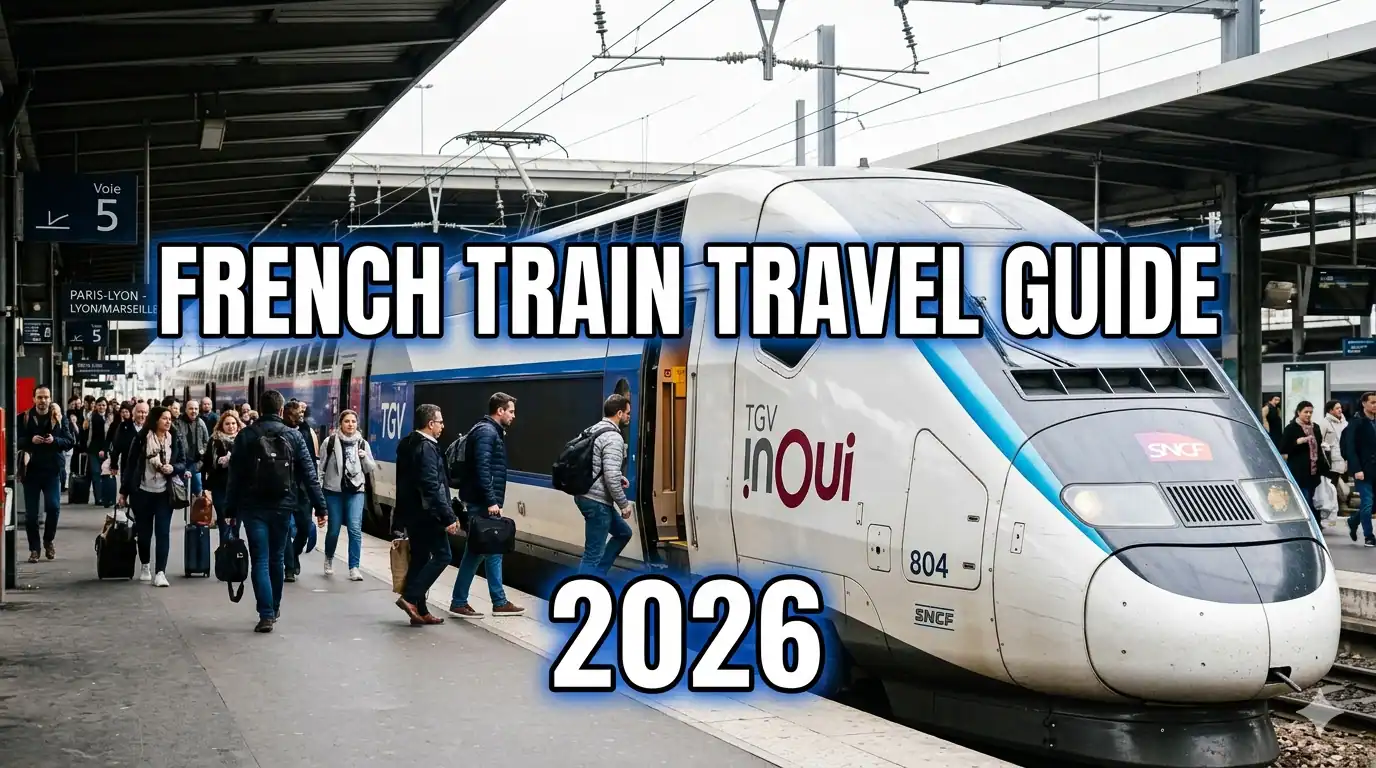
TGV (Train à Grande Vitesse) represents France's flagship high-speed rail service, operating at speeds up to 320 km/h (200 mph) on dedicated high-speed lines connecting major cities. TGV routes include Paris to Lyon, Marseille, Bordeaux, Strasbourg, Lille, Nantes, and Rennes, as well as international services to Brussels, Amsterdam, London (via Eurostar), Geneva, and Barcelona. TGV trains feature reserved seating, two class options (Second and First), onboard cafés, power outlets, and WiFi on most services. Advance booking proves essential for securing the best fares, with prices increasing significantly as departure dates approach.
Intercités trains operate on conventional rail lines connecting regional cities and towns not served by high-speed routes. These trains run at speeds of 120 to 160 km/h, offering slower but often more scenic journeys through French countryside and smaller cities. Intercités services include routes like Paris to Clermont-Ferrand, Orléans to Tours, and various regional connections. Seat reservations are mandatory on most Intercités services, though pricing remains more stable than TGV fares with less dramatic advance purchase discounts. These trains appeal to travelers prioritizing cost savings over speed or seeking to explore destinations off the high-speed network.
TER (Transport Express Régional) trains serve regional routes within France's administrative regions, connecting smaller towns and cities with frequent service. TER trains do not require seat reservations, allowing flexible ticketing valid for any train on the selected route within a specified timeframe. Pricing remains fixed regardless of booking timing, making TER ideal for spontaneous travel or short-distance journeys. While slower than TGV services, TER trains provide authentic local travel experiences and access to destinations unreachable by high-speed rail.
OUIGO represents SNCF's low-cost high-speed service, offering TGV travel at significantly reduced prices through simplified service, secondary station locations, and strict baggage policies. OUIGO trains operate on select routes including Paris to Lyon, Marseille, Bordeaux, and Nantes, with tickets starting from USD 10 to 20 for advance bookings. Trade-offs include limited luggage allowances (one carry-on plus one small bag), no seat selection flexibility, no onboard food service, and departure from stations outside city centers requiring additional transport connections. Budget-conscious travelers willing to accept these limitations can achieve substantial savings on popular routes.
Booking Platforms and Procedures for 2026

French train tickets can be purchased through multiple channels, each offering distinct advantages depending on your technical comfort, language preferences, and specific booking needs. Understanding these options enables selection of the most efficient platform for your circumstances.
SNCF Connect Website and App
SNCF Connect serves as the official booking platform for all SNCF services, offering comprehensive route information, real-time schedules, seat selection, and digital ticket delivery. The platform supports English language interface and accepts international credit cards, making it accessible for international travelers. The SNCF Connect mobile app (available for iOS and Android) provides mobile ticket storage, real-time journey updates, platform information, and disruption notifications, proving invaluable for managing travel on the go.
Booking procedures through SNCF Connect follow a straightforward process: enter departure and arrival stations, select travel dates and times, choose preferred train and fare type, select seats if desired, provide passenger information, and complete payment. Digital tickets arrive via email and appear in the app immediately after purchase, eliminating the need for physical ticket collection. You can book for up to four passengers in a single transaction, with discounts automatically applied for children, seniors, and rail pass holders.
The platform displays multiple fare options for each train, ranging from non-exchangeable, non-refundable Prem's fares to fully flexible Première Class tickets. Clear labeling indicates exchange and refund conditions, enabling informed decisions based on your flexibility needs. SNCF Connect also offers package deals combining train tickets with hotel bookings or car rentals, occasionally providing cost savings for comprehensive travel planning.
Ticket Machines and Station Counters
SNCF ticket machines (bornes SNCF) operate at all major train stations, offering multilingual interfaces including English and accepting chip-and-PIN credit cards. These machines prove useful for last-minute bookings, ticket exchanges, or travelers preferring in-person transactions. The machines print physical tickets or send mobile tickets via email or SMS, providing flexibility in ticket format.
Station ticket counters (guichets) offer personalized assistance for complex bookings, special accommodations, rail pass validation, and troubleshooting issues. While counters may involve wait times during peak hours, staff can provide valuable advice on route options, connections, and local travel tips. Counter service proves particularly helpful for travelers with specific accessibility needs, group bookings, or questions about rail pass eligibility.
Third-Party Booking Platforms
International platforms like Trainline, Omio, and Rail Europe aggregate French train schedules alongside other European rail services, offering English-language interfaces and customer support familiar to international travelers. These platforms charge small booking fees (typically USD 2 to 5 per transaction) but provide convenience through unified search across multiple operators and countries.
Third-party platforms display the same fares and availability as SNCF Connect, though occasionally with slight delays in reflecting real-time changes. Tickets purchased through these platforms remain valid for travel and can be managed through the platform's app or website. However, some advanced features like seat selection or specific fare options may have limited availability compared to direct SNCF booking.
Fare Types and Pricing Strategies

French train tickets feature multiple fare categories with varying flexibility, refund conditions, and pricing, enabling travelers to select options matching their budget constraints and change tolerance. Understanding these fare structures proves essential for optimizing value and avoiding unexpected restrictions.
Prem's Fares (Advance Purchase)
Prem's fares represent SNCF's lowest-priced tickets, available exclusively through advance booking and subject to strict non-exchange, non-refund conditions. These fares become available up to four months before departure, with the deepest discounts appearing 3 to 4 months ahead. Prem's tickets for popular routes like Paris to Lyon can start from USD 25 when booked well in advance, compared to USD 80 to 120 for last-minute purchases.
Trade-offs include complete inflexibility: Prem's tickets cannot be changed, exchanged, or refunded under any circumstances except train cancellation by SNCF. You must travel on the specific train indicated on your ticket, with no option to take earlier or later services. These fares suit travelers with fixed itineraries and high confidence in their travel plans, offering maximum savings for those who can commit to specific departure times.
Loisir Fares (Flexible Economy)
Loisir fares provide moderate flexibility with exchange and partial refund options at reasonable price points. These tickets allow exchanges before departure with payment of any fare difference, and partial refunds (typically 50 to 70 percent) if cancelled before travel. Loisir fares cost 20 to 40 percent more than Prem's fares but offer valuable protection against itinerary changes.
Loisir tickets prove ideal for travelers requiring some flexibility due to uncertain schedules, potential weather disruptions, or desire to extend stays spontaneously. The moderate price premium often justifies the peace of mind and adaptability these fares provide, particularly for longer journeys or complex multi-city itineraries where changes prove more likely.
Flexible and Première Class Fares
Flexible fares and Première Class tickets offer maximum flexibility with full exchange and refund privileges, premium seating, and enhanced onboard services. These fares cost 50 to 100 percent more than standard economy tickets but provide complete booking security and comfort upgrades.
Flexible tickets allow unlimited exchanges and full refunds up to departure time, making them suitable for business travelers or those with highly uncertain schedules. Première Class includes spacious seating, complimentary refreshments on select routes, priority boarding, and access to station lounges in major cities. While expensive for budget-conscious travelers, these fares deliver tangible value for those prioritizing comfort, flexibility, or traveling during peak periods when economy fares surge dramatically.
Dynamic Pricing and Demand Management
SNCF employs dynamic pricing algorithms that adjust fares based on demand, booking timing, and seat availability. Prices increase as trains fill, with the cheapest seats selling first and premium fares remaining available closer to departure. Understanding this system enables strategic booking that maximizes savings.
Peak travel periods including Friday and Sunday evenings, holiday weekends, school vacation periods, and major events command premium pricing across all fare categories. Conversely, mid-week travel, early morning or late evening departures, and off-season periods offer better value. You can save 30 to 50 percent by traveling Tuesday through Thursday rather than Friday or Sunday, or by selecting 6 AM departures instead of 5 PM services.
Price comparison tools and fare alerts help identify optimal booking opportunities. SNCF Connect displays price calendars showing fare variations across multiple dates, enabling flexible travelers to select the most economical departure days. Setting fare alerts for specific routes notifies you when prices drop, though this strategy works best for advance bookings rather than last-minute travel.
Seat Selection and Reservation Procedures

Seat reservations prove mandatory for TGV and most Intercités services, with automatic assignment during booking or optional selection for an additional fee. Understanding reservation procedures and seat location implications enhances journey comfort and convenience.
Automatic vs. Manual Seat Selection
SNCF Connect automatically assigns seats during booking at no additional charge, selecting available positions based on your party size and any preferences indicated. Automatic assignment works efficiently for most travelers, though you receive whatever seats remain available at booking time, which may include less desirable locations like backward-facing seats, tables for one, or positions near restrooms.
Manual seat selection allows choosing specific seats from an interactive seat map for an additional USD 5 to 10 fee. The seat map displays available positions with indicators for window seats, aisle seats, table seats, quiet zones, and accessibility features. You can select seats facing your preferred direction, ensure window positions for scenic routes, or choose seats together for groups. This option proves worthwhile for longer journeys, travelers with specific comfort needs, or those seeking optimal views on scenic routes like Paris to Nice or Lyon to Grenoble.
Seat Location Considerations
Window seats provide scenic views and a wall to lean against for sleeping, appealing to leisure travelers on daytime journeys through picturesque regions. Aisle seats offer easier access for stretching, restroom visits, or retrieving luggage, suiting travelers who value mobility or have longer legs. Table seats enable working, dining, or playing games, ideal for families, business travelers, or those wanting to spread out.
Quiet zones (espaces calme) exist in designated carriages on most TGV trains, prohibiting phone calls, loud conversations, and audio without headphones. These areas appeal to travelers seeking peaceful work or rest environments, though they require booking specific carriages during seat selection. Families with young children or travelers expecting phone calls should avoid quiet zones to prevent disturbing other passengers.
Forward-facing seats reduce motion sickness for sensitive travelers and provide better views of approaching scenery, while backward-facing seats offer more legroom in some configurations and face traveling companions in four-seat arrangements. Direction indicators appear on seat maps during selection, enabling preference-based choices.
Group and Family Seating
Booking for groups of three or more passengers benefits from early reservation to ensure adjacent seating, as trains fill and seat availability fragments. SNCF Connect's group booking interface displays seat configurations showing which positions remain together, though large groups may need to split across multiple rows or carriages on busy services.
Families traveling with children under 4 years old can request bassinet spaces in designated areas, though advance notice proves essential. Children aged 4 to 11 receive automatic 50 percent discounts on most fares, with automatic seat assignment adjacent to accompanying adults. Family carriages with play areas exist on select long-distance TGV routes, providing entertainment and space for children during extended journeys.
Rail Passes and Multi-Journey Options

Rail passes offer alternative pricing structures for travelers planning multiple train journeys within France, potentially delivering significant savings compared to individual ticket purchases. Understanding pass types, validity rules, and cost-benefit calculations enables informed decisions about pass versus point-to-point ticket strategies.
France Rail Pass
The France Rail Pass, available exclusively to non-European residents, provides unlimited travel on SNCF trains for a specified number of travel days within a set validity period. Pass options include 3, 4, 5, or 8 travel days within 1 month, with pricing ranging from USD 285 for 3 days to USD 565 for 8 days in Second Class. First Class passes cost approximately 30 percent more.
Rail passes require activation before first use and reservation of specific trains, with seat reservations costing USD 10 to 20 per TGV journey even with a valid pass. Pass holders benefit from flexibility to change travel dates without fare penalties, though reservation availability remains subject to train capacity. The pass proves economical for travelers planning 4 or more long-distance journeys within a month, particularly if combining expensive routes like Paris to Nice, Bordeaux, and Strasbourg.
Cost-benefit analysis requires comparing pass prices against individual ticket costs for your planned itinerary. For example, Paris to Lyon (USD 60), Paris to Bordeaux (USD 65), Lyon to Nice (USD 70), and Nice to Paris (USD 85) total USD 280 in individual tickets, making a 4-day France Rail Pass at USD 340 uneconomical unless you add additional journeys or value the flexibility of spontaneous travel.
Interrail and Eurail Passes
European residents can purchase Interrail passes covering France and other European countries, while non-Europeans access similar benefits through Eurail passes. These multi-country passes include France in various regional or global combinations, enabling extensive European rail travel with single-pass convenience. Pricing depends on countries covered, travel days, and passenger age categories.
Interrail and Eurail passes follow similar reservation requirements as France Rail Pass, with mandatory seat reservations for TGV and international services costing USD 10 to 30 per journey. Pass holders must reserve seats in advance for popular routes, as passholder quota limitations can restrict availability during peak periods. These passes suit travelers planning multi-country European itineraries with France as one component rather than France-only travel.
Regional and Multi-Journey Cards
SNCF offers various discount cards providing percentage reductions on ticket purchases for specific traveler categories. The Carte Avantage (USD 55 annually) delivers 30 percent discounts for travelers aged 12 to 27, 27 to 59, or 60 and over, with the discount applying to up to 4 accompanying passengers on the same reservation. The card pays for itself after 2 to 3 round-trip journeys and proves valuable for frequent travelers or those planning multiple trips within a year.
Regional transport cards like TER regional passes offer unlimited travel within specific French regions for set periods, appealing to travelers exploring areas like Provence, Brittany, or Normandy extensively. These cards cost USD 30 to 80 depending on region and validity period, providing excellent value for intensive regional exploration with multiple short-distance journeys.
Digital Ticketing and Mobile Management

SNCF's digital ticketing system enables paperless travel through mobile tickets stored on smartphones, streamlining the travel experience and reducing environmental impact. Understanding digital ticket management proves essential for smooth journeys in 2026.
SNCF Connect Mobile App
The SNCF Connect app (available for iOS and Android) serves as the primary tool for managing French train travel, offering ticket purchase, mobile ticket storage, real-time journey updates, platform information, and disruption notifications. After booking, tickets appear automatically in the app's "My Tickets" section, accessible offline once downloaded. You can display tickets on your phone screen for conductor scanning, eliminating physical ticket concerns.
The app provides real-time train status updates including delays, platform changes, and cancellations, sending push notifications for affected journeys. Platform information appears 20 to 30 minutes before departure, enabling efficient station navigation. The app's journey planner suggests alternative routes during disruptions, helping you adapt to unexpected changes without station counter visits.
Ticket Validation and Inspection
Digital tickets require no validation before boarding, unlike some European rail systems. Simply board your train with your mobile ticket displayed on the SNCF Connect app, and conductors will scan the QR code during the journey. Ensure your phone remains charged throughout travel, as dead batteries preventing ticket display may result in fines or full-fare ticket purchases.
Conductors accept screenshots of tickets in emergencies, though the live app display with dynamic QR codes proves more reliable. You should download tickets to your phone before arriving at the station, as poor connectivity in some stations may prevent app access. Screenshot backups provide additional security against app glitches or connectivity issues.
Account Management and Booking History
Creating an SNCF Connect account enables booking history storage, frequent traveler information saving, and streamlined repeat bookings. Accounts sync across web and mobile platforms, allowing you to book on a computer and access tickets on your phone. Account holders receive promotional offers, fare alerts, and personalized travel recommendations based on booking patterns.
Guest checkout options exist for one-time bookings without account creation, though this approach limits ticket management flexibility and requires email access for ticket retrieval. Frequent travelers benefit significantly from account creation through time savings and enhanced features.
Practical Travel Tips and Onboard Services

Successful French train travel extends beyond booking to encompass practical considerations like luggage management, station navigation, onboard amenities, and connection planning. Understanding these elements enhances journey comfort and reduces stress.
Luggage Policies and Storage
French trains impose no weight limits or luggage fees for standard passenger baggage, allowing you to bring multiple suitcases, backpacks, and personal items without additional charges. TGV trains feature overhead racks above seats, dedicated luggage areas at carriage ends, and space between seat backs for smaller bags. You should keep valuables and essential items with you at your seat, storing larger suitcases in designated areas with visibility for security.
Luggage dimensions should not exceed reasonable personal transport capacity, as you must load and unload bags without assistance. Oversized items like bicycles, skis, or large musical instruments require advance reservations and fees ranging from USD 10 to 20 depending on the item and route. OUIGO services enforce stricter baggage limits, allowing only one carry-on (55cm x 35cm x 25cm) and one small bag (36cm x 27cm x 15cm) per passenger, with additional bags costing USD 5 to 10 each.
Station Navigation and Connections
Major French train stations like Paris Gare de Lyon, Paris Montparnasse, and Lyon Part-Dieu feature clear signage in French and English, information desks, and digital departure boards displaying train numbers, destinations, departure times, and platform assignments. Arrive 20 to 30 minutes before departure for familiar stations, 40 to 60 minutes for complex hubs or when navigating with luggage and children.
Platform numbers appear on departure boards 20 to 30 minutes before departure, with some stations assigning platforms as late as 10 minutes before departure. Follow signage to your platform, verify the train number and destination on platform displays, and position yourself near the carriage number indicated on your ticket for efficient boarding. TGV trains board quickly, with most passengers seated within 5 to 10 minutes of boarding commencement.
Connection times should allow at least 20 minutes at major stations and 30 to 40 minutes at complex hubs like Paris requiring station changes. SNCF Connect's journey planner suggests viable connections with adequate transfer times, though independent booking requires manual verification of connection feasibility. Missed connections due to delays on SNCF-operated journeys qualify for rebooking on the next available train at no charge.
Onboard Amenities and Services
TGV trains feature onboard cafés (bar-buffet cars) offering sandwiches, snacks, hot and cold beverages, and alcoholic drinks at prices ranging from USD 5 to 15. Payment accepts credit cards and contactless methods, though cash proves useful as backup. Some TGV routes offer at-seat service in First Class, while OUIGO provides no onboard food service, requiring passengers to bring their own refreshments.
Power outlets exist at most seats in both classes, with USB charging ports increasingly available on newer TGV trains. WiFi operates on most TGV services, though connectivity quality varies by route and passenger load. Quiet carriages prohibit phone calls and loud conversations, while family-friendly carriages welcome children and tolerate higher noise levels.
Restrooms exist in every carriage, maintained reasonably well on most services though quality declines toward journey ends. Accessible restrooms accommodate wheelchairs and passengers with reduced mobility in designated carriages. You should bring hand sanitizer and tissues as backup supplies, particularly on longer journeys or regional trains with less frequent cleaning.
Accessibility and Special Assistance
SNCF provides assistance services for passengers with reduced mobility, visual or hearing impairments, and other accessibility needs. Advance notification (48 hours minimum) enables staff assistance with boarding, disembarking, and station navigation. Accessible seating, wheelchair spaces, and adapted restrooms exist on all TGV and most Intercités trains.
Assistance requests can be made during booking through SNCF Connect's accessibility options or by contacting SNCF's dedicated accessibility service. Station staff meet assisted passengers at designated meeting points, providing escorts to platforms and help with luggage. These services operate free of charge, though advance planning proves essential for seamless experiences.
0 Comments