.webp)
.webp)
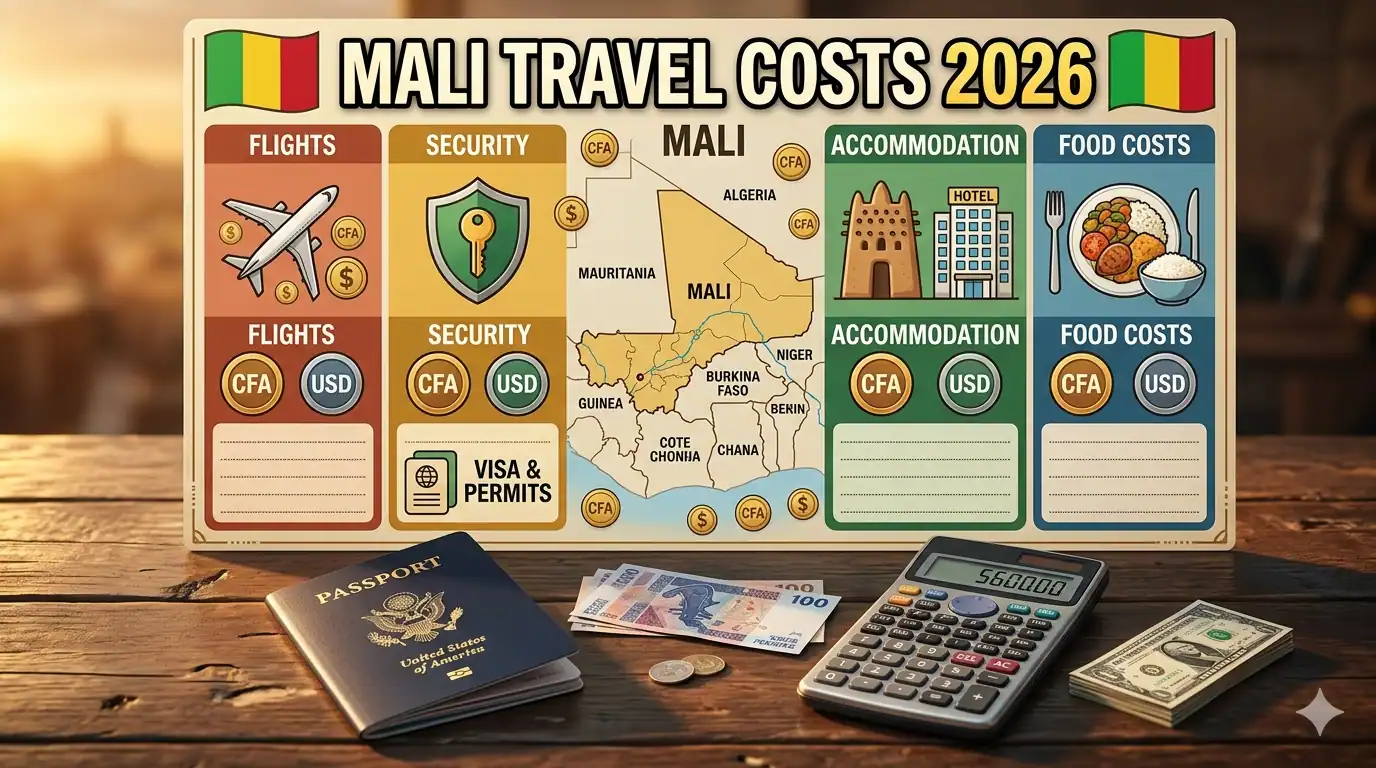
Mali Travel Cost Breakdown: How Much Does a 2026 Trip Really Cost?
Planning a trip to Mali in 2026 requires careful financial preparation alongside serious consideration of security, entry requirements, and health protocols. For travelers with legitimate authorization to visit—diplomats, accredited journalists, humanitarian workers, and citizens of countries with standard entry access—understanding the true cost of a Mali journey is essential for realistic budgeting and responsible planning. This comprehensive cost breakdown reveals the full financial picture of traveling to Mali in 2026, from flights and visas to security services and emergency preparedness.
Important context: Mali currently carries a US State Department Level 4: Do Not Travel advisory, and visa issuance for US citizens has been suspended as of January 2026. This guide is intended for travelers who have verified authorization to enter Mali through official channels. For leisure travelers, we also explore cost comparisons with safer West African alternatives that offer similar cultural experiences with greater accessibility.
Whether you're budgeting for essential professional travel or researching Mali as a potential destination, this resource provides transparent, detailed cost information aligned with current realities. From mandatory security expenditures to optional cultural experiences, discover what a Mali trip truly costs in 2026—and how to allocate resources responsibly for safe, compliant travel.
What is the average cost of a trip to Mali in 2026?
For authorized travelers, a 7-day trip to Bamako, Mali typically costs $3,500-$8,000+ USD depending on security requirements, accommodation standard, and purpose of travel. Essential security services, comprehensive insurance, and limited flight options significantly increase costs compared to typical African destinations. Leisure travelers should note that Mali's current security situation and entry restrictions make it inaccessible and inadvisable for tourism; safer West African alternatives offer comparable experiences at lower costs and risks.
Critical Context: Security and Entry Factors Affecting Costs

Before examining specific expenses, understanding Mali's current travel landscape explains why costs differ dramatically from typical destinations.
Level 4 Travel Advisory Impact:
The US State Department's Level 4: Do Not Travel advisory for Mali reflects severe risks including terrorism, kidnapping, violent crime, and civil unrest. This designation affects costs in several ways:
• Commercial travel insurance often excludes Level 4 destinations, requiring specialized (and expensive) coverage
• Flight options are limited, reducing competition and increasing airfare
• Accommodations with verified security measures command premium pricing
• Professional security services become essential rather than optional
• Emergency medical evacuation insurance is non-negotiable and costly
These factors mean Mali travel costs cannot be compared directly to safer African destinations.
Visa Suspension and Entry Complexity:
As of January 2026, Mali has suspended visa issuance to US citizens, creating additional barriers and costs for American travelers. For those with potential exemptions (diplomats, humanitarian workers, accredited journalists):
• Special authorization processes require time, documentation, and potentially legal assistance
• Coordination with embassy channels may involve administrative fees
• Uncertainty about entry approval necessitates flexible booking policies (often at higher cost)
• Alternative routing through neighboring countries may be required, adding transit expenses
Travelers from countries with standard visa access should verify current requirements directly with Malian diplomatic missions before budgeting.
Security as a Non-Negotiable Expense:
Unlike typical travel budgets where security is minimal or incidental, Mali requires professional security planning as a core cost component. This includes:
• Pre-travel risk assessments from qualified security firms
• Secure transportation with vetted drivers and vehicles
• Close protection services for movement outside secure facilities
• Communication equipment and emergency response protocols
• Kidnap and ransom insurance for high-risk assignments
These expenditures are not optional for responsible travel to Mali and significantly impact total trip costs.
Health Infrastructure Limitations:
Mali's limited medical facilities mean travelers must budget for comprehensive health preparedness:
• Travel medicine consultation and vaccinations ($200-500)
• Prescription malaria prophylaxis ($50-200 depending on regimen)
• Comprehensive travel insurance with medical evacuation ($300-1,500+)
• Personal medical supplies and medications for entire trip duration
• Contingency funds for potential medical evacuation (tens of thousands of dollars)
These health-related costs are essential investments, not discretionary expenses.
Why is Mali travel so expensive compared to neighboring countries?
Mali's elevated costs stem from security requirements, limited flight competition, specialized insurance needs, and restricted entry processes. Neighboring Senegal or Ghana offer similar West African cultural experiences with standard tourism infrastructure, lower security expenditures, and broader flight options—resulting in significantly lower total trip costs for leisure travelers.
Flight Costs: Getting to Bamako in 2026

Airfare represents one of the largest and most variable expenses for Mali travel.
Primary Gateway: Bamako-Sénou International Airport (BKO)
Most international travelers arrive via Bamako-Sénou, Mali's main airport serving the capital. Flight costs vary significantly by origin, season, and booking timing.
From North America:
• Typical routing: US/Canada → Europe (Paris, Brussels, Istanbul) → Bamako
• Average round-trip economy fare: $1,200-$2,500 USD
• Business class: $3,500-$7,000+ USD
• Airlines: Air France, Turkish Airlines, Royal Air Maroc (limited direct options)
• Booking window: 2-4 months ahead for best fares; last-minute bookings often 30-50% higher
• Note: US citizens face visa suspension; verify entry eligibility before purchasing tickets
From Europe:
• Direct flights available from Paris (Air France), Brussels (Brussels Airlines)
• Average round-trip economy fare: €600-€1,200 ($650-$1,300 USD)
• Seasonal variation: Higher prices November-February (cool, dry season)
• Flexibility tip: Mid-week departures often cheaper than weekends
From Within Africa:
• Regional connections: Casablanca, Dakar, Abidjan, Accra, Addis Ababa
• Average one-way fare: $300-$800 USD depending on origin
• Airlines: Royal Air Maroc, Ethiopian Airlines, ASKY, Air Côte d'Ivoire
• Advantage: Shorter travel time and potentially simpler visa processes for African passport holders
Cost-Saving Strategies for Flights:
• Use flight comparison tools (Google Flights, Skyscanner) with flexible date searches
• Consider nearby departure cities if multiple airports accessible
• Book refundable fares when entry authorization is uncertain
• Join airline frequent flyer programs for potential upgrades or award availability
• Avoid peak travel periods (December holidays, major conferences) if schedule allows
Important Flight Considerations:
• Verify baggage allowances; excess fees can add $50-200+ per segment
• Confirm visa requirements for transit countries (e.g., Morocco, Turkey)
• Allow ample connection time (3+ hours) for international transfers
• Keep printed copies of flight confirmations and entry documentation
How much should I budget for flights to Mali?
Budget $1,200-$2,500 USD for round-trip economy flights from North America to Bamako, or €600-€1,200 from Europe. Book 2-4 months in advance for best rates, and purchase refundable tickets if entry authorization is uncertain. Factor in potential transit visa costs and baggage fees when calculating total air travel expenses.
Visa and Entry Documentation Costs

Entry requirements significantly impact Mali travel budgets, particularly given current policy changes.
Pre-Suspension Visa Fees (For Reference):
Before the January 2026 suspension of US citizen visas, Mali visa costs included:
• Tourist/business visa application fee: $185 USD
• Processing service fees (if using visa center): $30-80 USD
• Passport photos, documentation preparation: $20-50 USD
• In-person submission travel costs (if not near embassy)
These costs may resume if visa policies change; verify current status with Embassy of Mali.
Current Entry Authorization Costs:
For travelers eligible under limited exemptions:
• Special authorization processing: Variable; may involve administrative fees
• Legal or consulting assistance for complex cases: $200-1,000+ USD
• Documentation preparation and translation: $50-300 USD
• Embassy appointment coordination: Potential service fees
• Yellow fever vaccination certificate: $50-150 USD at travel clinics
Passport and Documentation:
• Passport validity: Must be valid at time of entry; renewal costs if needed ($130-160 US)
• Blank visa pages: Ensure at least one available; passport renewal if full
• Copies and backups: Minimal cost but essential for security
• Digital storage: Secure cloud backup of travel documents
Health Documentation:
• Yellow fever vaccination: Required if arriving from endemic countries; $50-150 USD
• International Certificate of Vaccination ("yellow card"): Included with vaccination
• Additional recommended vaccines (hepatitis, typhoid, meningitis): $200-500 USD
• Travel medicine consultation: $100-300 USD for personalized health planning
Verification Costs:
• Embassy communication: Potential phone/email consultation fees
• Third-party verification services: $50-200 USD for expedited confirmation
• Legal review of entry authorization: $150-500 USD for complex cases
Do I need a visa to enter Mali in 2026?
Visa requirements depend on nationality and current policies. US citizens face visa suspension as of January 2026. Travelers from other countries should verify current requirements directly with the Embassy of Mali or official government channels before travel. Never rely on third-party visa services for high-risk destinations without official confirmation.
Accommodation Costs in Bamako

Lodging expenses in Mali vary widely based on security standards, location, and amenities.
Luxury/International Standard ($150-400/night):
• Radisson Blu Hotel Bamako: International chain with verified security, pool, business facilities
• La Maison Blanche: Boutique luxury with river views and enhanced protection
• Features: 24-hour security, gated entry, backup power, international dining, reliable WiFi
• Best for: Diplomats, corporate travelers, those requiring highest security standards
• Weekly estimate: $1,050-$2,800 USD
Mid-Range ($70-150/night):
• Hotel Azalaï Bamako: Reliable amenities, central location, security measures
• Hotel Mandé: Comfortable rooms, restaurant, meeting facilities
• Features: Basic security protocols, air conditioning, breakfast included, airport transfer options
• Best for: Humanitarian workers, journalists, budget-conscious authorized travelers
• Weekly estimate: $490-$1,050 USD
Budget/Guesthouse ($30-70/night):
• Local guesthouses in ACI 2000 or central districts
• Features: Basic rooms, shared facilities, local atmosphere, limited security
• Considerations: Verify security measures thoroughly; may not meet professional travel standards
• Best for: Extended stays with local partnerships, very budget-conscious travelers with low risk profiles
• Weekly estimate: $210-$490 USD
Security-Enhanced Accommodation Premium:
Properties with verified security measures (gated compounds, 24-hour guards, emergency protocols) typically cost 30-100% more than comparable non-secured options. This premium is non-negotiable for responsible travel to Mali and should be factored into all accommodation budgeting.
Booking Strategies:
• Reserve directly with hotels for best rates and flexibility
• Confirm security measures in writing before booking
• Request airport transfer inclusion to reduce transportation costs
• Negotiate extended-stay discounts for trips over one week
• Verify cancellation policies given entry uncertainty
Additional Accommodation Costs:
• Airport transfers: $20-50 USD each way if not included
• Laundry services: $5-15 USD per load
• Mini-bar, room service, additional meals: Variable
• Business center, meeting room rental: $50-200 USD/hour if needed
What is the safest accommodation option in Bamako?
International chain hotels like Radisson Blu Bamako or verified upscale properties with 24-hour security, gated access, and emergency protocols offer the highest safety standards. Confirm security measures directly with the property before booking, and prioritize locations in central Bamako with reliable transportation access. Budget travelers should never compromise verified security for lower cost.
Security and Protection Costs: Essential Expenditures

Security services represent the most significant cost differentiator for Mali travel compared to typical destinations.
Pre-Travel Risk Assessment ($500-2,000 USD):
• Professional security firm evaluation of itinerary, accommodations, and activities
• Threat analysis specific to traveler profile and mission objectives
• Recommendations for mitigation strategies and emergency protocols
• Written report for organizational approval and insurance purposes
• Providers: International SOS, Control Risks, local Malian security consultants
Secure Transportation ($100-400/day):
• Vetted driver with local knowledge and security training
• Vehicle with appropriate protection (armor optional for high-risk assignments)
• Fuel, maintenance, and insurance included in daily rate
• 24/7 availability for emergency movement if required
• Alternative: Hotel-arranged secure transport at potentially lower cost but less flexibility
Close Protection Services ($300-1,000+/day):
• Armed or unarmed security personnel accompanying traveler
• Route planning, advance reconnaissance, and threat monitoring
• Emergency response capability and coordination with local authorities
• Required for travel outside Bamako or high-profile assignments
• Costs vary by personnel qualifications, equipment, and mission complexity
Communication and Emergency Equipment ($100-500 one-time or rental):
• Satellite phone or messenger for areas without cellular coverage
• Local SIM card with data plan for Bamako communication
• Emergency contact protocols and check-in procedures
• Backup power sources for critical devices
Kidnap and Ransom Insurance ($500-3,000+ annually):
• Specialized coverage for high-risk destinations
• Includes crisis response, negotiation support, and family assistance
• Often required by employers for assignments to Level 4 locations
• Verify coverage details, exclusions, and activation procedures before travel
Security Cost Summary for 7-Day Bamako Trip:
• Minimum (in-city, low-profile): $1,500-3,000 USD
• Standard (professional assignment): $3,000-7,000 USD
• High-risk (remote travel, high-profile): $7,000-15,000+ USD
These expenditures are essential investments in personal safety, not optional luxuries.
Can I travel in Bamako without hiring security?
While not legally required for private travelers, professional security support is strongly recommended for any essential travel to Mali. The combination of crime, terrorism, and kidnapping risks makes independent movement inadvisable. At minimum, use hotel-arranged transportation, avoid nighttime travel, maintain low profile, and register with your embassy. For any travel outside Bamako, professional security assessment and support are non-negotiable.
Food and Dining Expenses

Meal costs in Bamako vary by venue type and dining preferences.
Budget/Local Dining ($5-15/meal):
• Street food: Accra (bean fritters), brochettes (grilled skewers), fresh fruit
• Local restaurants: Traditional dishes like tô, mafé, poulet yassa
• Markets: Fresh produce, snacks, beverages at very low cost
• Considerations: Verify food safety practices; drink only bottled water
• Daily estimate: $15-45 USD for three meals
Mid-Range Restaurants ($15-35/meal):
• Hotel restaurants: International and Malian cuisine in secure settings
• Expatriate-focused venues: Le Panoramique, Chez N'Golo, Le Safoutier
• Features: Reliable food safety, air conditioning, English menus, secure premises
• Daily estimate: $45-105 USD for three meals
Upscale Dining ($40-80+/meal):
• Luxury hotel fine dining: Multi-course meals with international standards
• Special occasion venues: Private dining, wine pairings, premium ingredients
• Features: Highest food safety standards, secure environment, reservation recommended
• Daily estimate: $120-240+ USD for three meals
Beverage Costs:
• Bottled water (1.5L): $1-3 USD
• Local beer (Castel, Flag): $3-6 USD
• Imported wine/spirits: $8-20+ USD
• Coffee/tea at cafés: $2-5 USD
• Note: Tap water is not safe to drink; budget for bottled water throughout trip
Food Budget Strategies:
• Mix local and mid-range dining to balance cost and safety
• Include breakfast with accommodation when possible to reduce daily expenses
• Carry snacks and water for day trips to avoid impulsive purchases
• Verify restaurant security measures before dining, especially evenings
7-Day Food Budget Estimates:
• Budget traveler: $105-315 USD
• Mid-range traveler: $315-735 USD
• Upscale traveler: $840-1,680+ USD
Is food safe to eat in Bamako?
Food safety requires careful selection in Bamako. Choose busy restaurants with high turnover, ensure food is thoroughly cooked, avoid raw vegetables unless peeled personally, and drink only bottled or treated water. Hotel restaurants and established venues generally maintain higher safety standards. When in doubt, prioritize food safety over cost savings to avoid illness that could complicate travel in a location with limited medical facilities.
Local Transportation and Movement Costs

Getting around Bamako safely requires budgeting for secure transportation options.
Hotel-Arranged Transportation ($20-50/trip):
• Airport transfers: $20-50 USD each way
• In-city trips: $10-30 USD depending on distance and duration
• Advantages: Vetted drivers, known vehicles, billing to room for convenience
• Best for: Short trips, travelers prioritizing simplicity and verified security
Private Driver Hire ($80-200/day):
• Full-day vehicle and driver for flexible movement
• Includes fuel, driver expertise, and basic security awareness
• Ideal for: Multiple stops, photography, market visits, day exploration
• Negotiate rate in advance; confirm vehicle condition and driver credentials
Secure Transportation Services ($150-400/day):
• Professional security firms offering armored vehicles and trained personnel
• Required for: Travel outside Bamako, high-profile assignments, elevated threat environments
• Includes: Advance route planning, threat monitoring, emergency response capability
• Book through reputable international or local security providers
Public Transportation (Not Recommended):
• Sotramas (minibuses): Very low cost ($0.50-2 USD) but not recommended for travelers due to safety, security, and reliability concerns
• Unmarked taxis: Avoid due to verification and security risks
• Ride-hailing apps: Limited availability and unverified driver status in Bamako
Transportation Budget for 7-Day Trip:
• Minimal (hotel transfers only): $140-350 USD
• Moderate (mix of hotel and private driver): $400-1,000 USD
• Comprehensive (secure services throughout): $1,000-2,800+ USD
Transportation Cost-Saving Tips:
• Cluster activities geographically to minimize trips
• Negotiate multi-day driver rates for better value
• Confirm all transportation costs in writing before service begins
• Keep small bills (CFA francs) for tips and incidental expenses
How do I get around Bamako safely?
Use pre-arranged transportation through your hotel or reputable security services for all movement in Bamako. Avoid public minibuses, unmarked taxis, and walking after dark. Confirm driver identity and vehicle details before entering any vehicle. For essential travel outside the city center, engage professional security guidance and support.
Activities, Cultural Experiences, and Sightseeing

While security considerations limit some activities, Bamako offers meaningful cultural experiences for authorized travelers.
Museum and Cultural Site Entry Fees:
• National Museum of Mali: ~$3-5 USD entry; guided tours additional
• Grand Mosque exterior viewing: Free (non-Muslims may not enter prayer areas)
• Cultural centers and galleries: $2-10 USD depending on exhibitions
• Photography permits: May require additional fees at certain sites
Market Shopping and Crafts:
• Marché du Fleuve: No entry fee; budget for purchases
• Authentic crafts (bogolanfini, masks, jewelry): $10-200+ USD depending on item
• Bargaining expected: Start at 30-40% of asking price and negotiate respectfully
• Support artisan cooperatives for fairer pricing and quality assurance
• Verify export regulations for cultural artifacts before purchasing
Music and Performance Experiences:
• Live music venues: $5-20 USD cover or minimum spend
• Cultural performances: $10-50 USD depending on venue and production
• Mali's musical heritage is world-renowned; prioritize authentic local artists
• Confirm venue security and transportation arrangements for evening events
Guided Tours and Workshops:
• Half-day cultural tours: $50-150 USD including guide and transportation
• Craft workshops (mud cloth, leatherwork): $30-100 USD for hands-on experience
• Language or cooking classes: $40-120 USD per session
• Book through reputable operators who verify guide credentials and safety protocols
Activities Budget for 7-Day Trip:
• Minimal (self-guided, low-cost experiences): $50-200 USD
• Moderate (mix of paid tours and cultural activities): $200-600 USD
• Comprehensive (private guides, workshops, performances): $600-1,500+ USD
Activity Planning Tips:
• Prioritize experiences that align with your travel purpose and interests
• Verify security arrangements for any activity outside secure accommodations
• Support local artisans and cultural practitioners through direct purchases
• Respect photography restrictions at government, military, and religious sites
What cultural experiences are safe in Bamako?
Secure venues like the National Museum, established restaurants with live music, and guided market visits with vetted operators offer safe cultural engagement. Avoid large crowds, political gatherings, and unverified events. Always confirm activity security protocols with your accommodation or security provider before participating. Prioritize experiences that support local communities while maintaining personal safety.
Travel Insurance and Medical Preparedness Costs

Comprehensive insurance and health preparation are essential, non-negotiable expenses for Mali travel.
Travel Insurance with Medical Evacuation ($300-1,500+ for 7 days):
• Standard policies often exclude Level 4 destinations; verify Mali coverage explicitly
• Medical evacuation coverage essential: Costs $10,000-100,000+ if needed
• Recommended providers: International SOS, Global Rescue, specialized high-risk insurers
• Coverage should include: Emergency medical, evacuation, repatriation, trip interruption
• Read exclusions carefully; some policies exclude terrorism, civil unrest, or kidnapping
Travel Medicine Consultation ($100-300 USD):
• Pre-travel health assessment with travel medicine specialist
• Personalized recommendations for vaccinations, medications, and precautions
• Documentation for insurance and entry requirements
• Locate specialists through CDC travel health resources or major medical centers
Vaccinations and Preventive Medications ($200-700 USD):
• Yellow fever vaccination (if required): $50-150 USD
• Routine vaccines update (hepatitis A/B, typhoid, meningitis): $150-400 USD
• Malaria prophylaxis prescription: $50-200 USD depending on regimen
• Additional recommended: Rabies pre-exposure for certain activities
Personal Medical Supplies ($50-200 USD):
• Prescription medications in original packaging with copies of prescriptions
• Basic first-aid kit: bandages, antiseptic, pain relievers, anti-diarrheal
• Insect repellent with DEET, sunscreen, oral rehydration salts
• Any personal health items not reliably available in Mali
Emergency Contingency Fund:
• Set aside $1,000-5,000+ USD accessible for unexpected medical or security needs
• Maintain multiple payment methods: cash (USD and CFA francs), credit cards, wire transfer capability
• Share emergency fund access protocols with trusted contacts
Insurance and Health Budget Summary:
• Minimum essential coverage: $650-1,700 USD for 7-day trip
• Comprehensive high-risk coverage: $1,500-3,000+ USD
• These costs protect against potentially catastrophic expenses and are critical investments
Do I need special travel insurance for Mali?
Yes, comprehensive travel insurance with explicit Mali coverage and medical evacuation is essential. Standard policies often exclude Level 4 advisory destinations. Verify that your policy covers emergency medical evacuation to a country with adequate healthcare (typically Europe), 24/7 assistance access from Mali, and any specific risks relevant to your travel purpose. Carry insurance documentation and emergency contacts at all times.
Sample Budget Breakdowns: 7-Day Mali Trip Scenarios

These realistic budget scenarios help travelers plan financially for authorized Mali travel.
Scenario 1: Essential Professional Travel (Minimum Security)
Profile: Humanitarian worker or journalist with low-profile assignment in Bamako
Assumptions: In-city activities only, mid-range accommodation, essential security
• Flights (round-trip from Europe): $900 USD
• Visa/entry documentation: $250 USD
• Accommodation (mid-range, 7 nights): $700 USD
• Food (mix of local and mid-range): $350 USD
• Transportation (hotel transfers + private driver): $500 USD
• Security services (basic risk assessment + secure transport): $2,000 USD
• Travel insurance with evacuation: $600 USD
• Health preparations (vaccines, meds, consultation): $400 USD
• Activities and cultural experiences: $200 USD
• Contingency fund (10%): $600 USD
Total Estimated Cost: $6,500 USD
Notes: This represents a responsible minimum budget for essential travel. Costs increase significantly for travel outside Bamako or higher-profile assignments.
Scenario 2: Standard Professional Assignment
Profile: Diplomat, senior journalist, or NGO staff with moderate security requirements
Assumptions: Enhanced security, upscale accommodation, comprehensive insurance
• Flights (round-trip from North America): $1,800 USD
• Visa/entry documentation: $400 USD
• Accommodation (luxury, 7 nights): $2,100 USD
• Food (mid-range to upscale): $600 USD
• Transportation (secure services throughout): $1,400 USD
• Security services (assessment + close protection): $4,500 USD
• Travel insurance with comprehensive coverage: $1,200 USD
• Health preparations: $550 USD
• Activities and cultural engagement: $400 USD
• Contingency fund (15%): $1,900 USD
Total Estimated Cost: $14,850 USD
Notes: Reflects typical costs for professional assignments requiring enhanced security protocols and higher accommodation standards.
Scenario 3: High-Risk or Remote Assignment
Profile: Travel requiring movement outside Bamako or elevated threat environment
Assumptions: Armored transport, armed protection, specialized insurance
• Flights and entry: $2,200 USD
• Accommodation (secure luxury): $2,800 USD
• Food and logistics: $800 USD
• Transportation (armored vehicles, multiple drivers): $3,500 USD
• Security services (armed close protection, advance teams): $8,000+ USD
• Specialized insurance (kidnap/ransom coverage): $2,500 USD
• Health and emergency preparedness: $800 USD
• Activities and operational costs: $600 USD
• Contingency fund (20%): $4,200 USD
Total Estimated Cost: $25,400+ USD
Notes: Costs vary widely based on specific threat assessments, location, and mission requirements. Professional security consultation is essential for accurate budgeting.
Budget Planning Tips:
• Obtain written quotes from security providers before finalizing budgets
• Build in 15-25% contingency for unexpected costs or extended stays
• Verify insurance coverage details in writing before travel
• Maintain accessible emergency funds separate from daily expenses
• Document all expenditures for organizational reimbursement or tax purposes
How much should I budget for a week in Mali?
For authorized essential travel to Bamako: Budget $6,500-15,000+ USD for 7 days depending on security requirements, accommodation standard, and travel purpose. Security services, comprehensive insurance, and limited flight options significantly increase costs compared to typical destinations. Leisure travelers should consider safer West African alternatives offering similar cultural experiences at lower costs and risks.
Cost Comparison: Mali vs. West African Alternatives

For leisure travelers interested in West African culture but seeking accessible, safer destinations, comparing costs highlights Mali's unique financial barriers.
7-Day Trip Cost Comparison (Leisure Traveler Profile):
• Mali (Bamako): $6,500-15,000+ USD (essential travel minimum)
• Senegal (Dakar): $1,800-3,500 USD
• Ghana (Accra): $2,000-4,000 USD
• Morocco (Marrakech): $1,500-3,000 USD
Key Cost Differences:
• Security services: Mali requires $1,500-8,000+; alternatives typically $0-200
• Insurance: Mali requires specialized high-risk coverage ($600-2,500+); alternatives use standard policies ($100-400)
• Flights: Mali has limited competition increasing fares; alternatives offer more options and lower prices
• Accommodation: Mali's security-verified properties command premiums; alternatives have broader price ranges
• Entry complexity: Mali's visa suspension adds uncertainty and potential legal costs; alternatives have straightforward processes
Cultural Experience Comparison:
• Mali: Rich musical heritage, historic sites, traditional crafts—but access severely limited
• Senegal: Gorée Island, vibrant music scene, similar Islamic culture—more accessible
• Ghana: Historic slave trade sites, cultural festivals, English-speaking—tourism infrastructure well-developed
• Morocco: Imperial cities, Sahara access, Islamic architecture—established tourism sector
Recommendation: Leisure travelers seeking West African cultural experiences should prioritize Senegal or Ghana, which offer comparable richness with significantly lower costs, risks, and entry barriers.
Is Senegal a more affordable alternative to Mali?
Yes, Senegal offers similar West African cultural experiences—Islamic heritage, traditional music, historic sites, Sahel landscapes—with significantly lower costs and risks. US citizens can obtain visa-on-arrival, flight options are more competitive, security requirements are standard rather than exceptional, and tourism infrastructure is well-developed. Total trip costs are typically 60-80% lower than Mali for comparable experiences.
Money-Saving Strategies for Authorized Mali Travel
While Mali travel costs are inherently high, strategic planning can optimize expenditures for essential travelers.
Flight Cost Optimization:
• Book 2-4 months ahead for best fares; avoid last-minute purchases
• Use flexible date searches to identify cheaper departure days
• Consider nearby departure airports if accessible
• Join airline frequent flyer programs for potential upgrades or award availability
• Verify baggage allowances to avoid excess fees
Accommodation Value:
• Negotiate extended-stay discounts for trips over one week
• Request airport transfer inclusion to reduce separate transportation costs
• Consider mid-range properties with verified security rather than luxury if budget constrained
• Book directly with hotels for best rates and flexibility
Security Cost Management:
• Obtain multiple quotes from reputable security providers
• Clearly define scope of services to avoid unnecessary expenditures
• Cluster activities to minimize transportation and security hours
• Leverage organizational security resources if traveling for employer/NGO
Food and Daily Expenses:
• Include breakfast with accommodation when possible
• Mix local dining (with safety verification) and mid-range venues
• Carry snacks and water to avoid impulsive purchases during activities
• Use hotel mini-fridge for storing personal beverages and snacks
Insurance and Health:
• Compare specialized high-risk insurance providers for best coverage-to-cost ratio
• Complete vaccinations through public health clinics when possible for lower costs
• Bring sufficient personal medications to avoid premium local pricing
• Verify what health costs your organization covers before personal expenditure
Contingency Planning:
• Maintain emergency funds in multiple accessible forms (cash, cards, wire)
• Document all expenditures for potential reimbursement
• Build 15-25% buffer into total budget for unexpected costs or extensions
• Establish clear spending approval protocols if traveling for organization
Can I reduce Mali travel costs without compromising safety?
Yes, by optimizing flights, negotiating accommodation rates, clustering activities to minimize security hours, and comparing insurance providers. However, never compromise verified security measures, comprehensive insurance, or health preparations to save money. These are essential investments in personal safety, not discretionary expenses. Focus cost-saving efforts on flexible categories while maintaining non-negotiable security and health standards.
Final Considerations: Responsible Financial Planning for Mali Travel
Traveling to Mali in 2026 requires financial preparation that acknowledges both the significant costs and the serious risks involved. For authorized travelers with legitimate purposes, this cost breakdown provides a realistic framework for budgeting essential expenditures while maintaining safety and compliance.
Key financial principles for Mali travel:
Security Is Non-Negotiable:
Professional security services, verified accommodations, and secure transportation are essential investments, not optional luxuries. Budget for these costs first before allocating funds to other categories. Cutting corners on security exposes travelers to unacceptable risks and potentially far greater costs in emergencies.
Insurance Is Critical Protection:
Comprehensive travel insurance with explicit Mali coverage and medical evacuation capability protects against potentially catastrophic expenses. Verify coverage details in writing before travel and carry documentation at all times. The cost of proper insurance is minimal compared to the financial consequences of an uncovered emergency.
Contingency Planning Is Essential:
Maintain accessible emergency funds and flexible booking policies given entry uncertainty and potential for extended stays. Build 15-25% buffer into total budgets for unexpected costs, delays, or changing circumstances.
Transparency Supports Responsibility:
Document expenditures, obtain written quotes for services, and maintain clear communication with sponsors or organizations funding travel. Financial transparency supports accountability and enables better planning for future missions.
Alternatives Merit Consideration:
For leisure travelers, safer West African destinations like Senegal or Ghana offer comparable cultural experiences at significantly lower costs and risks. Responsible travel planning includes honest assessment of whether Mali's unique challenges align with your travel purpose and resources.
As you plan financially for Mali travel in 2026, remember that every expenditure serves a purpose: protecting your safety, ensuring compliance with entry requirements, supporting local communities through responsible tourism, or enabling your professional mission. Thoughtful budgeting is not just about numbers—it's about preparing for a journey undertaken with intention, respect, and commitment to responsible engagement.
Whether your Mali trip is essential professional travel or informed research, may your financial preparation support safe, compliant, and meaningful experiences. The true cost of travel includes not just dollars spent but wisdom applied, risks managed, and respect demonstrated. Budget accordingly.
0 Comments