.webp)
.webp)
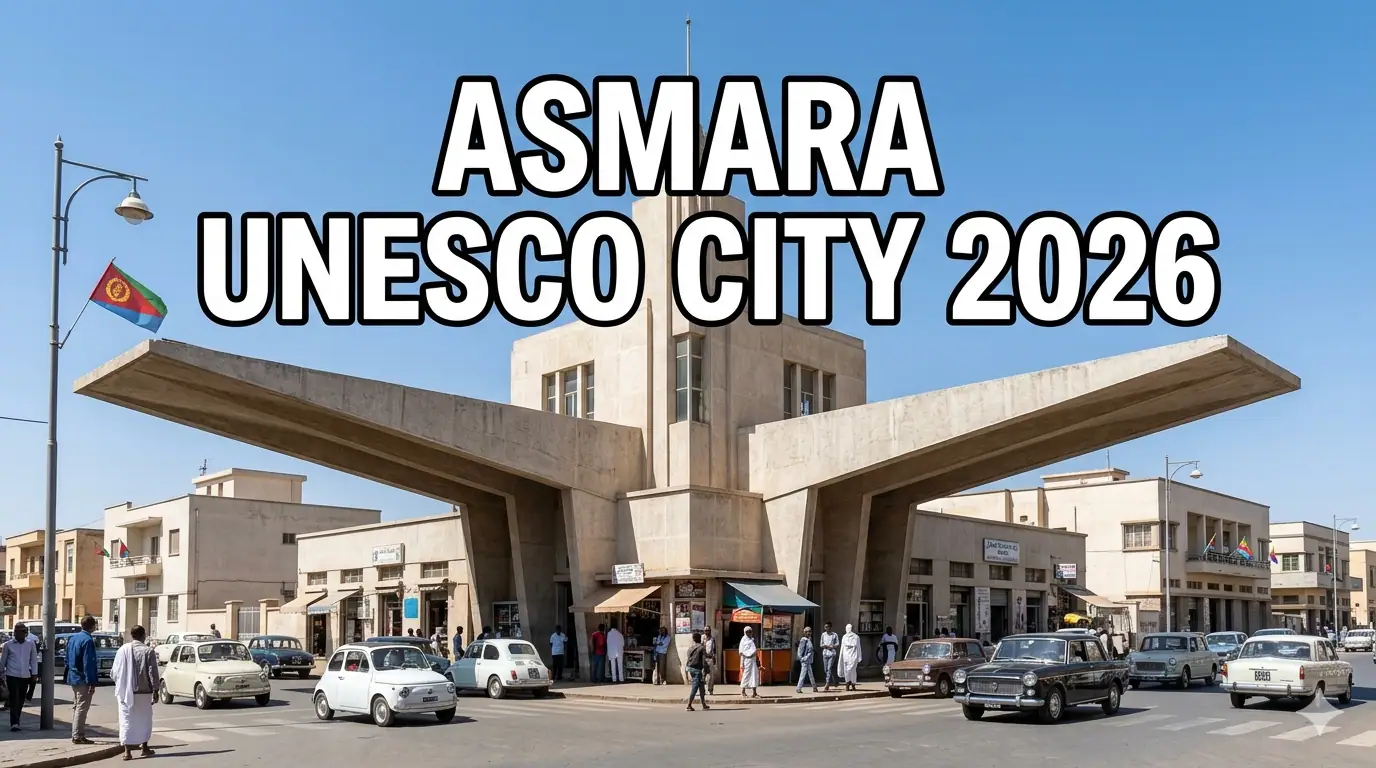
Asmara UNESCO Modernist City: Why "Little Rome" Is the World's First Entirely Listed Modernist City
In the highlands of Eritrea, perched at over 2,300 meters above sea level, lies a city unlike any other on the African continent. Asmara, affectionately known as "Little Rome," holds a distinction that sets it apart from every other urban center globally: it is the world's first modernist city to be entirely listed as a UNESCO World Heritage Site. This groundbreaking designation, awarded in 2017, recognizes not just individual buildings but the entire urban fabric of the Eritrean capital as a masterpiece of human creative genius and a testament to a unique moment in architectural history.
For travelers in 2026, Asmara represents a fascinating convergence of history, architecture, and culture. Walking its streets feels like stepping into a time capsule where Italian Rationalist architecture meets African resilience. From the futuristic Fiat Tagliero Service Station to the art deco Cinema Impero, the cityscape tells the story of colonial ambition, modernist innovation, and post-colonial preservation. But beyond the architecture, Asmara offers rich cultural experiences, from traditional coffee ceremonies to vibrant street life, all set against a backdrop of cool highland climate and warm hospitality.
This comprehensive guide explores why Asmara earned its UNESCO status, what makes its modernist architecture so exceptional, and how you can plan a visit to this unique destination in 2026. Whether you're an architecture enthusiast, a history buff, or an adventurous traveler seeking off-the-beaten-path destinations, this guide provides everything you need to know about visiting the world's first entirely listed modernist city.
Understanding the UNESCO Designation: A Historic First

What Does "Entirely Listed" Mean?
When UNESCO inscribed Asmara on the World Heritage List in July 2017, it marked a paradigm shift in how urban heritage is protected. Typically, World Heritage Sites focus on specific monuments, archaeological sites, or historic districts within a city. Asmara's designation is different because it encompasses the entire city center—approximately four square kilometers—recognizing the urban ensemble as a whole.
Key aspects of the designation include:
- Holistic protection: The entire urban plan, including street layouts, public spaces, and building facades, is protected
- Modernist focus: Recognizes early 20th-century modernist architecture applied in an African context
- Cultural landscape: Acknowledges the interaction between Italian colonial planning and African urban life
- Preservation mandate: Requires Eritrean authorities to maintain the architectural integrity of the city center
- 👉 Leptis Magna 2026: The Ultimate Visitor Guide to the Mediterranean's Best-Preserved Roman City
- 👉 Sudan Itinerary Ancient Gold Trade Routes Nubian Desert Exploration
- 👉 Guinea Highland Adventure 2026: Beyond the Atlantic Coast
This comprehensive approach ensures that Asmara remains not just a collection of old buildings but a living, breathing example of modernist urbanism preserved in its authentic context.
UNESCO Criteria for Inscription
Asmara was inscribed under UNESCO Criterion (ii) and Criterion (iv), recognizing its outstanding universal value:
- Criterion (ii): Exhibits an important interchange of human values over a span of time on developments in architecture or technology, monumental arts, town-planning, or landscape design. Asmara demonstrates the application of Italian modernist planning principles to an African colonial context.
- Criterion (iv): Is an outstanding example of a type of building, architectural or technological ensemble, or landscape which illustrates a significant stage in human history. Asmara represents the culmination of modernist urban experimentation in the 1930s.
- 👉 Leptis Magna 2026: The Ultimate Visitor Guide to the Mediterranean's Best-Preserved Roman City
- 👉 Sudan Itinerary Ancient Gold Trade Routes Nubian Desert Exploration
- 👉 Guinea Highland Adventure 2026: Beyond the Atlantic Coast
The designation acknowledges that Asmara is an exceptional example of early modernist urbanism at the beginning of the 20th century, including its functional layout and the variety of building types designed in different modernist styles.
The Architecture of "Little Rome": A Walking Tour Through Modernism

Italian Rationalism and Art Deco
The architectural character of Asmara was shaped primarily between 1890 and 1941, during the Italian colonial period. After 1935, under Mussolini's fascist regime, Asmara underwent a massive construction boom that transformed it into a showcase of Italian Rationalist architecture. This style emphasized simplicity, functionality, and geometric forms, rejecting ornate decoration in favor of clean lines and modern materials.
Architectural styles found in Asmara include:
- Italian Rationalism: Functional, geometric buildings with minimal ornamentation
- Art Deco: Decorative geometric patterns, streamlined forms, and vertical emphasis
- Futurism: Dynamic, forward-looking designs emphasizing speed and technology
- Neo-Romanesque: Traditional elements blended with modernist principles
- Neo-Classical: Classical proportions adapted to modern construction
- 👉 Leptis Magna 2026: The Ultimate Visitor Guide to the Mediterranean's Best-Preserved Roman City
- 👉 Sudan Itinerary Ancient Gold Trade Routes Nubian Desert Exploration
- 👉 Guinea Highland Adventure 2026: Beyond the Atlantic Coast
The concentration of these styles within such a compact area is unmatched anywhere else in the world, making Asmara an open-air museum of modernist architecture.
Iconic Buildings You Must See
Fiat Tagliero Service Station (1938):
Perhaps the most iconic building in Asmara, the Fiat Tagliero Service Station is a masterpiece of Futurist architecture. Designed by Giuseppe Pettazzi, the building resembles an airplane with a central tower and two 15-meter concrete wings that extend outward without internal support. Legend has it that Pettazzi held workers at gunpoint to remove the supporting scaffolding, trusting his engineering calculations. Today, it remains a functioning service station and a symbol of Asmara's architectural ambition.
Cinema Impero (1937):
Considered one of the world's finest examples of Art Deco cinema architecture, Cinema Impero features a striking facade with vertical lines, geometric patterns, and a prominent tower. The interior retains much of its original decor, including chandeliers, velvet seats, and decorative plasterwork. It still operates as a cinema, offering visitors a chance to experience the building as intended.
Presidential Palace (1897):
Originally built as the governor's palace, this Neo-Romanesque building features a distinctive clock tower and ornate facade. It represents the earlier phase of Italian colonial architecture before the modernist movement took hold. The palace remains an important government building today.
Asmara Opera House (1918):
A beautiful example of Neo-Romanesque architecture, the Opera House features ornate detailing, arched windows, and a grand facade. It reflects the cultural ambitions of the Italian colonial administration and remains a venue for performances and events.
Bar Zilli (1930s):
This iconic bar features a distinctive curved facade and interior design typical of 1930s modernist cafes. It remains a popular gathering spot for locals and visitors, offering coffee, pastries, and a glimpse into Asmara's cafe culture.
Cinema Roma (1937):
Another stunning example of Art Deco cinema architecture, Cinema Roma features a streamlined facade with vertical emphasis and geometric detailing. Like Cinema Impero, it represents the golden age of Asmara's cultural life.
Why Visit Asmara in 2026?

Preservation and Authenticity
In 2026, Asmara offers something increasingly rare: authenticity. Unlike many historic cities that have been过度 developed or commercialized, Asmara retains its original character. The dry highland climate has helped preserve the buildings, and Eritrea's limited economic development has inadvertently protected the city from modern redevelopment pressures. Walking the streets of Asmara feels like traveling back to the 1930s, with vintage Fiat cars still common on the roads and original shop signs still visible on buildings.
Cultural Richness
Beyond architecture, Asmara offers rich cultural experiences. The city is a melting pot of Eritrea's nine ethnic groups, plus Italian, Arab, and Indian influences. This diversity is reflected in the food, language, and daily life. The traditional coffee ceremony, a cornerstone of Eritrean culture, is a must-experience ritual that showcases hospitality and community.
Climate and Comfort
Located at 2,325 meters (7,628 feet) above sea level, Asmara enjoys a mild highland climate year-round. Temperatures typically range from 15°C to 25°C (59°F to 77°F), making it comfortable for walking and exploring. This contrasts sharply with the hot, humid conditions found in many other African destinations, making Asmara an ideal destination for outdoor exploration.
Off-the-Beaten-Path Adventure
Eritrea remains one of the least-visited countries in Africa, offering travelers the chance to explore a destination few others have experienced. The limited tourism infrastructure means authentic interactions with locals and unspoiled experiences. For adventurous travelers seeking something genuinely different, Asmara delivers.
Practical Travel Guide: How to Visit Asmara

Visa Requirements and Entry Rules
Visiting Eritrea requires careful planning, as the visa process is more complex than many other destinations. Here's what you need to know for 2026:
Visa Types:
- Tourist Visa: Required for all leisure travelers; typically valid for 30 days
- Business Visa: Required for professional visits; requires invitation from Eritrean entity
- Transit Visa: Available for short stops; requires onward ticket
- 👉 Leptis Magna 2026: The Ultimate Visitor Guide to the Mediterranean's Best-Preserved Roman City
- 👉 Sudan Itinerary Ancient Gold Trade Routes Nubian Desert Exploration
- 👉 Guinea Highland Adventure 2026: Beyond the Atlantic Coast
Application Process:
- Tour operator sponsorship: Most independent travelers must apply through a government-approved tour operator who acts as visa sponsor
- Invitation letter: Required for all visa applications; provided by tour operator or hotel
- Embassy processing: Visas are typically issued through Eritrean embassies abroad, not on arrival
- Processing time: Allow 4-8 weeks for visa processing; apply well in advance
- Visa fee: Approximately $50-100 USD depending on nationality and visa type
- 👉 Leptis Magna 2026: The Ultimate Visitor Guide to the Mediterranean's Best-Preserved Roman City
- 👉 Sudan Itinerary Ancient Gold Trade Routes Nubian Desert Exploration
- 👉 Guinea Highland Adventure 2026: Beyond the Atlantic Coast
Important Notes:
- Passport must be valid for at least 6 months beyond intended stay
- Yellow fever vaccination certificate required if arriving from endemic countries
- Travel insurance with medical evacuation coverage strongly recommended
- Register with your embassy upon arrival
- 👉 Leptis Magna 2026: The Ultimate Visitor Guide to the Mediterranean's Best-Preserved Roman City
- 👉 Sudan Itinerary Ancient Gold Trade Routes Nubian Desert Exploration
- 👉 Guinea Highland Adventure 2026: Beyond the Atlantic Coast
Getting to Asmara
By Air:
- Asmara International Airport (ASM): The main gateway to Eritrea
- Direct flights: Limited international service from Addis Ababa (Ethiopia), Cairo (Egypt), Dubai (UAE), and Frankfurt (Germany)
- Airlines: Eritrean Airlines, Ethiopian Airlines, EgyptAir, Lufthansa (seasonal)
- Flight time: Varies by origin; approximately 2 hours from Addis Ababa, 4-5 hours from Cairo
- 👉 Leptis Magna 2026: The Ultimate Visitor Guide to the Mediterranean's Best-Preserved Roman City
- 👉 Sudan Itinerary Ancient Gold Trade Routes Nubian Desert Exploration
- 👉 Guinea Highland Adventure 2026: Beyond the Atlantic Coast
By Land:
- From Ethiopia: Border crossings exist but require special permits and are subject to political conditions; check current status before planning
- From Sudan: Border crossings available but require additional permits and security clearance
- 👉 Leptis Magna 2026: The Ultimate Visitor Guide to the Mediterranean's Best-Preserved Roman City
- 👉 Sudan Itinerary Ancient Gold Trade Routes Nubian Desert Exploration
- 👉 Guinea Highland Adventure 2026: Beyond the Atlantic Coast
Recommendation: Flying into Asmara is the most reliable and straightforward option for most travelers in 2026.
Getting Around Asmara
Walking:
- Asmara's city center is compact and highly walkable
- Most major architectural sites are within walking distance of each other
- Walking allows you to appreciate the urban fabric and discover hidden gems
- 👉 Leptis Magna 2026: The Ultimate Visitor Guide to the Mediterranean's Best-Preserved Roman City
- 👉 Sudan Itinerary Ancient Gold Trade Routes Nubian Desert Exploration
- 👉 Guinea Highland Adventure 2026: Beyond the Atlantic Coast
Taxis:
- Blue and white taxis are abundant and affordable
- Negotiate fare before starting journey; meters rarely used
- Shared taxis (contract taxis) follow fixed routes and are very inexpensive
- 👉 Leptis Magna 2026: The Ultimate Visitor Guide to the Mediterranean's Best-Preserved Roman City
- 👉 Sudan Itinerary Ancient Gold Trade Routes Nubian Desert Exploration
- 👉 Guinea Highland Adventure 2026: Beyond the Atlantic Coast
Rental Cars:
- Available but require special permits for travel outside Asmara
- Driving is on the right side of the road
- International driving permit recommended
- 👉 Leptis Magna 2026: The Ultimate Visitor Guide to the Mediterranean's Best-Preserved Roman City
- 👉 Sudan Itinerary Ancient Gold Trade Routes Nubian Desert Exploration
- 👉 Guinea Highland Adventure 2026: Beyond the Atlantic Coast
Accommodation Options
Luxury Hotels:
- Hotel Asmara: Historic hotel in city center; classic colonial charm
- Grand Hotel: Recently renovated; modern amenities in historic setting
- Price range: $80-150 USD per night
- 👉 Leptis Magna 2026: The Ultimate Visitor Guide to the Mediterranean's Best-Preserved Roman City
- 👉 Sudan Itinerary Ancient Gold Trade Routes Nubian Desert Exploration
- 👉 Guinea Highland Adventure 2026: Beyond the Atlantic Coast
Mid-Range Hotels:
- Hotel Colosseum: Central location; good value
- Albergo Italia: Historic building; authentic atmosphere
- Price range: $40-80 USD per night
- 👉 Leptis Magna 2026: The Ultimate Visitor Guide to the Mediterranean's Best-Preserved Roman City
- 👉 Sudan Itinerary Ancient Gold Trade Routes Nubian Desert Exploration
- 👉 Guinea Highland Adventure 2026: Beyond the Atlantic Coast
Budget Options:
- Guesthouses: Family-run accommodations; basic but clean
- Hostels: Limited availability; book in advance
- Price range: $15-40 USD per night
- 👉 Leptis Magna 2026: The Ultimate Visitor Guide to the Mediterranean's Best-Preserved Roman City
- 👉 Sudan Itinerary Ancient Gold Trade Routes Nubian Desert Exploration
- 👉 Guinea Highland Adventure 2026: Beyond the Atlantic Coast
Booking Tip: Accommodation options are limited compared to major tourist destinations; book well in advance, especially during peak season (October-March).
Sample Itinerary: Exploring Asmara in 3 Days

Day 1: Architectural Highlights
- Morning: Start at Independence Square; visit Presidential Palace and Asmara Opera House
- Late Morning: Walk to Fiat Tagliero Service Station; photograph the iconic wings
- Lunch: Traditional Eritrean injera at local restaurant
- Afternoon: Visit Cinema Impero; explore surrounding Art Deco buildings
- Evening: Coffee ceremony experience; dinner at Italian-Eritrean fusion restaurant
- 👉 Leptis Magna 2026: The Ultimate Visitor Guide to the Mediterranean's Best-Preserved Roman City
- 👉 Sudan Itinerary Ancient Gold Trade Routes Nubian Desert Exploration
- 👉 Guinea Highland Adventure 2026: Beyond the Atlantic Coast
Day 2: Culture and Markets
- Morning: Visit Asmara Market (Shwa); observe daily life and local crafts
- Late Morning: Explore Enda Mariam Cathedral; blend of African and Italian styles
- Lunch: Street food tour; try himba, taita, and local snacks
- Afternoon: Visit National Museum; learn about Eritrean history and culture
- Evening: Walk along Harnet Avenue; enjoy evening atmosphere
- 👉 Leptis Magna 2026: The Ultimate Visitor Guide to the Mediterranean's Best-Preserved Roman City
- 👉 Sudan Itinerary Ancient Gold Trade Routes Nubian Desert Exploration
- 👉 Guinea Highland Adventure 2026: Beyond the Atlantic Coast
Day 3: Day Trip to Massawa
- Early Morning: Depart for Massawa (2-hour drive); descend from highlands to Red Sea coast
- Morning: Explore Old Massawa; Ottoman and Egyptian architecture
- Lunch: Fresh seafood at Red Sea waterfront
- Afternoon: Visit Dahlak Archipelago viewpoint; optional boat trip
- Evening: Return to Asmara; farewell dinner
- 👉 Leptis Magna 2026: The Ultimate Visitor Guide to the Mediterranean's Best-Preserved Roman City
- 👉 Sudan Itinerary Ancient Gold Trade Routes Nubian Desert Exploration
- 👉 Guinea Highland Adventure 2026: Beyond the Atlantic Coast
Travel Costs: Budgeting for Asmara

Daily Expenses (Per Person)
- Accommodation: $40-150 USD (depending on category)
- Meals: $10-30 USD (local restaurants to mid-range)
- Transportation: $5-20 USD (taxis and shared taxis)
- Attractions: $10-20 USD (museum entries, cinema tickets)
- Miscellaneous: $10-20 USD (souvenirs, tips, snacks)
- 👉 Leptis Magna 2026: The Ultimate Visitor Guide to the Mediterranean's Best-Preserved Roman City
- 👉 Sudan Itinerary Ancient Gold Trade Routes Nubian Desert Exploration
- 👉 Guinea Highland Adventure 2026: Beyond the Atlantic Coast
Total estimated daily budget: $75-240 USD per person
Additional Costs
- Visa fees: $50-100 USD
- Tour operator fees: $100-300 USD (if required for visa)
- Travel insurance: $50-150 USD (depending on coverage)
- Flights: Varies significantly by origin; $800-2,000 USD from Europe/North America
- 👉 Leptis Magna 2026: The Ultimate Visitor Guide to the Mediterranean's Best-Preserved Roman City
- 👉 Sudan Itinerary Ancient Gold Trade Routes Nubian Desert Exploration
- 👉 Guinea Highland Adventure 2026: Beyond the Atlantic Coast
Total estimated trip cost (7 days): $1,500-3,500 USD per person (excluding international flights)
Best Time to Visit Asmara

Climate Overview
Asmara's highland location creates a mild climate year-round, but there are distinct seasons:
Dry Season (October-May):
- Weather: Sunny days, cool nights; minimal rainfall
- Temperatures: 15-25°C (59-77°F)
- Best for: Walking tours, photography, outdoor activities
- Crowds: Peak tourist season; book accommodation in advance
- 👉 Leptis Magna 2026: The Ultimate Visitor Guide to the Mediterranean's Best-Preserved Roman City
- 👉 Sudan Itinerary Ancient Gold Trade Routes Nubian Desert Exploration
- 👉 Guinea Highland Adventure 2026: Beyond the Atlantic Coast
Rainy Season (June-September):
- Weather: Afternoon showers; lush green landscapes
- Temperatures: 18-28°C (64-82°F)
- Best for: Lower prices, fewer tourists, dramatic skies
- Considerations: Some outdoor activities may be disrupted by rain
- 👉 Leptis Magna 2026: The Ultimate Visitor Guide to the Mediterranean's Best-Preserved Roman City
- 👉 Sudan Itinerary Ancient Gold Trade Routes Nubian Desert Exploration
- 👉 Guinea Highland Adventure 2026: Beyond the Atlantic Coast
Recommended Months
- October-November: Ideal weather; post-rain greenery; comfortable temperatures
- December-February: Peak season; perfect weather; festive atmosphere
- March-May: Warm but pleasant; good value before peak season
- 👉 Leptis Magna 2026: The Ultimate Visitor Guide to the Mediterranean's Best-Preserved Roman City
- 👉 Sudan Itinerary Ancient Gold Trade Routes Nubian Desert Exploration
- 👉 Guinea Highland Adventure 2026: Beyond the Atlantic Coast
Cultural Experiences: Beyond Architecture

The Coffee Ceremony
No visit to Asmara is complete without experiencing a traditional Eritrean coffee ceremony. This ritual is a cornerstone of Eritrean hospitality and social life:
- Process: Green coffee beans are roasted over charcoal, ground by hand, and brewed in a traditional Jebena pot
- Service: Coffee is served in three rounds (Abol, Tona, Baraka), each with symbolic meaning
- Accompaniments: Popcorn, incense, and sometimes traditional snacks
- Duration: Ceremony lasts 1-2 hours; it's a social event, not just coffee
- Where to experience: Local homes, cafes, or arranged through hotels
- 👉 Leptis Magna 2026: The Ultimate Visitor Guide to the Mediterranean's Best-Preserved Roman City
- 👉 Sudan Itinerary Ancient Gold Trade Routes Nubian Desert Exploration
- 👉 Guinea Highland Adventure 2026: Beyond the Atlantic Coast
Eritrean Cuisine
Eritrean food reflects the country's diverse cultural influences:
- Injera: Sourdough flatbread made from teff; served with various stews (tsebhi)
- Zigni: Spicy beef or lamb stew; national dish
- Shiro: Chickpea or lentil stew; vegetarian-friendly
- Ful: Fava bean stew; popular breakfast dish
- Pasta: Italian influence evident; spaghetti with Eritrean spices common
- Eating style: Communal platters; eating with hands (right hand only)
- 👉 Leptis Magna 2026: The Ultimate Visitor Guide to the Mediterranean's Best-Preserved Roman City
- 👉 Sudan Itinerary Ancient Gold Trade Routes Nubian Desert Exploration
- 👉 Guinea Highland Adventure 2026: Beyond the Atlantic Coast
Music and Arts
- Live music: Traditional Eritrean music features in many restaurants and cafes
- Art galleries: Small galleries showcase local artists; worth exploring
- Cinema: Watching a film at Cinema Impero is a cultural experience in itself
- 👉 Leptis Magna 2026: The Ultimate Visitor Guide to the Mediterranean's Best-Preserved Roman City
- 👉 Sudan Itinerary Ancient Gold Trade Routes Nubian Desert Exploration
- 👉 Guinea Highland Adventure 2026: Beyond the Atlantic Coast
Safety and Travel Tips

Safety Considerations
Eritrea is generally safe for tourists, but there are important considerations:
- Crime: Violent crime against tourists is rare; petty theft possible in crowded areas
- Political situation: Stable but authoritarian; avoid political discussions or demonstrations
- Photography: Do not photograph government buildings, military installations, or airports; ask permission before photographing people
- Travel permits: Required for travel outside Asmara; arrange through tour operator or hotel
- Emergency services: Limited outside Asmara; carry comprehensive travel insurance
- 👉 Leptis Magna 2026: The Ultimate Visitor Guide to the Mediterranean's Best-Preserved Roman City
- 👉 Sudan Itinerary Ancient Gold Trade Routes Nubian Desert Exploration
- 👉 Guinea Highland Adventure 2026: Beyond the Atlantic Coast
Health Considerations
- Vaccinations: Yellow fever (if arriving from endemic area), hepatitis A/B, typhoid recommended
- Malaria: Low risk in Asmara (high altitude); prophylaxis recommended for coastal areas
- Water: Drink bottled or purified water; avoid tap water
- Medical facilities: Limited in Eritrea; bring personal medications and basic first aid supplies
- Altitude: Asmara is at 2,325 meters; allow time to acclimatize if arriving from sea level
- 👉 Leptis Magna 2026: The Ultimate Visitor Guide to the Mediterranean's Best-Preserved Roman City
- 👉 Sudan Itinerary Ancient Gold Trade Routes Nubian Desert Exploration
- 👉 Guinea Highland Adventure 2026: Beyond the Atlantic Coast
Cultural Etiquette
- Greetings: Handshakes common; use right hand only
- Dress code: Conservative dress appreciated; cover shoulders and knees, especially for women
- Religion: Respect religious sites; remove shoes before entering mosques or churches
- Language: Tigrinya and Arabic widely spoken; English understood in tourism sector
- Tipping: Appreciated but not mandatory; 5-10% in restaurants
- 👉 Leptis Magna 2026: The Ultimate Visitor Guide to the Mediterranean's Best-Preserved Roman City
- 👉 Sudan Itinerary Ancient Gold Trade Routes Nubian Desert Exploration
- 👉 Guinea Highland Adventure 2026: Beyond the Atlantic Coast
Common Travel Mistakes to Avoid

Visa and Documentation
- Mistake: Arriving without proper visa or invitation letter
Solution: Apply for visa well in advance through approved tour operator; carry all documentation - Mistake: Assuming visa on arrival is available
Solution: Visa on arrival is extremely limited; obtain visa before travel - Mistake: Passport validity less than 6 months
Solution: Renew passport before applying for visa - 👉 Leptis Magna 2026: The Ultimate Visitor Guide to the Mediterranean's Best-Preserved Roman City
- 👉 Sudan Itinerary Ancient Gold Trade Routes Nubian Desert Exploration
- 👉 Guinea Highland Adventure 2026: Beyond the Atlantic Coast
Travel Planning
- Mistake: Not booking accommodation in advance
Solution: Limited hotel options; book 2-3 months ahead - Mistake: Expecting widespread credit card acceptance
Solution: Cash (USD or Nakfa) essential; ATMs limited and unreliable - Mistake: Planning day trips without permits
Solution: Arrange travel permits for outside Asmara through hotel or tour operator - 👉 Leptis Magna 2026: The Ultimate Visitor Guide to the Mediterranean's Best-Preserved Roman City
- 👉 Sudan Itinerary Ancient Gold Trade Routes Nubian Desert Exploration
- 👉 Guinea Highland Adventure 2026: Beyond the Atlantic Coast
Cultural Sensitivity
- Mistake: Photographing restricted areas
Solution: Ask before photographing; avoid government/military buildings - Mistake: Dressing immodestly
Solution: Respect local customs; dress conservatively - Mistake: Discussing politics
Solution: Avoid political conversations; focus on culture and architecture - 👉 Leptis Magna 2026: The Ultimate Visitor Guide to the Mediterranean's Best-Preserved Roman City
- 👉 Sudan Itinerary Ancient Gold Trade Routes Nubian Desert Exploration
- 👉 Guinea Highland Adventure 2026: Beyond the Atlantic Coast
Frequently Asked Questions About Visiting Asmara
Is Asmara safe for American and European tourists?
Yes, Asmara is generally safe for Western tourists. Crime rates are low, and locals are typically welcoming. However, travelers should exercise standard precautions, respect local laws and customs, and stay informed about current political conditions. Register with your embassy upon arrival.
Do I need a tour guide to visit Asmara?
While not strictly mandatory for exploring Asmara city center, a local guide enhances the experience significantly. Guides provide historical context, help navigate language barriers, and assist with permits for travel outside the city. For visa purposes, tour operator sponsorship is typically required.
Can I use credit cards in Asmara?
Credit card acceptance is very limited. Most hotels, restaurants, and shops operate on cash only. Bring sufficient USD cash (clean, unmarked bills dated 2013 or later) to exchange for local currency (Nakfa). ATMs exist but are often out of service or cash.
What is the currency in Eritrea?
The local currency is the Eritrean Nakfa (ERN). USD and EUR are accepted at some hotels and exchange bureaus. Exchange money at official bureaus or banks; black market exchange is illegal and risky.
Is internet access available in Asmara?
Internet access is available but limited and slow. Hotels typically offer WiFi, but connectivity can be unreliable. Mobile data is available through local SIM cards (EriTel), but speeds are modest. Expect limited connectivity compared to Western standards.
Can I travel freely outside Asmara?
Travel outside Asmara requires travel permits. These are typically arranged through your hotel or tour operator. Some areas may be restricted for security reasons. Plan day trips in advance and allow time for permit processing.
Conclusion: A Modernist Treasure Worth Discovering
Asmara stands as a testament to a unique moment in architectural and urban history. As the world's first entirely listed UNESCO modernist city, it offers travelers an opportunity to experience a living museum of Rationalist and Art Deco architecture set within an authentic African context. The designation is not just about preserving buildings; it's about protecting an entire urban ecosystem that tells the story of colonialism, modernism, and resilience.
For travelers in 2026, Asmara represents the road less traveled—a destination where authenticity reigns supreme, where vintage cars still cruise tree-lined avenues, and where the coffee ceremony unfolds at a leisurely pace. The city's mild climate, rich culture, and architectural treasures make it a compelling destination for those seeking something genuinely different from typical tourist circuits.
Visiting Asmara requires patience and preparation. The visa process is complex, infrastructure is limited, and connectivity is modest. But for those willing to navigate these challenges, the rewards are extraordinary. You'll walk through architectural history, experience warm Eritrean hospitality, and discover a city that time seems to have preserved for future generations.
Asmara is more than "Little Rome." It's an African city with its own identity, resilience, and story. It's a place where modernist dreams were realized on African soil, where colonial ambitions left an architectural legacy that now belongs to the world, and where visitors are welcomed with open arms and endless cups of coffee.
In 2026, as mass tourism continues to transform destinations worldwide, Asmara remains refreshingly untouched. It's a reminder that some places are worth protecting, preserving, and experiencing on their own terms. The world's first entirely listed modernist city awaits. Will you answer the call?
0 Comments