.webp)
.webp)
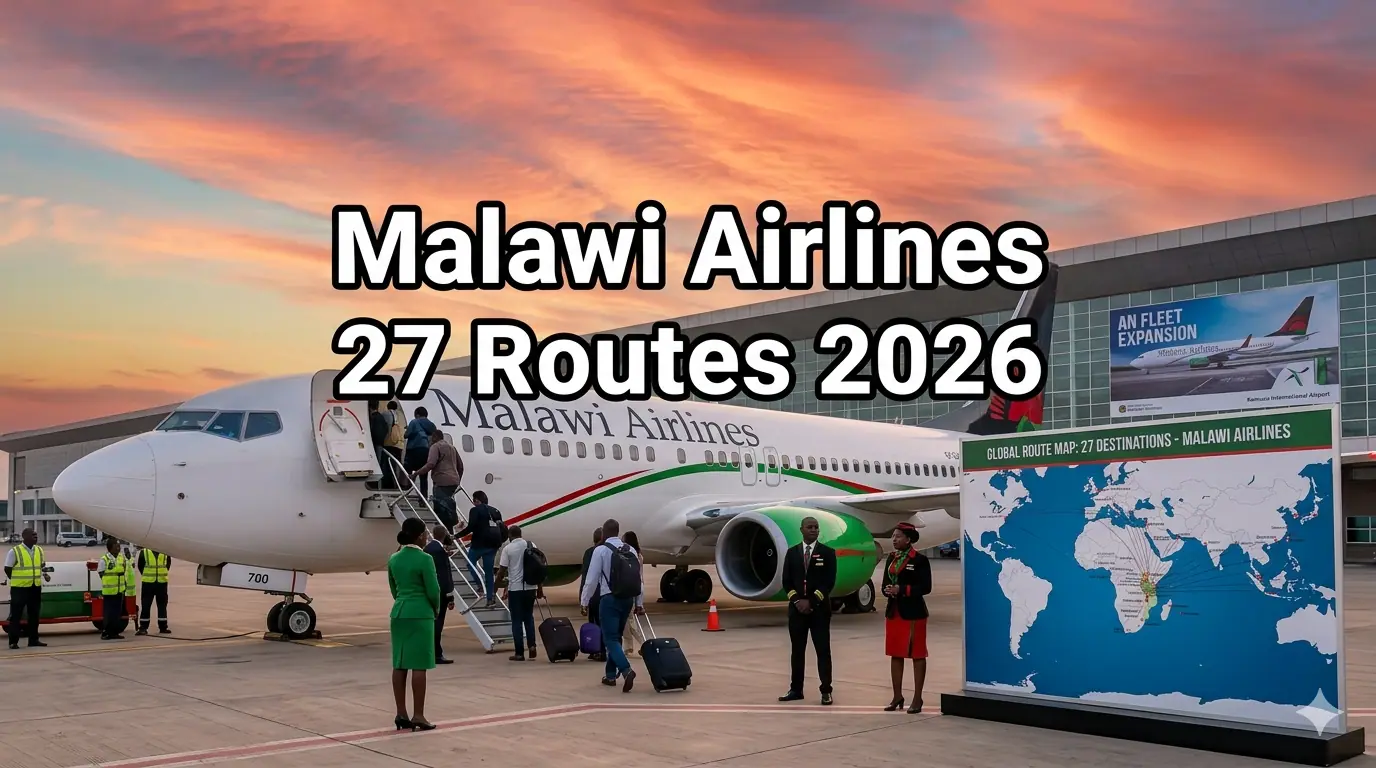
Malawi Airlines 2026 Fleet Expansion: Increasing International Routes from 7 to 27
Malawi Airlines is embarking on its most ambitious transformation yet in 2026, announcing a strategic fleet expansion that will increase international routes from 7 to 27 destinations across Africa, the Middle East, Europe, and beyond. This landmark growth initiative, developed in partnership with Ethiopian Airlines, positions the national carrier as a key player in African aviation and dramatically enhances connectivity for travelers visiting or departing from the "Warm Heart of Africa."
For tourists, business travelers, and transit passengers, this expansion represents unprecedented access to Malawi and from Malawi to the world. Whether you're planning a safari adventure in Liwonde National Park, attending regional business conferences in Lilongwe, or connecting to global destinations via Malawi's growing aviation hub, the enhanced Malawi Airlines network offers more options, better frequencies, and improved travel experiences than ever before.
This comprehensive guide explores every dimension of Malawi Airlines' 2026 fleet expansion: the new route map, aircraft acquisitions, partnership benefits with Ethiopian Airlines, booking strategies, travel tips, and how this aviation transformation positions Malawi for tourism growth and economic development. From understanding which new destinations are coming online to maximizing your travel experience with the expanded carrier, discover how Malawi Airlines' evolution opens doors to seamless African and global connectivity.
What is Malawi Airlines' 2026 fleet expansion?
Malawi Airlines' 2026 fleet expansion is a strategic growth initiative to increase the carrier's international route network from 7 to 27 destinations while expanding its aircraft fleet from 3 to 10 planes over five years. Developed in partnership with Ethiopian Airlines, the expansion includes new Boeing 737-800 aircraft, enhanced regional connectivity, and improved service quality, positioning Malawi as an increasingly accessible aviation hub in Southern Africa.
The Strategic Vision: Partnership with Ethiopian Airlines

Malawi Airlines' dramatic expansion isn't happening in isolation—it's powered by one of African aviation's most successful partnerships.
Ethiopian Airlines Collaboration:
The foundation of Malawi Airlines' growth strategy is its strategic partnership with Ethiopian Airlines, Africa's largest and most profitable carrier. This collaboration, established when Malawi Airlines was relaunched in 2013, provides critical advantages:
• Technical Expertise: Ethiopian Airlines provides operational support, maintenance capabilities, and crew training
• Commercial Synergies: Codeshare agreements expand network reach without requiring Malawi Airlines to operate every route independently
• Fleet Access: Leasing arrangements and procurement support enable faster fleet growth
• Hub Connectivity: Addis Ababa Bole International Airport serves as a connecting hub, linking Malawi to Ethiopian Airlines' global network of 130+ destinations
• Revenue Management: Shared systems optimize pricing, yield management, and distribution
Five-Year Growth Framework:
The expansion follows a structured timeline:
• 2024-2025: Foundation phase—secure financing, finalize aircraft orders, recruit and train staff
• 2026: Acceleration phase—introduce new aircraft, launch initial new routes, enhance service quality
• 2027-2028: Consolidation phase—expand frequencies on successful routes, add long-haul capabilities
• 2029: Maturity phase—achieve target fleet of 10 aircraft and 27 international destinations
This phased approach balances ambition with operational realism, ensuring sustainable growth.
Investment and Financing:
While specific financial details haven't been fully disclosed, the expansion likely combines:
• Government equity participation as majority shareholder
• Ethiopian Airlines strategic investment
• Development finance institution support (African Export-Import Bank, African Development Bank)
• Commercial financing for aircraft acquisitions
• Revenue reinvestment from profitable existing routes
This diversified funding approach reduces risk while enabling significant capital deployment.
Strategic Objectives:
Beyond numerical growth, the expansion pursues broader goals:
• Enhance Malawi's connectivity for tourism and trade
• Reduce dependence on foreign carriers for international travel
• Create skilled employment opportunities in aviation sector
• Position Lilongwe and Blantyre as regional aviation hubs
• Support Malawi 2063 vision for economic transformation
• Improve balance of payments by retaining aviation spending domestically
How does the Ethiopian Airlines partnership benefit Malawi Airlines travelers?
Travelers benefit from seamless connections via Addis Ababa to Ethiopian Airlines' global network of 130+ destinations, coordinated schedules, through-check baggage, unified frequent flyer benefits, and consistent service standards. The partnership also enables Malawi Airlines to offer competitive pricing and expanded route options without operating every flight independently, providing passengers with greater choice and convenience.
The New Route Map: 27 International Destinations

Malawi Airlines' expansion from 7 to 27 international routes represents a quadrupling of global connectivity. Here's the comprehensive breakdown of destinations:
Existing Routes (Pre-2026):
These established routes form the foundation of the expanded network:
• Johannesburg, South Africa (OR Tambo International)
• Nairobi, Kenya (Jomo Kenyatta International)
• Dar es Salaam, Tanzania (Julius Nyerere International)
• Harare, Zimbabwe (Robert Gabriel Mugabe International)
• Lusaka, Zambia (Kenneth Kaunda International)
• Addis Ababa, Ethiopia (Bole International) – hub connection
• Dubai, United Arab Emirates (Dubai International) – long-haul gateway
New Regional African Routes (2026 Launch):
Expanding Southern and East African connectivity:
• Maputo, Mozambique – strengthens SADC regional links
• Gaborone, Botswana – business and tourism corridor
• Windhoek, Namibia – gateway to Namibian tourism
• Kigali, Rwanda – emerging business hub
• Entebbe, Uganda – East African community connection
• Zanzibar, Tanzania – leisure destination addition
• Lilongwe-Blantyre domestic shuttle enhancement
New Long-Haul African Routes:
Connecting Malawi to major continental hubs:
• Lagos, Nigeria – West Africa's largest economy
• Accra, Ghana – growing business destination
• Dakar, Senegal – Francophone West Africa gateway
• Cairo, Egypt – North Africa and Middle East connection
• Casablanca, Morocco – European-African bridge
New Middle East Routes:
Expanding beyond Dubai to key Gulf destinations:
• Doha, Qatar – Hamad International hub connection
• Abu Dhabi, United Arab Emirates – alternative Gulf gateway
• Muscat, Oman – emerging business destination
• Kuwait City, Kuwait – labor and business travel market
New European Routes:
Direct access to European markets:
• London, United Kingdom (Heathrow or Gatwick) – major diaspora and business market
• Istanbul, Turkey – Turkish Airlines partnership potential
• Frankfurt, Germany – European business hub
• Amsterdam, Netherlands – cargo and passenger connectivity
New Asian Routes:
Expanding eastward connectivity:
• Mumbai, India – significant diaspora and trade links
• Guangzhou, China – manufacturing and trade corridor
• Bangkok, Thailand – tourism and business connection
• Kuala Lumpur, Malaysia – Southeast Asian hub
Route Launch Phasing:
Not all 27 routes will launch simultaneously in 2026. Expect:
• Q1-Q2 2026: Regional African additions (Maputo, Gaborone, Kigali)
• Q3-Q4 2026: Middle East expansions (Doha, Abu Dhabi)
• Late 2026: Initial long-haul announcements (London, Mumbai)
• 2027-2028: Remaining routes phased in based on demand and operational readiness
This staggered approach allows Malawi Airlines to build capacity and expertise progressively.
Frequency and Capacity:
Route frequency will vary by market:
• High-demand regional routes: Daily or multiple daily flights
• Medium-demand African routes: 3-4 weekly frequencies
• Long-haul routes: 2-3 weekly frequencies initially, increasing with demand
Aircraft deployment will match route characteristics, with Boeing 737-800s serving regional routes and potential wide-body aircraft for long-haul sectors.
Which new Malawi Airlines route is most exciting for tourists?
For tourists, the new Zanzibar route stands out as particularly appealing, connecting Malawi's lake and wildlife destinations with Tanzania's renowned beach paradise. This creates a compelling "bush and beach" itinerary within a single airline network. Additionally, the potential London direct service would dramatically improve access for European and North American travelers visiting Malawi for safari and lake experiences.
Fleet Expansion: Aircraft and Capabilities

Supporting the route expansion requires corresponding fleet growth and modernization.
Current Fleet (Pre-Expansion):
Malawi Airlines currently operates approximately 3 aircraft:
• Boeing 737-800: Primary workhorse for regional routes, seating ~160 passengers
• Bombardier Q400: Turboprop for shorter regional sectors and domestic routes
• Additional leased aircraft as needed for peak demand
This limited fleet constrained route expansion and frequency options.
Target Fleet (By 2029):
The expansion plan targets 10 aircraft:
• Boeing 737-800 (6-7 aircraft): Continue as backbone for regional and medium-haul routes
• Boeing 737 MAX 8 (2-3 aircraft): More fuel-efficient next-generation aircraft for longer regional routes
• Wide-body consideration (1 aircraft): Potential Boeing 787 or Airbus A330 for long-haul routes to Europe/Asia
• Regional turboprops (1-2 aircraft): For domestic and very short regional sectors
This diversified fleet enables optimal aircraft-route matching for efficiency and passenger comfort.
Aircraft Features and Passenger Experience:
New and refurbished aircraft will offer:
• Modern cabin interiors with improved seating comfort
• In-flight entertainment via personal device streaming
• Complimentary meals and beverages on most routes
• Wi-Fi connectivity on select aircraft and routes
• Enhanced business class product on long-haul sectors
• Improved baggage handling and cargo capacity
• Advanced navigation and safety systems
These upgrades align Malawi Airlines with regional carrier standards and enhance competitiveness.
Maintenance and Operations:
Fleet expansion requires robust support infrastructure:
• Maintenance facilities at Kamuzu International Airport (Lilongwe) and Chileka International Airport (Blantyre)
• Technical partnership with Ethiopian Airlines for heavy maintenance
• Local technician training programs to build domestic capacity
• Spare parts inventory management systems
• Crew training facilities for pilots and cabin staff
Investing in these capabilities ensures operational reliability as the fleet grows.
Sustainability Considerations:
Modern aircraft contribute to environmental goals:
• Boeing 737 MAX offers ~15% fuel burn reduction vs. previous generation
• Newer engines produce lower emissions and noise
• Operational efficiencies reduce carbon footprint per passenger-kilometer
• Alignment with IATA and African aviation sustainability initiatives
• Potential for sustainable aviation fuel adoption as technology matures
These factors support Malawi's climate commitments while enabling growth.
What aircraft does Malawi Airlines fly?
Malawi Airlines primarily operates Boeing 737-800 aircraft for regional routes, with Bombardier Q400 turboprops for shorter sectors. The 2026 expansion includes adding more Boeing 737-800s and potentially Boeing 737 MAX 8 aircraft for improved efficiency. For long-haul routes to Europe or Asia, the airline may lease or acquire wide-body aircraft like the Boeing 787 or Airbus A330, though specific plans for these larger aircraft remain under development.
Booking and Travel Planning with Expanded Malawi Airlines

The route expansion creates new opportunities—and considerations—for travelers planning Malawi trips.
When to Book:
• New Routes: Book early when routes launch to secure introductory fares and guaranteed seats
• Peak Seasons: May-October is Malawi's dry season and peak tourism period—book 3-6 months ahead
• Flexible Dates: Use fare comparison tools to identify cheapest travel days
• Advance Purchase: International fares typically lowest 6-12 weeks before departure
• Last-Minute: Occasionally available but risky for popular routes—avoid for critical travel
Booking Channels:
• Malawi Airlines Website: Direct booking often offers best fares and seat selection
• Ethiopian Airlines Website: For codeshare flights and connecting itineraries
• Travel Agents: Local and international agents can bundle flights with tours/accommodations
• Online Travel Agencies: Expedia, Skyscanner, Kayak for comparison shopping
• Airport Ticket Offices: In-person booking at Lilongwe or Blantyre airports
Tip: Compare prices across channels; direct booking may offer better flexibility for changes.
Fare Classes and Benefits:
Malawi Airlines typically offers:
• Economy: Standard seating, complimentary snacks/beverages, checked baggage allowance
• Premium Economy: Extra legroom, priority boarding, enhanced meal service (select routes)
• Business Class: Lie-flat or angled seats on long-haul, premium dining, lounge access, priority services
• Frequent Flyer: ShebaMiles program (Ethiopian Airlines partnership) enables earning/redeeming miles across partner networks
Baggage Policies:
• Economy: Typically 23kg checked + 7kg carry-on
• Business: Typically 32kg checked + 10kg carry-on
• Sports equipment: Special handling for golf, diving gear (common for Malawi tourism)
• Excess baggage: Fees apply; pre-pay online for discounts
• Transit baggage: Through-check to final destination on codeshare itineraries
Visa and Entry Requirements:
• Malawi visas: Available on arrival or e-visa for many nationalities
• Transit visas: Check requirements for connection points (Ethiopia, UAE, etc.)
• Health requirements: Yellow fever certificate if arriving from endemic countries
• Passport validity: Minimum 6 months beyond intended stay
Always verify current requirements with official government sources before travel.
Travel Insurance:
Strongly recommended for all international travel:
• Medical coverage including emergency evacuation
• Trip cancellation/interruption protection
• Baggage loss/delay coverage
• Adventure activity coverage if planning safari, diving, or hiking
• Verify that policy covers all destinations on your itinerary
How do I earn frequent flyer miles with Malawi Airlines?
Malawi Airlines participates in Ethiopian Airlines' ShebaMiles frequent flyer program. Passengers earn miles based on fare class and distance flown, redeemable for award flights, upgrades, and partner benefits across the Star Alliance network. Enroll online before travel, provide your ShebaMiles number when booking, and ensure it's added to your reservation to accrue miles automatically.
Airport Experience: Kamuzu and Chileka International Airports

Malawi Airlines' expansion coincides with infrastructure improvements at the country's primary airports.
Kamuzu International Airport (LLW) – Lilongwe:
Malawi's main international gateway is undergoing enhancements:
• Terminal expansions to accommodate increased passenger volumes
• Improved check-in facilities with self-service kiosks
• Enhanced security screening processes
• Expanded retail and dining options
• Better ground transportation connections
• Upgraded baggage handling systems
These improvements support the growing route network while enhancing passenger experience.
Chileka International Airport (BLZ) – Blantyre:
Malawi's second international airport serves the commercial capital:
• Regional route focus with potential for selective long-haul services
• Business traveler amenities including meeting facilities
• Cargo handling capabilities supporting trade growth
• Convenient access to southern Malawi tourism destinations
• Coordination with Kamuzu Airport to optimize national network
Travelers can choose departure airport based on itinerary and accommodation location.
Transit and Connections:
For passengers connecting via Malawi:
• Minimum connection times: 90 minutes domestic-international, 2 hours international-international
• Through-check baggage available on Malawi Airlines and codeshare itineraries
• Transit visa requirements vary by nationality—verify before travel
• Airport lounges available for business class and eligible frequent flyers
• Ground transportation between Lilongwe and Blantyre: 3-4 hours by road or short domestic flight
Accessibility and Special Assistance:
Malawi Airlines and airports accommodate passengers with reduced mobility:
• Request assistance when booking or at least 48 hours before travel
• Wheelchair services available at check-in and gates
• Priority boarding for passengers needing extra time
• Accessible restrooms in airport terminals
• Trained staff to assist throughout journey
Notify the airline of specific needs to ensure seamless experience.
Which Malawi airport should I use?
Choose Kamuzu International Airport (Lilongwe) for most international flights and northern/central Malawi destinations. Select Chileka International Airport (Blantyre) for southern Malawi access, including Majete Wildlife Reserve, Lake Malawi southern beaches, and business travel to Blantyre. Both airports connect to the other via domestic flights or 3-4 hour road transfer. Consider your accommodation location and itinerary when selecting departure/arrival airport.
Tourism and Economic Impact: Why the Expansion Matters

Malawi Airlines' growth extends beyond aviation—it catalyzes broader national development.
Tourism Sector Growth:
Enhanced air connectivity directly supports Malawi's tourism ambitions:
• Increased Arrivals: More routes and frequencies make Malawi accessible to new source markets
• Diversified Markets: Beyond traditional European visitors, expansion targets African, Middle Eastern, and Asian travelers
• Longer Stays: Easier access encourages extended itineraries combining wildlife, lake, and cultural experiences
• Higher-Value Tourism: Improved connectivity attracts business travelers and luxury segments
• Regional Circuits: Better links enable multi-country Southern African itineraries featuring Malawi
Tourism contributes significantly to Malawi's economy, employment, and foreign exchange earnings.
Trade and Investment:
Aviation expansion facilitates economic activity:
• Cargo Capacity: Passenger aircraft bellies carry high-value exports (tea, coffee, specialty crops)
• Business Connectivity: Direct flights reduce travel time for investors and entrepreneurs
• Supply Chain Efficiency: Reliable air transport supports just-in-time manufacturing and retail
• Knowledge Exchange: Easier travel enables skills transfer and professional development
• Diaspora Engagement: Improved connections strengthen ties with Malawians abroad
Employment and Skills Development:
The aviation sector creates quality jobs:
• Direct employment: Pilots, cabin crew, ground staff, maintenance technicians, administrators
• Indirect employment: Airport services, hospitality, tourism, logistics
• Skills development: Training programs build technical and professional capabilities
• Youth opportunities: Aviation careers attract young Malawians to skilled professions
• Gender inclusion: Targeted recruitment promotes women in aviation roles
Regional Integration:
Malawi Airlines contributes to African connectivity goals:
• Supports African Union's Single African Air Transport Market (SAATM)
• Strengthens SADC and COMESA regional cooperation
• Facilitates intra-African trade and tourism
• Positions Malawi as a Southern African aviation node
• Enhances diplomatic and cultural exchanges across the continent
Brand Malawi:
The national carrier serves as an ambassador:
• Aircraft livery showcases Malawi's flag and identity globally
• In-flight experience introduces passengers to Malawian culture and hospitality
• Route expansions increase Malawi's visibility in international markets
• Service quality shapes perceptions of the country
• Successful airline performance boosts national pride and confidence
How does Malawi Airlines expansion benefit local communities?
Beyond tourism and trade, the expansion creates employment opportunities in aviation, hospitality, and support services; improves access to healthcare and education through better connectivity; supports local suppliers and businesses; and enhances Malawi's global profile, attracting investment and development partnerships. Communities near airports benefit from infrastructure improvements and economic activity, while remote areas gain better access to markets and services through improved air links.
Practical Travel Tips for Malawi Airlines in 2026

Maximize your experience with the expanding carrier using these recommendations:
Before Booking:
• Verify route availability and frequencies on Malawi Airlines website
• Check Ethiopian Airlines codeshare options for broader connectivity
• Compare fares across booking channels for best value
• Review baggage policies and pre-pay excess if needed
• Enroll in ShebaMiles frequent flyer program before first flight
• Confirm visa requirements for all destinations on itinerary
• Purchase comprehensive travel insurance
Before Travel:
• Online check-in opens 24-48 hours before departure—use it to save time
• Download Malawi Airlines app for mobile boarding passes and flight updates
• Arrive at airport 3 hours before international flights, 2 hours for regional
• Pack essentials in carry-on in case of checked baggage delays
• Carry printed copies of tickets, passport, visa, and insurance as backup
• Notify bank of travel plans to avoid card blocks
• Download offline maps and translation apps for Malawi
At the Airport:
• Keep travel documents easily accessible for check-in and security
• Declare any restricted items (liquids, electronics, medications) as required
• Take advantage of lounge access if eligible (business class, frequent flyer status)
• Confirm baggage tags show correct final destination
• Note gate information and monitor displays for updates
• Allow time for duty-free shopping if desired
• Stay hydrated and move around during long waits
Onboard the Aircraft:
• Follow crew instructions for safety and comfort
• Use personal device for in-flight entertainment if available
• Stay hydrated; cabin air is dry
• Adjust to destination time zone gradually during flight
• Be respectful of fellow passengers and crew
• Keep valuables with you, not in overhead bins
• Complete any required arrival cards before landing
Upon Arrival:
• Proceed to immigration with passport and completed forms
• Collect checked baggage and verify all items arrived
• Clear customs declaring any restricted or dutiable goods
• Arrange ground transportation in advance or use official airport services
• Exchange currency at authorized counters if needed
• Purchase local SIM card for connectivity
• Confirm accommodation transfer or taxi arrangements
• Keep airline contact information for any follow-up needs
Managing Disruptions:
• Save Malawi Airlines customer service contacts before travel
• Understand your rights regarding delays, cancellations, or denied boarding
• Keep receipts for unexpected expenses during disruptions
• Travel insurance can cover costs from significant delays
• Stay informed via airline app, website, or airport displays
• Maintain flexibility in itinerary when possible
• Document issues with photos or notes if filing claims later
What if my Malawi Airlines flight is delayed or cancelled?
Malawi Airlines follows international standards for passenger rights during disruptions. For delays or cancellations within the airline's control, passengers may be entitled to rebooking on next available flight, meals during extended waits, accommodation for overnight delays, and compensation in certain circumstances. Always keep documentation and contact customer service promptly. Travel insurance provides additional protection for significant disruptions.
Future Outlook: Beyond 2026

Malawi Airlines' 2026 expansion sets the stage for continued growth and evolution.
Medium-Term Aspirations (2027-2029):
• Achieve target fleet of 10 aircraft with optimal mix for route network
• Launch remaining planned destinations based on market demand
• Increase frequencies on successful routes to daily or multiple-daily service
• Enhance premium cabin products for long-haul competitiveness
• Expand cargo capabilities to support trade growth
• Develop maintenance capacity for greater operational independence
Long-Term Vision (2030+):
• Potential Star Alliance membership through Ethiopian Airlines partnership
• Direct long-haul services to additional European and Asian hubs
• Regional subsidiary or partnership model for feeder routes
• Sustainable aviation initiatives including fuel efficiency and carbon offset programs
• Digital transformation for seamless passenger experience
• Contribution to Malawi's middle-income economy aspirations
Challenges and Mitigation:
Growth requires navigating potential obstacles:
• Competition: Established carriers on key routes—differentiate through service and connectivity
• Volatility: Fuel prices, currency fluctuations, geopolitical events—maintain financial resilience
• Capacity: Recruiting and training skilled staff—invest in human capital development
• Infrastructure: Airport and air traffic management constraints—advocate for supportive policies
• Regulation: Bilateral agreements and aviation safety standards—maintain compliance and relationships
Proactive management of these factors enables sustainable expansion.
Industry Context:
Malawi Airlines' growth reflects broader African aviation trends:
• Rising middle class increasing demand for air travel
• Continental free trade area boosting business connectivity
• Tourism recovery and growth post-pandemic
• Infrastructure investment across the continent
• Technology enabling operational efficiency and customer experience
Positioning within these trends amplifies Malawi Airlines' potential impact.
Will Malawi Airlines join an airline alliance?
While Malawi Airlines isn't currently a member of a global airline alliance, its strategic partnership with Ethiopian Airlines—a Star Alliance member—provides many alliance-like benefits including codeshare connectivity, coordinated frequent flyer programs, and shared service standards. Future Star Alliance membership remains possible as the airline matures, though no official timeline has been announced. The Ethiopian partnership effectively extends Malawi Airlines' reach across the Star Alliance network today.
Final Thoughts: Malawi's Aviation Transformation
Malawi Airlines' 2026 fleet expansion from 7 to 27 international routes represents far more than numerical growth—it embodies Malawi's ambition to connect the "Warm Heart of Africa" with the world. This transformation, powered by strategic partnership, operational excellence, and visionary planning, positions the national carrier as a catalyst for tourism growth, economic development, and regional integration.
For travelers, the expansion delivers tangible benefits: more destination choices, flexible scheduling, competitive pricing, and seamless connectivity across Africa and beyond. Whether you're visiting Malawi for its pristine lakes, incredible wildlife, or vibrant culture—or departing Malawi to explore the world—the enhanced Malawi Airlines network makes your journey smoother, more accessible, and more enjoyable.
Yet the significance extends beyond convenience. Each new route represents opportunity: for Malawian entrepreneurs accessing global markets, for students pursuing international education, for families reconnecting across borders, for visitors discovering Malawi's treasures. Aviation connectivity is infrastructure for human potential.
As Malawi Airlines adds aircraft, launches routes, and welcomes passengers in 2026 and beyond, it carries not just travelers but aspirations—for a more connected, prosperous, and vibrant Malawi. The sky is no longer the limit; it's the pathway.
Book your journey. Experience the expansion. Discover Malawi—and the world—with confidence, comfort, and the warm hospitality that defines this remarkable nation.
Your African adventure, seamlessly connected, starts now.
0 Comments