.webp)
.webp)
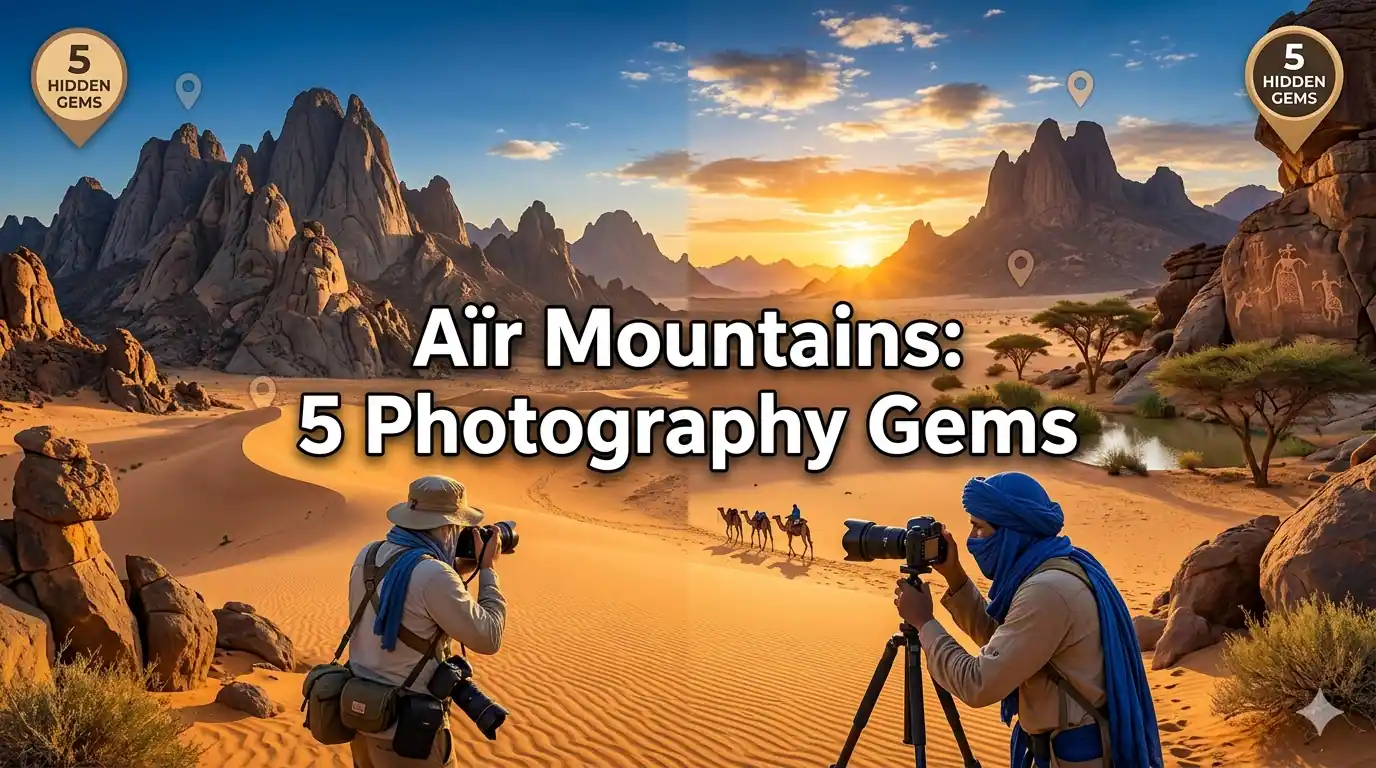
Introduction: Discovering the Aïr Mountains, Niger's Saharan Jewel
The Aïr Mountains, rising dramatically from the vast Sahara Desert in northern Niger, represent one of Africa's most spectacular and least-photographed mountain ranges. This ancient volcanic massif, covering over 70,000 square kilometers, offers adventure photographers an extraordinary canvas of jagged granite peaks, deep desert valleys, ancient rock art sites, and traditional Tuareg culture that has remained largely unchanged for centuries. For photographers seeking remote, untouched landscapes and authentic cultural encounters, the Aïr Mountains deliver an unparalleled visual feast that few travelers ever witness.
Located approximately 1,000 kilometers north of Niamey in Niger's Agadez Region, the Aïr Mountains form a triangular massif that rises abruptly from the surrounding desert plains. The range features peaks reaching over 2,000 meters, creating a dramatic contrast with the golden sand seas that surround this Saharan island of mountains. This unique geography has created isolated ecosystems, ancient trade routes, and cultural enclaves that provide endless photographic opportunities for those willing to make the journey.
This comprehensive guide reveals five hidden gems within the Aïr Mountains that every adventure photographer needs to capture. From remote mountain oases and ancient rock art sites to dramatic volcanic formations and traditional Tuareg settlements, these locations showcase the raw beauty and cultural richness of one of West Africa's most remarkable landscapes. Whether you are a landscape photographer chasing dramatic light, a documentary photographer seeking authentic cultural stories, or an adventure photographer drawn to remote wilderness, the Aïr Mountains offer experiences that will transform your portfolio and broaden your perspective.
Hidden Gem #1: Mont Idoukal-n-Taghès - Niger's Highest Peak

Mont Idoukal-n-Taghès, standing at 2,022 meters, is not only the highest peak in the Aïr Mountains but also the highest point in all of Niger. This dramatic granite massif offers adventure photographers a rare opportunity to capture high-altitude Saharan landscapes that few have documented. The mountain's rugged slopes, deep valleys, and panoramic vistas provide endless compositional possibilities for photographers willing to undertake the challenging trek to the summit.
The ascent to Mont Idoukal-n-Taghès typically begins from the village of Abalak or other nearby Tuareg settlements, requiring a multi-day trek through increasingly dramatic terrain. The journey itself is a photographer's dream, passing through ancient wadis (dry riverbeds), past weathered granite formations sculpted by millennia of wind and water erosion, and through valleys where acacia trees cling tenaciously to life in this harsh environment. Each stage of the trek reveals new photographic opportunities, from intimate details of desert flora to sweeping landscape compositions.
Upon reaching the summit, photographers are rewarded with 360-degree views that stretch across the entire Aïr massif and beyond to the endless Sahara. At sunrise and sunset, the landscape transforms into a painter's palette of colors—golden light illuminating granite peaks, deep purple shadows filling valleys, and the surrounding desert plains glowing in warm amber tones. The summit provides exceptional opportunities for panoramic photography, with layers of mountains creating depth and drama in every direction.
For landscape photographers, the key to capturing Mont Idoukal-n-Taghès lies in understanding the light. The harsh midday sun creates high contrast and washed-out colors, making golden hour essential for compelling images. Arrive at your chosen viewpoint at least an hour before sunrise or sunset to scout compositions, set up equipment, and wait for the magical light that transforms ordinary landscapes into extraordinary photographs. The clear Saharan atmosphere provides exceptional visibility, allowing telephoto lenses to compress distant peaks and create dramatic layered compositions.
Wildlife photographers will also find opportunities around Mont Idoukal-n-Taghès, where Barbary sheep (aoudad), desert foxes, and various bird species have adapted to the mountain environment. These animals are often most active during early morning and late evening, coinciding with the best light for landscape photography. Patience and local knowledge are essential—hiring a Tuareg guide not only ensures safety and navigation but also provides invaluable insights into animal behavior and the best locations for wildlife encounters.
Practical considerations for photographing Mont Idoukal-n-Taghès include preparing for extreme temperature variations, carrying sufficient water and supplies for multi-day treks, and respecting the fragile mountain ecosystem. The best time to visit is during the cooler months from November to February, when temperatures are more manageable and the air is clearest. Always travel with experienced local guides who know the terrain, weather patterns, and can facilitate respectful interactions with local Tuareg communities.
Hidden Gem #2: Tamgak Plateau - Ancient Volcanic Landscapes

The Tamgak Plateau represents one of the Aïr Mountains' most geologically fascinating and visually striking regions, offering adventure photographers a surreal landscape of volcanic formations, ancient lava flows, and dramatic geological features that tell the story of millions of years of volcanic activity. This remote plateau, accessible only through challenging desert routes, provides photographers with otherworldly compositions that rival the most dramatic volcanic landscapes on Earth.
The plateau's landscape is dominated by volcanic plugs, eroded calderas, and basalt formations that create a stark, almost lunar terrain. Towering spires of volcanic rock rise from golden sand, creating dramatic silhouettes against the sky. Weathered lava flows create textured patterns across the landscape, while erosion has carved intricate channels and valleys through the volcanic rock. For photographers, the Tamgak Plateau offers an abundance of abstract compositions, dramatic textures, and geological storytelling opportunities.
One of the plateau's most photogenic features is the presence of volcanic necks—hardened magma that once filled volcanic conduits, now exposed through millions of years of erosion. These dramatic vertical formations, some rising hundreds of meters above the surrounding terrain, create powerful focal points for landscape compositions. During golden hour, the low-angle light emphasizes the texture and verticality of these formations, creating dramatic shadows and highlighting the intricate patterns of weathered volcanic rock.
The plateau also features ancient volcanic craters, some partially filled with sand, creating fascinating contrasts between dark volcanic rock and golden desert. These craters provide excellent opportunities for aerial-style photography from elevated viewpoints, allowing photographers to capture the circular patterns and geological history written in the landscape. Wide-angle lenses excel at capturing the scale and drama of these formations, while telephoto lenses can isolate specific geological features and compress the dramatic terrain.
For photographers interested in the intersection of geology and human history, the Tamgak Plateau also features ancient rock art sites where Tuareg ancestors documented their lives, beliefs, and environment thousands of years ago. These petroglyphs, carved into volcanic rock surfaces, depict animals, human figures, and symbolic patterns that provide insights into the region's climatic and cultural history. Photographing these ancient artworks requires sensitivity and respect—use natural light when possible, avoid touching or damaging the fragile rock surfaces, and always seek permission from local guides before photographing cultural sites.
The best photography on the Tamgak Plateau occurs during the golden hours, when the low-angle sun creates dramatic shadows that emphasize the texture and three-dimensionality of volcanic formations. The clear Saharan atmosphere provides exceptional clarity, allowing photographers to capture distant peaks and geological features with remarkable detail. However, the plateau's remote location and challenging terrain require careful planning, adequate supplies, and experienced local guides who can navigate the complex landscape and ensure safety.
Hidden Gem #3: Timia Oasis - Desert Water and Verdant Life

Timia Oasis stands as one of the Aïr Mountains' most enchanting and photographically rewarding locations, offering a stunning contrast between the harsh Sahara Desert and lush, water-fed vegetation. This hidden gem, nestled in a mountain valley, features natural springs, date palm groves, terraced gardens, and traditional architecture that creates a photographer's paradise of textures, colors, and cultural authenticity.
The oasis is sustained by natural springs that emerge from the mountains, creating streams and pools that support date palms, fruit trees, and vegetable gardens in an otherwise arid environment. This abundance of water and vegetation creates a microclimate that has attracted human settlement for thousands of years, resulting in a living cultural landscape where traditional agricultural practices continue unchanged. For photographers, Timia offers opportunities to document the harmonious relationship between humans and their environment in one of Earth's harshest regions.
The heart of Timia's photographic appeal lies in its water features. Natural pools fed by mountain springs create mirror-like surfaces that reflect the surrounding mountains and palm trees, providing exceptional opportunities for reflection photography. The interplay of light on water, particularly during golden hour when the sun illuminates the palms and mountains, creates magical scenes that capture the essence of desert oasis life. Early morning visits often reveal mist rising from the pools, adding atmosphere and mystique to compositions.
The terraced gardens of Timia showcase traditional agricultural engineering adapted to the mountain environment. These stepped cultivation areas, built from stone and maintained for generations, create geometric patterns that contrast beautifully with the organic forms of palm trees and the rugged mountain backdrop. Photographers can capture these terraces from elevated viewpoints, creating compositions that show the relationship between human ingenuity and natural landscape. The gardens are particularly photogenic when crops are growing, adding splashes of green to the golden and brown tones of the desert.
Traditional architecture in Timia provides additional photographic opportunities. Mud-brick buildings, adapted to the Saharan climate, feature distinctive forms and textures that complement the natural landscape. Doorways, windows, and architectural details offer intimate compositions, while broader views of the village nestled among palms and mountains provide contextual landscape images. The warm tones of mud-brick architecture harmonize beautifully with the golden light of sunrise and sunset.
Cultural photography in Timia requires sensitivity and respect. The oasis is home to Tuareg and other communities who maintain traditional lifestyles. Always seek permission before photographing people, engage respectfully with residents, and consider how your presence and photography impact the community. Hiring local guides not only facilitates respectful interactions but also provides insights into the history, culture, and significance of the oasis that enrich your photographic work.
The best time to photograph Timia Oasis is during the cooler months from November to February, when temperatures are comfortable and the light is clearest. Early morning and late afternoon provide the most flattering light, while midday heat creates harsh shadows and washed-out colors. Consider spending multiple days at the oasis to capture it in different light conditions and to build relationships with local residents who can share their knowledge and facilitate authentic photographic opportunities.
Hidden Gem #4: Iwelene Valley - Ancient Rock Art and Tuareg Heritage

Iwelene Valley represents one of the Aïr Mountains' most significant cultural and historical sites, offering adventure photographers a unique opportunity to document ancient rock art, traditional Tuareg architecture, and living cultural heritage in a stunning desert mountain setting. This remote valley, accessible only through challenging desert routes, preserves thousands of years of human history etched into rock faces and maintained through living traditions.
The valley's rock art sites are among the most extensive and well-preserved in the Sahara, featuring petroglyphs and paintings that span from the Neolithic period to more recent Tuareg occupation. These ancient artworks depict animals that once roamed a greener Sahara—elephants, giraffes, rhinoceroses, and cattle—as well as human figures engaged in hunting, herding, and ceremonial activities. For photographers, these sites offer opportunities to document humanity's artistic heritage while telling the story of climatic and cultural change in the Sahara.
Photographing rock art requires specific techniques and sensitivity. The best light for capturing petroglyphs is often early morning or late afternoon when low-angle sunlight creates shadows that emphasize the carved lines and make the images more visible. Overcast days can also provide even lighting that reveals details without harsh shadows. Use polarizing filters to reduce glare on rock surfaces and enhance contrast. For painted rock art, be extremely careful with lighting—never use flash, as it can damage ancient pigments, and rely on natural light or continuous lighting sources that don't generate heat.
Beyond the rock art, Iwelene Valley features traditional Tuareg architecture and settlements that provide additional photographic opportunities. Traditional tents made from goat hair, mud-brick structures, and distinctive Tuareg design elements create compelling compositions that document contemporary desert life. The valley's landscape, with its dramatic mountain backdrop and desert vegetation, provides context for cultural photography that shows the relationship between people and place.
The valley also serves as a gathering place for Tuareg communities, particularly during seasonal migrations and cultural celebrations. These gatherings provide opportunities to document traditional clothing, jewelry, music, and social customs that have been maintained for generations. Tuareg men's distinctive indigo-dyed clothing, silver jewelry, and traditional weapons create striking visual elements, while women's jewelry and textiles showcase intricate craftsmanship. Always approach cultural photography with respect, seek permission, and consider how your images represent the people and culture you are documenting.
For photographers interested in storytelling, Iwelene Valley offers rich opportunities to document the intersection of ancient and contemporary life. Images might juxtapose ancient rock art with modern Tuareg life, show traditional practices continuing in a changing world, or capture the daily rhythms of desert life. These narrative photographs require time, patience, and relationship-building with local communities. Consider spending multiple days in the valley to move beyond surface-level documentation and create work that reflects deeper understanding and respect.
Practical considerations for photographing Iwelene Valley include preparing for remote desert conditions, carrying adequate supplies, and traveling with experienced Tuareg guides who can facilitate access to rock art sites and cultural interactions. The best time to visit is during the cooler months from November to February. Always follow local customs, respect sacred sites, and ensure that your presence and photography benefit the local community through fair compensation for guides and services.
Hidden Gem #5: Taghmert Pass - Dramatic Mountain Vistas

Taghmert Pass stands as one of the Aïr Mountains' most dramatic and photogenic locations, offering adventure photographers sweeping mountain vistas, challenging terrain, and exceptional opportunities for landscape photography that captures the raw power and beauty of this Saharan mountain range. This high mountain pass, traversing the heart of the Aïr massif, provides panoramic viewpoints that showcase the full majesty of Niger's most spectacular mountain landscape.
The pass cuts through the mountain range, creating a natural corridor that reveals the Aïr's geological complexity and dramatic topography. From viewpoints along the pass, photographers can capture layers of mountains receding into the distance, deep valleys carved by ancient watercourses, and the stark contrast between the dark volcanic rock of the mountains and the golden sands of the surrounding desert. The scale and drama of these vistas demand wide-angle lenses to capture the full scope of the landscape, while telephoto lenses can isolate specific peaks and create compressed compositions that emphasize the mountainous terrain.
Light plays a crucial role in photographing Taghmert Pass. The clear Saharan atmosphere provides exceptional visibility, but the harsh midday sun creates high contrast and washed-out colors. Golden hour—both sunrise and sunset—transforms the landscape, with low-angle light illuminating mountain faces in warm tones while filling valleys with deep blue shadows. The interplay of light and shadow creates depth and drama, revealing the texture and three-dimensionality of the terrain. For photographers willing to camp near the pass, the opportunity to capture sunrise illuminating the eastern peaks or sunset painting the western slopes in golden light is not to be missed.
The pass also offers exceptional opportunities for capturing the movement and atmosphere of the desert landscape. Dust devils dancing across valley floors, clouds casting moving shadows across mountains, and the occasional caravan of camels traversing ancient routes all add life and narrative to landscape compositions. These dynamic elements require patience and readiness—keep your camera accessible and be prepared to capture fleeting moments that add interest and storytelling to your images.
For photographers interested in astrophotography, Taghmert Pass offers exceptional dark skies far from light pollution. The combination of dramatic mountain silhouettes and the Milky Way stretching across the sky creates compelling night photography opportunities. The clear, dry Saharan atmosphere provides exceptional clarity for capturing stars, planets, and the Milky Way's structure. Bring a sturdy tripod, fast wide-angle lens, and be prepared for cold desert nights even when days are warm.
Weather in the Aïr Mountains can be unpredictable, and Taghmert Pass is no exception. While the region is generally dry, occasional storms can create dramatic cloud formations and atmospheric conditions that transform the landscape. These weather events, while challenging, can provide exceptional photographic opportunities—storm clouds gathering over peaks, rain creating ephemeral waterfalls in normally dry wadis, or clear air after a storm revealing distant mountains with exceptional clarity. Always prioritize safety over photography, and be prepared to adjust plans based on weather conditions.
Practical considerations for photographing Taghmert Pass include preparing for high-altitude conditions, carrying adequate water and supplies, and traveling with experienced guides who know the terrain and weather patterns. The pass is accessible only with appropriate 4WD vehicles and experienced drivers familiar with mountain desert routes. The best time to visit is during the cooler months from November to February, when temperatures are more manageable and the air is clearest. Always inform others of your travel plans, carry emergency supplies, and respect the challenging environment that demands preparation and caution.
Practical Photography Tips for the Aïr Mountains

Photographing the Aïr Mountains requires careful preparation, appropriate equipment, and respect for the challenging environment and local culture. These practical tips will help you maximize your photographic opportunities while ensuring safety and cultural sensitivity.
Equipment Recommendations: The Aïr Mountains' diverse landscapes demand versatile equipment. Bring a wide-angle lens (16-35mm) for sweeping mountain vistas and oasis scenes, a standard zoom (24-70mm) for general photography and cultural documentation, and a telephoto lens (70-200mm or longer) for compressing mountain layers, capturing wildlife, and isolating details. A sturdy tripod is essential for golden hour landscapes, astrophotography, and long exposures. Bring multiple batteries, as charging opportunities are limited, and protect equipment from dust with appropriate cases and cleaning supplies.
Light and Timing: The harsh Saharan sun creates challenging lighting conditions during midday hours. Plan your photography around golden hour—arrive at locations at least one hour before sunrise or sunset to scout compositions and set up equipment. The clear atmosphere provides exceptional clarity but also creates high contrast; use graduated neutral density filters to balance exposures between bright skies and darker landscapes. Polarizing filters help reduce glare on rock surfaces and water while enhancing color saturation.
Cultural Sensitivity: The Aïr Mountains are home to Tuareg and other communities who maintain traditional lifestyles. Always seek permission before photographing people, respect sacred sites and cultural practices, and compensate guides and hosts fairly for their time and knowledge. Engage respectfully with local communities, learn basic greetings in local languages, and consider how your photography represents the people and places you document. Your presence should benefit, not exploit, the communities you visit.
Safety and Logistics: The Aïr Mountains are remote and challenging. Always travel with experienced local guides who know the terrain, weather patterns, and can facilitate safe access to photographic locations. Carry adequate water, food, and emergency supplies. Inform others of your travel plans and expected return. The region's security situation requires careful research and planning—consult current travel advisories and work with reputable tour operators who prioritize safety. Never venture into remote areas alone or without proper preparation.
Environmental Responsibility: The Aïr Mountains' ecosystem is fragile and vulnerable to human impact. Practice Leave No Trace principles, pack out all trash, avoid disturbing wildlife, and respect vegetation. Use established campsites and trails when available. Your photography should celebrate and protect this remarkable landscape, not contribute to its degradation.
Conclusion: The Aïr Mountains Await

The Aïr Mountains represent one of Africa's last great photographic frontiers—a remote, dramatic landscape where ancient geology, living culture, and raw natural beauty converge to create unparalleled opportunities for adventure photographers. From the summit of Mont Idoukal-n-Taghès to the verdant pools of Timia Oasis, from ancient rock art in Iwelene Valley to dramatic vistas at Taghmert Pass, these five hidden gems showcase the diversity and splendor of Niger's mountain heartland.
Photographing the Aïr Mountains requires commitment, preparation, and respect—for the challenging environment, for local communities and their traditions, and for the fragile ecosystems that make this landscape so special. But for photographers willing to make the journey, the rewards are extraordinary: images that capture the essence of the Sahara's mountain island, stories that document living cultural heritage, and personal experiences that transform perspectives.
As you plan your photographic expedition to the Aïr Mountains, remember that the best photographs come not just from technical skill or expensive equipment, but from patience, curiosity, and genuine engagement with the places and people you encounter. Take time to understand the landscape, build relationships with local guides and communities, and allow yourself to be surprised by unexpected moments and opportunities.
The Aïr Mountains have stood for millions of years, witnessed thousands of years of human history, and will continue to inspire photographers for generations to come. Your journey to this remarkable landscape is not just about capturing images—it's about bearing witness to one of Earth's most spectacular and least-documented mountain ranges, and sharing its beauty and significance with the world. May your photographs inspire others to appreciate, respect, and protect this extraordinary corner of the Sahara.
0 Comments