.webp)
.webp)
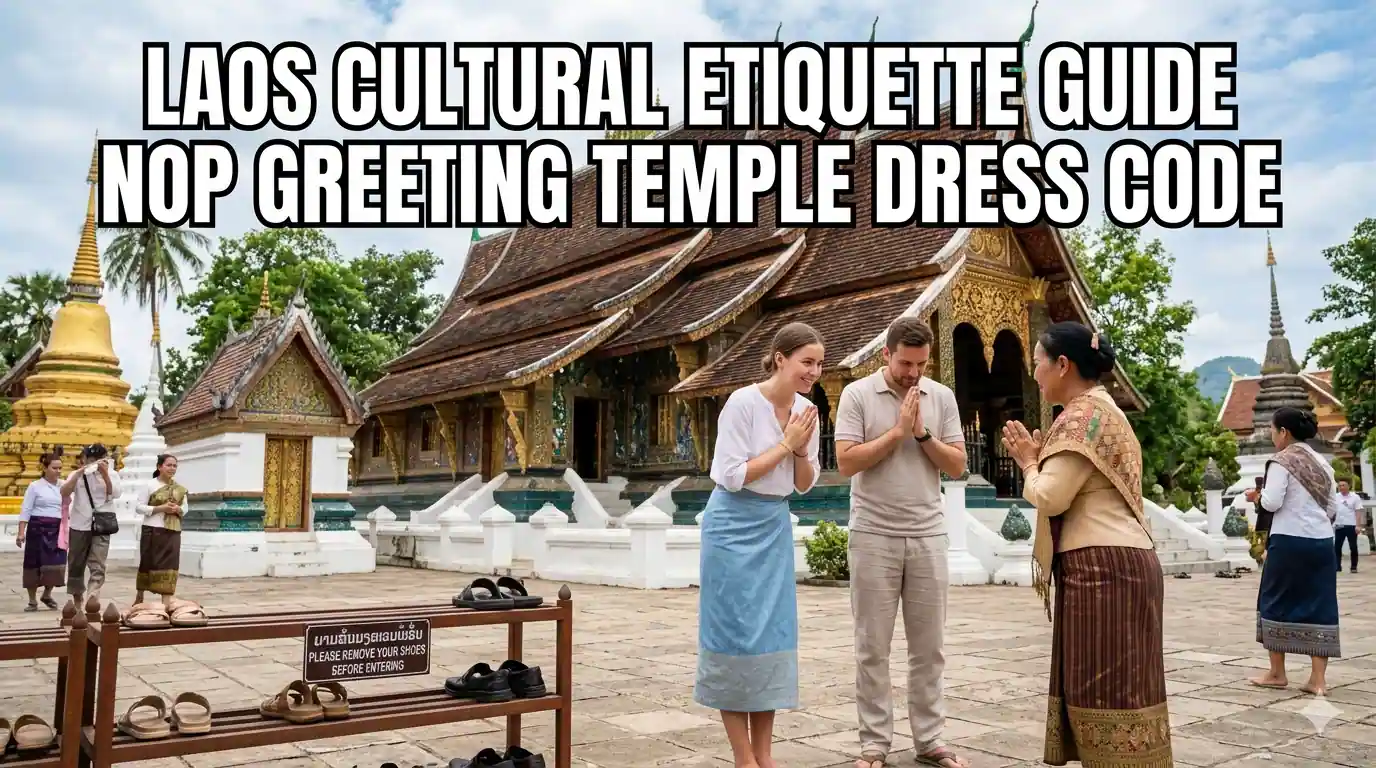
Understanding Lao Cultural Etiquette: A Guide for Respectful Travel
Laos, known as the "Land of a Million Elephants," is a country where traditional Buddhist values and customs remain deeply woven into daily life. For travelers, understanding and respecting Lao cultural etiquette is not just about avoiding offense—it's about showing genuine respect for a culture that values harmony, humility, and spiritual devotion.
Two of the most important aspects of Lao etiquette that every visitor should master are the "nop" (also called "wai" in Thai) greeting and proper temple dress codes. These practices reflect core Buddhist principles of respect, humility, and mindfulness that define Lao society.
This comprehensive guide will help you navigate these essential cultural practices with confidence, ensuring your interactions with Lao people are respectful and meaningful while your temple visits honor sacred traditions.
The Nop Greeting: Laos's Traditional Welcome

The "nop" (ນົບ) is the traditional Lao greeting that involves pressing your palms together in a prayer-like position while slightly bowing your head. This gesture, similar to the Thai "wai," is far more than a simple hello—it's a physical expression of respect, humility, and acknowledgment of another person's dignity.
How to Perform the Nop Correctly
Hand Position: Press your palms together with fingers pointing upward. Your hands should be positioned at chest level, with thumbs touching your chest and fingertips aligned with your nose or chin depending on the level of respect being shown.
Head Position: Slightly bow your head as you perform the nop. The depth of your bow indicates the level of respect—deeper bows show greater respect. For everyday greetings, a slight nod is sufficient. For monks, elders, or Buddha images, a deeper bow is appropriate.
Accompanying Words: Say "Sabaidee" (ສະບາຍດີ), which means "hello" or "good health" in Lao. The pronunciation is approximately "sa-bye-dee."
When to Use the Nop
Greetings: Use the nop when greeting people, especially elders, monks, and people you're meeting for the first time. It's appropriate in both formal and informal settings.
Expressing Gratitude: The nop is used to say thank you, showing appreciation and respect.
Apologies: When apologizing, the nop demonstrates sincerity and humility.
Farewells: Use the nop when saying goodbye, particularly in formal situations or when showing respect.
Receiving Something: When receiving something from someone, especially an elder or monk, use the nop to show gratitude and respect.
Levels of Respect in the Nop
The position of your hands and depth of your bow vary depending on who you're greeting:
For Peers and Friends: Hands at chest level, slight bow. This is the casual, everyday nop.
For Elders and Teachers: Hands positioned higher, with fingertips at nose level, and a deeper bow showing greater respect.
For Monks: Hands at forehead level with fingertips touching between the eyebrows, with a deep bow. This shows the highest level of respect.
For Buddha Images: When in temples, the nop to Buddha images should have hands at forehead level with a deep, respectful bow or prostration.
When NOT to Use the Nop
Service Workers: While not offensive, it's not expected to nop to service workers like waitstaff or shopkeepers. A smile and "sabaidee" is sufficient.
Children: Children typically initiate the nop to adults; adults respond but don't necessarily need to initiate.
Very Casual Settings: Among close friends or in very informal situations, a simple wave or verbal greeting may suffice, though the nop is never wrong.
Common Mistakes to Avoid
Incorrect Hand Position: Don't hold your hands too low (below chest level) or too high (above forehead) unless greeting monks or Buddha images.
Rushing the Gesture: The nop should be deliberate and respectful, not rushed. Take a moment to make eye contact and smile.
Forgetting to Bow: The hand position alone isn't enough—the slight bow of the head is essential to show respect.
Using with Wrong People: While generally safe, avoid using an overly formal nop (high hands, deep bow) with young children or service staff as it may make them uncomfortable.
Temple Dress Codes: Dressing Respectfully for Sacred Spaces

Buddhist temples (known as "wat" in Lao) are sacred spaces that serve as centers of worship, community gathering, and cultural preservation. Dressing appropriately when visiting temples is one of the most important ways to show respect for Lao culture and Buddhist traditions.
Essential Dress Code Requirements
Shoulders Must Be Covered: Both men and women must cover their shoulders completely. Sleeveless shirts, tank tops, spaghetti straps, and off-the-shoulder tops are not permitted. Short sleeves are acceptable, but long sleeves are preferred and show greater respect.
Knees Must Be Covered: Shorts, short skirts, and short dresses are not allowed. Your knees must be completely covered when standing, sitting, or walking. Long pants, long skirts, or dresses that extend below the knee are required.
No Revealing Clothing: Avoid tight, transparent, or revealing clothing. Clothing should be loose-fitting and modest. Low-cut tops are inappropriate.
Remove Shoes: You must remove your shoes before entering any temple building, including prayer halls and areas containing Buddha images. Socks are acceptable and recommended.
What to Wear: Recommended Clothing
For Women:
- Long pants or long skirts/dresses (below knee)
- Shirts with sleeves (short or long sleeves)
- Lightweight cardigan or shawl to cover shoulders if wearing sleeveless underneath
- Comfortable shoes that are easy to remove
- Scarf or shawl for additional coverage if needed
- 👉 Walking the Via Dolorosa: Jerusalem's Sacred Path of the Cross
- 👉 Syria Food Costs Falafel Street Food vs Luxury Palace Dining Guide 2026
- 👉 North Korea for Digital Nomad Families Navigating Secure Housing and Schooling
For Men:
- Long pants (shorts are not acceptable)
- Shirts with sleeves (no tank tops or sleeveless shirts)
- Collared shirts are preferred but not required
- Comfortable shoes that are easy to remove
- 👉 Walking the Via Dolorosa: Jerusalem's Sacred Path of the Cross
- 👉 Syria Food Costs Falafel Street Food vs Luxury Palace Dining Guide 2026
- 👉 North Korea for Digital Nomad Families Navigating Secure Housing and Schooling
What NOT to Wear
Absolute No-Nos:
- Sleeveless shirts or tank tops
- Shorts or short skirts (above the knee)
- Revealing or tight clothing
- Transparent or see-through clothing
- Clothing with offensive images or text
- Beachwear or athletic wear
- Flip-flops are technically acceptable but closed shoes are more respectful
- 👉 Walking the Via Dolorosa: Jerusalem's Sacred Path of the Cross
- 👉 Syria Food Costs Falafel Street Food vs Luxury Palace Dining Guide 2026
- 👉 North Korea for Digital Nomad Families Navigating Secure Housing and Schooling
Practical Tips for Temple Visits
Carry a Sarong or Scarf: Keep a lightweight sarong, scarf, or shawl in your bag. Many temples rent or sell cover-ups at the entrance, but it's better to come prepared.
Dress in Layers: Laos can be hot, but temples are often cool inside. Wearing layers allows you to stay comfortable while maintaining modesty.
Check Before You Go: Some temples may have slightly different requirements. When in doubt, dress more conservatively.
Respect Signs: Many temples post dress code requirements at the entrance. Always follow posted guidelines.
Special Considerations
Women and Monks: Women should never touch monks or hand objects directly to them. If you need to give something to a monk, place it on a surface for them to pick up, or have a man pass it.
Sitting Position: When sitting in a temple, sit with your feet tucked behind you, not pointing toward Buddha images or monks. Pointing your feet at sacred objects or people is considered very disrespectful.
Photography: Always ask permission before photographing monks or people praying. Some temples restrict photography in certain areas.
Additional Temple Etiquette Guidelines

Beyond dress codes, several other etiquette rules are essential for respectful temple visits.
Behavior Inside Temples
Speak Softly: Keep your voice low and avoid loud conversations. Temples are places of worship and meditation.
Turn Off Phone: Silence your phone or turn it off completely. Never take calls inside temple buildings.
Don't Point Feet: Never point your feet at Buddha images, monks, or other people. The feet are considered the lowest and dirtiest part of the body.
Walk Clockwise: When walking around Buddha images or stupas, always move in a clockwise direction as a sign of respect.
Don't Climb: Never climb on Buddha images, stupas, or other sacred structures, even for photos.
Remove Hats: Remove hats and sunglasses when entering temple buildings.
Interacting with Monks
Show Respect: Monks are highly respected in Lao society. Always show deference through your words and actions.
Women Should Not Touch Monks: As mentioned, women should never touch monks or hand them objects directly.
Give Way: Step aside to let monks pass, and don't stand higher than a monk if possible.
Ask Before Photographing: Always ask permission before photographing monks.
Making Offerings
Alms Giving: If participating in the morning alms giving (tak bat), do so respectfully and quietly. Follow local customs and don't block the monks' path.
Donations: If making donations, do so discreetly and respectfully. Place money in donation boxes or give it respectfully to temple staff.
Cultural Context: Why These Customs Matter

Understanding the cultural and religious significance behind these etiquette rules helps travelers appreciate why they matter.
Buddhist Principles
Respect (Khop Khun): Lao culture places enormous emphasis on showing respect, particularly to elders, religious figures, and sacred spaces. The nop and proper dress are physical manifestations of this respect.
Hierarchy: Lao society is hierarchical, with monks at the top, followed by elders, teachers, and then others. The nop acknowledges this hierarchy.
Modesty and Humility: Buddhist values emphasize modesty in dress and behavior. Revealing clothing is seen as immodest and disrespectful in sacred spaces.
Karma: Actions have consequences in Buddhist belief. Showing respect generates good karma; showing disrespect generates negative karma.
Historical Context
Laos has been a Buddhist country for over 600 years, with Buddhism deeply integrated into daily life, culture, and national identity. Temples serve not just as places of worship but as community centers, schools, and preservers of culture and tradition.
During the colonial period and subsequent conflicts, temples served as sanctuaries and symbols of Lao identity and resistance. They remain central to Lao cultural pride and spiritual life.
Practical Tips for Travelers

Before Your Trip
Pack Appropriately: Bring lightweight, loose-fitting clothing that covers shoulders and knees. Natural fabrics like cotton and linen are ideal for the tropical climate.
Bring a Sarong: A lightweight sarong is versatile—it can be used as a skirt, shoulder cover, or even a towel. Many travelers find them indispensable.
Research Temples: Some temples may have specific requirements or restricted areas. Research before visiting.
During Your Visit
Observe Locals: Watch how Lao people behave in temples and follow their example. When in doubt, err on the side of caution and formality.
Ask Questions: If you're unsure about proper etiquette, ask your guide or a local. Most Lao people appreciate visitors who make an effort to respect their culture.
Be Patient: Learning new customs takes time. If you make a mistake, apologize sincerely with a nop and move on.
Common Scenarios
Scenario 1: You're wearing shorts and want to visit a temple.
Solution: Many temples near tourist areas rent or sell sarongs and cover-ups. Alternatively, wear long pants or a long skirt under your shorts that you can change into.
Scenario 2: A monk approaches you for alms.
Solution: If you're prepared with food offerings, place them in the monk's bowl respectfully. If you're a woman, don't touch the monk—place the offering on a cloth or have a man pass it. If you're not prepared, a respectful nop is appropriate.
Scenario 3: You need to sit in a temple.
Solution: Sit with your legs tucked to the side or behind you, never with feet pointing toward Buddha images or monks.
Regional Variations

While basic etiquette is consistent throughout Laos, some regional variations exist:
Luang Prabang: As a UNESCO World Heritage site and former royal capital, Luang Prabang maintains particularly strict temple etiquette. The morning alms ceremony (tak bat) is a sacred ritual—observe from a respectful distance and don't block the monks' path.
Vientiane: The capital is more cosmopolitan, but temple etiquette remains strict. Major temples like Wat Si Saket and Wat Phra Keo expect proper dress and behavior.
Rural Areas: In rural villages, temple etiquette may be more relaxed for locals, but visitors should still dress and behave respectfully. Rural communities may be more traditional and conservative.
Mistakes to Avoid

1. Wearing Inappropriate Clothing: This is the most common mistake. Always dress conservatively for temple visits.
2. Touching Monks (if you're a woman): This is a serious breach of etiquette.
3. Pointing Feet at Sacred Objects: Always be aware of where your feet are pointing.
4. Climbing on Buddha Images: Never climb on or touch Buddha images for photos.
5. Loud Behavior: Keep your voice down in temples.
6. Inappropriate Photos: Don't take selfies with Buddha images or photograph people praying without permission.
7. Not Removing Shoes: Always remove shoes before entering temple buildings.
Conclusion: Respect Opens Doors

Understanding and practicing proper cultural etiquette in Laos—particularly the nop greeting and temple dress codes—is about far more than following rules. It's about showing genuine respect for a culture that has preserved its traditions through centuries of change.
When you greet someone with a sincere nop, dress modestly for temple visits, and behave respectfully in sacred spaces, you're not just avoiding offense—you're participating in a cultural exchange that enriches both your experience and the lives of the people you meet.
Lao people generally appreciate visitors who make an effort to understand and respect their customs. Your efforts will be noticed and appreciated, often leading to warmer interactions, deeper connections, and a more meaningful travel experience.
Remember that cultural etiquette is not about perfection—it's about intention. If you approach Lao culture with humility, respect, and a willingness to learn, you'll find that the Lao people are warm, welcoming, and grateful for your efforts to honor their traditions.
As you travel through Laos, let respect be your guide. Perform the nop with sincerity, dress modestly for temple visits, and behave mindfully in sacred spaces. In doing so, you'll not only avoid cultural missteps but also open doors to authentic connections and unforgettable experiences in the Land of a Million Elephants.
0 Comments