.webp)
.webp)
How to Visit Bikini Atoll: Complete Diving & History Guide
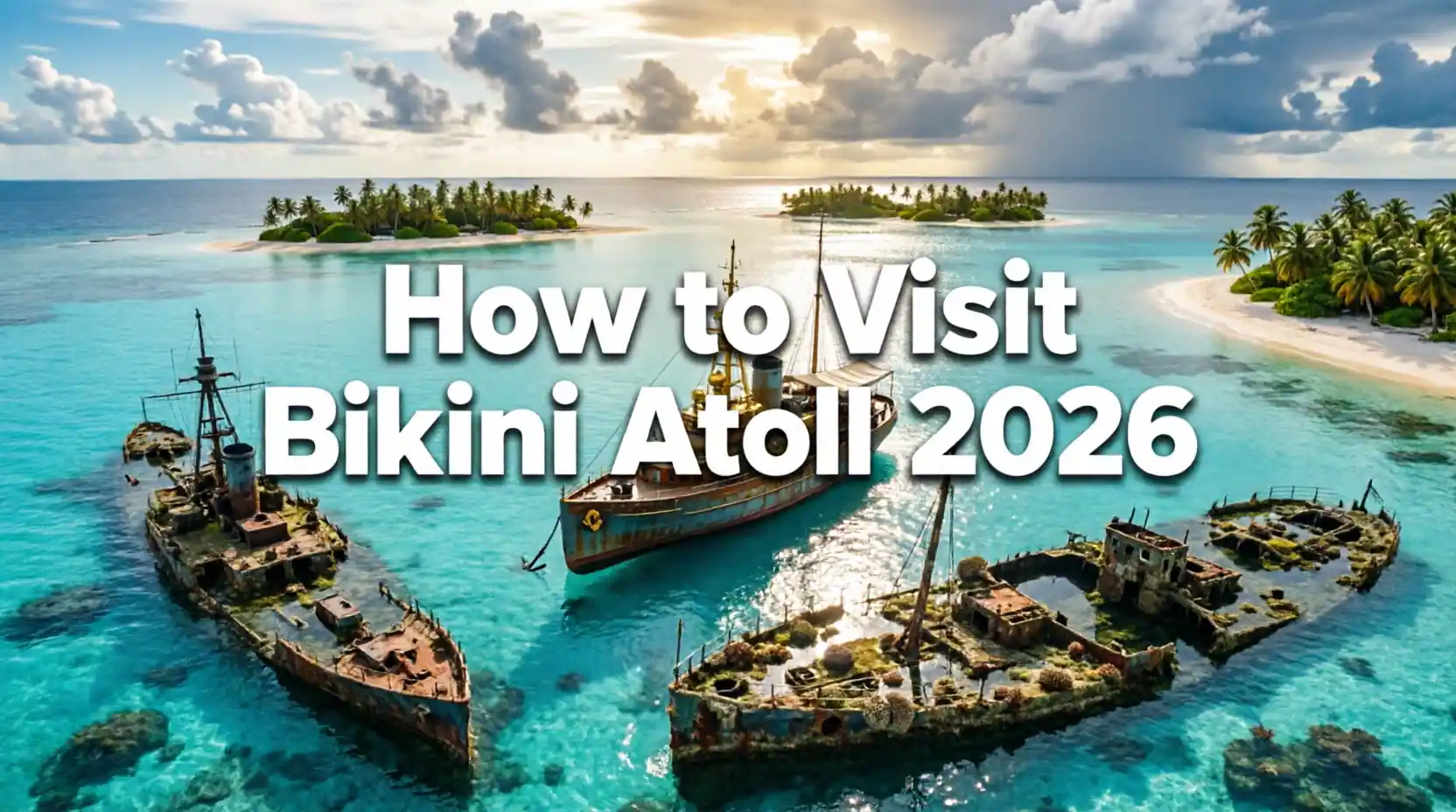
How to Visit Bikini Atoll: A Complete Guide for Scuba Divers and History Buffs
Visiting Bikini Atoll represents one of the most unique, challenging, and historically significant travel experiences available to divers and history enthusiasts today. This remote Marshall Islands atoll, site of 23 nuclear weapons tests between 1946 and 1958, now serves as both a UNESCO World Heritage Site and an extraordinary dive destination featuring the world's most historically significant shipwrecks—the "nuclear ghost fleet" sunk during Operation Crossroads.
For qualified technical divers, Bikini Atoll offers unparalleled access to iconic WWII warships including the battleship USS Arkansas, aircraft carrier USS Saratoga, and Japanese battleship Nagato, resting in pristine condition on the lagoon floor. For history buffs, the atoll provides a sobering glimpse into the nuclear age's dawn and the profound human cost borne by the displaced Bikinian people.
This comprehensive guide covers everything you need to know about visiting Bikini Atoll: from booking procedures and travel logistics to diving requirements, safety considerations, historical context, and the ethical implications of visiting this unique site. Understanding both the opportunities and responsibilities involved is essential for anyone considering this once-in-a-lifetime expedition.
Can tourists visit Bikini Atoll?
Yes, tourists can visit Bikini Atoll, but access is highly restricted and regulated. The atoll is primarily accessible through specialized liveaboard diving expeditions that operate seasonally (typically May-October). Independent travel is not permitted—all visitors must be part of organized tours approved by the Kili/Bikini/Ejit Local Government. The atoll remains uninhabited due to radiation concerns, and visitors are restricted to specific areas. All visits require advance permits and must be arranged through authorized operators.
Understanding Bikini Atoll: History and Context

Before planning a visit, understanding Bikini Atoll's complex history is essential for responsible tourism.
The Nuclear Testing Era (1946-1958):
• Operation Crossroads (1946): The first post-WWII nuclear tests sank multiple vessels including iconic warships
• Total Tests: 23 nuclear devices detonated at Bikini between 1946-1958
• Total Yield: Equivalent to 7,000 Hiroshima-sized bombs
• Castle Bravo (1954): Largest U.S. nuclear test at 15 megatons—1,000 times more powerful than Hiroshima
• The Ghost Fleet: Over 95 vessels intentionally sunk or damaged during tests now rest on the lagoon floor
The Bikinian People:
• Displacement: 167 residents were relocated in 1946 with the promise they could return
• Broken Promises: Attempts to return in the 1970s failed due to dangerous radiation levels
• Current Status: Most Bikinians live on Kili Island, Ejit Island, or in the U.S. (Arkansas, Oklahoma, Hawaii)
• Ongoing Impact: The community continues to face health, cultural, and financial challenges from displacement
• UNESCO Status: Designated a World Heritage Site in 2010 as a reminder of nuclear testing's human and environmental costs
Current Conditions:
• Radiation Levels: The lagoon and wrecks are safe for diving; radiation is primarily in the soil on some islands
• Access Restrictions: Visitors cannot stay overnight on Bikini Island itself
• Liveaboard Only: All visitors must sleep aboard the dive vessel
• Permit Requirements: All visits require permits from the Kili/Bikini/Ejit Local Government
• Environmental Recovery: Marine life has thrived in the absence of human activity, creating world-class diving conditions
Is Bikini Atoll safe to visit?
Yes, Bikini Atoll is safe for diving and visiting under regulated conditions. Scientific studies confirm that radiation levels in the lagoon water and around the wrecks are safe for diving activities. The primary radiation concerns are in the soil on certain islands, which is why overnight stays on land are prohibited. Liveaboard diving operations have operated safely for over 20 years with no radiation-related health incidents. However, visitors must follow all safety protocols and restricted area guidelines.
Planning Your Bikini Atoll Expedition

Visiting Bikini Atoll requires extensive advance planning and preparation.
Booking Timeline:
• Advance Booking: Reserve 12-18 months in advance
• Limited Availability: Only 2-3 liveaboard operators serve Bikini
• Seasonal Operation: May through October only (weather-dependent)
• Group Size: Typically 12-20 divers per expedition
• Waitlists: Common due to high demand and limited spots
Authorized Liveaboard Operators:
• Master Liveaboards: Operates the Truk Master and Pacific Master on rotation
• Bikini Atoll Divers: Specialized operator focused exclusively on Bikini
• Verification: Always verify operator is authorized by Kili/Bikini/Ejit Local Government
• Booking Process: Contact operators directly; expect detailed application process
Cost Considerations:
• Liveaboard Cost: $6,000-$9,000 USD for 10-14 day expedition
• What's Included: Accommodation, all meals, diving, permits, park fees
• Not Included: Flights to Majuro, hotel nights, equipment rental, gratuities
• Additional Costs: Nitrox (if desired), rental gear, travel insurance, Majuro hotel
• Total Trip Cost: Budget $8,000-$12,000 USD total including flights and extras
Permit Requirements:
• KBE Permit: Required from Kili/Bikini/Ejit Local Government
• Application: Usually handled by liveaboard operator
• Processing Time: Allow 2-3 months for permit approval
• Documentation: Passport copy, diving certifications, medical clearance
• Fees: Permit fees typically included in liveaboard package
How much does a Bikini Atoll diving trip cost?
A complete Bikini Atoll diving expedition costs $8,000-$12,000 USD total. The liveaboard portion runs $6,000-$9,000 for 10-14 days including accommodation, meals, diving, and permits. Additional costs include international flights to Majuro ($1,500-$3,000), hotel nights in Majuro ($100-$200/night), equipment rental if needed ($200-$400), travel insurance ($200-$500), and gratuities. This is a premium, once-in-a-lifetime diving experience requiring significant financial investment.
Travel Logistics: Getting to Bikini Atoll

Reaching Bikini Atoll involves multiple stages of travel to one of Earth's most remote locations.
Step 1: International Flight to Majuro:
• Gateway: Marshall Islands International Airport (MAJ) in Majuro Atoll
• Airlines: United Airlines (from Honolulu), Nauru Airlines (from Brisbane, Fiji, Tarawa)
• Flight Time: 6-8 hours from Honolulu; longer from other Pacific hubs
• Visa: U.S. citizens receive 90-day visa-free entry; check requirements for your nationality
• Stopover: Plan 1-2 nights in Majuro before and after Bikini expedition
Step 2: Majuro to Bikini Atoll:
• Domestic Flight: Air Marshall Islands operates occasional flights to Bikini
• Flight Duration: Approximately 2 hours
• Schedule: Irregular; coordinated with liveaboard schedule
• Alternative: Some operators arrange private charter flights
• Weather Dependency: Flights subject to weather delays; build buffer days
Step 3: Boarding the Liveaboard:
• Location: Liveaboard typically anchored in Bikini lagoon
• Transfer: Short boat transfer from airstrip to vessel
• Check-in: Safety briefing, equipment setup, permit verification
• Orientations: Historical briefing, dive site orientation, safety protocols
• First Dive: Usually begins within 24 hours of arrival
Travel Insurance Requirements:
• Mandatory: Comprehensive travel insurance required by all operators
• Medical Evacuation: Must include emergency medical evacuation coverage ($100,000+ minimum)
• Diving Coverage: Must specifically cover technical/deep diving
• Trip Cancellation: Strongly recommended given remote location and cost
• Providers: DAN (Divers Alert Network), Global Rescue, or similar specialized providers
Packing Essentials:
• Diving Gear: Most bring own equipment; rental available but limited
• Technical Gear: Redundant systems, reels, surface marker buoys required
• Documentation: Diving certifications, logbook, medical clearance, passport
• Personal Items: Sunscreen (reef-safe only), medications, seasickness prevention
• Clothing: Casual, lightweight; modest clothing for any shore interactions
• Electronics: Camera equipment, chargers, power bank (limited charging aboard)
How do I get from Majuro to Bikini Atoll?
Travel from Majuro to Bikini Atoll typically involves a 2-hour domestic flight on Air Marshall Islands or a private charter arranged by your liveaboard operator. Flights are irregular and coordinated with diving expedition schedules. Weather can cause delays, so build buffer days into your itinerary. Upon arrival at Bikini's small airstrip, a short boat transfer takes you to the liveaboard vessel anchored in the lagoon. The entire journey from Majuro to the dive boat takes approximately half a day.
Diving Requirements and Certification

Bikini Atoll diving is not for beginners. Strict certification and experience requirements ensure safety at these challenging depths.
Minimum Certification Requirements:
• Technical Diving Certification: Required (TDI, IANTD, GUE, or equivalent)
• Deep Diving Experience: Minimum 100 logged dives; 50+ on nitrox/trimix preferred
• Advanced Certifications: Advanced Nitrox and Decompression Procedures required
• Gas Requirements: Must be certified to use nitrox and trimix for deeper wrecks
• Recent Experience: Proof of recent deep/technical diving (within 12 months)
Dive Profile Overview:
• Depth Range: 40-55 meters (130-180 feet) for major wrecks
• Dive Type: Decompression diving required
• Bottom Time: Typically 20-30 minutes at depth
• Total Dive Time: 90-120 minutes including decompression
• Gas Switching: Multiple gas switches during ascent
• Dives Per Day: Usually 2-3 dives daily depending on conditions
Required Equipment:
• Primary Regulator: High-performance, cold-water rated
• Backup Regulator: Independent redundant system required
• BCD/Wing: Technical diving wing with dual bladders preferred
• Gas Planning: Multiple cylinders (bottom gas, travel gas, decompression gases)
• Reels/DSMBs: At least 2 reels and surface marker buoys
• Dive Computer: Technical diving computer with air integration preferred
• Lights: Primary and backup dive lights
• Cutting Tools: At least one cutting device
Medical Requirements:
• Medical Clearance: Current diving medical (within 12 months) required
• Physician Approval: Must be signed by diving medicine specialist
• Fitness: Excellent physical condition required for technical diving
• Medications: Disclose all medications; some may disqualify you
• Age Requirements: Typically 21+ years old
Experience Expectations:
• Wreck Diving: Prior wreck diving experience strongly recommended
• Deep Diving: Comfortable diving beyond 40 meters/130 feet
• Decompression: Extensive deco diving experience required
• Team Diving: Experience diving in technical teams
• Emergency Procedures: Proficiency in technical diving emergency protocols
What certifications do I need to dive Bikini Atoll?
You need technical diving certifications including Advanced Nitrox and Decompression Procedures from recognized agencies (TDI, IANTD, GUE, or equivalent). Minimum 100 logged dives with significant deep diving experience is required. You must be certified to use nitrox and trimix gas mixtures. A current diving medical (within 12 months) is mandatory. This is advanced technical diving at 40-55 meters requiring decompression stops—beginner and recreational divers cannot participate.
The Nuclear Ghost Fleet: Dive Sites and Wrecks

Bikini Atoll's lagoon contains the world's most historically significant collection of WWII warships.
USS Saratoga (CV-3):
• Type: Aircraft carrier
• Length: 270 meters (888 feet)
• Depth: 52 meters (170 feet) to deck; 40 meters (130 feet) to flight deck
• Highlights: Massive flight deck, hangar bay, aircraft on deck, anti-aircraft guns
• Dive Time: 25-30 minutes bottom time
• Historical Note: Sank during Baker test (July 25, 1946); survived atomic blast but sank hours later
USS Arkansas (BB-33):
• Type: Battleship
• Length: 171 meters (562 feet)
• Depth: 40 meters (130 feet) to deck
• Highlights: Massive gun turrets, intact superstructure, remarkably preserved
• Dive Time: 30 minutes bottom time
• Historical Note: Sank during Baker test; one of the closest ships to ground zero
Nagato:
• Type: Japanese battleship (Admiral Yamamoto's flagship)
• Length: 215 meters (705 feet)
• Depth: 45-55 meters (148-180 feet)
• Highlights: Massive 16-inch guns, bridge structure, historically significant
• Dive Time: 25 minutes bottom time
• Historical Note: Japan's most powerful battleship; survived Hiroshima and Nagasaki only to sink at Bikini
USS Pilotfish (SS-386):
• Type: Submarine
• Length: 95 meters (312 feet)
• Depth: 40 meters (130 feet)
• Highlights: Intact submarine, conning tower, torpedoes visible
• Dive Time: 30 minutes
• Historical Note: Sank during Baker test; positioned near Nagato
Other Notable Wrecks:
• USS Lamson: Destroyer, 40 meters depth
• USS Anderson: Destroyer, 45 meters depth
• HIJMS Sakawa: Japanese cruiser, 50 meters depth
• German Heavy Cruiser Prinz Eugen: Capsized, partially visible (radiation concerns limit diving)
Dive Conditions:
• Visibility: Typically 30-50 meters (100-165 feet)—exceptional
• Water Temperature: 27-29°C (81-84°F) year-round
• Current: Generally mild in lagoon; variable around wrecks
• Marine Life: Abundant—sharks, rays, tuna, reef fish colonize wrecks
• Preservation: Wrecks remarkably intact after 75+ years underwater
• Penetration: Generally not permitted; external exploration only
What will I see diving at Bikini Atoll?
You'll dive on remarkably preserved WWII warships including the aircraft carrier USS Saratoga (270m long), battleships USS Arkansas and Japanese Nagato, submarines, destroyers, and cruisers. Visibility averages 30-50 meters with water temperatures of 27-29°C. The wrecks sit at 40-55 meters depth and are heavily colonized by marine life including sharks, rays, and tropical fish. These are external dives only—no wreck penetration. The historical significance combined with pristine preservation makes this the world's most important wreck diving destination.
Safety Considerations and Radiation Concerns

Understanding and addressing safety concerns is essential for responsible Bikini Atoll tourism.
Radiation Reality:
• Lagoon Water: Safe for diving; radiation levels equivalent to natural background
• Wrecks: Safe to dive; radiation primarily in sediment, not water column
• Island Soil: Elevated radiation on some islands; overnight stays prohibited
• Seafood: Do not consume fish or seafood from Bikini lagoon
• Scientific Monitoring: Regular testing by U.S. Department of Energy and international agencies
• 20+ Years of Diving: No radiation-related health incidents among divers
Safety Protocols:
• No Overnight Stays: All visitors sleep aboard liveaboard
• Restricted Areas: Certain islands off-limits; follow guide instructions
• No Consumption: Do not eat, drink, or collect anything from islands
• Hygiene: Shower after any shore contact
• Guided Only: Never explore islands without authorized guide
• Respect Boundaries: Stay in designated areas only
Diving Safety:
• Technical Diving Risks: Deep decompression diving carries inherent risks
• Remote Location: 4+ hours from nearest medical facility
• Emergency Protocols: Liveaboards equipped with oxygen, first aid, communication
• Evacuation: Emergency evacuation possible but challenging and expensive
• Dive Briefings: Comprehensive briefings before each dive
• Buddy System: Strict adherence to technical diving team protocols
Health Considerations:
• Medical Screening: Thorough medical clearance required
• Fitness: Excellent physical condition essential
• Age: Most operators prefer divers under 60 for technical diving
• Medications: Disclose all medications; some may disqualify you
• Insurance: Comprehensive medical evacuation coverage mandatory
• DAN Membership: Divers Alert Network membership strongly recommended
Environmental Responsibility:
• UNESCO Site: Treat with utmost respect as World Heritage Site
• No Collection: Never remove artifacts, coral, or any materials
• No Touching: Observe wrecks without touching or penetrating
• Reef-Safe Products: Use only reef-safe sunscreen
• Wildlife: Observe marine life without disturbance
• Leave No Trace: Pack out everything you bring in
Is the radiation at Bikini Atoll dangerous for divers?
No, radiation levels in the lagoon water and around the wrecks are safe for diving. Scientific studies confirm radiation is primarily in island soil, not the water column. Over 20 years of diving operations have produced zero radiation-related health incidents. However, you must follow safety protocols: sleep aboard the liveaboard (no overnight on islands), don't consume local seafood, shower after any shore contact, and stay in designated areas. The diving itself is safe; the radiation concerns relate to long-term habitation on the islands, not recreational diving.
Historical and Cultural Significance

Visiting Bikini Atoll carries profound historical and ethical responsibilities.
UNESCO World Heritage Status:
• Designation: Inscribed as World Heritage Site in 2010
• Significance: "Outstanding example of a nuclear test site"
• Criteria: Represents the dawn of the nuclear age
• Preservation: Protects both cultural heritage and environmental memory
• Education: Serves as reminder of nuclear testing's human and environmental costs
The Bikinian People's Story:
• Forced Relocation: 167 people removed in 1946 with promise of return
• Failed Returns: Attempts in 1970s abandoned due to radiation
• Current Population: Approximately 7,000 Bikinians live in exile
• Ongoing Impact: Loss of homeland, culture, and traditional way of life
• Compensation: Ongoing legal and financial negotiations with U.S. government
• Visitor Responsibility: Acknowledge this human cost; educate yourself
Cold War History:
• Arms Race: Bikini tests fueled nuclear arms race between U.S. and USSR
• Environmental Impact: Global radioactive contamination from atmospheric tests
• Health Effects: Downwinders and test participants suffered radiation exposure
• Legacy: Nuclear weapons remain existential threat to humanity
• Memorial: Bikini serves as memorial to nuclear age victims
Ethical Tourism Considerations:
• Respect: This is not just a dive destination; it's a place of profound loss
• Education: Learn the full history before visiting
• Sensitivity: Be sensitive to the ongoing suffering of the Bikinian people
• Contribution: Consider donating to Bikinian community organizations
• Advocacy: Share the story responsibly; advocate for nuclear disarmament
• Perspective: Balance diving excitement with historical gravity
What is the historical significance of Bikini Atoll?
Bikini Atoll is where the nuclear age began. The 23 nuclear tests conducted between 1946-1958, including the massive 15-megaton Castle Bravo test, marked humanity's entry into the nuclear era. The atoll was designated a UNESCO World Heritage Site in 2010 as a reminder of nuclear testing's profound human and environmental costs. Most significantly, it represents the forced displacement of the Bikinian people who were removed from their homeland in 1946 and have never been able to return due to radiation contamination. Visiting Bikini requires acknowledging both the historical significance and the ongoing suffering of the displaced community.
Onboard Experience and Daily Life

Life aboard a Bikini Atoll liveaboard combines technical diving intensity with remote expedition comfort.
Typical Daily Schedule:
• 6:00 AM: Wake-up call, light breakfast
• 7:00 AM: First dive briefing and gear preparation
• 8:00 AM: First dive (typically USS Saratoga or Nagato)
• 10:30 AM: Return from dive, brunch
• 12:00 PM: Second dive briefing
• 1:00 PM: Second dive (different wreck)
• 3:30 PM: Return, snacks, rest period
• 5:00 PM: Optional third dive or relaxation time
• 7:00 PM: Dinner and evening briefing
• 8:00 PM: Historical presentations, video reviews, social time
• 10:00 PM: Rest (early bedtime for next day's diving)
Accommodation:
• Cabins: Typically shared cabins (2-4 people); some operators offer private cabins
• Amenities: Air conditioning, ensuite bathroom, storage
• Comfort Level: Functional and comfortable but not luxury
• Space: Compact cabins typical of liveaboard vessels
• Common Areas: Dive deck, dining area, lounge, sun deck
Meals and Nutrition:
• Quality: High-quality meals designed for technical divers
• Frequency: 3 main meals plus snacks between dives
• Hydration: Unlimited water, juice, soft drinks
• Dietary Needs: Most operators accommodate dietary restrictions (advise in advance)
• Alcohol: Limited or no alcohol due to technical diving schedule
• Special Considerations: High-carb meals to support decompression diving
Equipment and Facilities:
• Dive Deck: Spacious area for gear setup and rinsing
• Compressor: Onboard nitrox and trimix filling capabilities
• Camera Station: Dedicated area for camera gear
• Charging: Limited charging stations; bring power bank
• Medical: Oxygen, first aid, emergency medical kit
• Communication: Satellite phone for emergencies; limited internet
Educational Components:
• Historical Briefings: Daily presentations on wrecks and nuclear testing history
• Dive Briefings: Detailed briefings covering entry points, depths, gas plans
• Video Reviews: Evening review of dive footage when available
• Guest Speakers: Some expeditions include historians or Bikinian representatives
• Library: Books and resources on Bikini history and technical diving
Connectivity:
• Internet: Very limited or no internet access
• Phone: Satellite phone for emergencies only
• Disconnect: Embrace the disconnection; focus on diving and history
• Photos: Bring ample memory cards; limited ability to offload
• Emergency Contact: Family can contact vessel via satellite in emergencies
What is life like on a Bikini Atoll liveaboard?
Life aboard follows an intense diving schedule with 2-3 technical dives daily. You'll wake early (6 AM), dive from 8 AM-4 PM with surface intervals for meals and rest, and evenings include historical briefings and social time. Accommodations are functional shared or private cabins with air conditioning and ensuite bathrooms. Meals are high-quality and frequent to support decompression diving. Internet is very limited or unavailable—embrace the disconnection. The atmosphere combines technical diving focus with historical education and camaraderie among like-minded divers. It's physically demanding but intellectually and emotionally rewarding.
Photography and Documentation

Capturing Bikini Atoll's wrecks requires specialized equipment and techniques.
Camera Equipment:
• Housing: High-quality underwater housing rated to 60+ meters
• Camera: DSLR or mirrorless with manual controls preferred
• Lenses: Wide-angle (10-16mm) for massive wrecks; macro optional for details
• Lights: Powerful video lights or strobes (wrecks are dark at depth)
• Backup: Bring backup camera if possible; no repair options on site
• Memory: Ample high-capacity memory cards (64GB+ recommended)
Photography Challenges:
• Depth: 40-55 meters limits bottom time for photography
• Size: Wrecks are massive; difficult to capture scale
• Light: Limited natural light at depth; artificial lighting essential
• Decompression: Must manage deco obligations while photographing
• Conditions: Potential for current, visibility variations
• Gas Management: Photography can increase gas consumption
Photography Tips:
• Plan Shots: Review wreck layouts before diving
• Wide Angle: Essential for capturing massive scale of warships
• Lighting: Use video lights to illuminate details and restore color
• Positioning: Maintain safe distance from wrecks; don't touch
• Marine Life: Balance wreck photography with abundant marine life
• Safety First: Never compromise diving safety for photography
Video Considerations:
• Equipment: 4K capability recommended for large wrecks
• Stabilization: Gimbal or steady hand essential
• Lighting: Powerful video lights critical at depth
• Battery: Bring extra batteries; limited charging
• Storage: Ample storage for 4K video files
• Editing: Plan for extensive post-processing
Ethical Photography:
• Respect: These are war graves and historical sites
• Dignity: Photograph wrecks respectfully
• No Souvenirs: Never remove artifacts for photography
• Share Responsibly: Share images with historical context
• Education: Use photography to educate about history
• Permission: Some operators have photography guidelines
Can I take photos while diving at Bikini Atoll?
Yes, photography is encouraged and many divers bring extensive camera equipment. However, you need specialized gear rated for 60+ meters depth, powerful lighting for deep wrecks, and wide-angle lenses to capture the massive scale of warships. Bring ample memory cards and backup equipment—there are no repair facilities. Never compromise diving safety or decompression obligations for photography. Always photograph wrecks respectfully as they are war graves and historical sites. Most divers successfully balance technical diving requirements with photography, but prioritize safety over getting the perfect shot.
Post-Dive: Sharing Your Experience Responsibly

After returning from Bikini Atoll, how you share your experience matters.
Responsible Storytelling:
• Full Context: Share both the diving excitement and the human cost
• Bikinian Story: Always acknowledge the displaced community
• Historical Accuracy: Present historical facts accurately
• Avoid Glamorization: Don't glorify nuclear weapons or testing
• Educational Focus: Use your experience to educate others
• Nuclear Awareness: Connect to broader nuclear disarmament issues
Sharing Platforms:
• Social Media: Share photos with historical context and Bikinian story
• Dive Communities: Contribute to technical diving forums and groups
• Photography: Enter competitions; publish in diving/historical magazines
• Presentations: Offer to speak at dive clubs, schools, community groups
• Writing: Write articles or blog posts about your experience
• Video: Create documentaries or educational videos
Supporting the Bikinian Community:
• Donations: Contribute to Bikinian community organizations
• Awareness: Help raise awareness of ongoing displacement issues
• Advocacy: Support nuclear disarmament and environmental justice
• Respect: Center Bikinian voices in discussions about Bikini
• Education: Support educational initiatives about nuclear testing
• Long-term: Maintain connection to the issues beyond your trip
Continuing Education:
• Read: Continue learning about nuclear history and Bikinian culture
• Follow: Follow Bikinian community organizations and advocates
• Stay Informed: Keep up with nuclear policy and disarmament efforts
• Share Knowledge: Educate others about what you've learned
• Advocate: Use your voice for nuclear-free future
• Reflect: Process the profound experience thoughtfully
How can I share my Bikini Atoll experience responsibly?
Always share the complete story: the incredible diving AND the human cost to the displaced Bikinian people. Provide historical context about nuclear testing, avoid glorifying nuclear weapons, and center the ongoing suffering of the Bikinian community. Use your photos and stories to educate others about nuclear history and the importance of disarmament. Consider donating to Bikinian community organizations and supporting nuclear-free advocacy. Your experience carries responsibility—use it to promote understanding, peace, and justice rather than just adventure tourism.
Final Considerations: Is Bikini Atoll Right for You?
Bikini Atoll is not for everyone. Honest self-assessment is essential.
Bikini Atoll Is Right for You If:
• You're an experienced technical diver with 100+ logged dives
• You're certified in advanced nitrox and decompression procedures
• You're comfortable diving 40-55 meters with required decompression
• You have the financial resources ($8,000-$12,000)
• You can commit 2-3 weeks for the complete journey
• You're physically fit and medically cleared for technical diving
• You value historical significance and are willing to learn the full story
• You're comfortable with remote locations and limited connectivity
• You approach the experience with respect and humility
Bikini Atoll Is NOT Right for You If:
• You're a recreational or beginner diver
• You lack technical diving certifications
• You're uncomfortable with deep decompression diving
• You have budget constraints
• You need reliable internet connectivity
• You prefer luxury accommodations
• You're only interested in the diving without the historical context
• You're uncomfortable with the ethical complexities
• You have health conditions that preclude technical diving
Alternative Options:
If Bikini Atoll isn't right for you, consider:
• Chuuk (Truk) Lagoon: WWII wrecks at recreational depths
• Rabaul: WWII wrecks in Papua New Guinea
• Palau: WWII wrecks plus incredible reef diving
• Local Wreck Diving: Many destinations offer accessible wreck diving
• Virtual Tours: Online documentaries and virtual dives
• Museum Visits: Naval museums and nuclear history exhibits
Making the Decision:
• Honest Assessment: Evaluate your skills, resources, and motivations
• Consult Experts: Discuss with technical diving instructors
• Medical Clearance: Get thorough medical evaluation
• Financial Planning: Ensure you can afford the complete trip
• Time Commitment: Confirm you can take 2-3 weeks
• Ethical Reflection: Consider your motivations and responsibilities
• Final Decision: Only go if you're fully prepared and committed
Conclusion: A Journey of Profound Significance
Visiting Bikini Atoll represents far more than a diving expedition. It's a journey into the dawn of the nuclear age, a confrontation with the human cost of geopolitical decisions, and an opportunity to witness both humanity's capacity for destruction and nature's power of recovery.
For qualified technical divers, Bikini offers unparalleled access to history—swimming among the ghosts of WWII warships that witnessed the end of one global conflict and the beginning of another, more terrifying era. The diving is world-class, the visibility exceptional, and the marine life abundant. But the experience demands more than technical skill; it requires historical awareness, ethical reflection, and profound respect.
The Bikinian people's story—their forced displacement, their broken promises, their ongoing exile—must be central to any visit. These wrecks are not just dive sites; they are memorials to a community that sacrificed their homeland for nuclear testing. Responsible tourism means acknowledging this reality, supporting the community, and advocating for a nuclear-free future.
If you meet the qualifications, have the resources, and approach the experience with the gravity it deserves, Bikini Atoll can be transformative. You'll return not just with incredible dive logs and stunning photographs, but with a deeper understanding of our nuclear present and a commitment to working toward a safer future.
For those who cannot or should not make the journey, know that Bikini's story is everyone's story. The nuclear age affects us all. Learn about it. Advocate for disarmament. Support the Bikinian people. And if you do dive there, share the full story—the wonder and the warning.
Iakwe (hello) and komman tata (thank you) for considering this journey with respect and responsibility.
0 Comments