.webp)
.webp)
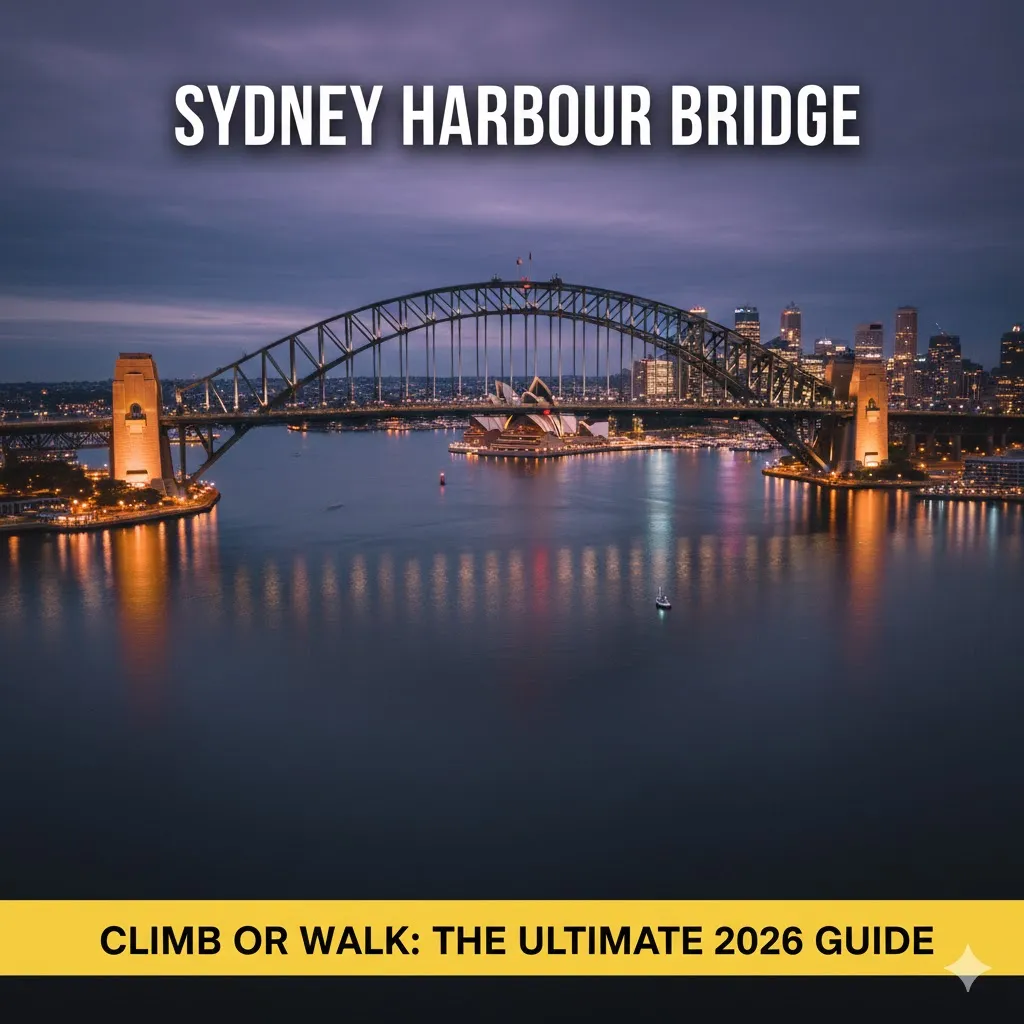
THE SYDNEY HARBOUR BRIDGE: WALKING OR CLIMBING THE WORLD'S MOST ICONIC ARCH
Few structures in the world command the immediate recognition, engineering admiration, and cultural significance of the Sydney Harbour Bridge. Spanning the spectacular natural harbor of Sydney with its massive steel arch, this iconic bridge has connected the city's north and south shores since 1932, serving not just as vital transportation infrastructure but as a symbol of Australian ambition, engineering prowess, and civic pride. Whether viewed from the water, walked across on its pedestrian pathway, or climbed to its summit for panoramic views, the Harbour Bridge offers visitors an unforgettable encounter with one of the world's great engineering achievements.
This comprehensive guide invites you to explore the Sydney Harbour Bridge with deeper understanding and greater appreciation. We will examine the historical context that gave rise to this monumental structure, decode the engineering innovations that make it a masterpiece of early 20th-century design, compare the different ways to experience the bridge from walking to climbing, and provide practical information for visiting in 2026. Whether you are an engineering enthusiast, an adventure seeker, a photography lover, or simply a curious traveler, this guide will help you prepare for an encounter with one of humanity's most impressive feats of construction.
Understanding the Sydney Harbour Bridge requires more than admiring its impressive scale; it demands engaging with the stories of vision, labor, controversy, and achievement that shaped this extraordinary structure. By approaching the bridge with curiosity and respect, you will discover not just a functional crossing but a living dialogue between engineering and art, between individual effort and collective ambition, between past achievement and present relevance.
HISTORICAL CONTEXT: FROM VISION TO STEEL GIANT
The story of the Sydney Harbour Bridge begins with a simple but profound challenge: how to connect the growing city of Sydney across its spectacular but divisive harbor. By the early 20th century, Sydney had become Australia's largest city, but its north and south shores remained separated by the wide expanse of Port Jackson, connected only by ferries. As the city expanded and traffic increased, the need for a fixed crossing became increasingly urgent.
In 1914, the New South Wales government appointed engineer John Bradfield to oversee the design and construction of a harbor bridge. Bradfield, a visionary engineer with international experience, advocated for a single-span steel arch bridge—a bold choice that would create one of the world's longest arch spans while minimizing obstruction to harbor shipping. After years of planning, political debate, and design refinement, construction began in 1923.
The bridge's construction represented one of the great engineering projects of the early 20th century. Over 1,400 workers labored for nearly nine years to build the structure, working at heights of up to 134 meters above the harbor. The work was dangerous—sixteen workers lost their lives during construction—but also a source of immense pride for the workers and the city. The bridge's steel components were fabricated in workshops around Sydney and assembled on-site using massive cranes and innovative techniques.
The arch itself was constructed using a remarkable method: the two halves of the arch were built outward from each shore, supported by temporary cables, until they met in the middle in August 1930. The moment when the two halves were joined, known as "joining the arch," was a dramatic milestone that signaled the bridge's imminent completion. The final rivet was driven in 1932, completing a structure that would become an enduring symbol of Sydney and Australia.
The Sydney Harbour Bridge was officially opened on March 19, 1932, by New South Wales Premier Jack Lang. The opening ceremony was marked by both celebration and controversy—Lang's political rival Captain Francis de Groot famously slashed the ribbon with his sword before Lang could perform the honor—but the bridge's opening was ultimately a triumphant moment for the city. Over 300,000 people walked across the bridge on opening day, experiencing firsthand the engineering marvel that now connected their city.
The bridge's design reflects the engineering aesthetics of its era. The massive steel arch, rising 134 meters above the harbor at its apex, creates a dramatic silhouette that has become instantly recognizable worldwide. The bridge's total length is 1,149 meters, with a main span of 503 meters—making it the world's longest steel arch bridge upon completion and still among the longest today. The bridge carries eight vehicle lanes, two train lines, a cycleway, and a pedestrian walkway, serving as a vital transportation artery for modern Sydney.
Beyond its functional role, the Harbour Bridge quickly became a cultural icon. Its image appeared on postcards, stamps, and promotional materials, representing Sydney's modernity and ambition. The bridge played a role in significant national moments, from wartime celebrations to cultural festivals to moments of collective reflection. Its presence in the Sydney skyline, alongside the later-added Opera House, created one of the world's most photographed urban vistas.
Today, the Sydney Harbour Bridge is recognized as an Engineering Heritage National Landmark by Engineers Australia and remains a vital part of Sydney's transportation network and cultural identity. For visitors in 2026, understanding this complex history enriches the experience of encountering the bridge, revealing the human stories of vision, labor, and achievement that lie behind the iconic steel arch.
ENGINEERING INNOVATION: STEEL, ARCH, AND ENDURANCE
The Sydney Harbour Bridge represents a convergence of engineering vision, structural innovation, and material science that redefined what was possible in bridge design. Understanding these innovations enhances appreciation of the bridge's significance as a masterpiece of early 20th-century engineering.
The Arch Design:
The bridge's most distinctive feature is its massive steel arch, which spans 503 meters between the two shore pylons. This arch design was chosen for several reasons: it minimized obstruction to harbor shipping by eliminating the need for mid-harbor piers; it distributed the bridge's weight efficiently to the shore foundations; and it created a dramatic aesthetic form that has become iconic.
The arch is constructed from 52,800 tons of steel, much of it imported from England. The steel components were fabricated to precise specifications and assembled on-site using over six million hand-driven rivets. The arch's curve was calculated to optimize structural efficiency while creating the graceful silhouette that defines the bridge's appearance.
The arch supports the bridge deck through a series of vertical hangers that transfer the weight of traffic, trains, and the deck itself to the arch structure. This design allows the deck to appear to float beneath the arch, creating a visual lightness that belies the structure's massive scale.
Structural Engineering:
The engineering of the Harbour Bridge represents one of the great achievements of early 20th-century structural design. The arch was constructed using a method that allowed the two halves to be built outward from each shore until they met in the middle. Temporary cables supported each half during construction, and when the halves were joined, the cables were removed, allowing the arch to support itself.
The bridge's foundations are equally impressive. Massive concrete pylons anchor the arch to the bedrock on each shore, transferring the enormous forces of the structure to the earth. The pylons, while primarily functional, also serve an aesthetic purpose, creating a monumental gateway to the harbor.
The bridge was designed to accommodate significant loads: eight lanes of vehicle traffic, two railway lines, a cycleway, and a pedestrian walkway. The structure's capacity has allowed it to serve Sydney's growing transportation needs for nearly a century, a testament to the foresight of its designers.
Material Innovation:
The materials used in the Harbour Bridge were selected for their strength, durability, and performance in the harsh harbor environment. The bridge's steel components were treated with protective coatings to resist corrosion from salt air and moisture. The distinctive grey paint scheme, known as "Harbour Bridge grey," was chosen not just for aesthetics but for its protective qualities.
Maintenance of the bridge is an ongoing engineering challenge. The bridge is repainted on a continuous cycle—by the time painters complete one side, it is time to begin again on the other. This ongoing maintenance ensures the bridge's structural integrity and appearance for future generations.
The bridge's design also incorporated innovative features for its time, including expansion joints to accommodate thermal movement, vibration dampers to reduce oscillation from wind and traffic, and drainage systems to manage water runoff. These features, though largely invisible to visitors, are essential to the bridge's long-term performance.
Cultural Significance: Icon, Venue, and Symbol
The Sydney Harbour Bridge transcends its function as transportation infrastructure to serve as a cultural icon, a symbol of Australian identity, and a testament to the power of engineering to inspire and unite.
Global Icon:
Few structures achieve the instant recognition of the Sydney Harbour Bridge. Its distinctive arch silhouette appears on postcards, souvenirs, and promotional materials around the world, representing not just Sydney but Australia itself. The bridge's image has been reproduced in countless contexts, from film and television to art and advertising, cementing its status as one of the most recognizable structures on Earth.
This global recognition stems from the bridge's unique combination of engineering achievement, dramatic harbor setting, and cultural function. The bridge is not just impressive; it is meaningful, embodying aspirations of innovation, connection, and civic pride.
Adventure Destination:
Beyond its iconic status, the Harbour Bridge has become a premier adventure destination. The BridgeClimb experience, launched in 1998, allows visitors to ascend the bridge's outer arch for panoramic views of Sydney Harbour, the Opera House, and the city skyline. This unique experience has attracted millions of climbers from around the world, making the bridge not just a structure to observe but a place to actively engage with.
The bridge's pedestrian walkway also offers a more accessible way to experience the structure. Walking across the bridge provides harbor views, photo opportunities, and a sense of the bridge's scale and engineering. The walk is free and open to the public, making the bridge one of Sydney's most accessible attractions.
Symbol of Australian Identity:
For Australians, the Harbour Bridge represents more than engineering; it embodies national values of innovation, perseverance, and connection. The bridge's construction during the Great Depression provided employment and hope during difficult times, while its completion signaled Australia's emergence as a modern nation capable of great achievements.
The bridge has played a role in significant national moments, from wartime celebrations to New Year's Eve fireworks to cultural festivals. Its image appears on Australian currency, postage stamps, and official materials, reinforcing its status as a national symbol.
At the same time, the bridge's history—including the labor struggles of its construction workers and the political controversies surrounding its opening—reminds us that cultural achievement is often complex and contested. This complexity adds depth to the bridge's significance, inviting reflection on the relationship between vision and realization, individual effort and collective achievement.
EXPERIENCING THE BRIDGE: WALKING, CLIMBING, AND VIEWING
Visiting the Sydney Harbour Bridge in 2026 offers multiple ways to engage with this engineering masterpiece, from free pedestrian walks to guided climbs that reach the summit of the arch.
Walking the Bridge:
The Harbour Bridge's pedestrian walkway offers a free, accessible way to experience the bridge and enjoy spectacular harbor views. The walkway is located on the eastern side of the bridge and is accessible from both the north and south shores.
Access Points:
- South shore: Access from The Rocks via Cumberland Street or from Circular Quay via Argyle Street
- North shore: Access from Milsons Point via Alfred Street South or from the train station
The Walk Experience:
- Distance: Approximately 1.5 kilometers one way across the bridge
- Duration: Allow 30-45 minutes for a leisurely walk with photo stops
- Views: Panoramic harbor views including the Opera House, Circular Quay, and the city skyline
- Surface: Paved pathway with gentle inclines; suitable for most mobility levels
- Hours: Open 24/7, though lighting is best during daylight hours
Tips for Walking:
- Visit at sunrise or sunset for optimal lighting and fewer crowds
- Bring a camera for harbor and Opera House views
- Wear comfortable shoes; the walkway can be windy
- Allow time to explore The Rocks or Milsons Point at either end
- The walk is free; no booking required
BridgeClimb Experience:
For those seeking a more adventurous way to experience the bridge, BridgeClimb offers guided ascents to the summit of the arch. This unique experience combines engineering education, physical activity, and unparalleled views for an unforgettable encounter with the bridge.
Climb Options:
- Summit Climb: The full experience, ascending to the very top of the arch (3.5 hours including preparation)
- Express Climb: A shorter route to a lower point on the arch (2.25 hours including preparation)
- Twilight and Night Climbs: Special experiences with dramatic lighting and city views
- BridgeClimb Mandarin and other language options available
What to Expect:
- Safety briefing and equipment fitting: All climbers are fitted with a specialized grey climb suit, harness, and safety equipment
- Guided ascent: Small groups (up to 14 climbers) are led by trained climb leaders who share stories of the bridge's history and engineering
- Summit experience: At the top, climbers enjoy 360-degree views of Sydney Harbour, the Opera House, and the city skyline
- Descent: The return journey offers different perspectives and photo opportunities
Requirements and Restrictions:
- Age: Minimum age 10 years; climbers under 16 must be accompanied by an adult
- Fitness: Moderate fitness level required; climbers must be able to ascend 1,332 steps
- Health: Certain medical conditions may restrict participation; consult with BridgeClimb staff if you have concerns
- Weather: Climbs may be cancelled or rescheduled due to extreme weather; check conditions before your climb
- Prohibited items: Cameras, phones, and loose items are not permitted on the climb; lockers are provided
Booking and Pricing:
- Booking: Essential to book well in advance, especially for peak season and popular time slots
- Pricing: Approximately AUD 174-394 per person depending on climb type and time of day
- Concessions: Discounts available for students, seniors, and groups
- Gift vouchers: Available for purchase as a unique gift experience
Pylon Lookout Alternative:
For visitors seeking spectacular views without the physical demands of BridgeClimb, the Pylon Lookout offers an excellent alternative. Located in the southeast pylon of the bridge, the lookout provides panoramic harbor views from a height of 87 meters.
The Pylon Lookout Experience:
- Access: Enter via the pedestrian walkway on the eastern side of the bridge
- Ascent: Climb 200 steps to the observation deck (no elevator available)
- Views: Spectacular 360-degree views of Sydney Harbour, the Opera House, and the city
- Museum: The pylon houses a small museum sharing the bridge's history and construction story
- Hours: Open daily 10 AM to 5 PM (last entry 4:15 PM)
Advantages of the Pylon Lookout:
- More affordable than BridgeClimb (approximately AUD 19 adults, AUD 13 children)
- No booking required; walk-up access available
- Suitable for most fitness levels (though 200 steps required)
- Museum adds educational context to the view experience
- Photography permitted; ideal for capturing harbor and Opera House views
Photography Tips:
The Harbour Bridge is one of the world's most photographed structures. To capture its beauty:
- Golden hour: Visit at sunrise or sunset for warm light that illuminates the steel arch
- Harbor views: Photograph from ferry approaches, Circular Quay, or Mrs Macquarie's Chair for classic perspectives
- Architectural details: Focus on rivets, steel patterns, and structural elements for abstract compositions
- Night photography: The bridge's lighting creates dramatic effects after dark; use a tripod for long exposures
- Include context: Frame the bridge with the Opera House, harbor, or city skyline for iconic compositions
- Respect safety: Stay on designated pathways and avoid obstructing pedestrian or vehicle traffic
CULTURAL AND HISTORICAL TOURS
For visitors seeking deeper understanding of the bridge's history and significance, guided tours provide valuable context and stories that enhance the experience.
BridgeClimb Historical Commentary:
All BridgeClimb experiences include historical commentary from trained climb leaders. As you ascend the arch, guides share stories of the bridge's design, construction, and cultural significance, bringing the engineering achievement to life through human stories of vision, labor, and achievement.
Walking Tours of The Rocks and Bridge Approaches:
Several tour operators offer walking tours that combine exploration of The Rocks historic district with views and stories of the Harbour Bridge. These tours provide context for the bridge's role in Sydney's development and its relationship to the city's historic core.
Self-Guided Historical Exploration:
For independent travelers, informational plaques at the bridge approaches and in the Pylon Lookout museum provide historical context. The Sydney Harbour Bridge website also offers historical resources and virtual tours for pre-visit preparation.
PRACTICAL VISITOR INFORMATION FOR 2026
Planning a visit to the Sydney Harbour Bridge requires some preparation to ensure a smooth and rewarding experience.
Getting to the Bridge:
The Harbour Bridge is easily accessible from central Sydney by public transportation, taxi, or on foot.
By public transportation:
- Train: Milsons Point Station (north shore) or Circular Quay Station (south shore) are closest
- Ferry: Circular Quay ferry terminal offers scenic harbor approaches with bridge views
- Bus: Multiple bus routes serve both ends of the bridge
- Light rail: L2 and L3 lines connect to Circular Quay
By taxi or ride-hailing:
- Taxis and services like Uber can drop off at designated points near bridge access
- Allow extra time for traffic, especially during peak hours
On foot:
- Walking from The Rocks, Circular Quay, or Milsons Point is pleasant and scenic
- Allow 10-20 minutes from central Sydney locations
Best Times to Visit:
To avoid crowds and enjoy optimal lighting for photography:
- Sunrise: Fewest crowds, soft morning light, cool temperatures
- Weekday mornings: Generally less crowded than weekends
- Sunset: Golden hour lighting, dramatic harbor views, but more crowded
- Avoid midday in summer: Heat and crowds peak; bridge walkway offers little shade
Weather Considerations:
Sydney has a temperate climate, but harbor-side locations can be windy:
- Summer (December-February): Warm to hot; bring sun protection and water
- Autumn (March-May) and Spring (September-November): Pleasant temperatures; ideal for visiting
- Winter (June-August): Mild days, cool evenings; bring layers for early morning or evening visits
Check weather forecasts before your visit, especially for BridgeClimb, which may be cancelled due to extreme weather.
Accessibility:
The Harbour Bridge offers varying levels of accessibility:
Pedestrian Walkway:
- Paved surface suitable for wheelchairs and strollers
- Gentle inclines; may require assistance for some mobility devices
- Accessible restrooms available at bridge approaches
- No elevator to the walkway from street level; stairs required at access points
Pylon Lookout:
- 200 steps to observation deck; no elevator available
- Not suitable for visitors with significant mobility challenges
- Museum area at base level is accessible
BridgeClimb:
- Not suitable for visitors with significant mobility challenges
- Requires moderate fitness level and ability to climb stairs
- Contact BridgeClimb directly to discuss specific accessibility needs
Safety Considerations:
The Harbour Bridge is generally safe for visitors, but take standard precautions:
- Stay on designated pathways; do not climb on bridge structures
- Be aware of bicycle traffic on the shared cycleway
- Hold onto railings, especially in windy conditions
- Supervise children closely near edges and stairs
- For BridgeClimb: Follow all safety instructions from climb leaders; report any concerns immediately
Dining and Amenities:
While the bridge itself has limited amenities, nearby areas offer dining and services:
The Rocks (south shore):
- Historic pubs, cafes, and restaurants with harbor views
- Weekend markets featuring local crafts and food
- Visitor information center and restrooms
Milsons Point (north shore):
- Luna Park Sydney offers family entertainment and dining
- Local cafes and shops with harbor views
- Restrooms and picnic areas in nearby parks
BridgeClimb facilities:
- Lockers for personal items
- Restrooms and changing facilities
- Gift shop featuring bridge-themed merchandise
SUSTAINABLE AND RESPONSIBLE VISITING
Visiting the Sydney Harbour Bridge carries responsibility to respect the structure, its cultural significance, and its harbor setting. In 2026, sustainable tourism practices enhance the experience for all.
Respect the Structure:
The Harbour Bridge is a working transportation infrastructure and a heritage-listed landmark. Help preserve this irreplaceable resource by:
- Staying on designated pedestrian pathways; do not climb on bridge structures
- Disposing of waste properly and using recycling facilities
- Avoiding graffiti or damage to bridge surfaces
- Respecting vehicle and train traffic; do not obstruct roadways or railway lines
Support Heritage Preservation:
The bridge's ongoing maintenance and preservation depend on public support:
- Consider donating to heritage preservation organizations that support the bridge
- Purchase merchandise from official sources to support bridge maintenance
- Share your experience responsibly on social media, highlighting the bridge's heritage value
Minimize Environmental Impact:
Sydney Harbour is a precious natural environment. Reduce your footprint by:
- Using public transportation to reach the bridge
- Carrying reusable water bottles and avoiding single-use plastics
- Participating in harbor cleanup initiatives if available
- Choosing eco-certified tour operators for guided experiences
Engage with Local Stories:
The bridge's history includes the stories of the workers who built it and the communities it connects. Acknowledge this heritage by:
- Learning about the bridge's construction history through tours and museum exhibits
- Supporting local businesses in The Rocks and Milsons Point
- Approaching the site with respect for its role in Sydney's development
CONCLUSION: AN ENDURING ENGINEERING MASTERPIECE
The Sydney Harbour Bridge stands as one of the great achievements of early 20th-century engineering—a structure that transformed a poetic vision into built form, that pushed the boundaries of steel construction, and that continues to inspire visitors and engineers around the world. Its massive arch, spanning Sydney Harbour like a steel rainbow, embodies the possibility of engineering to elevate human experience, to create beauty that endures, and to express the aspirations of a culture.
In 2026, as travelers seek meaningful connections to engineering, history, and place, the Harbour Bridge offers an unparalleled opportunity to engage with a masterpiece that is both historically significant and vibrantly contemporary. Whether you walk its pedestrian pathway, climb to its summit, or simply admire its silhouette from the harbor, the bridge invites reflection on the power of human ingenuity to shape the world.
As you plan your visit to the Sydney Harbour Bridge, approach this extraordinary structure with curiosity, humility, and respect. Listen to the stories its steel tells, engage with the engineering that brings it to life, and allow its beauty to inspire your own appreciation for innovation, perseverance, and the enduring human impulse to connect.
May your encounter with the Sydney Harbour Bridge deepen your appreciation for the achievements of the past and inspire your contribution to the future. As the engineers who built this bridge understood, true engineering greatness lies not in scale alone but in the ideas, values, and experiences that give structures meaning. May you carry that understanding forward, wherever your journey leads.
Useful resources include the Sydney Harbour Bridge official information at transport.nsw.gov.au for pedestrian access and conditions, BridgeClimb Sydney at bridgeclimb.com for climb bookings and information, and Destination NSW at visitnsw.com for trip planning. Emergency services in Australia can be reached at 000. Disclaimer: Information is accurate as of early 2026. Climb schedules, access conditions, and policies may change; verify details before travel. This guide is for informational purposes only and does not constitute professional travel or engineering advice.
0 Comments