.webp)
.webp)
Madagascar 2028: 1 Million Tourists Through 2026 Infrastructure
Introduction: Madagascar's Ambitious Tourism Transformation
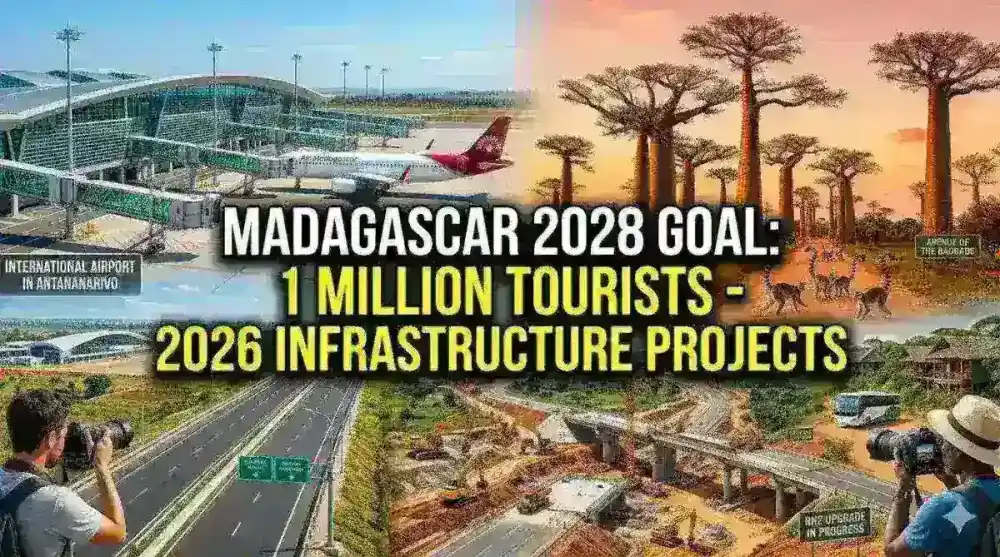
Madagascar stands at the threshold of a tourism revolution. With an audacious goal to welcome 1 million international visitors by 2028, the Great Island nation is embarking on an unprecedented infrastructure development campaign that will fundamentally transform how travelers experience this biodiverse paradise. The year 2026 marks a critical inflection point in this journey, as major infrastructure projects—spanning airports, roads, hotels, and digital connectivity—move from planning to reality, laying the physical foundation for Madagascar's emergence as a premier Indian Ocean destination.
Currently receiving approximately 400,000-500,000 international visitors annually, Madagascar must more than double its tourism capacity within a remarkably short timeframe. This ambitious target, set by the Ministry of Tourism and Crafts under Minister Lily Rafaralahy's leadership, recognizes that achieving such growth requires more than marketing campaigns or promotional events—it demands comprehensive infrastructure modernization that addresses long-standing bottlenecks while creating new opportunities for sustainable, high-quality tourism experiences.
This comprehensive guide examines Madagascar's strategic roadmap to 1 million tourists by 2028, with particular focus on the transformative infrastructure projects underway in 2026. From the expansion of Ivato International Airport in Antananarivo to the development of regional airstrips, from critical road network improvements connecting tourist circuits to the construction of eco-lodges and hotels that meet international standards, we explore how these investments are creating the physical infrastructure necessary to support massive tourism growth while preserving Madagascar's unique natural heritage and benefiting local communities.
The Current State: Where Madagascar Stands in 2026

Understanding Madagascar's 2028 tourism goal requires examining the current baseline from which the country is growing. As of 2026, Madagascar's tourism sector is recovering from pandemic-related disruptions while facing both opportunities and challenges that shape infrastructure priorities.
Tourism Numbers and Trends
Madagascar currently receives approximately 400,000-500,000 international visitors annually, representing a significant recovery from pandemic lows but still below the 1 million target set for 2028. Key visitor demographics include:
- Primary Markets: France remains the largest source market, followed by Germany, Italy, and other European nations. Regional markets including South Africa, Réunion Island, and Mauritius contribute significantly.
- Visitor Profiles: Madagascar attracts eco-tourists, wildlife enthusiasts, adventure travelers, and increasingly, luxury travelers seeking unique, authentic experiences.
- Average Stay: Visitors typically stay 10-14 days, exploring multiple regions and destinations across the island.
- Seasonality: Peak season runs from April to November (dry season), with significant seasonality challenges that infrastructure development aims to address.
- 👉 Libya eVisa 2026: A complete step-by-step guide to the new digital application portal.
- 👉 Eswatini eVisa 2026: Complete Digital Application Guide
- 👉 আলজেরিয়া ভিসা ২০২৬: বাংলাদেশী নাগরিকদের জন্য পূর্ণাঙ্গ গাইড (ফি ও আবেদন পদ্ধতি)
Infrastructure Challenges
Despite Madagascar's extraordinary natural attractions—including 90% endemic wildlife, stunning landscapes from rainforests to baobab alleys, and pristine beaches—the country faces significant infrastructure constraints that have limited tourism growth:
Air Access Limitations: Ivato International Airport in Antananarivo, while functional, operates below international standards for a destination targeting 1 million visitors. Limited terminal capacity, outdated facilities, and insufficient parking positions constrain growth. Regional airports face even more severe limitations, with many lacking paved runways, proper lighting, or modern navigation systems.
Road Network Deficiencies: Madagascar's road infrastructure presents one of the most significant barriers to tourism development. Of the approximately 38,000 kilometers of classified roads, only about 15% are paved. Critical tourist routes suffer from poor conditions, making travel times excessive and limiting access to remote but spectacular destinations. The Route Nationale 7 (RN7), Madagascar's primary tourist corridor connecting Antananarivo to Tulear, has seen improvements but still requires significant upgrades.
Accommodation Gaps: While Madagascar offers some world-class luxury lodges, there's a significant shortage of mid-range accommodations that meet international standards. Many regions lack sufficient hotel capacity, and existing facilities often don't meet the quality expectations of international travelers. This accommodation gap particularly affects emerging destinations and secondary tourist circuits.
Digital Connectivity: Internet connectivity remains limited, particularly in rural and remote areas where many tourist attractions are located. This digital divide affects both visitor experience and the ability of tourism businesses to operate efficiently in the modern digital economy.
Utilities and Services: Reliable electricity, water supply, and waste management systems are lacking in many tourist areas, constraining development and affecting visitor satisfaction.
The 2026 Infrastructure Roadmap: Building for 1 Million Tourists

Recognizing these challenges, Madagascar has launched an ambitious infrastructure development program in 2026 that addresses multiple sectors simultaneously. This comprehensive approach reflects understanding that tourism growth requires coordinated investment across transportation, accommodation, utilities, and digital infrastructure.
Airport Development: Opening Madagascar to the World
Airport infrastructure represents the most visible and critical component of Madagascar's 2026 tourism infrastructure program. The government, through Ravinala Airports Madagascar and in partnership with international investors, is pursuing multi-faceted airport development:
Ivato International Airport Expansion (Antananarivo):
Madagascar's primary international gateway is undergoing significant modernization to handle increased passenger volumes and meet international standards:
- Terminal Expansion: New passenger terminal facilities increasing capacity from current levels to accommodate 2-3 million passengers annually, providing headroom for growth beyond the 2028 target.
- Modern Facilities: Updated check-in areas, security screening, immigration facilities, and baggage handling systems that meet international efficiency standards.
- Commercial Spaces: Expanded duty-free shopping, restaurants, and lounges enhancing passenger experience and generating non-aeronautical revenue.
- Parking Apron Expansion: Additional aircraft parking positions allowing more international carriers to operate direct flights to Antananarivo.
- 👉 Libya eVisa 2026: A complete step-by-step guide to the new digital application portal.
- 👉 Eswatini eVisa 2026: Complete Digital Application Guide
- 👉 আলজেরিয়া ভিসা ২০২৬: বাংলাদেশী নাগরিকদের জন্য পূর্ণাঙ্গ গাইড (ফি ও আবেদন পদ্ধতি)
Regional Airport Upgrades:
Beyond Ivato, Madagascar is investing in regional airports critical for tourism circuit development:
- Fascene Airport (Nosy Be): Upgrades to this important tourist destination's airport include runway improvements, terminal modernization, and enhanced navigation systems to accommodate larger aircraft and increased frequencies.
- Philibert Tsiranana Airport (Toamasina/Tamatave): Improvements to Madagascar's main port city airport facilitate access to eastern rainforest circuits and beach destinations.
- Regional Airstrip Development: Smaller airstrips near key tourist destinations—including areas near national parks and remote lodges—are being upgraded to improve accessibility while maintaining environmental standards.
- Navigation and Safety Systems: Installation of modern instrument landing systems (ILS), radar, and communication equipment improving safety and allowing operations in varied weather conditions.
- 👉 Libya eVisa 2026: A complete step-by-step guide to the new digital application portal.
- 👉 Eswatini eVisa 2026: Complete Digital Application Guide
- 👉 আলজেরিয়া ভিসা ২০২৬: বাংলাদেশী নাগরিকদের জন্য পূর্ণাঙ্গ গাইড (ফি ও আবেদন পদ্ধতি)
Air Service Development:
Infrastructure improvements are coordinated with efforts to expand air service:
- New Routes: Airport upgrades enable Madagascar Airlines and international carriers to launch new direct routes from Europe, Asia, and Africa.
- Increased Frequencies: Enhanced capacity allows existing routes to operate more frequent flights, improving connectivity and reducing travel times.
- Code-Share Agreements: Infrastructure improvements support partnerships with international carriers expanding Madagascar's global connectivity.
- 👉 Libya eVisa 2026: A complete step-by-step guide to the new digital application portal.
- 👉 Eswatini eVisa 2026: Complete Digital Application Guide
- 👉 আলজেরিয়া ভিসা ২০২৬: বাংলাদেশী নাগরিকদের জন্য পূর্ণাঙ্গ গাইড (ফি ও আবেদন পদ্ধতি)
Road Network Modernization: Connecting Destinations
Road infrastructure represents perhaps the most challenging and critical component of Madagascar's tourism development strategy. The government has prioritized several key corridors:
Route Nationale 7 (RN7) Enhancement:
Madagascar's most important tourist route, connecting Antananarivo to Tulear via Antsirabe, Ambalavao, and Ranomafana, is receiving targeted improvements:
- Paving Projects: Completion of paving on previously unpaved sections reducing travel times and improving comfort.
- Road Safety: Installation of signage, guardrails, and improved road markings enhancing safety for tourists and locals alike.
- Bridge Rehabilitation: Repair and strengthening of bridges along the route ensuring year-round accessibility.
- Rest Areas: Development of tourist-friendly rest stops with facilities, local craft markets, and information centers.
- 👉 Libya eVisa 2026: A complete step-by-step guide to the new digital application portal.
- 👉 Eswatini eVisa 2026: Complete Digital Application Guide
- 👉 আলজেরিয়া ভিসা ২০২৬: বাংলাদেশী নাগরিকদের জন্য পূর্ণাঙ্গ গাইড (ফি ও আবেদন পদ্ধতি)
Route Nationale 2 (RN2) Improvements:
The corridor connecting Antananarivo to Toamasina (Tamatave) on the east coast is critical for accessing rainforest destinations:
- Andasibe Access: Road improvements facilitating access to Andasibe-Mantadia National Park, one of Madagascar's most accessible lemur-viewing destinations.
- Port Connectivity: Enhanced road links supporting both tourism and trade through Toamasina port.
- 👉 Libya eVisa 2026: A complete step-by-step guide to the new digital application portal.
- 👉 Eswatini eVisa 2026: Complete Digital Application Guide
- 👉 আলজেরিয়া ভিসা ২০২৬: বাংলাদেশী নাগরিকদের জন্য পূর্ণাঙ্গ গাইড (ফি ও আবেদন পদ্ধতি)
Route Nationale 4 (RN4) Development:
The route to Antsiranana (Diego Suarez) in the north is receiving attention:
- Northern Circuit Access: Improvements opening access to Madagascar's northern attractions including Montagne d'Ambre, Tsingy Rouge, and pristine beaches.
- Regional Connectivity: Better roads connecting northern destinations creating viable multi-destination circuits.
- 👉 Libya eVisa 2026: A complete step-by-step guide to the new digital application portal.
- 👉 Eswatini eVisa 2026: Complete Digital Application Guide
- 👉 আলজেরিয়া ভিসা ২০২৬: বাংলাদেশী নাগরিকদের জন্য পূর্ণাঙ্গ গাইড (ফি ও আবেদন পদ্ধতি)
Secondary Road Network:
Beyond national routes, investments in secondary roads are improving access to specific tourist sites:
- Park Access Roads: Roads leading to national park entrances and visitor centers are being upgraded.
- Community Roads: Roads connecting rural communities to tourist circuits enabling community-based tourism development.
- 👉 Libya eVisa 2026: A complete step-by-step guide to the new digital application portal.
- 👉 Eswatini eVisa 2026: Complete Digital Application Guide
- 👉 আলজেরিয়া ভিসা ২০২৬: বাংলাদেশী নাগরিকদের জন্য পূর্ণাঙ্গ গাইড (ফি ও আবেদন পদ্ধতি)
Hotel and Accommodation Development: Building Capacity
Madagascar's 2026 infrastructure program includes significant support for accommodation development to ensure sufficient quality lodging across tourist circuits:
Luxury Segment Expansion:
- International Brands: Partnerships with international hotel groups bringing recognized luxury brands to key destinations including Antananarivo, Nosy Be, and emerging locations.
- Eco-Lodge Development: Support for sustainable, high-end eco-lodges that showcase Madagascar's natural heritage while meeting international luxury standards.
- Boutique Properties: Development of unique, locally-owned boutique hotels that offer authentic Malagasy experiences.
- 👉 Libya eVisa 2026: A complete step-by-step guide to the new digital application portal.
- 👉 Eswatini eVisa 2026: Complete Digital Application Guide
- 👉 আলজেরিয়া ভিসা ২০২৬: বাংলাদেশী নাগরিকদের জন্য পূর্ণাঙ্গ গাইড (ফি ও আবেদন পদ্ধতি)
Mid-Range Market Growth:
- Standards Development: Creation of clear quality standards and certification programs for mid-range accommodations.
- Financing Support: Government and development partner programs providing financing and technical assistance for mid-range hotel development.
- Geographic Distribution: Incentives for development in underserved regions to ensure balanced tourism growth.
- 👉 Libya eVisa 2026: A complete step-by-step guide to the new digital application portal.
- 👉 Eswatini eVisa 2026: Complete Digital Application Guide
- 👉 আলজেরিয়া ভিসা ২০২৬: বাংলাদেশী নাগরিকদের জন্য পূর্ণাঙ্গ গাইড (ফি ও আবেদন পদ্ধতি)
Community-Based Accommodations:
- Homestay Programs: Development of community-managed homestay networks allowing tourists to experience authentic Malagasy life while generating income for rural communities.
- Eco-Campsites: Development of well-managed campsites for adventure travelers and budget-conscious tourists.
- 👉 Libya eVisa 2026: A complete step-by-step guide to the new digital application portal.
- 👉 Eswatini eVisa 2026: Complete Digital Application Guide
- 👉 আলজেরিয়া ভিসা ২০২৬: বাংলাদেশী নাগরিকদের জন্য পূর্ণাঙ্গ গাইড (ফি ও আবেদন পদ্ধতি)
Digital Infrastructure: Connecting Madagascar
Recognizing that modern tourism depends on digital connectivity, Madagascar is investing in telecommunications infrastructure:
Broadband Expansion:
- Fiber Optic Networks: Extension of fiber optic backbone to tourist destinations improving internet speed and reliability.
- Mobile Coverage: Expansion of 3G/4G mobile networks to cover major tourist routes and destinations.
- Public WiFi: Installation of public WiFi hotspots in tourist areas, airports, and major towns.
- 👉 Libya eVisa 2026: A complete step-by-step guide to the new digital application portal.
- 👉 Eswatini eVisa 2026: Complete Digital Application Guide
- 👉 আলজেরিয়া ভিসা ২০২৬: বাংলাদেশী নাগরিকদের জন্য পূর্ণাঙ্গ গাইড (ফি ও আবেদন পদ্ধতি)
Digital Tourism Platforms:
- Online Booking Systems: Development of platforms allowing tourists to book accommodations, tours, and activities online.
- Digital Payment Systems: Expansion of mobile money and digital payment options making transactions easier for international visitors.
- Tourism Information Systems: Digital platforms providing real-time information about destinations, weather, road conditions, and attractions.
- 👉 Libya eVisa 2026: A complete step-by-step guide to the new digital application portal.
- 👉 Eswatini eVisa 2026: Complete Digital Application Guide
- 👉 আলজেরিয়া ভিসা ২০২৬: বাংলাদেশী নাগরিকদের জন্য পূর্ণাঙ্গ গাইড (ফি ও আবেদন পদ্ধতি)
Utilities and Services Infrastructure
Beyond transportation and accommodation, Madagascar is addressing fundamental utility needs:
Water Supply:
- Tourist Zone Systems: Development of reliable water supply systems in major tourist destinations.
- Quality Standards: Implementation of water quality monitoring and treatment ensuring safe drinking water.
- 👉 Libya eVisa 2026: A complete step-by-step guide to the new digital application portal.
- 👉 Eswatini eVisa 2026: Complete Digital Application Guide
- 👉 আলজেরিয়া ভিসা ২০২৬: বাংলাদেশী নাগরিকদের জন্য পূর্ণাঙ্গ গাইড (ফি ও আবেদন পদ্ধতি)
Electricity:
- Grid Extension: Expansion of electrical grid to tourist areas reducing dependence on diesel generators.
- Renewable Energy: Promotion of solar and other renewable energy solutions for remote lodges and tourist facilities.
- 👉 Libya eVisa 2026: A complete step-by-step guide to the new digital application portal.
- 👉 Eswatini eVisa 2026: Complete Digital Application Guide
- 👉 আলজেরিয়া ভিসা ২০২৬: বাংলাদেশী নাগরিকদের জন্য পূর্ণাঙ্গ গাইড (ফি ও আবেদন পদ্ধতি)
Waste Management:
- Tourist Area Systems: Development of proper waste collection and treatment systems in tourist destinations.
- Recycling Programs: Implementation of recycling and waste reduction programs aligned with sustainable tourism principles.
- 👉 Libya eVisa 2026: A complete step-by-step guide to the new digital application portal.
- 👉 Eswatini eVisa 2026: Complete Digital Application Guide
- 👉 আলজেরিয়া ভিসা ২০২৬: বাংলাদেশী নাগরিকদের জন্য পূর্ণাঙ্গ গাইড (ফি ও আবেদন পদ্ধতি)
Financing the Vision: Investment and Partnerships

Achieving Madagascar's infrastructure goals requires substantial financial resources. The country is pursuing diverse financing mechanisms and partnerships:
Public-Private Partnerships (PPPs)
Madagascar is increasingly utilizing PPP models for infrastructure development:
- Airport Concessions: Ravinala Airports Madagascar operates major airports under concession agreements, bringing private sector efficiency and investment.
- Hotel Development: Incentives and partnerships encouraging private investment in hotel and accommodation infrastructure.
- Road Concessions: Exploration of concession models for major road projects.
- 👉 Libya eVisa 2026: A complete step-by-step guide to the new digital application portal.
- 👉 Eswatini eVisa 2026: Complete Digital Application Guide
- 👉 আলজেরিয়া ভিসা ২০২৬: বাংলাদেশী নাগরিকদের জন্য পূর্ণাঙ্গ গাইড (ফি ও আবেদন পদ্ধতি)
International Development Partners
Madagascar is working with multilateral and bilateral partners:
- World Bank: Funding and technical assistance for transport infrastructure and tourism development projects.
- African Development Bank: Support for regional infrastructure connecting Madagascar to continental tourism markets.
- European Union: Development assistance for sustainable tourism infrastructure.
- Bilateral Partners: Support from countries including France, China, and South Korea for specific infrastructure projects.
- 👉 Libya eVisa 2026: A complete step-by-step guide to the new digital application portal.
- 👉 Eswatini eVisa 2026: Complete Digital Application Guide
- 👉 আলজেরিয়া ভিসা ২০২৬: বাংলাদেশী নাগরিকদের জন্য পূর্ণাঙ্গ গাইড (ফি ও আবেদন পদ্ধতি)
Foreign Direct Investment
Madagascar is actively courting foreign investment in tourism infrastructure:
- Investment Incentives: Tax breaks, land access, and streamlined permitting for tourism infrastructure investments.
- Investment Promotion: Active marketing of investment opportunities at international forums and roadshows.
- Investor Services: Dedicated support services helping investors navigate regulatory requirements.
- 👉 Libya eVisa 2026: A complete step-by-step guide to the new digital application portal.
- 👉 Eswatini eVisa 2026: Complete Digital Application Guide
- 👉 আলজেরিয়া ভিসা ২০২৬: বাংলাদেশী নাগরিকদের জন্য পূর্ণাঙ্গ গাইড (ফি ও আবেদন পদ্ধতি)
Connecting Infrastructure to Tourism Growth: The Strategy

Madagascar's infrastructure investments are not random—they follow a strategic framework designed to maximize tourism growth while ensuring sustainability and community benefit.
Circuit Development Approach
Rather than developing isolated attractions, Madagascar is focusing on complete tourism circuits:
Northern Circuit: Antsiranana (Diego Suarez) → Montagne d'Ambre → Tsingy Rouge → Nosy Be → Radama Islands. Infrastructure investments in this circuit include airport upgrades, road improvements, and accommodation development creating a cohesive, accessible destination.
Eastern Circuit: Antananarivo → Andasibe-Mantadia → Toamasina → Pangalanes Canal → Sainte Marie. Investments focus on road access to rainforest parks, coastal infrastructure, and diversified accommodation.
Southern Circuit: Antananarivo → Antsirabe → Ambalavao → Ranomafana → Isalo → Tulear. The RN7 corridor improvements are central to this circuit, along with park infrastructure and accommodation expansion.
Western Circuit: Morondava → Avenue of the Baobabs → Kirindy Forest → Bemaraha Tsingy. Investments include road improvements, airstrip upgrades, and eco-lodge development.
Seasonality Management
Infrastructure development aims to address Madagascar's tourism seasonality:
- All-Weather Access: Road paving and improvements ensuring year-round access to destinations regardless of rainy season.
- Diversified Products: Infrastructure supporting different types of tourism (cultural, adventure, beach, wildlife) that have different peak seasons.
- Regional Balance: Development across different climatic zones allowing tourists to visit different regions in different seasons.
- 👉 Libya eVisa 2026: A complete step-by-step guide to the new digital application portal.
- 👉 Eswatini eVisa 2026: Complete Digital Application Guide
- 👉 আলজেরিয়া ভিসা ২০২৬: বাংলাদেশী নাগরিকদের জন্য পূর্ণাঙ্গ গাইড (ফি ও আবেদন পদ্ধতি)
Sustainability Integration
All infrastructure development incorporates sustainability principles:
- Environmental Impact Assessments: Mandatory assessments ensuring infrastructure doesn't degrade natural attractions.
- Green Building Standards: Promotion of sustainable construction practices and materials.
- Community Consultation: Engagement with local communities ensuring infrastructure meets their needs and respects their rights.
- Climate Resilience: Design standards accounting for climate change impacts including sea level rise and extreme weather.
- 👉 Libya eVisa 2026: A complete step-by-step guide to the new digital application portal.
- 👉 Eswatini eVisa 2026: Complete Digital Application Guide
- 👉 আলজেরিয়া ভিসা ২০২৬: বাংলাদেশী নাগরিকদের জন্য পূর্ণাঙ্গ গাইড (ফি ও আবেদন পদ্ধতি)
Measuring Progress: Milestones and Metrics

Madagascar has established clear metrics to track progress toward the 1 million tourist goal:
2026 Milestones
- Airport Capacity: Ivato terminal expansion reaching 50% completion; regional airport upgrades initiated at 3-5 key destinations.
- Road Infrastructure: 200-300 kilometers of critical tourist routes paved or improved; major bridge repairs completed on RN7.
- Accommodation: 2,000-3,000 new hotel rooms added across various categories; 20-30 new eco-lodges or boutique properties opened.
- Digital Connectivity: 4G coverage extended to 80% of major tourist destinations; public WiFi installed in key areas.
- Visitor Numbers: Target of 600,000-650,000 international visitors for 2026, representing 30-40% growth from baseline.
- 👉 Libya eVisa 2026: A complete step-by-step guide to the new digital application portal.
- 👉 Eswatini eVisa 2026: Complete Digital Application Guide
- 👉 আলজেরিয়া ভিসা ২০২৬: বাংলাদেশী নাগরিকদের জন্য পূর্ণাঙ্গ গাইড (ফি ও আবেদন পদ্ধতি)
2027 Milestones
- Airport Completion: Ivato expansion substantially complete; regional airport upgrades finished at priority destinations.
- Road Network: Additional 300-400 kilometers of tourist routes improved; secondary road network enhancements completed.
- Accommodation Growth: Cumulative addition of 5,000-6,000 rooms; balanced distribution across regions and categories.
- Service Quality: Implementation of national tourism quality standards; certification programs operational.
- Visitor Target: 800,000 international visitors, putting Madagascar on track for 2028 goal.
- 👉 Libya eVisa 2026: A complete step-by-step guide to the new digital application portal.
- 👉 Eswatini eVisa 2026: Complete Digital Application Guide
- 👉 আলজেরিয়া ভিসা ২০২৬: বাংলাদেশী নাগরিকদের জন্য পূর্ণাঙ্গ গাইড (ফি ও আবেদন পদ্ধতি)
2028 Target Achievement
- Infrastructure Completion: Major infrastructure projects completed and operational.
- Capacity: Sufficient airport, road, and accommodation infrastructure to comfortably handle 1 million visitors.
- Quality: Service standards meeting international expectations across the tourism value chain.
- Sustainability: Tourism growth achieved while maintaining environmental integrity and community benefits.
- Economic Impact: Tourism contributing significantly to GDP, employment, and foreign exchange earnings.
- 👉 Libya eVisa 2026: A complete step-by-step guide to the new digital application portal.
- 👉 Eswatini eVisa 2026: Complete Digital Application Guide
- 👉 আলজেরিয়া ভিসা ২০২৬: বাংলাদেশী নাগরিকদের জন্য পূর্ণাঙ্গ গাইড (ফি ও আবেদন পদ্ধতি)
Challenges and Risk Management

Achieving Madagascar's ambitious infrastructure and tourism goals requires navigating significant challenges:
Financial Constraints
Challenge: Madagascar's limited public finances constrain direct government investment in infrastructure.
Mitigation: Aggressive pursuit of PPPs, foreign direct investment, and development partner financing; prioritization of high-impact projects; phased implementation matching available resources.
Implementation Capacity
Challenge: Limited technical and administrative capacity for managing complex infrastructure projects.
Mitigation: Technical assistance from development partners; capacity building programs; engagement of international consultants and contractors; streamlined procurement processes.
Environmental Concerns
Challenge: Infrastructure development risks degrading the very natural attractions that draw tourists.
Mitigation: Rigorous environmental impact assessments; sustainable design standards; community-based monitoring; allocation of tourism revenue to conservation.
Community Acceptance
Challenge: Infrastructure projects may face local opposition if communities don't perceive benefits.
Mitigation: Early and continuous community consultation; benefit-sharing mechanisms; local employment requirements; support for community-based tourism enterprises.
Global Competition
Challenge: Madagascar competes with other Indian Ocean and African destinations for tourists and investment.
Mitigation: Emphasis on unique selling propositions (endemic wildlife, cultural authenticity, adventure tourism); competitive pricing; quality service delivery; strategic marketing.
The Human Dimension: Skills and Employment

Infrastructure is only part of the equation—Madagascar must also develop human capital to support tourism growth:
Skills Development Programs
The government and private sector are investing in tourism education and training:
- Hospitality Training: Expansion of hotel schools and vocational training programs in hospitality, food service, and tourism management.
- Guide Certification: Professional certification programs for tour guides ensuring quality interpretation and visitor safety.
- Language Training: English, French, and other language programs enabling better service to international visitors.
- Digital Skills: Training in digital marketing, online booking systems, and technology use in tourism operations.
- 👉 Libya eVisa 2026: A complete step-by-step guide to the new digital application portal.
- 👉 Eswatini eVisa 2026: Complete Digital Application Guide
- 👉 আলজেরিয়া ভিসা ২০২৬: বাংলাদেশী নাগরিকদের জন্য পূর্ণাঙ্গ গাইড (ফি ও আবেদন পদ্ধতি)
Employment Generation
Tourism infrastructure development creates significant employment:
- Construction Jobs: Infrastructure projects employ thousands in construction, engineering, and related services.
- Direct Tourism Employment: Hotels, restaurants, tour operators, and attractions employ workers across skill levels.
- Indirect Employment: Agriculture, transportation, crafts, and other sectors benefit from tourism demand.
- Entrepreneurship: Tourism growth creates opportunities for small business development in guiding, transport, crafts, and services.
- 👉 Libya eVisa 2026: A complete step-by-step guide to the new digital application portal.
- 👉 Eswatini eVisa 2026: Complete Digital Application Guide
- 👉 আলজেরিয়া ভিসা ২০২৬: বাংলাদেশী নাগরিকদের জন্য পূর্ণাঙ্গ গাইড (ফি ও আবেদন পদ্ধতি)
Conclusion: Building Madagascar's Tourism Future

Madagascar's goal of welcoming 1 million tourists by 2028 is ambitious but achievable, grounded in the comprehensive infrastructure development program underway in 2026. The investments being made today—in airports that connect Madagascar to the world, roads that link destinations, hotels that provide comfortable accommodation, and digital infrastructure that enables modern tourism—are creating the physical foundation for sustainable tourism growth.
But infrastructure alone is not enough. Success requires coordinated action across multiple fronts: continued investment in conservation to protect the natural attractions that draw visitors; development of human capital to deliver high-quality service; engagement of local communities to ensure tourism benefits are widely shared; and strategic marketing to position Madagascar competitively in global tourism markets.
The 2026 infrastructure projects represent more than construction—they embody Madagascar's vision for a tourism sector that drives economic development while preserving the island's unique biodiversity and cultural heritage. They represent commitment to creating a tourism model that benefits Malagasy people, protects natural resources, and offers visitors authentic, transformative experiences.
As these projects progress throughout 2026 and into 2027, Madagascar will be watching key metrics: visitor numbers, infrastructure completion rates, service quality indicators, community satisfaction, and environmental health. This data-driven approach allows for course correction and ensures that the path to 1 million tourists remains sustainable and inclusive.
The journey from 400,000 to 1 million tourists is significant, but Madagascar has the natural assets, the strategic vision, and now the infrastructure investment to make it happen. The roads being paved, the airports being expanded, the hotels being built, and the digital networks being deployed in 2026 are laying the foundation for a tourism revolution that will transform Madagascar's economy while sharing the Great Island's extraordinary beauty with the world.
For travelers, investors, and development partners, 2026 is the time to engage with Madagascar's tourism transformation. The infrastructure is being built, the opportunities are emerging, and the vision is becoming reality. Madagascar's goal of 1 million tourists by 2028 is not just a number—it's a commitment to sustainable development, community empowerment, and the preservation of one of Earth's most remarkable destinations.
The road to 1 million tourists is being paved in 2026. Madagascar is ready for the journey.
0 Comments