.webp)
.webp)
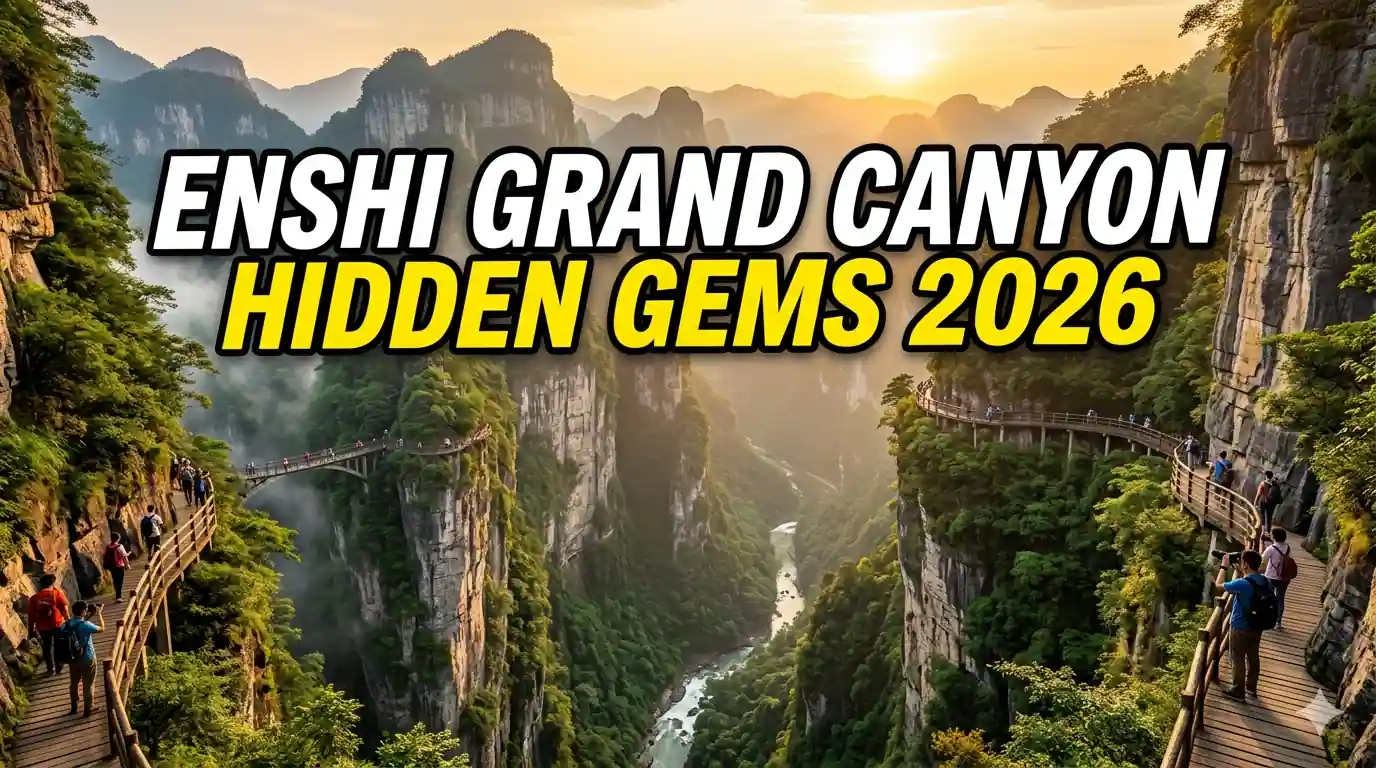
Overview of Enshi Grand Canyon Hidden Treasures
Enshi Grand Canyon stands as one of China's most spectacular natural wonders yet remains surprisingly undiscovered by international travelers.
Located in Hubei Province's Enshi Tujia and Miao Autonomous Prefecture this massive canyon system rivals more famous destinations.
The canyon stretches over 108 kilometers featuring dramatic vertical cliffs natural bridges and pristine river valleys.
Beyond the main tourist trails lie seven exceptional hidden gems offering solitude and unspoiled natural beauty.
These secret locations provide authentic encounters with karst landscapes traditional villages and untouched wilderness areas.
Why Enshi Remains Undiscovered
Enshi's remote location in western Hubei requires extra travel effort deterring mass tourism.
Limited English signage and information keeps many international travelers from exploring beyond main attractions.
The region's dramatic karst topography creates numerous hidden valleys and viewpoints accessible only to adventurous visitors.
Local Tujia and Miao communities maintain traditional lifestyles offering authentic cultural experiences.
Infrastructure improvements in 2026 now make hidden areas more accessible while preserving their pristine character.
Best Time to Visit Hidden Areas
April through June offers comfortable temperatures blooming wildflowers and active waterfalls from spring rains.
September to October provides clear skies autumn colors and ideal photography conditions with stable weather.
July and August bring lush greenery but increased crowds and afternoon thunderstorms in mountain areas.
November to March features dramatic misty landscapes though some remote trails may close due to weather.
Early morning visits ensure solitude at popular hidden spots before day trippers arrive from Enshi City.
Yuelu Peak Sunrise Viewpoint

Yuelu Peak stands as Enshi's best kept secret offering panoramic canyon views without tourist crowds.
This elevated viewpoint sits 1680 meters above sea level providing 360 degree vistas of the entire canyon system.
Access requires a challenging 2 hour hike from the nearest trailhead rewarding visitors with unparalleled scenery.
Sunrise from Yuelu Peak reveals layered mountain ranges emerging from morning mist in spectacular fashion.
The trail passes through pristine forests traditional farming terraces and small Tujia settlements.
Reaching Yuelu Peak
Start from Mufu Village parking area accessible by local bus or taxi from Enshi City.
The trail begins behind the village temple following stone steps through bamboo forests.
After 45 minutes reach the first viewpoint offering initial canyon glimpses and rest areas.
Continue ascending through mixed forests spotting rare birds and endemic plant species.
Final 30 minutes involve steep climb with safety chains reaching the summit platform.
Bring headlamp for pre dawn hikes and warm layers as temperatures drop significantly at elevation.
Photography and Viewing Tips
Arrive 90 minutes before sunrise to secure best positions on the narrow summit ridge.
Wide angle lenses capture sweeping canyon vistas while telephoto compresses distant peaks.
Summer months offer dramatic cloud formations rolling through valleys creating mystical atmospheres.
Autumn provides clearest air quality with visibility extending over 50 kilometers on exceptional days.
Local guides available in Mufu Village for 200 yuan offering route knowledge and cultural insights.
Qingjiang River Secret Gorge

The Qingjiang River Gallery contains a hidden gorge section bypassed by standard tourist boats.
This pristine 5 kilometer stretch features emerald waters vertical cliffs rising 400 meters and hidden waterfalls.
Access requires hiring a local fisherman with small boat from downstream villages.
The gorge remains virtually untouched with no commercial development or tourist facilities.
Crystal clear water reveals underwater karst formations and schools of native fish species.
Boat Access and Local Guides
Arrange boat transport through Qingjiang Village guesthouses or ask at riverside restaurants.
Local fishermen charge 300 to 500 yuan for 3 hour round trip depending on group size.
Best departure times are early morning 7 to 9 AM when water is calmest and light is optimal.
Boats are simple wooden vessels with canopy providing shade and basic seating.
Communicate your interest in the secret gorge upstream rather than standard tourist route.
Gorge Exploration Activities
Swimming in designated calm pools offers refreshing break with water temperatures around 20 degrees Celsius.
Waterfalls cascade from cliff sides creating natural slides and photo opportunities.
Cliff overhangs provide shelter and dramatic backdrops for photography enthusiasts.
Wildlife spotting includes kingfishers macaques and occasionally golden pheasants along riverbanks.
Picnic areas on small beaches allow rest and meals surrounded by pristine nature.
Yunlong Ground Fissure Upper Reaches

While the main Yunlong Ground Fissure attracts crowds the upper reaches remain remarkably quiet.
This extension continues 3 kilometers beyond the official trail endpoint through pristine峡谷 terrain.
Narrow passages widen into hidden chambers with natural skylights illuminating ancient rock formations.
The trail follows the stream bed requiring water crossings and moderate scrambling abilities.
Stalactites and flowstones decorate cave entrances revealing millions of years of geological history.
Trail Conditions and Preparation
Start from the main fissure trail's end point marked by wooden railings and informational signs.
Continue upstream following the stream bed and occasional faded trail markers.
Water levels vary seasonally with spring requiring waterproof boots or wading through knee deep water.
Autumn and winter offer easiest passage with lower water levels and stable conditions.
Bring headlamp as some sections pass under rock overhangs creating near darkness.
Geological Features and Formations
Natural bridges span the fissure created by collapsed cave systems thousands of years ago.
Vertical walls display colorful mineral deposits in red yellow and grey bands.
Hidden pools form behind boulder dams offering swimming opportunities in summer months.
Fossil impressions visible in limestone walls reveal ancient marine life from when area was ocean floor.
Local geology students sometimes conduct field studies providing educational opportunities for visitors.
Tujia Mountain Village of Mufu

Mufu Village preserves traditional Tujia architecture and culture in stunning canyon setting.
This remote settlement of 200 families sits on terraced hillsides overlooking the canyon's eastern rim.
Wooden stilt houses called diaojiaolou cling to mountainsides following centuries old building traditions.
Villagers practice subsistence farming growing rice corn and vegetables on steep terraces.
Homestay opportunities allow immersive cultural experiences with local families.
Cultural Experiences and Traditions
Tujia embroidery featuring intricate geometric patterns represents distinctive ethnic art form.
Traditional Tujia cuisine includes smoked meats wild vegetables and corn based dishes.
Evening gatherings feature folk songs and dances performed in village squares during festivals.
Local artisans demonstrate wood carving basket weaving and traditional tool making.
Participate in daily activities like tea picking rice planting or tofu making with families.
Accommodation and Hospitality
Homestays cost 150 to 250 yuan per night including dinner and breakfast with local families.
Rooms are simple but clean with shared bathrooms and spectacular mountain views.
Basic Mandarin or translation app helpful as English proficiency limited in remote village.
Respect local customs removing shoes before entering homes and accepting offered tea.
Small gifts from your home country appreciated though not expected by hosting families.
Seven Star Mountain Hidden Plateau

Seven Star Mountain contains a high altitude plateau rarely visited by canyon tourists.
This elevated grassland sits at 1800 meters offering panoramic views and alpine meadows.
Wildflowers bloom from May to September creating colorful carpets across the plateau.
The area serves as traditional grazing land for local villagers' cattle and goats.
Sunrise and sunset from the plateau provide exceptional photography opportunities.
Reaching the Plateau
Access from Seven Star Village requires 3 hour hike gaining 600 meters elevation.
Trail passes through forests farmland and rocky sections before opening to grassland.
Local shepherds can provide directions and sometimes offer goat milk to hikers.
Weather changes rapidly at altitude requiring rain gear and warm layers year round.
Camping permitted with no fees though bring all supplies as no facilities exist.
Plateau Activities and Wildlife
Birdwatching reveals rare species including golden eagles and Tibetan partridges.
Wildflower identification particularly rewarding in June with over 100 species present.
Stargazing offers exceptional clarity with minimal light pollution on clear nights.
Photograph traditional herding scenes with cattle against dramatic mountain backdrops.
Collect medicinal herbs with local guidance learning traditional Tujia plant knowledge.
Dragon Well Valley Waterfall System

Dragon Well Valley contains a series of five cascading waterfalls hidden in dense forest.
The tallest drop measures 80 meters plunging into emerald pools surrounded by moss covered rocks.
This system remains largely unknown as it requires leaving marked trails and route finding.
Mist from the falls creates rainbow effects visible throughout the day in sunny conditions.
The valley's microclimate supports rare ferns and orchids not found elsewhere in the region.
Navigating to the Waterfalls
Begin from the main canyon trail at the 8 kilometer marker near休息 pavilion.
Descend into the valley following the sound of water and game trails.
The first waterfall appears after 45 minutes of steep downhill hiking.
Continue upstream visiting each successive fall requiring stream crossings and scrambling.
Allow 4 to 5 hours round trip with time for exploration and photography.
Valley Ecology and Conservation
The valley's isolation protects endemic species including rare salamanders and butterflies.
Moisture loving plants create lush vegetation contrasting with drier canyon rim areas.
Practice leave no trace principles packing out all waste and avoiding soap in pools.
Swimming permitted in lower pools but avoid areas directly beneath falling water.
Local conservation groups monitor the area requesting visitor cooperation in preservation.
Ancient Tea Plantation Terraces

Centuries old tea terraces cascade down canyon slopes representing agricultural heritage.
These working plantations produce Enshi's famous Yulu green tea with distinctive steamed processing.
The terraces create stunning geometric patterns against the natural canyon landscape.
Tea picking season from March to May offers hands on participation opportunities.
Traditional processing methods demonstrated by local families preserve cultural knowledge.
Tea Culture and Tasting
Visit plantation families who welcome guests for tea ceremonies and tastings.
Learn about the unique steaming process that distinguishes Enshi Yulu from other green teas.
Tea tasting sessions cost 50 to 100 yuan including multiple varieties and snacks.
Purchase directly from producers at fair prices supporting local agricultural communities.
Understand the terroir how canyon climate and soil create distinctive tea characteristics.
Photography and Scenic Views
Early morning mist rolling through tea terraces creates ethereal photography conditions.
Tea pickers in traditional dress provide cultural photography opportunities during harvest.
Sunset from upper terraces offers golden light on layered green rows descending to canyon.
Macro photography reveals delicate tea leaves morning dew and small insects.
Aerial perspectives from drone if permitted show geometric patterns of terraced agriculture.
Practical Information for Visiting Hidden Gems

Access to these hidden locations requires planning and local knowledge beyond standard tourism.
Hire local guides from Enshi City or village guesthouses for remote areas at 300 to 500 yuan daily.
Carry sufficient water food and first aid supplies as facilities are limited or nonexistent.
Download offline maps as mobile coverage is spotty in canyon areas and valleys.
Inform accommodation of your itinerary when visiting remote locations for safety.
Transportation and Access
Enshi Xujiaping Airport receives flights from major Chinese cities with taxi service to canyon.
High speed rail connects Enshi to Wuhan Chongqing and Yichang making access easier.
Local buses reach main canyon entrance but hidden areas require taxis or private vehicles.
Rental cars available in Enshi City though mountain driving requires experience and caution.
Arrange return transportation in advance as remote areas have limited taxi availability.
Accommodation Options
Enshi City offers full range of hotels from budget to international chains.
Canyon area has guesthouses and mid range hotels near main entrance.
Village homestays in Mufu and other settlements provide authentic cultural experiences.
Book accommodation in advance during peak seasons April May and September October.
Consider staying multiple nights in different locations to maximize exploration time.
Physical Requirements and Safety
Most hidden gems require moderate to strenuous hiking with elevation changes.
Good physical fitness essential for accessing remote viewpoints and waterfalls.
Proper hiking boots with ankle support recommended for uneven terrain and stream crossings.
Weather can change rapidly bringing fog rain or temperature drops even in summer.
Carry emergency supplies including whistle flashlight and basic first aid kit.
Environmental Responsibility and Conservation
Enshi Grand Canyon's fragile ecosystem requires visitor cooperation in preservation efforts.
Pack out all trash including biodegradable items as waste management is limited.
Stay on designated trails to prevent erosion and protect rare plant species.
Respect wildlife maintaining distance and never feeding animals.
Use biodegradable soap if washing in streams and avoid contaminating water sources.
Supporting Local Communities
Hire local guides and porters providing employment and economic benefits to villages.
Purchase handicrafts and agricultural products directly from producers at fair prices.
Respect cultural traditions asking permission before photographing people or ceremonies.
Learn basic Tujia greetings showing respect for local ethnic culture.
Contribute to village development through homestay fees and local service purchases.
Sustainable Tourism Practices
Visit during shoulder seasons reducing pressure on infrastructure during peak times.
Use reusable water bottles and containers minimizing plastic waste in pristine areas.
Choose accommodations with environmental certifications or sustainable practices.
Share responsible travel practices with fellow visitors promoting conservation awareness.
Report environmental damage or illegal activities to local authorities or park management.
0 Comments