.webp)
.webp)
Cultural Etiquette in Sierra Leone Understanding Poro and Sande Traditions 2026
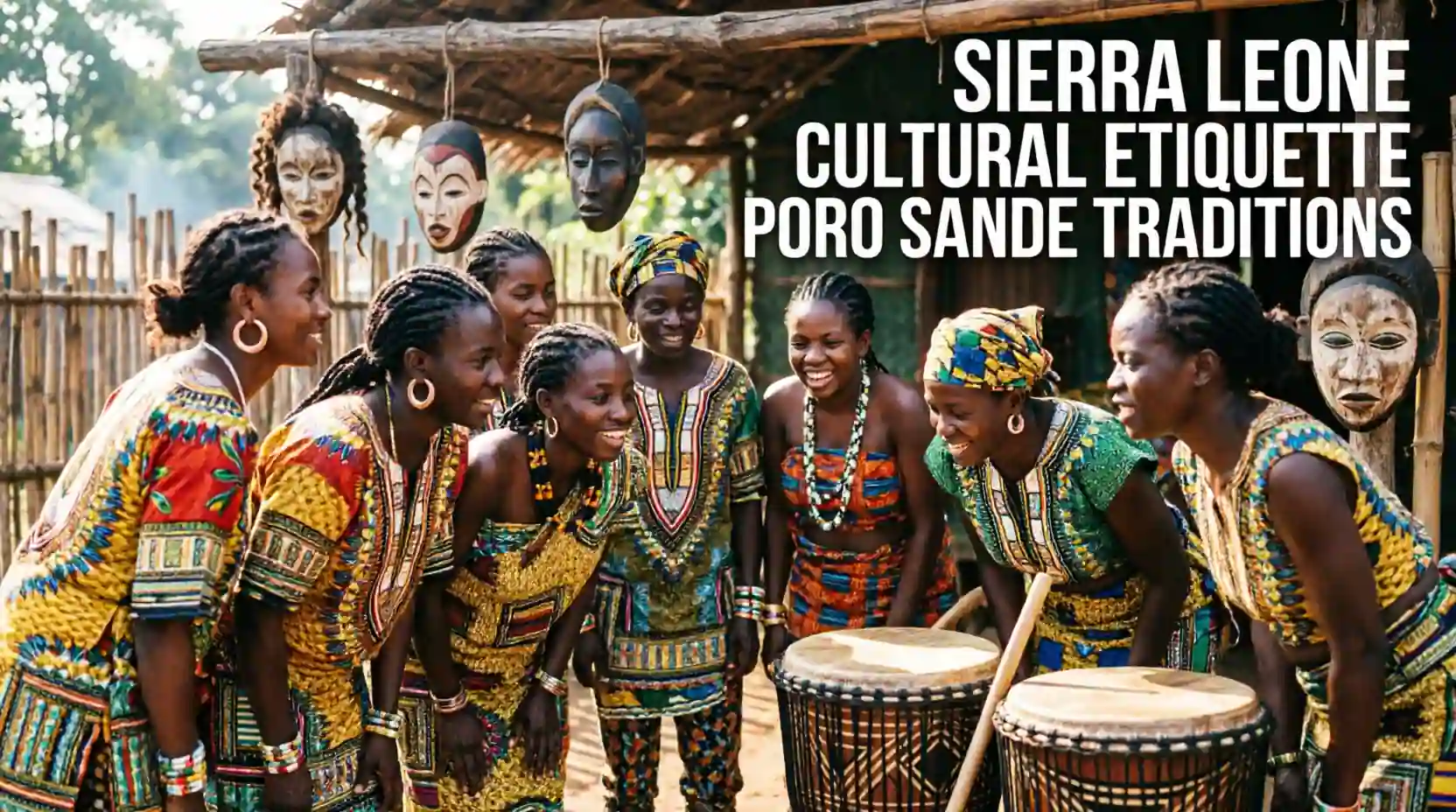
Cultural Etiquette in Sierra Leone Understanding Poro and Sande Traditions 2026
Sierra Leone's cultural landscape is deeply shaped by traditional secret societies, particularly the Poro society for men and the Sande society for women. These institutions have guided social organization, governance, and cultural transmission for centuries.
Understanding these traditions at an appropriate level is essential for visitors seeking cultural sensitivity and respect. While the specific rituals and secret knowledge remain protected, recognizing the significance of these societies enhances cross-cultural understanding.
This comprehensive 2026 guide provides travelers with culturally appropriate knowledge about Poro and Sande traditions. You will learn about their social roles, appropriate etiquette when encountering related ceremonies, and how to show respect for these important cultural institutions.
Visitors who approach these traditions with humility, respect, and cultural sensitivity contribute to positive cross-cultural exchange. This knowledge helps travelers navigate Sierra Leonean society with greater awareness and appreciation.
Understanding Secret Societies in Sierra Leone

Secret societies in Sierra Leone are not secretive in the sense of being hidden or nefarious. Rather, they are institutions that guard sacred knowledge and rituals transmitted only to initiated members.
These societies serve crucial social functions including education, governance, conflict resolution, and cultural preservation. They represent sophisticated systems of social organization that have maintained order and transmitted values across generations.
The Poro society governs men's initiation and social roles while the Sande society fulfills similar functions for women. Both societies operate across ethnic groups though specific practices vary between communities.
Membership and participation in these societies remain central to Sierra Leonean identity for many citizens. Understanding their importance helps visitors appreciate the cultural context of Sierra Leonean society.
Historical Context and Origins
Poro and Sande societies predate colonial rule by many centuries, representing indigenous African governance and educational systems. These institutions organized social life, transmitted cultural knowledge, and maintained community cohesion.
Colonial authorities attempted to suppress or control these societies, viewing them as challenges to colonial power. Despite these pressures, the societies persisted and adapted, maintaining their essential functions.
Post-independence Sierra Leone has seen renewed recognition of traditional institutions' importance. While modern governance structures exist, traditional societies continue influencing social organization and cultural life.
These societies represent living traditions that continue evolving while maintaining core values and functions. They are not relics of the past but active institutions shaping contemporary Sierra Leonean society.
Social Functions and Community Roles
Secret societies provide education about cultural values, social responsibilities, and practical skills necessary for adult life. This educational function remains central to their purpose.
They serve as governance structures, mediating disputes, enforcing social norms, and maintaining order within communities. Traditional leaders often derive authority from society membership.
Initiation ceremonies mark transitions from childhood to adulthood, conferring new rights and responsibilities. These rites of passage remain important markers of social status and identity.
Societies preserve and transmit cultural knowledge including history, medicinal practices, artistic traditions, and spiritual beliefs. They function as repositories of collective wisdom.
The Poro Society: Men's Traditional Institution

The Poro society exists among multiple ethnic groups in Sierra Leone including the Mende, Temne, and others. While practices vary between groups, core functions and principles remain consistent.
Poro governs men's social roles, providing education, discipline, and guidance throughout life. The society maintains hierarchies and structures that organize male participation in community life.
Initiation into Poro typically occurs during adolescence, though the society continues influencing members throughout their lives. The initiation period involves education, testing, and ceremonial activities.
Poro leaders hold significant authority in traditional governance structures. Their decisions influence community affairs, dispute resolution, and maintenance of social order.
Poro Initiation and Education
Young men enter Poro initiation during adolescence, typically between ages 12 and 20. The initiation period separates initiates from their families for extended periods ranging from several weeks to months.
During initiation, young men learn cultural values, practical skills, social responsibilities, and secret knowledge reserved for society members. This education prepares them for adult roles and responsibilities.
Physical and mental challenges test initiates' courage, endurance, and commitment. These trials demonstrate readiness for adult status and society membership.
Upon completion of initiation, young men return to their communities as adults with new rights, responsibilities, and social status. Community celebrations mark this important transition.
Poro Governance and Authority
Poro society maintains hierarchical structures with leaders holding various levels of authority and knowledge. Senior members guide society activities and community governance.
Poro leaders often serve as traditional authorities alongside or integrated with formal governance structures. Their influence extends beyond society members to entire communities.
The society enforces social norms and resolves disputes according to traditional law and custom. Poro authority helps maintain social order and community cohesion.
Decisions made by Poro leaders carry significant weight in community affairs. Respect for these authorities remains important in traditional Sierra Leonean society.
The Sande Society: Women's Traditional Institution

The Sande society, also known as Bundu in some areas, serves as the women's counterpart to Poro. This institution governs women's social roles, education, and community participation.
Sande exists primarily among Mende and related ethnic groups, though similar institutions exist across West Africa. The society maintains women's authority structures and cultural transmission.
Like Poro, Sande conducts initiation ceremonies for adolescent girls, educating them about women's roles, responsibilities, and cultural knowledge. These ceremonies mark transitions to womanhood.
Sande leaders hold significant authority in women's affairs and community governance. They advocate for women's interests and maintain social norms regarding women's roles.
Sande Initiation and Women's Education
Young women enter Sande initiation during adolescence, participating in educational programs that prepare them for adult roles as wives, mothers, and community members.
Initiation involves learning about cultural values, domestic skills, reproductive health, social responsibilities, and women's secret knowledge. This education transmits essential cultural information across generations.
The initiation period typically involves separation from families and community life, allowing focused education and character development. Duration varies by community and circumstances.
Completion of Sande initiation confers adult status on young women, marking them as eligible for marriage and full participation in women's social structures. Communities celebrate these transitions.
Sande Leadership and Women's Authority
Sande society maintains leadership structures with senior women holding authority over society activities and women's affairs. These leaders command significant respect within their communities.
Sande leaders advocate for women's interests in community governance and dispute resolution. They provide women's perspectives on community decisions and policies.
The society enforces norms regarding women's behavior, marriage, family life, and community participation. Sande authority helps maintain social order from women's perspectives.
Senior Sande members serve as mentors and counselors for younger women, providing guidance throughout life stages. This mentorship function strengthens intergenerational bonds among women.
Cultural Masks and Ceremonial Symbols

Both Poro and Sande societies utilize masks and ceremonial objects in their rituals and public ceremonies. These objects carry deep symbolic meaning and cultural significance.
The Sowei mask, associated with Sande society, represents one of West Africa's most distinctive artistic traditions. These wooden helmets depict idealized female beauty and spiritual power.
Poro society employs various masks representing spirits, ancestors, and social roles. These masks appear during ceremonies, initiations, and community events.
Visitors may encounter mask performances during cultural festivals or ceremonies. Understanding appropriate etiquette when observing these performances demonstrates cultural respect.
Sowei Masks and Sande Symbolism
Sowei masks represent the Sande society's spiritual authority and ideals of feminine beauty. These carved wooden helmets feature elaborate designs including neck rings symbolizing health and prosperity.
Only initiated Sande members wear these masks during ceremonies, embodying the society's spiritual presence. The masks represent the transformation of initiates into women.
Sowei masks appear during initiation completions, weddings, funerals, and other important community events. Their presence signifies Sande authority and blessing.
These masks represent sophisticated artistic traditions passed down through generations. They hold both aesthetic and spiritual significance within Sierra Leonean culture.
Poro Masks and Ceremonial Objects
Poro society utilizes various masks representing different spirits, social roles, and ceremonial functions. These objects appear during initiations, funerals, and community governance activities.
Mask performances communicate social messages, enforce norms, and entertain communities. They serve multiple functions within traditional social organization.
Ceremonial objects including staffs, costumes, and ritual implements carry symbolic meaning reserved for initiated members. These objects facilitate communication with spiritual realms.
Visitors observing mask performances should maintain respectful distance and follow local guidance regarding photography and behavior. These ceremonies hold sacred significance.
Appropriate Etiquette for Visitors

Visitors to Sierra Leone may encounter Poro and Sande ceremonies or symbols during their travels. Understanding appropriate etiquette demonstrates cultural respect and sensitivity.
These societies guard secret knowledge not appropriate for outsiders. Respectful visitors do not press for information about secret rituals or attempt to observe restricted ceremonies.
When encountering public ceremonies involving masks or initiates, maintain respectful distance and follow local guidance. Ask permission before photographing ceremonies or participants.
Approach these traditions with humility and cultural sensitivity rather than judgment or curiosity about exotic details. Recognize these as sophisticated social institutions deserving respect.
Photography and Observation Guidelines
Always request permission before photographing ceremonies, masks, or initiates. Many communities restrict photography of sacred ceremonies or require specific protocols.
Respect signs or verbal instructions prohibiting photography or close observation. These restrictions protect sacred knowledge and maintain ceremony integrity.
Maintain appropriate distance during ceremonies, avoiding disruption of ritual activities. Position yourself where you can observe without interfering.
Understand that some aspects of these traditions are not meant for outsider observation. Accept limitations gracefully rather than pushing boundaries.
Questions and Cultural Exchange
Ask questions respectfully and accept that some information remains restricted to initiated members. Not all aspects of these societies are appropriate for discussion with outsiders.
Frame questions in terms of general cultural understanding rather than seeking secret knowledge. Ask about social functions and community roles rather than ritual details.
Listen actively when community members share information, showing genuine interest and respect. Avoid interrupting or challenging explanations of cultural practices.
Express gratitude for cultural sharing and acknowledge the privilege of learning about these traditions. Humility enhances cross-cultural exchange.
Respecting Initiation Ceremonies and Sacred Spaces

Initiation ceremonies represent sacred transitions marked by privacy and restricted access. Visitors must respect these boundaries even when curious about cultural practices.
Initiation camps and sacred groves serve as spaces for education and ritual away from public observation. These areas remain off-limits to non-members and outsiders.
Attempting to observe or photograph initiation ceremonies violates cultural protocols and demonstrates profound disrespect. Such actions can cause serious offense and damage community relationships.
Respecting these boundaries demonstrates cultural maturity and earns community respect. Trust that important cultural transmission occurs within appropriate contexts.
Understanding Sacred Geography
Certain forests, groves, or buildings serve as sacred spaces for Poro and Sande activities. These locations may not be obviously marked but remain restricted to initiated members.
Local guides can help visitors understand which areas are appropriate for tourism and which remain sacred spaces requiring respect and distance.
Never enter restricted areas out of curiosity or for photography opportunities. Violating sacred spaces causes deep offense and may have legal consequences.
Respect barriers, signs, or verbal instructions regarding restricted areas. These protections maintain the sanctity of traditional practices.
Timing and Community Events
Initiation ceremonies and society activities follow traditional calendars that may not align with tourist schedules. Communities prioritize cultural obligations over visitor convenience.
During major ceremonies, communities may limit visitor access to certain areas or activities. Respect these limitations as necessary for cultural preservation.
Plan travel itineraries with flexibility, understanding that cultural events may affect access to certain locations or services. Work with local guides who understand these dynamics.
Recognize that cultural preservation takes precedence over tourism. Support communities' rights to maintain traditions without outsider interference.
Gender Considerations and Cultural Sensitivity

Poro and Sande societies maintain gender-specific roles and knowledge systems. Understanding these distinctions helps visitors navigate cultural interactions appropriately.
Certain ceremonies, spaces, and knowledge remain restricted by gender. Male visitors should not expect access to Sande activities while female visitors should not expect access to Poro activities.
Respect gender boundaries in traditional contexts even if they differ from visitors' home cultures. Cultural sensitivity requires accepting different social organizations.
Female travelers should understand that Sande society provides important support structures for Sierra Leonean women. Respect for these institutions enhances cross-cultural understanding.
Navigating Gender-Specific Spaces
Some community spaces and ceremonies are gender-specific according to traditional custom. Respect these divisions even when they limit access or participation.
Follow local guidance regarding appropriate spaces and activities for your gender. Local hosts understand cultural protocols that visitors may not immediately recognize.
Avoid challenging or criticizing gender-specific traditions. Approach differences with curiosity and respect rather than judgment.
Recognize that gender-specific institutions like Sande provide important support, education, and advocacy for women within traditional society frameworks.
Working with Local Guides
Employ local guides who understand cultural protocols and can navigate sensitive situations appropriately. Their expertise prevents unintentional offenses.
Guides can explain when and where photography is appropriate, which areas are restricted, and how to behave during cultural events. Their knowledge facilitates respectful cultural exchange.
Trust guides' judgment regarding cultural sensitivity even when their advice limits access or activities. Their priority is maintaining positive community relationships.
Compensate guides fairly for their expertise and time. Quality guides provide invaluable cultural knowledge that enhances travel experiences.
Contemporary Context and Cultural Evolution

Poro and Sande societies continue evolving while maintaining core functions and values. These institutions adapt to contemporary realities while preserving cultural heritage.
Modern Sierra Leone balances traditional institutions with democratic governance, formal education, and international human rights frameworks. This balance creates ongoing dialogue about tradition and change.
Debates exist within Sierra Leone about certain practices associated with these societies, particularly regarding initiation age and procedures. These conversations reflect broader discussions about cultural preservation and human rights.
Visitors should approach these complex topics with nuance, recognizing that cultural practices mean different things to different community members. Avoid simplistic judgments about complex social institutions.
Balancing Tradition and Modernity
Many Sierra Leoneans participate in both traditional society structures and modern institutions. These are not necessarily contradictory but represent different aspects of social life.
Traditional leaders often hold positions in formal government structures, blending traditional and modern authority. This integration reflects Sierra Leone's unique cultural-political landscape.
Young people navigate between traditional expectations and contemporary opportunities, creating dynamic cultural evolution. Societies adapt to remain relevant to new generations.
Respect Sierra Leoneans' agency in determining their own cultural futures. Outsiders should support communities' self-determination regarding tradition and change.
Human Rights and Cultural Practices
International human rights frameworks sometimes conflict with traditional practices, creating complex ethical discussions. These conversations occur within Sierra Leonean society itself.
Visitors should educate themselves about these discussions without imposing external judgments. Sierra Leoneans actively debate and shape their cultural practices.
Support organizations working within Sierra Leone to promote positive cultural evolution while respecting community agency. External pressure often proves counterproductive.
Recognize that cultural practices carry meanings and functions that may not be immediately apparent to outsiders. Humility and listening prove more valuable than assumptions.
Supporting Cultural Preservation Responsibly

Visitors can support cultural preservation in Sierra Leone through respectful engagement, fair compensation for cultural knowledge sharing, and advocacy for community rights.
Cultural tourism, when conducted responsibly, provides economic incentives for preserving traditions. However, tourism must not distort or commodify sacred practices.
Purchase authentic crafts and art from traditional artists at fair prices. This supports cultural production while providing economic benefits to communities.
Share accurate, respectful information about Sierra Leonean culture with other travelers. Counter stereotypes and misconceptions with nuanced understanding.
Ethical Cultural Tourism
Choose tour operators and guides who demonstrate respect for local cultures and fair treatment of community members. Ethical tourism prioritizes community benefits over tourist convenience.
Avoid "cultural shows" that reduce sacred traditions to entertainment for tourists. Seek authentic cultural exchange rather than performance.
Compensate communities fairly for cultural knowledge sharing and access. Cultural information has value that deserves appropriate recognition.
Follow community protocols regarding cultural sites, ceremonies, and knowledge. Respect determines whether tourism supports or undermines cultural preservation.
Long-term Cultural Respect
Cultural respect extends beyond individual visits to ongoing commitment to understanding and honoring Sierra Leonean traditions. Build lasting relationships based on mutual respect.
Continue learning about Sierra Leonean culture after returning home. Cultural understanding deepens through sustained engagement rather than brief exposure.
Advocate for Sierra Leonean communities' rights to maintain their cultural practices and self-determination. Use your voice to support cultural preservation.
Recognize that cultural exchange benefits both visitors and hosts when conducted with mutual respect and humility. Approach cross-cultural encounters as opportunities for mutual learning.
Final Thoughts on Cultural Etiquette

Understanding Poro and Sande traditions at an appropriate level enhances visitors' appreciation of Sierra Leonean culture and society. These institutions represent sophisticated systems of social organization, education, and cultural preservation.
Respectful engagement requires humility, cultural sensitivity, and acceptance of boundaries around secret knowledge. Not all aspects of these traditions are appropriate for outsider observation or discussion.
Visitors who approach these traditions with respect contribute to positive cross-cultural exchange and support cultural preservation. Your behavior as a visitor affects how communities perceive and engage with tourism.
Sierra Leone's cultural heritage deserves respect and protection. By learning appropriate etiquette and honoring cultural boundaries, you demonstrate that cultural tourism can support rather than undermine traditional practices.
0 Comments