.webp)
.webp)
Comparing Public Bus Travel Why ADO is Better for Long Distances
Quick Answer for Mexico Travelers
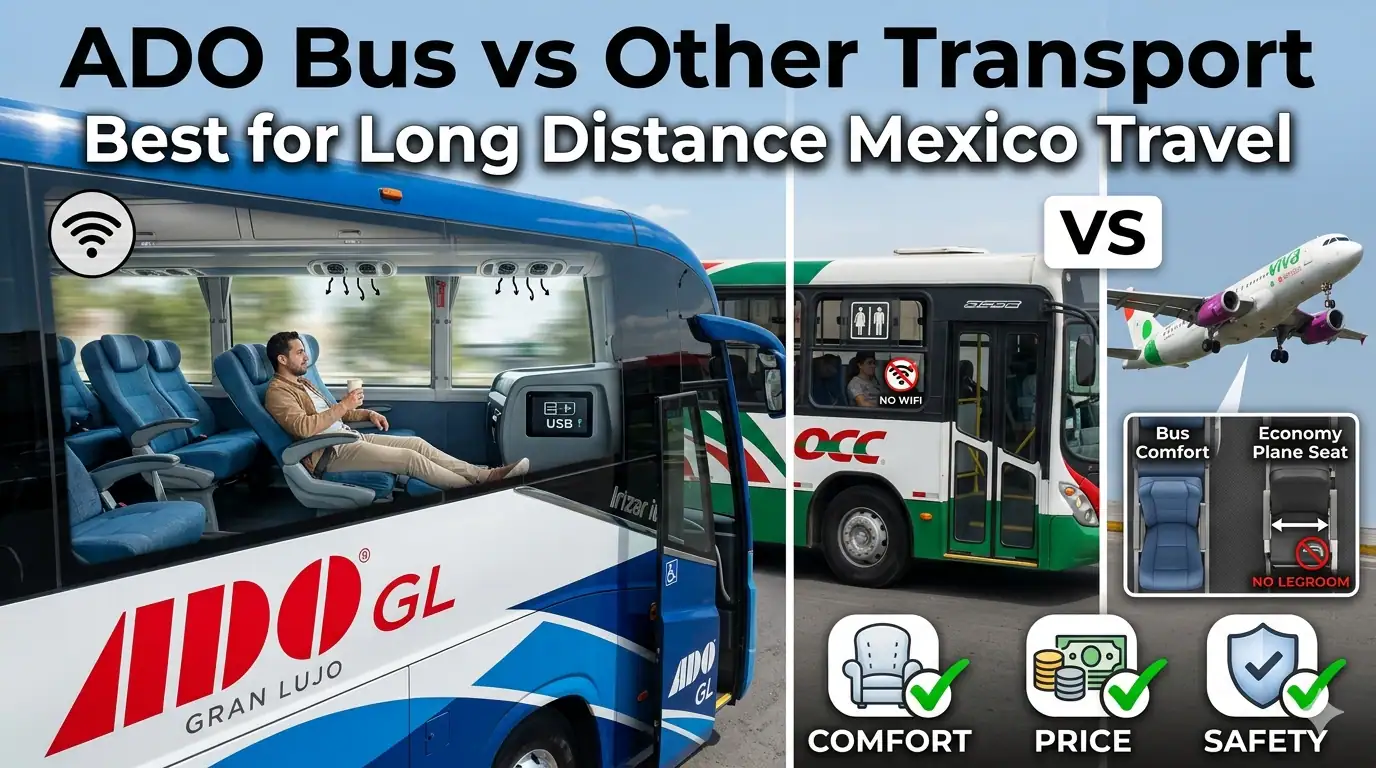
ADO buses are the superior choice for long-distance travel in Mexico, offering exceptional value with prices 60-80% lower than flights, comfortable reclining seats with 140-degree recline, onboard WiFi, air conditioning, restrooms, and an outstanding safety record. ADO operates over 1,000 daily routes connecting major cities like Mexico City, Cancún, Oaxaca, and Mérida. US citizens can travel freely on ADO buses with just a valid passport. Tickets range from $25-85 USD for journeys of 4-12 hours, compared to $150-400+ for equivalent flights. The ADO GL and ADO Platino premium services offer near-business-class comfort at economy prices, making them ideal for budget-conscious travelers who refuse to compromise on safety or comfort.
Understanding Mexico's Intercity Bus System

Mexico boasts one of Latin America's most extensive and reliable intercity bus networks, covering over 200,000 kilometers of routes that connect cities, towns, and remote villages. Unlike the United States, where bus travel often carries a stigma of inconvenience and discomfort, Mexican buses—particularly ADO—rival European rail systems in quality, punctuality, and passenger experience.
The Mexican bus system operates through several major companies, each with distinct service levels and regional strengths. ADO (Autobuses del Oriente) dominates southeastern Mexico, including routes to Cancún, Playa del Carmen, Tulum, Oaxaca, Veracruz, and Mexico City. Other notable operators include ETN (Enlaces Terrestres Nacionales), Primera Plus, Futura, and Omnibus de México, each serving different regions with varying service quality.
What sets Mexican buses apart from their North American counterparts is the commitment to passenger comfort and safety. Even standard ADO buses feature air conditioning, reclining seats, onboard restrooms, and movies. Premium services like ADO GL and ADO Platino elevate the experience with fully reclining seats (cama class), gourmet snacks, personal entertainment screens, and WiFi connectivity.
For long-distance travel exceeding 300 kilometers, ADO buses consistently outperform alternatives in cost-effectiveness, convenience, and overall experience. While flights might seem faster, the reality of airport security, check-in times, and transfers to city centers often makes total travel time comparable to direct bus journeys—at a fraction of the cost.
ADO Bus Service Levels and Amenities

ADO operates multiple service tiers designed to match different budgets and comfort preferences. Understanding these categories helps travelers select the optimal balance of price and amenities for their journey.
ADO Conect (Standard Service): This entry-level service connects smaller towns and cities with basic comfort features. Seats recline approximately 100 degrees, and buses include air conditioning and restrooms. Best for short journeys under 3 hours or budget travelers. Prices range $15-35 USD.
ADO Regular (First Class): The standard long-distance service features seats reclining 120-130 degrees, individual reading lights, air conditioning, onboard restroom, and movie entertainment. This is the most popular choice for journeys of 4-8 hours. Prices range $25-60 USD.
ADO GL (Grand Luxury): ADO GL represents the sweet spot for long-distance comfort, offering seats that recline 140 degrees with leg rests, extra-wide seating (2 seats per row instead of 3), personal entertainment screens, WiFi, power outlets, and complimentary snacks and beverages. Ideal for overnight journeys or travelers prioritizing comfort. Prices range $40-85 USD.
ADO Platino (Platinum): The premium offering features fully flat beds (cama class), gourmet meal service, premium beverages, personal attendants, and luxury terminal lounges. This service competes with business-class air travel at economy prices. Best for special occasions or travelers seeking maximum comfort. Prices range $60-120 USD.
ADO Service Level Comparison:
| Feature | ADO Conect | ADO Regular | ADO GL | ADO Platino |
| Seat Recline | 100 degrees | 120-130 degrees | 140 degrees | 180 degrees (flat) |
| Seat Width | Standard (3-across) | Standard (3-across) | Wide (2-across) | Extra-wide (2-across) |
| Restroom | Yes | Yes | Yes | Yes |
| WiFi | Limited | Selected routes | Yes | Yes |
| Power Outlets | No | Limited | Yes | Yes |
| Entertainment | None | Shared screens | Personal screens | Personal screens |
| Food Service | Snacks for purchase | Snacks for purchase | Complimentary snacks | Gourmet meals |
| Price Range | $15-35 | $25-60 | $40-85 | $60-120 |
Cost Comparison: ADO Buses vs Flights vs Driving

One of ADO's most compelling advantages is dramatic cost savings compared to air travel and car rental. For budget-conscious travelers, these savings can fund additional days of accommodation, tours, or dining experiences.
Popular Route Cost Comparison (USD one-way):
| Route | Distance | ADO Regular | ADO GL | Flight | Car Rental + Gas |
| Mexico City to Oaxaca | 460 km | $35 | $55 | $120-180 | $80-100 |
| Mexico City to Cancún | 1,650 km | $85 | $120 | $150-300 | $200-250 |
| Cancún to Mérida | 310 km | $28 | $45 | $100-150 | $60-80 |
| Mexico City to Guadalajara | 540 km | $40 | $65 | $130-200 | $90-110 |
| Oaxaca to Mexico City | 460 km | $35 | $55 | $120-180 | $80-100 |
| Veracruz to Mexico City | 430 km | $32 | $50 | $110-160 | $75-95 |
These comparisons reveal that ADO buses cost 60-80% less than flights on equivalent routes. Even when factoring in longer travel times, the savings are substantial. For example, Mexico City to Cancún by ADO GL costs $120 versus $200+ for flights—a $80 savings that could cover two nights of mid-range accommodation.
Car rental appears competitive on paper, but hidden costs erode the advantage. Mexican auto insurance is mandatory and expensive ($20-40 daily), toll roads (cuotas) add $30-80 depending on route, parking fees range $10-30 daily in cities, and fuel costs have risen significantly. Additionally, driving in Mexico requires navigation skills, comfort with varying road conditions, and acceptance of accident risks that buses mitigate through professional drivers and safety protocols.
Total Cost Reality Check (Mexico City to Oaxaca):
| Transportation Method | Base Cost | Additional Costs | Total |
| ADO GL Bus | $55 | $0 (all included) | $55 |
| Flight | $150 | $40 (airport transfers both ends) | $190 |
| Car Rental (2 days) | $60 | $80 (insurance, tolls, gas, parking) | $140 |
Safety Record and Security Features

Safety concerns top the list for travelers considering ground transportation in Mexico. ADO buses maintain an exemplary safety record that surpasses both private car travel and, in some metrics, domestic aviation.
Professional Drivers: ADO employs only certified professional drivers with extensive training and experience. Federal regulations mandate maximum driving periods of 4-5 hours followed by mandatory rest periods, preventing fatigue-related accidents. Drivers undergo regular medical examinations, drug testing, and continuing education in defensive driving techniques.
Vehicle Maintenance: ADO maintains strict maintenance schedules, with buses undergoing comprehensive inspections every 15,000 kilometers or 30 days, whichever comes first. This exceeds Mexican federal requirements and rivals European safety standards. The fleet averages less than 5 years old, ensuring modern safety features like ABS brakes, electronic stability control, and reinforced chassis.
Security Measures: All ADO buses feature GPS tracking monitored 24/7 from central control centers. Terminals employ security screening similar to airports, with baggage x-ray and metal detectors at major stations. Buses traveling through certain regions have armed security escorts or plainclothes security personnel onboard.
Accident Statistics: According to Mexican transportation data, intercity buses like ADO have accident rates 70% lower than private vehicles per kilometer traveled. The combination of professional drivers, maintained vehicles, and highway priority lanes creates a safety environment that private car travel cannot match.
Insurance Coverage: ADO tickets include comprehensive passenger insurance covering medical expenses, disability, and accidental death. This coverage, typically $50,000-100,000 USD equivalent, provides peace of mind without additional cost. Travelers can supplement with personal travel insurance for comprehensive trip protection.
Comfort and Amenities for Long Journeys

Long-distance bus travel succeeds or fails based on comfort. ADO's investment in passenger amenities transforms potentially arduous journeys into restful, even enjoyable experiences.
Seating Comfort: ADO GL and Platino seats rival airline business class in comfort. Seats measure 50-60 cm wide (versus 43 cm in economy flights), recline 140-180 degrees, and include adjustable headrests, lumbar support, and leg rests. The 2-across configuration eliminates middle-seat anxiety and provides easy aisle access.
Climate Control: Mexican highways traverse diverse climates from tropical coasts to high-altitude plateaus. ADO buses maintain consistent, comfortable temperatures regardless of external conditions. Individual air vents allow passengers to customize airflow, addressing the common complaint of buses being too cold or too hot.
Restroom Facilities: Clean, functional onboard restrooms eliminate the stress of searching for facilities during rest stops. While not luxurious, ADO restrooms are regularly maintained and stocked. For very long journeys (10+ hours), scheduled stops at clean terminal facilities provide additional comfort.
Entertainment and Connectivity: ADO GL and Platino buses feature personal entertainment screens with movie and TV selections in Spanish and English. Increasingly, buses offer WiFi connectivity, though speeds vary by route and terrain. Power outlets at every seat enable device charging, essential for digital nomads and business travelers.
Food and Beverage: Premium services include complimentary snacks and beverages. ADO Platino serves hot meals on routes exceeding 8 hours, featuring Mexican and international cuisine. Even standard services offer onboard vendors or rest stop opportunities to purchase regional specialties.
Route Coverage and Frequency

ADO's extensive network makes it practical for comprehensive Mexico travel without requiring multiple transportation modes.
Primary Routes: ADO dominates southeastern Mexico with frequent service between Mexico City and destinations including Oaxaca (8-10 daily departures), Cancún (6-8 daily), Mérida (5-7 daily), Veracruz (10-12 daily), Puebla (15-20 daily), and Tulum (4-6 daily). This frequency provides flexibility for schedule changes and spontaneous travel decisions.
Secondary Connections: ADO's network extends to smaller cities and tourist destinations often overlooked by airlines. Routes serve colonial towns like San Cristóbal de las Casas, beach destinations like Huatulco and Puerto Escondido, and archaeological sites like Palenque. This coverage enables multi-destination itineraries without returning to major hubs.
International Connections: ADO partners with Central American carriers to provide through-service to Guatemala, Belize, and beyond. Travelers can book connected tickets from Mexico City to Antigua, Guatemala, or Belize City, simplifying multi-country travel.
Night Service: ADO's overnight "sleeper" services maximize daytime exploration while covering long distances during sleep hours. Departures typically leave major terminals between 8 PM and 11 PM, arriving at destinations between 6 AM and 9 AM. This schedule saves accommodation costs and vacation days.
Booking Strategies and Money-Saving Tips

Strategic booking maximizes value and ensures seat availability on popular routes.
Advance Booking: Book 2-4 weeks ahead for peak travel periods (holidays, Semana Santa, December-January) to secure preferred seats and times. For regular travel, booking 3-7 days ahead usually suffices. Same-day tickets are available but may have limited seat selection.
Online vs Terminal Purchase: ADO's website (ado.com.mx) and mobile app offer convenient booking with e-tickets, eliminating terminal queues. The interface is available in Spanish and English. Online prices match terminal prices with no booking fees. However, some travelers prefer terminal purchase to verify schedules and ask questions in person.
Discount Opportunities: ADO offers discounts for students (10-15% with valid ID), seniors over 60 (20-30%), and children under 4 (free if not occupying a seat). Round-trip tickets occasionally feature 10% discounts. Group bookings (10+ passengers) qualify for negotiated rates.
Seat Selection: Choose seats strategically for comfort. Front rows offer easier boarding and exiting but may have less legroom. Rows 3-5 provide optimal balance of legroom and smooth ride. Avoid the last row if sensitive to engine noise or restroom traffic. Window seats suit scenery lovers; aisle seats benefit those needing frequent movement.
Loyalty Programs: ADO's "Club ADO" rewards frequent travelers with points redeemable for free tickets, upgrades, and partner discounts. Enrollment is free and beneficial for travelers planning multiple Mexican journeys.
Sample Long-Distance Itineraries Using ADO

These itineraries demonstrate how ADO buses enable efficient, affordable Mexico exploration.
7-Day Yucatán Peninsula Circuit:
Day 1: Arrive Cancún, evening ADO bus to Mérida ($28, 4 hours). Overnight Mérida.
Day 2-3: Explore Mérida and nearby Uxmal ruins.
Day 4: ADO bus to Campeche ($18, 2.5 hours). Overnight Campeche.
Day 5: Morning in Campeche, afternoon ADO bus to Playa del Carmen ($35, 5 hours). Overnight Playa.
Day 6-7: Tulum ruins and beach time. ADO bus back to Cancún ($12, 1 hour) for departure.
Total bus cost: $93 USD versus $250+ for flights or $200+ for car rental plus gas and tolls.
10-Day Southern Mexico Cultural Route:
Day 1: Arrive Mexico City, rest and acclimatization.
Day 2-3: Explore Mexico City.
Day 4: Evening ADO GL bus to Oaxaca ($55, 6-7 hours overnight).
Day 5-7: Oaxaca city, Monte Albán, and Mitla.
Day 8: ADO bus to San Cristóbal de las Casas ($40, 8 hours). Overnight San Cristóbal.
Day 9: San Cristóbal exploration.
Day 10: ADO bus back to Mexico City ($50, 10-12 hours overnight) for departure.
Total bus cost: $145 USD versus $400+ for domestic flights.
Comparing ADO to Alternative Bus Companies

While ADO dominates southeastern Mexico, other operators serve different regions with varying quality levels.
ETN (Enlaces Terrestres Nacionales): ETN operates primarily in western and central Mexico, serving Guadalajara, Puerto Vallarta, Los Cabos, and Monterrey. ETN's service quality rivals ADO GL, with fully reclining seats, WiFi, and excellent safety records. Prices are comparable to ADO GL. Choose ETN for western Mexico routes; choose ADO for southeastern routes.
Primera Plus: Serving central Mexico and Bajío region, Primera Plus offers good quality at moderate prices. Service resembles ADO Regular with comfortable seats and restrooms but fewer premium amenities. Ideal for budget-conscious travelers on routes like Mexico City to Guanajuato or San Miguel de Allende.
Futura: Owned by the same parent company as ADO, Futura serves northern Mexico routes. Quality matches ADO Regular with reliable service and safety. Good option for routes to Monterrey, Saltillo, or Torreón.
Second-Class Buses: Cheaper alternatives like Autobuses Unidos or regional carriers serve remote areas with frequent stops. These buses lack amenities, have older vehicles, and take significantly longer due to local stops. Only recommended for short distances, extreme budgets, or accessing areas without first-class service.
Bus Company Comparison:
| Company | Primary Region | Service Quality | Price Level | Best For |
| ADO | Southeast Mexico | Excellent | Moderate-High | Long-distance comfort |
| ETN | West/Central Mexico | Excellent | Moderate-High | Western routes |
| Primera Plus | Central Mexico | Good | Moderate | Budget comfort |
| Futura | Northern Mexico | Good | Moderate | Northern routes |
| Second-Class | Various | Basic | Low | Short distances, remote areas |
Practical Tips for First-Time ADO Travelers

Maximize your ADO experience with these practical recommendations.
Arrival Time: Arrive at terminals 30-45 minutes before departure for first-time travelers. This allows time for baggage check, finding your platform (andén), and locating your bus. Experienced travelers can arrive 15-20 minutes ahead.
Baggage: ADO allows 2 checked bags (up to 25 kg each) and 1 carry-on free. Checked bags receive claim tags. Keep valuables, medications, and one change of clothes in your carry-on. Buses have overhead compartments and under-floor storage.
Motion Sickness: Mexican highways wind through mountains and coastal regions. If prone to motion sickness, take preventative medication 30 minutes before departure. Choose seats in the middle of the bus (rows 5-10) for the smoothest ride. Avoid reading; instead, watch scenery or entertainment screens.
Temperature Management: ADO buses are famously cold due to aggressive air conditioning. Bring layers—a light jacket or sweater is essential even in tropical destinations. Blankets are sometimes available on overnight routes but not guaranteed.
Food and Water: While premium services include snacks, bring additional water and light snacks for long journeys. Avoid heavy, greasy foods that may cause discomfort. Terminal convenience stores offer affordable options before boarding.
Language: Terminal staff in major cities often speak basic English, but drivers and smaller terminals may not. Download Spanish translation apps and learn key phrases: "¿Dónde está el andén?" (Where is the platform?), "¿Esta es la ruta a...?" (Is this the route to...?), "Necesito ayuda" (I need help).
Environmental Impact and Sustainable Travel

Choosing ADO buses over flights or private cars significantly reduces your carbon footprint, aligning travel with environmental values.
Carbon Emissions Comparison: Per passenger, ADO buses emit approximately 30-50 grams of CO2 per kilometer, compared to 250-300 grams for domestic flights and 150-200 grams for single-occupancy cars. A Mexico City to Oaxaca journey by ADO GL produces 85% less CO2 than flying and 70% less than driving alone.
Fleet Modernization: ADO continuously updates its fleet with Euro V and Euro VI emission-standard engines, reducing pollutants and improving fuel efficiency. Newer buses feature aerodynamic designs that reduce fuel consumption by 15-20% compared to older models.
Highway Efficiency: Buses carry 40-50 passengers in the space of 2-3 cars, reducing traffic congestion and infrastructure strain. This efficiency becomes crucial in popular tourist corridors like Mexico City-Oaxaca or Cancún-Mérida, where unchecked car travel would overwhelm road capacity.
Sustainable Tourism: Choosing buses supports local economies by keeping transportation spending within Mexico rather than international airline corporations. ADO employs thousands of Mexican workers and sources services from local suppliers, multiplying the economic impact of your travel peso.
Final Verdict: Why ADO Dominates Long-Distance Travel

ADO buses represent the optimal balance of cost, comfort, safety, and convenience for long-distance travel in Mexico. The combination of professional service, modern amenities, extensive route coverage, and exceptional value creates a transportation experience that surpasses alternatives in nearly every metric.
For budget travelers, ADO Regular service provides safe, comfortable transportation at 60-80% savings versus flights. For comfort seekers, ADO GL and Platino deliver near-luxury experiences at mid-range prices. For environmentally conscious travelers, buses offer the lowest-carbon motorized transportation option.
The time investment of bus travel versus flying is real but often overstated. When accounting for airport transfers, security lines, and boarding procedures, total travel time differences shrink. A 6-hour ADO journey might compare to 4 hours flying plus 2 hours airport logistics—essentially equivalent with substantial cost savings.
ADO's dominance in southeastern Mexico means that travelers to Cancún, Tulum, Oaxaca, Veracruz, and the Yucatán Peninsula will find ADO the most practical, affordable, and comfortable option. Even travelers prioritizing speed should consider ADO GL or Platino for journeys under 8 hours, where the comfort and savings outweigh marginal time gains from flying.
For your next Mexican adventure, book an ADO bus and discover why millions of travelers—both Mexican and international—choose this superior transportation method. Your wallet, your comfort, and the environment will thank you.
0 Comments