.webp)
.webp)
Africa Travel Guide Safari Destinations and Safety Tips 2026
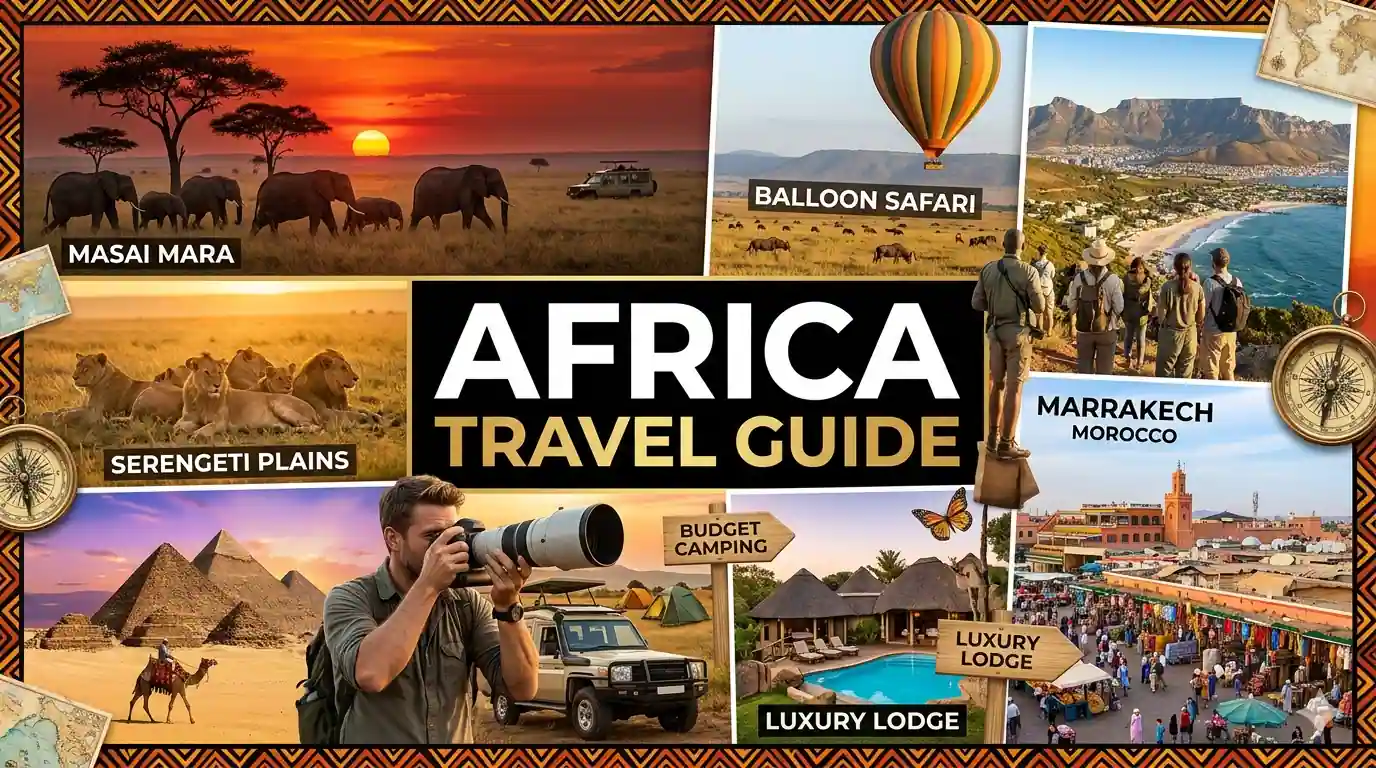
Complete Africa Travel Guide for 2026
Africa offers unparalleled wildlife encounters, ancient history, vibrant cultures, and breathtaking landscapes that create once-in-a-lifetime travel experiences.
This comprehensive guide covers essential information for visiting Africa in 2026 including safari planning, visa requirements, realistic costs, health precautions, and verified safety guidance.
Whether you are planning your first safari adventure or returning to explore new regions, this resource provides practical and authentic advice for a memorable African journey.
Why Visit Africa in 2026
Africa delivers unique experiences unavailable anywhere else on Earth from the Great Migration to ancient pyramids.
The continent offers exceptional value for wildlife viewing with world-class national parks and reserves.
Cultural diversity spans thousands of ethnic groups, languages, and traditions across fifty-four countries.
Natural wonders include Victoria Falls, Mount Kilimanjaro, the Sahara Desert, and pristine coastlines.
Safari tourism supports conservation efforts and local communities when booked responsibly.
Countries Covered in This Guide
This guide focuses on five major African destinations offering diverse experiences for travelers.
Kenya Travel Overview
Kenya is renowned for the Masai Mara National Reserve and the annual Great Migration.
Nairobi serves as a major gateway city with direct international flights and safari connections.
The country offers both luxury lodges and budget camping options for safari experiences.
Swahili and English are official languages making communication accessible for international visitors.
Kenya requires electronic travel authorization for most visitors applied through official government portals.
Tanzania Travel Overview
Tanzania features the Serengeti National Park, Ngorongoro Crater, and Mount Kilimanjaro.
The country hosts the majority of the Great Migration wildlife spectacle year-round.
Zanzibar adds beach relaxation to safari adventures with historic Stone Town and pristine beaches.
Visa requirements include obtaining authorization through official Tanzanian immigration channels.
Swahili is widely spoken with English common in tourism and business sectors.
South Africa Travel Overview
South Africa combines safari experiences with urban culture, wine regions, and coastal beauty.
Kruger National Park offers excellent wildlife viewing with self-drive and guided options.
Cape Town provides world-class dining, Table Mountain hikes, and Robben Island history.
The country has excellent infrastructure and is generally safe in tourist areas with standard precautions.
Visa policies vary by nationality with many countries eligible for visa-free short stays.
Egypt Travel Overview
Egypt features ancient wonders including the Pyramids of Giza, Luxor temples, and Nile River cruises.
Cairo serves as a major hub with extensive flight connections and historical attractions.
Red Sea resorts offer diving, snorkeling, and beach relaxation alongside cultural exploration.
Visa requirements include e-visa options available through official Egyptian government portals.
Arabic is the primary language with English widely understood in tourism sectors.
Morocco Travel Overview
Morocco blends African, Arab, and European influences in vibrant medinas and desert landscapes.
Marrakech, Fes, and Chefchaouen offer cultural immersion with historic architecture and markets.
Sahara Desert excursions provide camel treks and overnight camping under star-filled skies.
Many nationalities receive visa-free entry for short tourism stays verified through official sources.
Arabic and Berber languages dominate with French and English common in tourist areas.
Understanding Safari Experiences in Africa
Safaris represent the quintessential African travel experience with wildlife viewing in natural habitats.
What is a safari and what to expect
A safari is a journey to observe wildlife in their natural environment typically in national parks or reserves.
Most safaris involve game drives in open vehicles with trained guides who track animals and share knowledge.
Expect early morning and late afternoon drives when wildlife is most active and temperatures are cooler.
Patience is essential as wildlife encounters cannot be guaranteed though probabilities are high in prime areas.
Respectful behavior including quiet voices and following guide instructions ensures safety and animal welfare.
Types of safari experiences available
Game drives in 4x4 vehicles are the most common safari format offering comfortable wildlife viewing.
Walking safaris provide intimate ground-level experiences with armed rangers in designated areas.
Hot air balloon safaris offer aerial perspectives particularly popular in the Serengeti and Masai Mara.
Boat safaris on rivers and lakes provide unique viewpoints for hippos, crocodiles, and waterbirds.
Night drives with specialized lighting reveal nocturnal species not visible during daytime excursions.
Major national parks and reserves
Kenya's Masai Mara National Reserve is famous for the Great Migration and big cat populations.
Tanzania's Serengeti National Park and Ngorongoro Conservation Area offer exceptional wildlife density.
South Africa's Kruger National Park provides excellent infrastructure and self-drive safari options.
Botswana's Okavango Delta and Chobe National Park feature water-based safaris and elephant encounters.
Namibia's Etosha National Park offers unique desert-adapted wildlife and salt pan landscapes.
Wildlife viewing expectations and etiquette
The Big Five refers to lion, leopard, elephant, buffalo, and rhinoceros though sightings vary by location.
Great Migration viewing in Kenya and Tanzania peaks between July and October for river crossings.
Always maintain safe distances from wildlife and never attempt to feed or touch animals.
Follow your guide's instructions regarding vehicle positioning and noise levels at all times.
Photography should prioritize animal welfare over getting the perfect shot respect natural behaviors.
Safari booking basics without third-party agents
Book safaris directly through national park authorities or reputable lodge websites when possible.
Verify operator credentials through official tourism board websites for your destination country.
Request detailed itineraries including park fees, accommodation, meals, and transport in writing.
Confirm cancellation policies and payment methods before committing to any booking.
Travel insurance covering medical evacuation is essential for remote safari destinations.
Visa Requirements for Africa Travel
Visa policies vary significantly across African countries requiring advance verification from official sources.
General visa information for international travelers
Many African countries offer visa-on-arrival or e-visa options for tourism purposes.
Kenya requires electronic travel authorization applied through the official government eVisa portal.
Tanzania offers e-visa applications through the official immigration website for most nationalities.
South Africa permits visa-free entry for many Western passport holders for stays up to 90 days.
Egypt provides e-visa options through official government channels for tourism visits.
Morocco allows visa-free entry for many nationalities for short tourism stays verified through embassy sources.
Essential documentation for entry
Passports must be valid for at least six months beyond your intended departure date from Africa.
Proof of onward or return travel may be requested at immigration checkpoints.
Some countries require proof of sufficient funds for your stay though enforcement varies.
Yellow fever vaccination certificates are mandatory for entry to certain countries if arriving from endemic areas.
Keep digital and physical copies of your passport, visa, and travel insurance separate from originals.
Health and Vaccination Requirements for Africa
Protecting your health ensures a safe and enjoyable African travel experience.
Yellow fever vaccination requirements
Yellow fever vaccination is required for travelers arriving from countries with risk of yellow fever transmission.
The World Health Organization maintains an official list of countries requiring vaccination certificates.
Vaccination must be administered at least ten days before travel at approved vaccination centers.
Carry your International Certificate of Vaccination or Prophylaxis as proof of immunization.
Some countries like Kenya and Tanzania may request certificates even if transiting through endemic areas.
Always verify current requirements through official government health portals before departure.
General health precautions for Africa travel
Malaria prophylaxis is recommended for many African destinations consult a travel medicine specialist.
Drink only bottled, boiled, or chemically treated water throughout your African journey.
Avoid ice in drinks unless certain it is made from purified water sources.
Eat food that is cooked thoroughly and served hot to minimize foodborne illness risks.
Use insect repellent containing DEET and sleep under mosquito nets in malaria-risk areas.
Carry a basic travel health kit including oral rehydration salts and anti-diarrheal medication.
Safety Guidelines for Africa Travel
Africa is generally safe for tourists who follow verified precautions and remain aware of their surroundings.
Safe versus risky regions
Tourist areas in major destinations are typically safe with standard precautions similar to global travel.
Research specific neighborhoods and regions before visiting as safety varies within countries.
Avoid border areas with active conflicts or political instability verified through government travel advisories.
Urban centers require awareness of petty crime like pickpocketing in crowded markets and transport hubs.
Rural safari areas are generally very safe when traveling with reputable operators and guides.
Essential travel precautions
Use registered taxis or ride-hailing apps rather than accepting rides from strangers.
Keep valuables secure and avoid displaying expensive jewelry or electronics openly.
Store passports and extra cash in hotel safes carrying only daily necessities.
Share your itinerary with family or friends and check in regularly during your trip.
Register with your embassy's traveler program for safety updates and emergency assistance.
Local laws and cultural awareness
Photography restrictions apply to government buildings, military installations, and some cultural sites.
Always ask permission before photographing people especially in rural or indigenous communities.
Drug laws are strictly enforced with severe penalties for possession or trafficking.
Respect local customs regarding dress, behavior, and religious practices in all destinations.
Same-sex relationships are illegal in some African countries research laws before travel.
Transportation Options in Africa
Understanding transportation helps you travel efficiently and safely across diverse African landscapes.
Domestic flights versus ground transport
Domestic flights save significant time for long distances between major cities and safari hubs.
Regional airlines include Kenya Airways, South African Airways, Ethiopian Airlines, and Royal Air Maroc.
Book flights in advance for best prices especially during peak safari seasons.
Ground transport including safari vehicles and buses is economical but time-consuming for long distances.
Consider flight time savings versus cost when planning multi-destination itineraries.
Safari transport options
Most safaris use customized 4x4 vehicles with pop-up roofs for optimal wildlife viewing.
Private vehicle hires offer flexibility but cost significantly more than shared group tours.
Vehicle condition and guide expertise vary so verify operator credentials before booking.
Ensure vehicles have seat belts, first aid kits, and communication equipment for remote areas.
Confirm fuel arrangements and backup plans for mechanical issues in remote locations.
Public transport limitations
Public buses and minibuses are affordable but often crowded and less reliable for tourists.
Language barriers and route complexity make public transport challenging for first-time visitors.
Security concerns in some urban areas make registered taxis or arranged transport preferable.
Train services exist in South Africa and Morocco but are limited in other African countries.
For safari destinations arranged transport through lodges or tour operators is strongly recommended.
Africa Travel Cost Breakdown in USD
Understanding realistic costs helps you budget effectively for your African adventure.
Budget Traveler Costs per Day
Budget travelers can explore Africa on 50 to 80 USD per day with careful planning.
Hostel dorm beds or budget guesthouses cost 15 to 35 USD per night depending on location.
Local restaurants and street food provide meals for 5 to 15 USD daily.
Public transport and shared safari tours keep daily transport costs at 10 to 30 USD.
Free walking tours, public beaches, and self-guided exploration minimize entertainment expenses.
Countries like Morocco and Egypt offer better budget value than Kenya or Tanzania for safaris.
Mid-Range Traveler Costs per Day
Mid-range travelers spending 150 to 300 USD daily enjoy greater comfort and safari access.
Private rooms in lodges or mid-range hotels cost 60 to 150 USD per night.
Restaurant meals including one nice dinner range from 20 to 50 USD daily for food.
Shared safari vehicles, domestic flights, and arranged transfers cost 40 to 100 USD daily.
Park fees, guided tours, and activities budget 30 to 80 USD daily.
This level allows quality safari experiences while maintaining reasonable overall costs.
Luxury Safari Costs per Day
Luxury travelers spending 500 to 1500 plus USD daily experience Africa in exceptional style.
Five-star lodges and tented camps range from 300 to 1000 plus USD per night.
Fine dining, private chefs, and premium beverages cost 100 to 300 USD daily.
Private safari vehicles, charter flights, and exclusive transfers cost 200 to 600 USD daily.
Private guides, exclusive park access, and premium activities budget 200 to 500 USD daily.
Luxury safaris often include all-inclusive pricing covering meals, drinks, and activities.
Country-Specific Cost Comparison
Kenya and Tanzania safari costs are moderate with good value in mid-range options.
South Africa offers excellent value with self-drive Kruger options reducing guided tour costs.
Egypt provides exceptional value for historical attractions and Nile cruises.
Morocco delivers affordable cultural experiences with budget-friendly accommodations and dining.
Remote safari camps and exclusive reserves command premium pricing across all destinations.
Best Time to Visit Africa
Timing your trip significantly impacts wildlife viewing, weather, and overall experience.
Dry season versus wet season
Dry seasons generally offer better wildlife viewing as animals congregate around water sources.
Wet seasons bring lush landscapes, fewer tourists, and lower prices though some roads may be impassable.
East Africa's dry seasons run June to October and December to March ideal for safaris.
Southern Africa's dry winter months May to September provide optimal game viewing conditions.
North Africa is best visited in spring or fall to avoid extreme summer heat.
Best safari seasons by region
Kenya and Tanzania Great Migration river crossings peak between July and October.
Calving season in southern Serengeti occurs January to February offering predator action.
South Africa's Kruger National Park offers excellent year-round viewing with winter advantages.
Botswana's Okavango Delta floods May to September creating unique water-based safari opportunities.
Always verify seasonal patterns with official park authorities as climate variations occur.
Cultural Awareness and Etiquette in Africa
Respectful engagement with local cultures enhances your experience and supports sustainable tourism.
Local customs and traditions
Greetings are important in many African cultures take time for polite exchanges before business.
Use your right hand for eating, greeting, and passing objects as the left hand is considered unclean in some regions.
Ask permission before entering villages, homes, or sacred sites in rural communities.
Support local artisans by purchasing authentic crafts at fair prices rather than mass-produced souvenirs.
Learn basic greetings in local languages like Swahili or Arabic to show respect and build rapport.
Dress codes for different settings
Modest clothing covering shoulders and knees is expected when visiting religious sites and rural communities.
Neutral-colored clothing like khaki, green, or brown is recommended for safari to avoid startling wildlife.
Camouflage clothing is illegal in some African countries verify regulations before packing.
Urban areas accept casual Western attire though modest dress shows cultural sensitivity.
Bring layers for cool mornings and evenings on safari even in warm climates.
Respectful travel behavior
Always ask before photographing people especially children and respect refusals gracefully.
Avoid giving money or gifts directly to children as this can encourage dependency and disrupt communities.
Support community-based tourism initiatives that benefit local residents directly.
Follow Leave No Trace principles in natural areas preserving environments for future visitors.
Listen to local guides and community members as experts on their own cultures and environments.
Recommended Africa Itineraries
Well-planned itineraries maximize wildlife viewing and cultural experiences while managing travel time.
Seven Day Safari Focused Itinerary
Start in Nairobi with one day for orientation and visiting the David Sheldrick Elephant Orphanage.
Transfer to Masai Mara for four days of game drives witnessing the Great Migration if timing aligns.
Return to Nairobi for departure or extend to Amboseli National Park for Kilimanjaro views.
This itinerary focuses on Kenya's premier wildlife destination with efficient logistics.
Book park entries and accommodation well in advance especially for peak migration months.
Ten Day Multi-Country Safari Itinerary
Begin in Tanzania with three days in Serengeti National Park for wildlife viewing.
Visit Ngorongoro Crater for one day experiencing high-density wildlife in a unique caldera setting.
Transfer to Kenya's Masai Mara for three days continuing the safari experience across borders.
End with two days in Nairobi for cultural experiences and departure logistics.
This route leverages the contiguous ecosystem shared by Tanzania and Kenya for optimal wildlife viewing.
Coordinate visa requirements and border crossing procedures in advance with official sources.
Alternative Cultural and Safari Combination
Start in Morocco with three days exploring Marrakech medina and Sahara Desert excursions.
Fly to Kenya for five days of Masai Mara safari experiences.
End with two days in Nairobi for urban culture and departure.
This itinerary combines North African culture with East African wildlife for diverse experiences.
Verify flight connections and visa requirements for multi-country travel before booking.
Final Recommendations for Africa Travel
Africa rewards thoughtful planning with unparalleled wildlife encounters and cultural immersion.
Start with one or two countries rather than attempting to see the entire continent on one trip.
Prioritize reputable operators who support conservation and community benefits in their practices.
Remain flexible with wildlife viewing expectations as nature operates on its own schedule.
Respect local customs, environments, and wildlife as a guest in these remarkable destinations.
Travel insurance with medical evacuation coverage is essential for remote safari locations.
Build buffer days into your itinerary for travel delays or unexpected opportunities.
Africa's wild beauty, cultural richness, and transformative experiences make it a destination that captures hearts and inspires return visits.
Begin planning your African adventure today using verified information from official government and tourism sources.
0 Comments