.webp)
.webp)
10 Day Loire Valley Itinerary and the Best Chateaux to Visit by Bike or Car
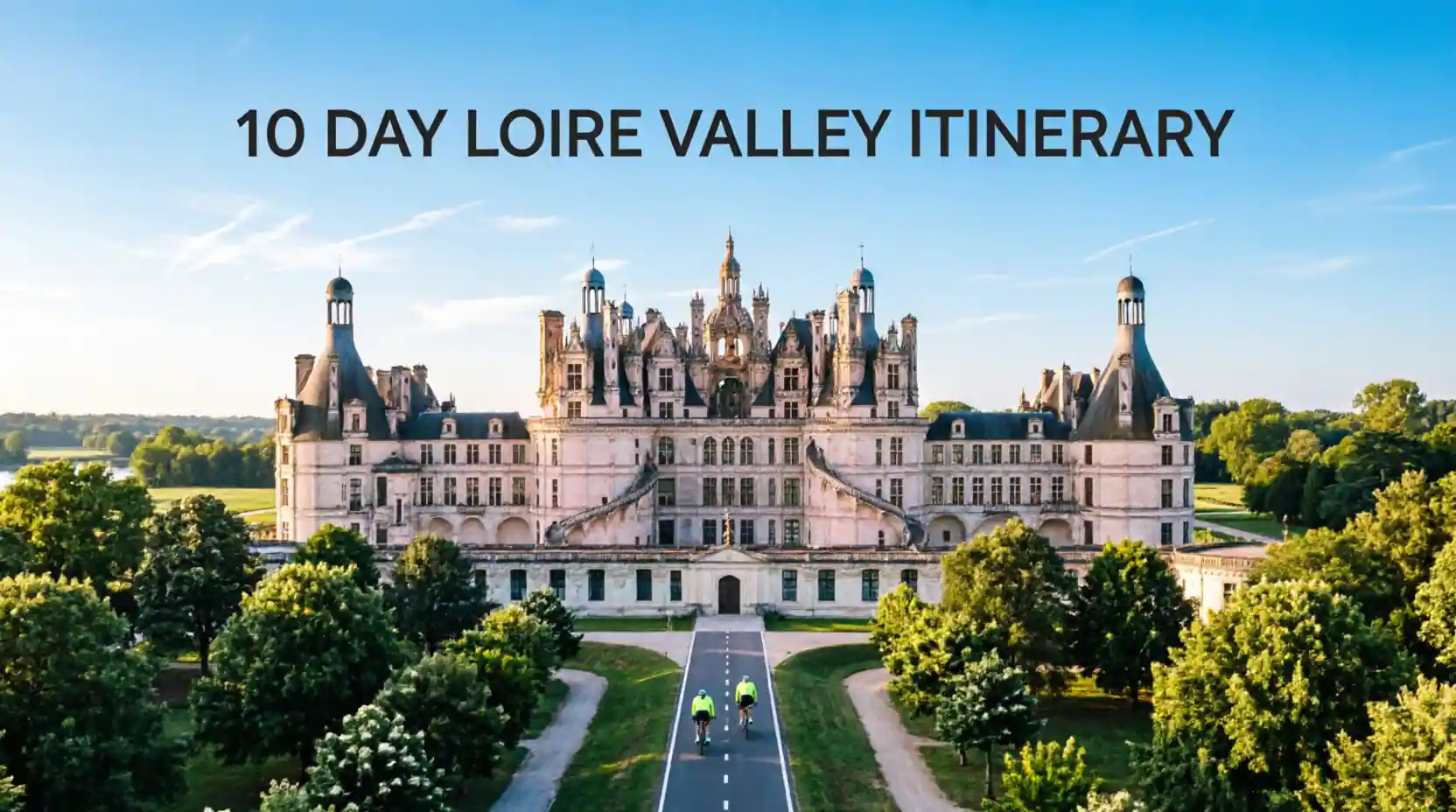
The Loire Valley, often referred to as the Garden of France, is a UNESCO World Heritage site spanning 280 kilometers of architectural splendor and viticultural excellence. In 2026, with the full implementation of the ETIAS system and a renewed focus on sustainable "slow travel," planning a 10-day journey requires balancing the grandeur of famous chateaux with the practicalities of regional logistics.
Quick Summary of Your Loire Valley 10 Day Trip
To answer your primary search intent: A perfect 10-day Loire Valley itinerary begins in Blois, moves through Amboise and Tours, and concludes in Saumur or Angers. For those choosing a car, you gain the flexibility to visit remote forest chateaux; however, cycling the "La Loire à Vélo" route offers a more intimate, eco-friendly experience. Expect to budget between $1,800 and $3,500 for a mid-range trip excluding international airfare.
Essential Loire Valley Planning Data for 2026
Review this key data to align your expectations with current 2026 travel trends and costs.
| Category | Car Travel (Road Trip) | Bike Travel (Cycling Tour) |
| Ideal Daily Distance | 60–100 km (37–62 miles) | 35–50 km (22–31 miles) |
| Daily Rental Cost | $45 – $95 (Economy to SUV) | $18 – $45 (Standard to E-bike) |
| Ease of Access | High (Remote castles included) | Moderate (Stick to river paths) |
| Total 10-Day Budget | $2,200 – $4,000 per person | $1,600 – $2,800 per person |
Why the Loire Valley is a 2026 Must-Visit

As international travel hits new peaks in 2026, the Loire Valley has positioned itself as the premier alternative to the high-density crowds of Paris. The region has invested heavily in the "La Loire à Vélo" infrastructure, which now boasts over 900 kilometers of interconnected, well-signposted paths. This makes it one of the safest and most visually rewarding destinations for cyclists in the world.
Furthermore, the chateaux have embraced immersive technology. Sites like the Château de Blois and Chenonceau now offer enhanced augmented reality "HistoPad" guides as standard, allowing you to see the Renaissance rooms exactly as they appeared in the 16th century. For the modern traveler, this blend of medieval history and high-tech accessibility is unparalleled.
How to Reach the Loire Valley from the USA and Europe

Most travelers from the United States, Canada, or the UK will arrive via Paris (CDG or ORY). From there, the high-speed TGV train is your most efficient option. In 2026, rail connectivity from Paris to Tours or Blois takes as little as 1 hour and 15 minutes, with tickets starting at approximately $35 USD when booked in advance.
- From New York/Chicago: Fly to Paris CDG. Round trip fares average $650–$1,200.
- From London: Take the Eurostar to Paris, then transfer to the TGV. Total travel time is roughly 4.5 hours.
- From Germany/Netherlands: Direct rail connections to Paris or regional flights to Nantes (NTE) are available.
- 👉 Vilnius Pink Soup Fest 2026: Dates & Best Places
- 👉 Coolcations Prokletije: Accursed Mountains Travel Guide 2026
- 👉 Denmark Coolcations 2026: Nordic Summer Alternative
- 👉 Family Friendly 3 Day San Marino Itinerary Wax Museum to Adventure Parks 2026
- 👉 Hidden Gems Seto Region Exploring Best Kingdom Vibe Southeast Estonia
Visa and Entry Requirements for 2026

For US, UK, Canadian, and Australian passport holders, the biggest change in 2026 is the ETIAS (European Travel Information and Authorisation System). While you remain visa-free for up to 90 days, you must register online before departure. The fee is approximately $8 USD (€7) and the authorization is valid for three years.
Always ensure your passport has at least six months of validity remaining from your planned date of departure from the Schengen Area. Border officials in 2026 are increasingly strict regarding the "90/180 day rule," so keep a record of your entry and exit dates if you are planning an extended European tour.
10-Day Itinerary: The Master Route

This itinerary is designed to be feasible for both motorists and cyclists, with distances kept manageable for those on two wheels.
Days 1–3: Blois and the Great Estates
Start your journey in Blois. The Royal Château de Blois is unique because it features four different architectural styles—Gothic, Flamboyant, Renaissance, and Classical—around a single courtyard. It is the perfect introduction to French history.
On Day 2, head to the Château de Chambord. If you are cycling, it is a 15 km (9 mile) ride through the scenic Domaine National de Chambord forest. As the largest castle in the valley, Chambord’s roof terrace offers a "forest of chimneys" that is essential for photography. Day 3 should be reserved for the Château de Cheverny, famous for its perfectly preserved interiors and its daily "hound feeding" ceremony.
Days 4–6: Amboise and the Ladies' Castle
Move west toward Amboise (approx. 40 km from Blois). Amboise is the final resting place of Leonardo da Vinci. Visit the Château du Clos Lucé, where da Vinci lived; the gardens are filled with life-sized models of his inventions, making it highly interactive for all ages.
Day 5 is dedicated to the Château de Chenonceau. Often called the "Château des Dames," it is built directly over the River Cher. In 2026, it remains the second most visited castle in France after Versailles. If you are driving, arrive by 9:00 AM to beat the tour buses. If cycling, follow the scenic path along the riverbanks for a flat, 15 km journey from Amboise.
Days 7–8: Tours and the Gardens of Villandry
Tours serves as the cosmopolitan heart of the valley. Spend Day 7 exploring the Place Plumereau, a square surrounded by medieval timber-framed houses. Day 8 involves a trip to the Château de Villandry, world-renowned for its geometric Renaissance gardens. These are considered the finest in France and require at least 3 hours to fully explore.
Days 9–10: Saumur and the Fortress of Angers
The final leg takes you into the Anjou region. Saumur is famous for its white tuffeau stone and its equestrian tradition (the Cadre Noir). On Day 9, visit the Château de Saumur, which sits like a fairytale castle overlooking the Loire. Spend your final day in Angers, home to the massive 17-towered Château d'Angers and the 14th-century Apocalypse Tapestry, the largest medieval tapestry set in the world.
Cost Comparison: Planning Your Spending

Prices in the Loire Valley are generally lower than in Paris, but the "Châteaux Entry" fees can add up. Most major castles charge between $15 and $22 per adult.
| Expense Category | Budget (USD) | Mid-Range (USD) | Luxury (USD) |
| Accommodation (Per Night) | $65 – $90 | $160 – $250 | $450+ |
| Daily Meals | $40 | $85 | $180+ |
| Transport (Rental + Fuel) | $25 (Bike) | $75 (Small Car) | $150 (Private Driver) |
| Entry Fees (Daily) | $20 (One castle) | $45 (Two castles) | $90 (Guided Tours) |
Bike vs. Car: Which is Right for You?

The choice between cycling and driving will fundamentally change your experience. In 2026, the infrastructure for both is excellent, but they cater to different travel styles.
The Case for Cycling
If you value exercise, fresh air, and a slow-paced discovery of small villages, choose the bike. The "La Loire à Vélo" route is almost entirely flat. E-bikes have become the standard rental in 2026, allowing travelers of all fitness levels to cover 50 km a day without exhaustion. Most hotels along the route are "Accueil Vélo" certified, meaning they offer secure bike storage and repair kits.
The Case for Driving
Choose a car if you want to see more chateaux in less time. Some of the most beautiful sites, like the Château de Valençay or the Fortress of Chinon, are located further away from the main river paths. A car also provides a "safety net" for luggage and unpredictable weather. Parking is generally ample at all major chateaux, though some sites now charge a small environmental fee ($3–$5) for non-electric vehicles.
Best Time to Visit in 2026

For the best balance of weather and crowd management, May, June, and September are the optimal months. In May and June, the castle gardens are in peak bloom. September offers the excitement of the wine harvest, particularly in the Chinon and Saumur regions. Avoid July and August if possible, as temperatures can exceed 90°F (32°C) and crowds are at their highest.
Actionable Safety and Logistic Tips

- Travel Insurance: Always ensure your policy covers cycling-related accidents if you plan to ride. World Nomads and Allianz offer specific "active travel" add-ons.
- Booking Tickets: In 2026, the most popular chateaux (Chenonceau and Chambord) often sell out of morning slots. Book your time-stamped entry online at least 72 hours in advance.
- Luggage Transfers: If cycling, you don't need to carry your bags. Services like "BagaFrance" will move your suitcases from hotel to hotel for roughly $15 per bag per day.
- Monday Closures: While major chateaux stay open 365 days a year, many smaller museums and local restaurants close on Mondays. Plan your dining accordingly.
- 👉 Vilnius Pink Soup Fest 2026: Dates & Best Places
- 👉 Coolcations Prokletije: Accursed Mountains Travel Guide 2026
- 👉 Denmark Coolcations 2026: Nordic Summer Alternative
- 👉 Family Friendly 3 Day San Marino Itinerary Wax Museum to Adventure Parks 2026
- 👉 Hidden Gems Seto Region Exploring Best Kingdom Vibe Southeast Estonia
The 40-60 Word Direct Answer: How to Plan the Best Trip

To plan the best 10-day Loire Valley trip, base yourself in Blois, Amboise, and Tours. Rent an e-bike for the river paths to visit Chenonceau and Chambord, or a car for outlying fortresses. Book time-stamped tickets online to avoid 2026 crowds, and travel in May or September for the best garden views and weather.
Whether you choose the pedal or the pedal-to-the-metal, the Loire Valley remains a testament to French elegance. By following this 10-day itinerary, you ensure a comprehensive exploration of the chateaux that defined the Renaissance, while enjoying the world-class hospitality of the French countryside.
0 Comments