.webp)
.webp)
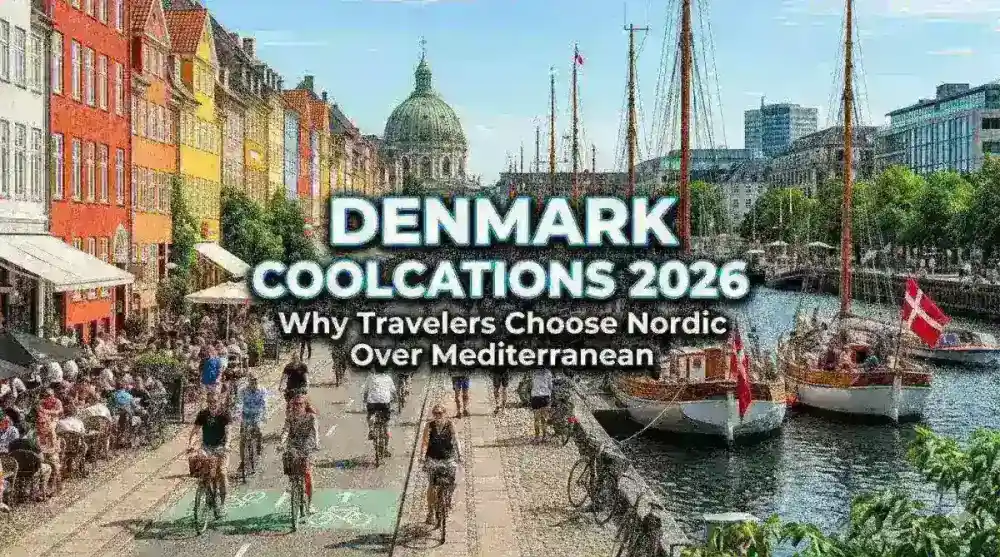
Introduction: The Great Summer Travel Shift
A quiet revolution is transforming European summer travel. As Mediterranean destinations bake under increasingly extreme heat waves, with temperatures regularly exceeding 40°C (104°F) and wildfires threatening coastal resorts, a growing number of travelers are looking north for their summer escapes. Welcome to the era of "Coolcations"—the trend of choosing cooler, northern destinations over traditional hot-weather spots, and Denmark is emerging as the poster child for this climate-conscious travel movement.
The statistics tell a compelling story. Mediterranean destinations like Greece, Spain, Italy, and southern France are experiencing record-breaking temperatures that are making summer travel uncomfortable, and in some cases, dangerous. Meanwhile, Denmark and its Nordic neighbors are enjoying their sweet spot: long daylight hours, comfortable temperatures averaging 18-22°C (64-72°F), and a thriving outdoor culture perfectly suited to the mild climate.
But Coolcations aren't just about escaping the heat. They represent a fundamental shift in how we think about summer travel—prioritizing sustainability, authentic experiences, and climate responsibility over traditional sun-and-sea tourism. Denmark, with its world-class cycling infrastructure, commitment to sustainability, hygge culture, and stunning blend of historic charm and modern innovation, has become the ideal destination for this new wave of conscious travelers.
This comprehensive guide explores why Denmark is becoming the go-to Coolcation destination for 2026, what makes Nordic summers so appealing, how to plan your Danish summer adventure, and why this trend represents more than just a fleeting travel fad—it's the future of sustainable summer tourism.
What Are Coolcations and Why Are They Trending?

The term "Coolcation" emerged in the early 2020s as travelers and travel industry professionals sought to describe the growing trend of choosing cooler destinations for summer vacations. But this isn't just about temperature—it's about a fundamental reimagining of what summer travel can and should be.
The Climate Reality Driving the Trend
The Mediterranean, long the default summer destination for European and international travelers, is facing an existential crisis. Climate change has transformed what were once pleasantly warm summers into increasingly extreme heat events:
- Record Temperatures: Southern Europe has seen temperatures exceed 45°C (113°F) in recent summers, with heat waves lasting weeks
- Wildfires: Greece, Spain, and Italy have experienced devastating wildfires that have destroyed forests, threatened communities, and forced tourist evacuations
- Water Scarcity: Many Mediterranean islands face severe water shortages, with some implementing strict rationing that affects tourists
- Overtourism: Popular destinations like Barcelona, Venice, and Santorini are implementing tourist caps and restrictions due to overcrowding
- Rising Costs: Extreme weather and overtourism have driven up prices while diminishing the quality of the experience
- 👉 Liechtenstein EES April 2026 Update: Why biometric entry is mandatory starting April 10.
- 👉 The reality of "Pub Culture" in 2026: Is it still friendly for solo travelers?
- 👉 ETIAS Luxembourg 2026: Mandatory for US & UK Citizens
Meanwhile, Scandinavia and the Nordic countries are experiencing their own climate-related changes, but in ways that make them more attractive for summer travel:
- Milder Winters, Perfect Summers: While winters are warming, summers remain comfortably cool
- Extended Season: The Nordic summer season has effectively lengthened, with pleasant weather from May through September
- Sustainable Infrastructure: Nordic countries have invested heavily in sustainable tourism infrastructure
- Natural Beauty: Pristine landscapes, clean air, and access to nature remain unparalleled
- 👉 Liechtenstein EES April 2026 Update: Why biometric entry is mandatory starting April 10.
- 👉 The reality of "Pub Culture" in 2026: Is it still friendly for solo travelers?
- 👉 ETIAS Luxembourg 2026: Mandatory for US & UK Citizens
Beyond Temperature: The Coolcation Philosophy
Coolcations represent more than just seeking cooler weather. They embody a travel philosophy that prioritizes:
Sustainability: Nordic countries lead the world in sustainable tourism practices, from carbon-neutral hotels to farm-to-table dining to extensive public transportation networks.
Authenticity: Rather than all-inclusive resorts and tourist traps, Coolcations emphasize genuine cultural immersion, local experiences, and meaningful connections with destinations.
Active Travel: Coolcation destinations like Denmark excel in cycling infrastructure, hiking trails, and outdoor activities that engage travelers with their surroundings.
Slower Pace: The Nordic concept of "hygge" (coziness and contentment) encourages travelers to slow down, savor moments, and prioritize well-being over checklist tourism.
Climate Responsibility: Choosing cooler destinations often means shorter flights for European travelers and supporting destinations that are investing in climate solutions rather than struggling with climate impacts.
Denmark's Summer Advantages: Why Choose Copenhagen and Beyond

Denmark has emerged as the quintessential Coolcation destination for good reason. The country offers a perfect combination of comfortable climate, world-class infrastructure, cultural richness, and sustainable practices that appeal to modern travelers.
Perfect Summer Climate
Temperature: Danish summers average 18-22°C (64-72°F), with occasional days reaching 25-28°C (77-82°F). This is warm enough for outdoor activities and beach time but cool enough to remain comfortable without air conditioning.
Daylight Hours: In June and July, Denmark experiences up to 17-18 hours of daylight, with the sun setting after 10 PM and rising before 5 AM. This "white night" phenomenon maximizes time for exploration and outdoor activities.
Weather Stability: While Denmark can experience rain (it is Northern Europe, after all), summer weather is generally stable with a mix of sunny days and occasional refreshing showers that keep the landscape lush and green.
World-Class Cycling Infrastructure
Denmark, and Copenhagen in particular, is legendary for its cycling culture. This isn't just a tourist attraction—it's a way of life that makes exploring the country uniquely accessible and sustainable.
Copenhagen's Cycling Network:
- Over 350 kilometers (217 miles) of dedicated bike lanes
- Cycle superhighways connecting the city to suburbs
- Bike bridges like the iconic Cykelslangen (Cycle Snake)
- Traffic lights timed for cyclists
- More bikes than cars in the city center
- 👉 Liechtenstein EES April 2026 Update: Why biometric entry is mandatory starting April 10.
- 👉 The reality of "Pub Culture" in 2026: Is it still friendly for solo travelers?
- 👉 ETIAS Luxembourg 2026: Mandatory for US & UK Citizens
Why It Matters for Travelers: Cycling allows you to experience Denmark like a local, cover more ground than walking, access areas cars can't reach, and do it all with zero carbon emissions. Bike rental is easy and affordable, with options ranging from city bikes to electric bikes to cargo bikes for families.
Sustainable Tourism Leadership
Denmark isn't just talking about sustainability—it's leading by example:
Copenhagen's Carbon Neutrality Goal: The city aims to be the world's first carbon-neutral capital by 2025, just one year after this guide's publication.
Green Hotels: Denmark has more Green Key certified hotels per capita than almost any other country, with strict standards for energy efficiency, waste reduction, and sustainable sourcing.
Organic Food Leadership: Denmark has the highest market share of organic food in the world, with many restaurants achieving organic certification at various levels (bronze, silver, gold).
Public Transportation: Efficient, clean, and extensive public transit makes car-free travel easy and enjoyable.
Cultural Richness and Hygge
Beyond sustainability and infrastructure, Denmark offers cultural experiences that resonate with modern travelers seeking depth and authenticity:
Design and Architecture: From Tivoli Gardens to the Opera House, from historic castles to cutting-edge contemporary architecture, Denmark is a design lover's paradise.
Food Culture: New Nordic cuisine has revolutionized fine dining, but Denmark's food scene extends far beyond Michelin stars to include world-class street food, traditional smørrebrød, and innovative food markets.
Hygge Culture: The Danish concept of hygge—creating warmth, connection, and contentment—permeates the travel experience, from cozy cafés to candlelit dinners to welcoming accommodations.
Safety and Ease: Denmark consistently ranks as one of the world's safest countries, with low crime rates, excellent healthcare, and English widely spoken, making it accessible for international travelers.
Denmark's Top Coolcation Destinations

While Copenhagen is the gateway to Danish Coolcations, the country offers diverse destinations that showcase different aspects of Nordic summer travel.
Copenhagen: The Urban Coolcation Capital
Why Visit: Copenhagen perfectly embodies the Coolcation ideal—urban sophistication meets sustainable living, historic charm meets modern innovation, and cultural richness meets outdoor accessibility.
Must-Experience Activities:
- Cycling the City: Rent a bike and explore neighborhoods like Nyhavn, Christianshavn, Vesterbro, and Nørrebro
- Harbor Swimming: Swim in Copenhagen's clean harbor waters at Islands Brygge or Sluseholmen
- Tivoli Gardens: Experience the world's second-oldest amusement park, especially magical in summer evenings
- Food Markets: Explore Torvehallerne, Reffen, and other food markets showcasing Danish and international cuisine
- Design District: Explore the Designmuseum Danmark and design shops in the Indre By district
- Rooftop Bars: Enjoy Copenhagen's thriving rooftop bar scene with panoramic city views
- 👉 Liechtenstein EES April 2026 Update: Why biometric entry is mandatory starting April 10.
- 👉 The reality of "Pub Culture" in 2026: Is it still friendly for solo travelers?
- 👉 ETIAS Luxembourg 2026: Mandatory for US & UK Citizens
Day Trips from Copenhagen:
- Helsingør: Visit Kronborg Castle (Hamlet's castle) and the Maritime Museum
- Roskilde: Explore the Viking Ship Museum and Roskilde Cathedral
- Møn: Visit the dramatic white chalk cliffs of Møns Klint
- Louisiana Museum: World-class modern art museum with stunning seaside location
- 👉 Liechtenstein EES April 2026 Update: Why biometric entry is mandatory starting April 10.
- 👉 The reality of "Pub Culture" in 2026: Is it still friendly for solo travelers?
- 👉 ETIAS Luxembourg 2026: Mandatory for US & UK Citizens
Aarhus: Denmark's Second City
Why Visit: Aarhus combines small-city charm with big-city culture, offering a more relaxed alternative to Copenhagen while maintaining world-class attractions.
Highlights:
- ARoS Museum: Contemporary art museum with the famous "Your Rainbow Panorama" rooftop installation
- Den Gamle By: Open-air museum showcasing Danish history from 1860s to 1970s
- Moesgaard Museum: Prehistory museum with dramatic architecture and beachfront location
- Aarhus Street Food: Vibrant food market in former bus garage
- Latin Quarter: Charming neighborhood with independent shops and cafés
- 👉 Liechtenstein EES April 2026 Update: Why biometric entry is mandatory starting April 10.
- 👉 The reality of "Pub Culture" in 2026: Is it still friendly for solo travelers?
- 👉 ETIAS Luxembourg 2026: Mandatory for US & UK Citizens
Odense: Hans Christian Andersen's City
Why Visit: Birthplace of Hans Christian Andersen, Odense offers fairy-tale charm, excellent cycling infrastructure, and a growing food scene.
Highlights:
- Hans Christian Andersen Museum: Newly opened museum celebrating the famous author
- Funen Village: Open-air museum showcasing rural Danish life
- Odense Zoo: Award-winning zoo with excellent exhibits
- Brandts: Cultural center with museums, cafés, and shops
- 👉 Liechtenstein EES April 2026 Update: Why biometric entry is mandatory starting April 10.
- 👉 The reality of "Pub Culture" in 2026: Is it still friendly for solo travelers?
- 👉 ETIAS Luxembourg 2026: Mandatory for US & UK Citizens
Aalborg: Northern Jutland's Gem
Why Visit: Aalborg offers a perfect blend of history, modern architecture, and access to Denmark's dramatic northern coastline.
Highlights:
- Utzon Center: Architecture center designed by Jørn Utzon (Sydney Opera House architect)
- Lindholm Høje: Viking burial site with museum
- Aalborg Waterfront: Revitalized waterfront with restaurants and activities
- Jens Bang's House: Renaissance merchant's house
- 👉 Liechtenstein EES April 2026 Update: Why biometric entry is mandatory starting April 10.
- 👉 The reality of "Pub Culture" in 2026: Is it still friendly for solo travelers?
- 👉 ETIAS Luxembourg 2026: Mandatory for US & UK Citizens
The Danish Islands: Bornholm, Læsø, and Beyond
Why Visit: Denmark's islands offer slower-paced, nature-focused Coolcation experiences with unique character and stunning scenery.
Bornholm: Known as the "Sunshine Island," Bornholm offers dramatic granite cliffs, medieval churches, smokehouses, and excellent cycling routes.
Læsø: Remote island famous for its unique seaweed-roofed houses and unspoiled nature.
Funen Archipelago: Collection of small islands offering sailing, kayaking, and island-hopping adventures.
Planning Your Danish Coolcation: Practical Guide

Successfully planning a Danish Coolcation requires understanding the unique aspects of Nordic summer travel. Here's your comprehensive planning guide.
When to Visit
Peak Season (June-August):
- Weather: Warmest temperatures, longest days
- Pros: Maximum daylight, all attractions open, festivals and events
- Cons: Higher prices, more crowds, need to book well in advance
- Best For: First-time visitors, festival-goers, those wanting maximum daylight
- 👉 Liechtenstein EES April 2026 Update: Why biometric entry is mandatory starting April 10.
- 👉 The reality of "Pub Culture" in 2026: Is it still friendly for solo travelers?
- 👉 ETIAS Luxembourg 2026: Mandatory for US & UK Citizens
Shoulder Season (May, September):
- Weather: Mild temperatures, fewer crowds
- Pros: Lower prices, fewer tourists, beautiful spring/fall colors
- Cons: Shorter days, some seasonal attractions may be closed
- Best For: Budget travelers, photographers, those seeking quieter experiences
- 👉 Liechtenstein EES April 2026 Update: Why biometric entry is mandatory starting April 10.
- 👉 The reality of "Pub Culture" in 2026: Is it still friendly for solo travelers?
- 👉 ETIAS Luxembourg 2026: Mandatory for US & UK Citizens
Midnight Sun Period (Late June):
- Experience: Near 24-hour daylight in northern Denmark
- Best For: Unique experience, photography, maximizing sightseeing time
- 👉 Liechtenstein EES April 2026 Update: Why biometric entry is mandatory starting April 10.
- 👉 The reality of "Pub Culture" in 2026: Is it still friendly for solo travelers?
- 👉 ETIAS Luxembourg 2026: Mandatory for US & UK Citizens
How Long to Stay
Minimum Recommended: 5-7 days for Copenhagen and immediate surroundings
Ideal Duration: 10-14 days to explore multiple cities and regions
Extended Stay: 2-3 weeks for comprehensive Denmark exploration including islands and Jutland
Getting to Denmark
By Air:
- Copenhagen Airport (CPH): Major international hub with excellent connections worldwide
- Aarhus Airport (AAR): Smaller airport with limited international connections
- Aalborg Airport (AAL): Regional airport with some European connections
- 👉 Liechtenstein EES April 2026 Update: Why biometric entry is mandatory starting April 10.
- 👉 The reality of "Pub Culture" in 2026: Is it still friendly for solo travelers?
- 👉 ETIAS Luxembourg 2026: Mandatory for US & UK Citizens
By Train:
- From Germany: Direct trains from Hamburg to Copenhagen (4.5 hours)
- From Sweden: Frequent trains from Stockholm and Malmö via Øresund Bridge
- European Rail: Denmark connected to European rail network
- 👉 Liechtenstein EES April 2026 Update: Why biometric entry is mandatory starting April 10.
- 👉 The reality of "Pub Culture" in 2026: Is it still friendly for solo travelers?
- 👉 ETIAS Luxembourg 2026: Mandatory for US & UK Citizens
By Ferry:
- From Germany: Multiple ferry routes to Danish islands
- From Norway/Sweden: Ferry connections to various Danish ports
- 👉 Liechtenstein EES April 2026 Update: Why biometric entry is mandatory starting April 10.
- 👉 The reality of "Pub Culture" in 2026: Is it still friendly for solo travelers?
- 👉 ETIAS Luxembourg 2026: Mandatory for US & UK Citizens
Getting Around Denmark
Cycling:
- Bike Rental: Easy and affordable in cities; Bycyklen (city bikes) in Copenhagen
- Cycle Routes: Extensive network of marked cycling routes throughout country
- Bike Trains: Many trains allow bikes, making multi-city cycling trips possible
- 👉 Liechtenstein EES April 2026 Update: Why biometric entry is mandatory starting April 10.
- 👉 The reality of "Pub Culture" in 2026: Is it still friendly for solo travelers?
- 👉 ETIAS Luxembourg 2026: Mandatory for US & UK Citizens
Public Transportation:
- Trains: DSB (Danish State Railways) operates efficient intercity and regional trains
- Buses: Comprehensive bus network connecting cities and rural areas
- Metro: Copenhagen Metro efficient for city travel
- Rejsekort: Travel card for seamless public transport across Denmark
- 👉 Liechtenstein EES April 2026 Update: Why biometric entry is mandatory starting April 10.
- 👉 The reality of "Pub Culture" in 2026: Is it still friendly for solo travelers?
- 👉 ETIAS Luxembourg 2026: Mandatory for US & UK Citizens
Car Rental:
- When Useful: Exploring rural areas, islands, and remote destinations
- Not Necessary: For city-focused itineraries with good public transport
- Considerations: Expensive fuel, excellent public transport alternatives
- 👉 Liechtenstein EES April 2026 Update: Why biometric entry is mandatory starting April 10.
- 👉 The reality of "Pub Culture" in 2026: Is it still friendly for solo travelers?
- 👉 ETIAS Luxembourg 2026: Mandatory for US & UK Citizens
Where to Stay
Sustainable Hotels:
- Green Key Certified: Look for this eco-certification
- Boutique Hotels: Denmark excels in design-forward boutique accommodations
- Historic Properties: Converted manor houses and historic buildings
- 👉 Liechtenstein EES April 2026 Update: Why biometric entry is mandatory starting April 10.
- 👉 The reality of "Pub Culture" in 2026: Is it still friendly for solo travelers?
- 👉 ETIAS Luxembourg 2026: Mandatory for US & UK Citizens
Alternative Accommodations:
- Airbnb: Widely available, especially in cities
- Hostels: Denmark has excellent, modern hostels (not just for backpackers)
- Camping: Denmark has excellent camping infrastructure, including "wild camping" in certain areas
- Farm Stays: Experience rural Danish life
- 👉 Liechtenstein EES April 2026 Update: Why biometric entry is mandatory starting April 10.
- 👉 The reality of "Pub Culture" in 2026: Is it still friendly for solo travelers?
- 👉 ETIAS Luxembourg 2026: Mandatory for US & UK Citizens
Budget Considerations
Denmark is Expensive: Be prepared for higher costs than Mediterranean destinations:
- Accommodation: €100-200+ per night for mid-range hotels
- Meals: €15-30 for casual dining, €100+ for fine dining
- Public Transport: €3-4 per single ticket, €10-15 for day passes
- Activities: Many free or low-cost options (cycling, beaches, parks)
- 👉 Liechtenstein EES April 2026 Update: Why biometric entry is mandatory starting April 10.
- 👉 The reality of "Pub Culture" in 2026: Is it still friendly for solo travelers?
- 👉 ETIAS Luxembourg 2026: Mandatory for US & UK Citizens
Money-Saving Tips:
- Copenhagen Card: Offers free public transport and museum entry
- Street Food: Excellent and affordable options at food markets
- Free Activities: Beaches, parks, cycling, harbor swimming
- Book in Advance: Especially for summer travel
- Travel Shoulder Season: Lower prices, fewer crowds
- 👉 Liechtenstein EES April 2026 Update: Why biometric entry is mandatory starting April 10.
- 👉 The reality of "Pub Culture" in 2026: Is it still friendly for solo travelers?
- 👉 ETIAS Luxembourg 2026: Mandatory for US & UK Citizens
Coolcation Activities: Making the Most of Danish Summer

Denmark's summer offers unique activities that embody the Coolcation philosophy—active, sustainable, culturally enriching, and perfectly suited to the mild climate.
Cycling Adventures
Urban Cycling:
- Explore Copenhagen's neighborhoods by bike
- Follow designated cycling routes through the city
- Join guided bike tours for historical context
- 👉 Liechtenstein EES April 2026 Update: Why biometric entry is mandatory starting April 10.
- 👉 The reality of "Pub Culture" in 2026: Is it still friendly for solo travelers?
- 👉 ETIAS Luxembourg 2026: Mandatory for US & UK Citizens
Long-Distance Cycling:
- National Cycle Routes: 13 designated routes covering the country
- Route 1: Around Zealand (Copenhagen's island)
- Route 4: Across Funen
- Route 9: Through Jutland
- 👉 Liechtenstein EES April 2026 Update: Why biometric entry is mandatory starting April 10.
- 👉 The reality of "Pub Culture" in 2026: Is it still friendly for solo travelers?
- 👉 ETIAS Luxembourg 2026: Mandatory for US & UK Citizens
Harbor and Beach Activities
Harbor Swimming:
- Copenhagen's harbor is clean enough for swimming
- Designated swimming areas with facilities
- Harbor baths like Islands Brygge and Sluseholmen
- 👉 Liechtenstein EES April 2026 Update: Why biometric entry is mandatory starting April 10.
- 👉 The reality of "Pub Culture" in 2026: Is it still friendly for solo travelers?
- 👉 ETIAS Luxembourg 2026: Mandatory for US & UK Citizens
Beach Hopping:
- Amager Beach: Close to Copenhagen, popular with locals
- Bellevue Beach: North of Copenhagen, designed by Arne Jacobsen
- Hornbæk Beach: Popular North Zealand beach town
- Jutland Coast: Miles of sandy beaches along the North Sea
- 👉 Liechtenstein EES April 2026 Update: Why biometric entry is mandatory starting April 10.
- 👉 The reality of "Pub Culture" in 2026: Is it still friendly for solo travelers?
- 👉 ETIAS Luxembourg 2026: Mandatory for US & UK Citizens
Food and Culinary Experiences
Food Markets:
- Torvehallerne: Copenhagen's premier food market
- Reffen: Street food market in Refshaleøen
- Broens Gadekøkken: Waterfront food market
- Regional Markets: Local markets in cities and towns
- 👉 Liechtenstein EES April 2026 Update: Why biometric entry is mandatory starting April 10.
- 👉 The reality of "Pub Culture" in 2026: Is it still friendly for solo travelers?
- 👉 ETIAS Luxembourg 2026: Mandatory for US & UK Citizens
New Nordic Cuisine:
- Fine Dining: Experience Michelin-starred restaurants
- Smørrebrød: Traditional open-faced sandwiches
- Foraging Tours: Learn about Nordic ingredients
- Cooking Classes: Learn to prepare Danish dishes
- 👉 Liechtenstein EES April 2026 Update: Why biometric entry is mandatory starting April 10.
- 👉 The reality of "Pub Culture" in 2026: Is it still friendly for solo travelers?
- 👉 ETIAS Luxembourg 2026: Mandatory for US & UK Citizens
Cultural Immersion
Museums and Galleries:
- National Museum: Danish history and culture
- Design Museum: Danish design excellence
- ARoS: Contemporary art in Aarhus
- Louisiana: Modern art museum with sculpture park
- 👉 Liechtenstein EES April 2026 Update: Why biometric entry is mandatory starting April 10.
- 👉 The reality of "Pub Culture" in 2026: Is it still friendly for solo travelers?
- 👉 ETIAS Luxembourg 2026: Mandatory for US & UK Citizens
Historic Sites:
- Kronborg Castle: Hamlet's castle in Helsingør
- Roskilde Cathedral: UNESCO World Heritage Site
- Viking Ship Museum: Roskilde and other locations
- Medieval Towns: Ribe, Ærøskøbing, and others
- 👉 Liechtenstein EES April 2026 Update: Why biometric entry is mandatory starting April 10.
- 👉 The reality of "Pub Culture" in 2026: Is it still friendly for solo travelers?
- 👉 ETIAS Luxembourg 2026: Mandatory for US & UK Citizens
Nature and Outdoor Activities
Hiking:
- Møns Klint: Dramatic white chalk cliffs
- Rold Forest: Denmark's largest forest
- Wadden Sea: UNESCO World Heritage tidal area
- National Parks: Five national parks across Denmark
- 👉 Liechtenstein EES April 2026 Update: Why biometric entry is mandatory starting April 10.
- 👉 The reality of "Pub Culture" in 2026: Is it still friendly for solo travelers?
- 👉 ETIAS Luxembourg 2026: Mandatory for US & UK Citizens
Water Activities:
- Kayaking: Explore Copenhagen's canals and coastline
- Sailing: Charter boats or join sailing tours
- Island Hopping: Explore Denmark's 400+ islands
- 👉 Liechtenstein EES April 2026 Update: Why biometric entry is mandatory starting April 10.
- 👉 The reality of "Pub Culture" in 2026: Is it still friendly for solo travelers?
- 👉 ETIAS Luxembourg 2026: Mandatory for US & UK Citizens
Sustainability and Responsible Coolcation Travel

Choosing Denmark as a Coolcation destination is inherently more sustainable than traditional Mediterranean summer travel, but there are ways to make your trip even more responsible.
Why Denmark is More Sustainable
Lower Carbon Footprint:
- Shorter Flights: For European travelers, Denmark often means shorter flights than Mediterranean destinations
- Train Access: Denmark easily accessible by train from much of Europe
- Cycling Culture: Easy to explore without cars
- Renewable Energy: Denmark leads in wind power and renewable energy
- 👉 Liechtenstein EES April 2026 Update: Why biometric entry is mandatory starting April 10.
- 👉 The reality of "Pub Culture" in 2026: Is it still friendly for solo travelers?
- 👉 ETIAS Luxembourg 2026: Mandatory for US & UK Citizens
Sustainable Infrastructure:
- Public Transport: Excellent, efficient public transportation
- Green Hotels: High percentage of certified sustainable accommodations
- Organic Food: World leader in organic food production and consumption
- Waste Management: Advanced recycling and waste-to-energy systems
- 👉 Liechtenstein EES April 2026 Update: Why biometric entry is mandatory starting April 10.
- 👉 The reality of "Pub Culture" in 2026: Is it still friendly for solo travelers?
- 👉 ETIAS Luxembourg 2026: Mandatory for US & UK Citizens
How to Travel Responsibly in Denmark
Transportation Choices:
- Cycle: Use bikes for city exploration
- Public Transport: Choose trains and buses over rental cars
- Walk: Danish cities are very walkable
- Train Travel: Consider train over plane for European travel
- 👉 Liechtenstein EES April 2026 Update: Why biometric entry is mandatory starting April 10.
- 👉 The reality of "Pub Culture" in 2026: Is it still friendly for solo travelers?
- 👉 ETIAS Luxembourg 2026: Mandatory for US & UK Citizens
Accommodation:
- Choose Green Certified: Look for Green Key, Nordic Swan, or other eco-certifications
- Support Local: Choose locally-owned accommodations
- Conserve Resources: Even in sustainable hotels, practice conservation
- 👉 Liechtenstein EES April 2026 Update: Why biometric entry is mandatory starting April 10.
- 👉 The reality of "Pub Culture" in 2026: Is it still friendly for solo travelers?
- 👉 ETIAS Luxembourg 2026: Mandatory for US & UK Citizens
Food and Dining:
- Eat Local: Choose restaurants using local, seasonal ingredients
- Organic Options: Denmark has excellent organic food options
- Reduce Waste: Use reusable water bottles (tap water is excellent)
- Try Plant-Based: Denmark has excellent vegetarian and vegan options
- 👉 Liechtenstein EES April 2026 Update: Why biometric entry is mandatory starting April 10.
- 👉 The reality of "Pub Culture" in 2026: Is it still friendly for solo travelers?
- 👉 ETIAS Luxembourg 2026: Mandatory for US & UK Citizens
Cultural Respect:
- Learn Basic Danish: Even simple phrases show respect
- Follow Local Customs: Respect cycling rules, queuing, etc.
- Support Local: Buy from local artisans and producers
- Leave No Trace: Practice responsible outdoor ethics
- 👉 Liechtenstein EES April 2026 Update: Why biometric entry is mandatory starting April 10.
- 👉 The reality of "Pub Culture" in 2026: Is it still friendly for solo travelers?
- 👉 ETIAS Luxembourg 2026: Mandatory for US & UK Citizens
Comparing Coolcations to Mediterranean Travel

Understanding the trade-offs between Coolcations and traditional Mediterranean summer travel helps you make an informed decision.
Temperature and Comfort
Mediterranean Summer:
- Temperature: 30-40°C+ (86-104°F+)
- Comfort: Often requires air conditioning, limits midday activities
- Health Risks: Heat exhaustion, dehydration, sunburn
- 👉 Liechtenstein EES April 2026 Update: Why biometric entry is mandatory starting April 10.
- 👉 The reality of "Pub Culture" in 2026: Is it still friendly for solo travelers?
- 👉 ETIAS Luxembourg 2026: Mandatory for US & UK Citizens
Denmark Summer:
- Temperature: 18-25°C (64-77°F)
- Comfort: Perfect for outdoor activities all day
- Health: Lower risk of heat-related issues
- 👉 Liechtenstein EES April 2026 Update: Why biometric entry is mandatory starting April 10.
- 👉 The reality of "Pub Culture" in 2026: Is it still friendly for solo travelers?
- 👉 ETIAS Luxembourg 2026: Mandatory for US & UK Citizens
Crowds and Overtourism
Mediterranean:
- Crowds: Extreme overcrowding at popular sites
- Prices: Peak season prices, tourist traps
- Quality: Diminished experience due to crowds
- 👉 Liechtenstein EES April 2026 Update: Why biometric entry is mandatory starting April 10.
- 👉 The reality of "Pub Culture" in 2026: Is it still friendly for solo travelers?
- 👉 ETIAS Luxembourg 2026: Mandatory for US & UK Citizens
Denmark:
- Crowds: More manageable, even in summer
- Prices: Higher base prices but better value
- Quality: More authentic, less touristy experiences
- 👉 Liechtenstein EES April 2026 Update: Why biometric entry is mandatory starting April 10.
- 👉 The reality of "Pub Culture" in 2026: Is it still friendly for solo travelers?
- 👉 ETIAS Luxembourg 2026: Mandatory for US & UK Citizens
Sustainability Impact
Mediterranean:
- Water Use: High water consumption in water-scarce regions
- Energy: High air conditioning use
- Infrastructure: Strained by overtourism
- 👉 Liechtenstein EES April 2026 Update: Why biometric entry is mandatory starting April 10.
- 👉 The reality of "Pub Culture" in 2026: Is it still friendly for solo travelers?
- 👉 ETIAS Luxembourg 2026: Mandatory for US & UK Citizens
Denmark:
- Water: Abundant water resources
- Energy: Renewable energy leadership
- Infrastructure: Built for sustainable tourism
- 👉 Liechtenstein EES April 2026 Update: Why biometric entry is mandatory starting April 10.
- 👉 The reality of "Pub Culture" in 2026: Is it still friendly for solo travelers?
- 👉 ETIAS Luxembourg 2026: Mandatory for US & UK Citizens
Cultural Experience
Mediterranean:
- Authenticity: Often lost in tourist areas
- Interaction: Limited genuine local interaction
- Seasonality: Many places shut down in extreme heat
- 👉 Liechtenstein EES April 2026 Update: Why biometric entry is mandatory starting April 10.
- 👉 The reality of "Pub Culture" in 2026: Is it still friendly for solo travelers?
- 👉 ETIAS Luxembourg 2026: Mandatory for US & UK Citizens
Denmark:
- Authenticity: Living culture, not just tourist表演
- Interaction: Easy to meet and interact with locals
- Seasonality: Summer is peak season for local activities
- 👉 Liechtenstein EES April 2026 Update: Why biometric entry is mandatory starting April 10.
- 👉 The reality of "Pub Culture" in 2026: Is it still friendly for solo travelers?
- 👉 ETIAS Luxembourg 2026: Mandatory for US & UK Citizens
Conclusion: The Future of Summer Travel

The rise of Coolcations represents more than just a trend—it's a necessary evolution in how we think about summer travel. As climate change makes traditional Mediterranean summers increasingly uncomfortable and unsustainable, destinations like Denmark are proving that cooler, more northern destinations can offer equally compelling, if not superior, travel experiences.
Denmark's appeal as a Coolcation destination goes beyond comfortable temperatures. It's about a holistic travel experience that combines sustainability, authenticity, cultural richness, and outdoor accessibility in ways that resonate with modern travelers' values. The country's leadership in sustainable practices, from carbon-neutral cities to organic food systems to world-class cycling infrastructure, makes it not just a pleasant place to visit but a responsible choice for conscious travelers.
The Coolcation trend also represents a shift in what we value in travel. Rather than seeking escape from our daily lives through sun and beaches, Coolcations invite us to engage more deeply with destinations—to cycle through cities, to savor local food, to connect with culture and nature, and to travel in ways that leave positive impacts on the places we visit.
For 2026 and beyond, Denmark stands ready to welcome Coolcations travelers with open arms, world-class infrastructure, and experiences that prove you don't need extreme heat to have an unforgettable summer vacation. Sometimes the coolest choice is literally the coolest destination.
As you plan your 2026 summer travels, consider whether the Mediterranean's extreme heat and overcrowded beaches are really what you're seeking, or whether Denmark's mild summers, sustainable practices, and rich cultural experiences might offer the refreshing alternative you need. The Coolcation revolution is here, and Denmark is leading the way.
Pack your rain jacket, rent a bike, and discover why Denmark is the future of summer travel.
0 Comments