.webp)
.webp)
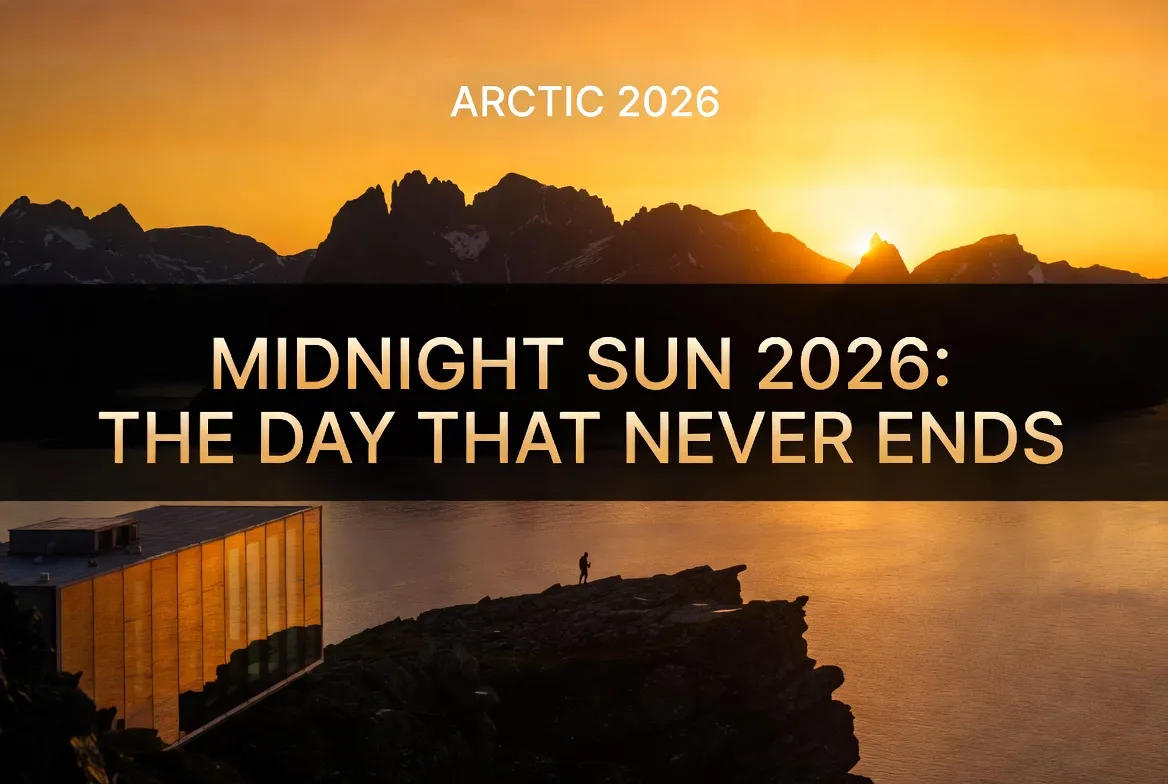
Midnight Sun: Experiencing 24 Hours of Daylight in Summer 2026
The Midnight Sun is one of nature's most extraordinary phenomena—a period during summer months when the sun remains visible for 24 hours a day, never dipping below the horizon. For travelers seeking unforgettable experiences in 2026, witnessing the Midnight Sun offers a rare opportunity to explore stunning Arctic and sub-Arctic landscapes under continuous golden light, engage in unique outdoor activities at any hour, and connect with indigenous cultures that have celebrated this natural wonder for centuries.
This comprehensive guide explains everything you need to know about experiencing the Midnight Sun in summer 2026: where to go, when to visit, what activities to enjoy, how to prepare for continuous daylight, and practical tips for photography, sleep, and cultural immersion. Whether you're planning a Nordic adventure, an Alaskan expedition, or a Canadian Arctic journey, this article equips you to make the most of the world's most luminous travel experience.
WHAT IS THE MIDNIGHT SUN?
The Midnight Sun occurs in regions located within or near the Arctic Circle (66.5°N latitude) and Antarctic Circle during their respective summer solstices. Due to Earth's axial tilt, these polar regions experience periods when the sun remains above the horizon for 24 hours or more.
Key Facts:
- Geographic Range: Occurs north of the Arctic Circle (66.5°N) and south of the Antarctic Circle (66.5°S)
- Duration: Varies by latitude—from one day at the Arctic Circle to several months at the North Pole
- Peak Dates: Around June 21 (summer solstice) in the Northern Hemisphere; December 21 in the Southern Hemisphere
- Southern Hemisphere Note: Antarctic Midnight Sun experiences are limited to research stations and expedition cruises due to remote, uninhabited terrain
Why It Happens:
- Earth's 23.5-degree axial tilt causes polar regions to face the sun continuously during summer
- At the Arctic Circle, the sun grazes the horizon at midnight on the solstice
- Further north, the sun remains higher in the sky even at "midnight"
WHERE TO EXPERIENCE THE MIDNIGHT SUN IN 2026
Northern Hemisphere Destinations (Summer 2026):
1. NORWAY
Best Locations:
- Tromsø (69.6°N): Midnight Sun from May 20 to July 22
- North Cape (71.1°N): Europe's northernmost point; Midnight Sun May 14 to July 29
- Svalbard (78°N): Midnight Sun April 19 to August 23; true polar desert experience
- Lofoten Islands (68°N): Dramatic peaks and fishing villages under midnight light
Why Visit Norway:
- Well-developed tourism infrastructure
- Rich Sami indigenous culture
- Excellent hiking, fishing, and wildlife viewing
- Northern Lights visible in shoulder seasons
2. SWEDEN
Best Locations:
- Abisko (68.4°N): Famous for clear skies; Midnight Sun May 20 to July 22
- Kiruna (67.9°N): Sweden's northernmost town; gateway to Lapland
- Jokkmokk (66.6°N): Traditional Sami markets and Arctic experiences
Why Visit Sweden:
- Abisko National Park offers exceptional stargazing despite midnight sun
- Icehotel in Jukkasjärvi (open year-round with summer activities)
- Excellent train connections via Arctic Circle Railway
3. FINLAND
Best Locations:
- Rovaniemi (66.5°N): Official hometown of Santa Claus; Arctic Circle marker
- Saariselkä (68.4°N): Fell hiking and glass igloo accommodations
- Utsjoki (69.9°N): Finland's northernmost municipality; authentic Sami culture
Why Visit Finland:
- Unique glass igloo accommodations for midnight sun viewing
- Sauna culture combined with Arctic experiences
- Excellent infrastructure for families and accessibility
4. ICELAND
Best Locations:
- Entire country experiences near-midnight sun (just south of Arctic Circle)
- Reykjavik (64.1°N): Sun sets briefly but twilight lasts all night in June
- Akureyri (65.7°N): Northern Iceland hub with extended daylight
- Westfjords and Highlands: Remote areas with minimal light pollution
Why Visit Iceland:
- Midnight Sun combined with geothermal lagoons, waterfalls, and volcanoes
- Ring Road makes self-drive exploration easy
- No true darkness in June allows flexible activity scheduling
5. ALASKA, USA
Best Locations:
- Fairbanks (64.8°N): Midnight Sun from May 17 to July 27; "Golden Heart City"
- Utqiagvik (Barrow, 71.3°N): Northernmost U.S. community; Midnight Sun May 10 to August 2
- Denali National Park: Wildlife viewing under continuous daylight
- Arctic Circle crossings via Dalton Highway
Why Visit Alaska:
- Dramatic wilderness and wildlife (bears, moose, caribou)
- Indigenous Athabascan and Inupiat cultural experiences
- Flightseeing and glacier tours under midnight light
6. CANADA
Best Locations:
- Yellowknife, Northwest Territories (62.4°N): Midnight Sun May 20 to July 22
- Inuvik (68.3°N): "Midnight Sun Festival" in June; northernmost Canadian town with road access
- Iqaluit, Nunavut (63.7°N): Inuit culture and Arctic landscapes
- Yukon Territory: Dawson City and Tombstone Territorial Park
Why Visit Canada:
- Authentic Indigenous experiences (First Nations, Inuit, Métis)
- Pristine wilderness with minimal light pollution
- Unique festivals celebrating the Midnight Sun
7. GREENLAND (Denmark)
Best Locations:
- Ilulissat (69.2°N): UNESCO World Heritage icefjord; Midnight Sun late May to late July
- Kangerlussuaq (67.0°N): Gateway to ice sheet and wildlife
- Nuuk (64.2°N): Capital city with midnight twilight experiences
Why Visit Greenland:
- Spectacular icebergs and glacier calving under midnight light
- Dog sledding on summer snowfields
- Remote, uncrowded Arctic experience
BEST TIMES TO VISIT IN SUMMER 2026
Northern Hemisphere Midnight Sun Calendar 2026:
Location | Latitude | Midnight Sun Period | Peak Experience
---|---|---|---
Svalbard, Norway | 78°N | April 19 - August 23 | June 21 (24h sun at 35° elevation)
North Cape, Norway | 71.1°N | May 14 - July 29 | June 21 (sun 12° above horizon at midnight)
Tromsø, Norway | 69.6°N | May 20 - July 22 | June 15-25 (optimal weather + light)
Fairbanks, Alaska | 64.8°N | May 17 - July 27 | June 10-30 (warmest + longest days)
Rovaniemi, Finland | 66.5°N | June 6 - July 7 | June 21 (sun touches horizon at midnight)
Reykjavik, Iceland | 64.1°N | No true midnight sun | June 15-25 (civil twilight all night)
Yellowknife, Canada | 62.4°N | May 20 - July 22 | June 15-25 (clear skies likely)
Planning Tips:
- Book accommodations 6-12 months ahead for popular destinations (Tromsø, Rovaniemi, Fairbanks)
- June offers warmest temperatures; July has more stable weather in some regions
- Late May/early August provide Midnight Sun with fewer crowds
- Check local festival dates (e.g., Midnight Sun Festival in Inuvik, June 20-22, 2026)
ACTIVITIES TO ENJOY UNDER THE MIDNIGHT SUN
Outdoor Adventures:
- Hiking and Trekking: Explore trails at any hour without headlamps; popular routes include Tromsø's Lyngen Alps, Abisko's Kungsleden, and Denali's backcountry
- Wildlife Viewing: Continuous daylight increases animal activity; spot reindeer, moose, Arctic foxes, whales, and seabirds
- Fishing: Midnight fishing for Arctic char, salmon, or halibut under surreal lighting
- Kayaking and Canoeing: Paddle calm Arctic waters with 24-hour visibility
- Cycling: Bike the Arctic Circle route or coastal roads with endless daylight
- Golf: Play a round at midnight at courses like Alaskan Midnight Sun Golf Classic
Cultural Experiences:
- Sami Indigenous Culture: Visit reindeer herding communities in Norway, Sweden, or Finland; learn about traditional joik singing and duodji crafts
- Midnight Sun Festivals: Celebrate with local communities through music, dance, and traditional foods
- Photography Workshops: Join guided sessions focused on capturing golden-hour light that lasts all night
- Indigenous Storytelling: Listen to elders share legends about the sun that never sets
Unique Midnight Sun Activities:
- Midnight Golf Tournaments: Play under the sun at 12 AM in Fairbanks or Tromsø
- Midnight Marathons: Run races that start at midnight under full daylight
- Midnight Sauna and Swim: Experience Finnish sauna culture followed by a dip in Arctic waters
- Midnight Photography: Capture landscapes, wildlife, and cultural moments in ethereal light
- Midnight Fishing Derbies: Join local competitions that embrace the 24-hour daylight
PHOTOGRAPHY TIPS FOR MIDNIGHT SUN
Equipment Recommendations:
- Camera: DSLR or mirrorless with manual controls for exposure flexibility
- Lenses: Wide-angle (16-35mm) for landscapes; telephoto (70-200mm) for wildlife
- Filters: Neutral density (ND) filters to manage bright conditions; polarizing filter to reduce glare
- Tripod: Essential for long exposures and stability in windy conditions
- Extra Batteries: Cold temperatures drain batteries faster; carry spares kept warm
Technical Settings:
- Exposure: Use manual mode; start with ISO 100-400, f/8-f/11, shutter speed 1/125-1/500
- White Balance: Set to "Daylight" or "Cloudy" to maintain warm golden tones
- Long Exposures: Use ND filters for silky water effects or cloud movement
- Golden Hour All Night: The sun's low angle creates soft, directional light 24/7—use it to your advantage
Composition Ideas:
- Silhouettes: Use the low sun to create dramatic silhouettes of landscapes or people
- Reflections: Capture mountains or aurora-like colors in lakes and fjords
- Wildlife in Soft Light: Photograph animals without harsh midday shadows
- Cultural Portraits: Document indigenous communities in flattering, even lighting
- Time-Lapses: Record the sun's circular path across the sky over hours
PRACTICAL TRAVEL PREPARATION
Packing Essentials:
- Sleep Mask: Critical for blocking continuous daylight and maintaining sleep cycles
- Sunglasses: Polarized lenses reduce glare from water, snow, and low-angle sun
- Layered Clothing: Arctic weather changes rapidly; pack moisture-wicking base layers, insulating mid-layers, and waterproof outer shells
- Sunscreen (SPF 50+): UV exposure is high despite cool temperatures; reapply frequently
- Insect Repellent: Mosquitoes and midges thrive in Arctic summer; bring strong repellent
- Reusable Water Bottle: Stay hydrated during extended outdoor activities
Health and Wellness Considerations:
- Sleep Management:
- Use blackout curtains or sleep masks consistently
- Maintain regular sleep/wake schedules despite continuous daylight
- Limit caffeine and screen time before intended sleep periods
- Consider melatonin supplements (consult physician first)
- Sun Protection:
- Apply sunscreen every 2 hours, even on cloudy days
- Wear hats and UV-protective clothing
- Protect eyes with quality sunglasses to prevent photokeratitis
- Circadian Rhythm Adjustment:
- Allow 2-3 days to adapt to continuous daylight
- Use meal times and activity schedules to anchor your body clock
- Seek brief periods of darkness (eye masks, dim rooms) if feeling disoriented
Transportation and Logistics:
- Flights: Major gateways include Oslo (Norway), Stockholm (Sweden), Helsinki (Finland), Reykjavik (Iceland), Anchorage (Alaska), Yellowknife (Canada)
- Ground Transport: Rent cars for flexibility; book early for summer season. Train options include Norway's Nordland Railway and Sweden's Arctic Circle line
- Local Tours: Book guided activities in advance, especially for wildlife viewing or indigenous cultural experiences
- Connectivity: Mobile coverage varies; download offline maps and translation apps. Satellite communicators recommended for remote areas
CULTURAL SENSITIVITY AND RESPONSIBLE TOURISM
Respecting Indigenous Communities:
- Seek Permission: Always ask before photographing people, homes, or cultural ceremonies
- Support Authentic Experiences: Choose tours operated by indigenous communities rather than third-party operators
- Learn Basic Phrases: Simple greetings in Sami, Inuktitut, or other local languages show respect
- Purchase Ethically: Buy crafts directly from artisans; avoid mass-produced souvenirs
Environmental Stewardship:
- Follow Leave No Trace Principles: Pack out all waste, stay on marked trails, respect wildlife distances
- Minimize Light Pollution: Use red-light headlamps at night to preserve dark skies for others
- Support Conservation: Choose operators committed to sustainable practices and habitat protection
- Reduce Carbon Footprint: Offset flight emissions; use public transport where possible
Cultural Learning Opportunities:
- Attend Community Events: Participate in local festivals, markets, or storytelling sessions
- Visit Cultural Centers: Learn about Arctic history and contemporary indigenous life at museums and heritage sites
- Engage with Guides: Ask questions respectfully; listen to stories about living with the Midnight Sun
SAMPLE ITINERARIES FOR SUMMER 2026
7-Day Norway Midnight Sun Adventure:
Day 1: Arrive Tromsø; evening city tour under midnight light
Day 2: Fjord cruise and wildlife spotting; midnight photography workshop
Day 3: Sami cultural experience: reindeer herding, traditional meals, joik singing
Day 4: Hike in Lyngen Alps; midnight picnic with panoramic views
Day 5: Drive to North Cape; visit Europe's northernmost point at midnight
Day 6: Return to Tromsø; midnight kayak tour or city exploration
Day 7: Departure or extend to Lofoten Islands
5-Day Alaska Midnight Sun Experience:
Day 1: Arrive Fairbanks; midnight city tour and Chena River cruise
Day 2: Denali National Park day trip; wildlife viewing under continuous daylight
Day 3: Arctic Circle crossing via Dalton Highway; midnight solstice celebration
Day 4: Cultural visit to Athabascan village; traditional crafts and storytelling
Day 5: Midnight golf or fishing; departure
10-Day Nordic Circle Journey (Norway/Sweden/Finland):
Days 1-3: Tromsø, Norway: Midnight sun activities and Sami culture
Days 4-6: Abisko/Kiruna, Sweden: Hiking, photography, Icehotel visit
Days 7-9: Rovaniemi/Saariselkä, Finland: Glass igloos, sauna culture, Arctic adventures
Day 10: Departure from Helsinki or extend to Iceland
FREQUENTLY ASKED QUESTIONS
Q: Can I see the Northern Lights during Midnight Sun season?
A: No. The Northern Lights (aurora borealis) require darkness to be visible. The Midnight Sun and Northern Lights are opposite phenomena—visit in September-March for auroras, May-July for midnight sun.
Q: Will I be able to sleep with 24 hours of daylight?
A: Most people adapt within 2-3 days. Use blackout curtains, sleep masks, and maintain consistent sleep schedules. Many hotels in Arctic regions are equipped for midnight sun guests.
Q: Is it safe to hike or drive at midnight under the Midnight Sun?
A: Yes, visibility is excellent. However, Arctic weather can change rapidly. Always check forecasts, carry appropriate gear, and inform others of your plans. Wildlife may be more active at "night."
Q: Do I need special visas for Arctic destinations?
A: Visa requirements depend on your nationality and destination countries. Norway, Sweden, Finland, and Iceland are part of the Schengen Area; Alaska is U.S. territory; Canada has separate requirements. Check official government sources before travel.
Q: What if I get disoriented by continuous daylight?
A: This is common initially. Stick to routines, use sleep aids like masks, and limit stimulants. If symptoms persist, consult a medical professional. Most travelers adapt quickly.
Q: Can I experience the Midnight Sun without traveling to the Arctic Circle?
A: Locations just south of the Arctic Circle (e.g., Reykjavik, Iceland) experience extended twilight but not true 24-hour sun. For the full phenomenon, travel north of 66.5°N latitude.
Q: Are there age restrictions for Midnight Sun activities?
A: Most activities accommodate all ages. However, remote expeditions or strenuous hikes may have fitness requirements. Family-friendly options abound in most destinations.
Q: What's the difference between Midnight Sun and White Nights?
A: Midnight Sun = sun remains above horizon 24/7 (true polar regions). White Nights = sun dips just below horizon but twilight lasts all night (sub-Arctic regions like St. Petersburg, Reykjavik).
SUSTAINABLE MIDNIGHT SUN TOURISM
Supporting Local Communities:
- Choose locally-owned accommodations, guides, and restaurants
- Participate in community-based tourism initiatives
- Respect local customs and seek permission for cultural documentation
Minimizing Environmental Impact:
- Use established trails and campsites to protect fragile tundra ecosystems
- Avoid disturbing wildlife, especially during breeding seasons
- Pack out all waste; Arctic environments decompose trash extremely slowly
Climate Change Awareness:
- The Arctic is warming faster than any other region on Earth
- Choose operators committed to carbon reduction and conservation
- Consider offsetting travel emissions through verified programs
CONCLUSION: EMBRACING THE LIGHT THAT NEVER ENDS
Experiencing the Midnight Sun in summer 2026 offers more than just a travel novelty—it's an opportunity to witness one of Earth's most awe-inspiring natural phenomena, connect with resilient cultures that have thrived in polar environments for millennia, and rediscover the simple joy of endless daylight.
Whether you're hiking Arctic trails at 2 AM, sharing stories with Sami elders under the midnight sun, or simply sitting in quiet wonder as the sun circles the sky without setting, the Midnight Sun invites you to slow down, observe deeply, and appreciate the extraordinary rhythms of our planet.
As you plan your journey, remember that the Midnight Sun is not just a spectacle to photograph—it's an invitation to experience time, light, and place in entirely new ways. Pack your sense of wonder along with your sleep mask, respect the lands and cultures you visit, and allow the endless daylight to illuminate not just the landscape, but your perspective on the world.
The sun won't set. Your adventure doesn't have to either.
Disclaimer: This guide provides general information about experiencing the Midnight Sun in summer 2026. Travel conditions, visa requirements, and local regulations are subject to change. Always verify current information through official government tourism websites, embassies, and reputable tour operators before traveling. Individual health considerations vary; consult medical professionals regarding sleep, sun exposure, and travel preparations.
0 Comments