.webp)
.webp)
Russia Travel Insurance: Why You Need Medical Coverage for Remote Siberian Regions in 2026
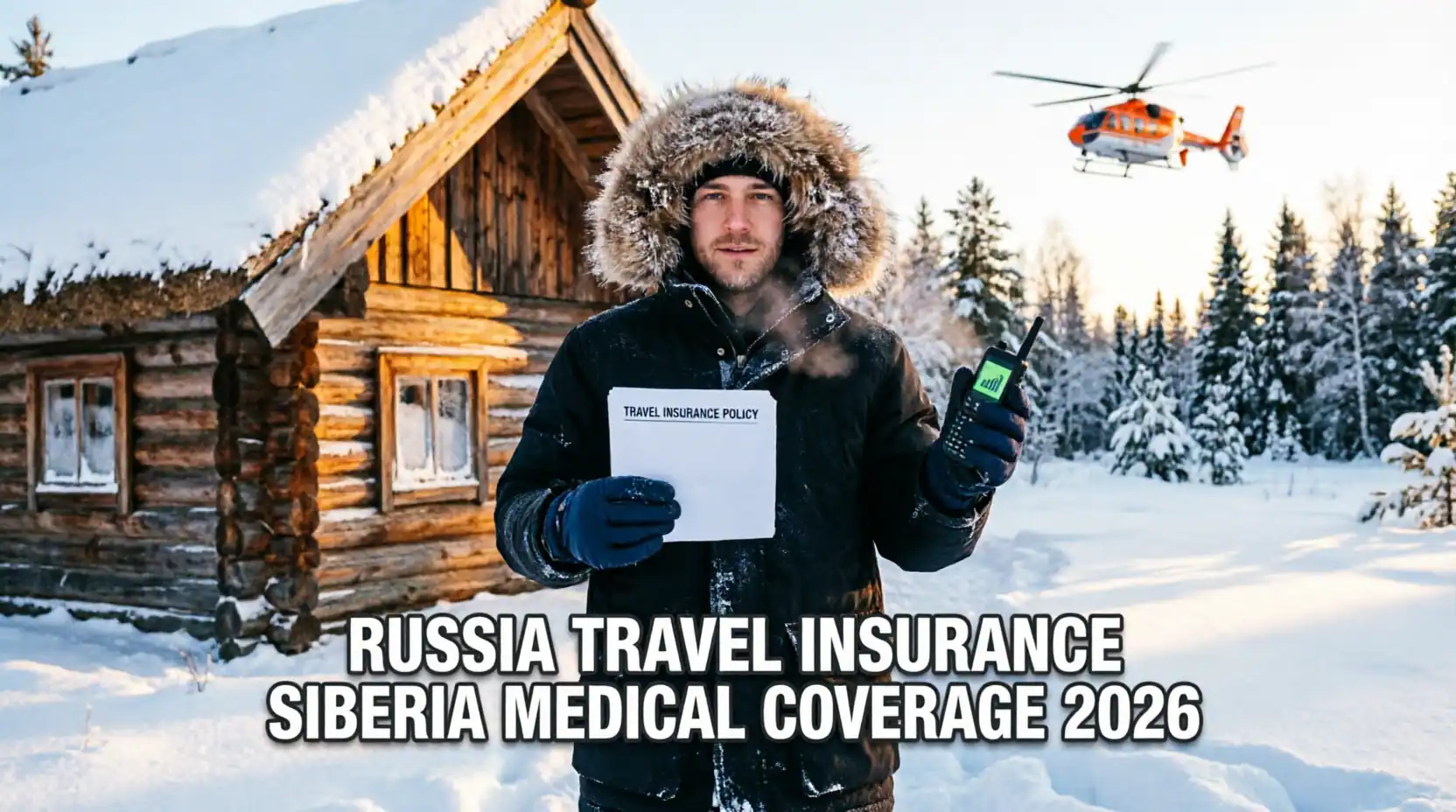
Understanding the Critical Need for Travel Insurance in Russia
Traveling to Russia, particularly to its vast and remote Siberian regions, represents one of the world's most rewarding yet logistically challenging adventures. From the pristine wilderness of Lake Baikal to the Arctic landscapes of Yakutia, from the Trans-Siberian Railway's endless horizons to the indigenous communities of the Far North, Siberia offers experiences unavailable anywhere else on Earth. However, these extraordinary destinations also present unique health and safety considerations that make comprehensive travel insurance with robust medical coverage not merely advisable but absolutely essential for responsible travel planning in 2026.
Russia's healthcare system, while adequate in major cities like Moscow and St. Petersburg, varies dramatically in quality and accessibility across the country's eleven time zones. In remote Siberian regions, medical facilities may be limited to small clinics with basic capabilities, specialized treatments often require transport to regional centers hundreds of kilometers away, and emergency evacuation to advanced medical facilities can involve complex logistics including helicopter transport, charter flights, or multi-day ground journeys. For international travelers including US citizens and Bangladeshi visitors, these realities create significant financial and health risks that only comprehensive travel insurance can adequately mitigate.
This comprehensive guide explores why medical coverage for remote Siberian travel deserves special attention, examines the specific risks travelers face in Russia's wilderness regions, explains essential insurance policy features to prioritize, and provides practical strategies for selecting and utilizing travel insurance that truly protects your health and investment when exploring Russia's most remote destinations in 2026.
The Unique Medical Challenges of Siberian Travel

Siberia's extraordinary geography creates medical challenges fundamentally different from urban Russian travel or destinations in more developed regions. Spanning approximately thirteen million square kilometers, Siberia encompasses diverse environments from Arctic tundra to temperate forests, from high mountain ranges to vast steppes, each presenting distinct health risks and logistical complications for travelers requiring medical care.
Extreme weather conditions represent one of Siberia's most significant health challenges. Winter temperatures in regions like Yakutia can plummet below minus fifty degrees Celsius, creating risks of frostbite, hypothermia, and cold-related injuries that require immediate specialized treatment. Summer brings its own challenges including intense mosquito populations that can transmit diseases, rapid weather changes that trap travelers in remote areas, and limited daylight in northern regions that complicates emergency response timing.
Limited Medical Infrastructure in Remote Areas
While major Siberian cities like Novosibirsk, Irkutsk, and Khabarovsk maintain hospitals with capabilities comparable to regional centers elsewhere, smaller towns and rural communities often have only basic medical clinics staffed by general practitioners with limited diagnostic equipment and medication supplies. Specialized care including surgery, intensive care, advanced imaging, or treatment for complex conditions typically requires transfer to larger facilities, which may be hundreds of kilometers distant.
For travelers experiencing medical emergencies in remote locations, the time required to reach appropriate care can extend from hours to days depending on weather conditions, transportation availability, and the nature of the medical issue. A simple injury that would receive immediate attention in urban settings may become serious if evacuation is delayed by blizzard conditions, mechanical failures, or limited aircraft availability in sparsely populated regions.
Language and Communication Barriers
Medical care in remote Siberian regions often involves significant language barriers for international travelers. While healthcare workers in major cities may speak some English, rural clinics frequently staff personnel with limited or no English proficiency. This communication gap can complicate diagnosis, treatment explanations, medication instructions, and coordination of evacuation efforts, potentially affecting care quality and traveler understanding of their medical situation.
Comprehensive travel insurance policies that include multilingual assistance services prove invaluable in these circumstances. Professional medical coordinators who speak both English and Russian can facilitate communication between travelers and local healthcare providers, ensure accurate transmission of medical information, and coordinate complex logistics that travelers cannot manage independently while dealing with health concerns.
Essential Insurance Coverage Features for Siberian Travel

Selecting appropriate travel insurance for remote Siberian travel requires understanding which policy features address the specific risks of these destinations. Not all travel insurance policies provide adequate protection for wilderness travel, and standard policies designed for urban tourism may exclude or limit coverage for the scenarios most likely to occur in Siberia's remote regions.
Emergency medical evacuation represents the single most critical coverage element for Siberian travel. This benefit covers the cost of transporting injured or ill travelers from remote locations to appropriate medical facilities, which in Siberia may involve helicopter rescue, charter aircraft, specialized ground ambulances, or combinations of these transport modes. Evacuation costs in remote Russia can easily exceed fifty thousand USD for complex rescues, making adequate coverage limits essential.
Medical Expense Coverage: Adequate Limits and Scope
Beyond evacuation, comprehensive medical expense coverage addresses costs of treatment at local facilities, medications, physician services, hospital stays, and follow-up care. For Siberian travel, policy limits of at least one hundred thousand USD provide meaningful protection, though higher limits offer greater security for serious conditions requiring extended treatment or multiple procedures.
Verify that policies cover pre-existing conditions if applicable, as many standard policies exclude medical issues that existed before travel. Some insurers offer waivers for pre-existing condition exclusions if policies are purchased within specified timeframes after initial trip payments, making early insurance procurement strategically valuable for travelers with health considerations.
Repatriation and Medical Return Coverage
Medical repatriation coverage addresses the cost of returning travelers to their home countries for continued treatment after stabilization in Russia. This benefit proves important for serious conditions requiring long-term care, specialized treatments unavailable locally, or traveler preference to recover near family and familiar healthcare systems.
Repatriation logistics in Siberia involve complex coordination including medical escort services, specialized transport equipment, and arrangements with receiving healthcare facilities. Insurance providers with experience in international medical cases manage these complexities more effectively than travelers attempting to arrange repatriation independently during medical crises.
Understanding Russia's Healthcare System for Travelers

Russia operates a mixed healthcare system combining state-funded facilities with private medical providers. Foreign travelers typically access private clinics in major cities or state facilities in remote areas, with payment structures and service expectations differing from healthcare systems in North America, Europe, or South Asia.
In urban centers, private hospitals and clinics cater to international patients with English-speaking staff, modern equipment, and payment systems accepting international credit cards. However, these facilities remain concentrated in major cities, with limited presence in Siberian regions outside a few key urban centers. Travelers in remote areas should not expect urban-level medical infrastructure regardless of insurance coverage.
Payment Practices and Insurance Coordination
Russian medical facilities often require payment at time of service, even for insured travelers. While comprehensive travel insurance reimburses covered expenses, travelers typically must pay upfront and submit claims for reimbursement after treatment. This payment model requires travelers to maintain access to sufficient funds for potential medical costs, even with insurance coverage.
Some premium travel insurance policies offer direct payment arrangements with network providers, eliminating the need for upfront payment. However, network coverage in remote Siberian regions remains limited, making direct payment arrangements less reliable for wilderness travel than for urban tourism. Travelers should prepare for upfront payment scenarios regardless of policy features.
Medication Availability and Prescription Considerations
Medication availability in Russia differs from other countries, with some pharmaceuticals common in the United States, Europe, or Bangladesh unavailable or requiring different prescription protocols. Travelers dependent on specific medications should carry adequate supplies for their entire journey plus emergency reserves, along with copies of prescriptions and physician letters explaining medical necessity.
Russian customs regulations require that medications be carried in original containers with prescription documentation. Some medications legal in other countries may be controlled substances in Russia, creating legal risks for travelers unaware of these distinctions. Research medication regulations before travel and consult insurance providers about coverage for medication replacement if supplies are lost or confiscated.
Specific Risks in Popular Siberian Destinations

Different Siberian destinations present distinct risk profiles that influence insurance needs. Understanding these variations helps travelers select coverage appropriate for their specific itineraries rather than relying on generic policy recommendations.
Lake Baikal: Adventure Activities and Seasonal Considerations
Lake Baikal, the world's deepest and oldest freshwater lake, attracts travelers for hiking, ice trekking, kayaking, and winter sports. These activities carry inherent injury risks that standard travel insurance policies may exclude unless specific adventure sports coverage is added. Verify that policies cover planned activities including ice climbing, dog sledding, or backcountry skiing if these feature in your Baikal itinerary.
Seasonal factors significantly impact Baikal travel risks. Winter ice conditions create hazards including thin ice areas, sudden weather changes, and extreme cold exposure. Summer brings mosquito-borne disease risks, water safety concerns for boating activities, and potential for travelers to become stranded by rapidly changing weather. Insurance policies should address these seasonal variations through comprehensive medical coverage regardless of activity type or weather conditions.
Trans-Siberian Railway: Medical Care During Extended Rail Travel
The Trans-Siberian Railway, spanning over nine thousand kilometers from Moscow to Vladivostok, presents unique medical considerations for travelers spending days or weeks aboard trains. While trains carry basic medical supplies and staff trained in first aid, serious medical issues require evacuation at the nearest station, which may be distant from appropriate medical facilities.
Travel insurance for Trans-Siberian journeys should cover medical evacuation from train routes, treatment at stations along the route, and potential trip interruption benefits if medical issues require abandoning planned itineraries. Policies that cover trip delays and cancellations due to medical emergencies provide valuable protection for travelers with complex, multi-stop rail itineraries.
Arctic and Far North Regions: Extreme Environment Medical Risks
Travel to Arctic regions of Siberia including Yakutia, the Taymyr Peninsula, or Chukotka involves exposure to some of Earth's most extreme environments. Medical risks include severe cold injuries, limited evacuation options due to weather-dependent air transport, and minimal local medical infrastructure in indigenous communities and research stations.
Insurance for Arctic Siberian travel requires particularly robust evacuation coverage, as helicopter rescue operations in polar conditions involve specialized equipment and expertise commanding premium costs. Policies should explicitly cover polar region travel, as some standard policies exclude coverage above certain latitudes or in designated extreme environment zones.
Selecting the Right Insurance Policy for Siberian Travel

Choosing appropriate travel insurance for remote Siberian travel requires careful evaluation of policy terms, coverage limits, exclusions, and provider capabilities. Not all travel insurance products offer adequate protection for wilderness destinations, and price alone rarely indicates suitability for complex travel scenarios.
Begin by identifying policies specifically designed for adventure travel, remote destinations, or international medical coverage rather than basic trip cancellation policies. Reputable providers specializing in international travel insurance typically offer more comprehensive coverage for complex scenarios than general travel insurance products marketed primarily for domestic or European tourism.
Key Policy Evaluation Criteria
When comparing policies, prioritize these essential features for Siberian travel: emergency medical evacuation coverage with limits of at least two hundred fifty thousand USD, medical expense coverage of one hundred thousand USD or more, 24/7 multilingual assistance services, coverage for adventure activities if applicable, and clear terms regarding pre-existing conditions and medication coverage.
Review exclusions carefully, as policies may exclude coverage for injuries sustained while under the influence of alcohol, participation in unauthorized activities, travel to regions under government advisories, or medical issues arising from failure to follow safety protocols. Understanding exclusions prevents unpleasant surprises when filing claims.
Provider Reputation and Claims Support
Insurance provider reputation matters significantly for international medical coverage. Research customer reviews focusing on claims processing experiences, responsiveness during emergencies, and effectiveness of assistance services. Providers with established networks in Russia and experience coordinating medical evacuations from remote regions offer more reliable support than companies lacking regional expertise.
Verify that providers offer 24/7 emergency assistance contacts accessible from Russia, including toll-free numbers or collect call options. Test contact procedures before travel to ensure you can reach assistance services when needed. Save emergency contact information in multiple formats including printed copies, digital files, and shared with travel companions or family members.
Practical Preparation Beyond Insurance Coverage

While comprehensive travel insurance provides crucial financial protection, responsible Siberian travel requires additional preparation that complements insurance coverage. These practical measures enhance safety, facilitate emergency response, and maximize the value of your insurance investment.
Carry comprehensive documentation including insurance policy details, emergency contact numbers, medical history summaries, medication lists with generic names, and copies of prescriptions. Store documents in multiple locations including physical copies in luggage, digital files on mobile devices, and shared copies with travel companions or family members at home.
Medical Preparedness and Self-Care Strategies
Assemble a comprehensive travel medical kit including basic first aid supplies, medications for common ailments, treatments for minor injuries, and personal prescription medications in adequate quantities. Include items specifically useful for Siberian conditions such as cold injury treatments, insect repellent for summer travel, and water purification supplies for remote areas.
Learn basic first aid skills before travel, including treatment for cold injuries, wound care, and recognition of symptoms requiring professional medical attention. While insurance covers professional care, self-care capabilities prevent minor issues from escalating and demonstrate responsible travel practices that insurers value.
Communication and Emergency Planning
Establish communication protocols for remote travel including satellite phone rental for areas without cellular coverage, regular check-in schedules with family or tour operators, and clear emergency action plans specifying who to contact and what information to provide in various scenarios.
Register with your country's travel registration program before departure, such as the US State Department's STEP program or equivalent services for other nationalities. These programs facilitate emergency communication and consular assistance if needed, complementing insurance coverage during crises.
Special Considerations for Bangladeshi Travelers to Siberia

Bangladeshi citizens planning Siberian travel face additional considerations beyond those affecting travelers from other regions. Understanding these factors helps ensure appropriate insurance selection and comprehensive preparation for remote Russian destinations.
Visa requirements for Russian travel include mandatory travel insurance documentation for Bangladeshi passport holders, with policies required to meet minimum coverage thresholds specified by Russian consular authorities. Verify that selected policies satisfy these requirements while also providing adequate coverage for Siberian travel risks.
Currency and Payment Considerations
Financial preparation for Siberian travel requires planning for limited access to international banking services in remote regions. Carry sufficient cash in convertible currencies for emergency expenses, as credit cards may not function in rural areas and ATMs remain scarce outside major towns.
Insurance premium payments and claim reimbursements may involve currency conversion considerations. Select policies with clear terms regarding payment currencies, reimbursement methods, and exchange rate calculations to avoid unexpected costs or delays in claim processing.
Cultural and Language Preparation
Language barriers in Siberian medical settings create additional challenges for Bangladeshi travelers who may not speak Russian or English fluently. Travel insurance with multilingual assistance services proves particularly valuable, as professional coordinators can bridge communication gaps between travelers and local healthcare providers.
Cultural preparation including understanding Russian healthcare practices, patient expectations, and communication norms enhances interactions with medical personnel and facilitates more effective care delivery. Research these considerations before travel and discuss them with insurance assistance providers when coordinating care.
Understanding Claims Processes and Documentation Requirements

Maximizing the value of travel insurance requires understanding how to file claims effectively and what documentation supports successful reimbursement. While no traveler hopes to use insurance benefits, preparedness for claims processes ensures smooth resolution if medical issues arise during Siberian travel.
Document all medical encounters thoroughly, obtaining itemized bills, diagnosis codes, treatment summaries, and physician contact information from every healthcare provider visited. Request documentation in English when possible, or arrange for translation services through insurance assistance providers if needed.
Timely Reporting and Communication
Report medical emergencies to insurance providers as soon as reasonably possible, ideally before or during treatment rather than after returning home. Early notification enables assistance services to coordinate care, verify coverage, and potentially arrange direct payment with providers, reducing out-of-pocket expenses and administrative burden.
Maintain records of all communications with insurance providers including dates, contact names, reference numbers, and summary of discussions. These records prove valuable if claim disputes arise or if additional documentation is requested during processing.
Common Claims Challenges and Solutions
Claims for remote area medical care sometimes encounter challenges including incomplete documentation, questions about medical necessity, or disputes regarding coverage scope. Prevent these issues by obtaining comprehensive documentation, clarifying coverage questions before travel, and working closely with insurance assistance services during medical events.
If claims are denied or disputed, utilize appeal processes provided by insurance policies. Many denials result from documentation gaps rather than coverage exclusions, and providing additional information often resolves disputes successfully. Persistence and thorough documentation typically yield positive outcomes for legitimate claims.
Conclusion: Investing in Peace of Mind for Siberian Adventures

Traveling to Siberia's remote regions offers extraordinary opportunities to experience some of Earth's most pristine wilderness, unique cultures, and unforgettable landscapes. However, these rewards come with inherent risks that comprehensive travel insurance with robust medical coverage helps manage responsibly. For US citizens, Bangladeshi travelers, and international visitors alike, investing in appropriate insurance represents not merely a bureaucratic requirement but a fundamental component of ethical and prepared adventure travel.
The costs of adequate travel insurance pale in comparison to the potential expenses of emergency medical evacuation, treatment for serious injuries, or trip interruptions due to health issues. More importantly, the peace of mind provided by comprehensive coverage enables travelers to focus on experiencing Siberia's wonders rather than worrying about worst-case scenarios.
As you plan your Siberian journey in 2026, prioritize travel insurance selection alongside itinerary planning, equipment preparation, and cultural research. Choose policies that specifically address the risks of remote Russian travel, verify coverage details before departure, and carry documentation that facilitates emergency response if needed. With thoughtful preparation and appropriate insurance protection, your Siberian adventure can deliver the transformative experiences these remarkable regions offer while maintaining the safety and security that responsible travel demands.
0 Comments