.webp)
.webp)
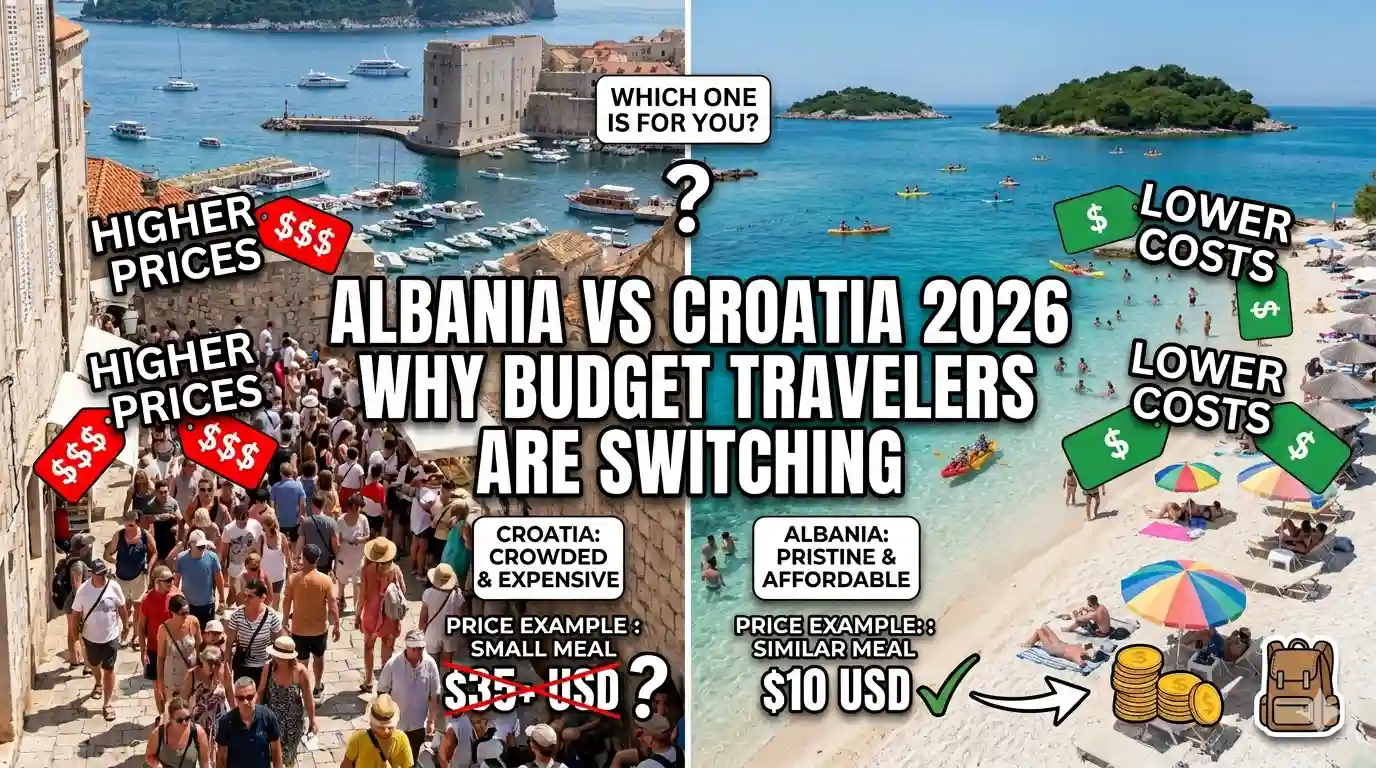
The Adriatic and Ionian coastlines have long been crown jewels of Mediterranean travel, but in 2026, a significant shift is underway. Budget-conscious travelers who once flocked exclusively to Croatia's stunning Dalmatian coast are increasingly turning south to Albania's pristine Riviera—and the numbers tell a compelling story. With Croatia's popularity driving prices to unprecedented heights and overtourism straining infrastructure, Albania emerges as the smart alternative offering comparable beauty at a fraction of the cost.
This coastal switch represents more than just budget travel trends; it reflects a fundamental recalibration of value in Mediterranean tourism. While Croatia's Dubrovnik, Split, and Hvar have become victims of their own success—with cruise ship crowds, inflated prices, and accommodation shortages—Albania's Sarandë, Ksamil, and Himarë remain refreshingly authentic, affordable, and accessible. Travelers are discovering that the Albanian Riviera delivers the same dramatic coastal scenery, crystal-clear waters, and historic charm as Croatia, but with prices that are 40-60% lower and crowds that haven't yet reached overwhelming levels.
This comprehensive comparison examines why 2026 marks a tipping point for budget travelers choosing between these two stunning Balkan coastlines. We'll analyze real costs for accommodation, dining, activities, and transportation; compare beach quality and tourist infrastructure; evaluate overtourism impacts; and provide practical insights to help you decide which destination deserves your 2026 vacation budget. Whether you're torn between Croatia's established reputation and Albania's emerging appeal, understanding these differences is essential for maximizing your Mediterranean adventure.
The Cost Reality: Albania vs. Croatia in 2026
The most immediate and compelling reason travelers are switching from Croatia to Albania is stark cost differences that have widened significantly in recent years.
Accommodation Costs: The Biggest Difference
Croatia (2026 Prices):
- Budget Hostels: €25-45/night for dorm beds in Split/Dubrovnik (up from €18-30 in 2019)
- Mid-Range Hotels: €120-250/night for 3-star properties in coastal cities
- Apartments/Vacation Rentals: €100-200/night for one-bedroom units in peak season
- Luxury Hotels: €300-600+/night for 4-5 star properties
- Peak Season Premium: July-August prices 50-100% higher than shoulder season
- 👉 Why Skyscanner Named Kaunas a Top 10 Trending Destination for 2026: A Deep Dive.
- 👉 7 Hidden Gems in Mavrovo National Park: Ultimate Hiking Guide
- 👉 Exploring Wood Churches Slovak Carpathians UNESCO Heritage Guide
Albania (2026 Prices):
- Budget Hostels: €10-20/night for dorm beds in Sarandë/Ksamil
- Mid-Range Hotels: €40-80/night for 3-star properties with sea views
- Apartments/Vacation Rentals: €30-60/night for one-bedroom units in peak season
- Luxury Hotels: €100-200/night for 4-5 star properties
- Peak Season Premium: July-August prices 20-40% higher than shoulder season
- 👉 Why Skyscanner Named Kaunas a Top 10 Trending Destination for 2026: A Deep Dive.
- 👉 7 Hidden Gems in Mavrovo National Park: Ultimate Hiking Guide
- 👉 Exploring Wood Churches Slovak Carpathians UNESCO Heritage Guide
The Bottom Line: Accommodation in Albania costs 50-70% less than comparable properties in Croatia. A mid-range traveler can stay in a beautiful sea-view apartment in Ksamil for €40/night versus €150/night for similar quality in Dubrovnik—a savings of €770 over a two-week trip.
Dining and Food Costs
Croatia:
- Budget Meal: €12-18 for pizza or fast food
- Mid-Range Restaurant: €25-40 per person for main course, drink, appetizer
- Fine Dining: €60-100+ per person
- Coffee: €2.50-4 for espresso
- Beer (local): €4-6 in restaurants, €2-3 in stores
- Groceries: Moderate; imported goods expensive
- 👉 Why Skyscanner Named Kaunas a Top 10 Trending Destination for 2026: A Deep Dive.
- 👉 7 Hidden Gems in Mavrovo National Park: Ultimate Hiking Guide
- 👉 Exploring Wood Churches Slovak Carpathians UNESCO Heritage Guide
Albania:
- Budget Meal: €4-7 for byrek, pizza, or quick bite
- Mid-Range Restaurant: €10-18 per person for main course, drink, appetizer
- Fine Dining: €25-40 per person
- Coffee: €1-1.50 for espresso
- Beer (local): €2-3 in restaurants, €1-1.50 in stores
- Groceries: Very affordable; local produce exceptionally cheap
- 👉 Why Skyscanner Named Kaunas a Top 10 Trending Destination for 2026: A Deep Dive.
- 👉 7 Hidden Gems in Mavrovo National Park: Ultimate Hiking Guide
- 👉 Exploring Wood Churches Slovak Carpathians UNESCO Heritage Guide
The Bottom Line: Dining in Albania costs 50-60% less than Croatia. A budget traveler can eat well for €15-20/day in Albania versus €35-50/day in Croatia. Over two weeks, that's a savings of €350-420 on food alone.
Activities and Entertainment
Croatia:
- City Walls (Dubrovnik): €35 per person
- Boat Tours: €50-100 for half-day excursions
- National Parks: €30-40 (Plitvice, Krka in peak season)
- Museum Entries: €10-15
- Beach Clubs: €15-30 for sunbed rentals
- Island Hopping: €60-120 per day
- 👉 Why Skyscanner Named Kaunas a Top 10 Trending Destination for 2026: A Deep Dive.
- 👉 7 Hidden Gems in Mavrovo National Park: Ultimate Hiking Guide
- 👉 Exploring Wood Churches Slovak Carpathians UNESCO Heritage Guide
Albania:
- Historical Sites: €3-7 (Butrint, Gjirokastër)
- Boat Tours: €20-40 for half-day excursions
- National Parks: €5-10 (Llogara, Theth)
- Museum Entries: €3-5
- Beach Access: Mostly free; some private beaches €5-10
- Day Trips: €25-50
- 👉 Why Skyscanner Named Kaunas a Top 10 Trending Destination for 2026: A Deep Dive.
- 👉 7 Hidden Gems in Mavrovo National Park: Ultimate Hiking Guide
- 👉 Exploring Wood Churches Slovak Carpathians UNESCO Heritage Guide
The Bottom Line: Activities in Albania cost 60-75% less than Croatia. Budget-conscious travelers can experience more for less, with savings of €300-500 over a two-week trip.
Transportation Costs
Getting There:
- Croatia: Flights to Dubrovnik/Split: €150-400 from major European cities; higher in peak season
- Albania: Flights to Tirana: €100-300; budget airlines increasingly serve Tirana
- Ground Transport: Bus from Tirana to Sarandë: €15-20; ferry from Corfu: €20-25
- 👉 Why Skyscanner Named Kaunas a Top 10 Trending Destination for 2026: A Deep Dive.
- 👉 7 Hidden Gems in Mavrovo National Park: Ultimate Hiking Guide
- 👉 Exploring Wood Churches Slovak Carpathians UNESCO Heritage Guide
Local Transportation:
- Croatia: Intercity buses: €15-30; ferries between islands: €10-25; car rental: €50-100/day
- Albania: Intercity buses (furgons): €5-15; taxis: very affordable; car rental: €25-50/day
- 👉 Why Skyscanner Named Kaunas a Top 10 Trending Destination for 2026: A Deep Dive.
- 👉 7 Hidden Gems in Mavrovo National Park: Ultimate Hiking Guide
- 👉 Exploring Wood Churches Slovak Carpathians UNESCO Heritage Guide
Total Trip Cost Comparison (14 Days, Mid-Range Traveler)
Croatia:
- Accommodation: €1,680 (€120/night average)
- Food: €560 (€40/day)
- Activities: €420 (€30/day)
- Transport: €350 (internal travel)
- Total: €3,010 (excluding flights)
- 👉 Why Skyscanner Named Kaunas a Top 10 Trending Destination for 2026: A Deep Dive.
- 👉 7 Hidden Gems in Mavrovo National Park: Ultimate Hiking Guide
- 👉 Exploring Wood Churches Slovak Carpathians UNESCO Heritage Guide
Albania:
- Accommodation: €700 (€50/night average)
- Food: €245 (€17.50/day)
- Activities: €140 (€10/day)
- Transport: €175 (internal travel)
- Total: €1,260 (excluding flights)
- 👉 Why Skyscanner Named Kaunas a Top 10 Trending Destination for 2026: A Deep Dive.
- 👉 7 Hidden Gems in Mavrovo National Park: Ultimate Hiking Guide
- 👉 Exploring Wood Churches Slovak Carpathians UNESCO Heritage Guide
Savings: €1,750 (58% cheaper)
This dramatic difference explains why budget travelers, digital nomads, and even mid-range tourists are reconsidering their Mediterranean plans in 2026.
Beach Quality and Coastal Beauty: Head-to-Head

Cost matters, but not if you're sacrificing the core experience. Let's examine whether Albania's beaches and coastline can truly compete with Croatia's renowned Adriatic shores.
Croatia's Coastal Strengths
What Croatia Offers:
- Crystal-Clear Waters: Adriatic Sea renowned for exceptional clarity and vibrant blue-green hues
- Diverse Coastline: Over 1,000 islands, dramatic cliffs, hidden coves, and pebble beaches
- Established Infrastructure: Well-maintained beaches, organized beach clubs, water sports facilities
- Iconic Destinations: Dubrovnik's old town beaches, Hvar's Pakleni Islands, Brač's Zlatni Rat, Korčula's charming coves
- Accessibility: Easy island-hopping via frequent ferries; coastal towns well-connected
- Water Quality: Consistently excellent; many Blue Flag beaches
- 👉 Why Skyscanner Named Kaunas a Top 10 Trending Destination for 2026: A Deep Dive.
- 👉 7 Hidden Gems in Mavrovo National Park: Ultimate Hiking Guide
- 👉 Exploring Wood Churches Slovak Carpathians UNESCO Heritage Guide
Croatia's Challenges:
- Crowds: Peak season beaches packed; finding space requires early arrival
- Cost: Beach club access, sunbed rentals, and water sports expensive
- Development: Some areas overdeveloped; natural beauty compromised by construction
- Pebble Beaches: Many beaches are rocky/pebbly rather than sandy (can be uncomfortable)
- 👉 Why Skyscanner Named Kaunas a Top 10 Trending Destination for 2026: A Deep Dive.
- 👉 7 Hidden Gems in Mavrovo National Park: Ultimate Hiking Guide
- 👉 Exploring Wood Churches Slovak Carpathians UNESCO Heritage Guide
Albania's Coastal Strengths
What Albania Offers:
- Pristine Beaches: Ksamil's white-sand beaches with turquoise waters rival Caribbean destinations
- Ionian Coast: Albanian Riviera features dramatic mountain-meets-sea scenery
- Undeveloped Charm: Many beaches remain uncommercialized; authentic atmosphere
- Stunning Locations: Ksamil, Sarandë, Himarë, Dhërmi, Palasë, Borsh
- Affordability: Beach access mostly free; sunbed rentals €5-10 versus €15-30 in Croatia
- Variety: Sandy beaches (rare in Croatia), pebble beaches, secluded coves
- Natural Beauty: Llogara Pass offers breathtaking coastal views; mountains plunge into sea
- 👉 Why Skyscanner Named Kaunas a Top 10 Trending Destination for 2026: A Deep Dive.
- 👉 7 Hidden Gems in Mavrovo National Park: Ultimate Hiking Guide
- 👉 Exploring Wood Churches Slovak Carpathians UNESCO Heritage Guide
Albania's Challenges:
- Infrastructure: Less developed than Croatia; fewer organized beach facilities
- Accessibility: Some beaches require 4WD or hiking to reach
- Services: Fewer water sports options; limited beach club amenities
- Development Issues: Some coastal areas experiencing unregulated construction
- Seasonality: Peak season (July-August) can be crowded in popular spots like Ksamil
- 👉 Why Skyscanner Named Kaunas a Top 10 Trending Destination for 2026: A Deep Dive.
- 👉 7 Hidden Gems in Mavrovo National Park: Ultimate Hiking Guide
- 👉 Exploring Wood Churches Slovak Carpathians UNESCO Heritage Guide
Beach Quality Comparison: The Verdict
Both destinations offer stunning coastal beauty, but with different characters:
- Water Clarity: Tie—both feature exceptionally clear, turquoise waters
- Beach Variety: Albania edges ahead with more sandy beaches; Croatia mostly pebble/rock
- Scenic Beauty: Tie—both offer dramatic mountain-coast landscapes
- Infrastructure: Croatia wins—more facilities, better maintenance
- Crowds: Albania wins—less crowded overall, though changing
- Cost: Albania wins decisively—free or cheap access versus expensive beach clubs
- Authenticity: Albania wins—less commercialized, more genuine local atmosphere
- 👉 Why Skyscanner Named Kaunas a Top 10 Trending Destination for 2026: A Deep Dive.
- 👉 7 Hidden Gems in Mavrovo National Park: Ultimate Hiking Guide
- 👉 Exploring Wood Churches Slovak Carpathians UNESCO Heritage Guide
Bottom Line: Albania's beaches match or exceed Croatia's in natural beauty while offering better value and fewer crowds. Croatia provides superior infrastructure but at premium prices and with mass tourism pressures.
Overtourism: Croatia's Crisis vs. Albania's Opportunity

One of the most significant factors driving the 2026 switch from Croatia to Albania is overtourism—a problem that has reached crisis levels in Croatia while Albania remains in a sweet spot of accessibility without overwhelming crowds.
Croatia's Overtourism Problem
The Scale:
- Dubrovnik: Receives over 1.5 million cruise ship passengers annually; old town (population ~1,000) can host 10,000+ day-trippers simultaneously
- Split: Cruise arrivals exceed 800,000 yearly; historic center overwhelmed in peak season
- Hvar: Small island (4,000 residents) receives 400,000+ visitors in summer months
- Plitvice Lakes: Capped at 10,000 daily visitors but still experiences severe crowding
- 👉 Why Skyscanner Named Kaunas a Top 10 Trending Destination for 2026: A Deep Dive.
- 👉 7 Hidden Gems in Mavrovo National Park: Ultimate Hiking Guide
- 👉 Exploring Wood Churches Slovak Carpathians UNESCO Heritage Guide
Impacts on Travelers:
- Crowds: Long lines for attractions, restaurants, beaches; difficulty enjoying experiences peacefully
- Prices: Demand-driven inflation; accommodation, dining, activities cost 2-3x off-season rates
- Availability: Accommodation books months in advance; last-minute travel nearly impossible
- Authenticity: Historic centers feel like theme parks; local culture displaced by tourism
- Infrastructure Strain: Public transport overcrowded; waste management challenged; water resources stressed
- 👉 Why Skyscanner Named Kaunas a Top 10 Trending Destination for 2026: A Deep Dive.
- 👉 7 Hidden Gems in Mavrovo National Park: Ultimate Hiking Guide
- 👉 Exploring Wood Churches Slovak Carpathians UNESCO Heritage Guide
Local Response:
- Dubrovnik implemented cruise ship caps and visitor limits
- Residents protest overtourism; some areas experiencing "tourismphobia"
- UNESCO threatening to revoke World Heritage status if crowds not managed
- Local businesses closing; replaced by tourist traps
- 👉 Why Skyscanner Named Kaunas a Top 10 Trending Destination for 2026: A Deep Dive.
- 👉 7 Hidden Gems in Mavrovo National Park: Ultimate Hiking Guide
- 👉 Exploring Wood Churches Slovak Carpathians UNESCO Heritage Guide
Albania's Current State
Tourism Levels:
- Overall Numbers: Albania received ~10 million visitors in 2024 (up from 3.4 million in 2019), but spread across entire country
- Ksamil: Most popular beach destination; crowded in July-August but manageable
- Sarandë: Growing rapidly but not yet overwhelmed
- Riviera Towns: Himarë, Dhërmi, Palasë remain relatively quiet
- 👉 Why Skyscanner Named Kaunas a Top 10 Trending Destination for 2026: A Deep Dive.
- 👉 7 Hidden Gems in Mavrovo National Park: Ultimate Hiking Guide
- 👉 Exploring Wood Churches Slovak Carpathians UNESCO Heritage Guide
Advantages for Travelers:
- Manageable Crowds: Can still find peaceful beaches and authentic experiences
- Availability: Accommodation books weeks ahead, not months; flexibility possible
- Reasonable Prices: Not yet subject to extreme demand inflation
- Authenticity: Local culture intact; residents welcoming rather than resentful
- Discovery: Sense of exploring emerging destination rather than checking off tourist boxes
- 👉 Why Skyscanner Named Kaunas a Top 10 Trending Destination for 2026: A Deep Dive.
- 👉 7 Hidden Gems in Mavrovo National Park: Ultimate Hiking Guide
- 👉 Exploring Wood Churches Slovak Carpathians UNESCO Heritage Guide
Warning Signs:
- Rapid development in Ksamil and Sarandë
- Some unregulated coastal construction
- Increasing prices year-over-year (though still far below Croatia)
- Growing cruise ship interest in Sarandë
- 👉 Why Skyscanner Named Kaunas a Top 10 Trending Destination for 2026: A Deep Dive.
- 👉 7 Hidden Gems in Mavrovo National Park: Ultimate Hiking Guide
- 👉 Exploring Wood Churches Slovak Carpathians UNESCO Heritage Guide
The Window of Opportunity:
Albania in 2026 represents a sweet spot: developed enough for comfortable travel with good infrastructure, but not yet overwhelmed by mass tourism. This window may close within 5-10 years if current growth continues, making 2026 an ideal time to visit before prices rise and crowds intensify.
Cultural Experiences: Authentic Albania vs. Touristy Croatia

Beyond beaches and budgets, cultural immersion differentiates these destinations significantly.
Croatia's Cultural Landscape
Strengths:
- UNESCO Sites: Dubrovnik Old Town, Split's Diocletian's Palace, Trogir, Šibenik
- Historic Architecture: Well-preserved medieval and Renaissance buildings
- Museums: Professional, well-funded cultural institutions
- Festivals: Dubrovnik Summer Festival, Ultra Europe, INmusic
- Cuisine: Excellent Mediterranean food; strong wine culture
- 👉 Why Skyscanner Named Kaunas a Top 10 Trending Destination for 2026: A Deep Dive.
- 👉 7 Hidden Gems in Mavrovo National Park: Ultimate Hiking Guide
- 👉 Exploring Wood Churches Slovak Carpathians UNESCO Heritage Guide
Challenges:
- Touristification: Historic centers dominated by souvenir shops, cruise-oriented businesses
- Local Displacement: Residents moving out of old towns; communities dissolving
- Authenticity Loss: Cultural experiences increasingly performed for tourists
- Seasonality: Many places feel dead in winter; overwhelming in summer
- 👉 Why Skyscanner Named Kaunas a Top 10 Trending Destination for 2026: A Deep Dive.
- 👉 7 Hidden Gems in Mavrovo National Park: Ultimate Hiking Guide
- 👉 Exploring Wood Churches Slovak Carpathians UNESCO Heritage Guide
Albania's Cultural Landscape
Strengths:
- Authenticity: Local life continues in historic centers; not yet displaced by tourism
- UNESCO Sites: Butrint (ancient ruins), Gjirokastër (Ottoman architecture), Berat (thousand-windowed city)
- Ottoman Heritage: Well-preserved Ottoman architecture in many towns
- Communist History: Unique historical perspective; bunkers, museums, sites
- Hospitality: Legendary Albanian "mikpritja" (hospitality); genuine warmth toward visitors
- Cuisine: Fresh, local, affordable; Mediterranean with Ottoman influences
- Living Culture: Traditional music, dance, crafts still practiced
- 👉 Why Skyscanner Named Kaunas a Top 10 Trending Destination for 2026: A Deep Dive.
- 👉 7 Hidden Gems in Mavrovo National Park: Ultimate Hiking Guide
- 👉 Exploring Wood Churches Slovak Carpathians UNESCO Heritage Guide
Challenges:
- Infrastructure: Some museums and sites need investment
- Information: Less English-language interpretation than Croatia
- Preservation: Some historic buildings in disrepair
- 👉 Why Skyscanner Named Kaunas a Top 10 Trending Destination for 2026: A Deep Dive.
- 👉 7 Hidden Gems in Mavrovo National Park: Ultimate Hiking Guide
- 👉 Exploring Wood Churches Slovak Carpathians UNESCO Heritage Guide
Cultural Comparison Verdict:
Albania offers more authentic cultural experiences in 2026, while Croatia provides more polished, accessible (but touristy) cultural attractions. Travelers seeking genuine interaction with local culture will find Albania more rewarding; those prioritizing convenience and professional presentation may prefer Croatia.
Infrastructure and Accessibility

Getting There
Croatia:
- Airports: Dubrovnik, Split, Zagreb, Zadar, Pula—excellent European connections
- Airlines: Major carriers plus Croatia Airlines; extensive route network
- From US: Direct flights to Zagreb from select cities; easy connections to coast
- Cruise Ships: Major Mediterranean cruise destination; many embark/disembark options
- 👉 Why Skyscanner Named Kaunas a Top 10 Trending Destination for 2026: A Deep Dive.
- 👉 7 Hidden Gems in Mavrovo National Park: Ultimate Hiking Guide
- 👉 Exploring Wood Churches Slovak Carpathians UNESCO Heritage Guide
Albania:
- Airports: Tirana (main); Corfu (Greece) + ferry to Sarandë alternative
- Airlines: Growing budget carrier presence (Wizz Air, Ryanair, easyJet)
- From US: No direct flights; connect via European hubs (Rome, Vienna, Istanbul)
- Cruise Ships: Sarandë increasingly on cruise itineraries; still limited
- 👉 Why Skyscanner Named Kaunas a Top 10 Trending Destination for 2026: A Deep Dive.
- 👉 7 Hidden Gems in Mavrovo National Park: Ultimate Hiking Guide
- 👉 Exploring Wood Churches Slovak Carpathians UNESCO Heritage Guide
Winner: Croatia—better air connectivity, more flight options
Getting Around
Croatia:
- Buses: Excellent network; frequent, comfortable, reliable
- Ferries: Extensive island network; Jadrolinija state ferry; private operators
- Car Rental: Widely available; good roads; expensive in peak season
- Trains: Limited coastal service; mainly inland
- 👉 Why Skyscanner Named Kaunas a Top 10 Trending Destination for 2026: A Deep Dive.
- 👉 7 Hidden Gems in Mavrovo National Park: Ultimate Hiking Guide
- 👉 Exploring Wood Churches Slovak Carpathians UNESCO Heritage Guide
Albania:
- Buses/Furgons: Extensive network; inexpensive; less comfortable; schedules flexible
- Ferries: Limited; mainly Corfu-Sarandë route
- Car Rental: Available; improving roads; mountain roads challenging
- Taxis: Affordable; widely available in cities
- 👉 Why Skyscanner Named Kaunas a Top 10 Trending Destination for 2026: A Deep Dive.
- 👉 7 Hidden Gems in Mavrovo National Park: Ultimate Hiking Guide
- 👉 Exploring Wood Churches Slovak Carpathians UNESCO Heritage Guide
Winner: Croatia—more reliable, comfortable, frequent transport
Tourist Infrastructure
Croatia:
- Accommodation: Extensive options from hostels to luxury resorts
- Restaurants: Wide variety; many English menus; high standards
- Tour Operators: Professional, numerous options
- Information: Excellent tourist offices; English widely spoken
- Healthcare: Good quality; EU health card accepted
- 👉 Why Skyscanner Named Kaunas a Top 10 Trending Destination for 2026: A Deep Dive.
- 👉 7 Hidden Gems in Mavrovo National Park: Ultimate Hiking Guide
- 👉 Exploring Wood Churches Slovak Carpathians UNESCO Heritage Guide
Albania:
- Accommodation: Growing options; quality improving rapidly
- Restaurants: Good local food; fewer international options; English menus increasing
- Tour Operators: Limited but expanding
- Information: Tourist offices developing; English spoken by younger people
- Healthcare: Basic care adequate; serious issues may require evacuation
- 👉 Why Skyscanner Named Kaunas a Top 10 Trending Destination for 2026: A Deep Dive.
- 👉 7 Hidden Gems in Mavrovo National Park: Ultimate Hiking Guide
- 👉 Exploring Wood Churches Slovak Carpathians UNESCO Heritage Guide
Winner: Croatia—more developed, reliable infrastructure
Practical Considerations for 2026 Travel

Best Time to Visit
Croatia:
- Peak Season: July-August—crowded, expensive, hot
- Shoulder Season: May-June, September-October—ideal weather, fewer crowds, moderate prices
- Off-Season: November-April—many businesses closed; mild weather; very quiet
- Recommendation: Late May-June or September for best balance
- 👉 Why Skyscanner Named Kaunas a Top 10 Trending Destination for 2026: A Deep Dive.
- 👉 7 Hidden Gems in Mavrovo National Park: Ultimate Hiking Guide
- 👉 Exploring Wood Churches Slovak Carpathians UNESCO Heritage Guide
Albania:
- Peak Season: July-August—warm, crowded in popular spots, highest prices
- Shoulder Season: May-June, September-October—perfect weather, fewer crowds, great prices
- Off-Season: November-April—mild coastal weather; some facilities closed
- Recommendation: June or September for optimal experience
- 👉 Why Skyscanner Named Kaunas a Top 10 Trending Destination for 2026: A Deep Dive.
- 👉 7 Hidden Gems in Mavrovo National Park: Ultimate Hiking Guide
- 👉 Exploring Wood Churches Slovak Carpathians UNESCO Heritage Guide
Visa Requirements
Croatia:
- EU member; Schengen Area (joined 2023)
- US/UK/Canadian/Australian citizens: 90 days visa-free within 180-day period
- ETIAS authorization required starting 2025 (€7 fee)
- 👉 Why Skyscanner Named Kaunas a Top 10 Trending Destination for 2026: A Deep Dive.
- 👉 7 Hidden Gems in Mavrovo National Park: Ultimate Hiking Guide
- 👉 Exploring Wood Churches Slovak Carpathians UNESCO Heritage Guide
Albania:
- Not EU or Schengen member
- US/UK/Canadian/Australian citizens: 90 days visa-free within 180-day period
- No ETIAS requirement (separate from Schengen)
- Easier for extended stays or multiple entries
- 👉 Why Skyscanner Named Kaunas a Top 10 Trending Destination for 2026: A Deep Dive.
- 👉 7 Hidden Gems in Mavrovo National Park: Ultimate Hiking Guide
- 👉 Exploring Wood Churches Slovak Carpathians UNESCO Heritage Guide
Currency and Payments
Croatia:
- Euro (€) since 2023
- Cards widely accepted
- ATMs readily available
- Generally more expensive
- 👉 Why Skyscanner Named Kaunas a Top 10 Trending Destination for 2026: A Deep Dive.
- 👉 7 Hidden Gems in Mavrovo National Park: Ultimate Hiking Guide
- 👉 Exploring Wood Churches Slovak Carpathians UNESCO Heritage Guide
Albania:
- Albanian Lek (ALL); some places accept euros
- Cards accepted in cities; cash essential in rural areas
- ATMs available in cities and larger towns
- Much more affordable overall
- 👉 Why Skyscanner Named Kaunas a Top 10 Trending Destination for 2026: A Deep Dive.
- 👉 7 Hidden Gems in Mavrovo National Park: Ultimate Hiking Guide
- 👉 Exploring Wood Churches Slovak Carpathians UNESCO Heritage Guide
Safety
Both Destinations:
- Very safe for tourists
- Low violent crime rates
- Petty theft exists in tourist areas (standard precautions apply)
- Political stability
- Croatia: EU safety standards
- Albania: Improving rapidly; generally very safe
- 👉 Why Skyscanner Named Kaunas a Top 10 Trending Destination for 2026: A Deep Dive.
- 👉 7 Hidden Gems in Mavrovo National Park: Ultimate Hiking Guide
- 👉 Exploring Wood Churches Slovak Carpathians UNESCO Heritage Guide
Who Should Choose Croatia in 2026?

Despite higher costs and crowds, Croatia remains the better choice for certain travelers:
- Luxury Travelers: Willing to pay premium for superior infrastructure and services
- First-Time Mediterranean Visitors: Prefer established, predictable destinations
- Island Hoppers: Want extensive ferry network and developed island tourism
- Cruise Passengers: Seeking convenient port access and organized excursions
- History Buffs: Prioritize UNESCO sites and well-preserved medieval architecture
- Short Trips: Limited time benefits from Croatia's efficient infrastructure
- Travelers with Mobility Issues: Need accessible facilities and reliable transport
- 👉 Why Skyscanner Named Kaunas a Top 10 Trending Destination for 2026: A Deep Dive.
- 👉 7 Hidden Gems in Mavrovo National Park: Ultimate Hiking Guide
- 👉 Exploring Wood Churches Slovak Carpathians UNESCO Heritage Guide
Who Should Choose Albania in 2026?

Albania is ideal for:
- Budget Travelers: Want maximum value and experiences per dollar
- Authenticity Seekers: Prefer genuine local culture over tourist performances
- Adventure Travelers: Enjoy exploring emerging destinations
- Digital Nomads: Seeking affordable long-term bases with good weather
- Beach Lovers: Want beautiful beaches without crowds or high prices
- Flexible Travelers: Comfortable with less predictability and infrastructure
- Repeat Mediterranean Visitors: Looking for something different from overcrowded hotspots
- Overland Travelers: Combining Albania with Greece, North Macedonia, Kosovo, Montenegro
- 👉 Why Skyscanner Named Kaunas a Top 10 Trending Destination for 2026: A Deep Dive.
- 👉 7 Hidden Gems in Mavrovo National Park: Ultimate Hiking Guide
- 👉 Exploring Wood Churches Slovak Carpathians UNESCO Heritage Guide
The Hybrid Approach: Best of Both Worlds

Many savvy travelers in 2026 are choosing to visit both countries, leveraging their proximity and complementary strengths:
Sample Itinerary (21 Days):
- Days 1-7: Croatia (Dubrovnik, Korčula, Hvar)—experience iconic Adriatic
- Days 8-14: Albania (Sarandë, Ksamil, Himarë, Berat)—enjoy affordable beaches and culture
- Days 15-21: Albania (Tirana, Shkodër, Albanian Alps)—explore mountains and capital
- 👉 Why Skyscanner Named Kaunas a Top 10 Trending Destination for 2026: A Deep Dive.
- 👉 7 Hidden Gems in Mavrovo National Park: Ultimate Hiking Guide
- 👉 Exploring Wood Churches Slovak Carpathians UNESCO Heritage Guide
Logistics:
- Fly into Dubrovnik, out of Tirana (or reverse)
- Bus from Dubrovnik to Tirana: ~8 hours, €25-35
- Or fly Dubrovnik to Tirana via connecting city
- Border crossings generally smooth for tourists
- 👉 Why Skyscanner Named Kaunas a Top 10 Trending Destination for 2026: A Deep Dive.
- 👉 7 Hidden Gems in Mavrovo National Park: Ultimate Hiking Guide
- 👉 Exploring Wood Churches Slovak Carpathians UNESCO Heritage Guide
Benefits:
- Experience both developed and emerging destinations
- Budget balance: splurge in Croatia, save in Albania
- Diverse landscapes: Croatian islands + Albanian mountains and coast
- Cultural variety: Central European + Balkan/Ottoman influences
- 👉 Why Skyscanner Named Kaunas a Top 10 Trending Destination for 2026: A Deep Dive.
- 👉 7 Hidden Gems in Mavrovo National Park: Ultimate Hiking Guide
- 👉 Exploring Wood Churches Slovak Carpathians UNESCO Heritage Guide
Frequently Asked Questions

Is Albania safer than Croatia?
Both countries are very safe for tourists. Violent crime against visitors is extremely rare in both destinations. Croatia has slightly lower petty crime rates due to more developed tourism policing, but Albania is generally very safe. Standard precautions (watching belongings, avoiding isolated areas at night) apply to both.
Can I use euros in Albania?
Some tourist-oriented businesses in Albania accept euros, but the official currency is the Albanian Lek (ALL). You'll get better value paying in Lek. Exchange money at banks or official exchange offices, or withdraw Lek from ATMs. Keep small denominations for easier transactions.
Is the Albanian Riviera as beautiful as Croatia's coast?
Yes, in many ways. The Albanian Riviera features equally stunning turquoise waters, dramatic mountain-meets-sea scenery, and pristine beaches. Ksamil's beaches rival anything in Croatia. The main differences: Albania has more sandy beaches, fewer crowds (for now), and significantly lower costs. Croatia offers more developed infrastructure and easier island-hopping.
How do I get from Croatia to Albania?
Options include:
- Bus: Direct buses from Dubrovnik to Tirana (~8 hours, €25-35); from Split to Tirana (~10 hours)
- Fly: No direct flights; connect via Vienna, Rome, or Istanbul
- Car: Drive via Montenegro (scenic but mountain roads); allow full day
- Ferry: No direct ferry; would need to go via Greece
- 👉 Why Skyscanner Named Kaunas a Top 10 Trending Destination for 2026: A Deep Dive.
- 👉 7 Hidden Gems in Mavrovo National Park: Ultimate Hiking Guide
- 👉 Exploring Wood Churches Slovak Carpathians UNESCO Heritage Guide
Is Albania ready for tourism in 2026?
Yes, Albania's tourism infrastructure has improved dramatically. Major coastal areas have good accommodation, restaurants, and transport. Tirana and Sarandë offer modern amenities. However, rural areas and some beaches remain less developed. If you're comfortable with some unpredictability and value authenticity over polish, Albania is absolutely ready for visitors.
Which is better for families: Croatia or Albania?
Croatia is better for families with young children due to superior infrastructure, reliable transport, abundant family-friendly activities, and easier logistics. Albania works well for adventurous families with older children who can handle less predictable conditions in exchange for authentic experiences and lower costs.
Will Albania become as expensive as Croatia?
Possibly eventually, but not soon. Albania's cost of living is fundamentally lower, and tourism development is still in growth phase. Realistically, Albania will remain 40-60% cheaper than Croatia for at least 5-10 years. However, popular areas like Ksamil are already experiencing price increases. Visit sooner rather than later for best value.
Do I need to speak Albanian or Croatian?
English is widely spoken in tourist areas of both countries, especially among younger people. In Croatia, you'll have no language issues. In Albania, English proficiency is high in Tirana and coastal areas; less so in remote regions. Learning basic phrases (hello, thank you, please) is appreciated in both countries.
Conclusion: Making Your 2026 Choice
The Albania versus Croatia decision for 2026 ultimately depends on your priorities, budget, and travel style. Both destinations offer stunning Mediterranean coastlines, rich history, warm hospitality, and unforgettable experiences. The key difference lies in where each country sits on the tourism development curve.
Choose Croatia if: You value convenience, reliability, and world-class infrastructure over cost. You're willing to pay premium prices for polished experiences, efficient transport, and extensive tourist services. You prioritize iconic destinations and don't mind crowds if it means accessing well-established attractions.
Choose Albania if: You're budget-conscious and want maximum value. You prefer authentic cultural experiences over tourist performances. You enjoy exploring emerging destinations before they become mainstream. You're comfortable with some unpredictability in exchange for lower prices, fewer crowds, and genuine local interactions.
The 2026 Reality: For budget-conscious travelers, the choice is increasingly clear. Albania delivers comparable natural beauty, rich culture, and warm hospitality at 40-60% lower costs than Croatia. While Croatia's infrastructure is superior, Albania's is developing rapidly and is entirely adequate for comfortable travel. The overtourism crisis affecting Croatia's most popular destinations makes Albania's relatively uncrowded beaches and towns even more appealing.
However, this window won't last forever. Albania is experiencing rapid tourism growth, and prices are rising year-over-year. The authentic, affordable Albania of 2026 may look very different in 2030. For travelers seeking the best combination of value, beauty, authenticity, and accessibility, 2026 represents an ideal time to discover Albania's Riviera before it follows Croatia's path toward mass tourism.
Whether you choose Croatia's polished perfection or Albania's emerging charm, both destinations offer extraordinary Mediterranean experiences. The question isn't which is objectively better—it's which aligns with your values, budget, and vision for your 2026 vacation.
Ready to explore the Adriatic and Ionian coasts? Start planning your 2026 Balkan adventure now, and discover why thousands of budget-conscious travelers are making the switch from Croatia to Albania.
0 Comments