.webp)
.webp)
Metropolitan Cathedral: A Stunning Example of Colonial Architecture
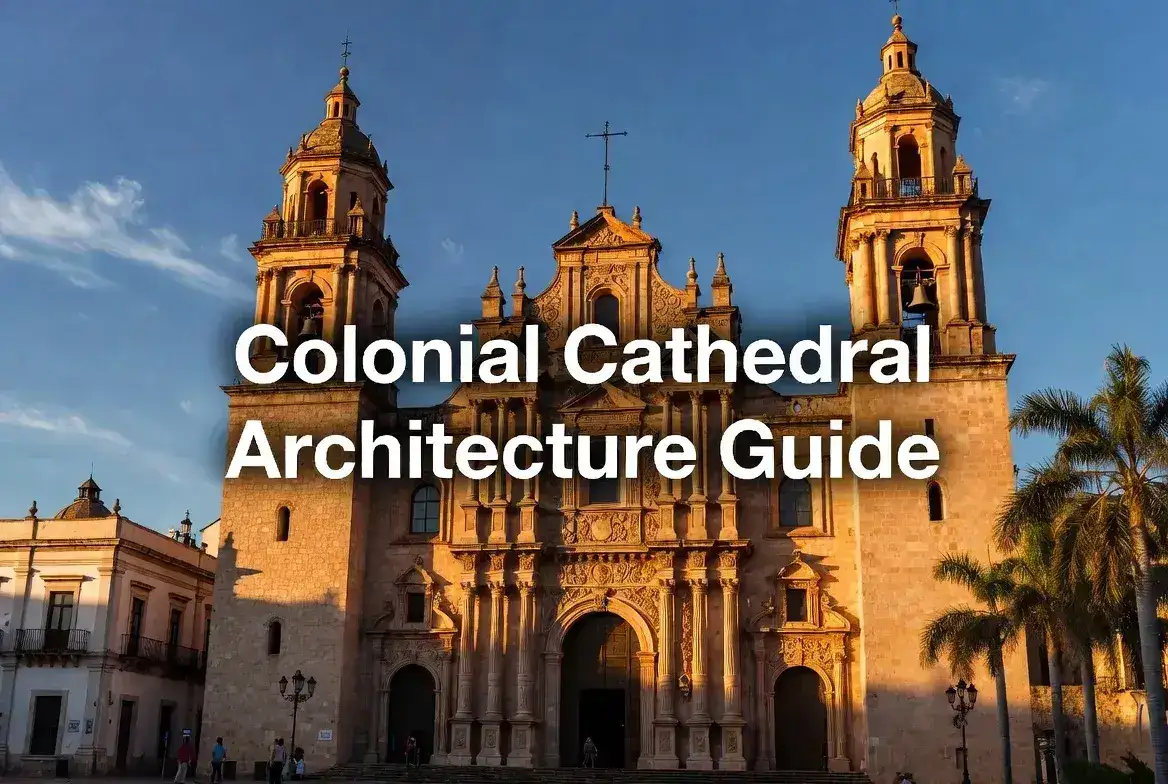
The Metropolitan Cathedral stands as one of the most magnificent expressions of colonial architecture in the Americas, a testament to the artistic vision, engineering ingenuity, and spiritual devotion that defined the Spanish colonial era. Rising majestically over the main plaza of Mexico City, this extraordinary edifice represents more than two centuries of construction, adaptation, and artistic evolution, blending Renaissance, baroque, and neoclassical styles into a harmonious whole that continues to inspire awe in visitors today. In 2026, as travelers seek meaningful connections to history and culture, the Metropolitan Cathedral offers an unparalleled opportunity to explore the rich legacy of colonial architecture, religious art, and urban planning that shaped Latin America.
This comprehensive guide invites you on a journey through the Metropolitan Cathedral's architectural splendor, exploring its historical context, design elements, artistic treasures, and ongoing preservation efforts. Whether you are an architecture enthusiast, a history buff, a religious pilgrim, or simply a curious traveler, this guide will help you appreciate the cathedral's significance as both a place of worship and a masterpiece of colonial craftsmanship. By approaching this magnificent structure with curiosity and respect, you will discover not just beautiful stones and intricate carvings but the human stories, cultural exchanges, and spiritual aspirations that brought this architectural marvel to life.
HISTORICAL CONTEXT: BUILDING A COLONIAL MASTERPIECE
Understanding the Metropolitan Cathedral requires appreciating the historical circumstances that shaped its creation. Construction began in 1573, just fifty-two years after the Spanish conquest of the Aztec Empire, on the site of the main temple of the Aztec capital Tenochtitlan. This deliberate placement symbolized the triumph of Christianity over indigenous religions and established the cathedral as the spiritual and political center of New Spain. The project spanned more than two hundred and forty years, with work continuing until 1813, reflecting the evolving artistic tastes, technical capabilities, and financial resources of the colonial period.
The cathedral's extended construction timeline allowed it to incorporate multiple architectural styles. The initial design, influenced by Spanish Renaissance principles, emphasized symmetry, proportion, and classical orders. As baroque aesthetics gained popularity in the seventeenth and eighteenth centuries, ornate decorative elements were added to the facade and interior. By the time construction concluded in the early nineteenth century, neoclassical influences had also left their mark, creating a unique architectural palimpsest that tells the story of colonial artistic evolution.
The cathedral was designed by prominent architects including Claudio de Arciniega, who established the basic plan, and later contributors such as Juan Gómez de Trasmonte and Lorenzo Rodríguez, who enriched the design with baroque flourishes. The project employed thousands of workers, including Spanish masters, indigenous craftsmen, and enslaved Africans, whose combined skills and labor created a building that represents both colonial oppression and cross-cultural artistic achievement.
The Metropolitan Cathedral served not only as a place of worship but also as a symbol of Spanish imperial power and Catholic evangelization. Its imposing presence on the Zocalo, Mexico City's main square, reinforced the authority of church and state while providing a focal point for civic and religious life. The cathedral hosted coronations, funerals, and celebrations that marked the history of New Spain and, later, independent Mexico.
ARCHITECTURAL FEATURES: EXPLORING THE COLONIAL DESIGN
The Metropolitan Cathedral's exterior presents a stunning display of colonial architectural artistry. The main facade, facing the Zocalo, showcases a harmonious blend of Renaissance order and baroque ornamentation. Twin bell towers, each rising approximately sixty-seven meters, frame the central entrance and create a powerful vertical emphasis that draws the eye upward. The towers feature multiple levels of arched openings, decorative pilasters, and sculptural elements that demonstrate the skill of colonial stone masons.
The central portal, known as the Puerta del Perdón, is adorned with intricate stone carvings depicting religious scenes, saints, and symbolic motifs. The use of tezontle, a porous volcanic stone native to the Valley of Mexico, combined with lighter chiluca stone, creates a striking visual contrast that enhances the facade's decorative details. The sculptural program includes representations of the Virgin Mary, apostles, and church fathers, arranged to convey theological messages to a largely illiterate colonial population.
Above the main entrance, the cathedral's dome rises as a defining feature of the skyline. Designed in the neoclassical style during the final phase of construction, the dome features a lantern that allows natural light to illuminate the interior. The dome's exterior is adorned with decorative elements that complement the baroque facade while introducing classical restraint, reflecting the stylistic transition of the late colonial period.
The cathedral's side facades, facing the Sagrario Metropolitano and the Archbishop's Palace, offer additional architectural interest. These elevations feature simpler designs that emphasize the building's massive scale and structural integrity. Buttresses, flying arches, and reinforced walls demonstrate the engineering solutions developed to support the cathedral's weight on the soft, lakebed soil of Mexico City.
INTERIOR SPLENDOR: SACRED ART AND ARCHITECTURAL SPACE
Stepping inside the Metropolitan Cathedral reveals a breathtaking interior that combines architectural grandeur with artistic richness. The nave, stretching approximately one hundred and ten meters in length, is flanked by side chapels and supported by massive columns that create a sense of verticality and spiritual aspiration. The vaulted ceiling, decorated with gold leaf and painted motifs, enhances the sense of divine presence and celestial harmony.
The main altar, a masterpiece of baroque artistry, features elaborate gilded carvings, religious statues, and paintings that depict scenes from the life of Christ and the Virgin Mary. The altarpiece, known as a retablo, demonstrates the skill of colonial craftsmen in working with wood, gold leaf, and polychrome techniques. The altar's hierarchical arrangement, with the most sacred elements positioned at the center and top, reflects Catholic liturgical traditions and theological priorities.
Side chapels dedicated to various saints and devotions line the cathedral's perimeter, each featuring unique artistic treatments and historical significance. The Chapel of the Kings, for example, houses the tombs of Spanish viceroys and features ornate baroque decoration. The Chapel of the Immaculate Conception showcases neoclassical design elements that contrast with the baroque main altar, illustrating the cathedral's stylistic evolution.
The cathedral's organ, one of the largest in Latin America, represents both musical and engineering achievement. Installed in the eighteenth century and restored in recent decades, the instrument features thousands of pipes and intricate mechanical actions that produce rich, resonant sound throughout the vast interior space. The organ's case, adorned with carved figures and decorative elements, is itself a work of art that complements the cathedral's architectural style.
Lighting plays a crucial role in the cathedral's interior experience. Natural light enters through high windows and the dome's lantern, creating dramatic effects that highlight architectural details and artistic treasures. Artificial lighting, carefully designed to preserve historic materials while enhancing visibility, allows visitors to appreciate the interior's beauty at all times of day.
ARTISTIC TREASURES: PAINTINGS, SCULPTURES, AND DECORATIVE ARTS
The Metropolitan Cathedral houses an extraordinary collection of colonial art that enriches its architectural significance. Paintings by renowned artists such as Cristóbal de Villalpando and Juan Correa adorn the walls and altars, depicting religious subjects with the emotional intensity and technical mastery characteristic of colonial baroque art. These works often incorporate local elements, such as indigenous flora and fauna, that reflect the cultural synthesis of colonial Mexico.
Sculptures in wood, stone, and metal populate the cathedral's chapels and altars, representing saints, angels, and biblical figures. Many sculptures feature polychrome finishes that enhance their lifelike appearance and emotional impact. The craftsmanship of these works demonstrates the skill of indigenous and mestizo artists who adapted European techniques to local materials and aesthetic sensibilities.
Decorative arts, including silverwork, textiles, and liturgical objects, further enrich the cathedral's artistic heritage. Silver altarpieces, chalices, and processional crosses showcase the metallurgical skills of colonial artisans. Embroidered vestments and altar cloths feature intricate designs that blend European patterns with indigenous motifs. These objects, while functional in religious practice, are also masterpieces of decorative art that reflect the wealth and artistic sophistication of colonial society.
The cathedral's sacristy and treasury house particularly precious artifacts, including relics, manuscripts, and ceremonial objects of historical and artistic significance. These collections, though not always accessible to the general public, represent the material culture of colonial religious life and the ongoing tradition of Catholic worship in Mexico.
ENGINEERING INNOVATIONS: BUILDING ON A LAKEBED
One of the most remarkable aspects of the Metropolitan Cathedral is the engineering ingenuity required to construct such a massive building on the soft, unstable soil of Mexico City, which was built on the bed of the former Lake Texcoco. Colonial engineers developed innovative foundation techniques to address this challenge, including driving thousands of wooden pilings deep into the lakebed to create a stable base for the cathedral's weight.
The cathedral's structural system incorporates thick walls, buttresses, and reinforced arches that distribute weight and resist lateral forces. The use of flexible materials, such as tezontle stone, allowed the building to absorb seismic activity without catastrophic failure. Despite these precautions, the cathedral has experienced settlement and tilting over the centuries, requiring ongoing monitoring and conservation efforts.
In the twentieth and twenty-first centuries, major restoration projects have addressed structural challenges while preserving the cathedral's historical integrity. Engineers have installed modern foundation systems, including concrete pilings and hydraulic jacks, to stabilize the building and prevent further settlement. These interventions demonstrate how contemporary engineering can support the preservation of colonial architecture while respecting its historical significance.
The cathedral's resilience in the face of earthquakes, subsidence, and environmental challenges serves as a testament to the skill of colonial builders and the ongoing commitment to preserving this architectural treasure. Visitors can observe evidence of these conservation efforts, which are integrated sensitively into the historic fabric of the building.
URBAN CONTEXT: THE CATHEDRAL AND THE COLONIAL CITY
The Metropolitan Cathedral's significance extends beyond its walls to its role in the urban fabric of colonial Mexico City. Positioned on the Zocalo, the main square that was the ceremonial center of the Aztec capital, the cathedral established a new spatial order that reflected Spanish colonial priorities. The square, surrounded by government buildings, commercial establishments, and religious institutions, became the heart of civic and religious life in New Spain.
The cathedral's orientation, with its main facade facing west toward the setting sun, follows traditional Christian symbolism while also responding to the existing urban grid. The relationship between the cathedral and adjacent buildings, including the Sagrario Metropolitano and the Archbishop's Palace, creates a cohesive architectural ensemble that defines the character of the historic center.
The cathedral's bell towers, visible from throughout the city, served as landmarks that oriented residents and visitors within the urban landscape. The sound of the bells marked the hours, called the faithful to worship, and announced important civic and religious events, integrating the cathedral into the daily rhythms of colonial life.
In 2026, the Metropolitan Cathedral continues to anchor Mexico City's historic center, which has been designated a UNESCO World Heritage Site. The surrounding area, with its colonial-era buildings, museums, and cultural institutions, offers visitors a comprehensive experience of colonial urbanism and its contemporary legacy. Walking the streets around the cathedral, one can trace the evolution of Mexico City from colonial capital to modern metropolis while appreciating the enduring presence of colonial architecture.
VISITOR EXPERIENCE: EXPLORING THE CATHEDRAL IN 2026
Visiting the Metropolitan Cathedral in 2026 offers a rich and rewarding experience for travelers interested in colonial architecture and history. The cathedral is open to visitors daily, though hours may vary for religious services and special events. Admission to the main cathedral is free, though donations are appreciated to support ongoing maintenance and conservation efforts.
Guided tours, available in multiple languages, provide valuable context for understanding the cathedral's architecture, art, and history. Knowledgeable guides can point out architectural details, explain artistic symbolism, and share stories that bring the cathedral's past to life. Audio guides and informational panels offer additional resources for self-guided exploration.
Photography is permitted in most areas of the cathedral, though flash may be restricted to protect delicate artworks and historic materials. Visitors are encouraged to dress respectfully, covering shoulders and knees, as the cathedral remains an active place of worship. Silence and reverence are appreciated, particularly during religious services.
The cathedral's location in the heart of Mexico City's historic center makes it easy to combine a visit with exploration of nearby attractions. The Templo Mayor archaeological site, the National Palace, and the Franz Mayer Museum are all within walking distance, offering complementary perspectives on Mexico's colonial and pre-colonial heritage.
Accessibility considerations are important for all visitors. The cathedral has made efforts to accommodate visitors with mobility challenges, though the historic nature of the building presents some limitations. Ramps and accessible routes are available in certain areas, and staff can provide assistance upon request. Visitors with specific accessibility needs are encouraged to contact the cathedral in advance to arrange appropriate accommodations.
PRESERVATION AND CONSERVATION: PROTECTING A COLONIAL TREASURE
The Metropolitan Cathedral's ongoing preservation represents a significant undertaking that balances historical authenticity with contemporary conservation standards. In 2026, conservation efforts focus on addressing structural stability, protecting artistic treasures, and managing the impacts of tourism and urban environmental conditions.
Structural conservation projects continue to monitor and mitigate the effects of soil subsidence and seismic activity. Engineers employ advanced technologies, including laser scanning and structural monitoring systems, to assess the building's condition and plan appropriate interventions. These efforts aim to preserve the cathedral's architectural integrity while ensuring the safety of visitors and worshippers.
Art conservation specialists work to protect the cathedral's paintings, sculptures, and decorative arts from deterioration caused by light, humidity, pollution, and handling. Conservation treatments are carefully documented and reversible, following international standards for historic preservation. Preventive measures, such as climate control and protective barriers, help minimize the need for invasive interventions.
Community engagement plays a crucial role in the cathedral's preservation. Local residents, religious communities, and cultural organizations collaborate to support conservation efforts and promote appreciation for the cathedral's historical and artistic significance. Educational programs, public events, and volunteer opportunities foster a sense of shared responsibility for protecting this colonial treasure.
Sustainable tourism practices are increasingly important for managing visitor impacts while ensuring access to the cathedral. Strategies include limiting group sizes, promoting off-peak visits, and providing clear guidelines for respectful behavior. These measures help preserve the cathedral's atmosphere of reverence while accommodating the legitimate interest of travelers in experiencing this architectural masterpiece.
CULTURAL SIGNIFICANCE: THE CATHEDRAL IN CONTEMPORARY MEXICO
The Metropolitan Cathedral's significance extends beyond its architectural and artistic merits to its role in contemporary Mexican culture and identity. As an active cathedral, it continues to serve as a place of worship for thousands of faithful, connecting contemporary religious practice to centuries of tradition. Religious ceremonies, from daily masses to major feast days, maintain the cathedral's spiritual function while adapting to contemporary needs.
The cathedral also serves as a symbol of Mexican heritage and national identity. Its image appears on currency, in literature, and in popular culture, representing the complex legacy of colonialism and the resilience of Mexican culture. Debates about the cathedral's history, including its relationship to indigenous heritage and colonial oppression, reflect ongoing conversations about memory, justice, and reconciliation in contemporary Mexico.
Cultural events, concerts, and exhibitions held at the cathedral connect its historical significance to contemporary artistic expression. Musical performances in the cathedral's acoustically rich space, art installations that engage with colonial themes, and educational programs that explore colonial history help ensure that the cathedral remains a living part of Mexico's cultural landscape.
For travelers, visiting the Metropolitan Cathedral offers an opportunity to engage with these complex meanings. By approaching the cathedral with openness to its multiple histories and contemporary significance, visitors can gain deeper appreciation for the ways in which colonial architecture continues to shape cultural identity and public memory in Mexico.
PRACTICAL INFORMATION FOR VISITORS
Planning a visit to the Metropolitan Cathedral in 2026 requires some practical preparation to ensure a meaningful and enjoyable experience.
Location and transportation: The cathedral is located on the Zocalo in the heart of Mexico City's historic center. The nearest metro stations are Zocalo and Allende, both on Line 2. Taxis and ride-hailing services can drop visitors near the cathedral, though traffic in the historic center can be heavy. Walking from nearby hotels or attractions is often the most convenient option.
Hours and admission: The cathedral is generally open to visitors from 9 AM to 5 PM daily, though hours may vary for religious services and special events. Admission to the main cathedral is free, though donations are appreciated. Access to certain areas, such as the choir loft or tower, may require special permission or guided tours.
Dress code and behavior: As an active place of worship, the cathedral requests that visitors dress respectfully, covering shoulders and knees. Silence and reverence are appreciated, particularly during religious services. Photography is permitted in most areas, but flash may be restricted.
Guided tours and resources: Guided tours are available in Spanish and English, typically departing from the cathedral's information desk. Audio guides and informational materials in multiple languages can enhance self-guided exploration. The cathedral's website and visitor center provide additional resources for planning your visit.
Nearby amenities: The historic center offers numerous restaurants, cafes, and shops where visitors can rest and refresh. Public restrooms are available in nearby museums and cultural centers. The Zocalo itself provides open space for relaxation and people-watching.
Safety considerations: Mexico City's historic center is generally safe for tourists during daylight hours, though standard precautions apply. Keep valuables secure, be aware of your surroundings, and follow local guidance for navigating the area. Travel insurance covering medical emergencies is recommended for all international visitors.
CONCLUSION: APPRECIATING COLONIAL ARCHITECTURAL LEGACY
The Metropolitan Cathedral stands as a stunning example of colonial architecture, embodying the artistic vision, technical skill, and spiritual devotion of the Spanish colonial era. Its harmonious blend of Renaissance, baroque, and neoclassical styles, its extraordinary collection of religious art, and its innovative engineering solutions create a masterpiece that continues to inspire awe and reflection.
In 2026, as travelers seek meaningful connections to history and culture, the Metropolitan Cathedral offers an unparalleled opportunity to explore the rich legacy of colonial architecture. By approaching this magnificent structure with curiosity, respect, and openness to its complex histories, visitors can gain deeper appreciation for the human stories, cultural exchanges, and spiritual aspirations that brought this architectural marvel to life.
May your visit to the Metropolitan Cathedral deepen your understanding of colonial architecture and its enduring significance. As you admire the intricate stone carvings, contemplate the sacred art, and reflect on the engineering ingenuity that made this building possible, may you find inspiration in the enduring human quest for beauty, meaning, and transcendence.
Useful resources include the Metropolitan Cathedral's official website for current hours and events, the National Institute of Anthropology and History for information on colonial architecture, and Mexico City's tourism office for visitor information. Emergency services can be reached at 911 throughout Mexico. Disclaimer: Information is accurate as of early 2026. Hours, policies, and conservation projects may change; verify details before travel. This guide is for informational purposes only and does not constitute professional travel or architectural advice.
0 Comments