.webp)
.webp)
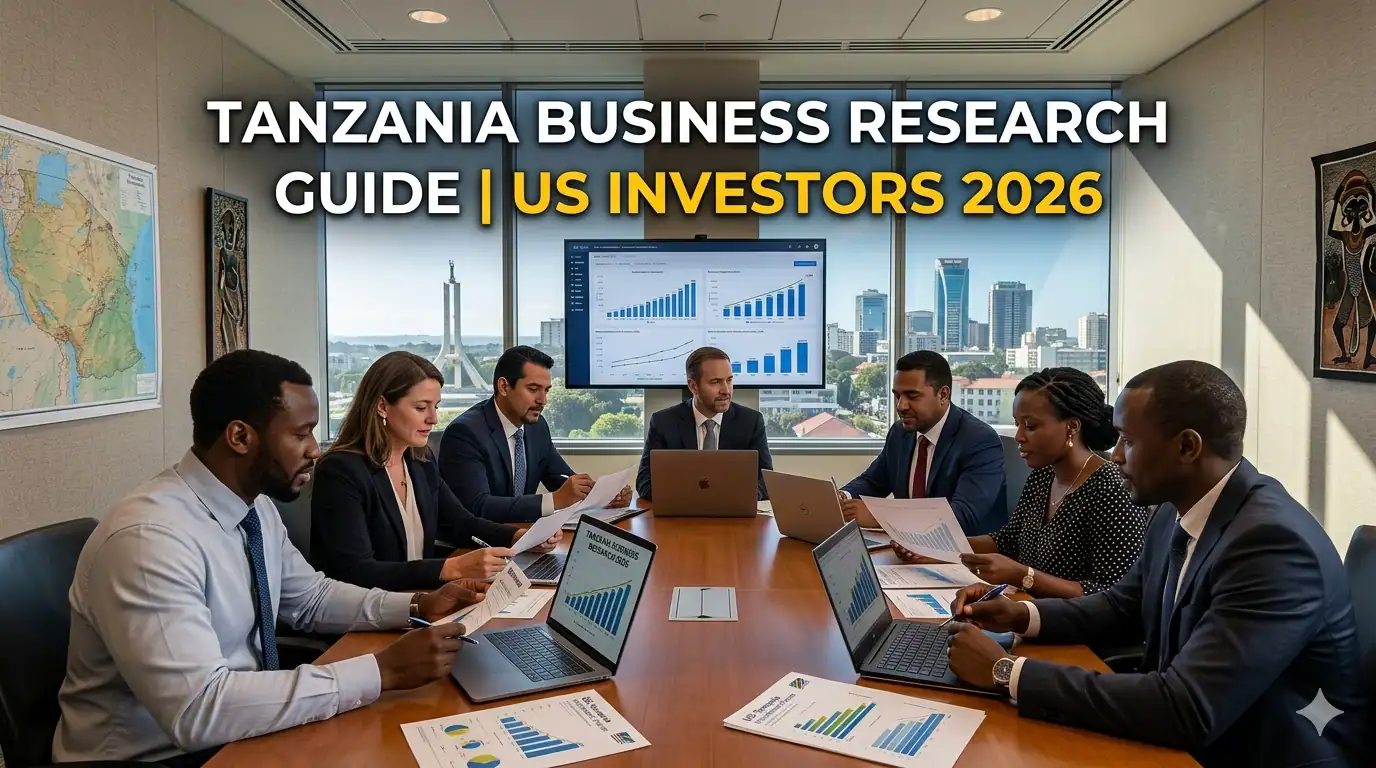
Understanding Tanzanias Business Environment for US Investors
Tanzania presents significant opportunities for US investors seeking entry into East African markets. The countrys strategic location natural resources and growing economy attract international business interest.
Conducting thorough business research before investment decisions proves essential for success. Understanding regulatory frameworks market dynamics and cultural contexts reduces risks significantly.
US investors benefit from bilateral trade agreements and diplomatic support structures. The US Commercial Service and Embassy provide valuable resources for market entry research.
Tanzanias business environment combines emerging market potential with developing infrastructure. Realistic expectations and patient capital deployment enhance investment outcomes.
This guide provides comprehensive strategies for conducting effective business research in Tanzania specifically tailored for American investors and companies.
Legal and Regulatory Framework for Foreign Investment

Tanzanias legal framework governing foreign investment centers on the Tanzania Investment Act and related regulations. Understanding these laws prevents compliance issues and facilitates smooth operations.
The Tanzania Investment Centre serves as the primary agency for investment promotion and facilitation. TIC provides one-stop services for business registration licensing and investor support.
Foreign investors must register with TIC to access incentives and protections. Registration requires business plans capital commitments and documentation of investor credentials.
Sector-specific regulations affect industries like mining agriculture tourism and manufacturing. Researching applicable sector rules ensures compliance before market entry.
Land ownership restrictions limit foreign direct ownership of land. Leasehold arrangements typically span thirty-three sixty-six or ninety-nine years requiring legal guidance.
Employment laws mandate preferences for Tanzanian workers with work permits required for expatriate staff. Understanding labor regulations prevents operational disruptions.
Key Research Institutions and Data Sources

Reliable data sources form the foundation of effective business research in Tanzania. Multiple institutions provide economic statistical and sector-specific information.
The National Bureau of Statistics publishes official economic indicators demographic data and business surveys. NBS data supports market sizing and trend analysis.
Bank of Tanzania releases monetary policy reports exchange rate data and banking sector statistics. Financial research requires these authoritative sources.
Tanzania Private Sector Foundation aggregates business community perspectives and policy recommendations. PSF insights reveal practical challenges and opportunities.
University research centers including University of Dar es Salaam produce academic studies on economic development. Scholarly research provides deeper analytical perspectives.
International organizations like World Bank IMF and African Development Bank publish Tanzania reports. These sources offer comparative regional context and development analysis.
US Government Resources for Tanzania Business Research
US government agencies provide specialized support for American investors researching Tanzania markets. Leveraging these resources reduces research costs and improves information quality.
The US Commercial Service Tanzania office offers market intelligence company matchmaking and due diligence services. Commercial Specialists provide customized research assistance.
US Embassy Dar es Salaam economic section publishes commercial guides and sector reports. Embassy resources reflect diplomatic perspectives on business conditions.
Export.gov and Trade.gov portals consolidate US government trade resources for Tanzania. These platforms provide accessible entry points for preliminary research.
Overseas Private Investment Corporation now DFC offers political risk insurance and financing. Understanding DFC programs supports investment structuring decisions.
American Chamber of Commerce connections facilitate peer networking and experience sharing. Fellow US investors provide practical insights beyond official reports.
Conducting Market Analysis and Sector Research
Effective market analysis requires systematic approaches to understanding Tanzania business opportunities. Structured research methodologies yield actionable intelligence.
Define research objectives clearly before beginning data collection. Specific questions about market size competition regulations and entry strategies focus research efforts efficiently.
Primary research through interviews surveys and site visits complements secondary data. Direct engagement with customers suppliers and competitors reveals ground-level realities.
Competitive analysis identifies existing players market shares and strategic positions. Understanding competitive dynamics informs positioning and differentiation strategies.
Consumer research explores purchasing behaviors preferences and unmet needs. Tanzanian consumer markets vary significantly by region income and urbanization.
Sector deep-dives examine value chains supply dynamics and regulatory environments. Industry-specific research prevents generic assumptions that mislead investment decisions.
Due Diligence Processes for Tanzania Investments
Comprehensive due diligence protects US investors from legal financial and reputational risks. Systematic verification processes uncover potential issues before commitments.
Legal due diligence reviews corporate structures contracts licenses and compliance histories. Local legal counsel with international experience provides essential expertise.
Financial due diligence examines audited statements tax records and banking relationships. Verifying financial claims prevents investment in misrepresented opportunities.
Operational due diligence assesses management capabilities infrastructure and supply chains. Understanding operational realities informs integration and scaling plans.
Environmental and social due diligence evaluates sustainability practices community relations and regulatory compliance. ESG considerations increasingly affect investment viability.
Political risk assessment analyzes stability policy continuity and expropriation risks. Understanding political contexts supports risk mitigation strategies.
Building Local Partnerships and Networks
Local partnerships significantly enhance business research quality and market entry success in Tanzania. Strategic relationships provide access to knowledge and networks.
Identifying suitable partners requires research into reputation capabilities and alignment of interests. Due diligence on potential partners prevents problematic associations.
Dar es Salaam Chamber of Commerce and Industry facilitates business networking and introductions. CCIT membership provides access to local business communities.
Industry associations offer sector-specific connections and advocacy platforms. Participating in associations builds relationships and influences policy environments.
Local advisors including lawyers accountants and consultants provide specialized expertise. Engaging reputable professionals accelerates research and reduces errors.
Cultural bridge-builders help navigate business customs and communication styles. Understanding Tanzanian business culture enhances relationship development and negotiation outcomes.
Understanding Tanzanian Business Culture and Practices
Cultural competence significantly impacts business research effectiveness and investment success in Tanzania. Respectful engagement builds trust and facilitates information sharing.
Relationship-building precedes transactional discussions in Tanzanian business culture. Investing time in personal connections yields long-term business benefits.
Communication styles favor indirectness and consensus-building over confrontation. Understanding these preferences prevents misinterpretation during negotiations.
Decision-making processes often involve multiple stakeholders and extended timelines. Patience and flexibility accommodate Tanzanian organizational cultures.
Gift-giving and hospitality customs reflect cultural values of reciprocity and respect. Appropriate gestures strengthen relationships though corruption laws require careful navigation.
Language considerations include Swahili as national language and English for business. Basic Swahili phrases demonstrate respect though English suffices for most business interactions.
Practical Logistics for Business Travel and Research
Effective business research in Tanzania requires planning for travel logistics and on-ground operations. Practical preparations enable productive fieldwork.
Visa requirements for US citizens include business visas obtainable online or on arrival. E-visa applications should be submitted at least one week before travel.
Accommodation in Dar es Salaam ranges from international hotels to local guesthouses. Business travelers typically prefer hotels with reliable internet and meeting facilities.
Transportation options include taxis ride-hailing apps and rental vehicles with drivers. Traffic congestion in Dar es Salaam requires time buffers for appointments.
Communication infrastructure supports business needs though connectivity varies by location. Mobile networks provide reliable coverage in urban areas with occasional rural gaps.
Health precautions including malaria prophylaxis and travel insurance prove essential. Medical facilities in Dar es Salaam handle routine issues though serious conditions may require evacuation.
Cost Considerations for Tanzania Business Research
Budgeting for business research in Tanzania requires understanding various expense categories. Realistic cost estimates support effective resource allocation.
Professional services including legal counsel consultants and translators cost one hundred to three hundred dollars hourly. Quality expertise justifies investment in critical research phases.
Travel expenses for US investors include flights accommodation meals and local transport. Weekly business trips typically cost two thousand to four thousand dollars per person.
Research costs including data purchases surveys and focus groups vary by scope. Comprehensive market studies may require ten thousand to fifty thousand dollars investments.
Registration and licensing fees through TIC and sector regulators range from five hundred to five thousand dollars. Budgeting for official costs prevents unexpected delays.
Contingency reserves of fifteen to twenty percent accommodate unforeseen expenses. Flexible budgeting supports adaptive research approaches in dynamic environments.
Technology and Digital Tools for Tanzania Research
Digital tools enhance efficiency and depth of business research in Tanzania. Leveraging technology supports comprehensive data collection and analysis.
Business intelligence platforms provide company databases financial records and news monitoring. Subscription services aggregate information reducing manual research burdens.
Geospatial tools map market demographics infrastructure and competition. Visual analytics support strategic decisions about location and expansion.
Social media monitoring reveals consumer sentiment brand perception and emerging trends. Digital listening complements traditional research methods.
Collaboration platforms enable remote teamwork between US and Tanzania-based researchers. Cloud-based tools facilitate real-time information sharing and document management.
Cybersecurity measures protect sensitive research data and communications. Secure systems prevent intellectual property loss during cross-border research activities.
Risk Assessment and Mitigation Strategies
Identifying and managing risks protects US investments during Tanzania business research and beyond. Proactive risk management enhances investment resilience.
Political risks include policy changes regulatory shifts and election cycles. Monitoring political developments and maintaining government relationships mitigate exposure.
Currency risks arise from Tanzanian shilling volatility against US dollar. Hedging strategies and local currency management reduce financial uncertainty.
Operational risks encompass infrastructure limitations supply chain disruptions and talent shortages. Contingency planning and local partnerships address operational challenges.
Reputational risks involve community relations environmental impacts and labor practices. Responsible business practices and stakeholder engagement protect brand value.
Legal risks include contract enforcement disputes and regulatory compliance. Strong legal frameworks and local counsel minimize legal vulnerabilities.
Timeline and Phasing for Tanzania Market Entry Research
Structured timelines coordinate research activities and investment decisions effectively. Phased approaches manage complexity and resource allocation.
Preliminary research phase spans one to two months focusing on desk research and initial contacts. This stage identifies opportunities and filters non-viable options.
Field research phase requires two to four weeks in Tanzania for interviews site visits and validation. On-ground activities confirm preliminary findings and reveal nuances.
Analysis and decision phase takes one to two months for synthesizing findings and developing strategies. Thorough analysis supports informed investment commitments.
Implementation planning phase coordinates legal setup partnerships and operational preparations. Detailed planning enables smooth market entry execution.
Flexibility in timelines accommodates Tanzanian business rhythms and unexpected developments. Adaptive scheduling prevents frustration while maintaining momentum.
Connecting Research to Investment Decision Making
Translating research findings into investment decisions requires structured frameworks and disciplined processes. Clear decision criteria prevent analysis paralysis.
Developing investment theses based on research insights focuses capital deployment. Well-articulated strategies guide resource allocation and prioritization.
Scenario planning explores multiple outcomes and prepares contingency responses. Considering best case base case and worst case scenarios enhances decision quality.
Stakeholder alignment ensures internal consensus on research conclusions and investment choices. Engaging decision-makers throughout research builds commitment to outcomes.
Pilot investments or phased commitments test assumptions before full-scale deployment. Incremental approaches manage risk while building market knowledge.
Continuous monitoring systems track performance against research projections. Feedback loops refine strategies and improve future research effectiveness.
Conclusion Strategic Research for Tanzania Investment Success
Conducting thorough business research in Tanzania enables US investors to navigate opportunities and challenges effectively. Systematic approaches reduce risks and enhance returns.
Understanding legal frameworks market dynamics cultural contexts and practical logistics creates comprehensive investment intelligence. Quality research informs strategic decisions and operational planning.
Leveraging US government resources local partnerships and digital tools optimizes research efficiency and depth. Strategic resource allocation maximizes research impact within budget constraints.
Patience relationship-building and adaptive planning align with Tanzanian business environments. Respectful engagement and long-term perspectives support sustainable investment success.
US investors who invest in quality research before committing capital position themselves for Tanzania market success. Strategic research transforms uncertainty into informed opportunity in this dynamic East African economy.
0 Comments