.webp)
.webp)
Quick Summary and Core Trail Information
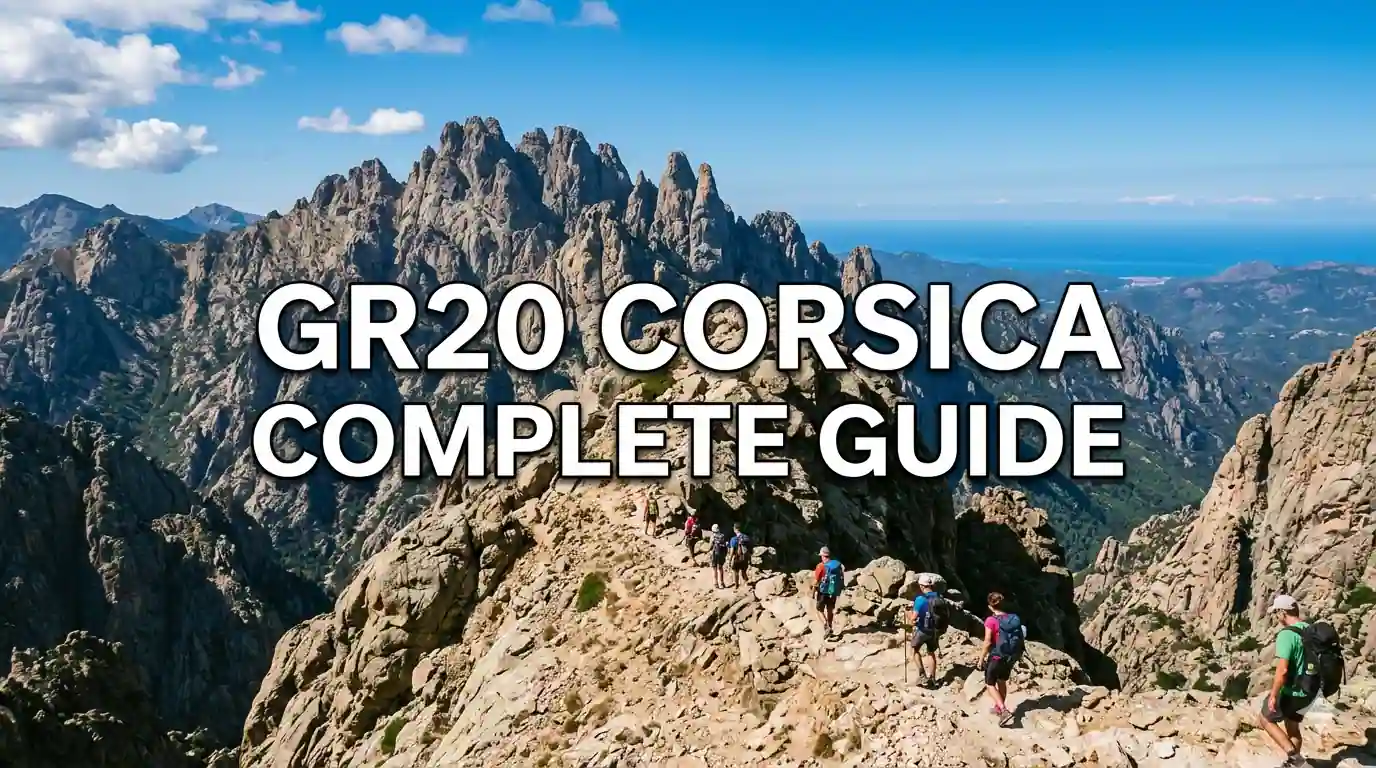
The GR20 in Corsica stands as Europe's most challenging long-distance hiking trail, traversing 180 kilometers of rugged mountain terrain from Calenzana in the north to Conca in the south. This demanding trek requires exceptional fitness, proper preparation, and respect for mountain conditions. Most trekkers complete the route in 12 to 16 days, navigating steep granite ridges, high-altitude passes, and exposed rock scrambles while staying in mountain refuges or designated camping areas.
The primary user intent centers on understanding whether the GR20 matches their fitness level, learning exact logistics for permits and accommodation, calculating realistic costs, and preparing adequately for this serious mountain undertaking. You need verified information on trail difficulty, stage-by-stage breakdowns, refuge booking procedures, equipment requirements, and safety protocols. This guide delivers comprehensive details for both the legendary northern section and the slightly easier southern portion.
Average trekkers report that the GR20 exceeds expectations for difficulty, particularly the northern half between Calenzana and Vizzavona. Daily hiking distances range from 8 to 16 kilometers, but elevation gains of 800 to 1200 meters per day and technical terrain extend hiking times to 6 to 10 hours. Success requires months of physical preparation, lightweight packing strategies, and flexible scheduling to accommodate weather delays or fatigue.
Essential GR20 Trail Data
| Total Distance | 180 kilometers from Calenzana to Conca |
| Typical Duration | 12 to 16 days for complete traverse |
| Difficulty Rating | Very difficult, technical mountain trek |
| Best Season | June to September, July and August peak |
| Average Daily Cost | USD 80 to 150 per person |
| Refuge Booking Window | 3 to 6 months in advance |
| Maximum Elevation | 2622 meters at Monte Cintino area |
Why the GR20 Ranks as Europe's Toughest Trek

The GR20 earns its formidable reputation through relentless elevation changes, technical terrain, and minimal flat sections. Unlike long-distance trails in other European countries that follow gentler contours or valley floors, the GR20 traverses Corsica's mountainous spine via the most direct and challenging route possible. You encounter near-constant ascents and descents over jagged granite, requiring hands-on scrambling, route-finding skills, and mental resilience.
Geographic isolation amplifies the challenge. Corsica's mountain range rises dramatically from the Mediterranean, creating steep gradients and exposed ridges with limited escape routes. Weather systems develop rapidly, transforming dry rock into slippery hazards within minutes. Summer temperatures at lower elevations reach 30 to 35 degrees Celsius, while high passes experience freezing conditions and afternoon thunderstorms. You must carry sufficient water between scarce sources and manage hydration carefully.
Infrastructure limitations distinguish the GR20 from more developed trails. Mountain refuges provide basic dormitory accommodation and simple meals, but capacity remains limited and comfort minimal. You sleep in shared rooms with 20 to 60 other trekkers, often in hot, noisy conditions. Camping is permitted only at designated areas near refuges, requiring you to carry tent, sleeping bag, and cooking equipment. Water sources depend on seasonal snowmelt and mountain springs that may run dry in late summer.
Physical demands exceed most trekkers' initial expectations. Daily elevation gains of 800 to 1200 meters combined with technical terrain and heavy packs create cumulative fatigue. Your knees absorb punishing descents on uneven granite, while exposed sections test your comfort with heights. Success requires not just cardiovascular fitness but also leg strength, balance, and mental determination to push through discomfort for two consecutive weeks.
The trail's reputation attracts serious hikers seeking authentic mountain challenges. You join an international community of trekkers united by shared struggle and mutual support. Camaraderie develops quickly as you exchange encouragement on steep climbs and celebrate daily accomplishments. The sense of achievement upon completing the GR20 ranks among hiking's most rewarding experiences, but respect for the trail's demands proves essential for safety and enjoyment.
How to Reach Corsica and Trail Starting Points

Corsica's island location requires ferry or air travel from mainland Europe. The northern trailhead at Calenzana sits near Calvi, while the southern terminus at Conca lies close to Porto-Vecchio. Most international trekkers fly into Nice, France, then connect to Corsica via ferry or regional flights. Alternative routes include direct flights to Corsican airports from major European cities during peak season.
Flight Routes and Ferry Options
Travelers from the United States typically fly to Nice, Paris, or other European hubs before connecting to Corsica. Direct flights from Paris, Nice, Marseille, and Rome operate year-round to Ajaccio, Bastia, Calvi, and Figari airports. Summer season adds connections from London, Frankfurt, Brussels, and other European cities. Round-trip airfare ranges from USD 400 to 900 for economy class depending on departure city and booking timing.
Ferry services provide vehicle transport and foot passenger options from Nice, Toulon, Marseille, Genoa, and Livorno. Crossing times vary from 3 to 12 hours depending on departure port and vessel type. Foot passenger tickets cost USD 40 to 80 one-way, while vehicle transport adds USD 150 to 400 depending on size. Ferries operate reduced schedules outside June through September, requiring advance planning for shoulder season treks.
Ground transportation from ports and airports to trailheads requires buses, taxis, or rental cars. Calenzana connects to Calvi via local bus service running 2 to 3 times daily during summer, costing approximately USD 5 per person. Conca requires taxi from Porto-Vecchio or organized shuttle services, typically USD 60 to 100 per vehicle. Rental cars enable flexible logistics but require parking arrangements and one-way fees if not returning to the original location.
Pre and post-trek accommodation in Calvi, Bastia, Ajaccio, or Porto-Vecchio allows rest and preparation time. Budget hotels and hostels charge USD 50 to 90 per night, while mid-range options range from USD 100 to 180. You should plan at least one night before and after the trek to accommodate travel delays, equipment checks, and recovery time.
Best Time to Hike the GR20 for Optimal Conditions

The GR20 hiking season officially runs from early June to late September, though exact dates depend on snow conditions and refuge opening schedules. Each period offers distinct advantages and challenges that significantly impact your experience. Understanding seasonal variations enables informed decisions about timing based on your fitness level, weather tolerance, and crowd preferences.
June presents early season conditions with lingering snow at high passes, particularly in the northern section. You encounter fewer trekkers, cooler temperatures, and abundant water sources from snowmelt. However, some refuges may not open until mid-June, and residual snow requires additional caution on exposed sections. Fitness and experience should exceed minimum recommendations for June attempts. You must verify refuge opening dates and trail conditions immediately before departure.
July and August deliver peak season conditions with all refuges open, clear trails, and reliable weather patterns. However, these months attract maximum crowds, with refuges often at full capacity and trails experiencing congestion at technical sections. Afternoon thunderstorms develop regularly, requiring early starts and summit crossings before 2 PM. Temperatures at lower elevations become uncomfortable, and water sources may diminish in the southern section. Advance booking of 4 to 6 months proves essential for refuge accommodation.
September offers ideal balance for experienced trekkers. Crowds diminish significantly after mid-month, temperatures moderate to comfortable levels, and afternoon storms decrease in frequency. Water sources remain adequate through early September but require careful management later in the month. Some refuges begin reducing services or closing in late September, limiting flexibility. You should complete the trek by September 25 to ensure full infrastructure availability.
Shoulder season attempts in late May or October prove extremely challenging and generally discouraged. Snow coverage, closed refuges, limited daylight hours, and unpredictable weather create hazardous conditions suitable only for expert mountaineers with full self-sufficiency capabilities. Most guidebooks and official sources strongly recommend staying within the June to September window for safety reasons.
Complete Cost Breakdown and Budget Planning

Hiking the GR20 requires significant financial investment beyond typical vacation budgets. Understanding all cost components enables realistic planning and prevents unexpected expenses. You can complete the trek on varying budgets by choosing between refuge accommodation with meals, self-catering options, or wild camping where permitted, though regulations restrict camping to designated areas.
Budget trekkers spending USD 70 to 100 per day carry camping equipment and self-cater using food purchased in villages along the route. You pay USD 10 to 15 per night for designated camping areas near refuges, purchase groceries at mountain villages for USD 25 to 35 daily, and occasionally buy refuge meals for USD 15 to 25. This approach requires carrying heavier loads and dedicating time to meal preparation but reduces costs substantially.
Mid-range budgets of USD 110 to 160 per day utilize refuge dormitory accommodation with half-board meal plans. Refuge stays cost USD 55 to 75 per night including dinner, breakfast, and dormitory bed. You purchase lunch snacks and drinks separately for USD 15 to 25 daily. This option balances comfort and cost while eliminating cooking time and reducing pack weight. Advance booking remains essential during peak season.
Premium experiences costing USD 180 to 280 per day include private room upgrades where available, additional meals and drinks, luggage transfer services, and guided day hikes on particularly technical sections. Some trekkers hire local guides for the entire trek at USD 200 to 350 per day including guide fees, accommodation, and meals. This approach maximizes safety and learning but represents significant investment.
| Expense Category | Budget Option | Mid Range | Premium |
| Refuge Camping Per Night | USD 10 to 15 | N/A | N/A |
| Refuge Dormitory Half Board | N/A | USD 55 to 75 | USD 75 to 95 |
| Daily Food and Snacks | USD 25 to 35 | USD 15 to 25 | USD 30 to 50 |
| Transportation to Trailhead | USD 5 to 10 | USD 15 to 25 | USD 60 to 100 |
| Travel Insurance Coverage | USD 40 to 70 | USD 60 to 100 | USD 80 to 150 |
| Equipment Rental if Needed | USD 100 to 200 | USD 150 to 300 | USD 200 to 400 |
Northern Section Stage by Stage Breakdown

The northern half of the GR20 between Calenzana and Vizzavona ranks as the trail's most challenging segment, featuring technical scrambles, exposed ridges, and dramatic elevation changes. Most trekkers allocate 7 to 9 days for this section, allowing adequate time for difficult stages and potential weather delays. Physical fitness should exceed baseline requirements before attempting the northern portion.
Stage 1 from Calenzana to Ortu di u Piobbu covers 13 kilometers with 950 meters of ascent and 600 meters of descent. You begin at 550 meters elevation and climb steadily through forest to reach the refuge at 1520 meters. This introductory stage tests your pack weight and hiking pace without extreme technical difficulty. Typical hiking time ranges from 5 to 7 hours depending on fitness and conditions.
Stage 2 to Carozzu involves 11 kilometers with 900 meters of ascent and 750 meters of descent. The route traverses high mountain lakes and rocky terrain with moderate exposure. You reach Carozzu refuge at 1970 meters after 6 to 8 hours of hiking. This stage introduces the GR20's characteristic granite scrambling and requires careful foot placement on uneven surfaces.
Stage 3 to Asco Stagnu represents one of the trail's most demanding days, covering 10 kilometers with 1050 meters of ascent and 900 meters of descent. The route crosses the Bocca di Stagnu pass at 2300 meters with significant exposure and hands-on scrambling. Hiking time extends to 7 to 9 hours. Weather conditions critically impact safety on this section, and afternoon storms create serious hazards.
Stage 4 to Tighjettu spans 12 kilometers with 850 meters of ascent and 1000 meters of descent. You navigate the Cirque de la Solitude, a steep gully requiring rope-assisted sections when wet. This stage demands careful route-finding and comfort with exposure. Typical duration reaches 6 to 8 hours. Alternative routes exist when the Cirque proves impassable due to weather or rockfall.
Stage 5 to Ciottulu di i Mori covers 10 kilometers with 950 meters of ascent and 650 meters of descent. The route climbs to the trail's highest point near Monte Cintino at 2622 meters before descending to the refuge at 1991 meters. Panoramic views reward the effort, but altitude and exposure require steady pacing. Hiking time averages 6 to 8 hours.
Stage 6 to Manganu involves 11 kilometers with 700 meters of ascent and 900 meters of descent. You traverse high plateaus and descend through forest to reach the refuge at 1602 meters. This stage provides relative respite from extreme technical difficulty while maintaining the GR20's characteristic physical demands. Typical duration spans 5 to 7 hours.
Stage 7 to Petra Piana covers 9 kilometers with 850 meters of ascent and 600 meters of descent. The route features exposed ridges and rocky terrain with spectacular views toward the coast. You reach Petra Piana refuge at 1853 meters after 5 to 7 hours of hiking. This stage requires sustained concentration on technical footing.
Stage 8 to Vizzavona spans 10 kilometers with 650 meters of ascent and 1050 meters of descent. You complete the northern section by descending through forest to the historic railway town at 900 meters elevation. This stage provides welcome relief after consecutive difficult days. Hiking time ranges from 5 to 7 hours. Vizzavona offers restaurants, accommodation, and supply opportunities before continuing south.
Southern Section Stage by Stage Breakdown

The southern half of the GR20 between Vizzavona and Conca presents slightly less technical difficulty than the north but maintains serious physical demands. Most trekkers allocate 6 to 8 days for this section, enjoying faster pace and more predictable terrain. The southern portion features dramatic landscapes including the Bavella needles and coastal views approaching the finish at Conca.
Stage 9 from Vizzavona to Capanelle covers 12 kilometers with 900 meters of ascent and 500 meters of descent. You climb from forest into high alpine meadows, reaching the refuge at 1585 meters. This stage reacquaints you with GR20 demands after rest at Vizzavona. Typical hiking time spans 5 to 7 hours.
Stage 10 to Prati involves 11 kilometers with 750 meters of ascent and 650 meters of descent. The route traverses open plateaus with panoramic views and moderate technical sections. You reach Prati refuge at 1820 meters after 5 to 7 hours of hiking. This stage maintains steady physical demands without extreme exposure.
Stage 11 to Asinao covers 14 kilometers with 800 meters of ascent and 900 meters of descent. You navigate varied terrain including forest, meadows, and rocky sections before descending to the refuge at 1650 meters. This longer stage requires endurance and pacing discipline. Typical duration extends to 6 to 8 hours.
Stage 12 to Paliri spans 12 kilometers with 650 meters of ascent and 850 meters of descent. The route approaches the Bavella massif with increasingly dramatic scenery. You reach Paliri refuge at 1550 meters after 5 to 7 hours of hiking. This stage builds anticipation for the final day's spectacular terrain.
Stage 13 to Conca completes the GR20 with 11 kilometers featuring 550 meters of ascent and 1100 meters of descent. You traverse the famous Bavella needles, one of Corsica's most iconic landscapes, before descending through forest to the finish at 600 meters elevation. Emotional completion of this epic trek typically requires 5 to 7 hours. Conca provides transportation connections to Porto-Vecchio and other coastal towns.
Refuge Booking Procedures and Accommodation Details

Securing refuge accommodation on the GR20 requires advance planning and understanding of the booking system. Mountain refuges operate under the management of the Parc Naturel Régional de Corse and private operators, with capacity ranging from 40 to 80 beds per location. Peak season demand far exceeds availability, making early reservations essential for guaranteed accommodation.
Online booking opens in January for the June through September season through official refuge booking platforms. You create an account, select desired dates and refuges, and pay deposits via credit card. Most refuges require 30 to 50 percent deposits with balance due upon arrival. Cancellation policies typically allow full refunds up to 14 days before arrival, with 50 percent refunds up to 7 days before, and no refunds for later cancellations.
Half-board meal plans include dinner, breakfast, and dormitory accommodation. Dinners feature hearty mountain cuisine with soup, pasta or rice dishes, cheese, and dessert. Breakfasts provide coffee, bread, jam, and pastries. Vegetarian options exist but remain limited. You should communicate dietary restrictions when booking, though remote locations constrain menu flexibility. Lunch requires self-catering with purchased snacks or picnic supplies from villages.
Dormitory accommodation consists of shared rooms with bunk beds, mattresses, and blankets. You must carry a sleeping bag liner for hygiene, as blankets receive washing between groups but not daily. Rooms accommodate 8 to 20 people with limited privacy and inevitable noise. Earplugs and eye masks prove essential for quality rest. Shower facilities vary from hot showers to basic washrooms depending on refuge infrastructure and water availability.
Alternative camping options exist at designated areas adjacent to most refuges for USD 10 to 15 per person. You must carry tent, sleeping bag, sleeping pad, and cooking equipment, adding 3 to 5 kilograms to pack weight. Camping provides flexibility for spontaneous itinerary changes but requires additional time for setup and meal preparation. Wild camping outside designated areas violates regulations and risks fines.
Essential Equipment and Packing List

Proper equipment selection determines your GR20 experience more than any other factor. Pack weight directly impacts daily fatigue, joint stress, and overall enjoyment. You should target a base pack weight of 8 to 12 kilograms excluding water and food, requiring careful equipment choices and elimination of non-essentials. Quality gear proves safer and more comfortable than budget alternatives for this demanding trek.
Footwear represents your most critical equipment investment. Sturdy hiking boots with ankle support, aggressive tread, and proven waterproofing handle the GR20's granite terrain and stream crossings. You should complete at least 100 kilometers of training hikes in your boots before departure to ensure proper fit and prevent blisters. Trail running shoes prove insufficient for the GR20's technical demands and heavy pack weights.
Sleeping systems require lightweight sleeping bags rated to 0 to 5 degrees Celsius and compact sleeping bag liners for refuge hygiene. Refuge blankets provide additional warmth but cannot substitute for adequate sleeping bags. Inflatable sleeping pads add comfort for camping options but prove unnecessary for refuge-only itineraries. You should test your sleeping system in similar conditions before departure.
Clothing layers must accommodate temperature ranges from near-freezing at high passes to 35 degrees Celsius in valleys. Essential items include moisture-wicking base layers, insulating mid-layers, waterproof and windproof outer shell, hiking pants and shorts, sun hat and warm hat, gloves, and multiple pairs of hiking socks. Cotton clothing proves dangerous due to slow drying and heat loss when wet.
Safety equipment includes detailed topographic maps, compass, headlamp with spare batteries, first aid kit with blister treatment, emergency whistle, multi-tool, and fully charged mobile phone with offline maps. You should carry 2 to 3 liters of water capacity and water purification tablets as backup. Sun protection requires high-SPF sunscreen, lip balm, and sunglasses with UV protection.
Physical Preparation and Training Requirements

The GR20 demands exceptional physical fitness that cannot be achieved through last-minute training. You should begin preparation 4 to 6 months before your intended departure date, progressively building endurance, leg strength, and pack-carrying capacity. Sedentary individuals attempting the GR20 without adequate preparation risk injury, exhaustion, and trail evacuation.
Cardiovascular training forms the foundation of GR20 preparation. You should complete at least 3 to 4 aerobic sessions weekly, gradually increasing duration and intensity. Activities include running, cycling, swimming, or stair climbing for 45 to 90 minutes at moderate to vigorous intensity. Target heart rate zones of 70 to 85 percent of maximum build the endurance necessary for consecutive long hiking days.
Leg strength and stability prevent injuries on the GR20's punishing descents. You should incorporate squats, lunges, step-ups, and calf raises into training routines 2 to 3 times weekly. Single-leg exercises improve balance for uneven terrain. Core strengthening through planks and stability work supports pack carrying and reduces lower back strain.
Specific hiking preparation proves essential for GR20 success. You should complete weekend training hikes with progressively heavier packs, building to 12 to 15 kilograms over 15 to 20 kilometer distances with 800 to 1000 meters of elevation gain. Mountain terrain training replicates GR20 conditions better than flat surfaces. You should complete at least one multi-day hiking trip before attempting the GR20 to test equipment and assess fitness.
Weight management significantly impacts GR20 performance. Excess body weight multiplies the stress of carrying a pack over mountainous terrain. You should achieve a healthy weight before attempting the trek through balanced nutrition and consistent training. Every kilogram of body weight or pack weight increases energy expenditure and joint stress substantially over 12 to 16 days of hiking.
Safety Considerations and Emergency Procedures

The GR20 presents genuine mountain hazards requiring respect and preparation. Weather changes rapidly, transforming dry rock into slippery danger and exposing ridges to lightning strikes. Afternoon thunderstorms develop regularly during summer, necessitating early starts and summit crossings before 2 PM. You must monitor weather forecasts at every refuge and adjust plans accordingly, even if delays extend your itinerary.
Technical terrain demands constant attention to footing and route-finding. The GR20's granite surfaces become extremely slippery when wet, and exposed sections offer minimal margin for error. You should never attempt technical sections during storms or when fatigued. Turning back or waiting for improved conditions proves wiser than pushing forward unsafely. Many accidents occur when trekkers rush to reach refuges before dark.
Water management prevents dehydration and heat illness. You should carry minimum 2 liters of water and drink regularly even when not thirsty. Water sources between refuges may run dry in late summer, requiring careful planning. Signs of dehydration include headache, dizziness, dark urine, and fatigue. You should treat all natural water sources with purification tablets or filters to prevent gastrointestinal illness.
Emergency procedures require knowledge and equipment. You should save emergency numbers in your phone and carry written copies. Mountain rescue in Corsica responds to 112 or 18 for emergencies. Helicopter evacuations cost thousands of euros without proper insurance coverage. You should purchase comprehensive travel insurance specifically covering mountain rescue and high-altitude trekking. Annual policies for serious trekkers cost USD 150 to 300 and prove invaluable for GR20 attempts.
Common injuries include ankle sprains, knee problems, blisters, and muscle strains. You should carry a comprehensive first aid kit including blister treatment, pain relievers, bandages, and personal medications. Minor injuries can become serious if infected or neglected. You should address foot problems immediately before they force trail abandonment. Rest days at refuges with supply access allow recovery without complete evacuation.
0 Comments