.webp)
.webp)
7 Hidden Gems in Mavrovo National Park: Ultimate Hiking Guide
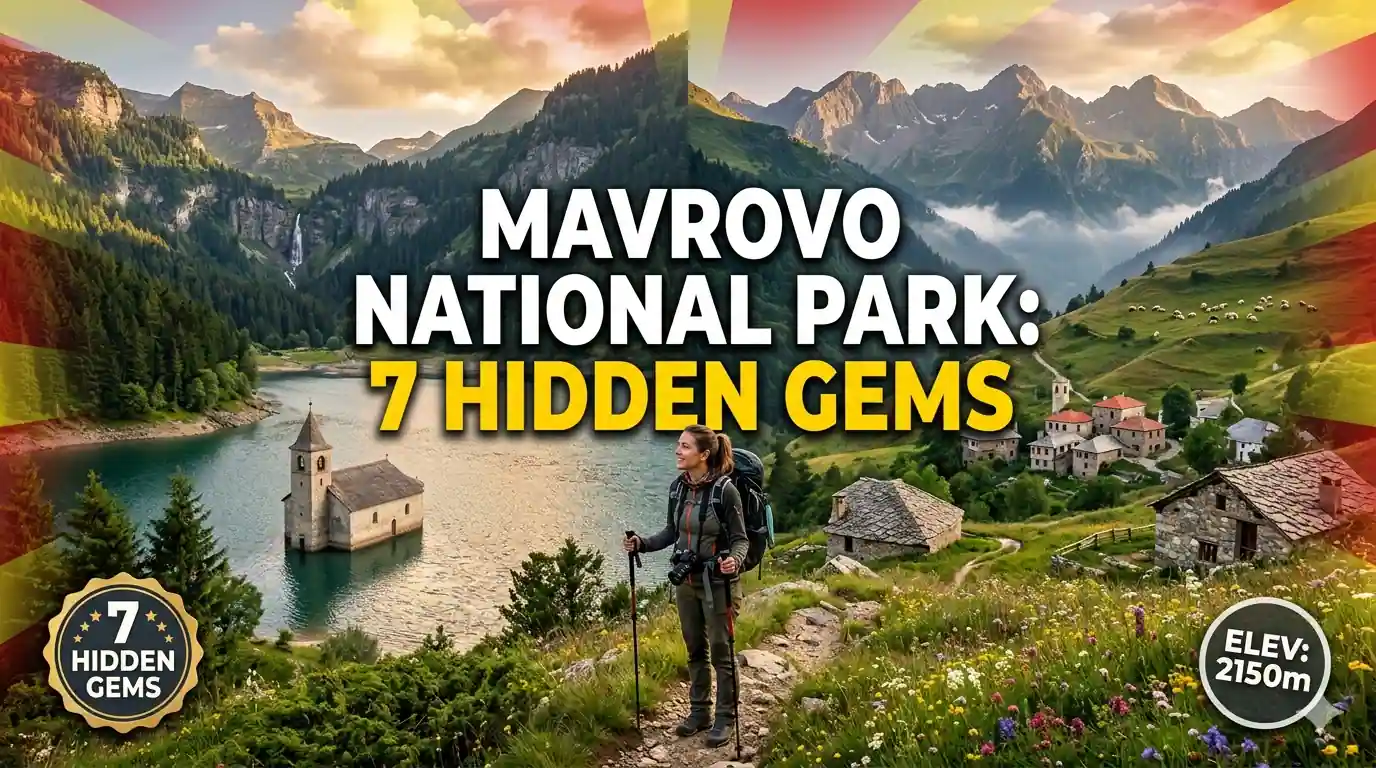
Introduction: Discovering Mavrovo National Park, Macedonia's Mountain Wilderness
Mavrovo National Park, North Macedonia's largest protected area spanning over 731 square kilometers, represents one of the Balkans' most spectacular and least-explored mountain wildernesses. This pristine landscape, where dramatic peaks rise above crystal-clear alpine lakes, ancient forests shelter rare wildlife, and traditional mountain villages preserve centuries-old traditions, offers adventure hikers an extraordinary journey through one of Europe's last great wild places.
Located in the western part of North Macedonia, Mavrovo National Park encompasses the dramatic Šar Mountains, the serene Mavrovo Lake with its iconic submerged church, deep river gorges, and high-altitude meadows that burst with wildflowers in spring. The park's diverse ecosystems support brown bears, wolves, lynx, chamois, and over 150 bird species, while its cultural heritage includes traditional stone villages, ancient monasteries, and shepherding traditions that have remained largely unchanged for generations.
For adventure hikers seeking more than marked trails and tourist crowds, Mavrovo National Park delivers an authentic wilderness experience where every valley reveals new wonders, every mountain pass offers breathtaking panoramas, and every traditional village welcomes visitors with genuine Macedonian hospitality. The park's remote location and limited development have preserved its natural character, making it a paradise for those who value solitude, pristine nature, and cultural authenticity over convenience and crowds.
This comprehensive guide reveals seven hidden gems within Mavrovo National Park that every adventure hiker needs to experience. From the mysterious submerged church of St. Nicholas to remote mountain villages accessible only by foot, from dramatic waterfalls hidden in forest gorges to alpine meadows where shepherds still practice transhumance, these destinations showcase the full splendor of Macedonia's mountain heartland. Whether you are a wildlife enthusiast hoping to spot brown bears, a photographer seeking dramatic landscapes, or a cultural traveler interested in traditional mountain life, Mavrovo National Park delivers unforgettable moments that connect you to nature's raw beauty and Macedonia's rich heritage.
Hidden Gem #1: Mavrovo Lake and the Submerged Church of St. Nicholas

Mavrovo Lake, the park's centerpiece, holds one of the Balkans' most photographed and mysterious landmarks: the submerged church of St. Nicholas, which emerges from the water when lake levels drop. This hauntingly beautiful sight, where a 19th-century church half-submerged in turquoise water creates an almost surreal landscape, has become an iconic symbol of Mavrovo and a must-see destination for photographers and cultural travelers.
The church, built in 1850 in the village of Mavrovo, was partially flooded in the 1950s when a dam was constructed to create a hydroelectric reservoir. Rather than demolishing the historic structure, authorities allowed it to remain, creating an unintentional monument that now draws visitors from around the world. The church's bell tower and portions of its walls rise dramatically from the water, creating striking reflections on calm days and a poignant reminder of the villages lost to progress.
For adventure hikers, Mavrovo Lake offers more than just photographic opportunities. The 9-kilometer lakeside trail circumnavigates the reservoir, providing varying perspectives of the submerged church and surrounding mountains. The full circuit takes 3-4 hours at a moderate pace, with relatively gentle elevation gain suitable for most fitness levels. Along the way, you'll pass traditional stone houses, alpine meadows, and viewpoints that reveal the lake's changing colors from emerald to deep blue depending on weather and light.
The best time to photograph the submerged church is during early morning or late afternoon when the light is soft and the water is calm. During dry periods in late summer and autumn, more of the church structure becomes visible as water levels drop, creating more dramatic compositions. Winter brings a different kind of magic, with the church surrounded by snow and ice, though access can be challenging during heavy snowfall.
Beyond the church, Mavrovo Lake serves as an excellent base for exploring the wider park. Several hiking trails radiate from the lakeshore, leading to high mountain passes, remote villages, and wildlife viewing areas. The lake's elevation of 1,275 meters provides a comfortable starting point for acclimatization before tackling higher peaks. Facilities around the lake include guesthouses, restaurants serving traditional Macedonian cuisine, and boat rentals for those who prefer to explore from the water.
For a complete experience, plan to spend at least half a day at Mavrovo Lake. Hike the lakeside trail, photograph the submerged church from multiple angles, enjoy a traditional lunch featuring fresh trout from the lake, and perhaps rent a kayak or paddleboard to explore from a different perspective. The combination of natural beauty, cultural heritage, and outdoor recreation makes Mavrovo Lake an essential stop on any Mavrovo National Park itinerary.
Hidden Gem #2: Galičnik Village - Living Heritage in the Mountains

Galičnik, one of Macedonia's most beautifully preserved traditional mountain villages, offers adventure hikers a rare glimpse into a way of life that has survived largely unchanged for centuries. Perched at 1,350 meters elevation in the Bistra Mountain range, this stone village of narrow cobblestone streets, traditional architecture, and warm hospitality represents the living cultural heritage of Macedonia's highland communities.
Galičnik is perhaps most famous for its annual Galičnik Wedding Festival, held every July on Petrovden (St. Peter's Day), when the village comes alive with traditional music, dance, and customs as local couples marry in elaborate ceremonies that attract visitors from across the Balkans. However, even outside festival season, Galičnik offers authentic cultural experiences, with families still practicing traditional crafts like wool weaving, woodcarving, and cheese-making using methods passed down through generations.
The village's architecture reflects the distinctive style of Macedonian mountain settlements: two-story stone houses with wooden upper floors, slate roofs, and enclosed courtyards designed to withstand harsh mountain winters. Many buildings date to the 18th and 19th centuries, and while some have been restored, others stand in romantic ruin, creating a landscape that feels frozen in time. The Church of St. Peter and Paul, with its remarkable frescoes and woodcarvings, serves as the spiritual heart of the community.
For hikers, Galičnik serves as both a cultural destination and a trailhead for mountain adventures. Several hiking routes radiate from the village, leading to high mountain pastures where shepherds still practice transhumance, moving livestock between seasonal grazing grounds as they have for millennia. The hike to the nearby peak of Medenica (2,163 meters) takes 3-4 hours round-trip and rewards climbers with panoramic views of the Bistra Mountains and distant peaks of the Šar range.
The village also offers opportunities to learn about traditional mountain life firsthand. Local families often welcome visitors interested in learning about cheese-making, wool processing, or traditional cooking. Some guesthouses offer hands-on workshops where you can try your hand at weaving, baking traditional bread in wood-fired ovens, or preparing local specialties like kačkavalj cheese and rakija fruit brandy.
Reaching Galičnik requires a 20-kilometer drive from Mavrovo Lake on mountain roads that wind through forests and pastures. The final approach to the village climbs steeply, offering increasingly dramatic views of the stone houses clustered on the mountainside. While the road is passable for standard vehicles in good weather, the journey itself is part of the adventure, taking you deep into the mountain wilderness far from tourist crowds.
Plan to spend at least half a day in Galičnik, though staying overnight in a traditional guesthouse allows you to experience the village's peaceful atmosphere after day-trippers depart. Evening meals featuring home-cooked traditional dishes, conversations with local hosts about mountain life, and stargazing in the clear mountain air create memories that last far beyond the hike itself.
Hidden Gem #3: Duf Waterfall - The Hidden Cascade

Tucked away in a remote corner of Mavrovo National Park, Duf Waterfall represents one of Macedonia's most spectacular yet least-visited natural attractions. This multi-tiered cascade, plunging over 50 meters through a forested gorge, rewards adventurous hikers willing to venture off the beaten path with one of the Balkans' most pristine and photogenic waterfalls.
The waterfall takes its name from the nearby village of Duf, a small mountain settlement that serves as the starting point for the hike. The trail begins in the village and follows a forest path that gradually climbs through dense beech and pine forests, crossing mountain streams and passing traditional shepherd huts along the way. The 2-hour hike (one way) involves moderate elevation gain of approximately 400 meters, making it accessible to hikers with reasonable fitness levels.
What makes Duf Waterfall special is not just its height but its setting. The cascade tumbles down a series of rocky steps through a narrow gorge, surrounded by lush vegetation and moss-covered boulders. The sound of rushing water echoes through the canyon, creating a natural amphitheater that amplifies the waterfall's power. In spring and early summer, when snowmelt swells the mountain streams, the waterfall reaches its most dramatic flow, though it remains impressive year-round.
The pool at the base of the waterfall forms a natural swimming hole during warmer months, inviting adventurous hikers to cool off in the icy mountain water. The surrounding rocks provide perfect spots for picnicking, photography, or simply sitting in meditation while absorbing the raw power and beauty of nature. The gorge's microclimate supports unique plant species and creates a cool, refreshing environment even on hot summer days.
For photographers, Duf Waterfall offers exceptional opportunities throughout the day. Morning light filters through the forest canopy, creating dramatic beams that illuminate the mist rising from the falls. Midday sun creates brilliant highlights on the cascading water, while late afternoon brings warm tones that enhance the colors of moss and rock. During autumn, the surrounding forest transforms into a riot of gold, orange, and red, creating stunning contrast with the white water.
The trail to Duf Waterfall, while not technically difficult, requires proper hiking boots and caution, particularly when rocks are wet from spray or recent rain. The path can be muddy in places, and stream crossings may require careful footing. During winter and early spring, sections of the trail may be snow-covered or icy, requiring additional equipment like microspikes.
Because Duf Waterfall remains relatively unknown to mass tourism, you're likely to have this natural wonder largely to yourself, particularly on weekdays and outside peak summer months. This solitude enhances the experience, allowing you to fully immerse yourself in the sounds, sights, and sensations of this pristine mountain environment.
Plan to spend 4-5 hours for the round-trip hike, including time at the waterfall for swimming, photography, and relaxation. Bring plenty of water, snacks, swimwear if you plan to take a dip, and a waterproof bag to protect electronics from spray. The combination of physical activity, natural beauty, and peaceful solitude makes the journey to Duf Waterfall one of Mavrovo National Park's most rewarding experiences.
Hidden Gem #4: Korab Mountain - Macedonia's Highest Peak

Korab Mountain, standing at 2,764 meters, holds the distinction of being not only North Macedonia's highest peak but also Albania's highest point, making it a unique geographical feature shared between two nations. For serious adventure hikers, summiting Korab represents the ultimate challenge and reward in Mavrovo National Park, offering breathtaking panoramic views, alpine wilderness, and the satisfaction of standing atop Macedonia's roof.
The standard route to Korab's summit begins from the village of Žuže, accessible via a rough mountain road from Mavrovo Lake. The ascent is demanding, requiring 8-10 hours round-trip and involving 1,400 meters of elevation gain. The trail passes through diverse terrain: dense forests in the lower sections, alpine meadows bursting with wildflowers in summer, rocky scree slopes, and finally the exposed summit ridge where careful footing is essential.
What makes Korab special beyond its height is the dramatic landscape it traverses. The mountain's western face drops steeply into Albania, creating spectacular vistas across the border, while the eastern slopes descend more gently toward Macedonia's mountain valleys. On clear days, the summit offers 360-degree views encompassing the Šar Mountains to the north, the Bistra range to the south, and distant peaks of Albania and Kosovo.
The climb requires good physical fitness, proper mountaineering equipment, and ideally some high-altitude hiking experience. The upper sections involve scrambling over loose rock, and weather can change rapidly at altitude, bringing fog, wind, or thunderstorms even on days that begin clear. Most hikers attempt Korab during the summer months (June-September) when snow has melted from the upper slopes, though even then, patches of snow can persist in shaded gullies.
For those seeking a less strenuous but still rewarding Korab experience, alternative routes offer shorter hikes to scenic viewpoints and alpine meadows without committing to the full summit. The Korab Lakes, a series of glacial tarns nestled below the summit, make an excellent destination for a full-day hike, offering spectacular mountain scenery and opportunities to observe rare alpine flora and fauna.
Wildlife on Korab's slopes includes chamois, marmots, and golden eagles, all adapted to the harsh alpine environment. Spring and early summer bring spectacular wildflower displays, with rare species like the Macedonian pine and endemic alpine flowers carpeting the meadows. Autumn transforms the landscape with golden larch trees and the opportunity to observe wildlife preparing for winter.
Because of Korab's location on the international border, hikers should carry identification and be aware that crossing into Albania requires proper documentation. The summit itself straddles the border, marked by a simple pyramid-shaped marker that serves as a popular photo opportunity for those who reach the top.
For safety, consider hiring a local guide familiar with the route and weather patterns. Guides can be arranged in Mavrovo village or through guesthouses around Mavrovo Lake. Their knowledge of the terrain, weather patterns, and emergency procedures adds a crucial margin of safety for this challenging ascent.
Summiting Korab is not just a physical achievement but a spiritual experience, standing at the highest point in the country, surrounded by wilderness that feels timeless and untouched. For adventure hikers seeking the ultimate Mavrovo challenge, Korab Mountain delivers an unforgettable experience that tests limits and rewards perseverance with views that stretch across the Balkans.
Hidden Gem #5: Radiuška Mountain and the Blue Lakes

Radiuška Mountain, rising to 2,385 meters in the heart of Mavrovo National Park, guards one of the region's most spectacular natural treasures: the Blue Lakes (Sinji Ezera), a series of glacial tarns whose impossibly blue waters reflect the surrounding peaks with mirror-like perfection. This hidden gem, accessible only via challenging mountain trails, rewards intrepid hikers with scenery that rivals the most celebrated alpine destinations in Europe.
The Blue Lakes sit in a high mountain cirque carved by ancient glaciers, their vivid blue color resulting from glacial flour—fine rock particles suspended in the water that scatter light to create the distinctive turquoise hue. There are actually several lakes in the complex, each with its own character: the largest lake, perfectly circular and deep blue; smaller tarns nestled in rocky hollows; and seasonal pools that fill with snowmelt in spring and early summer.
Reaching the Blue Lakes requires commitment and preparation. The standard route begins from the village of Leunovo and involves a strenuous 5-6 hour hike one way, with 900 meters of elevation gain. The trail passes through diverse terrain: beech forests in the lower sections, giving way to pine woodland, then open alpine meadows, and finally rocky slopes as you approach the lakes. The path is well-marked but challenging, requiring good fitness and proper hiking equipment.
What makes the journey to the Blue Lakes special is the progressive revelation of mountain scenery. As you climb, the views expand to encompass the surrounding peaks of Radiuška and neighboring mountains. Wildflowers carpet the meadows in July and August, with rare species like the Macedonian edelweiss and alpine poppies adding splashes of color against the green grass. Marmots whistle warnings from rocky outcrops, and golden eagles circle on thermal currents above.
Upon reaching the Blue Lakes, the effort of the climb is instantly rewarded. The largest lake, nestled in a rocky bowl beneath steep cliffs, reflects the sky and surrounding peaks with such clarity that it's sometimes difficult to distinguish water from sky. The smaller tarns, scattered across the cirque floor, create a landscape that feels almost otherworldly in its beauty. In early morning or late afternoon, when the light is soft and the water is calm, the scene becomes almost magical.
For photographers, the Blue Lakes offer exceptional opportunities throughout the day. Sunrise brings pink alpenglow to the surrounding peaks reflected in the still water. Midday sun creates brilliant blue tones in the lakes contrasting with white clouds and dark rock. Sunset paints the entire scene in warm gold and orange tones. The lakes are particularly photogenic after a rainstorm, when waterfalls cascade down the surrounding cliffs and mist rises from the water surface.
Camping near the Blue Lakes is possible for experienced wild campers, though there are no facilities. Spending a night at altitude allows you to experience the lakes at different times of day, witness spectacular sunrises and sunsets, and enjoy stargazing in the clear mountain air. However, be prepared for cold temperatures even in summer, as the elevation of 2,100 meters brings rapid temperature drops after sunset.
For those who prefer not to camp, the hike to the Blue Lakes can be completed as a long day trip, though this requires an early start and good fitness. Alternatively, break the journey by staying in a mountain hut or village along the route, making the hike more manageable and allowing time to acclimatize to altitude.
The Blue Lakes are accessible from June through October, depending on snow conditions. Early season (June-July) offers the most dramatic water flow from snowmelt and spectacular wildflower displays, but some snow patches may remain on the trail. Late season (September-October) brings autumn colors and clearer trails, though temperatures drop and weather becomes more unpredictable.
Because of the challenging access and remote location, the Blue Lakes remain relatively uncrowded even during peak season. You're likely to encounter only a handful of other hikers, preserving the sense of wilderness and solitude that makes this destination so special. This isolation requires self-sufficiency: carry all necessary supplies, navigation tools, and emergency equipment, and inform someone of your plans before setting out.
For adventure hikers seeking Macedonia's most spectacular alpine scenery, the Blue Lakes of Radiuška Mountain represent the pinnacle of Mavrovo National Park's natural beauty. The combination of physical challenge, pristine wilderness, and breathtaking scenery creates an experience that rivals the most celebrated mountain destinations in Europe, yet remains largely unknown to all but the most intrepid travelers.
Hidden Gem #6: Traditional Shepherd Huts and Transhumance Routes

Scattered throughout Mavrovo National Park's high mountain pastures are traditional shepherd huts (known locally as "kolibi"), simple stone and wood structures that have served as seasonal homes for shepherds practicing transhumance for centuries. These rustic dwellings, and the ancient routes connecting them, offer adventure hikers a unique opportunity to experience Macedonia's pastoral heritage and connect with a way of life that has survived largely unchanged since medieval times.
Transhumance, the seasonal movement of livestock between winter and summer pastures, has shaped Mavrovo's landscape and culture for over a thousand years. Each spring, shepherds guide their flocks of sheep and goats from villages in the valleys up to high mountain pastures (known as "planina"), where the animals graze on nutrient-rich alpine grasses throughout the summer. In autumn, the herds return to lower elevations, completing an annual cycle that has defined mountain life for generations.
The shepherd huts themselves are marvels of vernacular architecture, built from locally-sourced stone and wood using techniques passed down through families. Typically consisting of a single room with a stone fireplace, wooden sleeping platforms, and small windows, these structures are designed for functionality rather than comfort, providing shelter from harsh mountain weather while housing both shepherds and their animals.
For adventure hikers, following traditional transhumance routes offers a unique way to explore Mavrovo's high country. These ancient paths, worn smooth by centuries of use, connect villages to mountain pastures, linking shepherd huts in a network that covers the entire park. The routes vary in difficulty, from gentle valley walks suitable for all fitness levels to challenging mountain passes requiring experience and proper equipment.
One particularly rewarding transhumance route connects the village of Galičnik to the high pastures of Bistra Mountain, passing several shepherd settlements along the way. The 3-4 hour hike involves moderate elevation gain and rewards hikers with spectacular mountain scenery, opportunities to meet shepherds and learn about their craft, and the chance to taste fresh sheep's milk, cheese, and yogurt produced using traditional methods.
Meeting the shepherds who maintain these traditions provides insights into a way of life increasingly rare in modern Europe. Many shepherds welcome respectful visitors, offering stories about mountain life, demonstrations of cheese-making and wool processing, and perhaps a glass of rakija and plate of fresh cheese. These encounters, based on mutual respect and genuine curiosity, create meaningful cultural exchanges that enrich the hiking experience.
The best time to experience transhumance culture is from June through September, when shepherds are actively grazing their flocks in the high pastures. Early morning and late afternoon are particularly atmospheric times to visit shepherd settlements, when the air is cool, animals are being milked or moved between grazing areas, and smoke rises from cooking fires.
For those interested in a deeper immersion, some shepherd families offer overnight stays in their huts, providing a basic but authentic mountain experience. Sleeping on wooden platforms, waking to the sound of sheep bells, and sharing simple meals prepared over an open fire creates memories that last far beyond the hike itself. However, be prepared for rustic conditions: no electricity, limited water, basic sanitation, and early mornings dictated by the needs of the flock.
Photographers will find rich subject matter in the transhumance landscape: shepherds guiding their flocks along mountain paths, traditional stone huts nestled in alpine meadows, sheep bells creating a musical soundscape, and the interplay of light and shadow across the mountain terrain. The combination of human activity and pristine nature creates compelling visual narratives about humanity's relationship with the land.
Following transhumance routes requires respect for the shepherds' work and property. Always ask permission before entering private pastures or approaching flocks, keep dogs under control to avoid disturbing livestock, close gates after passing through, and leave no trace of your visit. These simple courtesies help preserve the delicate balance between tourism and traditional livelihoods.
For adventure hikers seeking more than just physical challenge, Macedonia's transhumance routes offer a journey through living history, where ancient traditions continue to shape the landscape and every shepherd's hut tells a story of resilience, adaptation, and connection to the land. These hidden gems provide authentic cultural experiences that complement the natural beauty of Mavrovo National Park, creating a more complete understanding of this remarkable mountain wilderness.
Hidden Gem #7: Rostuše Waterfall and the Radika River Gorge

The Radika River, carving its way through a dramatic gorge in the southern part of Mavrovo National Park, creates one of Macedonia's most spectacular natural corridors. Along its course, the river plunges over Rostuše Waterfall, a powerful cascade that marks the entrance to a pristine wilderness of vertical cliffs, ancient forests, and mountain villages clinging to steep slopes.
Rostuše Waterfall, dropping approximately 30 meters in a single dramatic plunge, serves as both a natural landmark and a gateway to the Radika Gorge. The waterfall is easily accessible from the village of Rostuše, requiring only a short 20-minute walk from the village center. Despite its easy access, the waterfall retains a wild character, particularly in spring and early summer when snowmelt swells the river to impressive volume.
The Radika River Gorge itself represents one of the Balkans' most pristine river valleys, where the river has carved a narrow canyon through limestone and granite, creating vertical cliffs that rise hundreds of meters above the water. The gorge's microclimate supports diverse plant and animal life, including rare species that have adapted to the unique conditions of the canyon environment.
For adventure hikers, the Radika Gorge offers several route options depending on fitness level and interests. The most popular trail follows the river upstream from Rostuše village, gradually climbing through the gorge and passing several smaller waterfalls and rapids along the way. This 4-5 hour round-trip hike involves moderate elevation gain and rewards hikers with increasingly dramatic scenery as the gorge narrows and the cliffs rise higher.
More experienced hikers can tackle the challenging route that climbs out of the gorge to reach high mountain pastures and traditional villages perched on the plateau above. This full-day expedition involves significant elevation gain (800+ meters) and requires good fitness, proper equipment, and navigation skills. However, the rewards are exceptional: panoramic views of the entire Radika Valley, encounters with traditional mountain communities, and the satisfaction of completing one of Mavrovo's most demanding hikes.
The Radika River itself offers opportunities for adventure beyond hiking. During high water in spring, sections of the river provide excellent whitewater rafting and kayaking, though these activities require local guides familiar with the river's hazards. In summer, when water levels drop, the river's clear pools become inviting spots for wild swimming, particularly on hot summer days after a long hike.
The gorge's geology tells the story of millions of years of erosion and tectonic activity. Layers of sedimentary rock, folded and faulted by mountain-building forces, are exposed in the cliff faces, creating a natural textbook of geological history. Keen-eyed observers can spot fossilized marine creatures in the limestone, evidence that this mountain region was once covered by ancient seas.
Wildlife in the Radika Gorge includes otters along the river, brown bears in the surrounding forests, and numerous bird species including dippers that dive for insects in the rushing water. The gorge's vertical cliffs provide nesting sites for rare birds of prey, and lucky hikers may spot golden eagles or peregrine falcons hunting along the canyon walls.
For photographers, the Radika Gorge offers exceptional opportunities throughout the day. Morning light illuminates the eastern cliffs while the river remains in shadow, creating dramatic contrast. Midday sun brings out the colors of the rock and water. Late afternoon brings warm tones to the western cliffs as the gorge descends into shadow. The combination of water, rock, and vegetation creates endless compositional possibilities.
The villages along the Radika River, including Rostuše, Galičnik, and smaller settlements, preserve traditional architecture and ways of life that complement the natural beauty of the gorge. Stone houses with slate roofs cling to steep slopes, churches with medieval frescoes stand as testaments to centuries of faith, and elderly residents maintain traditions that connect present to past.
Visiting the Radika Gorge and Rostuše Waterfall requires minimal preparation for the easy waterfall hike, but more ambitious routes demand proper planning, equipment, and fitness. The gorge's remote location means limited facilities, so carry sufficient water, food, and emergency supplies. Weather can change rapidly in mountain gorges, bringing flash floods during storms, so check forecasts and avoid the gorge during heavy rain.
For adventure hikers seeking a combination of natural beauty, physical challenge, and cultural heritage, the Radika River Gorge and Rostuše Waterfall offer a complete Mavrovo experience. The dramatic landscape, pristine wilderness, and traditional mountain villages create a journey that engages all the senses and leaves lasting impressions of one of the Balkans' most spectacular river valleys.
Practical Hiking Information for Mavrovo National Park

Planning a successful visit to Mavrovo National Park requires preparation and understanding of practical considerations. This information ensures you are well-prepared for a safe and enriching experience.
Best Time to Visit: Mavrovo National Park can be visited year-round, but the optimal time for hiking is from June to September, when trails are clear of snow, weather is generally stable, and mountain huts are open. July and August bring the warmest temperatures and longest days, but also the most visitors. May-June offers wildflower displays and fewer crowds, though some high trails may retain snow patches. September-October brings autumn colors and cooler temperatures, though weather becomes more unpredictable.
Physical Requirements: Mavrovo's hidden gems vary in difficulty from easy lakeside walks to challenging mountain ascents. Assess your fitness level honestly and choose routes accordingly. The submerged church and Rostuše Waterfall are accessible to most visitors. Galičnik village and transhumance routes require moderate fitness. The Blue Lakes and Korab summit demand good fitness and mountain hiking experience. Always err on the side of caution when assessing your abilities.
Essential Gear: Proper hiking boots with good ankle support and grip are essential for Mavrovo's varied terrain. Bring layered clothing suitable for changing mountain weather, including waterproof jacket, warm layers, and sun protection. Carry at least 2 liters of water per person, high-energy snacks, first aid kit, map and compass or GPS, headlamp, whistle, and emergency blanket. For high mountain routes, add trekking poles, sunglasses, and sun hat.
Local Guides: Hiring a local guide is highly recommended for challenging routes like Korab summit, the Blue Lakes, and transhumance trails. Guides typically charge 50-100 EUR per day and provide invaluable knowledge about routes, weather, wildlife, and local culture. Guides can be arranged through guesthouses in Mavrovo village, Galičnik, or through the national park visitor center.
Accommodation: Mavrovo National Park offers various accommodation options: hotels and guesthouses around Mavrovo Lake ($30-80 per night), traditional guesthouses in Galičnik and other villages ($25-60 per night), mountain huts on hiking routes ($15-30 per night for dormitory beds), and wild camping (free but practice Leave No Trace principles). Book accommodation in advance during July-August peak season.
Transportation: Reaching Mavrovo National Park requires a car or organized transport. From Skopje, the drive takes approximately 2 hours via the M3 highway to Gostivar, then mountain roads to Mavrovo. Public buses run from Skopje to Mavrovo village but are infrequent and don't serve remote trailheads. Renting a car provides maximum flexibility for exploring the park's hidden gems.
Safety Considerations: Mavrovo is home to brown bears, wolves, and other large wildlife. While attacks are extremely rare, practice bear safety: make noise on trails, carry bear spray, store food properly, and never approach wildlife. Weather can change rapidly in mountains; check forecasts and be prepared to turn back if conditions deteriorate. Inform someone of your hiking plans and expected return time. Carry a charged phone, though coverage is limited in remote areas.
Cultural Respect: Mavrovo's traditional villages and shepherd settlements are living communities, not museums. Dress modestly, ask permission before photographing people or private property, respect religious sites and local customs, and support local economy by purchasing from village shops and staying in local guesthouses. Learn basic Macedonian greetings to facilitate positive interactions.
Conclusion: Mavrovo National Park—Where Adventure Meets Authenticity
Mavrovo National Park stands as one of the Balkans' last great wilderness areas—a place where dramatic mountain landscapes, pristine alpine lakes, ancient forests, and living cultural traditions converge to create an unforgettable adventure. The seven hidden gems explored in this guide—the submerged church of St. Nicholas, Galičnik village, Duf Waterfall, Korab Mountain, the Blue Lakes of Radiuška, traditional transhumance routes, and the Radika River Gorge—represent just the beginning of what this remarkable park has to offer.
For adventure hikers, Mavrovo provides more than physical challenge; it offers a journey through time, a connection to ancient traditions, and an appreciation for wilderness that remains largely untouched by mass tourism. Each trail reveals new wonders, each mountain pass offers breathtaking panoramas, and each encounter with local shepherds and villagers adds depth to the experience.
As you plan your visit to Mavrovo National Park, approach the experience with respect, curiosity, and openness. Hire local guides who depend on tourism for their livelihood and who possess irreplaceable knowledge about the mountains. Support the local economy by staying in village guesthouses, eating at family-run restaurants, and purchasing traditional crafts. Practice Leave No Trace principles, respect wildlife, and leave the wilderness as pristine as you found it.
Mavrovo National Park reminds us that the most rewarding adventures are those that challenge us physically while enriching us culturally and spiritually. The trails are demanding, the scenery is spectacular, and the hospitality is genuine. For adventure hikers seeking authentic experiences that connect them to Macedonia's rich heritage and stunning landscapes, Mavrovo delivers an unforgettable journey that will resonate long after the descent is complete.
Whether you come for the physical challenge of summiting Korab, the cultural immersion of Galičnik's traditions, the natural beauty of the Blue Lakes, or simply the opportunity to experience one of Europe's last great wilderness areas, Mavrovo National Park welcomes you with open mountains and ancient trails. The hidden gems await, the stories wait to be discovered, and the adventure begins with a single step. Your journey through Macedonia's mountain heartland starts now.
0 Comments