.webp)
.webp)
Hidden Gems Savo Island Volcanic Steam Cooking and Megapodes
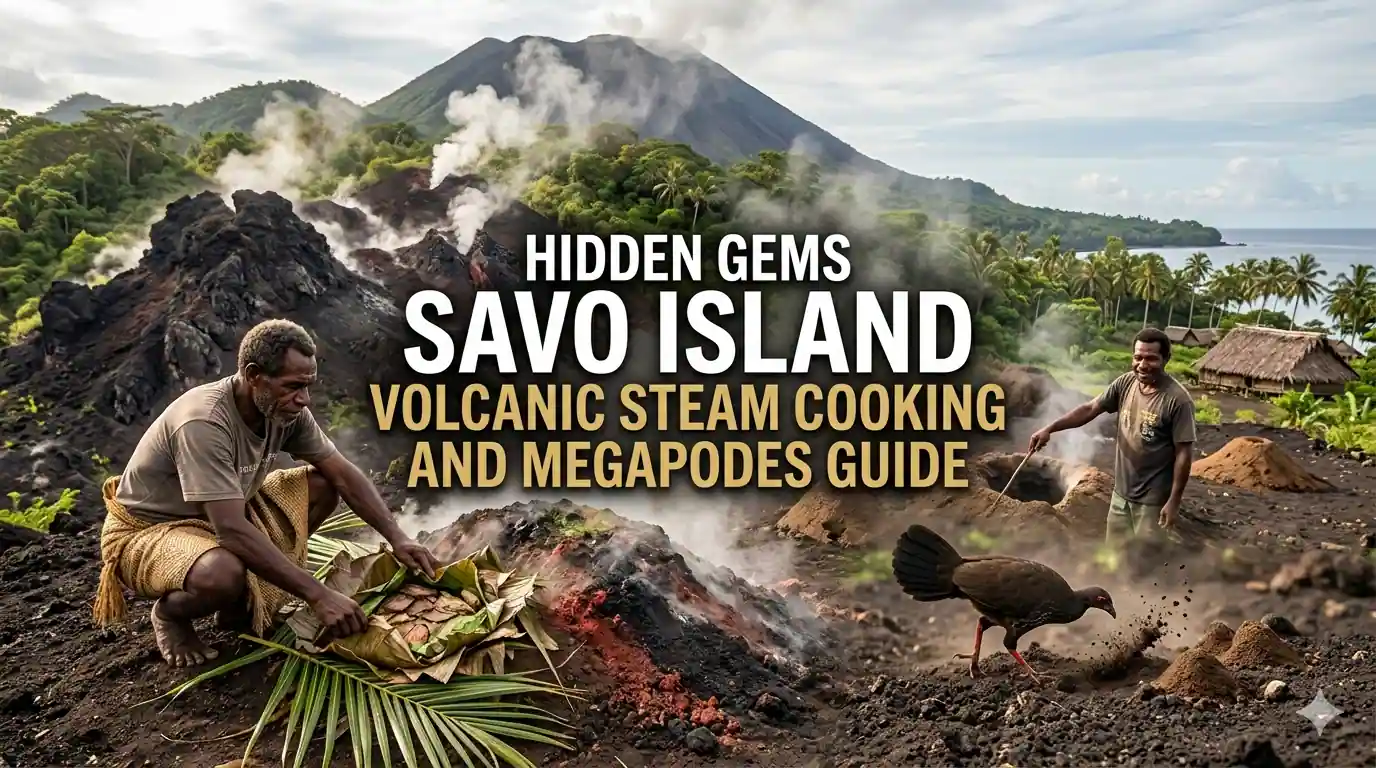
Discovering Savo Island's Extraordinary Natural and Cultural Treasures
Savo Island in the Solomon Islands represents one of the Pacific's most fascinating yet least-visited destinations. This small volcanic island combines dramatic geothermal activity unique wildlife and ancient cultural traditions that create an unforgettable experience for adventurous travelers.
Located just twenty kilometers north of Guadalcanal Savo rises dramatically from the sea with its active volcanic vents steaming fumaroles and lush tropical vegetation. The island's isolation has preserved both its natural ecosystems and traditional ways of life.
Two remarkable features distinguish Savo from other Pacific islands: the traditional practice of cooking food using volcanic steam and the presence of endangered megapode birds that utilize volcanic heat for egg incubation. These interconnected phenomena reveal profound relationships between geology ecology and human culture.
Understanding how to responsibly experience these hidden gems requires knowledge of local protocols seasonal patterns and conservation considerations. This comprehensive guide reveals everything needed to explore Savo Island's volcanic steam cooking traditions and megapode habitats in 2026.
Understanding Savo Island's Volcanic Geography

Savo Island's dramatic landscape results from ongoing volcanic activity that has shaped both its physical environment and human culture for centuries.
The island features multiple active volcanic vents releasing steam and heat from beneath the surface. These geothermal features create micro-environments where temperatures remain elevated year-round.
Volcanic soil enriched by mineral deposits supports lush vegetation including tropical forests coconut plantations and traditional garden plots. This fertile ground enables both natural ecosystems and human agriculture to thrive.
Coastal areas feature black sand beaches formed from volcanic rock contrasting with turquoise waters and coral reefs. These diverse habitats support rich marine biodiversity alongside terrestrial ecosystems.
Understanding this geological foundation proves essential for appreciating how volcanic heat enables both traditional cooking methods and megapode nesting behaviors unique to Savo Island.
The Ancient Art of Volcanic Steam Cooking

Volcanic steam cooking on Savo Island represents a remarkable adaptation of traditional Pacific earth oven techniques to unique geothermal conditions.
Local communities have developed specialized methods for harnessing volcanic heat to cook food. Steam vents are carefully managed with stones and earth creating natural ovens that maintain consistent temperatures.
Traditional dishes include root vegetables like taro and yams wrapped in banana leaves then placed in steam chambers. Fish and meats may also be cooked using this method infusing foods with subtle mineral flavors.
The cooking process requires deep knowledge of vent temperatures steam flow and timing. Elders pass this knowledge through generations ensuring cultural continuity and food safety.
Experiencing volcanic steam cooking offers more than culinary novelty. It provides insight into sustainable resource use traditional ecological knowledge and community-based food systems that have endured for centuries.
Where to Experience Volcanic Steam Cooking

Several locations on Savo Island offer opportunities to observe or participate in volcanic steam cooking though access requires cultural sensitivity and local guidance.
Coastal villages near geothermal areas typically maintain traditional cooking sites. These locations often combine cultural demonstration with community meals enabling visitors to taste traditional preparations.
Community-based tourism initiatives coordinate steam cooking experiences with cultural protocols ensuring respectful engagement. These programs typically include explanations of techniques ingredients and cultural significance.
Seasonal variations affect cooking site accessibility with some locations more active during traditional ceremonies or community gatherings. Local guides provide current information about optimal visiting times.
Photography and participation require explicit permission from community leaders. Respecting these protocols ensures positive experiences and supports cultural preservation efforts.
Visitors should approach these experiences with genuine curiosity rather than treating them as tourist attractions. Meaningful engagement benefits both travelers and communities.
Megapode Birds and Volcanic Incubation

Savo Island hosts populations of megapode birds also known as brush turkeys or incubator birds that utilize volcanic heat for egg incubation.
Megapodes possess remarkable reproductive strategies. Instead of sitting on eggs like most birds they bury them in warm substrate where geothermal heat or solar radiation provides incubation.
On Savo Island megapodes exploit volcanic soil temperatures to incubate their eggs. This adaptation enables year-round breeding though nesting activity peaks during specific seasons.
Female megapodes dig deep burrows in warm volcanic soil depositing eggs then covering them with sand and vegetation. They monitor temperatures using sensitive beaks adjusting mound composition as needed.
Chicks hatch fully developed with open eyes and ability to fly within hours. This precocial development proves essential for survival in challenging island environments.
Understanding megapode biology enhances appreciation for Savo Island's unique ecological relationships between geology and wildlife.
Best Locations for Megapode Observation

Several areas on Savo Island offer opportunities to observe megapodes though their elusive nature requires patience and local knowledge.
Coastal forest edges near volcanic vents often attract megapodes seeking warm nesting sites. Early morning and late afternoon prove optimal for observation when birds prove most active.
Traditional nesting areas maintained by communities may offer guided observation opportunities. These locations require permission and cultural protocols though provide reliable viewing.
Conservation areas established to protect megapode habitats often feature observation platforms or guided walks. These initiatives balance visitor access with species protection.
Local guides possess intimate knowledge of megapode behavior nesting sites and seasonal patterns. Their expertise significantly increases observation success while ensuring minimal disturbance.
Patience and quiet movement prove essential for megapode observation. These birds prove easily disturbed requiring respectful distances and minimal noise.
Seasonal Patterns for Optimal Visiting

Timing visits to Savo Island significantly affects experiences with volcanic steam cooking and megapode observation.
Dry season May through October offers optimal conditions with minimal rainfall stable volcanic activity and comfortable temperatures. This period proves ideal for first-time visitors.
Wet season November through April brings increased rainfall though also lush vegetation and active megapode nesting. Clear days during this period often provide exceptional experiences.
Megapode nesting activity typically peaks during cooler months when volcanic heat proves most valuable for incubation. Local guides provide current information about nesting activity.
Traditional cooking demonstrations often align with community events ceremonies or market days. Coordinating visits with these occasions enhances cultural experiences.
Weather monitoring proves essential as tropical conditions can change rapidly. Flexible scheduling accommodates weather variations common in Pacific island environments.
Cultural Protocols and Community Engagement

Visiting Savo Island requires understanding and respecting cultural protocols that govern access to traditional practices and natural resources.
Always seek permission before entering villages or accessing traditional sites. Arriving unannounced proves disrespectful and may result in denied access.
Present small gifts or offerings when visiting communities. Traditional protocol often involves presenting kava tobacco or small amounts of money to village elders though guides can advise on appropriate customs.
Photography requires explicit permission particularly of people cultural practices and sacred sites. Always ask before photographing respecting any refusals without pressure.
Dress modestly covering shoulders and knees particularly when visiting villages. Remove hats and shoes when entering certain spaces as sign of respect.
Listen more than you speak demonstrating genuine interest in learning rather than treating communities as tourist attractions. Patience and humility prove essential.
Conservation Considerations for Megapodes

Megapode populations face multiple threats requiring visitor awareness and responsible behavior to support conservation efforts.
Habitat loss from development agriculture and invasive species threatens megapode nesting sites. Supporting community conservation initiatives helps protect critical habitats.
Predation by introduced species including rats cats and pigs significantly impacts megapode reproductive success. Conservation programs address these threats though visitor awareness prevents accidental introduction of new invasives.
Climate change affects volcanic activity patterns and soil temperatures potentially disrupting megapode incubation strategies. Understanding these challenges contextualizes conservation urgency.
Respectful observation practices including maintaining distances avoiding nest disturbance and minimizing noise protect megapodes during critical breeding periods.
Supporting research and monitoring efforts through responsible tourism contributions helps build knowledge essential for effective conservation management.
Practical Logistics for Visiting Savo Island

Reaching and exploring Savo Island requires planning regarding transportation accommodation and local arrangements.
Access typically requires boat transfer from Guadalcanal with departures from Honiara or nearby coastal villages. Weather conditions affect schedules requiring flexibility.
Accommodation on Savo remains limited with basic guesthouses or homestays available through community arrangements. Advance coordination through local contacts proves essential.
Guides familiar with Savo's cultural protocols and natural features significantly enhance experiences while ensuring respectful engagement. Arrange guides through reputable operators or community contacts.
Carry cash in Solomon Islands dollars as electronic payment proves unavailable. Small denominations facilitate transactions for local purchases and community contributions.
Pack for tropical conditions including lightweight clothing rain gear insect repellent and sun protection. Volcanic terrain requires sturdy footwear with good traction.
Photography and Documentation Guidelines

Documenting Savo Island's unique features requires balancing personal interests with cultural sensitivity and conservation ethics.
Volcanic landscapes offer dramatic photography opportunities though safety requires maintaining appropriate distances from active vents and unstable terrain.
Megapode photography demands patience telephoto lenses and respectful distances. Avoid using flash or making sudden movements that may disturb birds.
Cultural documentation including cooking demonstrations requires explicit permission. Share photographs responsibly providing context and avoiding exploitation.
Underwater photography around Savo's reefs reveals marine biodiversity though requires appropriate equipment and environmental awareness.
Consider how documentation might affect communities and ecosystems. Responsible sharing raises awareness while protecting sensitive locations and practices.
Combining Savo Island with Broader Solomon Islands Travel

Savo Island integrates effectively into broader Solomon Islands itineraries enabling diverse experiences across the archipelago.
Guadalcanal offers historical sites including WWII landmarks cultural attractions and urban amenities that complement Savo's remote natural experiences.
Marine activities including diving snorkeling and fishing around Savo's reefs connect with broader Solomon Islands marine tourism opportunities.
Cultural exchanges on Savo provide context for understanding broader Melanesian traditions throughout the Solomon Islands archipelago.
Allow buffer time for weather-dependent boat transfers between islands. Flexible scheduling enhances enjoyment of multi-destination itineraries.
Support community-based tourism initiatives across the Solomon Islands ensuring benefits flow to local communities rather than external operators.
Health and Safety Considerations

Visiting volcanic environments requires specific health and safety awareness beyond typical tropical travel considerations.
Volcanic vents release gases including sulfur dioxide that may irritate respiratory systems. Maintain safe distances and avoid prolonged exposure to concentrated steam.
Unstable terrain near volcanic features requires careful footing and appropriate footwear. Follow guide instructions regarding safe observation areas.
Medical facilities remain extremely limited on Savo Island. Comprehensive travel insurance covering medical evacuation proves essential for remote island travel.
Vaccinations including hepatitis A and B typhoid and routine immunizations should be current. Consult travel medicine specialists before departure.
Food and water safety requires vigilance. Consume only properly cooked foods and bottled or treated water particularly when experiencing traditional cooking methods.
Sustainable Tourism Practices for Savo Island
Responsible tourism ensures Savo Island's natural and cultural treasures remain protected for future generations of visitors and residents.
Minimize environmental impact by staying on established trails packing out all trash and avoiding disturbance to wildlife and vegetation.
Support local economies by purchasing crafts and services directly from community members at fair prices. Avoid aggressive bargaining which exploits community members dependent on tourism income.
Use reef-safe sunscreen exclusively preventing chemical damage to coral ecosystems. Mineral-based products without oxybenzone and octinoxate prove essential.
Respect wildlife by maintaining appropriate distances avoiding feeding animals and minimizing disturbance to natural behaviors. Observe without interfering.
Share experiences emphasizing conservation messages and cultural appreciation rather than merely spectacular sightings. Education amplifies positive impacts beyond individual visits.
Conclusion Embracing Savo Island's Unique Heritage
Savo Island offers extraordinary opportunities to witness profound connections between geology ecology and human culture. Volcanic steam cooking traditions and megapode nesting behaviors reveal adaptive relationships that have endured for centuries.
Respectful engagement with these hidden gems requires cultural sensitivity conservation awareness and genuine curiosity. Approaching Savo with humility and preparation enables meaningful experiences that benefit both visitors and communities.
The island's isolation though challenging to access proves its greatest asset preserving natural ecosystems and traditional knowledge increasingly rare in our interconnected world.
Your visit to Savo Island when conducted responsibly contributes to conservation efforts cultural preservation and sustainable livelihoods. These remarkable treasures await travelers ready to embrace authentic Pacific island experiences with respect and wonder.
Savo Island's volcanic steam and megapode wonders represent living heritage that connects past present and future. With proper preparation cultural sensitivity and commitment to sustainability your journey reveals extraordinary stories written in steam soil and wings.
0 Comments